Success Factors for Internationalisation
of Clusters
Dr. Gerd Meier zu Köcker
Vilnius, 8th April 2015
www.bmwi.de
Reasons Not to Internationalise
 If policy makers insist
 If it is a mandatory part of funding rules
 Only because of funding
 If products or technologies are not competitive
 If cluster participants do not have capacities to internationalise
 If the cluster management does not have the mandate to internationalise
 If the cluster does not have any idea or strategy where and why to
internationalise
2
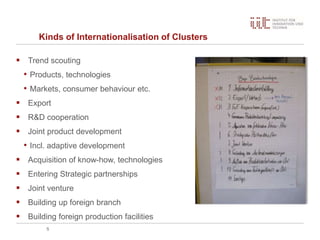
Kinds of Internationalisation of Clusters
 Trend scouting
• Products, technologies
• Markets, consumer behaviour etc.
 Export
 R&D cooperation
 Joint product development
• Incl. adaptive development
 Acquisition of know-how, technologies
 Entering Strategic partnerships
 Joint venture
 Building up foreign branch
 Building foreign production facilities
5
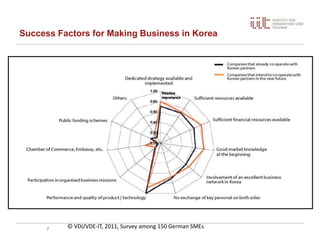
Success Factors for Making Business in Korea
7
© VDI/VDE-IT, 2011, Survey among 150 German SMEs
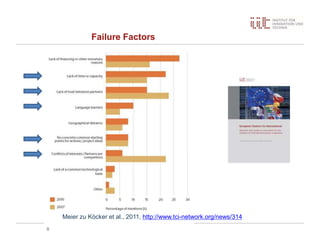
Failure Factors
9
Meier zu Köcker et al., 2011, http://www.tci-network.org/news/314
Key Success Factor
Unterstanding Internationalisation
14
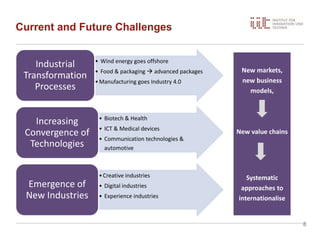
Current and Future Challenges
• Wind energy goes offshore
• Food & packaging  advanced packages
•Manufacturing goes Industry 4.0
Industrial
Transformation
Processes
• Biotech & Health
• ICT & Medical devices
• Communication technologies &
automotive
Increasing
Convergence of
Technologies
•Creative industries
• Digital industries
• Experience industries
Emergence of
New Industries
New markets,
new business
models,
New value chains
Systematic
approaches to
internationalise
8
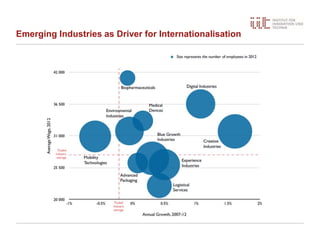
Emerging Industries as Driver for Internationalisation
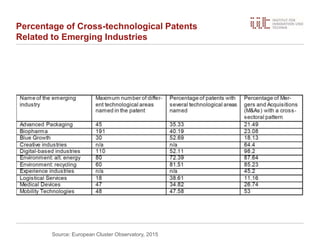
Percentage of Cross-technological Patents
Related to Emerging Industries
Source: European Cluster Observatory, 2015
Cross-sectoral Value Chain of Paper and
Packaging Industry
Source: European Cluster Observatory, 2015
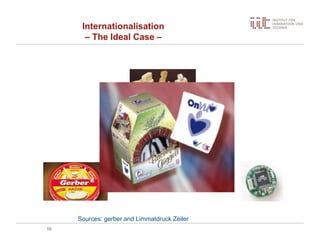
Internationalisation
– The Ideal Case –
16
Sources: gerber and Limmatdruck Zeiler
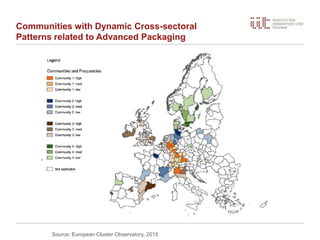
Communities with Dynamic Cross-sectoral
Patterns related to Advanced Packaging
Source: European Cluster Observatory, 2015
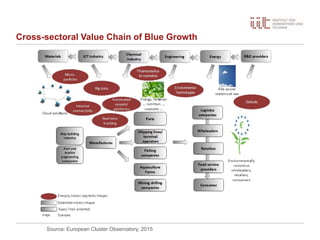
Cross-sectoral Value Chain of Blue Growth
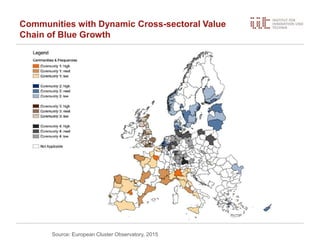
Communities with Dynamic Cross-sectoral Value
Chain of Blue Growth
Source: European Cluster Observatory, 2015
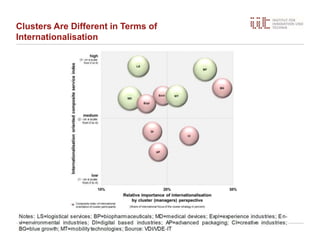
Clusters Are Different in Terms of
Internationalisation
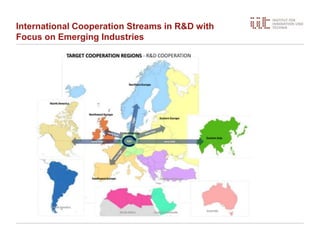
International Cooperation Streams in R&D with
Focus on Emerging Industries
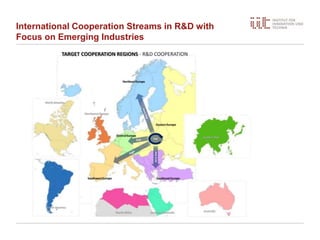
International Cooperation Streams in R&D with
Focus on Emerging Industries
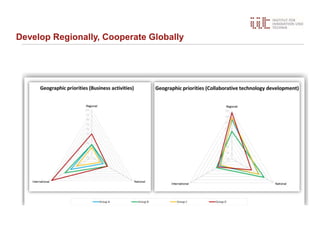
Develop Regionally, Cooperate Globally
Service Porfolio of Excellent Cluster Management
Internationalisation
– The Ideal Case –
15
Sustainable
strategic
partnerships
Looking for
external partners
Among cluster
actors
10 Key Success Factors
10
 Internationalisation strategy developed with cluster participants
 To know why, when and where to gor (e. g. new value chains)
 Cluster management is responsible for internationalisation
 Competitive products, technologies (and companies)
 Cluster actors are willing and able to invest
 Innovative services offered by the cluster management
 International experience of cluster management team
 Good knowledge of international cluster landscape
 Involvement of other key actors (export promotion agencies, Foreign
Chamber of Commerce etc.)
 Patience…
10 Steps Towards an
Internationalisation Strategy
 Communication of the upcoming strategy process among the cluster
participants
 Selection of stakeholders and cluster actors to be involved
 SWOT analysis/analysis of the current demand status and
future expectations
 Creativity workshops with cluster actors and stakeholders
 Additional interviews with selected cluster actors
 Deduction of strategic objectives and operational targets
 Identification of main action fields
 Prioritisation of actions and services
 Discussion of approach with cluster actors and stakeholders
 Agreement on action plan for development and implementation of services
11
Summary
Traditional approaches and key success factors
for cluster internationalisation are not sufficient
to address upcoming industrial needs
for internationalisation.
18
Contact
 Dr. Gerd Meier zu Köcker
 Institute for Innovation and Technology
 Steinplatz 1
 10623 Berlin
 E-Mail: mzk@vdivde-it.de
 Tel.: +49 30 310078-118
 Fax: +49 30 310078-222
19
Prevailing Services of Cluster Organisations
in the Context of Internationalisation
0
1
2
3
4
Availability of print/web
information in foreign
languages
Participation of the cluster
management in trade fairs /
conferences abroad with own
booth to present the cluster
and its participants
Other activities by the cluster
management for intensifying
international contacts and co-
operations with foreign
partners or clusters
Offices or other permanent
representations of the cluster
abroad
Acquisition of international
R&D projects that were mainly
initiated by the cluster
management
Other services/activities
Spain France Germany
Norway Denmark
13
© ESCA 2013,

New Approach for Internationalisation of Cluster

  • 1.
    Success Factors forInternationalisation of Clusters Dr. Gerd Meier zu Köcker Vilnius, 8th April 2015 www.bmwi.de
  • 2.
    Reasons Not toInternationalise  If policy makers insist  If it is a mandatory part of funding rules  Only because of funding  If products or technologies are not competitive  If cluster participants do not have capacities to internationalise  If the cluster management does not have the mandate to internationalise  If the cluster does not have any idea or strategy where and why to internationalise 2
  • 3.
    Kinds of Internationalisationof Clusters  Trend scouting • Products, technologies • Markets, consumer behaviour etc.  Export  R&D cooperation  Joint product development • Incl. adaptive development  Acquisition of know-how, technologies  Entering Strategic partnerships  Joint venture  Building up foreign branch  Building foreign production facilities 5
  • 4.
    Success Factors forMaking Business in Korea 7 © VDI/VDE-IT, 2011, Survey among 150 German SMEs
  • 5.
    Failure Factors 9 Meier zuKöcker et al., 2011, http://www.tci-network.org/news/314
  • 6.
    Key Success Factor UnterstandingInternationalisation 14
  • 7.
    Current and FutureChallenges • Wind energy goes offshore • Food & packaging  advanced packages •Manufacturing goes Industry 4.0 Industrial Transformation Processes • Biotech & Health • ICT & Medical devices • Communication technologies & automotive Increasing Convergence of Technologies •Creative industries • Digital industries • Experience industries Emergence of New Industries New markets, new business models, New value chains Systematic approaches to internationalise 8
  • 8.
    Emerging Industries asDriver for Internationalisation
  • 9.
    Percentage of Cross-technologicalPatents Related to Emerging Industries Source: European Cluster Observatory, 2015
  • 10.
    Cross-sectoral Value Chainof Paper and Packaging Industry Source: European Cluster Observatory, 2015
  • 11.
    Internationalisation – The IdealCase – 16 Sources: gerber and Limmatdruck Zeiler
  • 12.
    Communities with DynamicCross-sectoral Patterns related to Advanced Packaging Source: European Cluster Observatory, 2015
  • 13.
    Source: European ClusterObservatory, 2015 Cross-sectoral Value Chain of Blue Growth
  • 14.
    Communities with DynamicCross-sectoral Value Chain of Blue Growth Source: European Cluster Observatory, 2015
  • 15.
    Clusters Are Differentin Terms of Internationalisation
  • 16.
    International Cooperation Streamsin R&D with Focus on Emerging Industries
  • 17.
    International Cooperation Streamsin R&D with Focus on Emerging Industries
  • 18.
  • 19.
    Service Porfolio ofExcellent Cluster Management
  • 20.
    Internationalisation – The IdealCase – 15 Sustainable strategic partnerships Looking for external partners Among cluster actors
  • 21.
    10 Key SuccessFactors 10  Internationalisation strategy developed with cluster participants  To know why, when and where to gor (e. g. new value chains)  Cluster management is responsible for internationalisation  Competitive products, technologies (and companies)  Cluster actors are willing and able to invest  Innovative services offered by the cluster management  International experience of cluster management team  Good knowledge of international cluster landscape  Involvement of other key actors (export promotion agencies, Foreign Chamber of Commerce etc.)  Patience…
  • 22.
    10 Steps Towardsan Internationalisation Strategy  Communication of the upcoming strategy process among the cluster participants  Selection of stakeholders and cluster actors to be involved  SWOT analysis/analysis of the current demand status and future expectations  Creativity workshops with cluster actors and stakeholders  Additional interviews with selected cluster actors  Deduction of strategic objectives and operational targets  Identification of main action fields  Prioritisation of actions and services  Discussion of approach with cluster actors and stakeholders  Agreement on action plan for development and implementation of services 11
  • 23.
    Summary Traditional approaches andkey success factors for cluster internationalisation are not sufficient to address upcoming industrial needs for internationalisation. 18
  • 24.
    Contact  Dr. GerdMeier zu Köcker  Institute for Innovation and Technology  Steinplatz 1  10623 Berlin  E-Mail: mzk@vdivde-it.de  Tel.: +49 30 310078-118  Fax: +49 30 310078-222 19
  • 25.
    Prevailing Services ofCluster Organisations in the Context of Internationalisation 0 1 2 3 4 Availability of print/web information in foreign languages Participation of the cluster management in trade fairs / conferences abroad with own booth to present the cluster and its participants Other activities by the cluster management for intensifying international contacts and co- operations with foreign partners or clusters Offices or other permanent representations of the cluster abroad Acquisition of international R&D projects that were mainly initiated by the cluster management Other services/activities Spain France Germany Norway Denmark 13 © ESCA 2013,