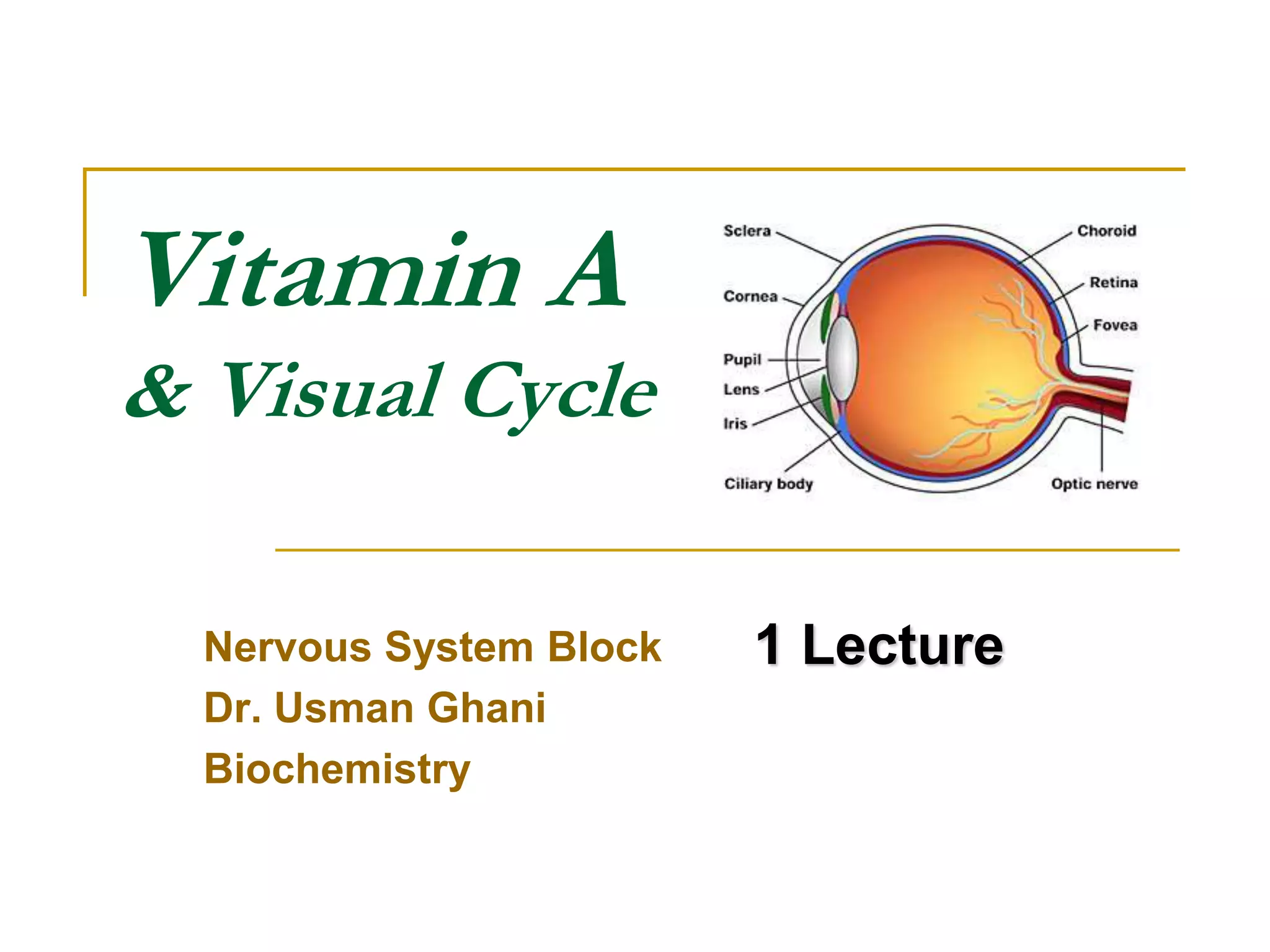
Vitamin A
& Visual Cycle
Nervous System Block
Dr. Usman Ghani
Biochemistry
1 Lecture
Vitamin A
 General biochemistry and types
 General functions
 Functions in the vision cycle
 Deficiency and diseases
Vitamin A
 Essential
 Noncaloric
 Required in very small amounts
Vitamins - Classified Based on Solubility
 Fat-Soluble Vitamins
 A, D, E, and K
 Water-Soluble Vitamins
 ascorbic acid (vitamin C)
 thiamin (vitamin B1)
 riboflavin (vitamin B2)
 niacin
 pyridoxine (vitamin B6)
 biotin
 pantothenic acid
 folate
 cobalamin (vitamin B12)
Vitamin A
(Preformed and Provitamin)
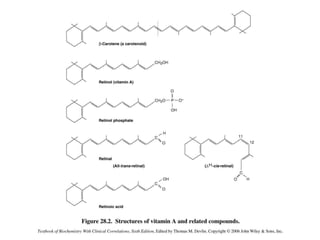
 Preformed: Three preformed compounds that
are metabolically active and found in animal
products
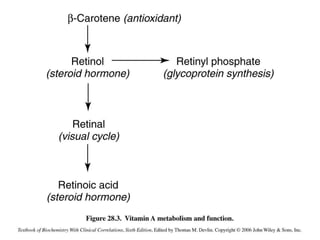
 retinol – alcohol form
 retinal or retinaldehyde – aldehyde form
 retinoic acid – acid form
 Provitamin: Carotenoids (b-carotene) and
cryptoxanthin can yield retinoids when
metabolized in the body
 These are from plant sources
Vitamin A
 Essential role in vision and normal cell
differentiation
 Deficiency is the most significant cause of
blindness in the developing world
 Large doses over a prolonged period of time
can produce intoxication and eventually lead to
liver disease
 Excessive carotenoids intake can result in
yellowing of the skin, but appears to be
harmless
Functions of Vitamin A
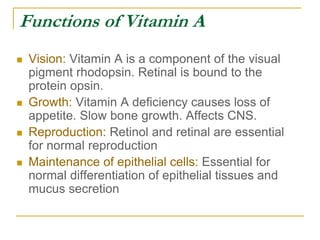
 Vision: Vitamin A is a component of the visual
pigment rhodopsin. Retinal is bound to the
protein opsin.
 Growth: Vitamin A deficiency causes loss of
appetite. Slow bone growth. Affects CNS.
 Reproduction: Retinol and retinal are essential
for normal reproduction
 Maintenance of epithelial cells: Essential for
normal differentiation of epithelial tissues and
mucus secretion
Role of Vitamin A in Vision
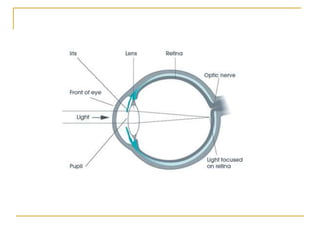
Visual Cycle
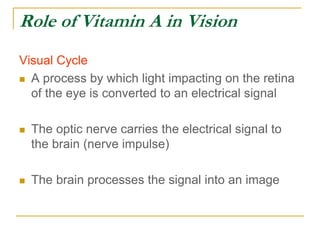
 A process by which light impacting on the retina
of the eye is converted to an electrical signal
 The optic nerve carries the electrical signal to
the brain (nerve impulse)
 The brain processes the signal into an image
Role of Vitamin A in Vision
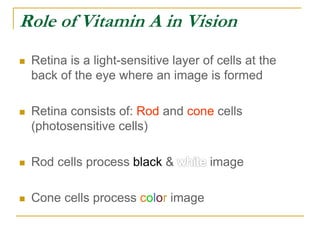
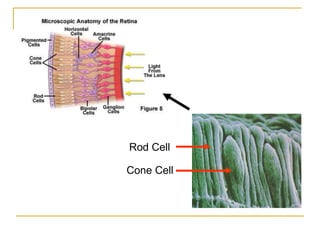
 Retina is a light-sensitive layer of cells at the
back of the eye where an image is formed
 Retina consists of: Rod and cone cells
(photosensitive cells)
 Rod cells process black & image
 Cone cells process color image
Rod Cell
Cone Cell
Role of Vitamin A in Vision
 Normal vision depends on the retina and on
adequate vitamin A
 In the retina, vitamin A in the form of retinal
binds to a protein called opsin to make
rhodopsin (in rod cells) and iodopsin (in cone
cells)
 Rhodopsin and iodopsin are light-sensitive
pigments
Role of Vitamin A in Vision
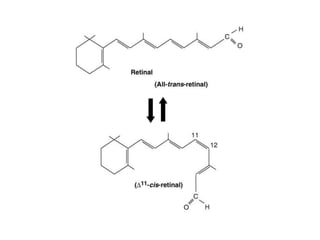
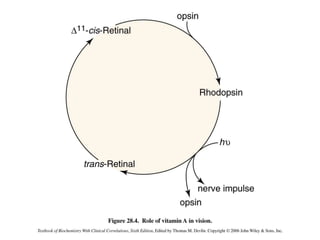
 When stimulated by light vitamin A isomerizes
from its bent ‘cis’ form to a straighter ‘trans’
form and detaches from opsin
 The opsin molecule changes shape, which
sends a signal to the brain via optic nerve and
an image is formed
 Most retinal released in this process is quickly
converted to trans-retinol and then to cis-retinal,
to begin another cycle
Role of Vitamin A in Vision
Dark Adaptation time
 Bright light depletes rhodopsin (photobleaching)
 Sudden shift from bright light to darkness
causes difficulty in seeing
 Rhodopsin is synthesized in a few minutes and
vision is improved in the dark
Role of Vitamin A in Vision
 The time required to synthesize rhodopsin in
the dark is called dark adaptation time
 It is increased in vitamin A deficiency
Recommended Dietary Allowance (RDA)
Vitamin A for Adults
 Women: 700 µg or 2,330 IU µg
 Men: 900 µg or 3,000 IU
 UL Men or Women: 3,000 µg or 10,000 IU
Vitamin A Deficiency and Diseases
 Nyctalopia (night blindness): patient cannot see
in low light or near darkness conditions
 Xerophthalmia: dryness of the conjunctiva and
cornea
 Bitot’s spots: localized increased thickness of
the conjunctiva
Vitamin A Deficiency and Diseases
 Keratomalacia: prolonged xerophthalmia leads
to drying and clouding of cornea
 Complete blindness (in severe deficiency)

02 Vitamin A.ppt

  • 1.
    Vitamin A & VisualCycle Nervous System Block Dr. Usman Ghani Biochemistry 1 Lecture
  • 2.
    Vitamin A  Generalbiochemistry and types  General functions  Functions in the vision cycle  Deficiency and diseases
  • 3.
    Vitamin A  Essential Noncaloric  Required in very small amounts
  • 4.
    Vitamins - ClassifiedBased on Solubility  Fat-Soluble Vitamins  A, D, E, and K  Water-Soluble Vitamins  ascorbic acid (vitamin C)  thiamin (vitamin B1)  riboflavin (vitamin B2)  niacin  pyridoxine (vitamin B6)  biotin  pantothenic acid  folate  cobalamin (vitamin B12)
  • 5.
    Vitamin A (Preformed andProvitamin)  Preformed: Three preformed compounds that are metabolically active and found in animal products  retinol – alcohol form  retinal or retinaldehyde – aldehyde form  retinoic acid – acid form  Provitamin: Carotenoids (b-carotene) and cryptoxanthin can yield retinoids when metabolized in the body  These are from plant sources
  • 8.
    Vitamin A  Essentialrole in vision and normal cell differentiation  Deficiency is the most significant cause of blindness in the developing world  Large doses over a prolonged period of time can produce intoxication and eventually lead to liver disease  Excessive carotenoids intake can result in yellowing of the skin, but appears to be harmless
  • 10.
    Functions of VitaminA  Vision: Vitamin A is a component of the visual pigment rhodopsin. Retinal is bound to the protein opsin.  Growth: Vitamin A deficiency causes loss of appetite. Slow bone growth. Affects CNS.  Reproduction: Retinol and retinal are essential for normal reproduction  Maintenance of epithelial cells: Essential for normal differentiation of epithelial tissues and mucus secretion
  • 11.
    Role of VitaminA in Vision Visual Cycle  A process by which light impacting on the retina of the eye is converted to an electrical signal  The optic nerve carries the electrical signal to the brain (nerve impulse)  The brain processes the signal into an image
  • 12.
    Role of VitaminA in Vision  Retina is a light-sensitive layer of cells at the back of the eye where an image is formed  Retina consists of: Rod and cone cells (photosensitive cells)  Rod cells process black & image  Cone cells process color image
  • 14.
  • 15.
    Role of VitaminA in Vision  Normal vision depends on the retina and on adequate vitamin A  In the retina, vitamin A in the form of retinal binds to a protein called opsin to make rhodopsin (in rod cells) and iodopsin (in cone cells)  Rhodopsin and iodopsin are light-sensitive pigments
  • 16.
    Role of VitaminA in Vision  When stimulated by light vitamin A isomerizes from its bent ‘cis’ form to a straighter ‘trans’ form and detaches from opsin  The opsin molecule changes shape, which sends a signal to the brain via optic nerve and an image is formed  Most retinal released in this process is quickly converted to trans-retinol and then to cis-retinal, to begin another cycle
  • 18.
    Role of VitaminA in Vision Dark Adaptation time  Bright light depletes rhodopsin (photobleaching)  Sudden shift from bright light to darkness causes difficulty in seeing  Rhodopsin is synthesized in a few minutes and vision is improved in the dark
  • 19.
    Role of VitaminA in Vision  The time required to synthesize rhodopsin in the dark is called dark adaptation time  It is increased in vitamin A deficiency
  • 20.
    Recommended Dietary Allowance(RDA) Vitamin A for Adults  Women: 700 µg or 2,330 IU µg  Men: 900 µg or 3,000 IU  UL Men or Women: 3,000 µg or 10,000 IU
  • 21.
    Vitamin A Deficiencyand Diseases  Nyctalopia (night blindness): patient cannot see in low light or near darkness conditions  Xerophthalmia: dryness of the conjunctiva and cornea  Bitot’s spots: localized increased thickness of the conjunctiva
  • 22.
    Vitamin A Deficiencyand Diseases  Keratomalacia: prolonged xerophthalmia leads to drying and clouding of cornea  Complete blindness (in severe deficiency)