Gamification of collaborative
authoring of interactive ebooks for
Children, the Q-Tales project
Gamification στην εκπαιδευτική
Διαδικασία – 11/06/2015
Stavros Lounis – Director, Gamifico Ltd
“How can the features that make computer games
captivating be used to make other user interfaces
interesting and enjoyable to use?” (1982, Malone)
– “The process of game-thinking and game mechanics
to engage users and solve problems” (2011,
Zichermann and Cunningham)
– “The use of game elements and techniques in non-
game contexts” (2011, Deterding et al.)
– “use of game mechanics, dynamics and frameworks
to promote desired behaviors” (2011, Lee and
Hammer)
Elements of Gamification
(2012, Kankanhalli et al.)
Rewards under a
Gamification Setting
(2011, Burke)
Reported Results
Higher AVG grade for students enrolled
in course utilizing Levels, Badges
and Feedback initially aimed to
increase student motivation to
undertake course related tasks. (2013
Dominguez et al.)
18.5 %
10.0 %
Higher completion of tests on tutorial
versus non gamified version of
same tutorial. Gamified version
introduced Missions, Rewards,
Levels, Rewards (2012, Li et al.)
Q-Tales
A Collaboration Ecosystem enabling EU Creative SMEs to exchange
multi-media content and create multi-plot, interactive Apps for Children,
curated according to Reader ability and educational value.
www.q-tales.eu
The Partners in the
Endeavour
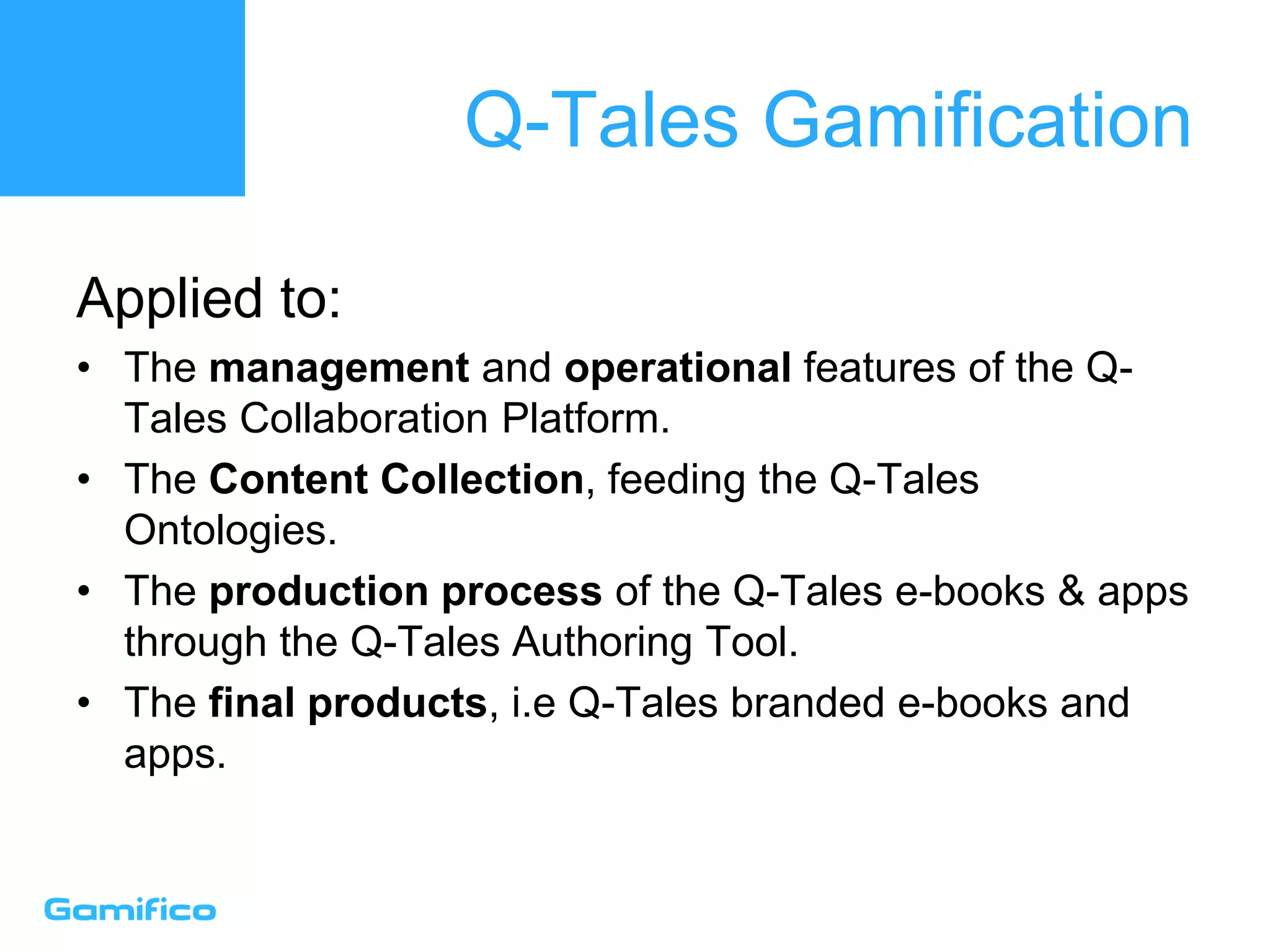
Q-Tales Gamification
Applied to:
• The management and operational features of the Q-
Tales Collaboration Platform.
• The Content Collection, feeding the Q-Tales
Ontologies.
• The production process of the Q-Tales e-books & apps
through the Q-Tales Authoring Tool.
• The final products, i.e Q-Tales branded e-books and
apps.
Our Approach
Gamification within and
across end products
(E-Books/apps)
Support the Learning Process
Enhance Pedagogical Value
Introduce Learning Activities
Profile
Personalization Missions
Feedback Progression Badges
Contact US
www.q-tales.eu
Stavros Lounis
Gamifico Limited
slounis@gamifico.co.uk

Gamification στην εκπαιδευτική Διαδικασία, Stavros Lounis–Director, GamificoLtd

  • 1.
    Gamification of collaborative authoringof interactive ebooks for Children, the Q-Tales project Gamification στην εκπαιδευτική Διαδικασία – 11/06/2015 Stavros Lounis – Director, Gamifico Ltd
  • 2.
    “How can thefeatures that make computer games captivating be used to make other user interfaces interesting and enjoyable to use?” (1982, Malone) – “The process of game-thinking and game mechanics to engage users and solve problems” (2011, Zichermann and Cunningham) – “The use of game elements and techniques in non- game contexts” (2011, Deterding et al.) – “use of game mechanics, dynamics and frameworks to promote desired behaviors” (2011, Lee and Hammer)
  • 3.
  • 4.
    Rewards under a GamificationSetting (2011, Burke)
  • 5.
    Reported Results Higher AVGgrade for students enrolled in course utilizing Levels, Badges and Feedback initially aimed to increase student motivation to undertake course related tasks. (2013 Dominguez et al.) 18.5 % 10.0 % Higher completion of tests on tutorial versus non gamified version of same tutorial. Gamified version introduced Missions, Rewards, Levels, Rewards (2012, Li et al.)
  • 6.
    Q-Tales A Collaboration Ecosystemenabling EU Creative SMEs to exchange multi-media content and create multi-plot, interactive Apps for Children, curated according to Reader ability and educational value. www.q-tales.eu
  • 7.
    The Partners inthe Endeavour
  • 8.
    Q-Tales Gamification Applied to: •The management and operational features of the Q- Tales Collaboration Platform. • The Content Collection, feeding the Q-Tales Ontologies. • The production process of the Q-Tales e-books & apps through the Q-Tales Authoring Tool. • The final products, i.e Q-Tales branded e-books and apps.
  • 9.
  • 10.
    Gamification within and acrossend products (E-Books/apps) Support the Learning Process Enhance Pedagogical Value Introduce Learning Activities Profile Personalization Missions Feedback Progression Badges
  • 11.