



Gamification in
Education: Learning
Meets Entertainment
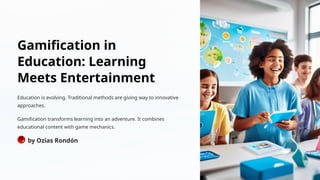
Education is evolving. Traditional methods are giving way to innovative
approaches.
Gamification transforms learning into an adventure. It combines
educational content with game mechanics.
by Ozías Rondón
What is Gamification?
Definition
Using game elements and
mechanics in non-game
contexts to engage users.
Purpose
Makes learning fun,
interactive, and motivating
through familiar game
features.
Application
Transforms traditional lessons into engaging experiences with
rewards, challenges, and feedback.
The Science Behind
Gamification
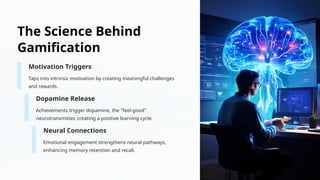
Motivation Triggers
Taps into intrinsic motivation by creating meaningful challenges
and rewards.
Dopamine Release
Achievements trigger dopamine, the "feel-good"
neurotransmitter, creating a positive learning cycle.
Neural Connections
Emotional engagement strengthens neural pathways,
enhancing memory retention and recall.
Benefits of Gamification
in Education
Increased
Engagement
Students become
active participants
rather than passive
listeners.
Better Retention
Game mechanics
help cement learning
through repetition
and emotional
connection.
Problem-Solving
Games naturally
encourage strategic
thinking and creative
problem-solving
skills.
Key Elements of Gamification
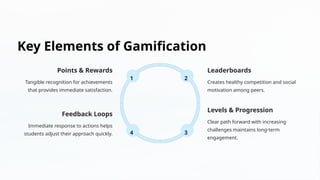
Points & Rewards
Tangible recognition for achievements
that provides immediate satisfaction.
1
Leaderboards
Creates healthy competition and social
motivation among peers.
2
Levels & Progression
Clear path forward with increasing
challenges maintains long-term
engagement.
3
Feedback Loops
Immediate response to actions helps
students adjust their approach quickly. 4
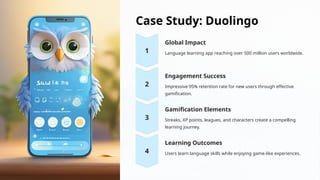
Case Study: Duolingo
Global Impact
Language learning app reaching over 500 million users worldwide.
Engagement Success
Impressive 95% retention rate for new users through effective
gamification.
Gamification Elements
Streaks, XP points, leagues, and characters create a compelling
learning journey.
Learning Outcomes
Users learn language skills while enjoying game-like experiences.
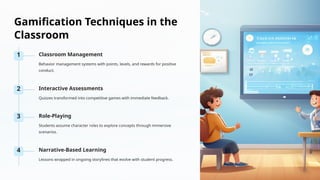
Gamification Techniques in the
Classroom
1 Classroom Management
Behavior management systems with points, levels, and rewards for positive
conduct.
2 Interactive Assessments
Quizzes transformed into competitive games with immediate feedback.
3 Role-Playing
Students assume character roles to explore concepts through immersive
scenarios.
4 Narrative-Based Learning
Lessons wrapped in ongoing storylines that evolve with student progress.
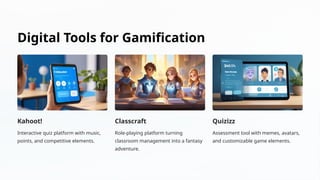
Digital Tools for Gamification
Kahoot!
Interactive quiz platform with music,
points, and competitive elements.
Classcraft
Role-playing platform turning
classroom management into a fantasy
adventure.
Quizizz
Assessment tool with memes, avatars,
and customizable game elements.
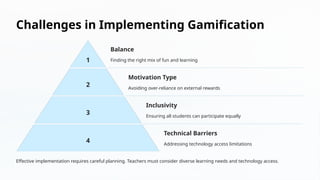
Challenges in Implementing Gamification
1
Balance
Finding the right mix of fun and learning
2
Motivation Type
Avoiding over-reliance on external rewards
3
Inclusivity
Ensuring all students can participate equally
4
Technical Barriers
Addressing technology access limitations
Effective implementation requires careful planning. Teachers must consider diverse learning needs and technology access.
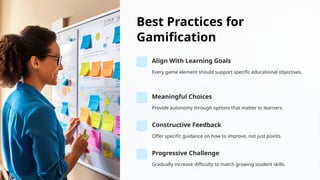
Best Practices for
Gamification
Align With Learning Goals
Every game element should support specific educational objectives.
Meaningful Choices
Provide autonomy through options that matter to learners.
Constructive Feedback
Offer specific guidance on how to improve, not just points.
Progressive Challenge
Gradually increase difficulty to match growing student skills.
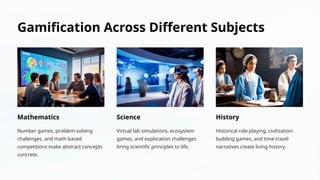
Gamification Across Different Subjects
Mathematics
Number games, problem-solving
challenges, and math-based
competitions make abstract concepts
concrete.
Science
Virtual lab simulations, ecosystem
games, and exploration challenges
bring scientific principles to life.
History
Historical role-playing, civilization-
building games, and time-travel
narratives create living history.
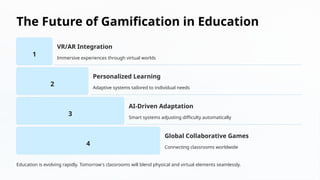
The Future of Gamification in Education
1
VR/AR Integration
Immersive experiences through virtual worlds
2
Personalized Learning
Adaptive systems tailored to individual needs
3
AI-Driven Adaptation
Smart systems adjusting difficulty automatically
4
Global Collaborative Games
Connecting classrooms worldwide
Education is evolving rapidly. Tomorrow's classrooms will blend physical and virtual elements seamlessly.
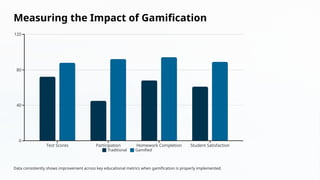
Measuring the Impact of Gamification
Traditional Gamified
Data consistently shows improvement across key educational metrics when gamification is properly implemented.
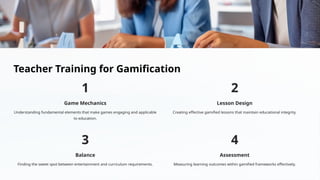
Teacher Training for Gamification
1
Game Mechanics
Understanding fundamental elements that make games engaging and applicable
to education.
2
Lesson Design
Creating effective gamified lessons that maintain educational integrity.
3
Balance
Finding the sweet spot between entertainment and curriculum requirements.
4
Assessment
Measuring learning outcomes within gamified frameworks effectively.
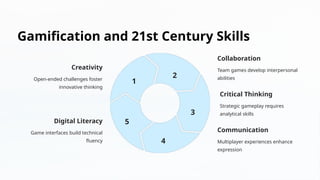
Gamification and 21st Century Skills
Creativity
Open-ended challenges foster
innovative thinking
1
Collaboration
Team games develop interpersonal
abilities
2
Critical Thinking
Strategic gameplay requires
analytical skills
3
Communication
Multiplayer experiences enhance
expression
4
Digital Literacy
Game interfaces build technical
fluency
5
Gamification Beyond the Classroom
Learning extends beyond school walls. Gamification creates bridges between classroom, home, and community learning
environments.
Ethical Considerations in
Educational Gamification
Data Privacy Ensuring student information is
protected and properly secured
Addiction Concerns Avoiding mechanics that foster
unhealthy obsession with rewards
Equitable Access Making technology-based
gamification available to all students
Cultural Sensitivity Designing games that respect
diverse backgrounds and values
Healthy Competition Creating environments where
winning doesn't overshadow
learning
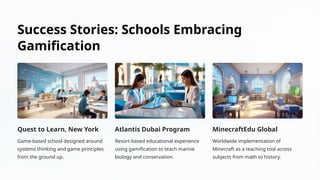
Success Stories: Schools Embracing
Gamification
Quest to Learn, New York
Game-based school designed around
systems thinking and game principles
from the ground up.
Atlantis Dubai Program
Resort-based educational experience
using gamification to teach marine
biology and conservation.
MinecraftEdu Global
Worldwide implementation of
Minecraft as a teaching tool across
subjects from math to history.
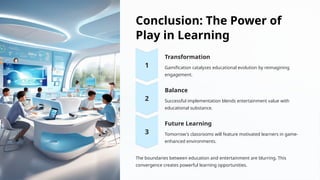
Conclusion: The Power of
Play in Learning
Transformation
Gamification catalyzes educational evolution by reimagining
engagement.
Balance
Successful implementation blends entertainment value with
educational substance.
Future Learning
Tomorrow's classrooms will feature motivated learners in game-
enhanced environments.
The boundaries between education and entertainment are blurring. This
convergence creates powerful learning opportunities.
Manifest Your
Educational Success!
Transform Your
Learning Journey
Harness positive energy to
overcome educational
challenges.
Explore Good Vibes
Manifestation
Discover how positive
thinking enhances learning
outcomes.
Take Action Today
Visit Good Vibes Manifestation to unlock your full potential.

Gamification-in-Education-Learning-Meets-Entertainment

  • 1.
    Gamification in Education: Learning MeetsEntertainment Education is evolving. Traditional methods are giving way to innovative approaches. Gamification transforms learning into an adventure. It combines educational content with game mechanics. by Ozías Rondón
  • 2.
    What is Gamification? Definition Usinggame elements and mechanics in non-game contexts to engage users. Purpose Makes learning fun, interactive, and motivating through familiar game features. Application Transforms traditional lessons into engaging experiences with rewards, challenges, and feedback.
  • 3.
    The Science Behind Gamification MotivationTriggers Taps into intrinsic motivation by creating meaningful challenges and rewards. Dopamine Release Achievements trigger dopamine, the "feel-good" neurotransmitter, creating a positive learning cycle. Neural Connections Emotional engagement strengthens neural pathways, enhancing memory retention and recall.
  • 4.
    Benefits of Gamification inEducation Increased Engagement Students become active participants rather than passive listeners. Better Retention Game mechanics help cement learning through repetition and emotional connection. Problem-Solving Games naturally encourage strategic thinking and creative problem-solving skills.
  • 5.
    Key Elements ofGamification Points & Rewards Tangible recognition for achievements that provides immediate satisfaction. 1 Leaderboards Creates healthy competition and social motivation among peers. 2 Levels & Progression Clear path forward with increasing challenges maintains long-term engagement. 3 Feedback Loops Immediate response to actions helps students adjust their approach quickly. 4
  • 6.
    Case Study: Duolingo GlobalImpact Language learning app reaching over 500 million users worldwide. Engagement Success Impressive 95% retention rate for new users through effective gamification. Gamification Elements Streaks, XP points, leagues, and characters create a compelling learning journey. Learning Outcomes Users learn language skills while enjoying game-like experiences.
  • 7.
    Gamification Techniques inthe Classroom 1 Classroom Management Behavior management systems with points, levels, and rewards for positive conduct. 2 Interactive Assessments Quizzes transformed into competitive games with immediate feedback. 3 Role-Playing Students assume character roles to explore concepts through immersive scenarios. 4 Narrative-Based Learning Lessons wrapped in ongoing storylines that evolve with student progress.
  • 8.
    Digital Tools forGamification Kahoot! Interactive quiz platform with music, points, and competitive elements. Classcraft Role-playing platform turning classroom management into a fantasy adventure. Quizizz Assessment tool with memes, avatars, and customizable game elements.
  • 9.
    Challenges in ImplementingGamification 1 Balance Finding the right mix of fun and learning 2 Motivation Type Avoiding over-reliance on external rewards 3 Inclusivity Ensuring all students can participate equally 4 Technical Barriers Addressing technology access limitations Effective implementation requires careful planning. Teachers must consider diverse learning needs and technology access.
  • 10.
    Best Practices for Gamification AlignWith Learning Goals Every game element should support specific educational objectives. Meaningful Choices Provide autonomy through options that matter to learners. Constructive Feedback Offer specific guidance on how to improve, not just points. Progressive Challenge Gradually increase difficulty to match growing student skills.
  • 11.
    Gamification Across DifferentSubjects Mathematics Number games, problem-solving challenges, and math-based competitions make abstract concepts concrete. Science Virtual lab simulations, ecosystem games, and exploration challenges bring scientific principles to life. History Historical role-playing, civilization- building games, and time-travel narratives create living history.
  • 12.
    The Future ofGamification in Education 1 VR/AR Integration Immersive experiences through virtual worlds 2 Personalized Learning Adaptive systems tailored to individual needs 3 AI-Driven Adaptation Smart systems adjusting difficulty automatically 4 Global Collaborative Games Connecting classrooms worldwide Education is evolving rapidly. Tomorrow's classrooms will blend physical and virtual elements seamlessly.
  • 13.
    Measuring the Impactof Gamification Traditional Gamified Data consistently shows improvement across key educational metrics when gamification is properly implemented.
  • 14.
    Teacher Training forGamification 1 Game Mechanics Understanding fundamental elements that make games engaging and applicable to education. 2 Lesson Design Creating effective gamified lessons that maintain educational integrity. 3 Balance Finding the sweet spot between entertainment and curriculum requirements. 4 Assessment Measuring learning outcomes within gamified frameworks effectively.
  • 15.
    Gamification and 21stCentury Skills Creativity Open-ended challenges foster innovative thinking 1 Collaboration Team games develop interpersonal abilities 2 Critical Thinking Strategic gameplay requires analytical skills 3 Communication Multiplayer experiences enhance expression 4 Digital Literacy Game interfaces build technical fluency 5
  • 16.
    Gamification Beyond theClassroom Learning extends beyond school walls. Gamification creates bridges between classroom, home, and community learning environments.
  • 17.
    Ethical Considerations in EducationalGamification Data Privacy Ensuring student information is protected and properly secured Addiction Concerns Avoiding mechanics that foster unhealthy obsession with rewards Equitable Access Making technology-based gamification available to all students Cultural Sensitivity Designing games that respect diverse backgrounds and values Healthy Competition Creating environments where winning doesn't overshadow learning
  • 18.
    Success Stories: SchoolsEmbracing Gamification Quest to Learn, New York Game-based school designed around systems thinking and game principles from the ground up. Atlantis Dubai Program Resort-based educational experience using gamification to teach marine biology and conservation. MinecraftEdu Global Worldwide implementation of Minecraft as a teaching tool across subjects from math to history.
  • 19.
    Conclusion: The Powerof Play in Learning Transformation Gamification catalyzes educational evolution by reimagining engagement. Balance Successful implementation blends entertainment value with educational substance. Future Learning Tomorrow's classrooms will feature motivated learners in game- enhanced environments. The boundaries between education and entertainment are blurring. This convergence creates powerful learning opportunities.
  • 20.
    Manifest Your Educational Success! TransformYour Learning Journey Harness positive energy to overcome educational challenges. Explore Good Vibes Manifestation Discover how positive thinking enhances learning outcomes. Take Action Today Visit Good Vibes Manifestation to unlock your full potential.