Lesson 1
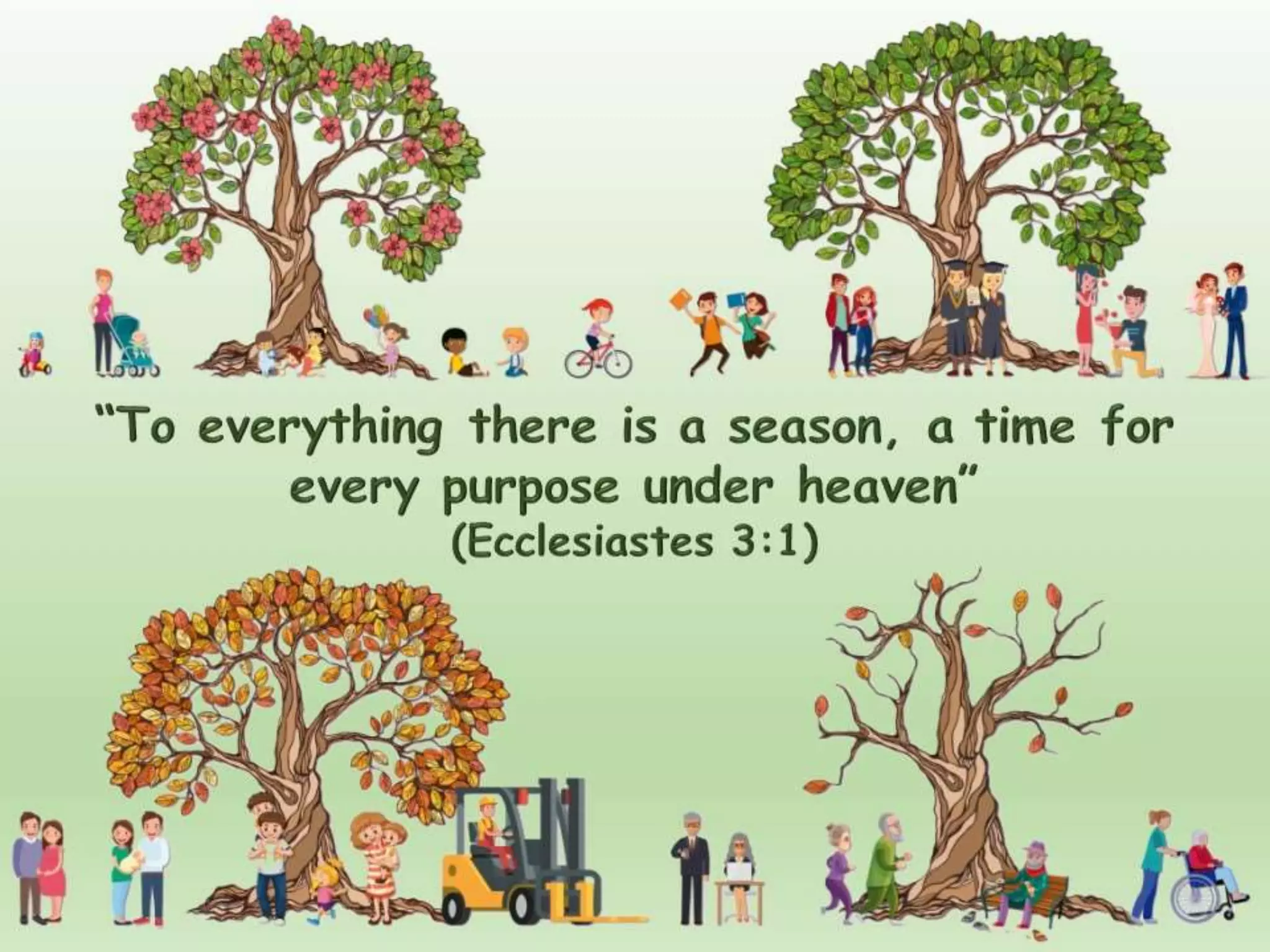
TIME TO GROW TIME TO WORK
TIME TO DIE
TIME TO REST
TIME TO GET UP
TIEMPO DE
VOLVER AL PADRE
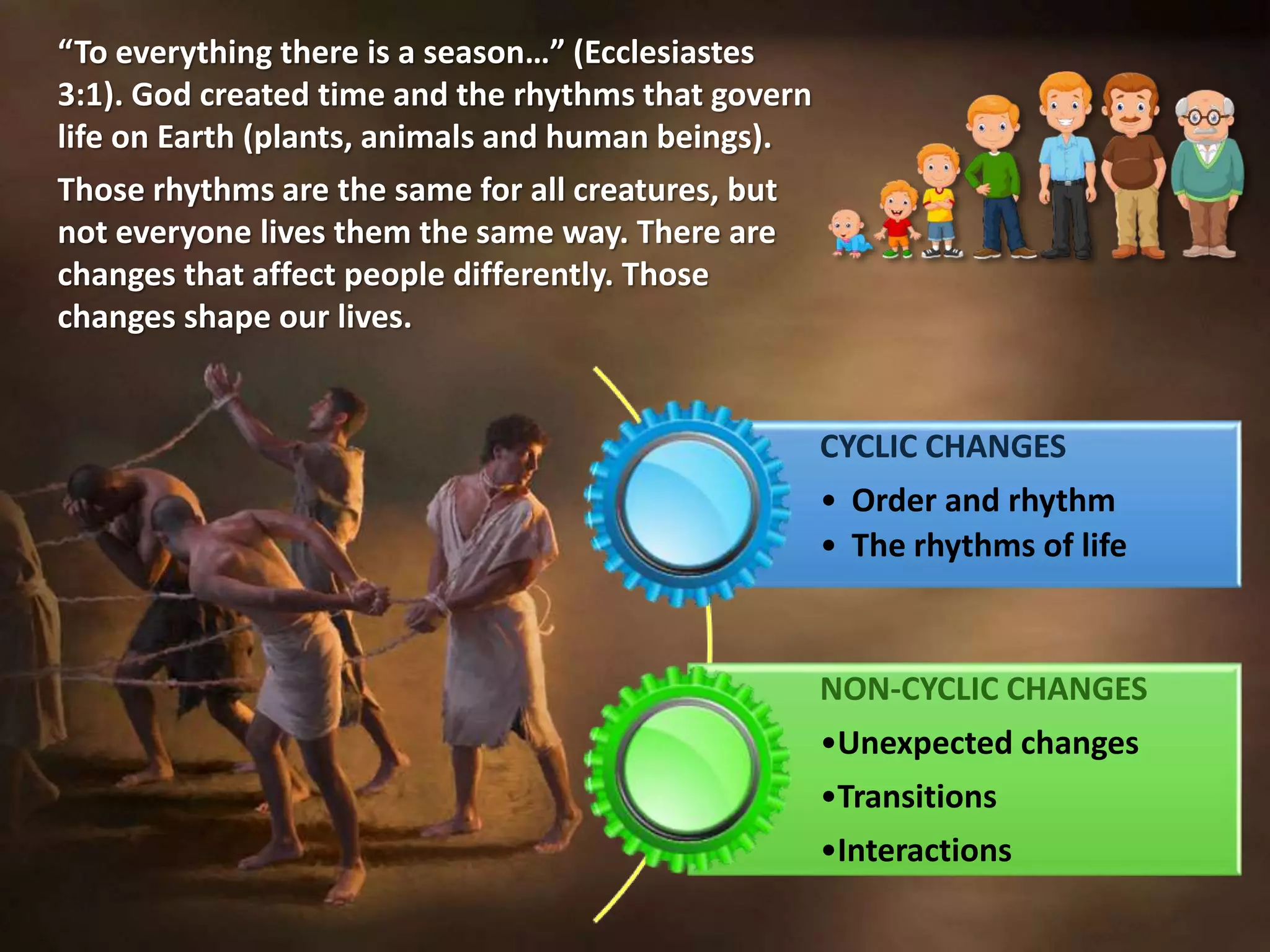
CYCLIC CHANGES
• Order and rhythm
• The rhythms of life
NON-CYCLIC CHANGES
•Unexpected changes
•Transitions
•Interactions
“To everything there is a season…” (Ecclesiastes
3:1). God created time and the rhythms that govern
life on Earth (plants, animals and human beings).
Those rhythms are the same for all creatures, but
not everyone lives them the same way. There are
changes that affect people differently. Those
changes shape our lives.
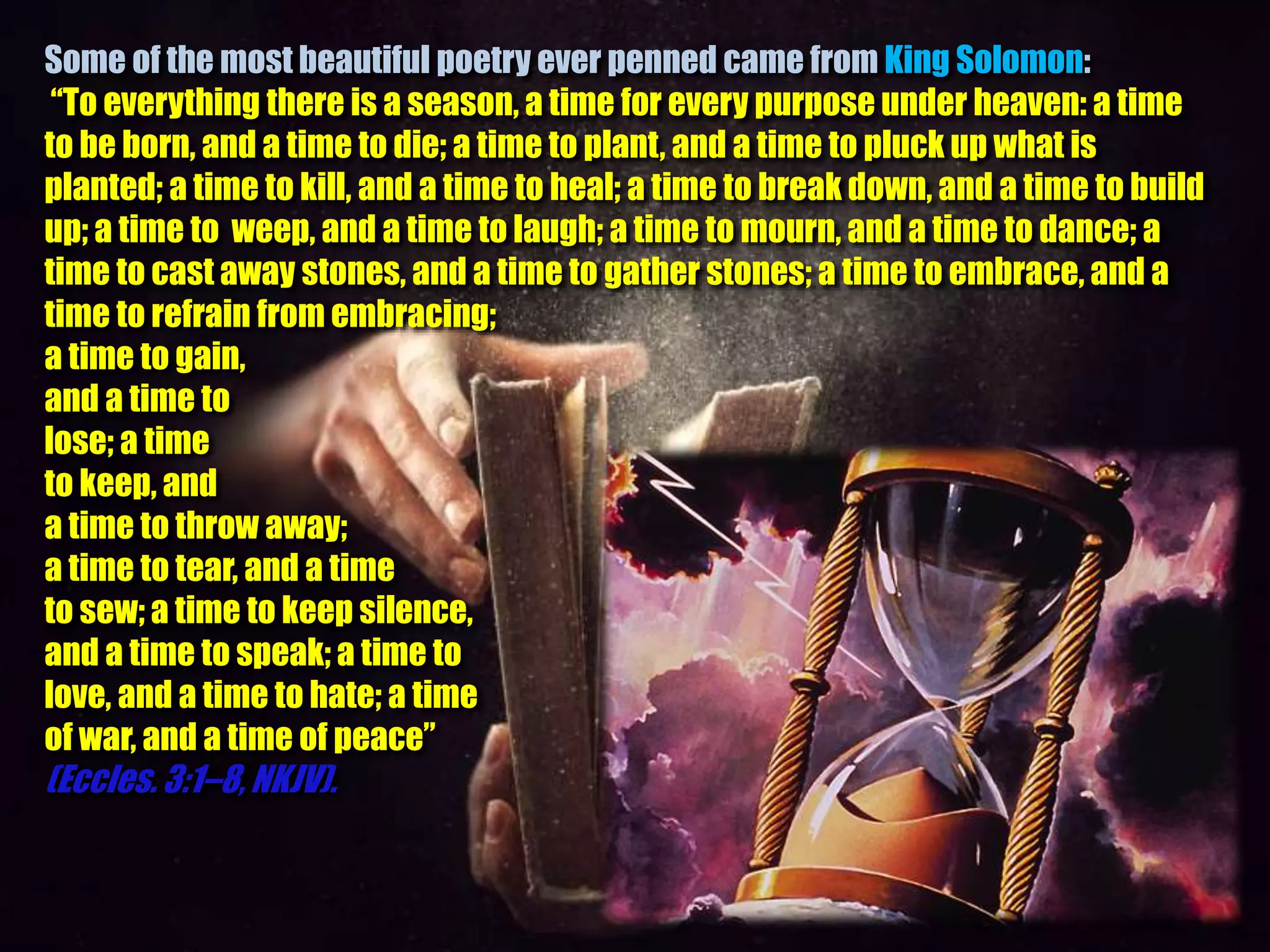
Some of the most beautiful poetry ever penned came from King Solomon:
“To everything there is a season, a time for every purpose under heaven: a time
to be born, and a time to die; a time to plant, and a time to pluck up what is
planted; a time to kill, and a time to heal; a time to break down, and a time to build
up; a time to weep, and a time to laugh; a time to mourn, and a time to dance; a
time to cast away stones, and a time to gather stones; a time to embrace, and a
time to refrain from embracing;
a time to gain,
and a time to
lose; a time
to keep, and
a time to throw away;
a time to tear, and a time
to sew; a time to keep silence,
and a time to speak; a time to
love, and a time to hate; a time
of war, and a time of peace”
(Eccles. 3:1–8, NKJV).
Those words capture so much of human existence—the seasons, the
rhythms of our lives. Yes, our lives go through stages, through
changes, and they do so from the moment we are born.
Sometimes the changes are good, sometimes not; sometimes we
have control over them; sometimes not.
This lesson let’s look at
the seasons and rhythms
of our lives, especially as
they impact us and our
families, too. .
“While the earth remains, seedtime
and harvest, cold and heat, winter
and summer, and day and night shall
not cease.” (Genesis 8:22)
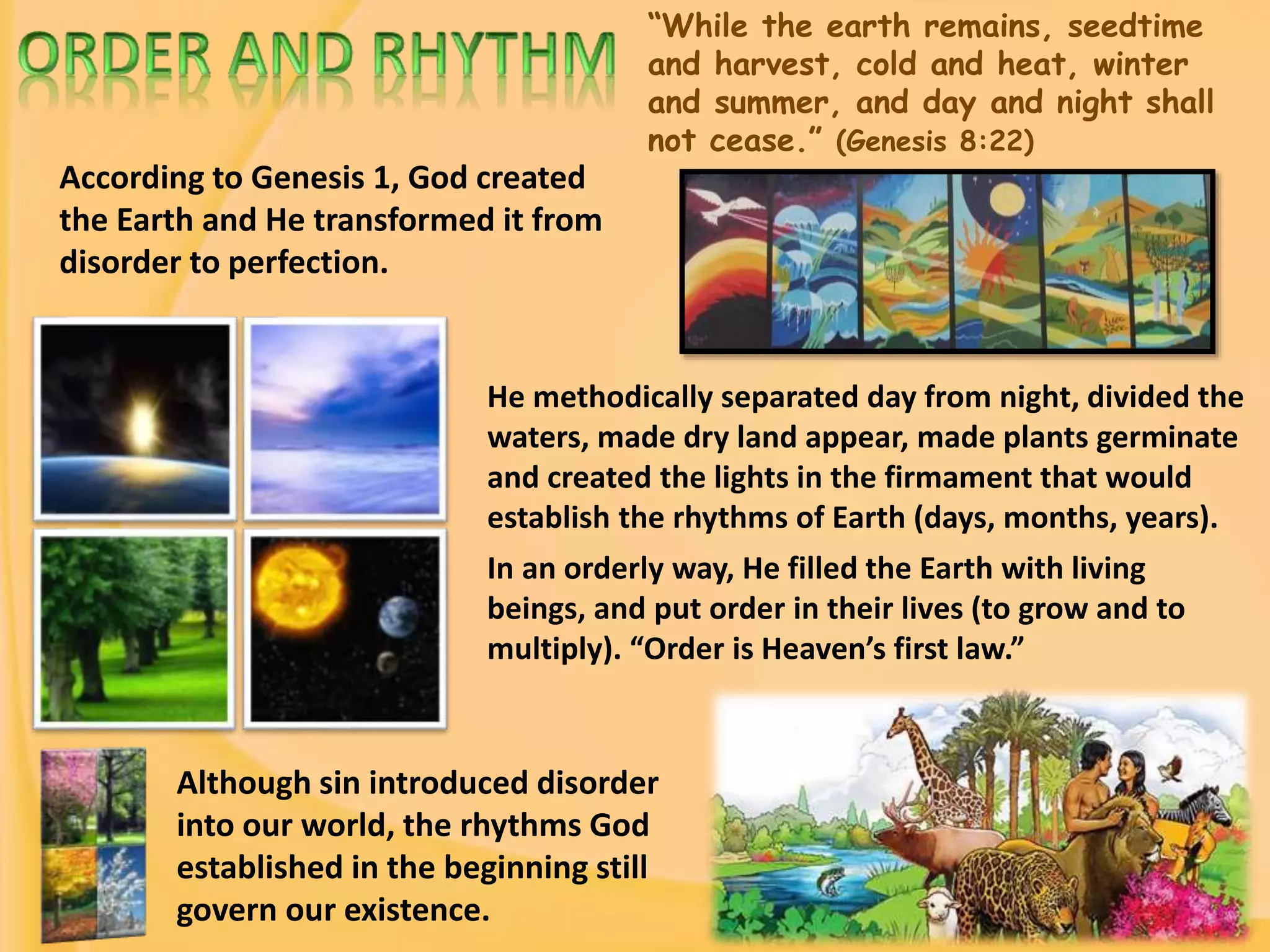
According to Genesis 1, God created
the Earth and He transformed it from
disorder to perfection.
He methodically separated day from night, divided the
waters, made dry land appear, made plants germinate
and created the lights in the firmament that would
establish the rhythms of Earth (days, months, years).
In an orderly way, He filled the Earth with living
beings, and put order in their lives (to grow and to
multiply). “Order is Heaven’s first law.”
Although sin introduced disorder
into our world, the rhythms God
established in the beginning still
govern our existence.
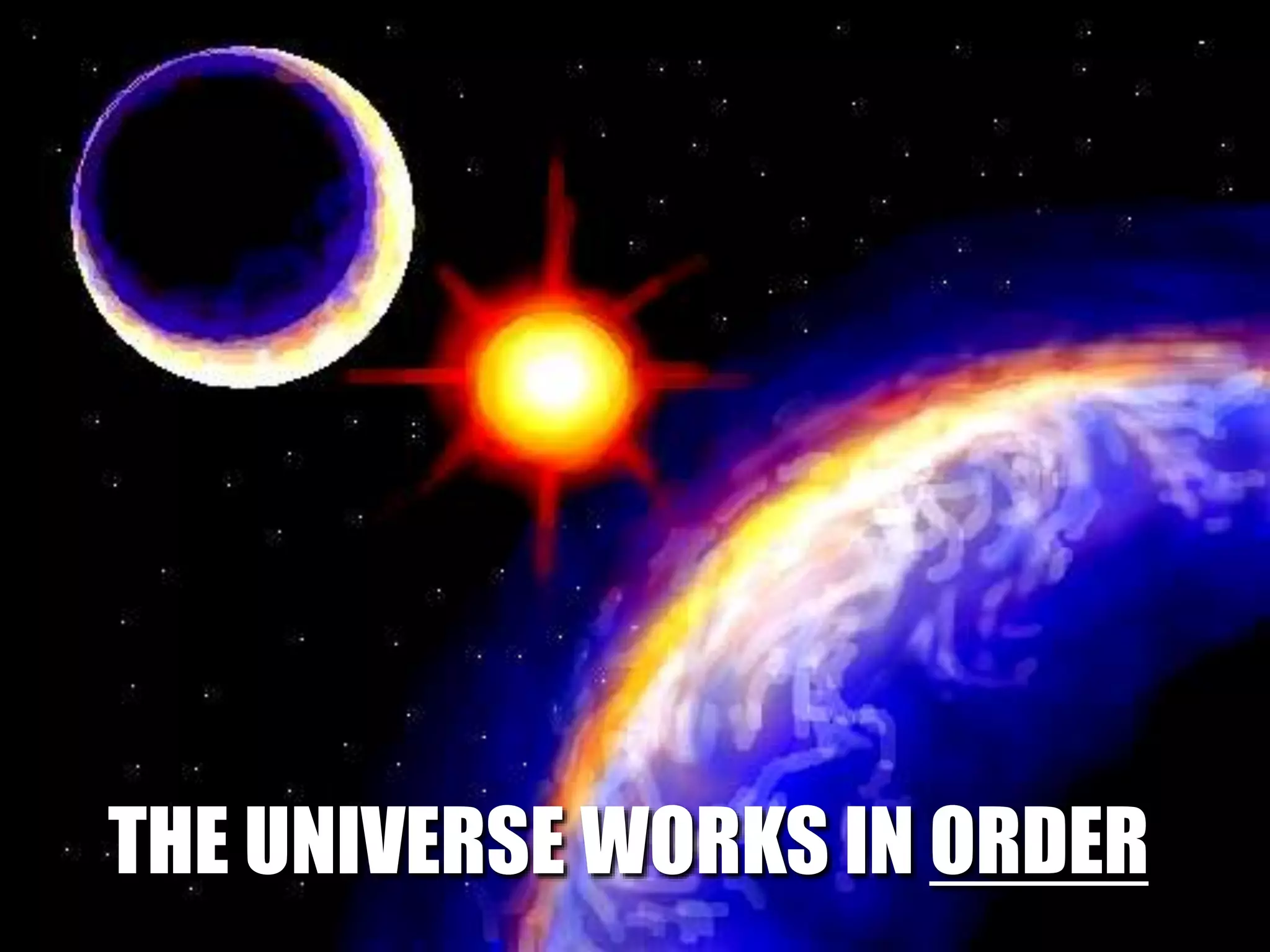
THE UNIVERSE WORKS IN ORDER
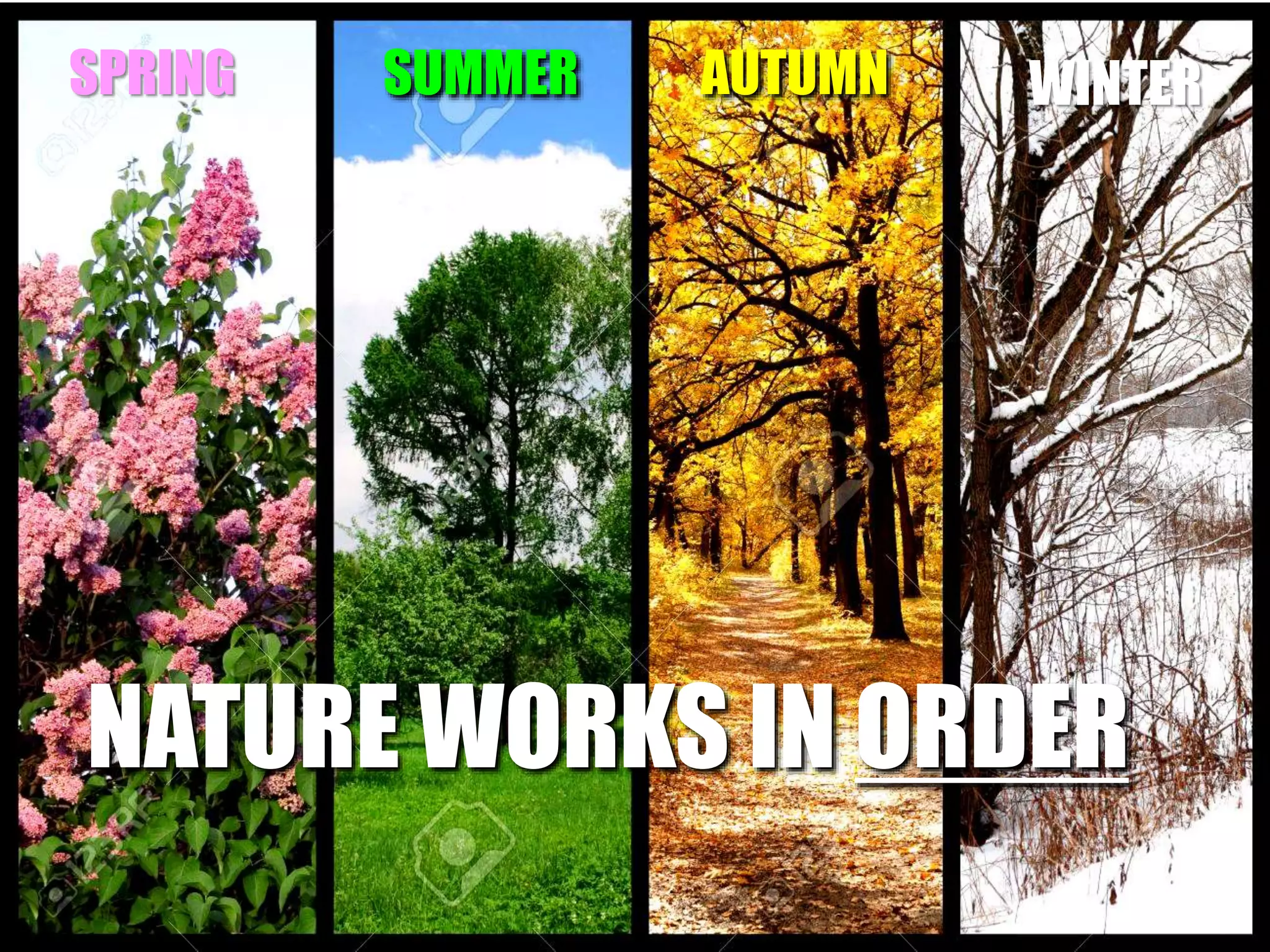
SPRING SUMMER AUTUMN WINTER
NATURE WORKS IN ORDER
“The glory of young men is their
strength, and the splendor of old men is
their gray head.” (Proverbs 20:29)
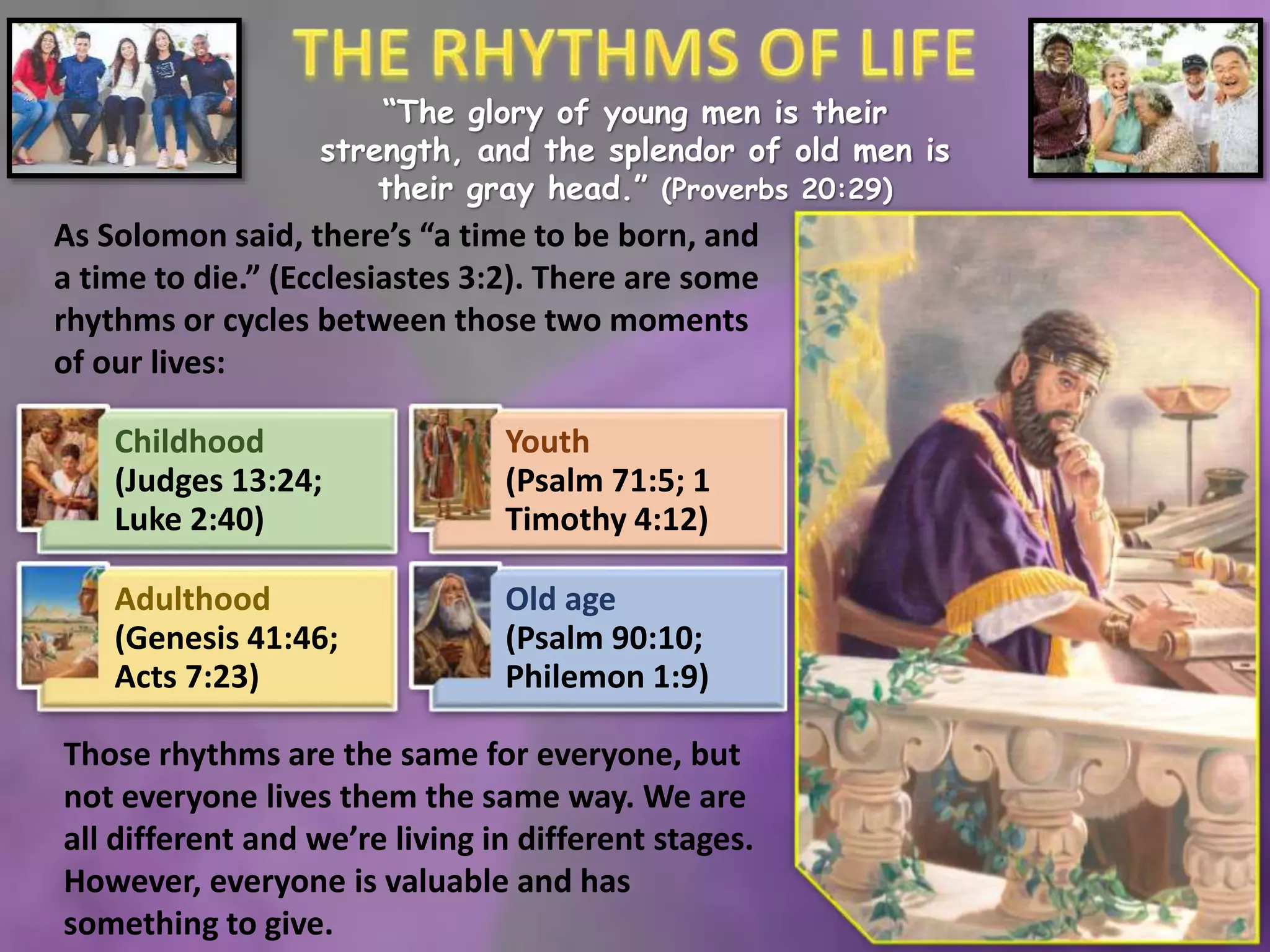
As Solomon said, there’s “a time to be born, and
a time to die.” (Ecclesiastes 3:2). There are some
rhythms or cycles between those two moments
of our lives:
Childhood
(Judges 13:24;
Luke 2:40)
Youth
(Psalm 71:5; 1
Timothy 4:12)
Adulthood
(Genesis 41:46;
Acts 7:23)
Old age
(Psalm 90:10;
Philemon 1:9)
Those rhythms are the same for everyone, but
not everyone lives them the same way. We are
all different and we’re living in different stages.
However, everyone is valuable and has
something to give.
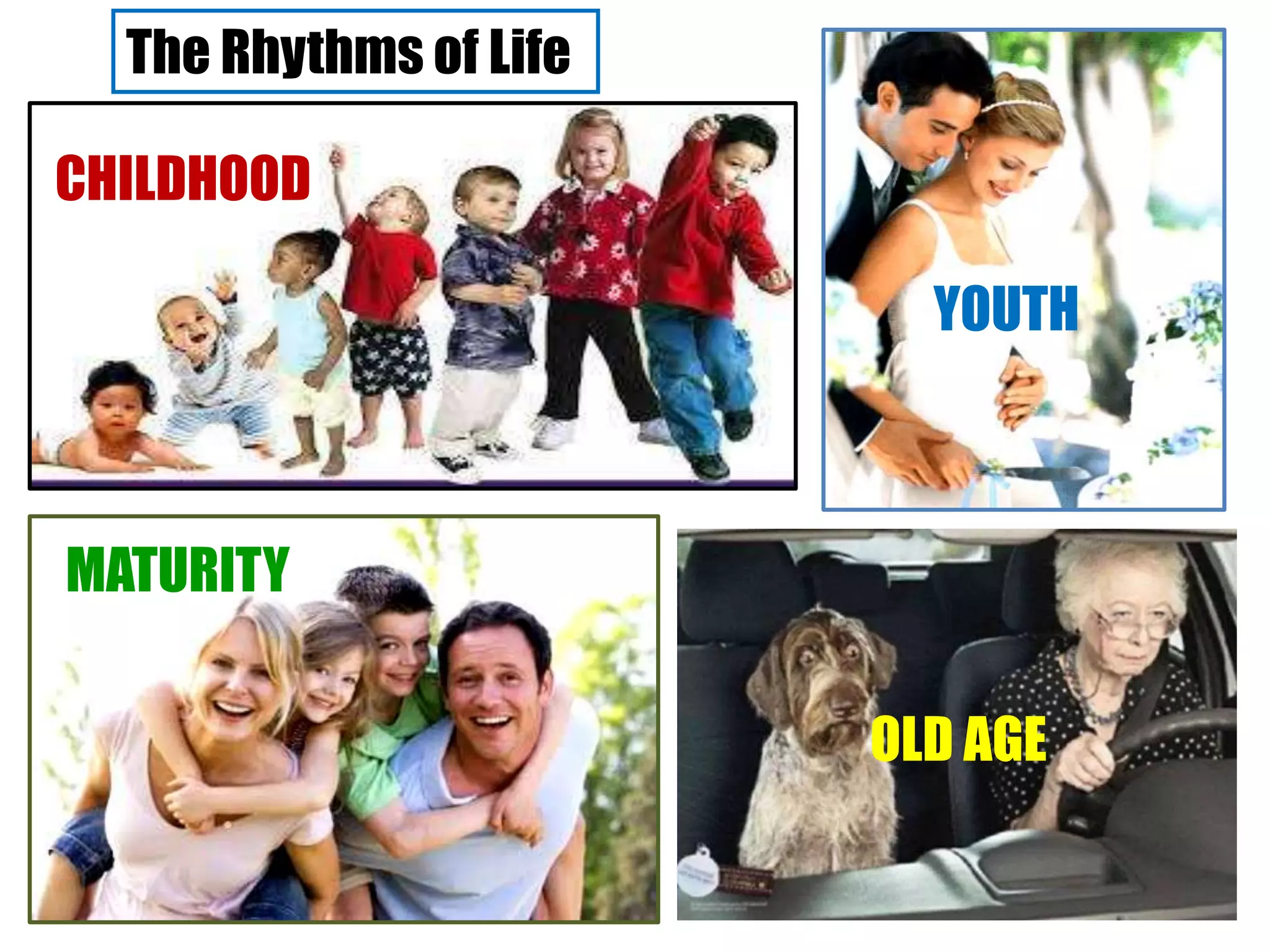
The Rhythms of Life
CHILDHOOD
YOUTH
MATURITY
OLD AGE
The Unexpected
Read Job 1:13–19, 2:7–9. What happened to Job? In what ways does his experience
reflect what happens to everyone, in one way or another, or at one time or another?
Read Job 1:13–19, 2:7–9. What happened to Job? In what ways does his experience
reflect what happens to everyone, in one way or another, or at one time or another?
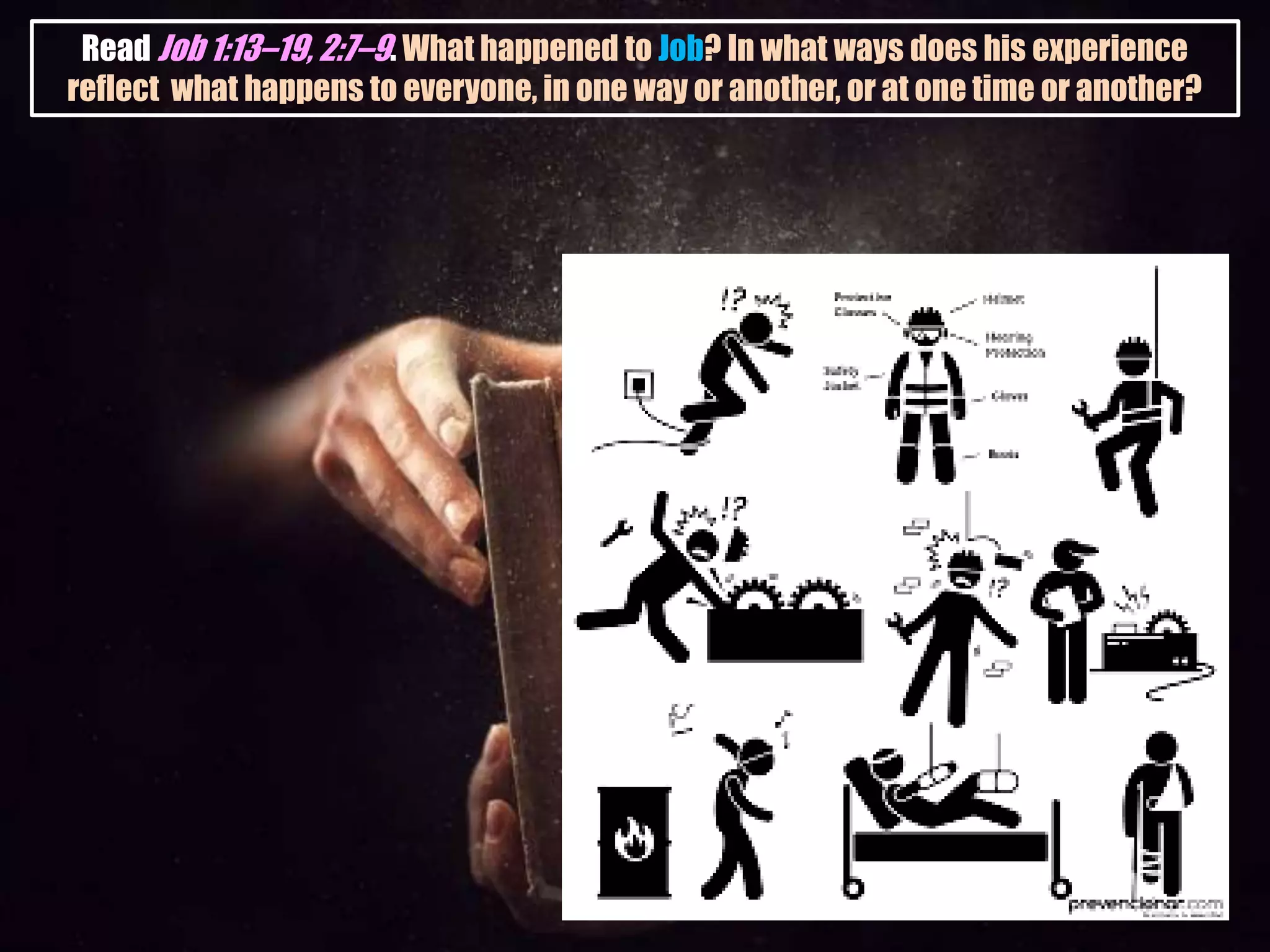
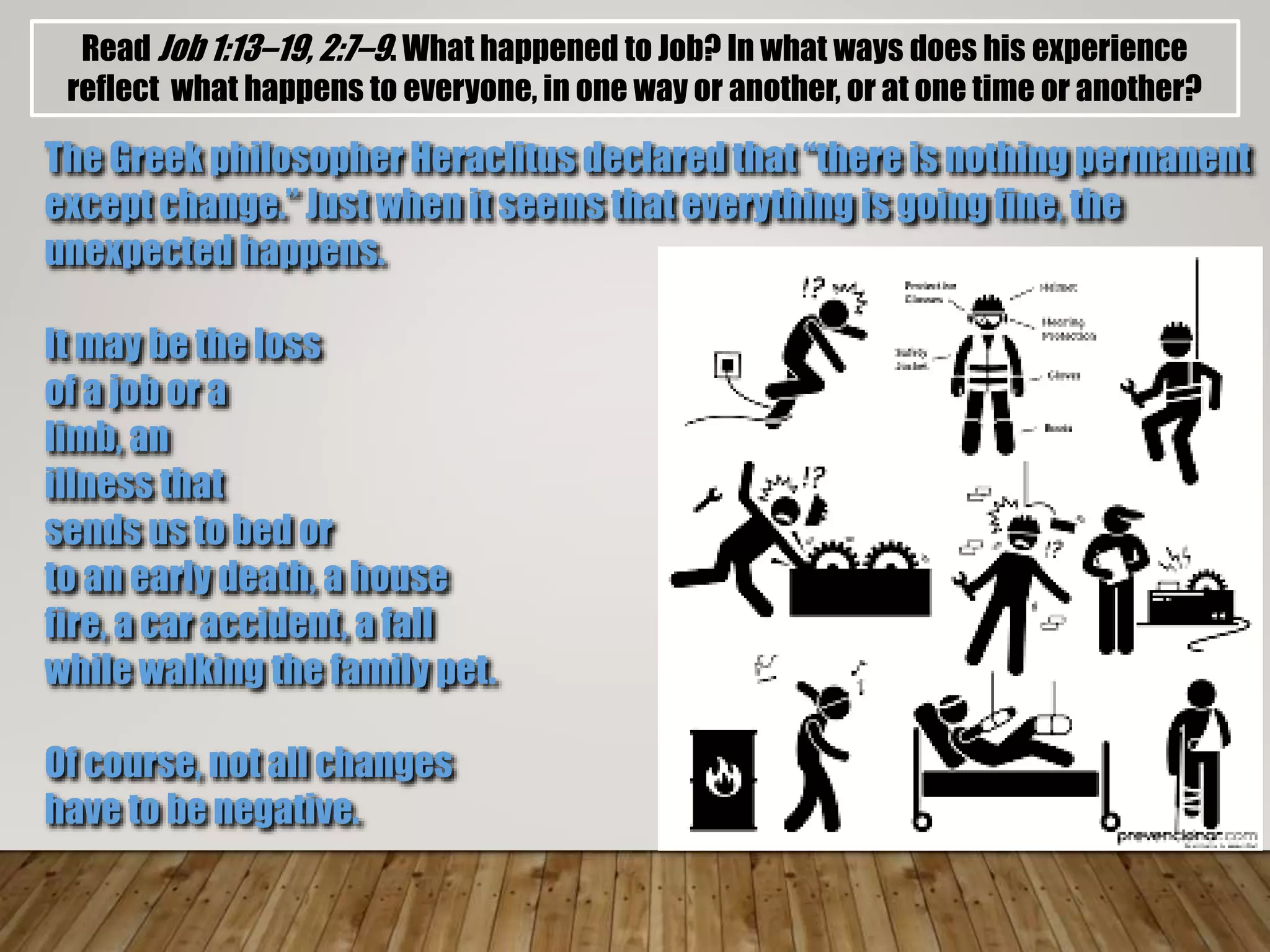
The Greek philosopher Heraclitus declared that “there is nothing permanent
except change.” Just when it seems that everything is going fine, the
unexpected happens.
It may be the loss
of a job or a
limb, an
illness that
sends us to bed or
to an early death, a house
fire, a car accident, a fall
while walking the family pet.
Of course, not all changes
have to be negative.
“Naked I came from my mother’s womb, and naked shall I return
there. The Lord gave, and the Lord has taken away; blessed be the
name of the Lord.” (Job 1:21)
We all have our own rhythms and routines. Sometimes,
unexpected changes may disrupt them.
Job’s case is an extreme one (he lost his possessions, his
laborers, his children, his health, and the support of his
wife and friends). However, everyone is subject to
possible radical changes that may change the
circumstances of our lives–for the better or for the worse.
Abel died suddenly, Joseph was sold as a slave by his own
brothers.
If we cling to God and
trust Him, we’ll be able to
face these unexpected
changes and to get the
best out of the new
circumstances
(Genesis 50:20).
“being confident of this very thing, that He who
has begun a good work in you will complete it
until the day of Jesus Christ.” (Philippians 1:6)
Transitions set the change between life’s
stages: childhood, youth, adulthood, old age.
There are transitions in our spiritual life too.
God is taking us from conversion to a full
spiritual maturity (Hebrews 5:12-14).
Let’s study the change the apostle Paul
experienced (AA, pp. 119, 120):
The inmost thoughts and emotions of his
heart were transformed by divine grace.
His nobler faculties were brought into
harmony with the eternal purposes of
God.
Christ and His righteousness became to
Saul more than the whole world.
Our lives are constantly affected by the way other
people interact with us. We also affect others as
we interact with them.
Those interactions can bring changes, either for
the better or the worse. As Christians, we must try
to always be a good influence on others (Romans
12:18).
Our positive interactions can be a strong
influence. They may affect the life of others
in such a way that they may accept Christ
thanks to His work through us.
Our relationships must be always governed
by love and kindness.
Slideshare.net/chucho1943
We invite you to
download and study
each one of the 13
lessons about this
serie:
Family Seasons
THIS SERVICE IS FREE AND
YOU CAN USE IT

01 rhythms of life

  • 1.
  • 3.
    TIME TO GROWTIME TO WORK TIME TO DIE TIME TO REST TIME TO GET UP TIEMPO DE VOLVER AL PADRE
  • 4.
    CYCLIC CHANGES • Orderand rhythm • The rhythms of life NON-CYCLIC CHANGES •Unexpected changes •Transitions •Interactions “To everything there is a season…” (Ecclesiastes 3:1). God created time and the rhythms that govern life on Earth (plants, animals and human beings). Those rhythms are the same for all creatures, but not everyone lives them the same way. There are changes that affect people differently. Those changes shape our lives.
  • 5.
    Some of themost beautiful poetry ever penned came from King Solomon: “To everything there is a season, a time for every purpose under heaven: a time to be born, and a time to die; a time to plant, and a time to pluck up what is planted; a time to kill, and a time to heal; a time to break down, and a time to build up; a time to weep, and a time to laugh; a time to mourn, and a time to dance; a time to cast away stones, and a time to gather stones; a time to embrace, and a time to refrain from embracing; a time to gain, and a time to lose; a time to keep, and a time to throw away; a time to tear, and a time to sew; a time to keep silence, and a time to speak; a time to love, and a time to hate; a time of war, and a time of peace” (Eccles. 3:1–8, NKJV).
  • 6.
    Those words captureso much of human existence—the seasons, the rhythms of our lives. Yes, our lives go through stages, through changes, and they do so from the moment we are born. Sometimes the changes are good, sometimes not; sometimes we have control over them; sometimes not. This lesson let’s look at the seasons and rhythms of our lives, especially as they impact us and our families, too. .
  • 7.
    “While the earthremains, seedtime and harvest, cold and heat, winter and summer, and day and night shall not cease.” (Genesis 8:22) According to Genesis 1, God created the Earth and He transformed it from disorder to perfection. He methodically separated day from night, divided the waters, made dry land appear, made plants germinate and created the lights in the firmament that would establish the rhythms of Earth (days, months, years). In an orderly way, He filled the Earth with living beings, and put order in their lives (to grow and to multiply). “Order is Heaven’s first law.” Although sin introduced disorder into our world, the rhythms God established in the beginning still govern our existence.
  • 8.
  • 9.
    SPRING SUMMER AUTUMNWINTER NATURE WORKS IN ORDER
  • 10.
    “The glory ofyoung men is their strength, and the splendor of old men is their gray head.” (Proverbs 20:29) As Solomon said, there’s “a time to be born, and a time to die.” (Ecclesiastes 3:2). There are some rhythms or cycles between those two moments of our lives: Childhood (Judges 13:24; Luke 2:40) Youth (Psalm 71:5; 1 Timothy 4:12) Adulthood (Genesis 41:46; Acts 7:23) Old age (Psalm 90:10; Philemon 1:9) Those rhythms are the same for everyone, but not everyone lives them the same way. We are all different and we’re living in different stages. However, everyone is valuable and has something to give.
  • 11.
    The Rhythms ofLife CHILDHOOD YOUTH MATURITY OLD AGE
  • 12.
  • 13.
    Read Job 1:13–19,2:7–9. What happened to Job? In what ways does his experience reflect what happens to everyone, in one way or another, or at one time or another?
  • 14.
    Read Job 1:13–19,2:7–9. What happened to Job? In what ways does his experience reflect what happens to everyone, in one way or another, or at one time or another? The Greek philosopher Heraclitus declared that “there is nothing permanent except change.” Just when it seems that everything is going fine, the unexpected happens. It may be the loss of a job or a limb, an illness that sends us to bed or to an early death, a house fire, a car accident, a fall while walking the family pet. Of course, not all changes have to be negative.
  • 15.
    “Naked I camefrom my mother’s womb, and naked shall I return there. The Lord gave, and the Lord has taken away; blessed be the name of the Lord.” (Job 1:21) We all have our own rhythms and routines. Sometimes, unexpected changes may disrupt them. Job’s case is an extreme one (he lost his possessions, his laborers, his children, his health, and the support of his wife and friends). However, everyone is subject to possible radical changes that may change the circumstances of our lives–for the better or for the worse. Abel died suddenly, Joseph was sold as a slave by his own brothers. If we cling to God and trust Him, we’ll be able to face these unexpected changes and to get the best out of the new circumstances (Genesis 50:20).
  • 16.
    “being confident ofthis very thing, that He who has begun a good work in you will complete it until the day of Jesus Christ.” (Philippians 1:6) Transitions set the change between life’s stages: childhood, youth, adulthood, old age. There are transitions in our spiritual life too. God is taking us from conversion to a full spiritual maturity (Hebrews 5:12-14). Let’s study the change the apostle Paul experienced (AA, pp. 119, 120): The inmost thoughts and emotions of his heart were transformed by divine grace. His nobler faculties were brought into harmony with the eternal purposes of God. Christ and His righteousness became to Saul more than the whole world.
  • 17.
    Our lives areconstantly affected by the way other people interact with us. We also affect others as we interact with them. Those interactions can bring changes, either for the better or the worse. As Christians, we must try to always be a good influence on others (Romans 12:18). Our positive interactions can be a strong influence. They may affect the life of others in such a way that they may accept Christ thanks to His work through us. Our relationships must be always governed by love and kindness.
  • 19.
    Slideshare.net/chucho1943 We invite youto download and study each one of the 13 lessons about this serie: Family Seasons THIS SERVICE IS FREE AND YOU CAN USE IT