♫ Turn on your speakers!
CLICK TO ADVANCE SLIDES


Copyright © 2009 Tommy's Window. All Rights Reserved
"The everlasting God, the Lord, the Creator of the ends of the earth …
     gives power to the weak, and to those who have no might He
 increases strength. Even the youths shall faint and be weary, and the
   young men shall utterly fall, but those who wait on the Lord shall
 renew their strength; they shall mount up with wings like eagles, they
      shall run and not be weary, they shall walk and not faint"
                          (Isaiah 40:28-31).
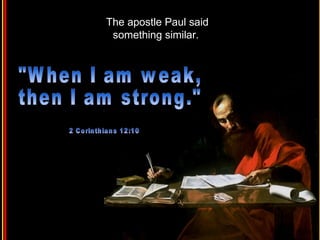
The apostle Paul said
 something similar.
It's interesting to note that Paul wrote those words to the Greeks, who
       exalted intellect and physical beauty and prowess—man and his
                achievements—and had no use for a weakling.
Yet we know that Paul had some physical impairment, his "thorn in the flesh,"
 as he called it (2 Corinthians 12:7), and the Greeks said of him, "His bodily
  presence is weak, and his speech contemptible" (2 Corinthians 10:10).
 The fact that he had been scorned, stoned, whipped, and imprisoned didn't
  help his reputation either. In short, Paul did not at all measure up to the
                          Greeks' ideas of strength.
It's very often people who are not particularly gifted, nor highly
  trained, nor learned in man's wisdom that God is able to do the
    most with. Because they are humble, emptied of self, weak in
themselves, and depend on God for strength, He can work through
them. He supplements such weakness with His strength,
                      and they become truly strong.
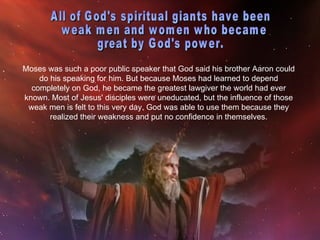
Moses was such a poor public speaker that God said his brother Aaron could
    do his speaking for him. But because Moses had learned to depend
  completely on God, he became the greatest lawgiver the world had ever
known. Most of Jesus' disciples were uneducated, but the influence of those
 weak men is felt to this very day. God was able to use them because they
       realized their weakness and put no confidence in themselves.
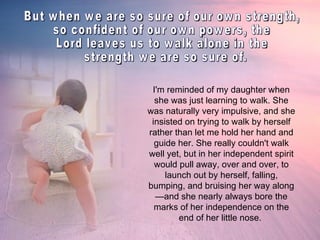
I'm reminded of my daughter when
  she was just learning to walk. She
was naturally very impulsive, and she
 insisted on trying to walk by herself
rather than let me hold her hand and
  guide her. She really couldn't walk
well yet, but in her independent spirit
  would pull away, over and over, to
     launch out by herself, falling,
bumping, and bruising her way along
  —and she nearly always bore the
  marks of her independence on the
        end of her little nose.
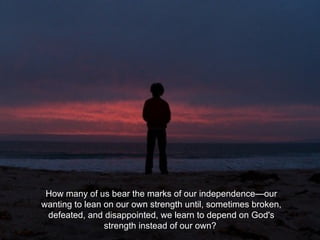
How many of us bear the marks of our independence—our
wanting to lean on our own strength until, sometimes broken,
 defeated, and disappointed, we learn to depend on God's
                strength instead of our own?
What a pity that we should depend on the human when we
  can have the divine, that we should draw only on our
  natural resources when we can have all of Heaven's
               resources at our command!
He longs to give us His
    strength, but if we insist on
walking by ourselves in our own
 strength, just as I've said, He'll
 leave us to stumble around till
  we find how little strength we
actually have. He'll walk off the
stage of our lives and leave us
       to ourselves until the
   foundations of our pride and
     confidence in the human
strength have been shaken and
       we at last come to the
  realization that our supposed
       strength is weakness.
He says, "I dwell with him who
has a contrite and humble spirit"
           (Isaiah 57:15).
Ask God for His wisdom and His
  strength, and He will give it to
  you, that the excellence of the
 power may be of God and not of
you (Matthew 7:7; 2 Corinthians 4:7).
For more PowerPoint messages visit: www.tommyswindow.com

Strength From Weakness

  • 1.
    ♫ Turn onyour speakers! CLICK TO ADVANCE SLIDES Copyright © 2009 Tommy's Window. All Rights Reserved
  • 3.
    "The everlasting God,the Lord, the Creator of the ends of the earth … gives power to the weak, and to those who have no might He increases strength. Even the youths shall faint and be weary, and the young men shall utterly fall, but those who wait on the Lord shall renew their strength; they shall mount up with wings like eagles, they shall run and not be weary, they shall walk and not faint" (Isaiah 40:28-31).
  • 4.
    The apostle Paulsaid something similar.
  • 5.
    It's interesting tonote that Paul wrote those words to the Greeks, who exalted intellect and physical beauty and prowess—man and his achievements—and had no use for a weakling. Yet we know that Paul had some physical impairment, his "thorn in the flesh," as he called it (2 Corinthians 12:7), and the Greeks said of him, "His bodily presence is weak, and his speech contemptible" (2 Corinthians 10:10). The fact that he had been scorned, stoned, whipped, and imprisoned didn't help his reputation either. In short, Paul did not at all measure up to the Greeks' ideas of strength.
  • 7.
    It's very oftenpeople who are not particularly gifted, nor highly trained, nor learned in man's wisdom that God is able to do the most with. Because they are humble, emptied of self, weak in themselves, and depend on God for strength, He can work through them. He supplements such weakness with His strength, and they become truly strong.
  • 8.
    Moses was sucha poor public speaker that God said his brother Aaron could do his speaking for him. But because Moses had learned to depend completely on God, he became the greatest lawgiver the world had ever known. Most of Jesus' disciples were uneducated, but the influence of those weak men is felt to this very day. God was able to use them because they realized their weakness and put no confidence in themselves.
  • 9.
    I'm reminded ofmy daughter when she was just learning to walk. She was naturally very impulsive, and she insisted on trying to walk by herself rather than let me hold her hand and guide her. She really couldn't walk well yet, but in her independent spirit would pull away, over and over, to launch out by herself, falling, bumping, and bruising her way along —and she nearly always bore the marks of her independence on the end of her little nose.
  • 10.
    How many ofus bear the marks of our independence—our wanting to lean on our own strength until, sometimes broken, defeated, and disappointed, we learn to depend on God's strength instead of our own?
  • 11.
    What a pitythat we should depend on the human when we can have the divine, that we should draw only on our natural resources when we can have all of Heaven's resources at our command!
  • 12.
    He longs togive us His strength, but if we insist on walking by ourselves in our own strength, just as I've said, He'll leave us to stumble around till we find how little strength we actually have. He'll walk off the stage of our lives and leave us to ourselves until the foundations of our pride and confidence in the human strength have been shaken and we at last come to the realization that our supposed strength is weakness.
  • 13.
    He says, "Idwell with him who has a contrite and humble spirit" (Isaiah 57:15). Ask God for His wisdom and His strength, and He will give it to you, that the excellence of the power may be of God and not of you (Matthew 7:7; 2 Corinthians 4:7).
  • 14.
    For more PowerPointmessages visit: www.tommyswindow.com