Preview Main Idea / Reading Focus The Life of the Buddha The Teachings of Buddhism The Spread of Buddhism   Map: Spread of Buddhism Buddhism
Reading Focus How did the early life of the Buddha lead to the beginnings of Buddhism? What are the major teachings of Buddhism? What areas were affected by the spread of Buddhism? Main Idea Buddhism, which teaches people that they can escape the suffering of the world through the Buddha’s teachings, developed in India and spread to other parts of Asia and the world. Buddhism
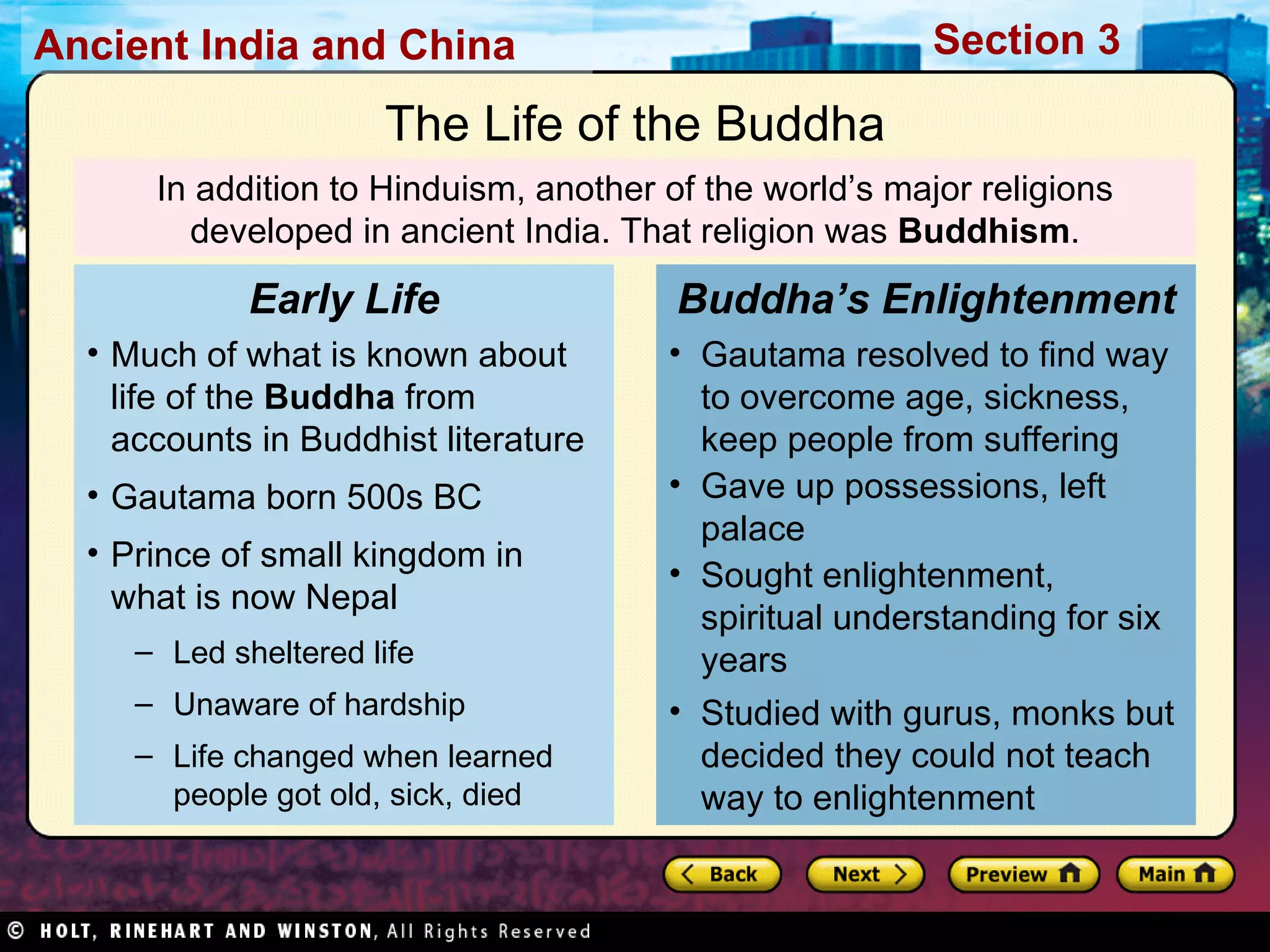
In addition to Hinduism, another of the world’s major religions developed in ancient India. That religion was  Buddhism . The Life of the Buddha Much of what is known about life of the  Buddha  from accounts in Buddhist literature Gautama born 500s BC Prince of small kingdom in what is now Nepal Led sheltered life Unaware of hardship  Life changed when learned people got old, sick, died Early Life Gautama resolved to find way to overcome age, sickness, keep people from suffering Gave up possessions, left palace Sought enlightenment, spiritual understanding for six years Studied with gurus, monks but decided they could not teach way to enlightenment Buddha’s Enlightenment
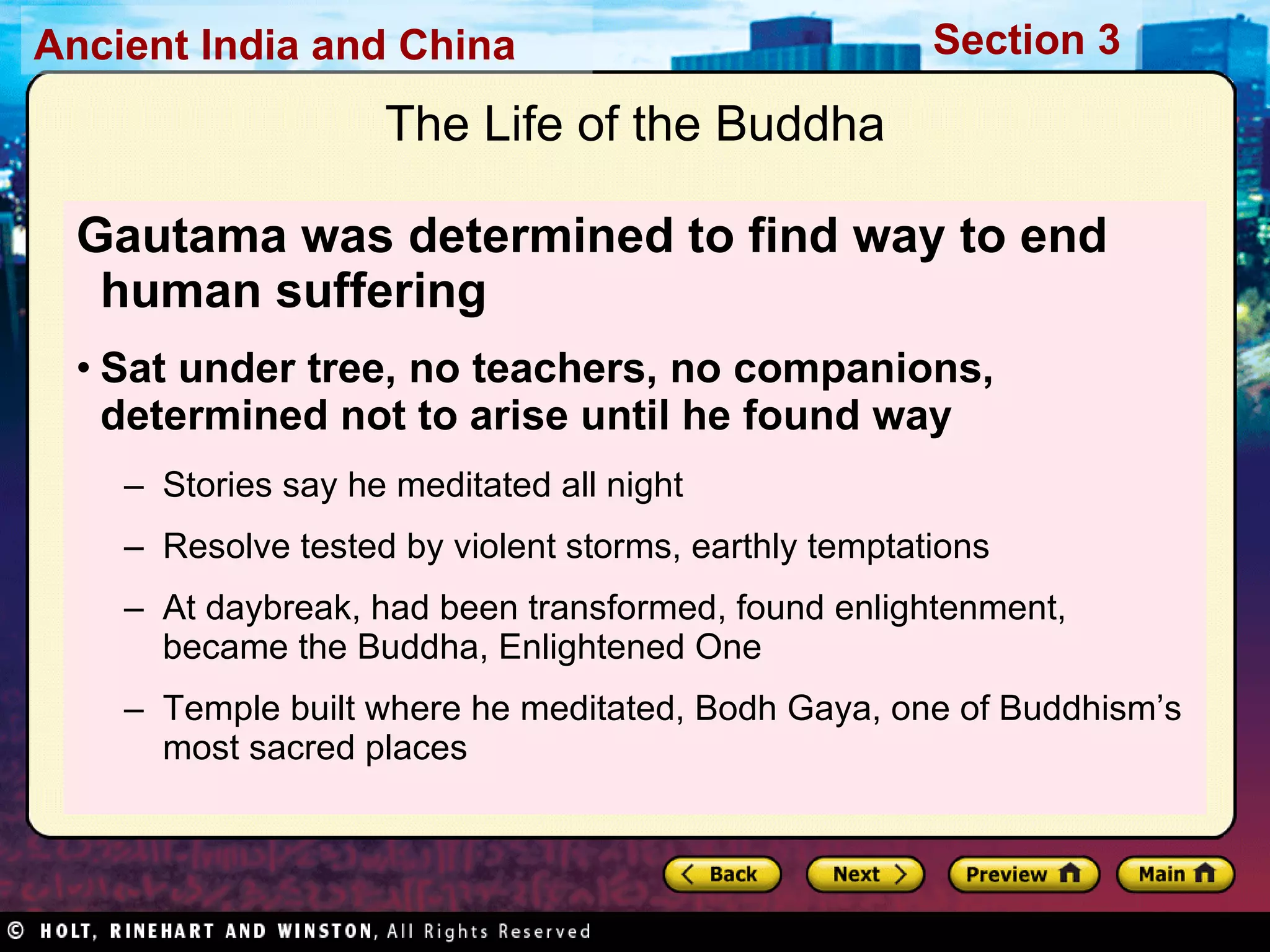
Gautama was determined to find way to end human suffering   Sat under tree, no teachers, no companions, determined not to arise until he found way Stories say he meditated all night Resolve tested by violent storms, earthly temptations At daybreak, had been transformed, found enlightenment, became the Buddha, Enlightened One Temple built where he meditated, Bodh Gaya, one of Buddhism’s most sacred places  The Life of the Buddha
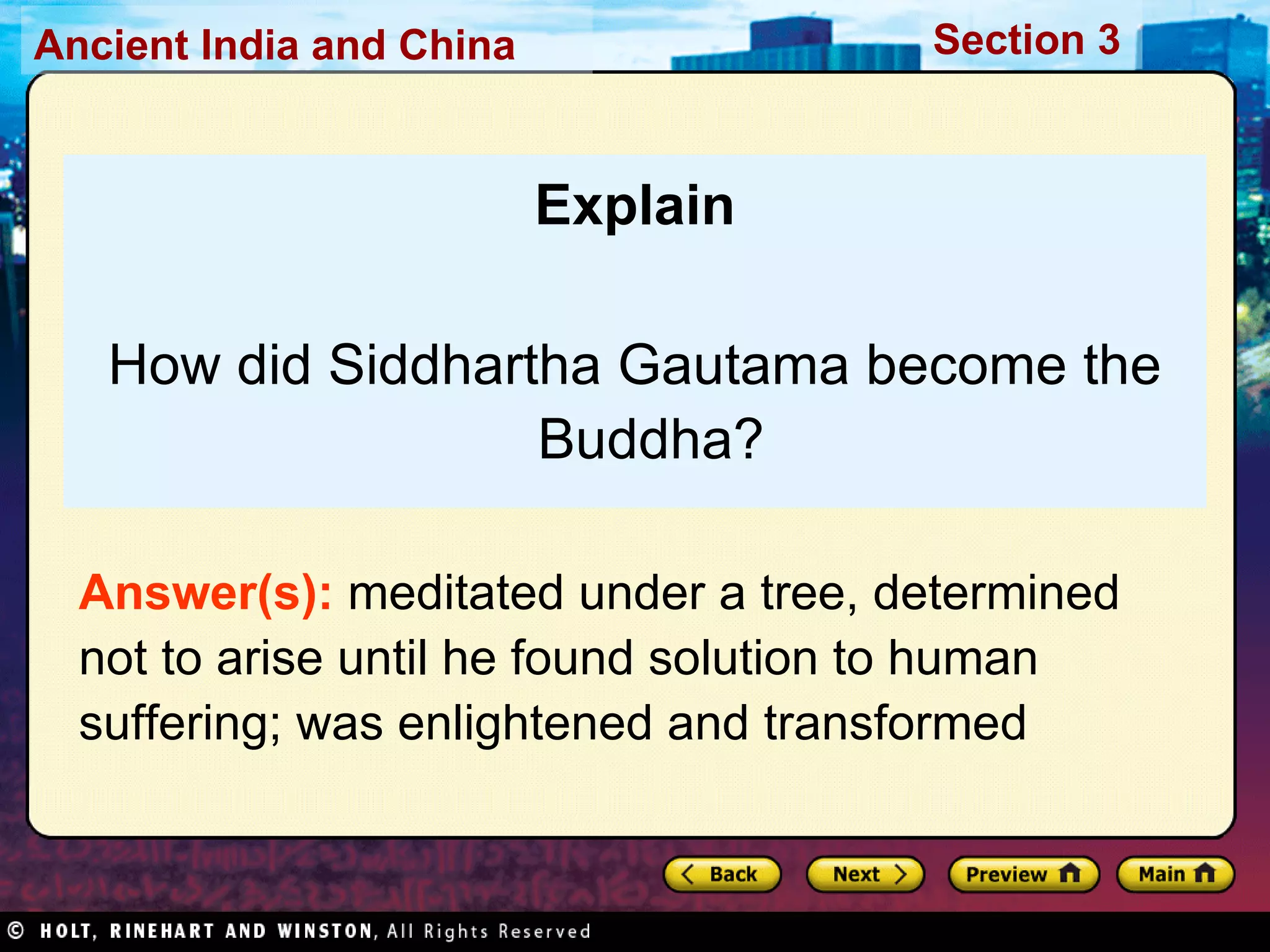
Explain How did Siddhartha Gautama become the Buddha? Answer(s):  meditated under a tree, determined not to arise until he found solution to human suffering; was enlightened and transformed
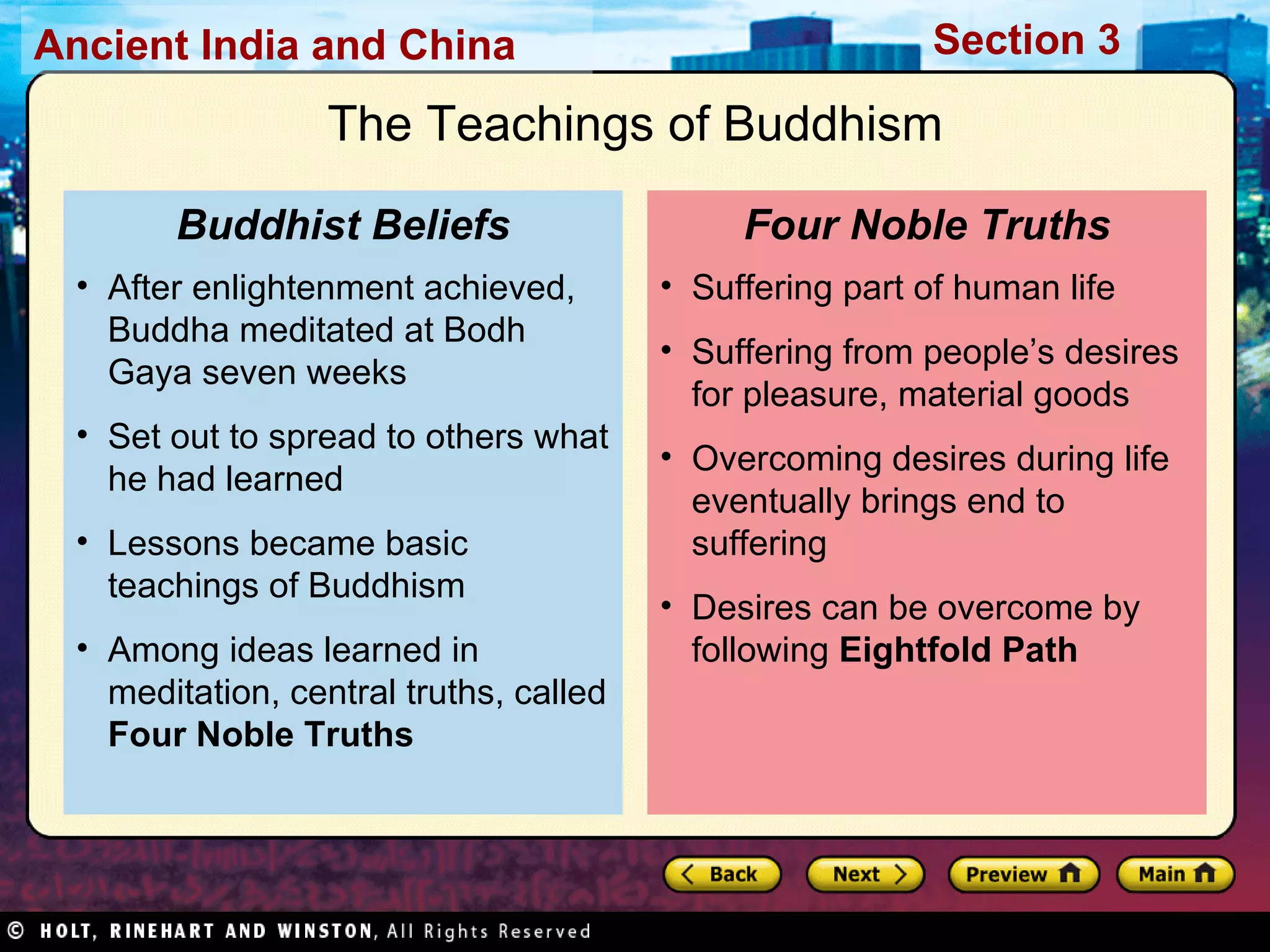
The Teachings of Buddhism Suffering part of human life Suffering from people’s desires for pleasure, material goods Overcoming desires during life eventually brings end to suffering Desires can be overcome by following  Eightfold Path Four Noble Truths After enlightenment achieved, Buddha meditated at Bodh Gaya seven weeks Set out to spread to others what he had learned Lessons became basic teachings of Buddhism  Among ideas learned in meditation, central truths, called  Four Noble Truths Buddhist Beliefs
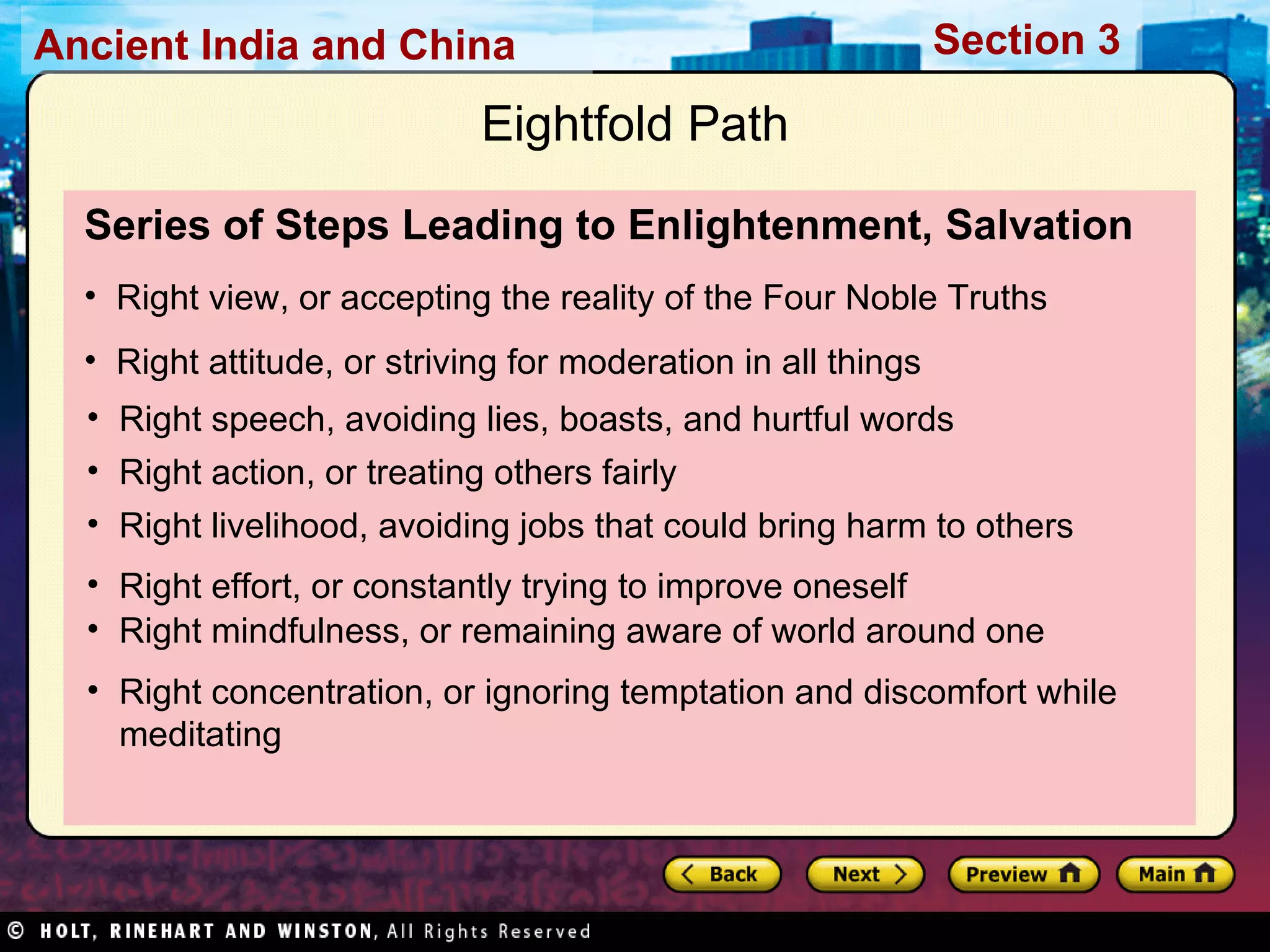
Series of Steps Leading to Enlightenment, Salvation Right view, or accepting the reality of the Four Noble Truths Right attitude, or striving for moderation in all things Eightfold Path Right speech, avoiding lies, boasts, and hurtful words Right action, or treating others fairly Right livelihood, avoiding jobs that could bring harm to others Right effort, or constantly trying to improve oneself Right mindfulness, or remaining aware of world around one Right concentration, or ignoring temptation and discomfort while meditating
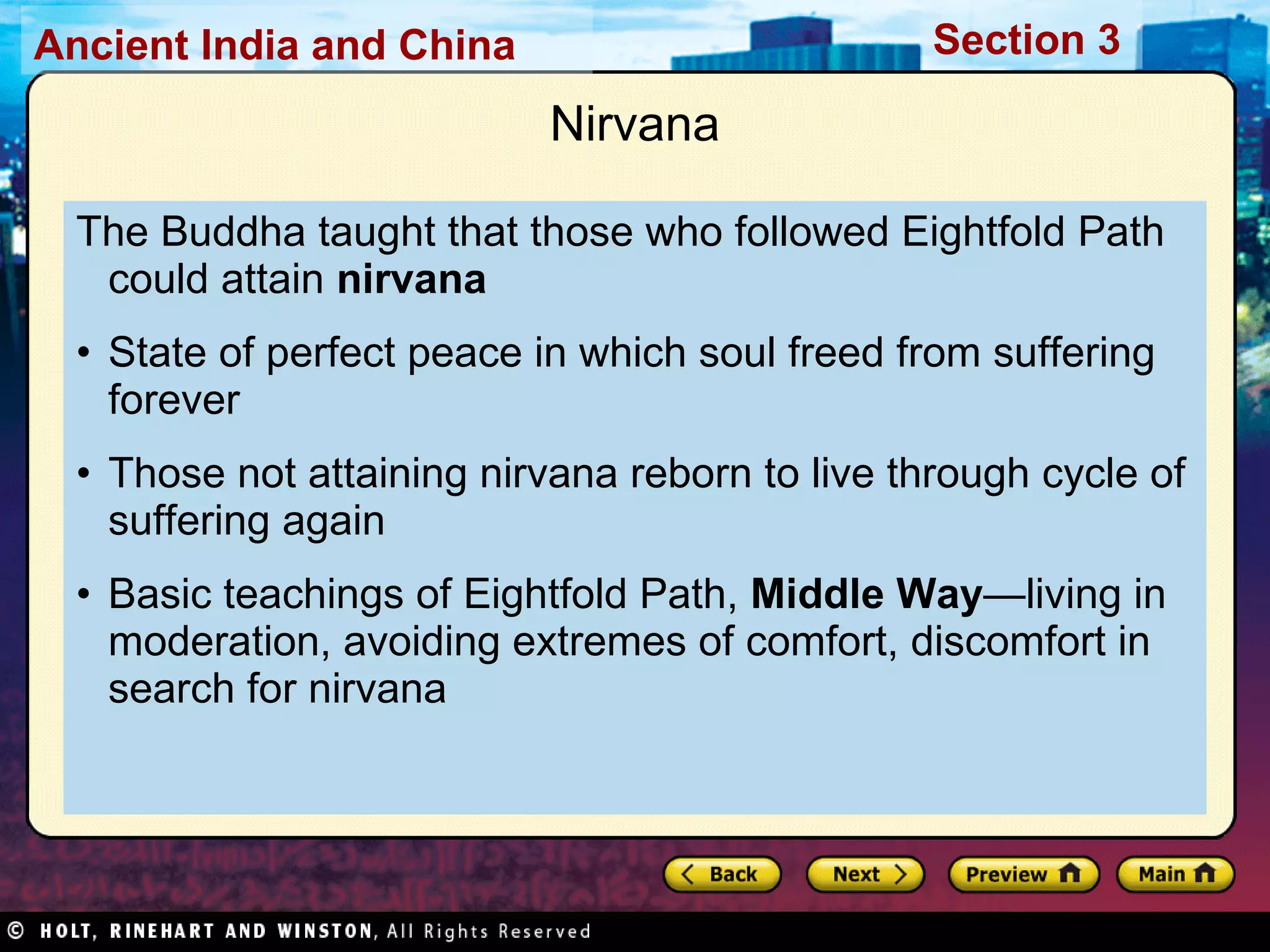
The Buddha taught that those who followed Eightfold Path could attain  nirvana State of perfect peace in which soul freed from suffering forever Those not attaining nirvana reborn to live through cycle of suffering again Basic teachings of Eightfold Path,  Middle Way — living in moderation, avoiding extremes of comfort, discomfort in search for nirvana Nirvana
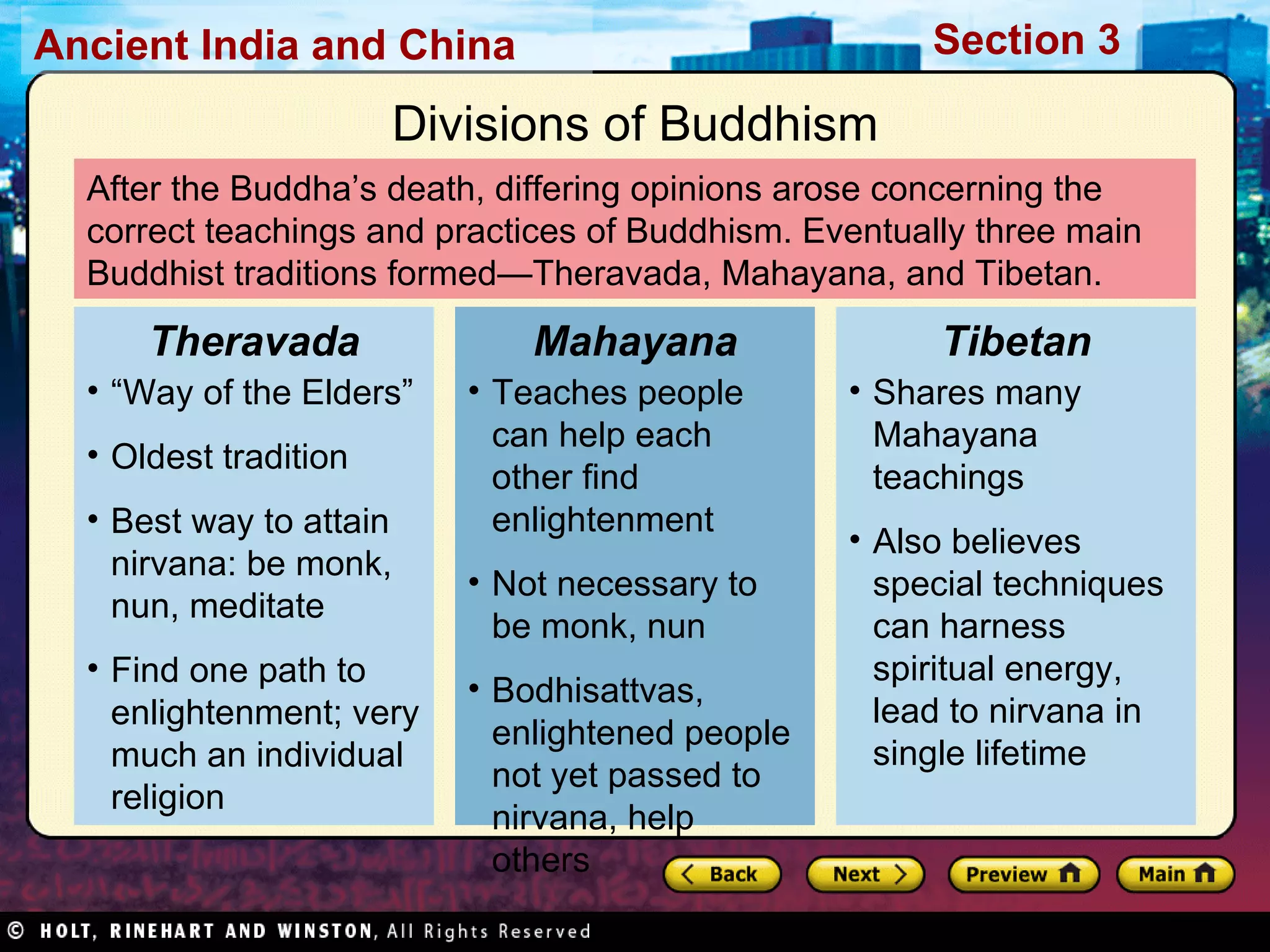
After the Buddha’s death, differing opinions arose concerning the correct teachings and practices of Buddhism. Eventually three main Buddhist traditions formed—Theravada, Mahayana, and Tibetan. Divisions of Buddhism “ Way of the Elders” Oldest tradition Best way to attain nirvana: be monk, nun, meditate Find one path to enlightenment; very much an individual religion Theravada Teaches people can help each other find enlightenment Not necessary to be monk, nun Bodhisattvas, enlightened people not yet passed to nirvana, help others Mahayana Shares many Mahayana teachings Also believes special techniques can harness spiritual energy, lead to nirvana in single lifetime  Tibetan
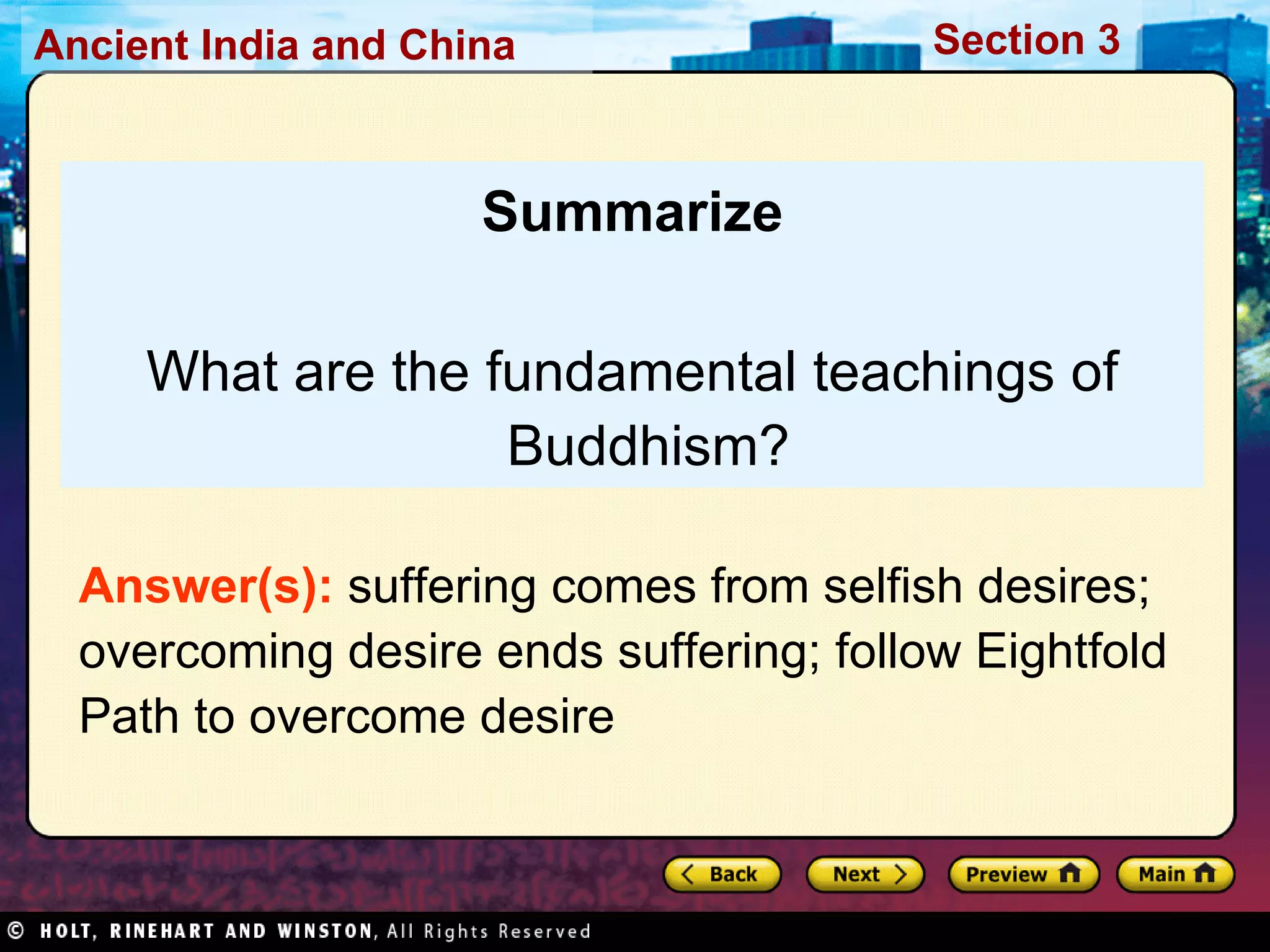
Summarize What are the fundamental teachings of Buddhism? Answer(s):  suffering comes from selfish desires; overcoming desire ends suffering; follow Eightfold Path to overcome desire
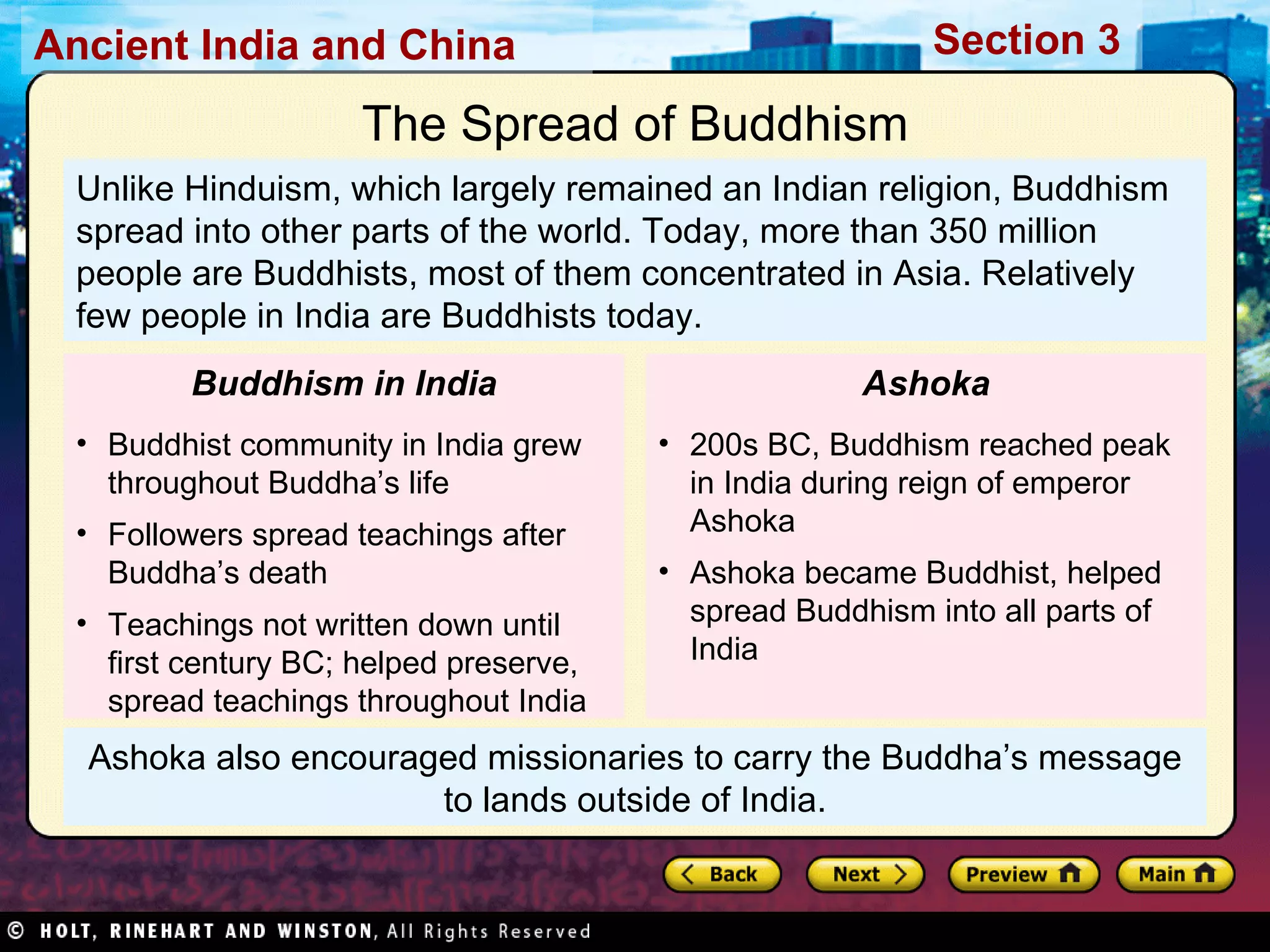
Ashoka also encouraged missionaries to carry the Buddha’s message to lands outside of India. Unlike Hinduism, which largely remained an Indian religion, Buddhism spread into other parts of the world. Today, more than 350 million people are Buddhists, most of them concentrated in Asia. Relatively few people in India are Buddhists today. The Spread of Buddhism Buddhist community in India grew throughout Buddha’s life Followers spread teachings after Buddha’s death Teachings not written down until first century BC; helped preserve, spread teachings throughout India Buddhism in India 200s BC, Buddhism reached peak in India during reign of emperor Ashoka Ashoka became Buddhist, helped spread Buddhism into all parts of India Ashoka
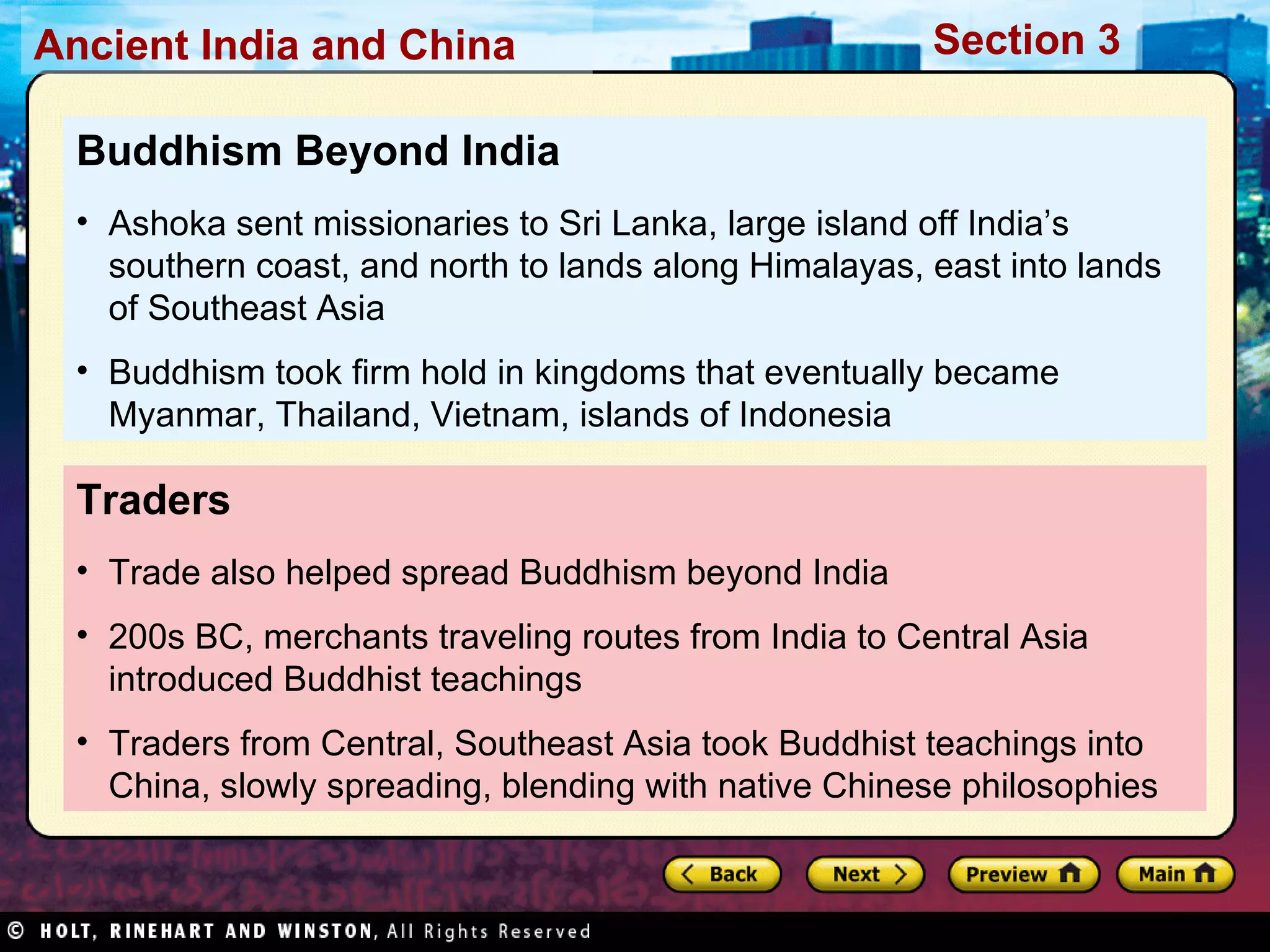
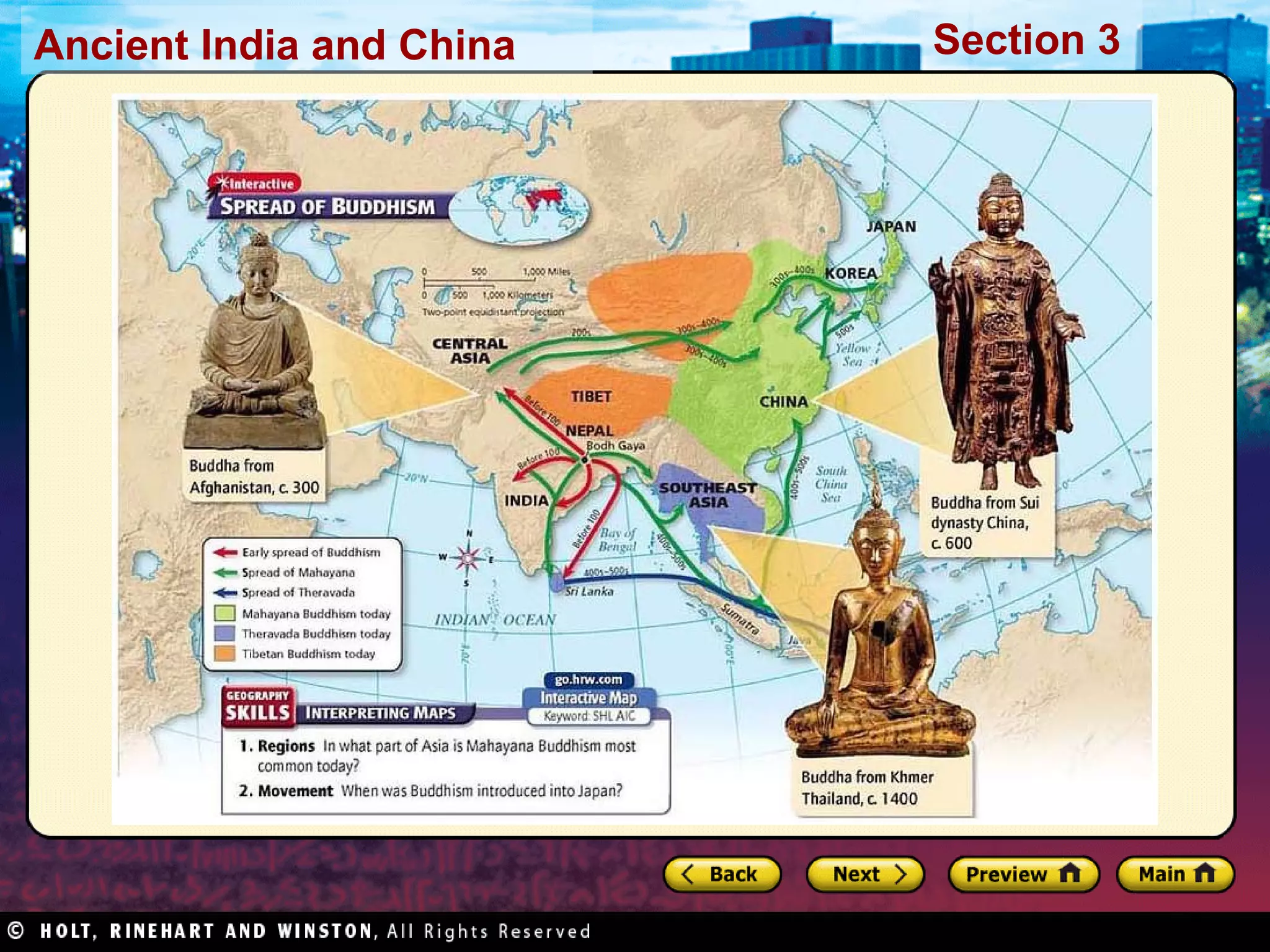
Traders Trade also helped spread Buddhism beyond India 200s BC, merchants traveling routes from India to Central Asia introduced Buddhist teachings Traders from Central, Southeast Asia took Buddhist teachings into China, slowly spreading, blending with native Chinese philosophies Buddhism Beyond India Ashoka sent missionaries to Sri Lanka, large island off India’s southern coast, and north to lands along Himalayas, east into lands of Southeast Asia Buddhism took firm hold in kingdoms that eventually became Myanmar, Thailand, Vietnam, islands of Indonesia
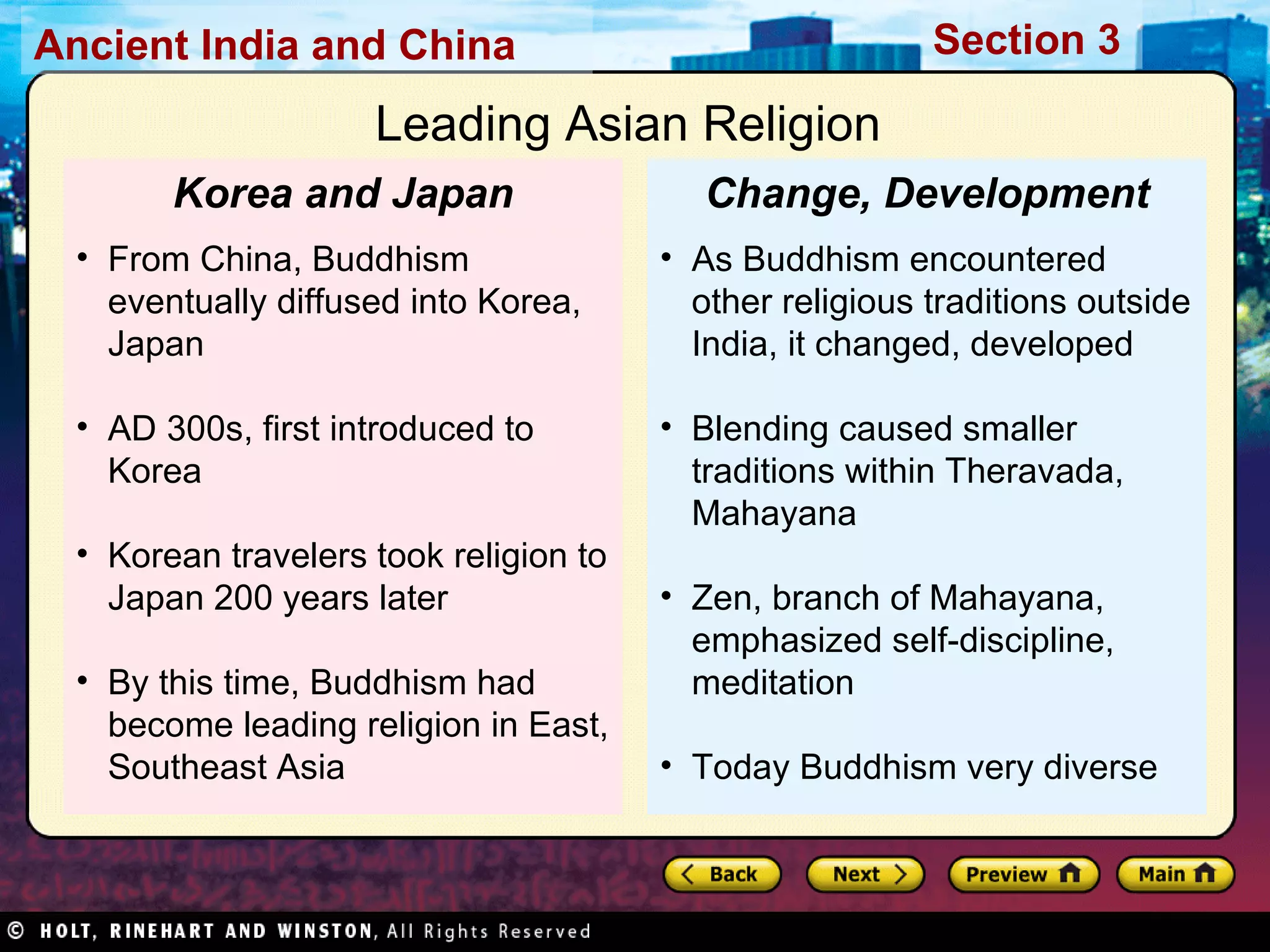
Leading Asian Religion  As Buddhism encountered other religious traditions outside India, it changed, developed Blending caused smaller traditions within Theravada, Mahayana Zen, branch of Mahayana, emphasized self-discipline, meditation Today Buddhism very diverse Change, Development From China, Buddhism eventually diffused into Korea, Japan AD 300s, first introduced to Korea Korean travelers took religion to Japan 200 years later By this time, Buddhism had become leading religion in East, Southeast Asia Korea and Japan
 
Sequence How did Buddhism spread through Asia? Answer(s):  through missionary work and trade

00 buddha

  • 1.
    Preview Main Idea/ Reading Focus The Life of the Buddha The Teachings of Buddhism The Spread of Buddhism Map: Spread of Buddhism Buddhism
  • 2.
    Reading Focus Howdid the early life of the Buddha lead to the beginnings of Buddhism? What are the major teachings of Buddhism? What areas were affected by the spread of Buddhism? Main Idea Buddhism, which teaches people that they can escape the suffering of the world through the Buddha’s teachings, developed in India and spread to other parts of Asia and the world. Buddhism
  • 3.
    In addition toHinduism, another of the world’s major religions developed in ancient India. That religion was Buddhism . The Life of the Buddha Much of what is known about life of the Buddha from accounts in Buddhist literature Gautama born 500s BC Prince of small kingdom in what is now Nepal Led sheltered life Unaware of hardship Life changed when learned people got old, sick, died Early Life Gautama resolved to find way to overcome age, sickness, keep people from suffering Gave up possessions, left palace Sought enlightenment, spiritual understanding for six years Studied with gurus, monks but decided they could not teach way to enlightenment Buddha’s Enlightenment
  • 4.
    Gautama was determinedto find way to end human suffering Sat under tree, no teachers, no companions, determined not to arise until he found way Stories say he meditated all night Resolve tested by violent storms, earthly temptations At daybreak, had been transformed, found enlightenment, became the Buddha, Enlightened One Temple built where he meditated, Bodh Gaya, one of Buddhism’s most sacred places The Life of the Buddha
  • 5.
    Explain How didSiddhartha Gautama become the Buddha? Answer(s): meditated under a tree, determined not to arise until he found solution to human suffering; was enlightened and transformed
  • 6.
    The Teachings ofBuddhism Suffering part of human life Suffering from people’s desires for pleasure, material goods Overcoming desires during life eventually brings end to suffering Desires can be overcome by following Eightfold Path Four Noble Truths After enlightenment achieved, Buddha meditated at Bodh Gaya seven weeks Set out to spread to others what he had learned Lessons became basic teachings of Buddhism Among ideas learned in meditation, central truths, called Four Noble Truths Buddhist Beliefs
  • 7.
    Series of StepsLeading to Enlightenment, Salvation Right view, or accepting the reality of the Four Noble Truths Right attitude, or striving for moderation in all things Eightfold Path Right speech, avoiding lies, boasts, and hurtful words Right action, or treating others fairly Right livelihood, avoiding jobs that could bring harm to others Right effort, or constantly trying to improve oneself Right mindfulness, or remaining aware of world around one Right concentration, or ignoring temptation and discomfort while meditating
  • 8.
    The Buddha taughtthat those who followed Eightfold Path could attain nirvana State of perfect peace in which soul freed from suffering forever Those not attaining nirvana reborn to live through cycle of suffering again Basic teachings of Eightfold Path, Middle Way — living in moderation, avoiding extremes of comfort, discomfort in search for nirvana Nirvana
  • 9.
    After the Buddha’sdeath, differing opinions arose concerning the correct teachings and practices of Buddhism. Eventually three main Buddhist traditions formed—Theravada, Mahayana, and Tibetan. Divisions of Buddhism “ Way of the Elders” Oldest tradition Best way to attain nirvana: be monk, nun, meditate Find one path to enlightenment; very much an individual religion Theravada Teaches people can help each other find enlightenment Not necessary to be monk, nun Bodhisattvas, enlightened people not yet passed to nirvana, help others Mahayana Shares many Mahayana teachings Also believes special techniques can harness spiritual energy, lead to nirvana in single lifetime Tibetan
  • 10.
    Summarize What arethe fundamental teachings of Buddhism? Answer(s): suffering comes from selfish desires; overcoming desire ends suffering; follow Eightfold Path to overcome desire
  • 11.
    Ashoka also encouragedmissionaries to carry the Buddha’s message to lands outside of India. Unlike Hinduism, which largely remained an Indian religion, Buddhism spread into other parts of the world. Today, more than 350 million people are Buddhists, most of them concentrated in Asia. Relatively few people in India are Buddhists today. The Spread of Buddhism Buddhist community in India grew throughout Buddha’s life Followers spread teachings after Buddha’s death Teachings not written down until first century BC; helped preserve, spread teachings throughout India Buddhism in India 200s BC, Buddhism reached peak in India during reign of emperor Ashoka Ashoka became Buddhist, helped spread Buddhism into all parts of India Ashoka
  • 12.
    Traders Trade alsohelped spread Buddhism beyond India 200s BC, merchants traveling routes from India to Central Asia introduced Buddhist teachings Traders from Central, Southeast Asia took Buddhist teachings into China, slowly spreading, blending with native Chinese philosophies Buddhism Beyond India Ashoka sent missionaries to Sri Lanka, large island off India’s southern coast, and north to lands along Himalayas, east into lands of Southeast Asia Buddhism took firm hold in kingdoms that eventually became Myanmar, Thailand, Vietnam, islands of Indonesia
  • 13.
    Leading Asian Religion As Buddhism encountered other religious traditions outside India, it changed, developed Blending caused smaller traditions within Theravada, Mahayana Zen, branch of Mahayana, emphasized self-discipline, meditation Today Buddhism very diverse Change, Development From China, Buddhism eventually diffused into Korea, Japan AD 300s, first introduced to Korea Korean travelers took religion to Japan 200 years later By this time, Buddhism had become leading religion in East, Southeast Asia Korea and Japan
  • 14.
  • 15.
    Sequence How didBuddhism spread through Asia? Answer(s): through missionary work and trade