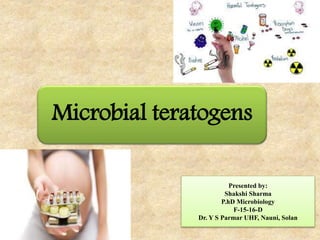
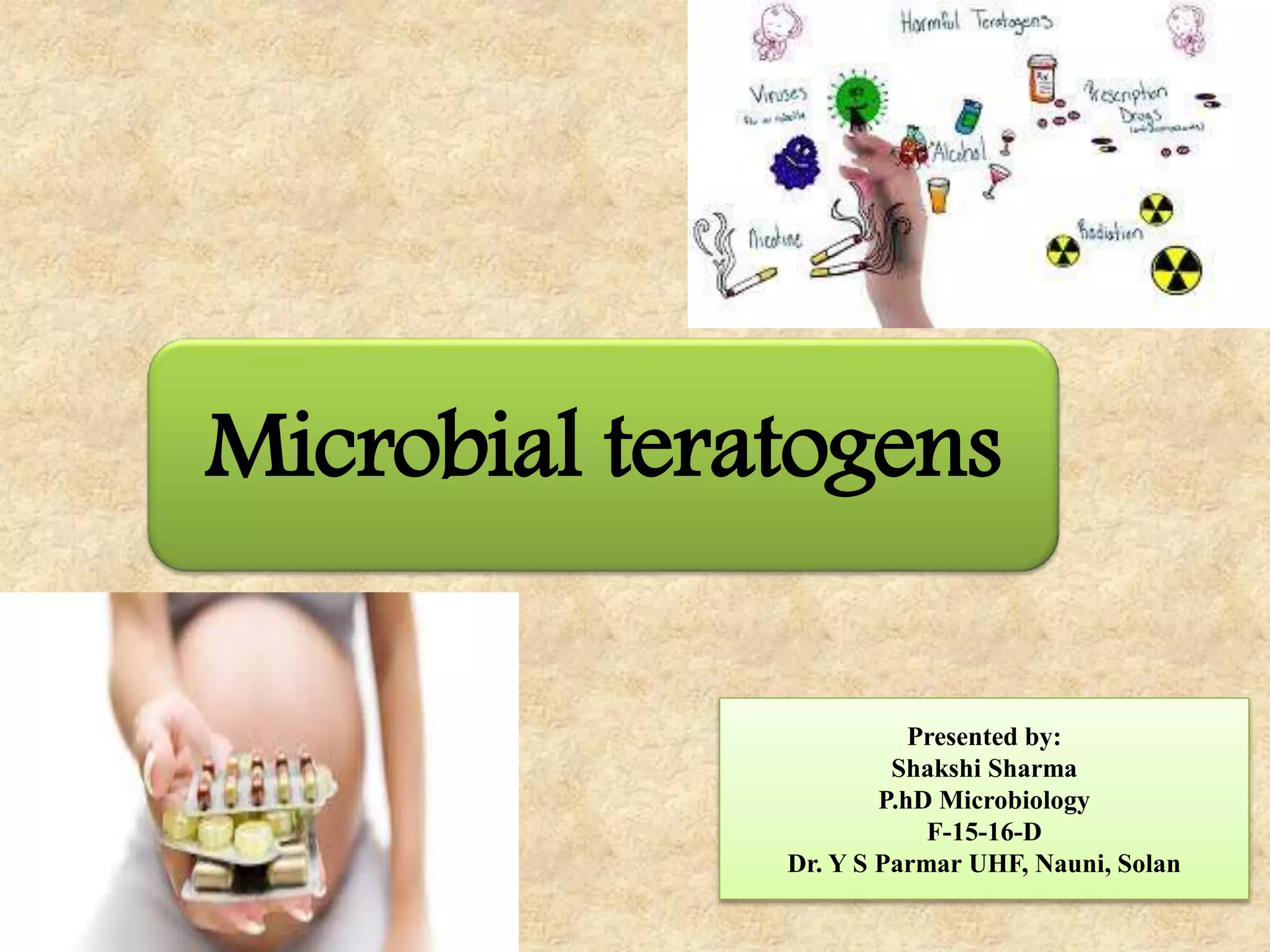
Microbial teratogens
Presented by:
Shakshi Sharma
P.hD Microbiology
F-15-16-D
Dr. Y S Parmar UHF, Nauni, Solan
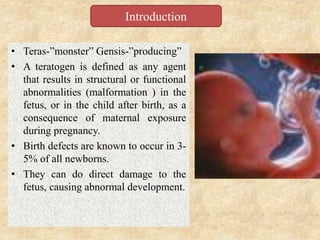
• Teras-”monster” Gensis-”producing”
• A teratogen is defined as any agent
that results in structural or functional
abnormalities (malformation ) in the
fetus, or in the child after birth, as a
consequence of maternal exposure
during pregnancy.
• Birth defects are known to occur in 3-
5% of all newborns.
• They can do direct damage to the
fetus, causing abnormal development.
Introduction
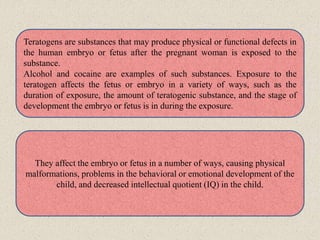
Teratogens are substances that may produce physical or functional defects in
the human embryo or fetus after the pregnant woman is exposed to the
substance.
Alcohol and cocaine are examples of such substances. Exposure to the
teratogen affects the fetus or embryo in a variety of ways, such as the
duration of exposure, the amount of teratogenic substance, and the stage of
development the embryo or fetus is in during the exposure.
They affect the embryo or fetus in a number of ways, causing physical
malformations, problems in the behavioral or emotional development of the
child, and decreased intellectual quotient (IQ) in the child.
History
• The word teratogen originates from the
Greek word for monster, teratos, Isidore
Geoffroy Saint-Hilaire, a physician from
Paris, France, defined it in 1932 .
• People had sought explanations for
abnormal human and animal
development, however, for centuries,
and they had developed different
theories about the causes for the
abnormalities.
• The study of teratology has interested
both developmental biologists and
physicians alike.
• Teratogens are classified into four types:
1. physical agents,
2. metabolic conditions,
3. infection,
4. and finally, drugs and chemicals
Causes of teratogenesis
• Abnormal development may be caused by errors in
genetic programming, from environmental agents /
factors or from unknown causes that interfere with
development.
• About 7 % of all live birth defects are due to prenatal
exposure to radiation, environmental factors,
chemicals and drugs. Abnormalities caused by
genetic events, e.g. mutation in genes, structural
changes in chromosomes and aneuploidies, etc. are
called malformations
• Abnormalities caused by environmental agents are
called disruptions. The environmental factors may be
either biological (e.g. viruses and parasites) or non
biological such as physical factors (e.g. temperature,
radiation) and chemical factors (e.g. drug, chemicals
and nutritional imbalances).
The agents responsible for the disruptions are called teratogens.
Mutagens and carcinogens also are the causes of abnormal
development but their mode of action differ. Teratogens are
agents that affect the embryo at dose levels. They are harmless
to adult organisms and do not permanently damage the genetic
material. On the other hand, mutagens are agents that alter the
genes, whereas carcinogens are agents that lead to excessive
growth and loss of differentiation, generally in adult tissue.
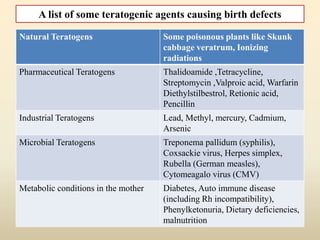
A list of some teratogenic agents causing birth defects
Natural Teratogens Some poisonous plants like Skunk
cabbage veratrum, Ionizing
radiations
Pharmaceutical Teratogens Thalidoamide ,Tetracycline,
Streptomycin ,Valproic acid, Warfarin
Diethylstilbestrol, Retionic acid,
Pencillin
Industrial Teratogens Lead, Methyl, mercury, Cadmium,
Arsenic
Microbial Teratogens Treponema pallidum (syphilis),
Coxsackie virus, Herpes simplex,
Rubella (German measles),
Cytomeagalo virus (CMV)
Metabolic conditions in the mother Diabetes, Auto immune disease
(including Rh incompatibility),
Phenylketonuria, Dietary deficiencies,
malnutrition
Microbial teratogens
• This class of teratogens includes infectious
microorganisms. These microbes affect 1-5%
of all live births and are among the leading
causes of neonatal morbidity and mortality.
General symptoms include premature birth,
growth retardation, neurological
abnormalities, damage of the eye, liver, heart
and ear along with bone lesions.
Rubella
Abnormal babies are born to women suffering from Rubella (German
measles) during the first five weeks of pregnancy. The abnormalities
include, microphthalmia, cataracts, glaucoma, cardiac malformations,
hearing loss and mental retardation. The mode of action of the pathogen
can be direct viral effects or damage to immune response.
In 1969, Rubella vaccine was introduced. Since then the cases of congenital
Rubella syndrome have decreased significantly .
Cytomegalovirus (CMV) & Herpes simplex
Cytomegalovirus infection early in gestation is fatal while infection of later
embryos might lead to blindness, deafness, cerebral palsy and mental
retardation. CMV damage including hepatitis, gestational prematurity,
anemia. Mode of action of CMV is similar to that of rubella virus, i.e. cell
lysis and immune response.
Toxoplasma
Toxoplasma goondii is a protozoan parasite carried by rabbits and
cats. It can cross the placenta causing hydrocephaly,
microphthalmia, brain lesions and multiple organ damage. Fetal
infection occurs approximately one in four thousand pregnancies.
The fetal damage caused by the teratogen is maxmium if the mother
is infected in third trimester resulting in 60% of the infected new
born.
Syphilis
Treponema pallidum is the cause of syphilis. Several hundred
children are born each year with syphilis. Early infection most often
results in spontaneous abortion. New born which survive are anemic
having spleen and liver malformations. Infection during late
pregnancy results in deafness, dental and bony abnormalities,
cardiovascular defects and skin lesions.
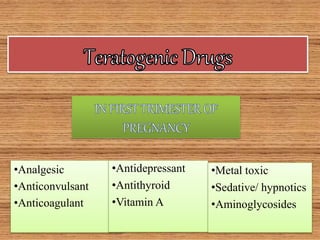
•Analgesic
•Anticonvulsant
•Anticoagulant
•Antidepressant
•Antithyroid
•Vitamin A
•Metal toxic
•Sedative/ hypnotics
•Aminoglycosides
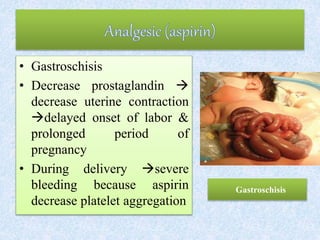
• Gastroschisis
• Decrease prostaglandin 
decrease uterine contraction
delayed onset of labor &
prolonged period of
pregnancy
• During delivery severe
bleeding because aspirin
decrease platelet aggregation
Gastroschisis
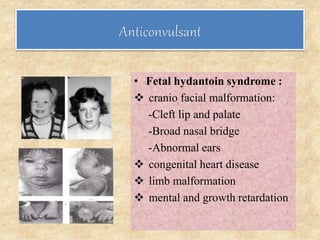
• Fetal hydantoin syndrome :
 cranio facial malformation:
-Cleft lip and palate
-Broad nasal bridge
-Abnormal ears
 congenital heart disease
 limb malformation
 mental and growth retardation
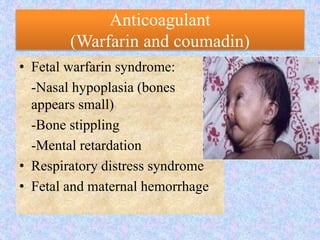
Anticoagulant
(Warfarin and coumadin)
• Fetal warfarin syndrome:
-Nasal hypoplasia (bones
appears small)
-Bone stippling
-Mental retardation
• Respiratory distress syndrome
• Fetal and maternal hemorrhage
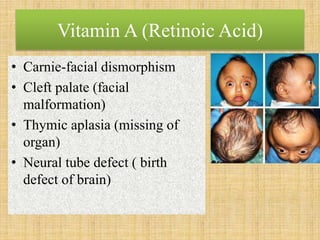
Vitamin A (Retinoic Acid)
• Carnie-facial dismorphism
• Cleft palate (facial
malformation)
• Thymic aplasia (missing of
organ)
• Neural tube defect ( birth
defect of brain)
TETRACYCLINE
ACE INHIBITORS
CHLORAMPHENICOL
AMINOGLYCOSIDES
SULFAMETHOXAZOLE
TRIMETHOPRIM
Teratogenic drug
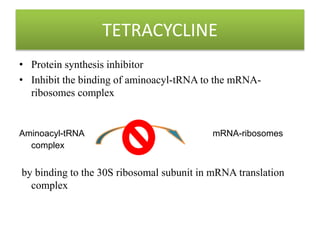
TETRACYCLINE
• Protein synthesis inhibitor
• Inhibit the binding of aminoacyl-tRNA to the mRNA-
ribosomes complex
Aminoacyl-tRNA mRNA-ribosomes
complex
by binding to the 30S ribosomal subunit in mRNA translation
complex
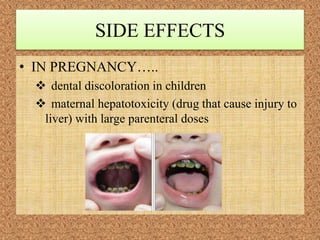
SIDE EFFECTS
• IN PREGNANCY…..
 dental discoloration in children
 maternal hepatotoxicity (drug that cause injury to
liver) with large parenteral doses
CHLORAMPHENICOL
• Bacteriostatic drug that stop bacterial growth by inhibiting
protein synthesis
• Prevent protein chain elongation by inhibiting peptidyl
transferase activity of bacterial chromosome
• Intravenous chloramphenicol use has been associated with
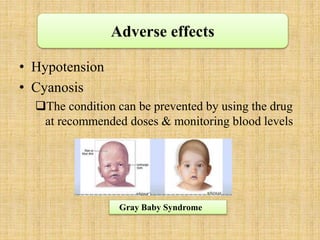
Gray Baby syndrome
This occur in newborn infants because their liver enzymes
not yet fully developed
• Hypotension
• Cyanosis
The condition can be prevented by using the drug
at recommended doses & monitoring blood levels
Gray Baby Syndrome
Adverse effects
AMINOGLYCOSIDES
• EG: GENTAMICIN, STREPTOMYCIN
• Have several potential antibiotic mechanisms
• Disrupt the integrity of the bacterial cell
membrane
SULFAMETHOXAZOLE,
TRIMETHOPRIM
• Sulfonamide is a bacteriostatic antibiotic
• Structural analogs and competitive antagonist
of PABA
• Inhibit normal bacterial utilisation of PABA
for the synthesis of folic acid
• Used as a bacteriostatic antibiotic in treatment
of urinary tract infections
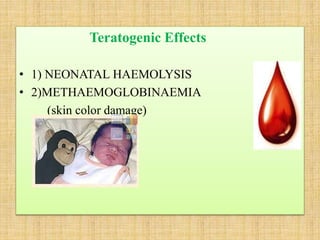
Teratogenic Effects
• 1) NEONATAL HAEMOLYSIS
• 2)METHAEMOGLOBINAEMIA
(skin color damage)
Is an Eclipse harmful during pregnancy?
• There is no evidence to suggest that an eclipse can harm a pregnant mum or
her baby.
• Eclipses are seen all over the world and in many countries there is no
tradition of staying indoors during one. However, in many cultures, an
eclipse is considered a bad omen.
• There are some superstitions that an eclipse can cause deformities such as
a cleft lip or unsightly birthmarks, but the scientific evidence does not
support this belief
• If you are out and about during an eclipse, one precaution you do need to
take is to protect your eyes. In an eclipse, it is possible to look directly at
the sun without much discomfort to your eyes at the time. But doing so can
cause severe damage to your eyes without you even knowing it.
Pregnancy and radiation exposure
• Ionizing radiation is the kind of electromagnetic radiation produced
by x-ray machines, radioactive isotopes, and radiation therapy
machines. There is potential for the embryo or fetus to be exposed
during the diagnostic or therapeutic procedures for women who are
pregnant .
• To determine the risks of a radiation exposure, it is best to request a
consultation from a health physicist who works at or consults for the
organization where the procedures were performed. In many
instances, an evaluation of the radiation exposure would not be
necessary because the radiological procedure did not expose the
developing embryo.
• Most diagnostic procedures expose the embryo to less than 50
mSv. This level of radiation exposure will not increase reproductive
risks (either birth defects or miscarriage). According to published
information, the reported dose of radiation to result in an increased
incidence of birth defects or miscarriage is above 200 mSv.
CONCLUSIONS
• BE CAREFUL IN TAKING DRUGS DURING
PREGNANCY
• ALL CLINICIANS INCLUDING PHARMACISTS
ARE RESPONSIBLE TO COUNSEL PATIENTS WITH
COMPLETE , ACCURATE AND CURRENT
INFORMATION ON THE RISKS AND BENEFITS OF
USING MEDICATIONS DURING PREGNANCY
Teratogens

Teratogens

  • 1.
    Microbial teratogens Presented by: ShakshiSharma P.hD Microbiology F-15-16-D Dr. Y S Parmar UHF, Nauni, Solan
  • 2.
    • Teras-”monster” Gensis-”producing” •A teratogen is defined as any agent that results in structural or functional abnormalities (malformation ) in the fetus, or in the child after birth, as a consequence of maternal exposure during pregnancy. • Birth defects are known to occur in 3- 5% of all newborns. • They can do direct damage to the fetus, causing abnormal development. Introduction
  • 3.
    Teratogens are substancesthat may produce physical or functional defects in the human embryo or fetus after the pregnant woman is exposed to the substance. Alcohol and cocaine are examples of such substances. Exposure to the teratogen affects the fetus or embryo in a variety of ways, such as the duration of exposure, the amount of teratogenic substance, and the stage of development the embryo or fetus is in during the exposure. They affect the embryo or fetus in a number of ways, causing physical malformations, problems in the behavioral or emotional development of the child, and decreased intellectual quotient (IQ) in the child.
  • 4.
    History • The wordteratogen originates from the Greek word for monster, teratos, Isidore Geoffroy Saint-Hilaire, a physician from Paris, France, defined it in 1932 . • People had sought explanations for abnormal human and animal development, however, for centuries, and they had developed different theories about the causes for the abnormalities. • The study of teratology has interested both developmental biologists and physicians alike.
  • 5.
    • Teratogens areclassified into four types: 1. physical agents, 2. metabolic conditions, 3. infection, 4. and finally, drugs and chemicals
  • 6.
    Causes of teratogenesis •Abnormal development may be caused by errors in genetic programming, from environmental agents / factors or from unknown causes that interfere with development. • About 7 % of all live birth defects are due to prenatal exposure to radiation, environmental factors, chemicals and drugs. Abnormalities caused by genetic events, e.g. mutation in genes, structural changes in chromosomes and aneuploidies, etc. are called malformations • Abnormalities caused by environmental agents are called disruptions. The environmental factors may be either biological (e.g. viruses and parasites) or non biological such as physical factors (e.g. temperature, radiation) and chemical factors (e.g. drug, chemicals and nutritional imbalances).
  • 7.
    The agents responsiblefor the disruptions are called teratogens. Mutagens and carcinogens also are the causes of abnormal development but their mode of action differ. Teratogens are agents that affect the embryo at dose levels. They are harmless to adult organisms and do not permanently damage the genetic material. On the other hand, mutagens are agents that alter the genes, whereas carcinogens are agents that lead to excessive growth and loss of differentiation, generally in adult tissue.
  • 8.
    A list ofsome teratogenic agents causing birth defects Natural Teratogens Some poisonous plants like Skunk cabbage veratrum, Ionizing radiations Pharmaceutical Teratogens Thalidoamide ,Tetracycline, Streptomycin ,Valproic acid, Warfarin Diethylstilbestrol, Retionic acid, Pencillin Industrial Teratogens Lead, Methyl, mercury, Cadmium, Arsenic Microbial Teratogens Treponema pallidum (syphilis), Coxsackie virus, Herpes simplex, Rubella (German measles), Cytomeagalo virus (CMV) Metabolic conditions in the mother Diabetes, Auto immune disease (including Rh incompatibility), Phenylketonuria, Dietary deficiencies, malnutrition
  • 9.
    Microbial teratogens • Thisclass of teratogens includes infectious microorganisms. These microbes affect 1-5% of all live births and are among the leading causes of neonatal morbidity and mortality. General symptoms include premature birth, growth retardation, neurological abnormalities, damage of the eye, liver, heart and ear along with bone lesions.
  • 10.
    Rubella Abnormal babies areborn to women suffering from Rubella (German measles) during the first five weeks of pregnancy. The abnormalities include, microphthalmia, cataracts, glaucoma, cardiac malformations, hearing loss and mental retardation. The mode of action of the pathogen can be direct viral effects or damage to immune response. In 1969, Rubella vaccine was introduced. Since then the cases of congenital Rubella syndrome have decreased significantly . Cytomegalovirus (CMV) & Herpes simplex Cytomegalovirus infection early in gestation is fatal while infection of later embryos might lead to blindness, deafness, cerebral palsy and mental retardation. CMV damage including hepatitis, gestational prematurity, anemia. Mode of action of CMV is similar to that of rubella virus, i.e. cell lysis and immune response.
  • 11.
    Toxoplasma Toxoplasma goondii isa protozoan parasite carried by rabbits and cats. It can cross the placenta causing hydrocephaly, microphthalmia, brain lesions and multiple organ damage. Fetal infection occurs approximately one in four thousand pregnancies. The fetal damage caused by the teratogen is maxmium if the mother is infected in third trimester resulting in 60% of the infected new born. Syphilis Treponema pallidum is the cause of syphilis. Several hundred children are born each year with syphilis. Early infection most often results in spontaneous abortion. New born which survive are anemic having spleen and liver malformations. Infection during late pregnancy results in deafness, dental and bony abnormalities, cardiovascular defects and skin lesions.
  • 12.
  • 13.
    • Gastroschisis • Decreaseprostaglandin  decrease uterine contraction delayed onset of labor & prolonged period of pregnancy • During delivery severe bleeding because aspirin decrease platelet aggregation Gastroschisis
  • 14.
    • Fetal hydantoinsyndrome :  cranio facial malformation: -Cleft lip and palate -Broad nasal bridge -Abnormal ears  congenital heart disease  limb malformation  mental and growth retardation
  • 15.
    Anticoagulant (Warfarin and coumadin) •Fetal warfarin syndrome: -Nasal hypoplasia (bones appears small) -Bone stippling -Mental retardation • Respiratory distress syndrome • Fetal and maternal hemorrhage
  • 16.
    Vitamin A (RetinoicAcid) • Carnie-facial dismorphism • Cleft palate (facial malformation) • Thymic aplasia (missing of organ) • Neural tube defect ( birth defect of brain)
  • 17.
  • 18.
    TETRACYCLINE • Protein synthesisinhibitor • Inhibit the binding of aminoacyl-tRNA to the mRNA- ribosomes complex Aminoacyl-tRNA mRNA-ribosomes complex by binding to the 30S ribosomal subunit in mRNA translation complex
  • 19.
    SIDE EFFECTS • INPREGNANCY…..  dental discoloration in children  maternal hepatotoxicity (drug that cause injury to liver) with large parenteral doses
  • 20.
    CHLORAMPHENICOL • Bacteriostatic drugthat stop bacterial growth by inhibiting protein synthesis • Prevent protein chain elongation by inhibiting peptidyl transferase activity of bacterial chromosome • Intravenous chloramphenicol use has been associated with Gray Baby syndrome This occur in newborn infants because their liver enzymes not yet fully developed
  • 21.
    • Hypotension • Cyanosis Thecondition can be prevented by using the drug at recommended doses & monitoring blood levels Gray Baby Syndrome Adverse effects
  • 22.
    AMINOGLYCOSIDES • EG: GENTAMICIN,STREPTOMYCIN • Have several potential antibiotic mechanisms • Disrupt the integrity of the bacterial cell membrane
  • 23.
    SULFAMETHOXAZOLE, TRIMETHOPRIM • Sulfonamide isa bacteriostatic antibiotic • Structural analogs and competitive antagonist of PABA • Inhibit normal bacterial utilisation of PABA for the synthesis of folic acid • Used as a bacteriostatic antibiotic in treatment of urinary tract infections
  • 24.
    Teratogenic Effects • 1)NEONATAL HAEMOLYSIS • 2)METHAEMOGLOBINAEMIA (skin color damage)
  • 25.
    Is an Eclipseharmful during pregnancy? • There is no evidence to suggest that an eclipse can harm a pregnant mum or her baby. • Eclipses are seen all over the world and in many countries there is no tradition of staying indoors during one. However, in many cultures, an eclipse is considered a bad omen. • There are some superstitions that an eclipse can cause deformities such as a cleft lip or unsightly birthmarks, but the scientific evidence does not support this belief • If you are out and about during an eclipse, one precaution you do need to take is to protect your eyes. In an eclipse, it is possible to look directly at the sun without much discomfort to your eyes at the time. But doing so can cause severe damage to your eyes without you even knowing it.
  • 26.
    Pregnancy and radiationexposure • Ionizing radiation is the kind of electromagnetic radiation produced by x-ray machines, radioactive isotopes, and radiation therapy machines. There is potential for the embryo or fetus to be exposed during the diagnostic or therapeutic procedures for women who are pregnant . • To determine the risks of a radiation exposure, it is best to request a consultation from a health physicist who works at or consults for the organization where the procedures were performed. In many instances, an evaluation of the radiation exposure would not be necessary because the radiological procedure did not expose the developing embryo. • Most diagnostic procedures expose the embryo to less than 50 mSv. This level of radiation exposure will not increase reproductive risks (either birth defects or miscarriage). According to published information, the reported dose of radiation to result in an increased incidence of birth defects or miscarriage is above 200 mSv.
  • 27.
    CONCLUSIONS • BE CAREFULIN TAKING DRUGS DURING PREGNANCY • ALL CLINICIANS INCLUDING PHARMACISTS ARE RESPONSIBLE TO COUNSEL PATIENTS WITH COMPLETE , ACCURATE AND CURRENT INFORMATION ON THE RISKS AND BENEFITS OF USING MEDICATIONS DURING PREGNANCY