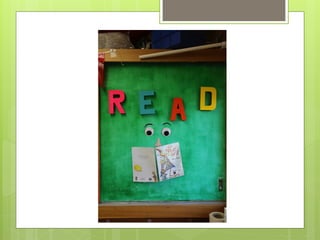
Self-Selected
Reading
Books for every reader
Jane Farrall
Jane Farrall Consulting
Sally Clendon
Clendon Consulting
Why do we read?
›  Pleasure
›  Information
›  Communication
›  Work
›  Study
›  Escape
›  Entertainment
What do we read?
›  Books
›  Facebook
›  Emails
›  Text messages
›  Tweets #AGOSCI2015
›  Websites
›  News……
What do we get from
reading?
›  Vocabulary
›  Connection
›  Communication
›  Mental Stimulation
›  Stress Reduction
›  Knowledge
›  Memory Improvement
›  Stronger Analytical Thinking Skills
›  Improved Focus and Concentration
›  Better Writing
Self-Selected Reading
›  Show students WHY they would want to
read….
›  Help them to become automatic in skill
application
›  Give them practice to become more
fluent
The BIG rules
›  For all students:
›  It isn’t self-directed if you don’t choose it
yourself
›  For conventional readers:
›  You can’t get good at it, if it is too difficult
Setting up for Self-Selected
Reading
›  20 books per student (or more)
›  Rotated frequently
›  Mix of fiction and non-fiction
›  Include different types of books:
›  Alphabet books
›  Repeated line books
›  Photo based books
›  Picture books
›  Wordless books
›  Rhyming books
›  Chapter books
›  Topic/theme-related books
›  Custom student or classroom books
›  And (most importantly) books in their areas of interest e.g.
motorbikes, make-up, animals, fairy tales
Components of Self-Selected
Reading
›  DEAR time (Drop Everything and Read)
›  Teacher Read Alouds
›  Reader’s Chair
›  Book Reviews
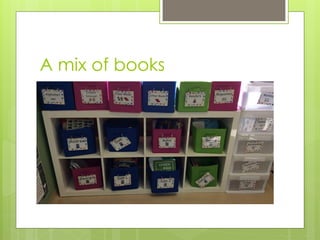
A mix of books
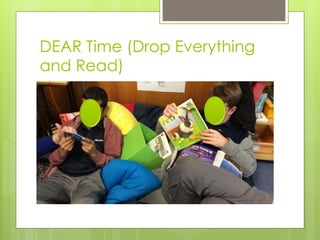
DEAR Time (Drop Everything
and Read)
For emergent students
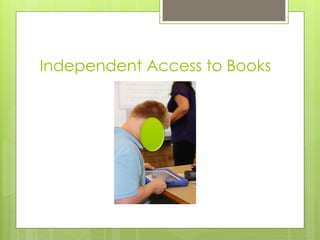
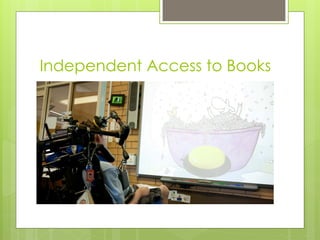
›  Give them independent access to books
›  Give them the opportunity to read books
with an adult for pleasure and enjoyment
›  Are you doing shared reading in this
block? (Remember to use AAC and
Comment, Ask, Respond)
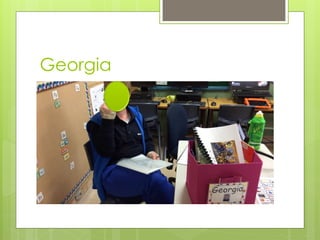
Georgia
Georgia
›  Emergent reader
›  Georgia’s tub contains
›  Custom classroom books
›  Books from Tar Heel reader on topics of
interest (such as nail polish)
›  Some picture books for older readers
Custom Classroom Books
›  Produced during predictable chart writing
›  Produced by some of the other students
for Georgia
›  Produced by the teacher for Georgia
(check out Jess Murray on Tar Heel
Reader)
Tar Heel Reader
www.tarheelreader.org
›  Thousands of books on hundreds of topics
›  Generally suitable for emergent and early
conventional readers and writers
›  Switch accessible or direct access
›  Can be downloaded as PowerPoints or
ePubs
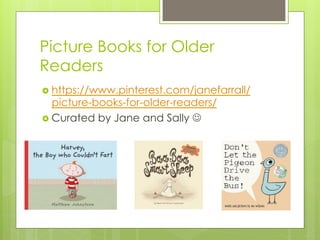
Picture Books for Older
Readers
›  https://www.pinterest.com/janefarrall/
picture-books-for-older-readers/
›  Curated by Jane and Sally J
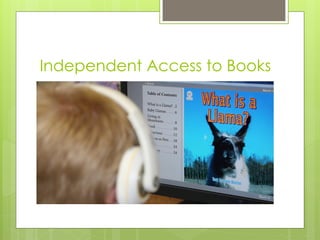
Independent Access to Books
For conventional students
›  Books at or below their reading level
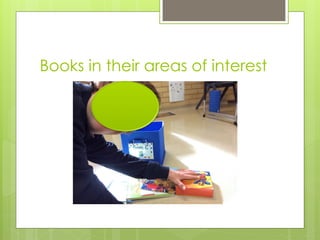
›  Books in their areas of interest
Make sure books are at or
below their reading level
›  Put appropriate books in a tub or an area
for them to choose from
›  Use Level It or similar resource to get the
reading level of books
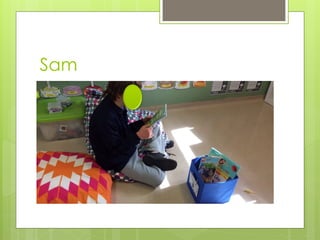
Sam
Sam
›  Early conventional reader (primer level)
›  Sam’s tub contains
›  Published books on topics of interest (Lego,
superheroes, Pixar movies)
›  Tar Heel Reader books on topics of interest
›  Some early “readers” around areas of
interest
›  Some high interest favourites e.g. Dr Seuss
›  Some picture books for older readers
Books in their areas of interest
Level It
›  www.levelitbooks.com
›  Available as an app as well
›  Provides Lexile, Guided Reading, Grade
Level Equivalent and DRA level for
thousands of books
›  Type in ISBN (or scan book’s barcode in
app)
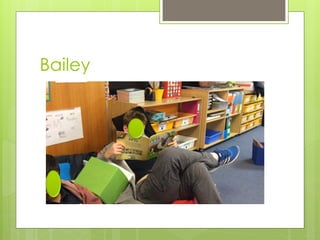
Bailey
Bailey
›  Conventional reader (Grade 2 level)
›  Bailey’s tub contains
›  Published books on topics of interest (cars, cars,
cars and transport)
›  Tar Heel Reader books on topics of interest
›  Some early “readers” around areas of interest
›  Some picture books for older readers
›  Bailey shows a preference for simpler fiction
books while focusing on silent reading,
although generally he prefers non-fiction
Aim for silent reading
›  Once students are at a Grade 1 level (or
earlier if student has CCN)
›  Talk about “inner voice”
›  Provide a range of texts for working on
silent reading
›  Write simple instructions for students to
follow as a start (read this “in your head”
and then do it)
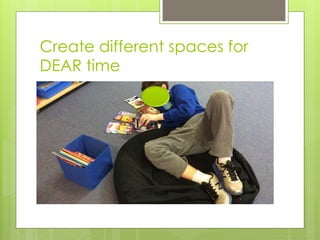
Create different spaces for
DEAR time
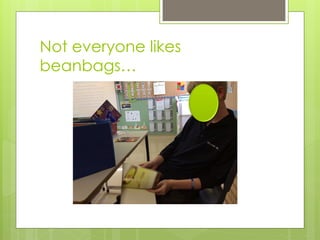
Not everyone likes
beanbags…
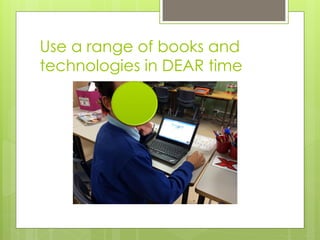
Use a range of books and
technologies in DEAR time
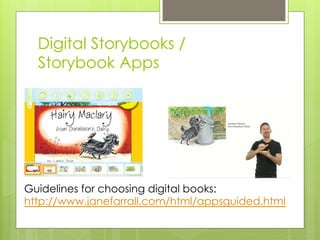
Digital Storybooks /
Storybook Apps
Guidelines for choosing digital books:
http://www.janefarrall.com/html/appsguided.html
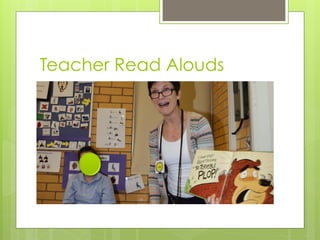
Teacher Read Alouds
Teacher Read Alouds
›  Use this as a chance to expose students
to different types of books that they might
choose to read later
›  Don’t always have to read the whole
book
›  Include read alouds in your planning
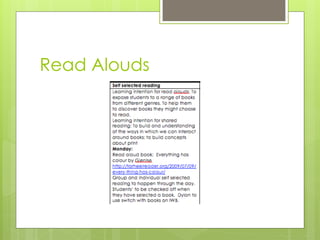
Read Alouds
Reader’s Chair & Book
Reviews
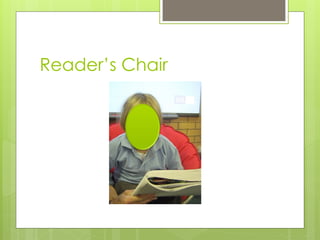
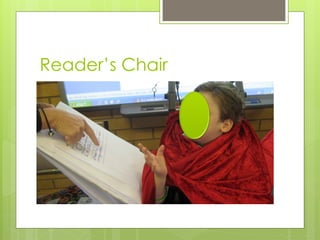
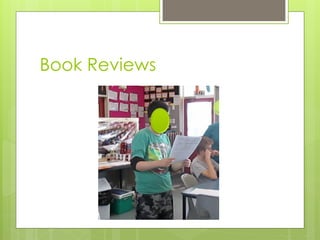
›  Students share a book they have read
recently
›  Share with other students
›  Start discussions about what books they
enjoy (and don’t enjoy)
Reader’s Chair
Reader’s Chair
Book Reviews
Self Selected Reading

Self Selected Reading

  • 1.
  • 2.
    Jane Farrall Jane FarrallConsulting Sally Clendon Clendon Consulting
  • 3.
    Why do weread? ›  Pleasure ›  Information ›  Communication ›  Work ›  Study ›  Escape ›  Entertainment
  • 4.
    What do weread? ›  Books ›  Facebook ›  Emails ›  Text messages ›  Tweets #AGOSCI2015 ›  Websites ›  News……
  • 5.
    What do weget from reading? ›  Vocabulary ›  Connection ›  Communication ›  Mental Stimulation ›  Stress Reduction ›  Knowledge ›  Memory Improvement ›  Stronger Analytical Thinking Skills ›  Improved Focus and Concentration ›  Better Writing
  • 6.
    Self-Selected Reading ›  Showstudents WHY they would want to read…. ›  Help them to become automatic in skill application ›  Give them practice to become more fluent
  • 7.
    The BIG rules › For all students: ›  It isn’t self-directed if you don’t choose it yourself ›  For conventional readers: ›  You can’t get good at it, if it is too difficult
  • 8.
    Setting up forSelf-Selected Reading ›  20 books per student (or more) ›  Rotated frequently ›  Mix of fiction and non-fiction ›  Include different types of books: ›  Alphabet books ›  Repeated line books ›  Photo based books ›  Picture books ›  Wordless books ›  Rhyming books ›  Chapter books ›  Topic/theme-related books ›  Custom student or classroom books ›  And (most importantly) books in their areas of interest e.g. motorbikes, make-up, animals, fairy tales
  • 9.
    Components of Self-Selected Reading › DEAR time (Drop Everything and Read) ›  Teacher Read Alouds ›  Reader’s Chair ›  Book Reviews
  • 10.
    A mix ofbooks
  • 11.
    DEAR Time (DropEverything and Read)
  • 12.
    For emergent students › Give them independent access to books ›  Give them the opportunity to read books with an adult for pleasure and enjoyment ›  Are you doing shared reading in this block? (Remember to use AAC and Comment, Ask, Respond)
  • 13.
  • 14.
    Georgia ›  Emergent reader › Georgia’s tub contains ›  Custom classroom books ›  Books from Tar Heel reader on topics of interest (such as nail polish) ›  Some picture books for older readers
  • 15.
    Custom Classroom Books › Produced during predictable chart writing ›  Produced by some of the other students for Georgia ›  Produced by the teacher for Georgia (check out Jess Murray on Tar Heel Reader)
  • 16.
    Tar Heel Reader www.tarheelreader.org › Thousands of books on hundreds of topics ›  Generally suitable for emergent and early conventional readers and writers ›  Switch accessible or direct access ›  Can be downloaded as PowerPoints or ePubs
  • 17.
    Picture Books forOlder Readers ›  https://www.pinterest.com/janefarrall/ picture-books-for-older-readers/ ›  Curated by Jane and Sally J
  • 18.
  • 19.
  • 20.
  • 21.
    For conventional students › Books at or below their reading level ›  Books in their areas of interest
  • 22.
    Make sure booksare at or below their reading level ›  Put appropriate books in a tub or an area for them to choose from ›  Use Level It or similar resource to get the reading level of books
  • 23.
  • 24.
    Sam ›  Early conventionalreader (primer level) ›  Sam’s tub contains ›  Published books on topics of interest (Lego, superheroes, Pixar movies) ›  Tar Heel Reader books on topics of interest ›  Some early “readers” around areas of interest ›  Some high interest favourites e.g. Dr Seuss ›  Some picture books for older readers
  • 25.
    Books in theirareas of interest
  • 26.
    Level It ›  www.levelitbooks.com › Available as an app as well ›  Provides Lexile, Guided Reading, Grade Level Equivalent and DRA level for thousands of books ›  Type in ISBN (or scan book’s barcode in app)
  • 27.
  • 28.
    Bailey ›  Conventional reader(Grade 2 level) ›  Bailey’s tub contains ›  Published books on topics of interest (cars, cars, cars and transport) ›  Tar Heel Reader books on topics of interest ›  Some early “readers” around areas of interest ›  Some picture books for older readers ›  Bailey shows a preference for simpler fiction books while focusing on silent reading, although generally he prefers non-fiction
  • 29.
    Aim for silentreading ›  Once students are at a Grade 1 level (or earlier if student has CCN) ›  Talk about “inner voice” ›  Provide a range of texts for working on silent reading ›  Write simple instructions for students to follow as a start (read this “in your head” and then do it)
  • 30.
  • 31.
  • 32.
    Use a rangeof books and technologies in DEAR time
  • 33.
    Digital Storybooks / StorybookApps Guidelines for choosing digital books: http://www.janefarrall.com/html/appsguided.html
  • 34.
  • 35.
    Teacher Read Alouds › Use this as a chance to expose students to different types of books that they might choose to read later ›  Don’t always have to read the whole book ›  Include read alouds in your planning
  • 36.
  • 37.
    Reader’s Chair &Book Reviews ›  Students share a book they have read recently ›  Share with other students ›  Start discussions about what books they enjoy (and don’t enjoy)
  • 38.
  • 39.
  • 40.