STYLES OF PRINTING
TEXTILE PRINTING 
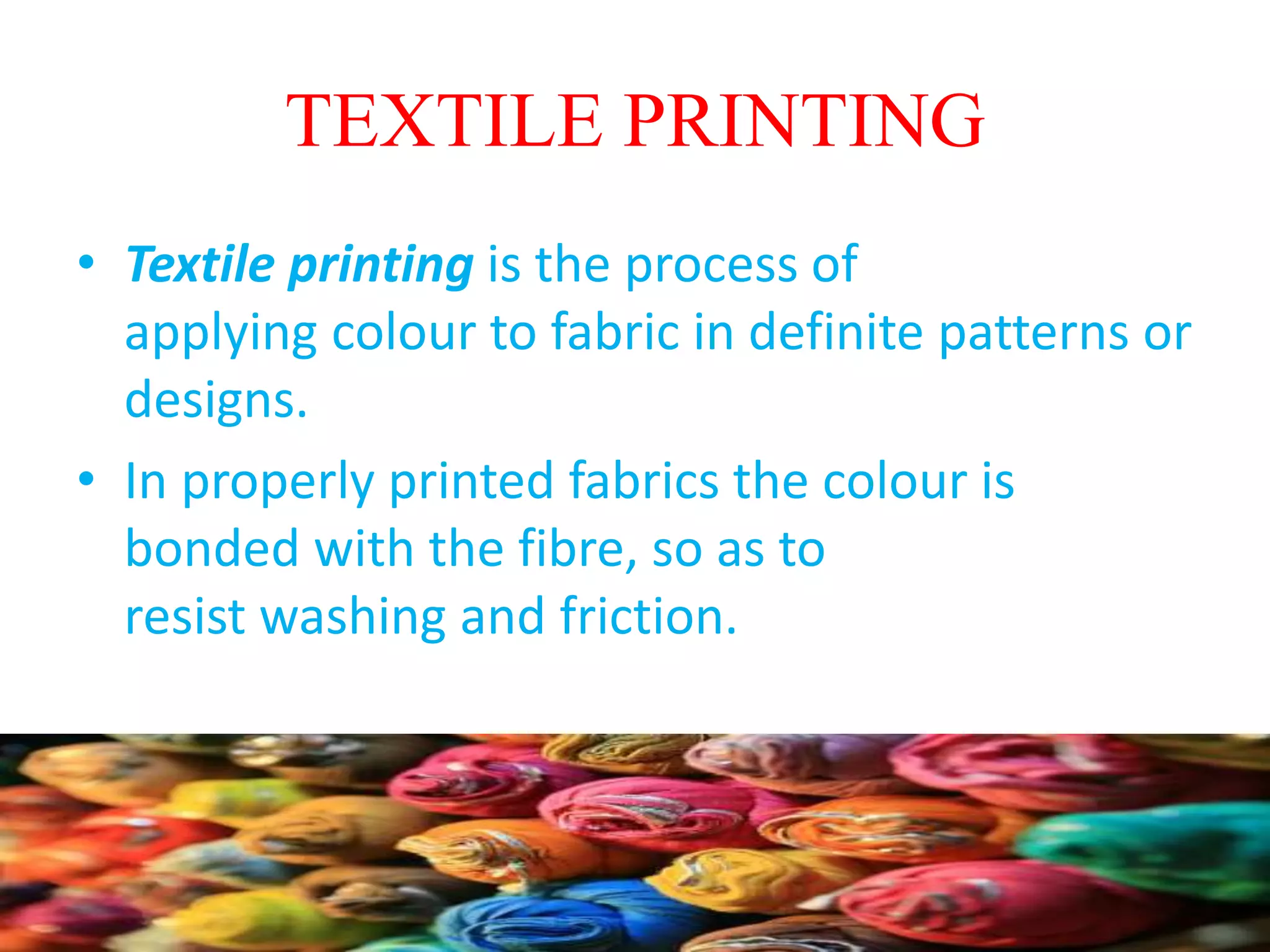
• Textile printing is the process of 
applying colour to fabric in definite patterns or 
designs. 
• In properly printed fabrics the colour is 
bonded with the fibre, so as to 
resist washing and friction.
• In printing, wooden blocks, stencils , engraved 
plates, rollers, or silk screens can be used to 
place colours on the fabric. 
• Colorants used in printing contain dyes thickened 
to prevent the colour from spreading by capillary 
attraction beyond the limits of the pattern or 
design.
• For cotton printing vat and reactive dyes are 
generally used. 
• Silk is usually printed with acid colours. 
• Wool is printed with acid or chrome dyes but 
before printing it is treated with chlorine to 
make it more receptive to colours. 
• Manmade fibres are generally printed with 
disperse and cationic dyes.
ALL STYLES OF PRINTING 
•Direct printing 
• Resist printing 
• Heat-transfer printing 
•Discharge printing 
•Mordant printing
DIRECT PRINTING 
• It is the most common approach to apply a colour pattern on 
fabric. 
• It can be done on white or a coloured fabric. 
• If done on coloured fabric, it is known as overprinting. 
• The desired pattern is produced by imprinting dye on the 
fabric in a paste form. 
• To prepare the print paste, a thickening agent is added to a 
limited amount of water and dye is dissolved in it.
• Earlier corn starch was preferred as a thickening 
agent for cotton printing. 
• Nowadays gums or alginates derived from 
seaweed are preferred because they are easier to 
wash out, do not themselves absorb any colour 
and allow better penetration of colour. 
• Most pigment printing is done without 
thickeners as the mixing up of resins, solvents 
and water itself produces thickening.
RESIST PRINTING 
• In this technique, a resist paste is imprinted on 
the fabric and then it is dyed. 
• The dye affects only those parts that are not 
covered by the resist paste. 
• After dyeing, the resist paste is removed 
leaving a pattern on a dark background.
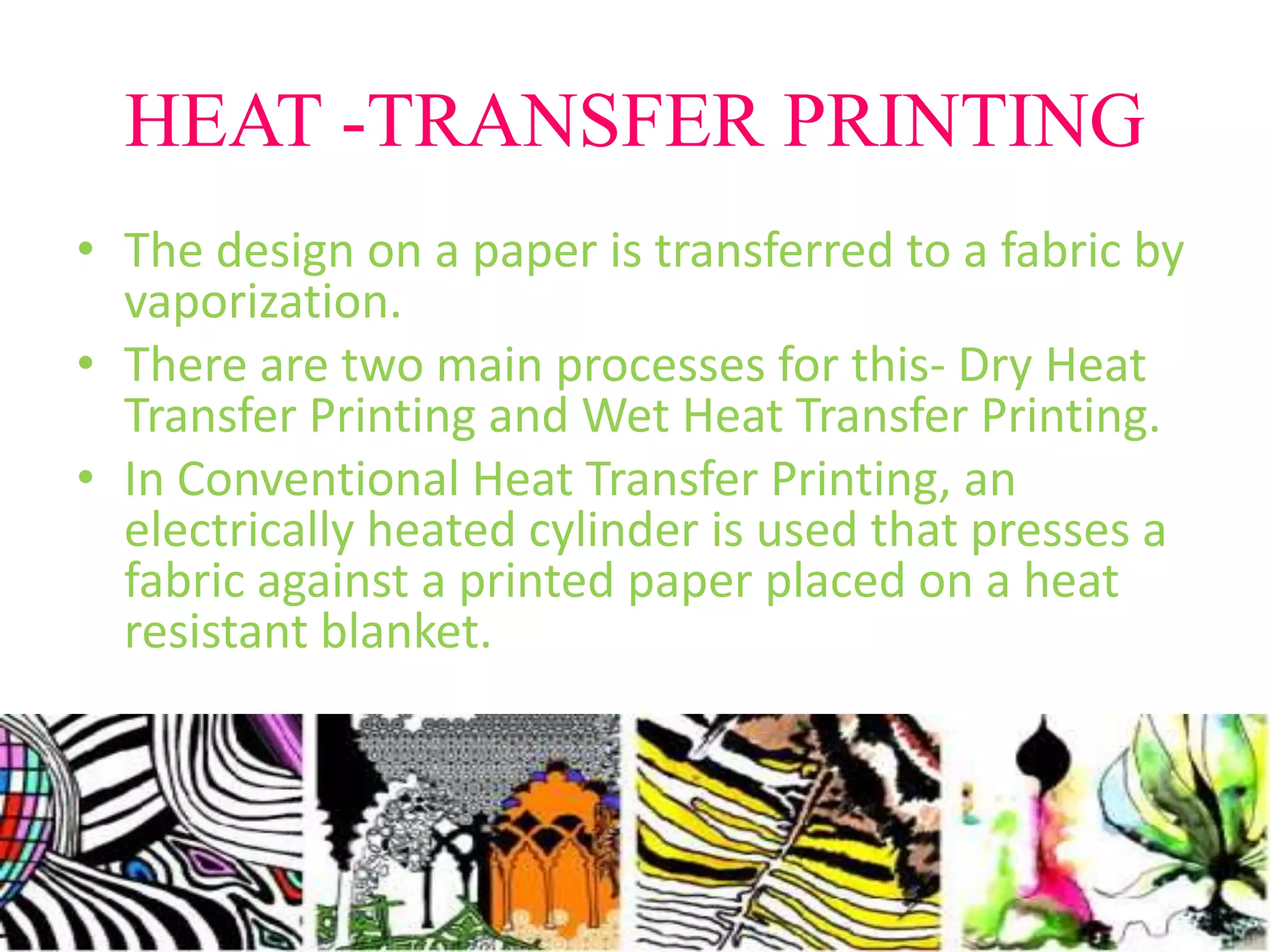
HEAT -TRANSFER PRINTING 
• The design on a paper is transferred to a fabric by 
vaporization. 
• There are two main processes for this- Dry Heat 
Transfer Printing and Wet Heat Transfer Printing. 
• In Conventional Heat Transfer Printing, an 
electrically heated cylinder is used that presses a 
fabric against a printed paper placed on a heat 
resistant blanket.
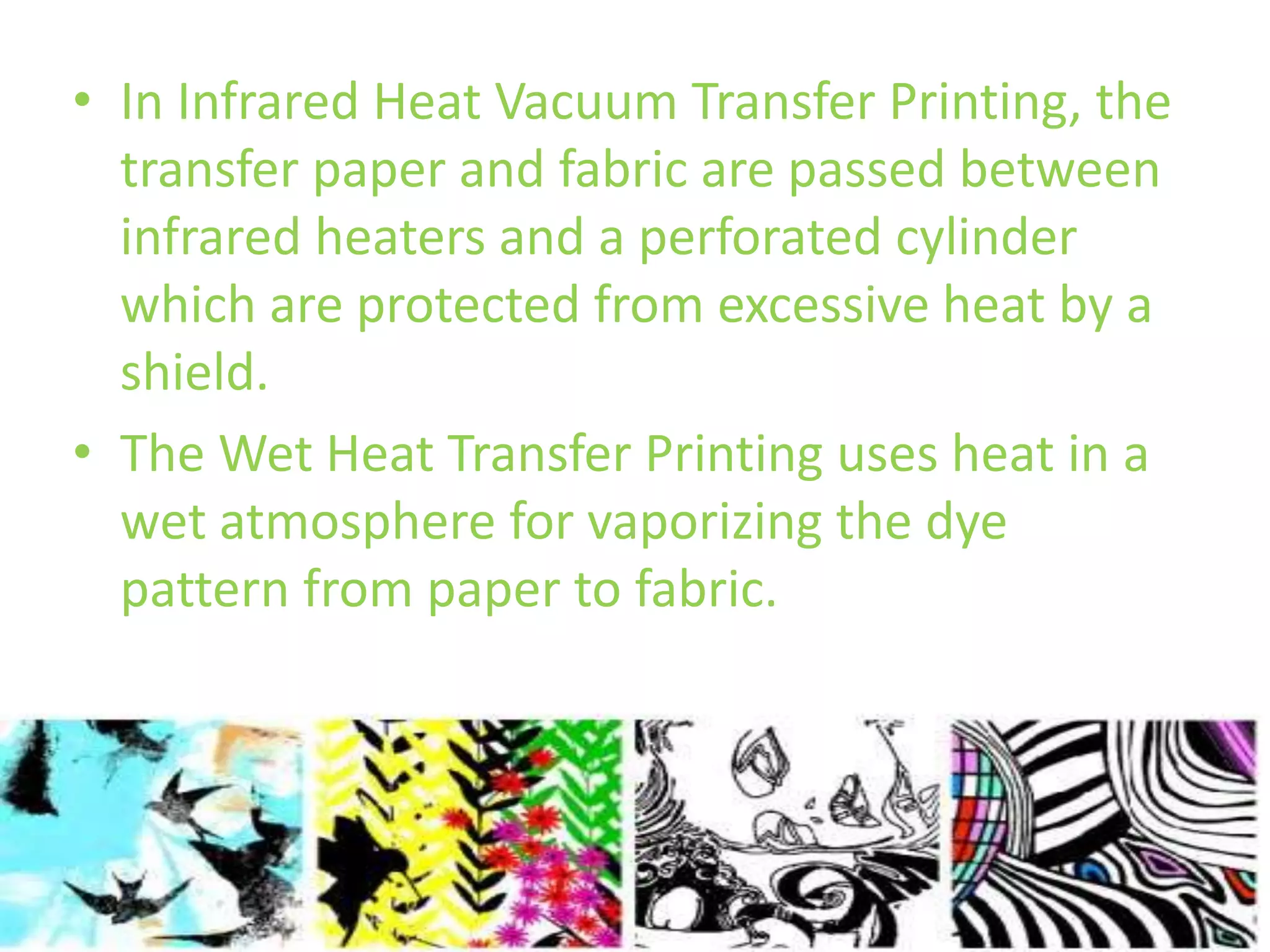
• In Infrared Heat Vacuum Transfer Printing, the 
transfer paper and fabric are passed between 
infrared heaters and a perforated cylinder 
which are protected from excessive heat by a 
shield. 
• The Wet Heat Transfer Printing uses heat in a 
wet atmosphere for vaporizing the dye 
pattern from paper to fabric.
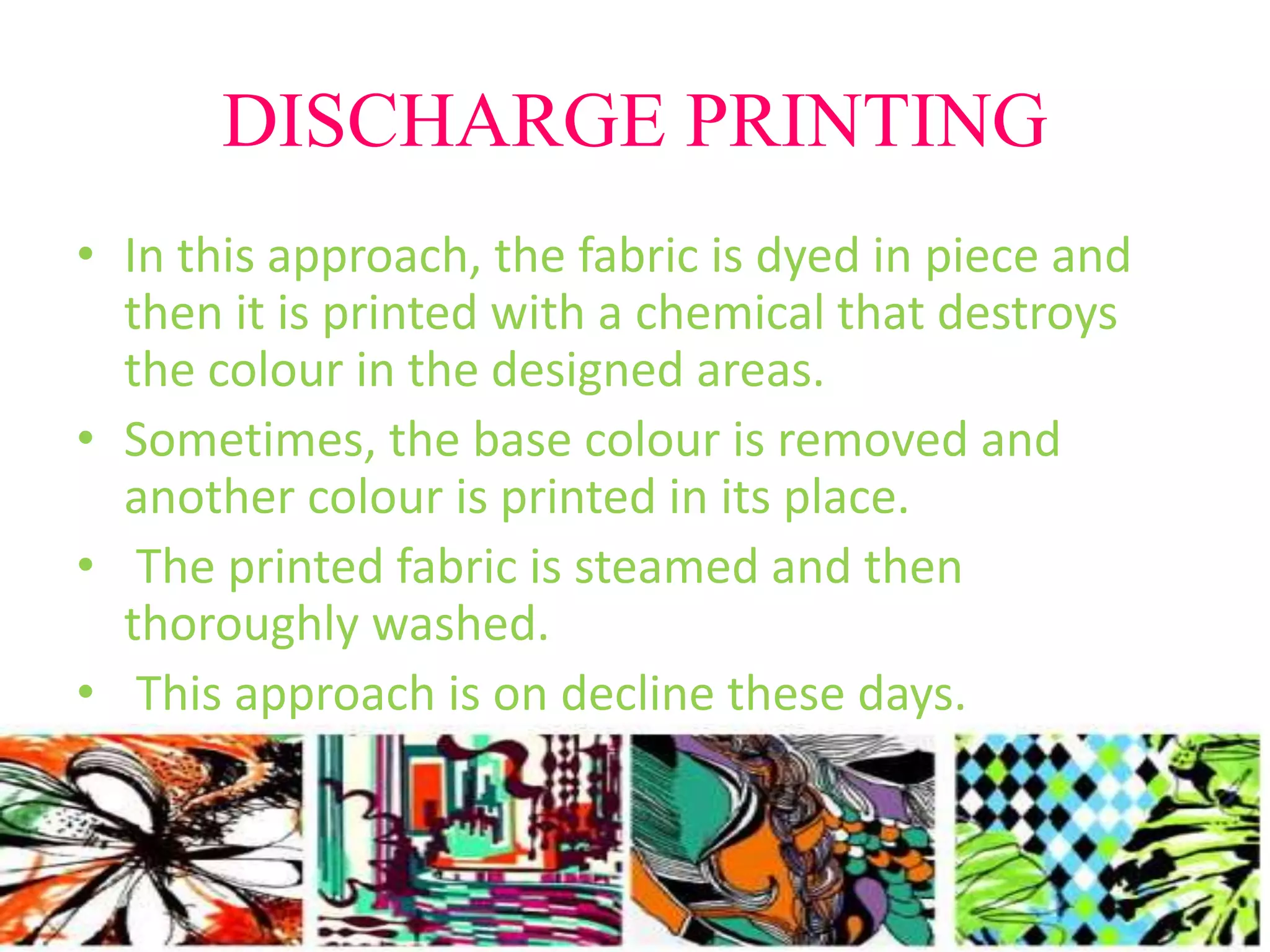
DISCHARGE PRINTING 
• In this approach, the fabric is dyed in piece and 
then it is printed with a chemical that destroys 
the colour in the designed areas. 
• Sometimes, the base colour is removed and 
another colour is printed in its place. 
• The printed fabric is steamed and then 
thoroughly washed. 
• This approach is on decline these days.
MORDANT PRINTING 
• A mordant is a substance used to set dyes on 
fabrics or tissue sections by forming a 
coordination complex with the dye which then 
attaches to the fabric or tissue. 
• It may be used for dyeing fabrics, or for 
intensifying stains in cell or tissue 
preparations.

Styles of printing

  • 1.
  • 2.
    TEXTILE PRINTING •Textile printing is the process of applying colour to fabric in definite patterns or designs. • In properly printed fabrics the colour is bonded with the fibre, so as to resist washing and friction.
  • 3.
    • In printing,wooden blocks, stencils , engraved plates, rollers, or silk screens can be used to place colours on the fabric. • Colorants used in printing contain dyes thickened to prevent the colour from spreading by capillary attraction beyond the limits of the pattern or design.
  • 4.
    • For cottonprinting vat and reactive dyes are generally used. • Silk is usually printed with acid colours. • Wool is printed with acid or chrome dyes but before printing it is treated with chlorine to make it more receptive to colours. • Manmade fibres are generally printed with disperse and cationic dyes.
  • 5.
    ALL STYLES OFPRINTING •Direct printing • Resist printing • Heat-transfer printing •Discharge printing •Mordant printing
  • 6.
    DIRECT PRINTING •It is the most common approach to apply a colour pattern on fabric. • It can be done on white or a coloured fabric. • If done on coloured fabric, it is known as overprinting. • The desired pattern is produced by imprinting dye on the fabric in a paste form. • To prepare the print paste, a thickening agent is added to a limited amount of water and dye is dissolved in it.
  • 7.
    • Earlier cornstarch was preferred as a thickening agent for cotton printing. • Nowadays gums or alginates derived from seaweed are preferred because they are easier to wash out, do not themselves absorb any colour and allow better penetration of colour. • Most pigment printing is done without thickeners as the mixing up of resins, solvents and water itself produces thickening.
  • 8.
    RESIST PRINTING •In this technique, a resist paste is imprinted on the fabric and then it is dyed. • The dye affects only those parts that are not covered by the resist paste. • After dyeing, the resist paste is removed leaving a pattern on a dark background.
  • 9.
    HEAT -TRANSFER PRINTING • The design on a paper is transferred to a fabric by vaporization. • There are two main processes for this- Dry Heat Transfer Printing and Wet Heat Transfer Printing. • In Conventional Heat Transfer Printing, an electrically heated cylinder is used that presses a fabric against a printed paper placed on a heat resistant blanket.
  • 10.
    • In InfraredHeat Vacuum Transfer Printing, the transfer paper and fabric are passed between infrared heaters and a perforated cylinder which are protected from excessive heat by a shield. • The Wet Heat Transfer Printing uses heat in a wet atmosphere for vaporizing the dye pattern from paper to fabric.
  • 11.
    DISCHARGE PRINTING •In this approach, the fabric is dyed in piece and then it is printed with a chemical that destroys the colour in the designed areas. • Sometimes, the base colour is removed and another colour is printed in its place. • The printed fabric is steamed and then thoroughly washed. • This approach is on decline these days.
  • 12.
    MORDANT PRINTING •A mordant is a substance used to set dyes on fabrics or tissue sections by forming a coordination complex with the dye which then attaches to the fabric or tissue. • It may be used for dyeing fabrics, or for intensifying stains in cell or tissue preparations.