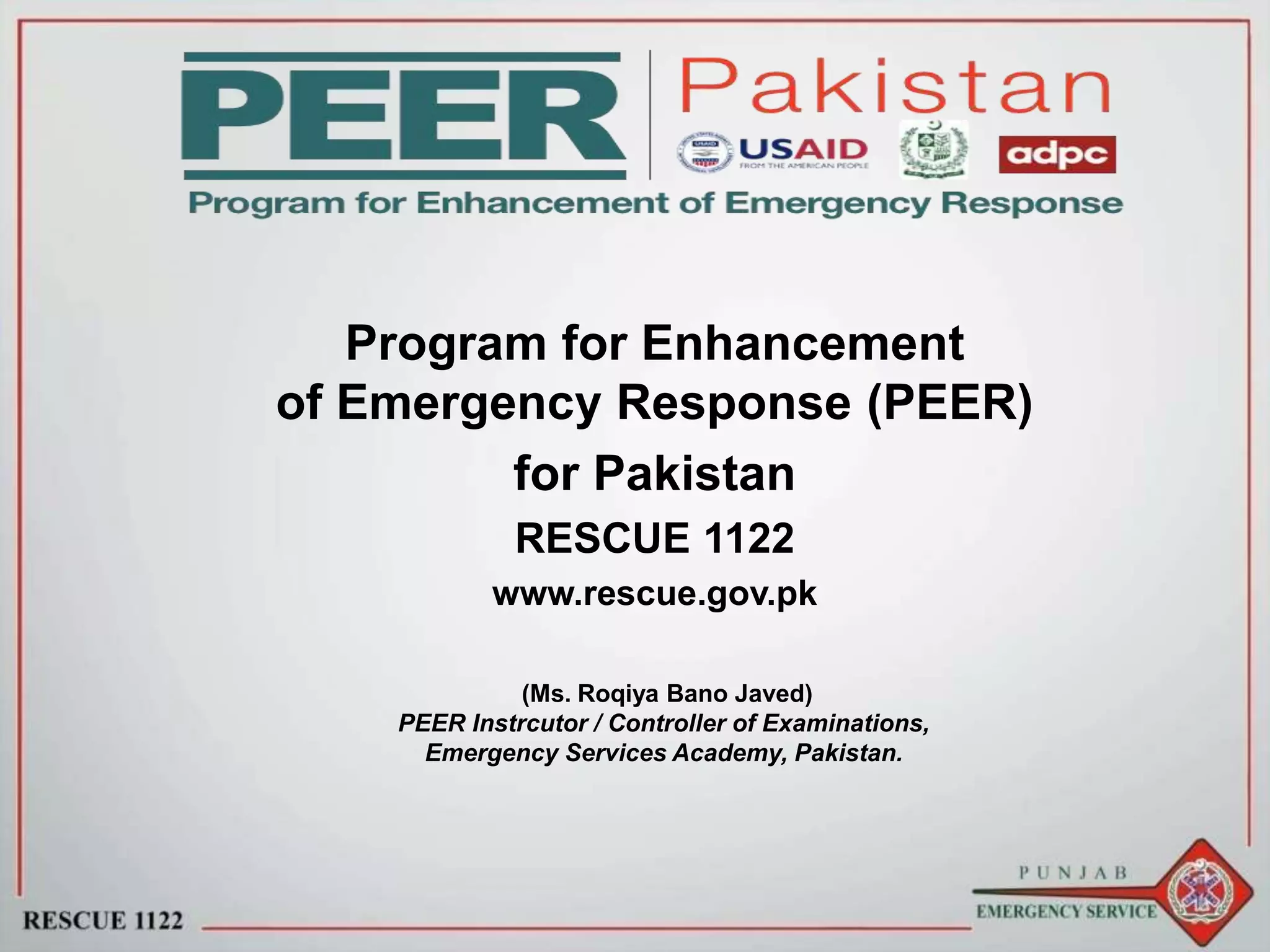
Program for Enhancement
of Emergency Response (PEER)
for Pakistan
RESCUE 1122
www.rescue.gov.pk
(Ms. Roqiya Bano Javed)
PEER Instrcutor / Controller of Examinations,
Emergency Services Academy, Pakistan.
2
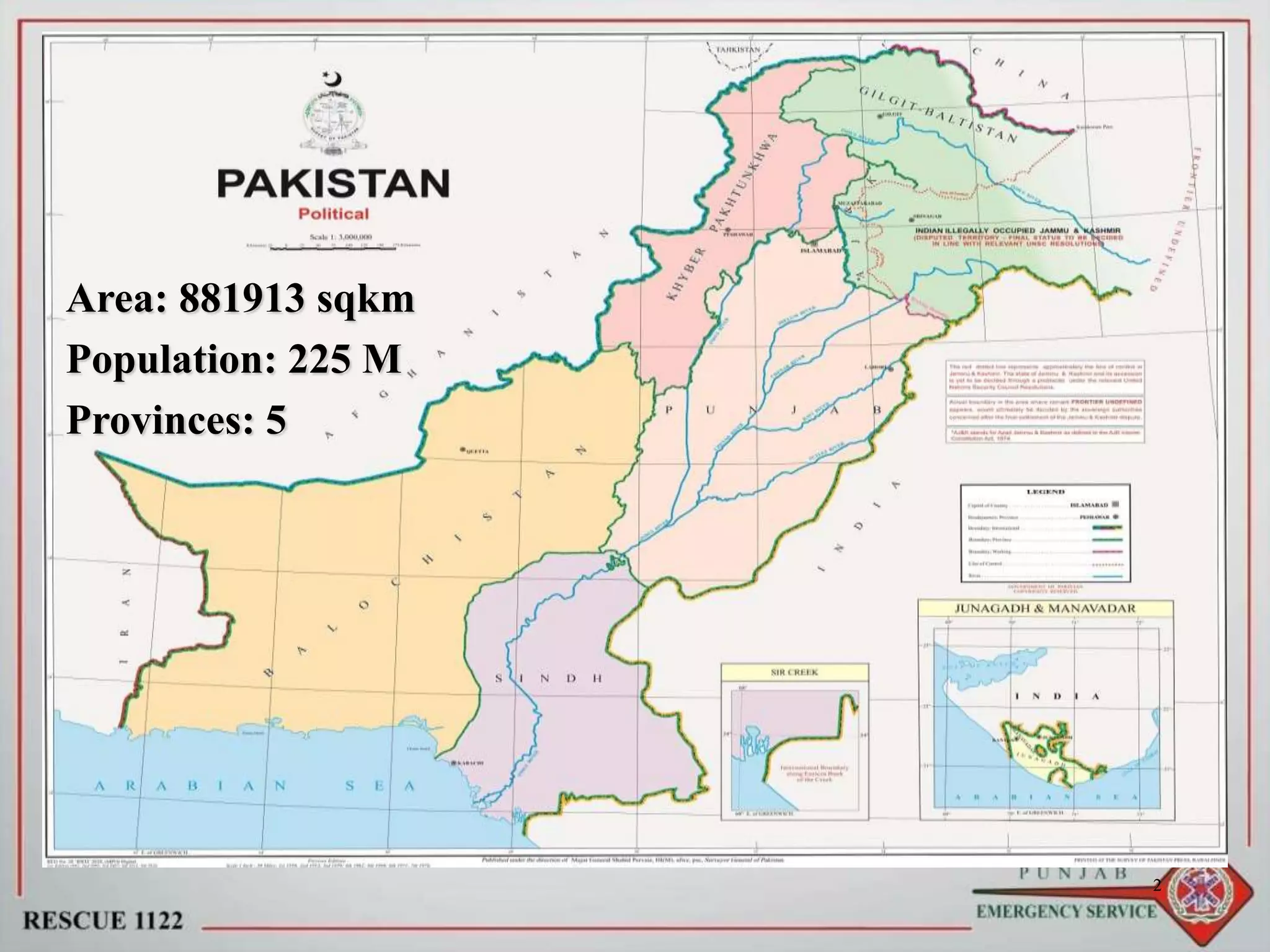
Area: 881913 sqkm
Population: 225 M
Provinces: 5
Common Emergencies
• Road Traffic Accidents
• Structural Collapse
• Fires
• Floods
• Earthquake
Disaster Management Strategy
 Planning & Coordination by National &
Provincial Disaster Management Authorities.
 Emergency Rescue Services for professional
management of emergencies.
 Community Emergency Response Teams at
Union Council level.
 Hospital Emergency Preparedness by Ministry
of Health NHEPRN
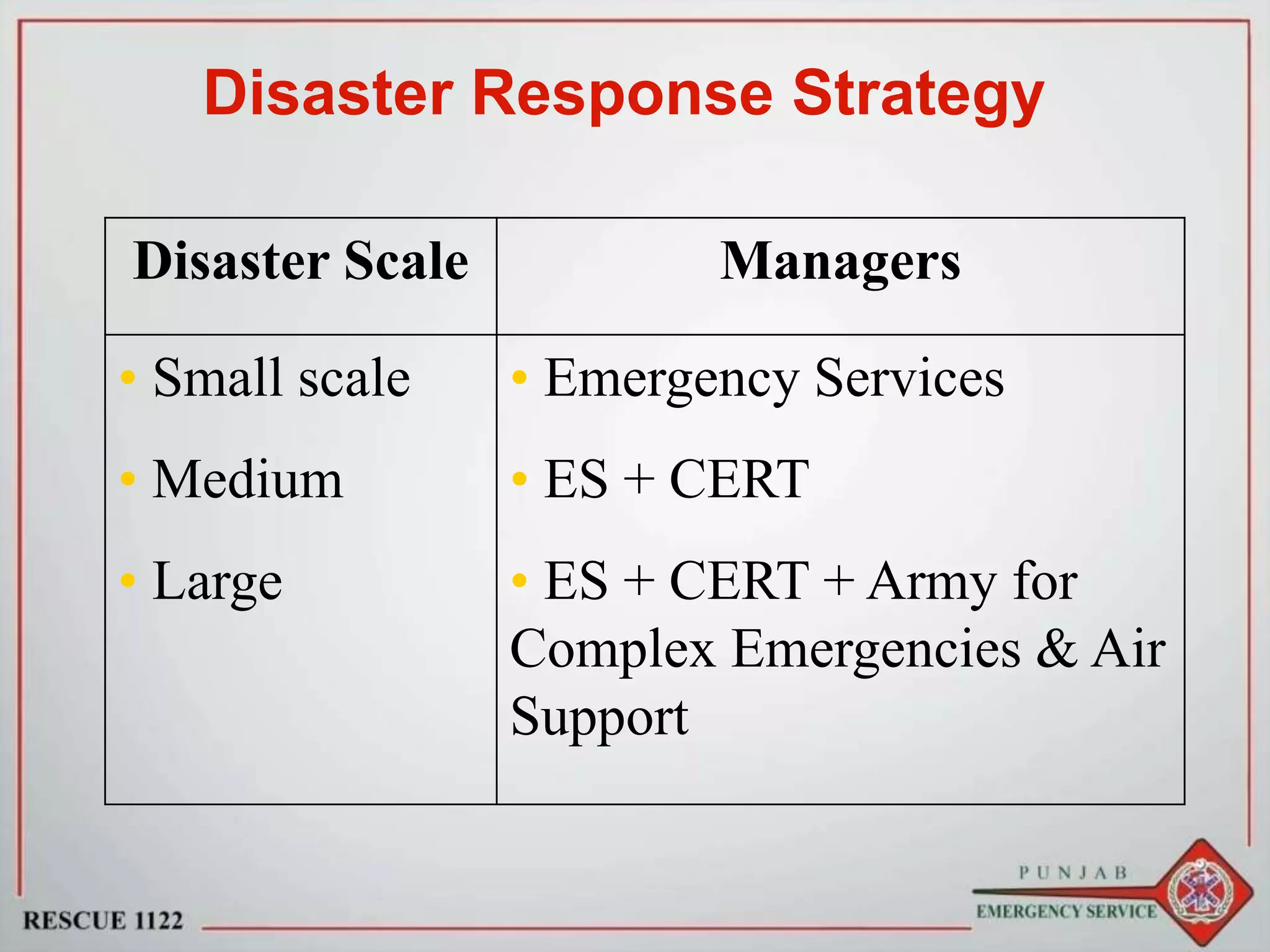
Disaster Response Strategy
Disaster Scale Managers
• Small scale
• Medium
• Large
• Emergency Services
• ES + CERT
• ES + CERT + Army for
Complex Emergencies & Air
Support
Institutionalization of
PEER Training Process
&
Establishment of
Emergency Services Academy
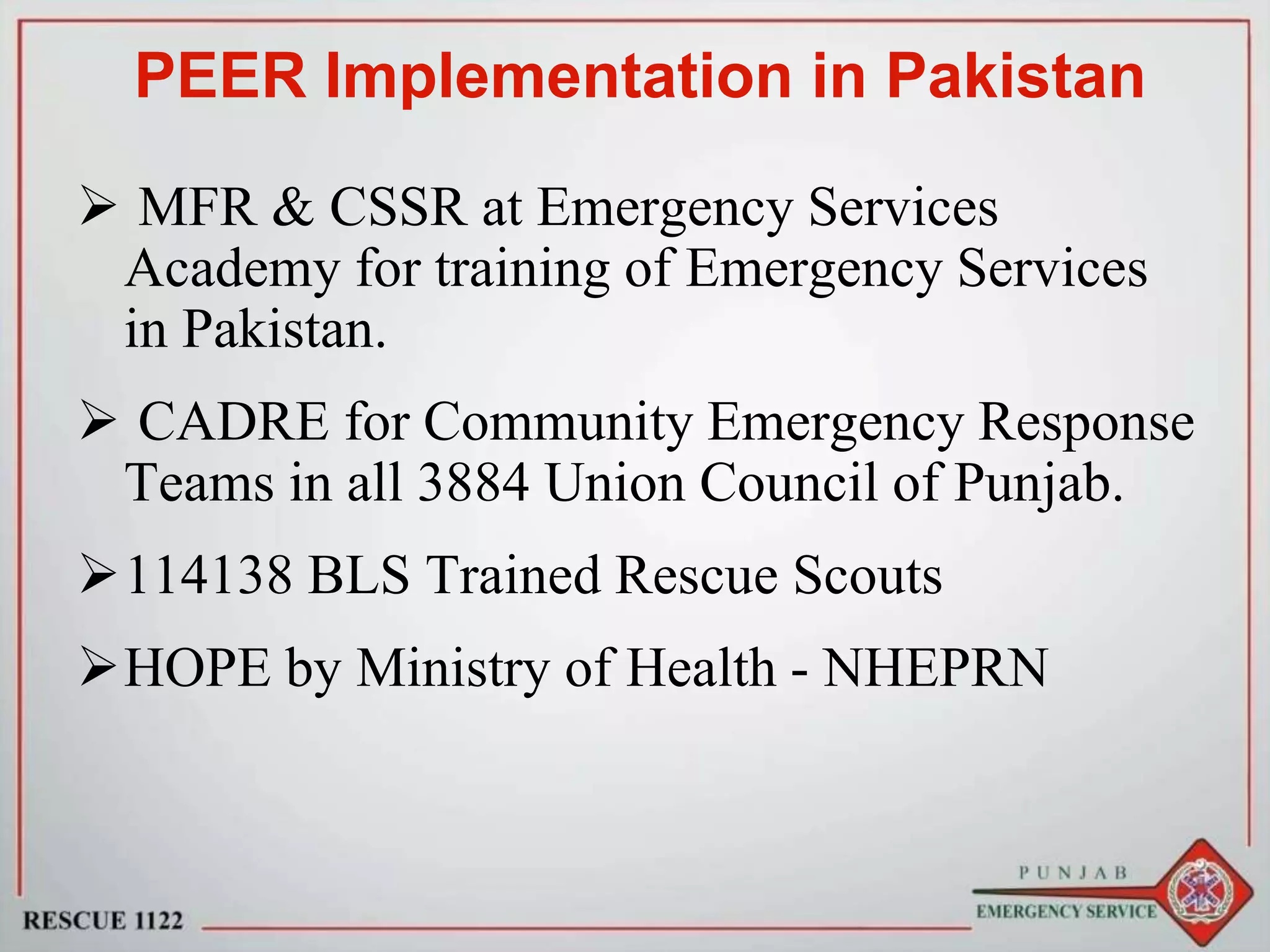
PEER Implementation in Pakistan
 MFR & CSSR at Emergency Services
Academy for training of Emergency Services
in Pakistan.
 CADRE for Community Emergency Response
Teams in all 3884 Union Council of Punjab.
114138 BLS Trained Rescue Scouts
HOPE by Ministry of Health - NHEPRN
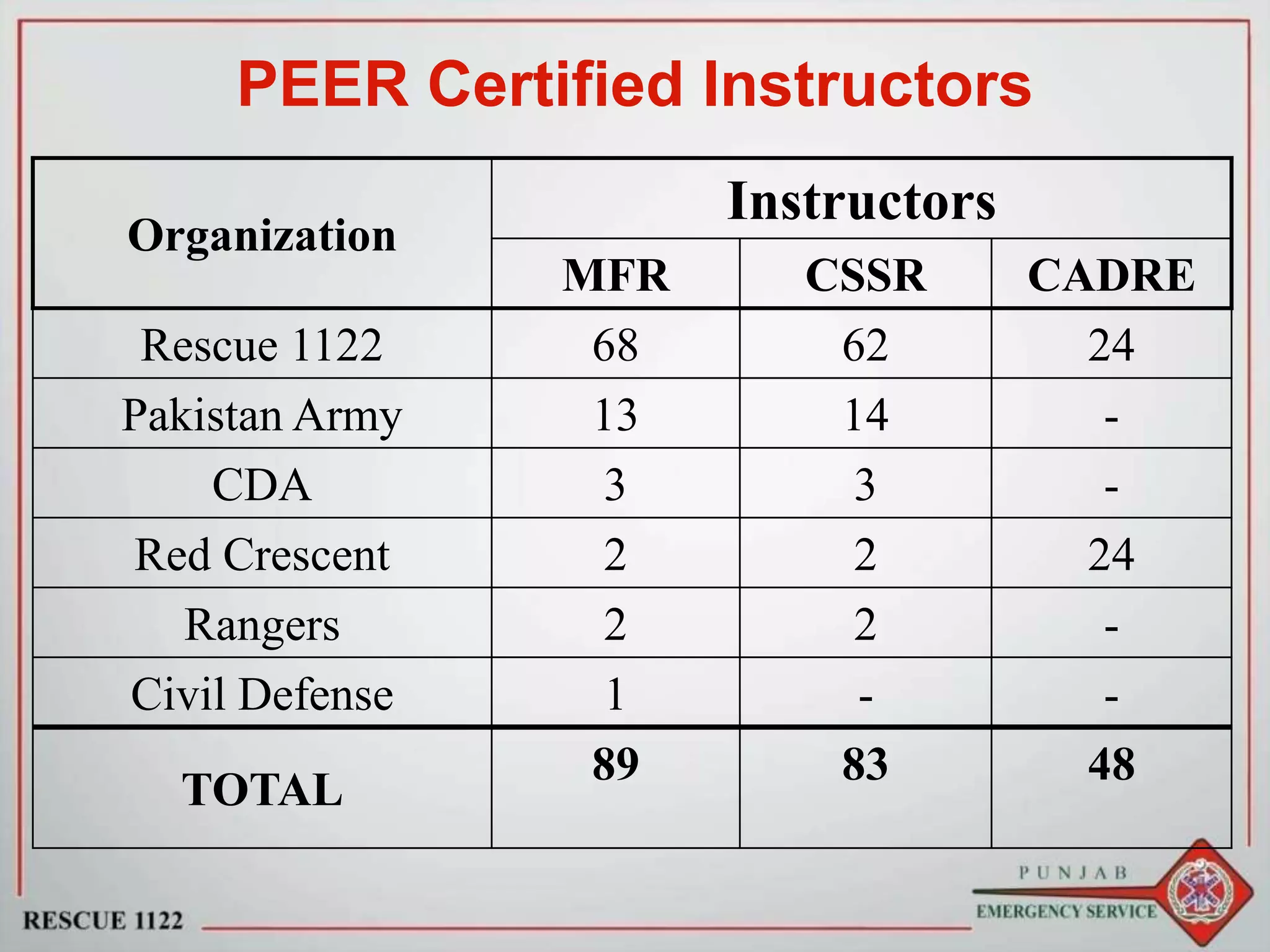
PEER Certified Instructors
Organization
Instructors
MFR CSSR CADRE
Rescue 1122 68 62 24
Pakistan Army 13 14 -
CDA 3 3 -
Red Crescent 2 2 24
Rangers 2 2 -
Civil Defense 1 - -
TOTAL
89 83 48
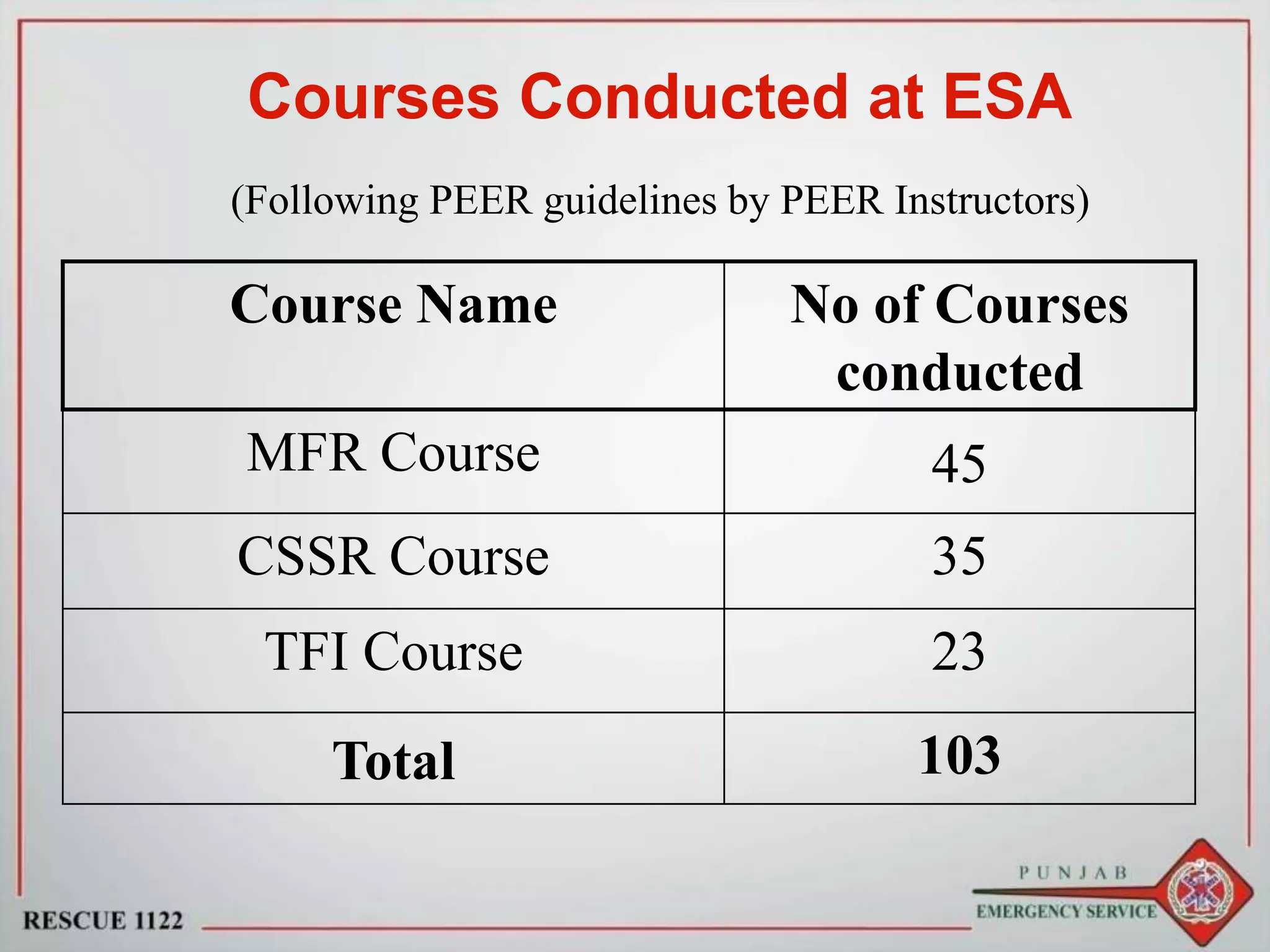
(Following PEER guidelines by PEER Instructors)
Course Name No of Courses
conducted
MFR Course 45
CSSR Course 35
TFI Course 23
Total 103
Courses Conducted at ESA
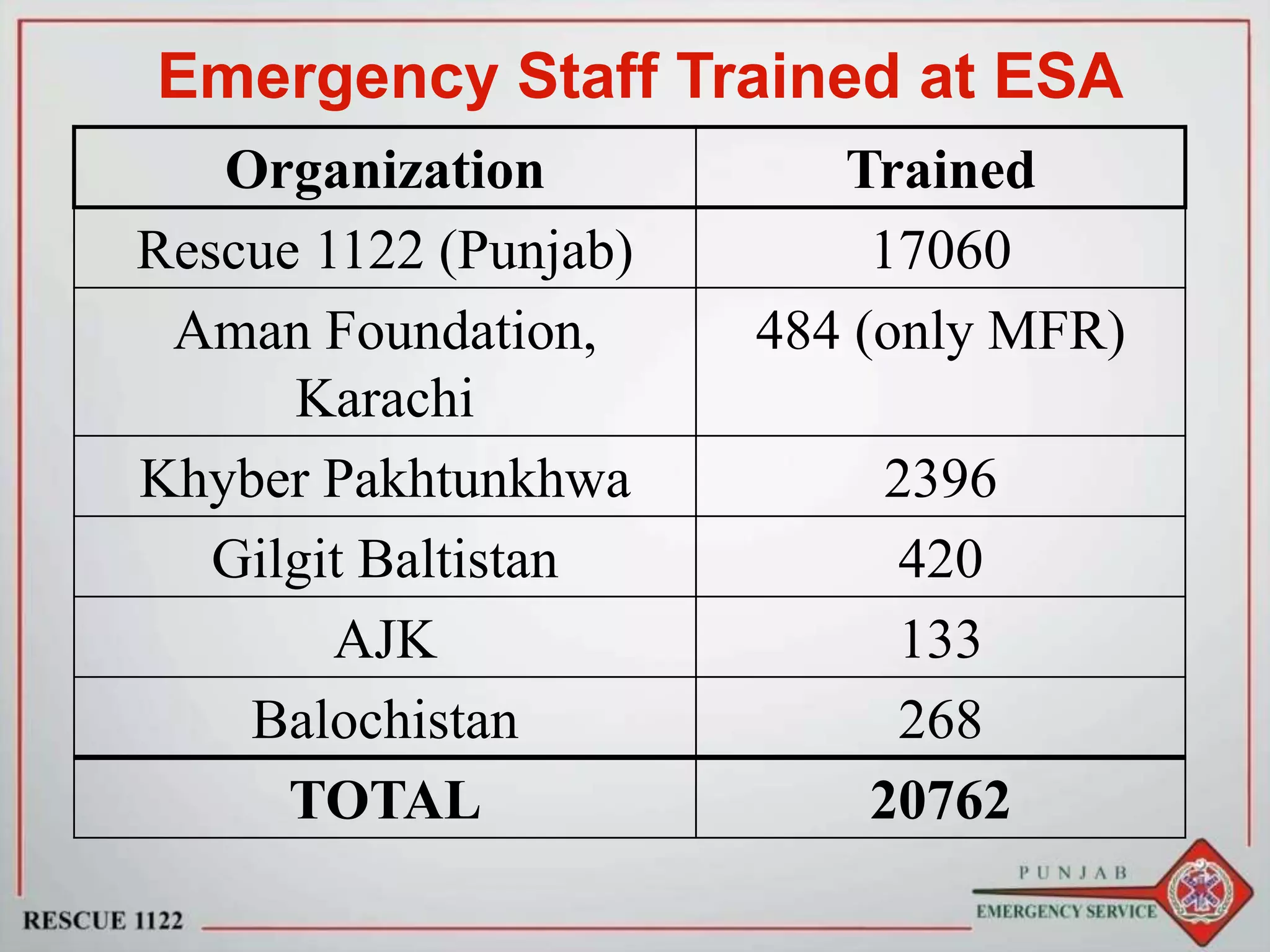
Emergency Staff Trained at ESA
Organization Trained
Rescue 1122 (Punjab) 17060
Aman Foundation,
Karachi
484 (only MFR)
Khyber Pakhtunkhwa 2396
Gilgit Baltistan 420
AJK 133
Balochistan 268
TOTAL 20762
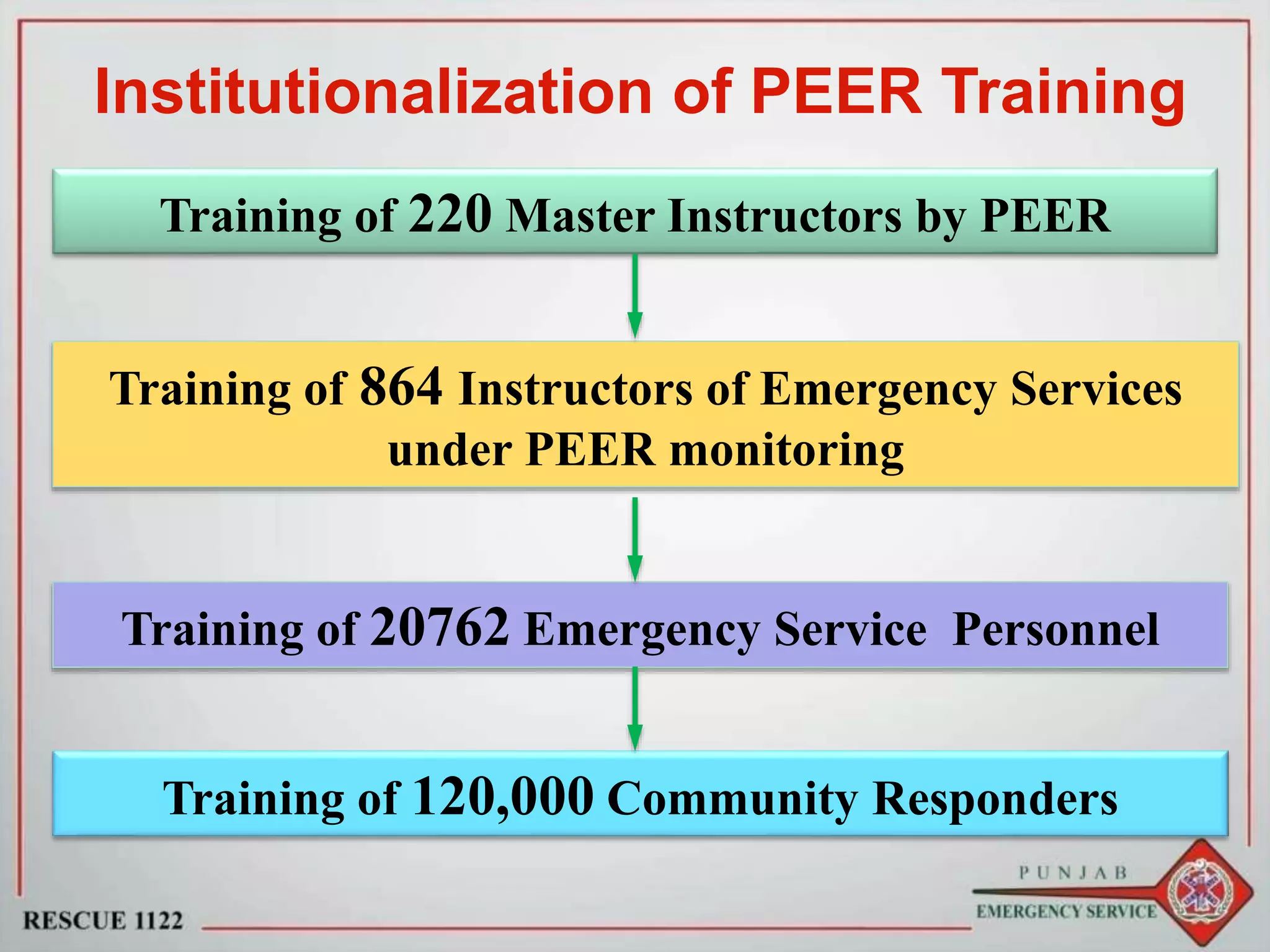
Institutionalization of PEER Training
Training of 220 Master Instructors by PEER
Training of 120,000 Community Responders
Training of 20762 Emergency Service Personnel
Training of 864 Instructors of Emergency Services
under PEER monitoring
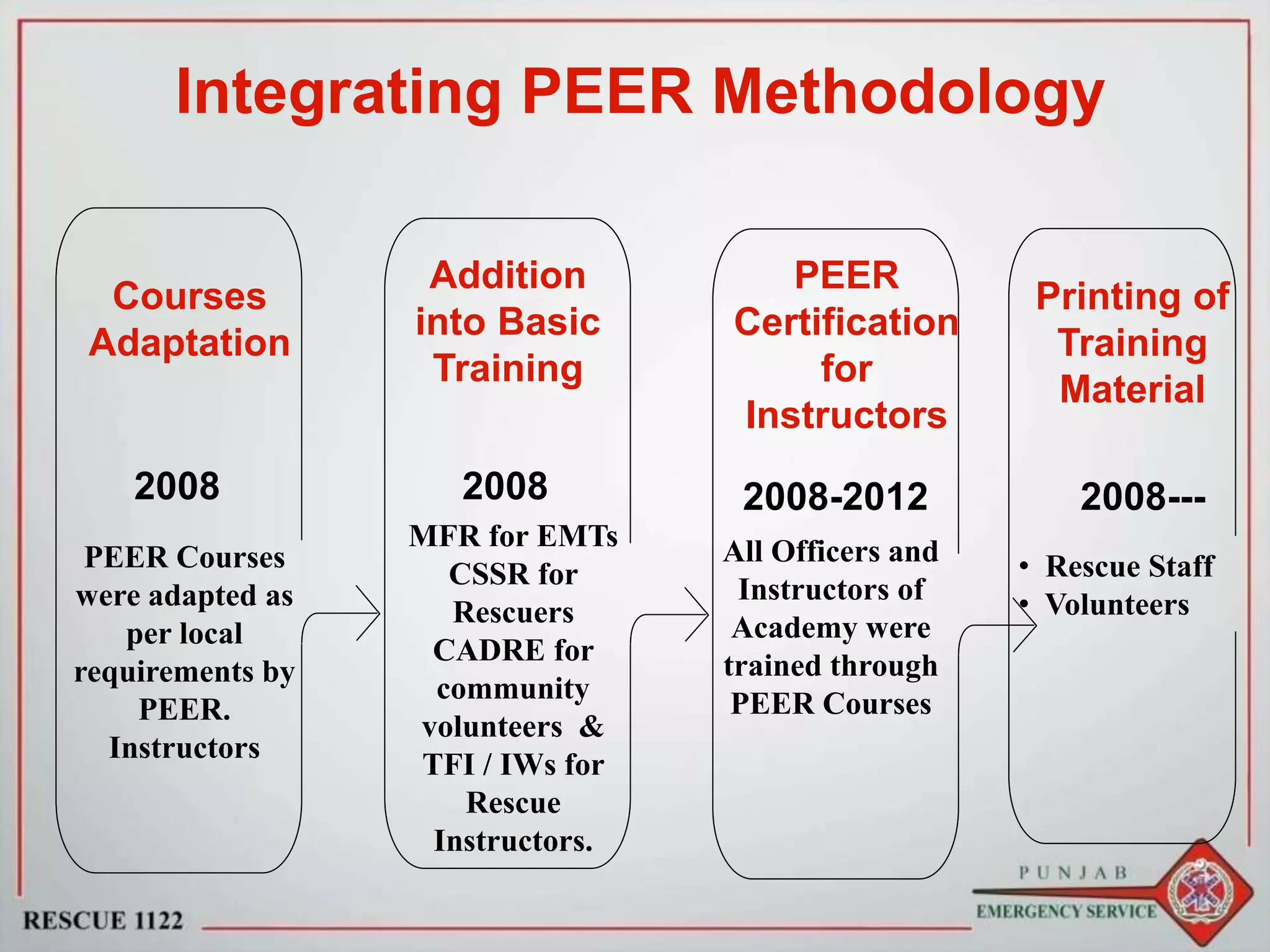
• Rescue Staff
• Volunteers
Printing of
Training
Material
2008---
Addition
into Basic
Training
MFR for EMTs
CSSR for
Rescuers
CADRE for
community
volunteers &
TFI / IWs for
Rescue
Instructors.
2008
PEER
Certification
for
Instructors
All Officers and
Instructors of
Academy were
trained through
PEER Courses
2008-2012
Courses
Adaptation
PEER Courses
were adapted as
per local
requirements by
PEER.
Instructors
2008
Integrating PEER Methodology
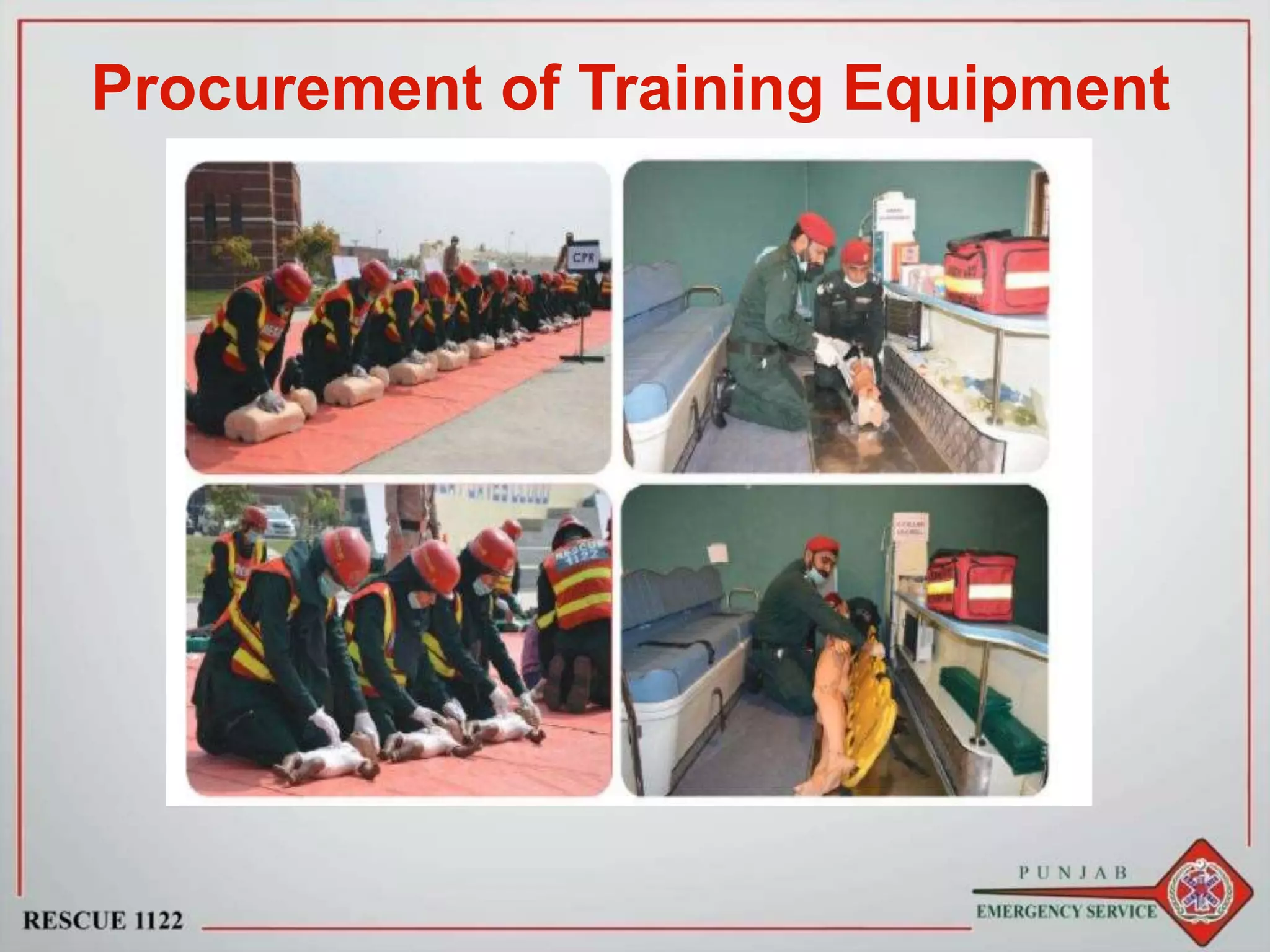
Procurement of Training Equipment
NEw
slide
s
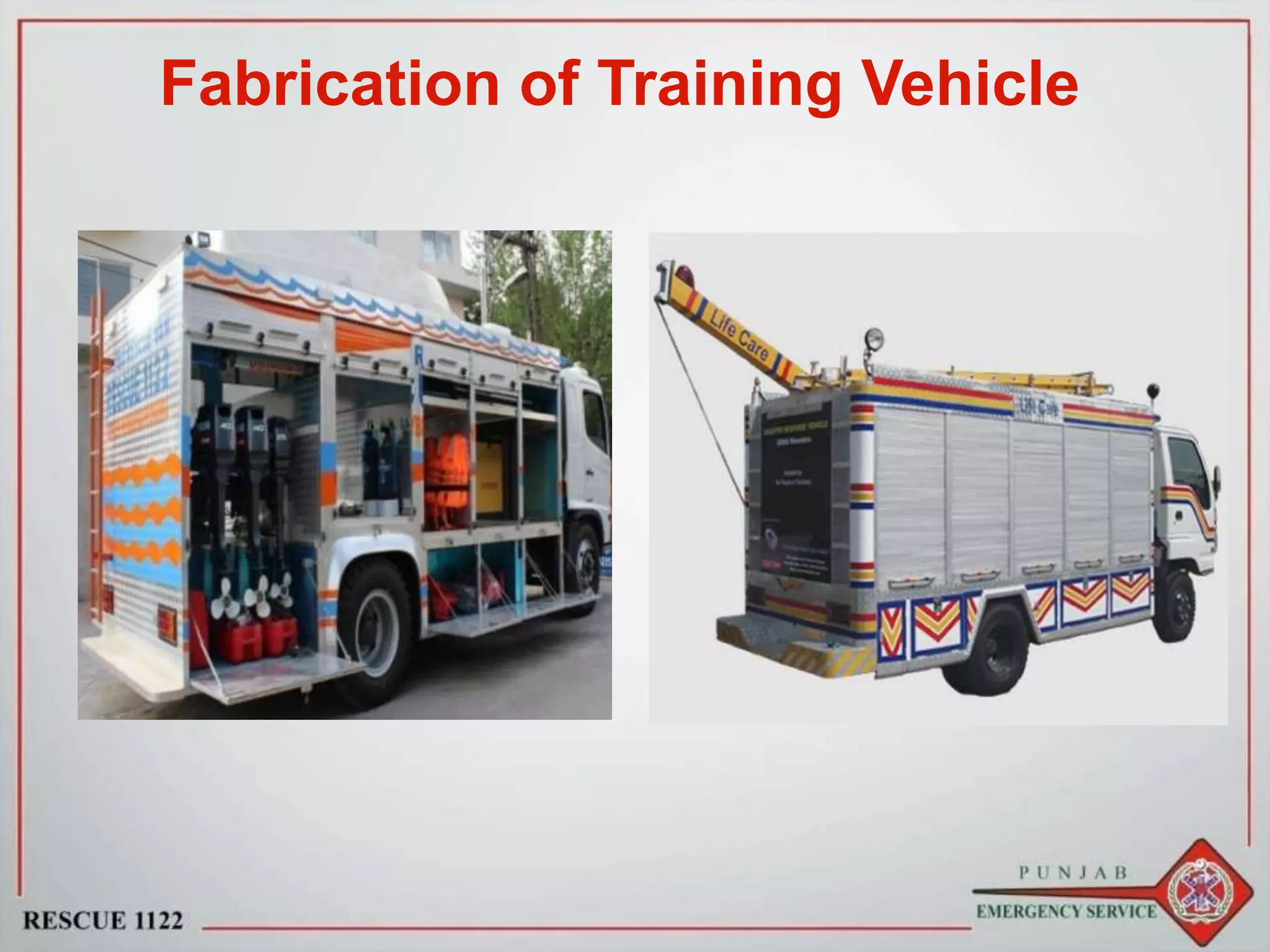
Fabrication of Training Vehicle
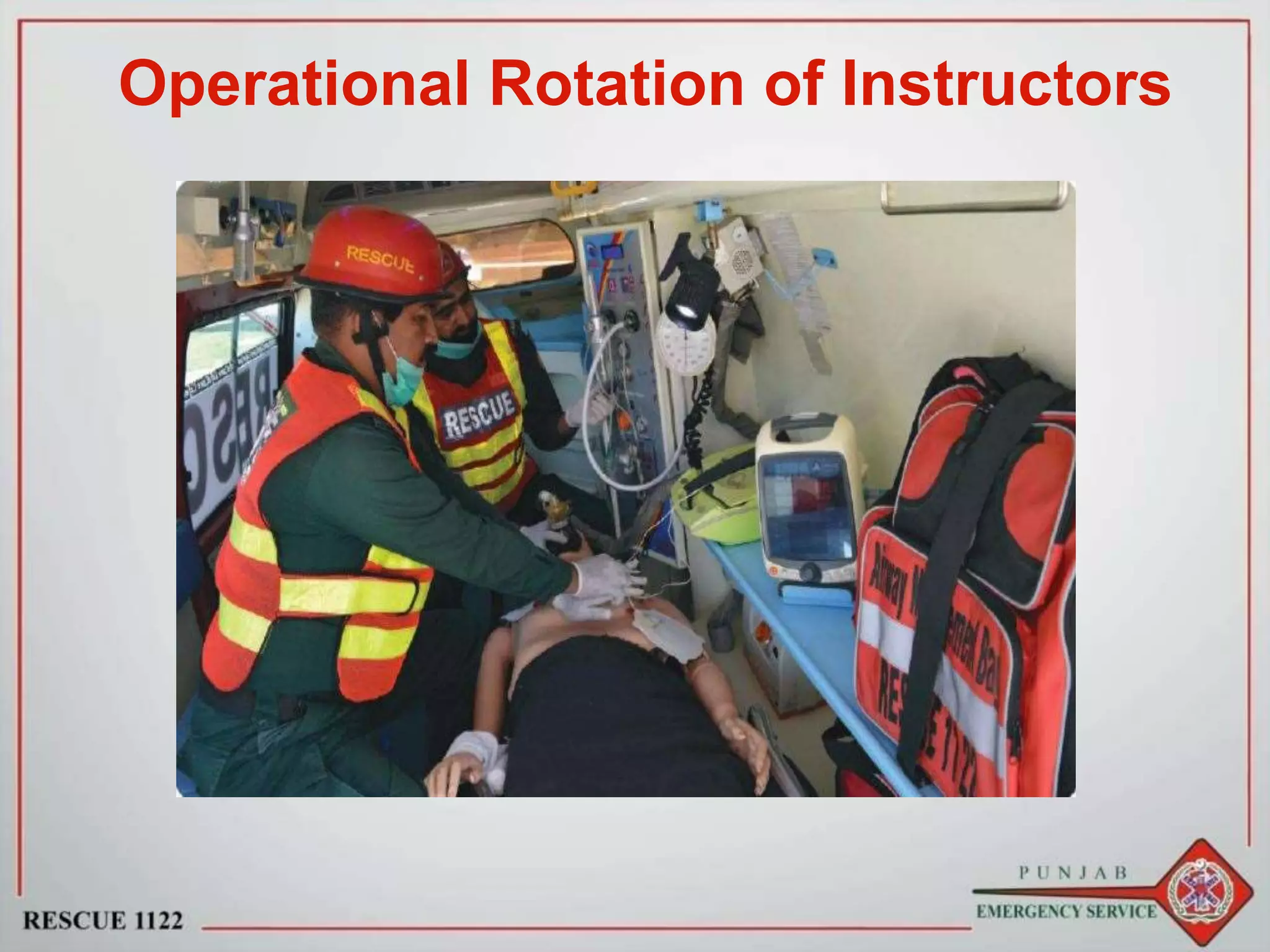
Operational Rotation of Instructors
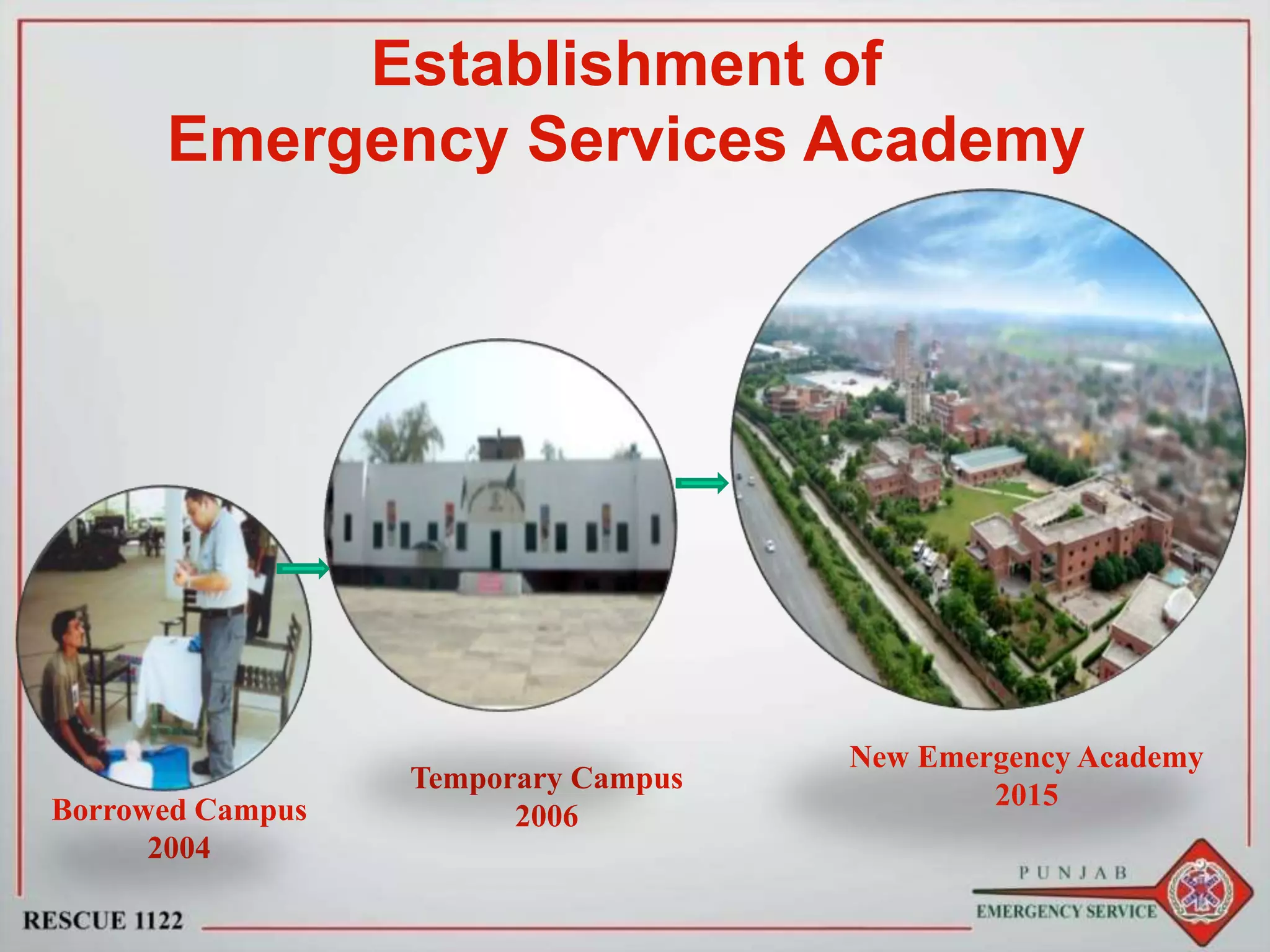
Establishment of
Emergency Services Academy
Borrowed Campus
2004
Temporary Campus
2006
New Emergency Academy
2015
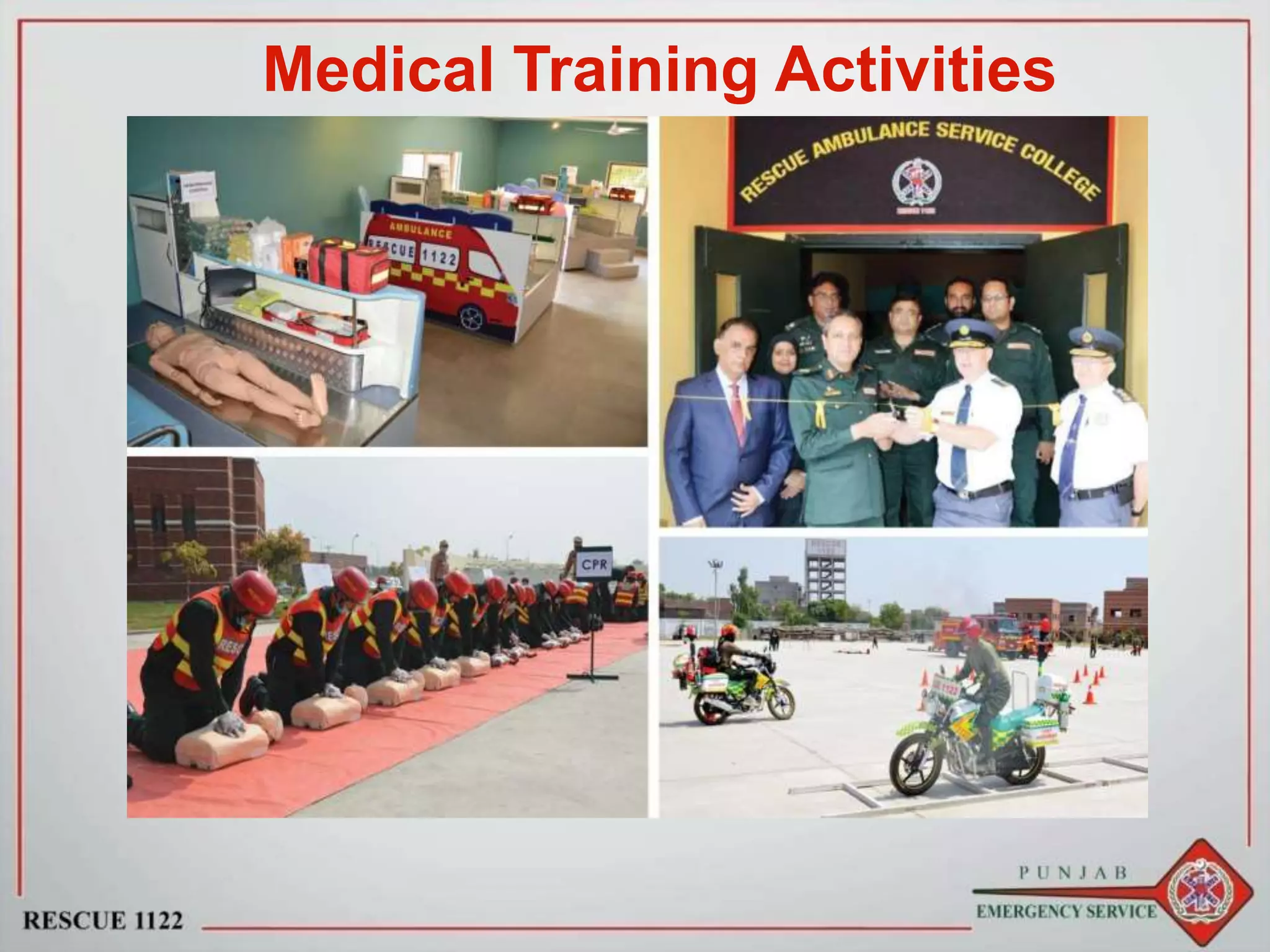
Medical Training Activities
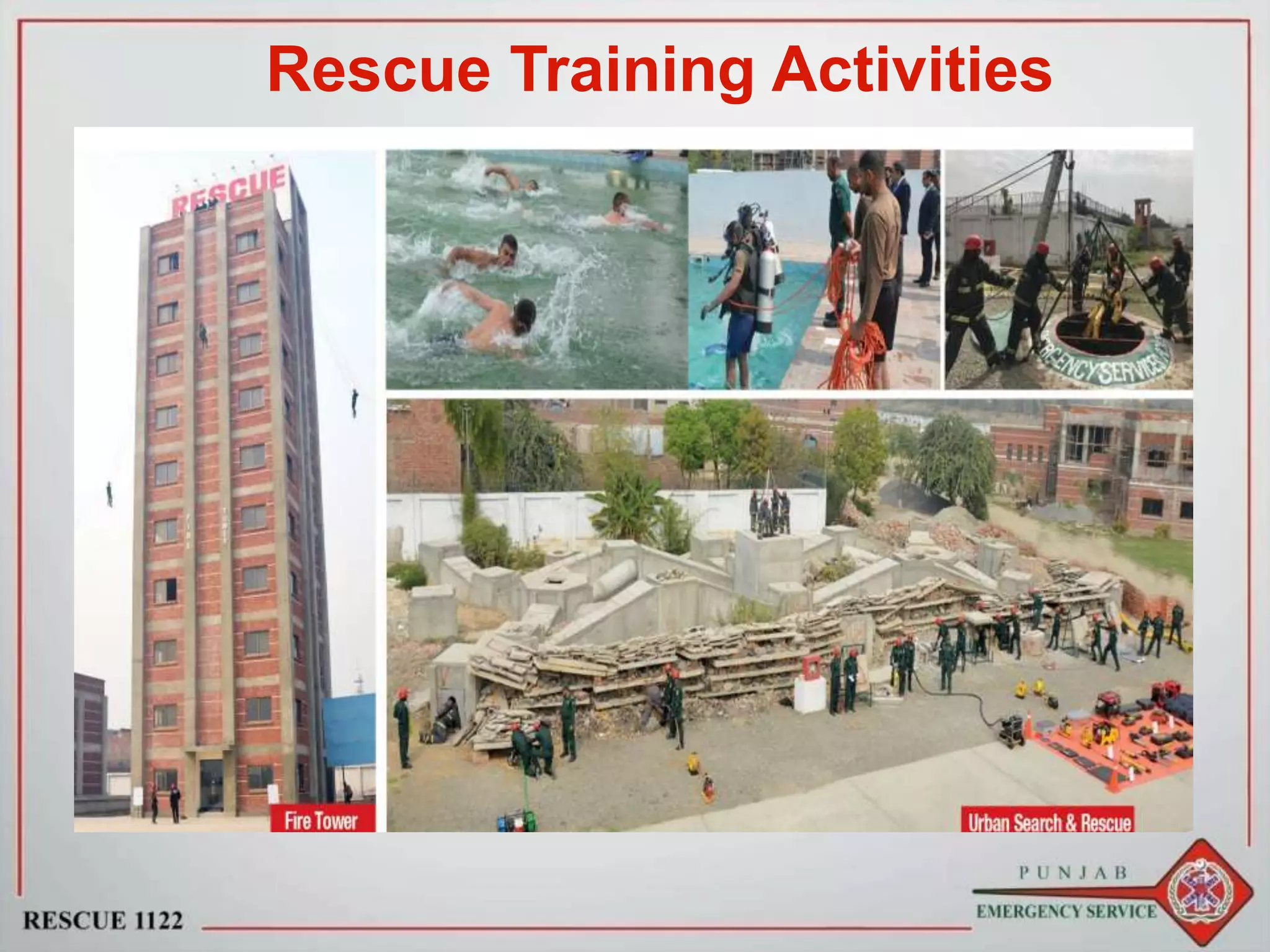
Rescue Training Activities
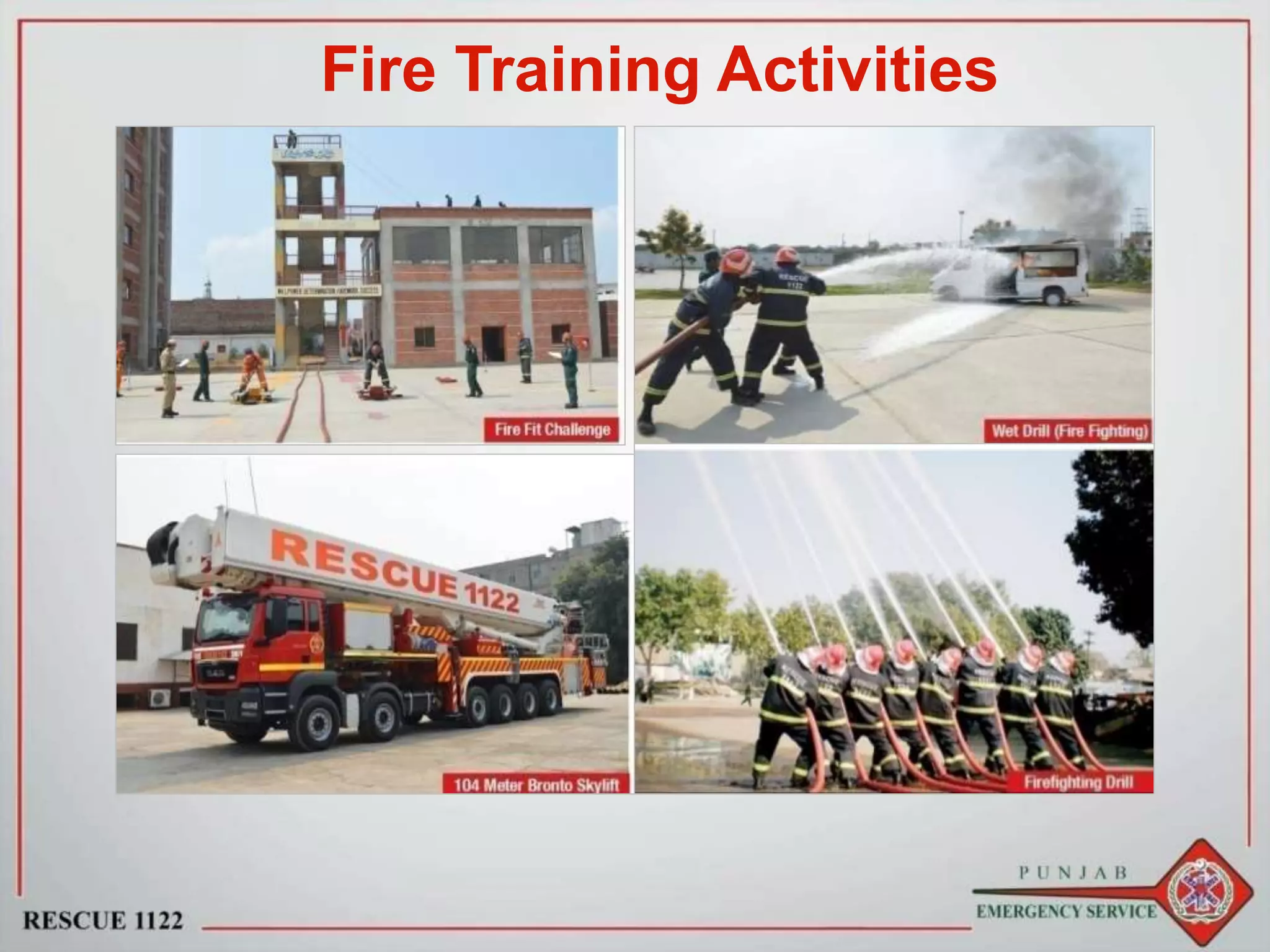
Fire Training Activities
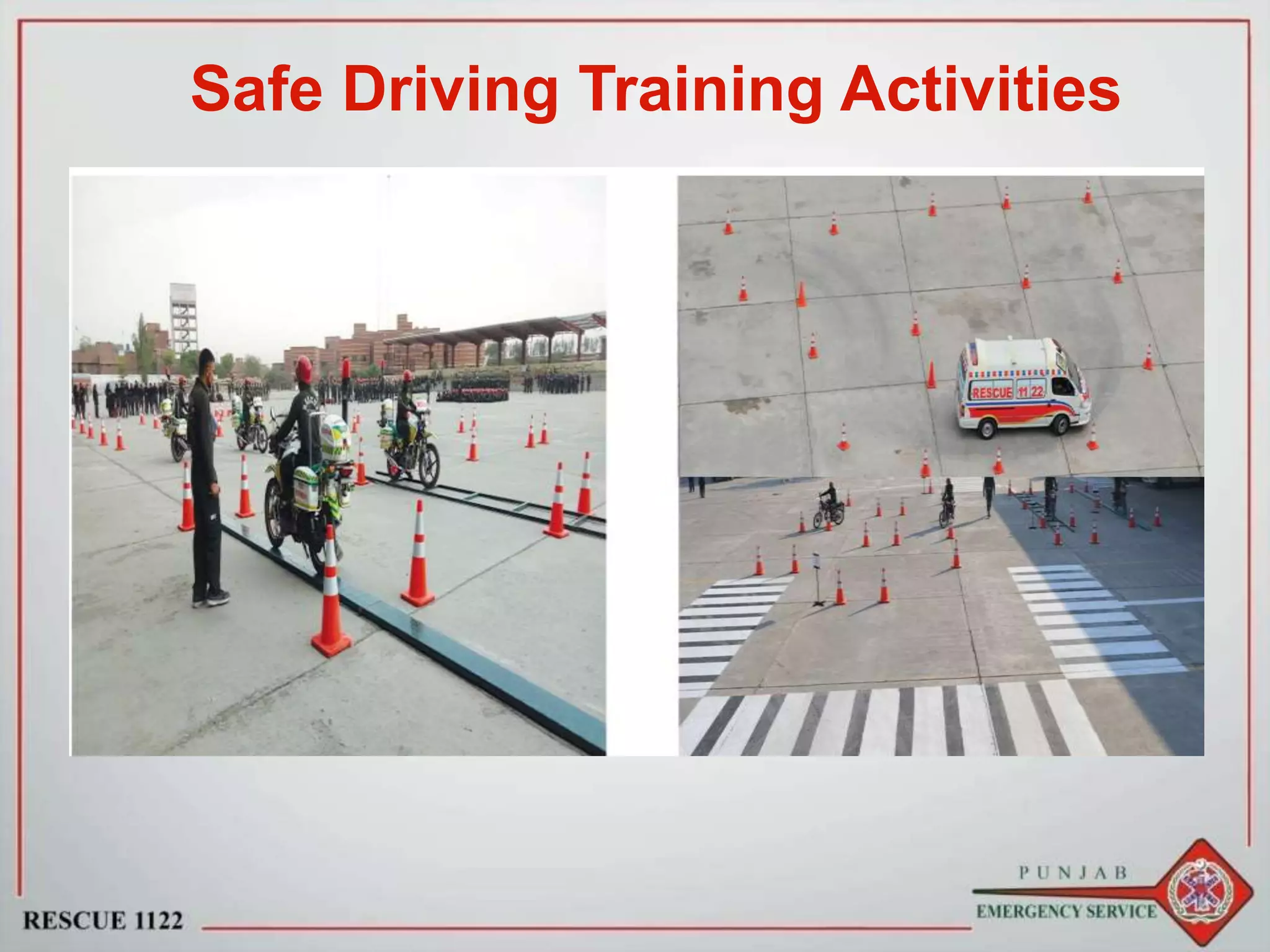
Safe Driving Training Activities
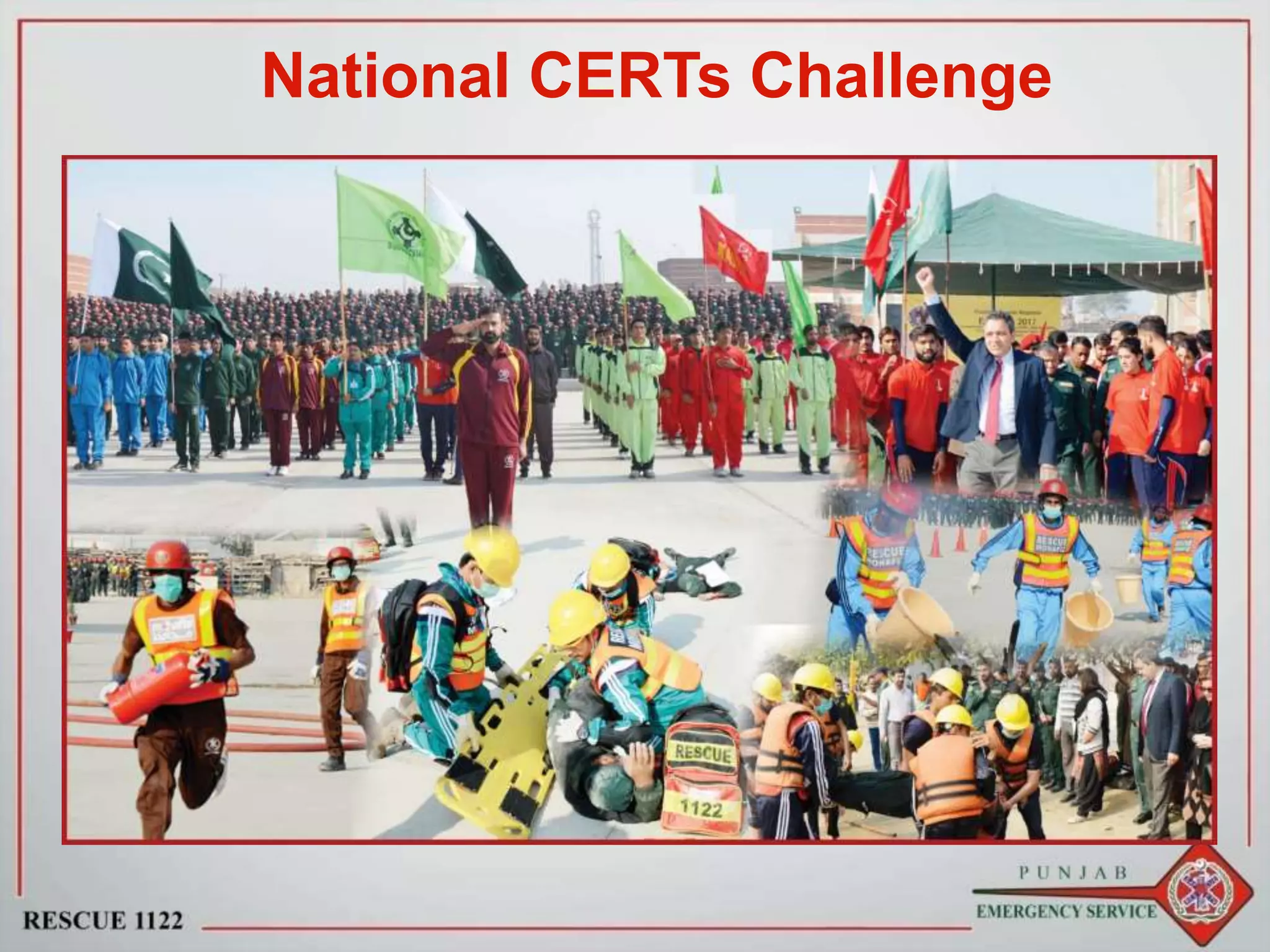
National CERTs Challenge
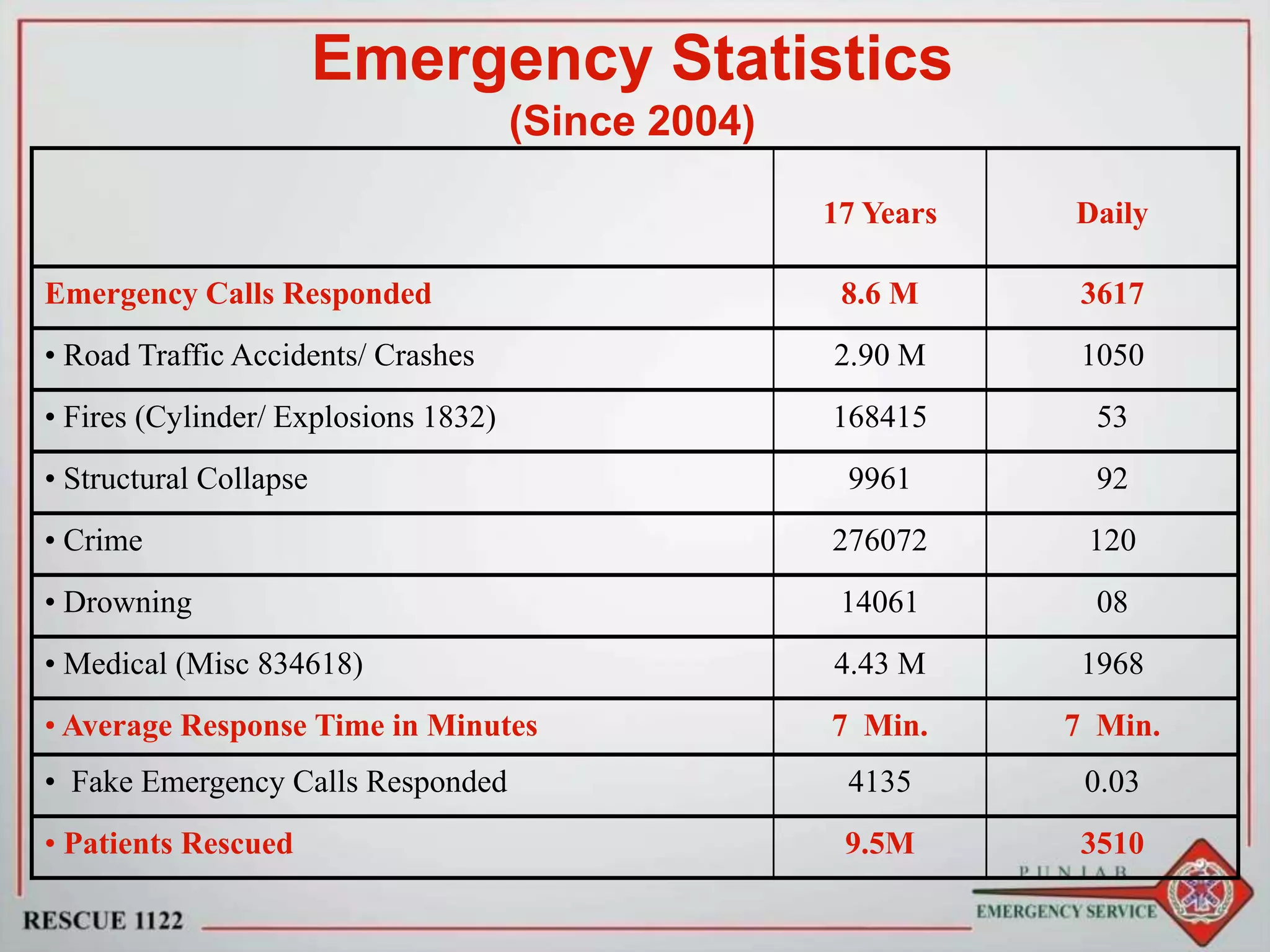
Emergency Statistics
(Since 2004)
17 Years Daily
Emergency Calls Responded 8.6 M 3617
• Road Traffic Accidents/ Crashes 2.90 M 1050
• Fires (Cylinder/ Explosions 1832) 168415 53
• Structural Collapse 9961 92
• Crime 276072 120
• Drowning 14061 08
• Medical (Misc 834618) 4.43 M 1968
• Average Response Time in Minutes 7 Min. 7 Min.
• Fake Emergency Calls Responded 4135 0.03
• Patients Rescued 9.5M 3510
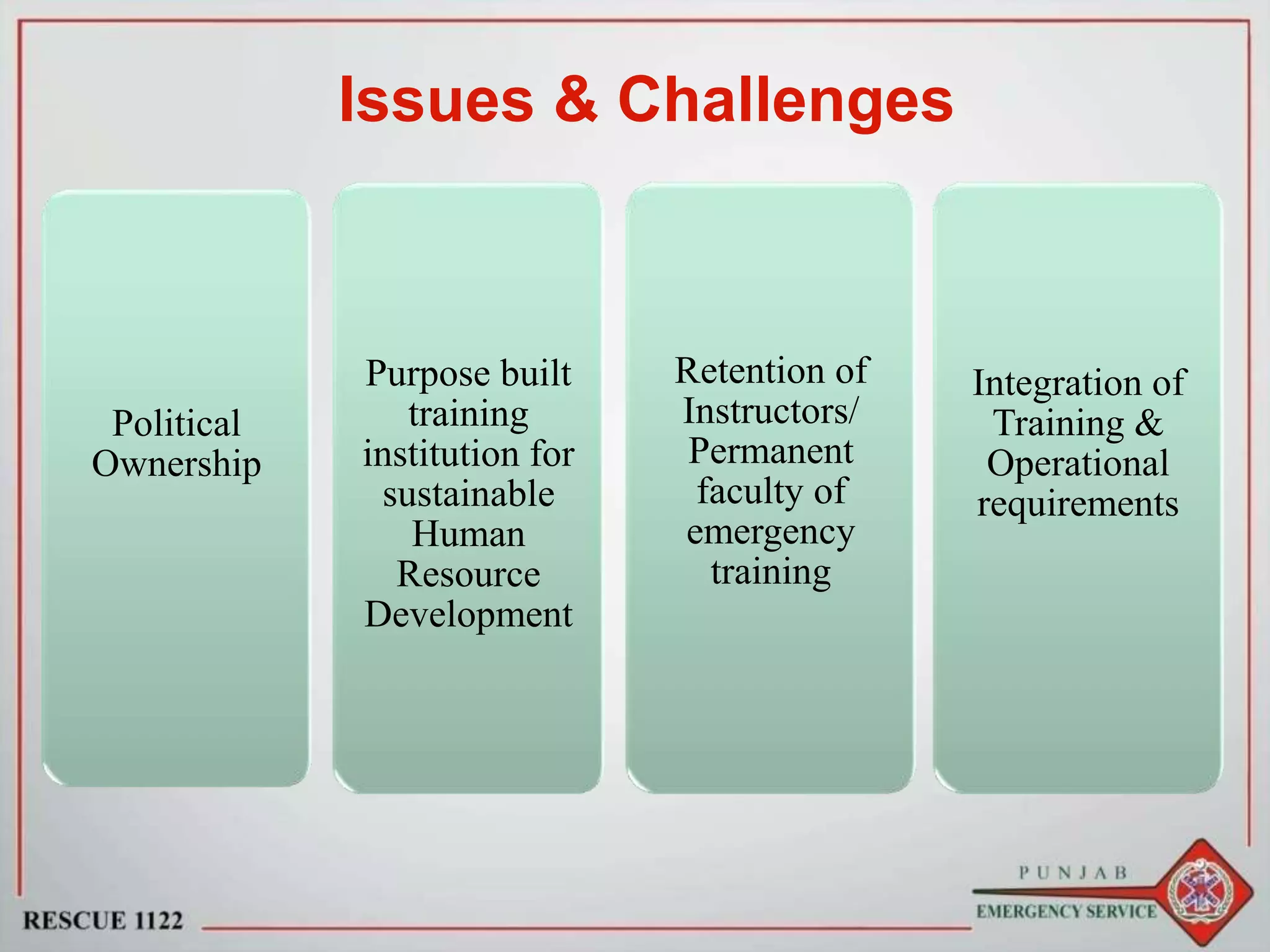
Issues & Challenges
Political
Ownership
Purpose built
training
institution for
sustainable
Human
Resource
Development
Retention of
Instructors/
Permanent
faculty of
emergency
training
Integration of
Training &
Operational
requirements
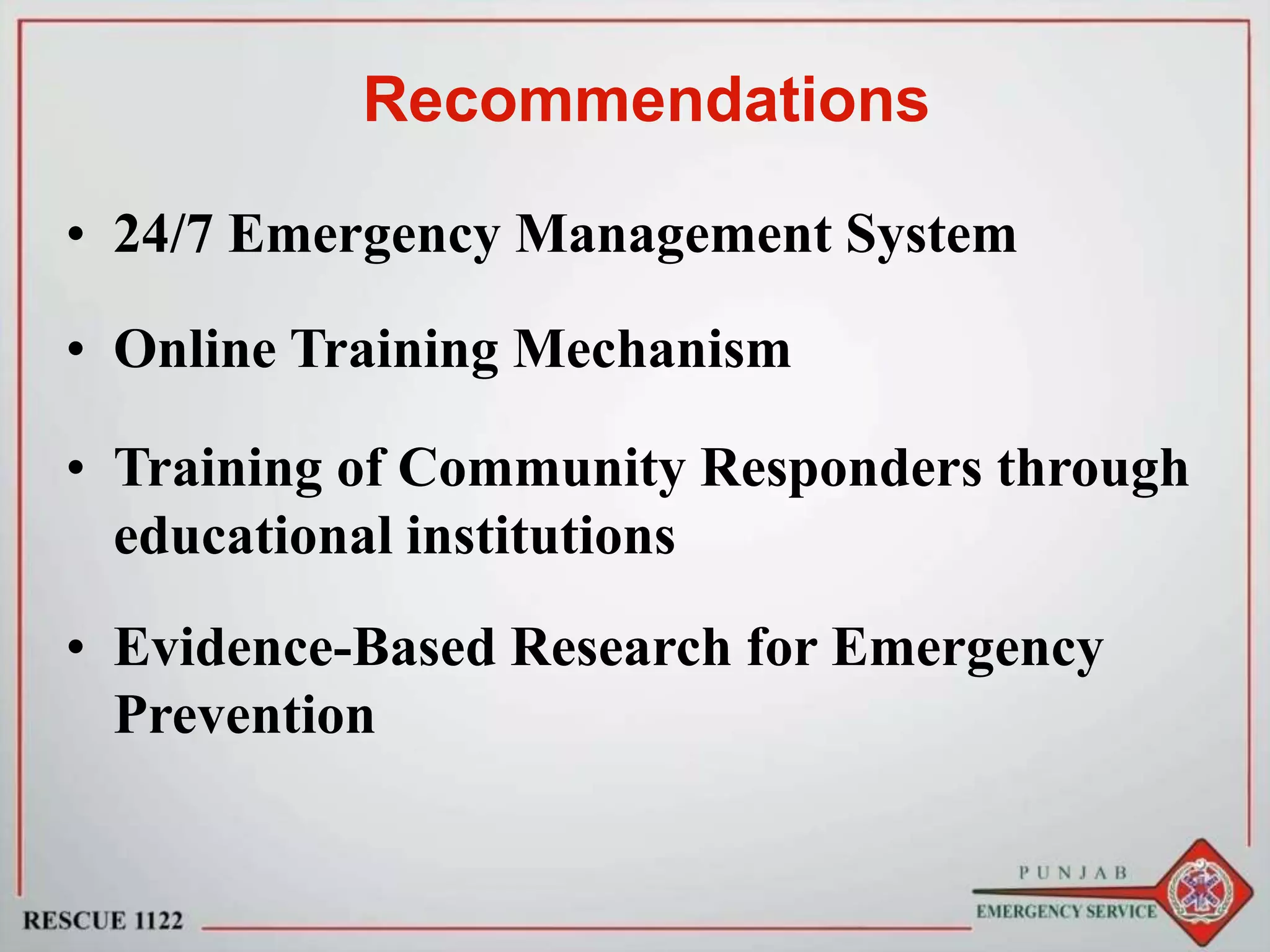
Recommendations
• 24/7 Emergency Management System
• Online Training Mechanism
• Training of Community Responders through
educational institutions
• Evidence-Based Research for Emergency
Prevention
Thanks You!

PEER Training Processes and Establishment of Emergency Services Academy

  • 1.
    Program for Enhancement ofEmergency Response (PEER) for Pakistan RESCUE 1122 www.rescue.gov.pk (Ms. Roqiya Bano Javed) PEER Instrcutor / Controller of Examinations, Emergency Services Academy, Pakistan.
  • 2.
  • 3.
    Common Emergencies • RoadTraffic Accidents • Structural Collapse • Fires • Floods • Earthquake
  • 4.
    Disaster Management Strategy Planning & Coordination by National & Provincial Disaster Management Authorities.  Emergency Rescue Services for professional management of emergencies.  Community Emergency Response Teams at Union Council level.  Hospital Emergency Preparedness by Ministry of Health NHEPRN
  • 5.
    Disaster Response Strategy DisasterScale Managers • Small scale • Medium • Large • Emergency Services • ES + CERT • ES + CERT + Army for Complex Emergencies & Air Support
  • 6.
    Institutionalization of PEER TrainingProcess & Establishment of Emergency Services Academy
  • 7.
    PEER Implementation inPakistan  MFR & CSSR at Emergency Services Academy for training of Emergency Services in Pakistan.  CADRE for Community Emergency Response Teams in all 3884 Union Council of Punjab. 114138 BLS Trained Rescue Scouts HOPE by Ministry of Health - NHEPRN
  • 8.
    PEER Certified Instructors Organization Instructors MFRCSSR CADRE Rescue 1122 68 62 24 Pakistan Army 13 14 - CDA 3 3 - Red Crescent 2 2 24 Rangers 2 2 - Civil Defense 1 - - TOTAL 89 83 48
  • 9.
    (Following PEER guidelinesby PEER Instructors) Course Name No of Courses conducted MFR Course 45 CSSR Course 35 TFI Course 23 Total 103 Courses Conducted at ESA
  • 10.
    Emergency Staff Trainedat ESA Organization Trained Rescue 1122 (Punjab) 17060 Aman Foundation, Karachi 484 (only MFR) Khyber Pakhtunkhwa 2396 Gilgit Baltistan 420 AJK 133 Balochistan 268 TOTAL 20762
  • 11.
    Institutionalization of PEERTraining Training of 220 Master Instructors by PEER Training of 120,000 Community Responders Training of 20762 Emergency Service Personnel Training of 864 Instructors of Emergency Services under PEER monitoring
  • 12.
    • Rescue Staff •Volunteers Printing of Training Material 2008--- Addition into Basic Training MFR for EMTs CSSR for Rescuers CADRE for community volunteers & TFI / IWs for Rescue Instructors. 2008 PEER Certification for Instructors All Officers and Instructors of Academy were trained through PEER Courses 2008-2012 Courses Adaptation PEER Courses were adapted as per local requirements by PEER. Instructors 2008 Integrating PEER Methodology
  • 13.
    Procurement of TrainingEquipment NEw slide s
  • 14.
  • 15.
  • 16.
    Establishment of Emergency ServicesAcademy Borrowed Campus 2004 Temporary Campus 2006 New Emergency Academy 2015
  • 17.
  • 18.
  • 19.
  • 20.
  • 21.
  • 22.
    Emergency Statistics (Since 2004) 17Years Daily Emergency Calls Responded 8.6 M 3617 • Road Traffic Accidents/ Crashes 2.90 M 1050 • Fires (Cylinder/ Explosions 1832) 168415 53 • Structural Collapse 9961 92 • Crime 276072 120 • Drowning 14061 08 • Medical (Misc 834618) 4.43 M 1968 • Average Response Time in Minutes 7 Min. 7 Min. • Fake Emergency Calls Responded 4135 0.03 • Patients Rescued 9.5M 3510
  • 23.
    Issues & Challenges Political Ownership Purposebuilt training institution for sustainable Human Resource Development Retention of Instructors/ Permanent faculty of emergency training Integration of Training & Operational requirements
  • 24.
    Recommendations • 24/7 EmergencyManagement System • Online Training Mechanism • Training of Community Responders through educational institutions • Evidence-Based Research for Emergency Prevention
  • 25.