4 August 2021
Sisira Madurapperuma
Director, Preparedness for Response and Recovery
ADPC, Thailand
Overview
PEER INSTITUTIONALIZATION
PEER
Institutionalization
Strategy, Indicators
and Way Forward
The PEER Journey
From Training to Institutionalization
Developing
Instructors &
Graduates
YOUR TITLE 01
Adopting PEER
Methodology
and Approach
Identifying Entry-
Points to
integrate PEER in
Annual Plans and
Strategies
Leveraging Funding
Sources and
Budgetary Allocation
for Sustainability
Key Ingredients for PEER Institutionalization
Strengthen
Technical
Capacities
Strengthen
Institutional
Capacities
South-South Learning and Exchange
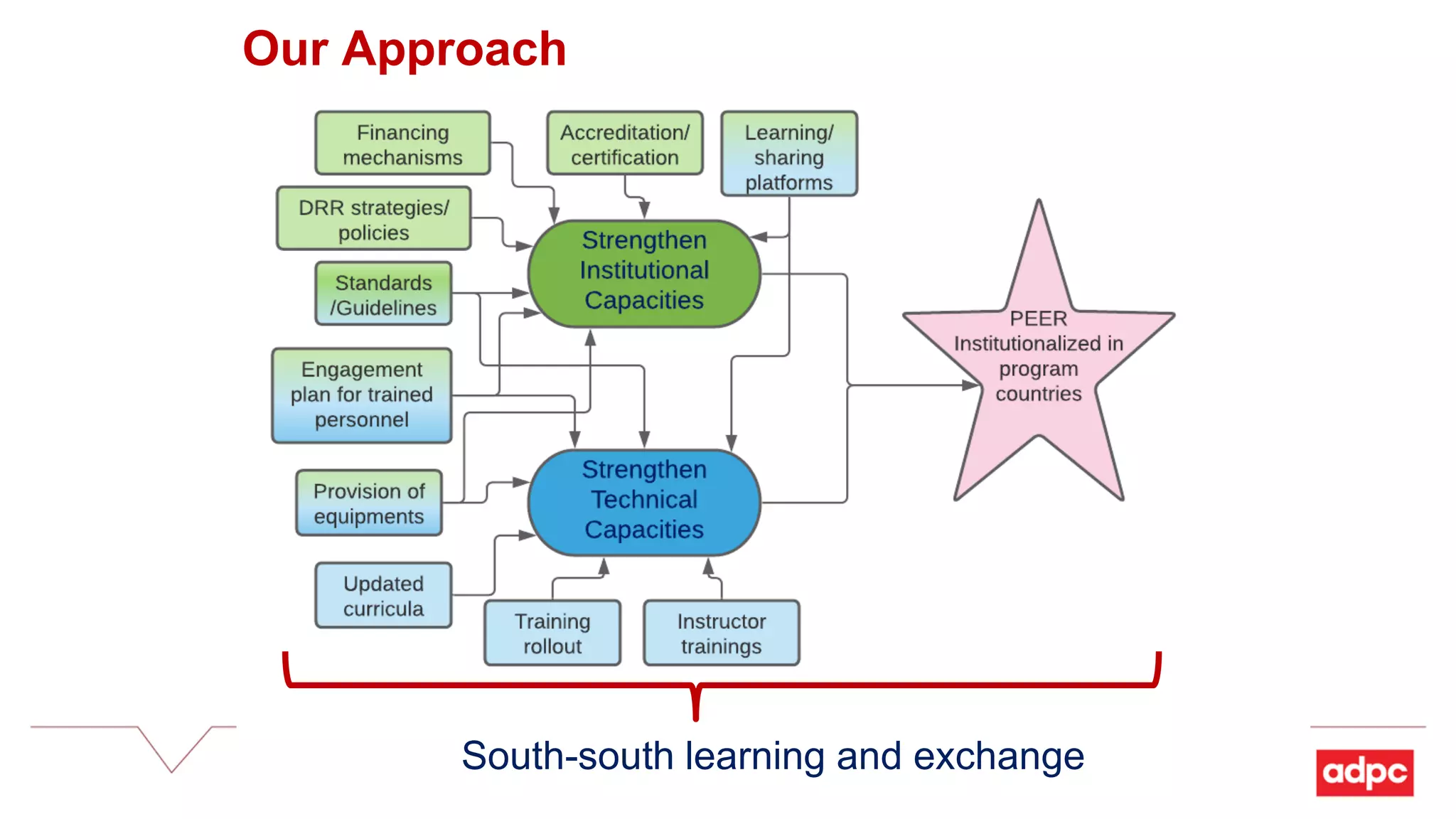
Our Approach
South-south learning and exchange
PEER Institutionalization Conditions
Nationaly Adapted PEER
Curricula
National PEER Standards
Established and Endorsed
PEER Integrated into DRR
Strategies
Indentified funding sources
for rollout / integration in
annual budgets
PEER includes as one of the
training programs / modules
by national / Sub national…
Minimum required PEER
instructors sustained
One or more courses
accredited by professional
institutes
Engagement plan for trained
personnel established and
endorsed
Established PEER
community of practice for
learning and sharing
PEER Institutionalization
1
Institutionally adapted, locally
translated
Adapted PEER Curricula
2
Training system standards,
national response standards,
simulations to validate and test
National PEER Standards
3
Linkages in existing plans,
policies, strategies, and
frameworks, engagement in
review and updating of PEER
plans
Integration into DRR
Strategies
4
Annual budget allocation,
leverage partner funds
Funding Sources
5
Integration into
Institutional
Programs
Inclusion in annual work plan,
curricula and use of PEER
materials
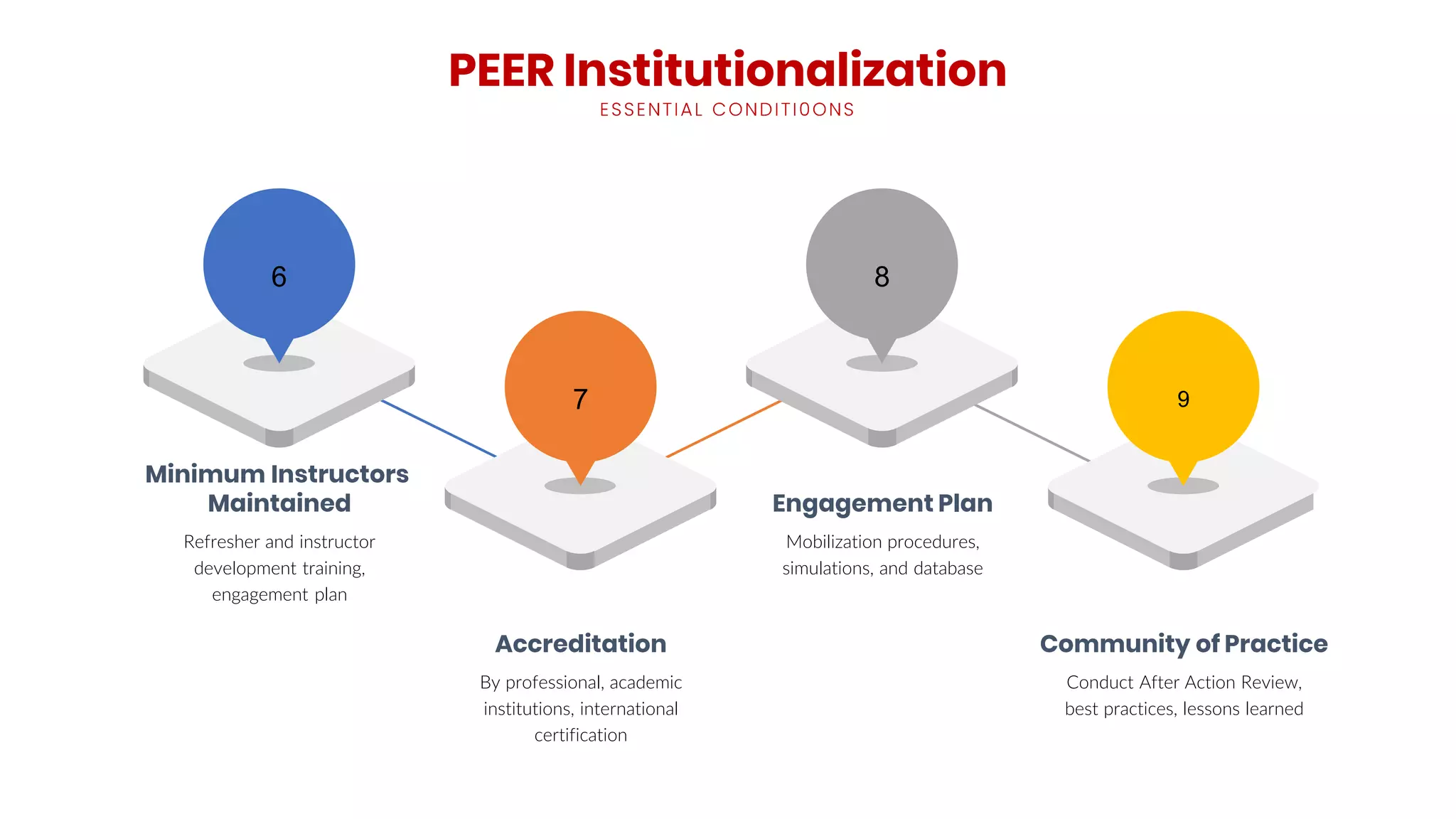
PEER Institutionalization
6
Refresher and instructor
development training,
engagement plan
Minimum Instructors
Maintained
7
By professional, academic
institutions, international
certification
Accreditation
8
Mobilization procedures,
simulations, and database
Engagement Plan
9
Conduct After Action Review,
best practices, lessons learned
Community of Practice
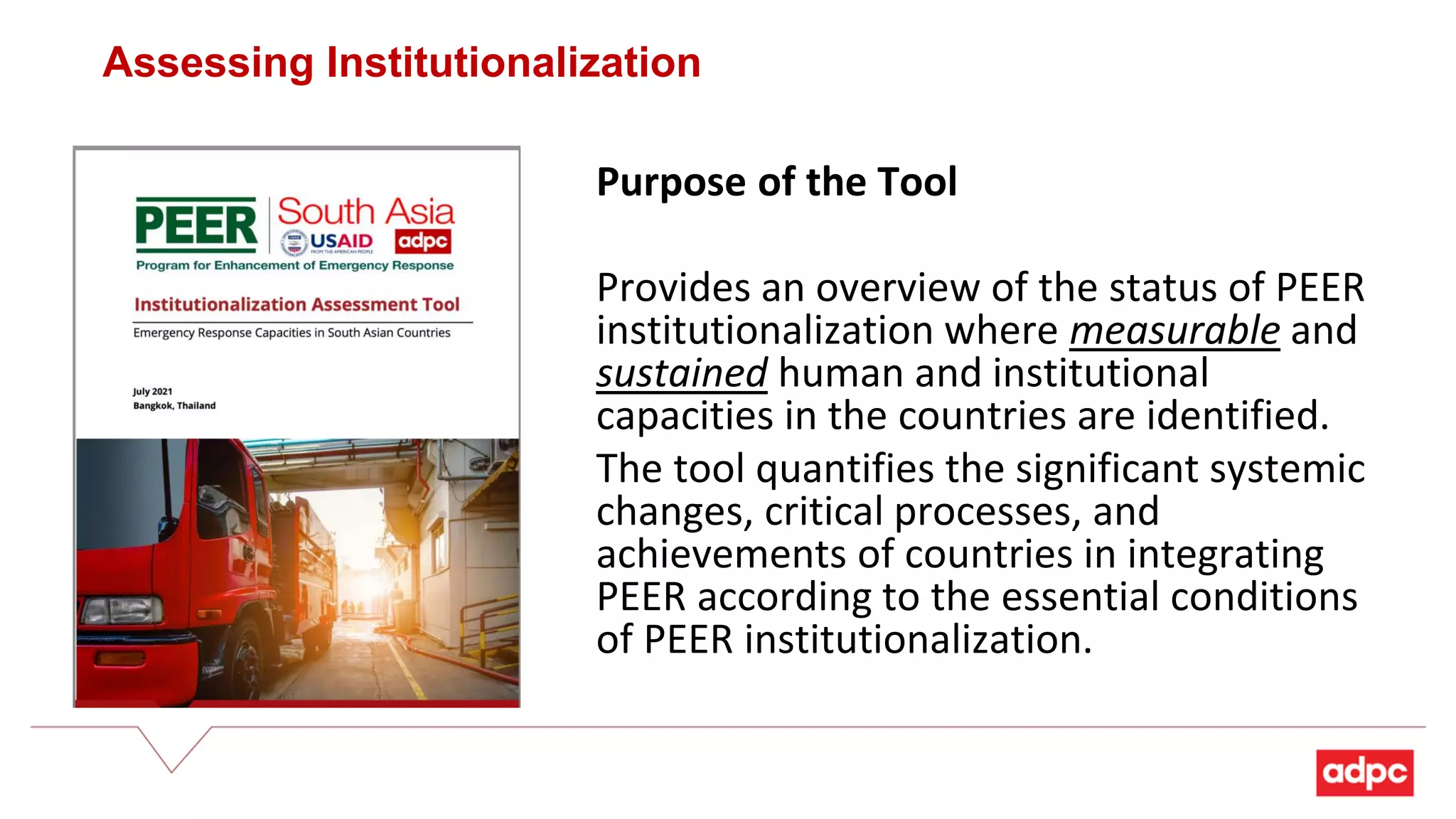
Purpose of the Tool
Provides an overview of the status of PEER
institutionalization where measurable and
sustained human and institutional
capacities in the countries are identified.
The tool quantifies the significant systemic
changes, critical processes, and
achievements of countries in integrating
PEER according to the essential conditions
of PEER institutionalization.
Assessing Institutionalization
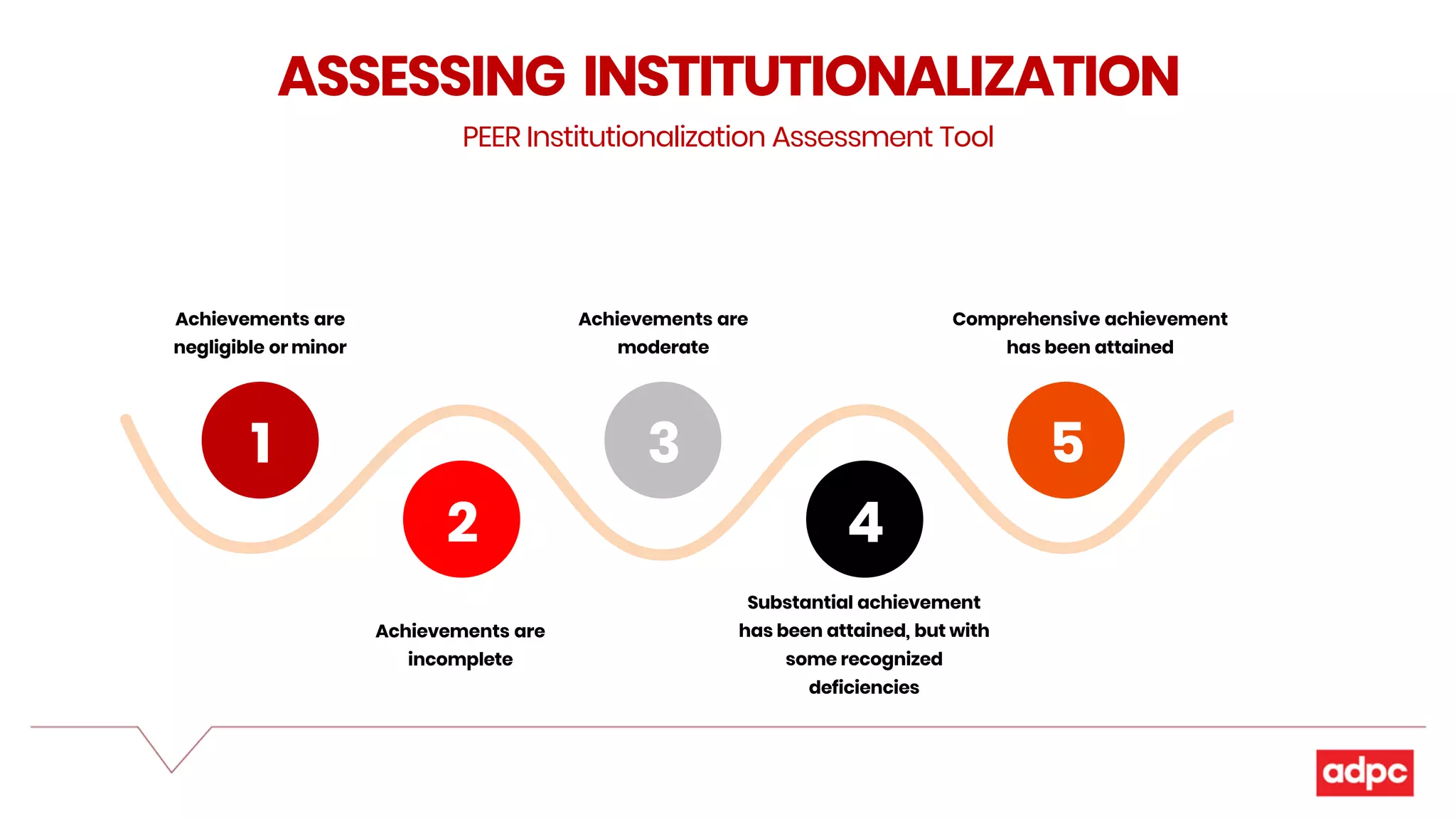
Achievements are
negligible or minor
1
2
Achievements are
incomplete
Achievements are
moderate
3
4
Substantial achievement
has been attained, but with
some recognized
deficiencies
Comprehensive achievement
has been attained
5
6
SELECT BEST
ALTERNATIVES
ASSESSING INSTITUTIONALIZATION
PEER Institutionalization Assessment Tool
PEER Institutionalization Outlook - 01
Nationaly Adapted PEER
Curricula
National PEER Standards
Established and Endorsed
PEER Integrated into DRR
Strategies
Indentified funding sources for
rollout / integration in annual
budgets
PEER includes as one of the
training programs / modules
by national / Sub national
institutes
Minimum required PEER
instructors sustained
One or more courses
accredited by professional
institutes
Engagement plan for trained
personnel established and
endorsed
Established PEER community
of practice for learning and
sharing
Country A
PEER Institutionalization Outlook - 02
Nationaly Adapted PEER
Curricula
National PEER Standards
Established and Endorsed
PEER Integrated into DRR
Strategies
Indentified funding sources for
rollout / integration in annual
budgets
PEER includes as one of the
training programs / modules by
national / Sub national institutes
Minimum required PEER
instructors sustained
One or more courses
accredited by professional
institutes
Engagement plan for trained
personnel established and
endorsed
Established PEER community
of practice for learning and
sharing
Country B
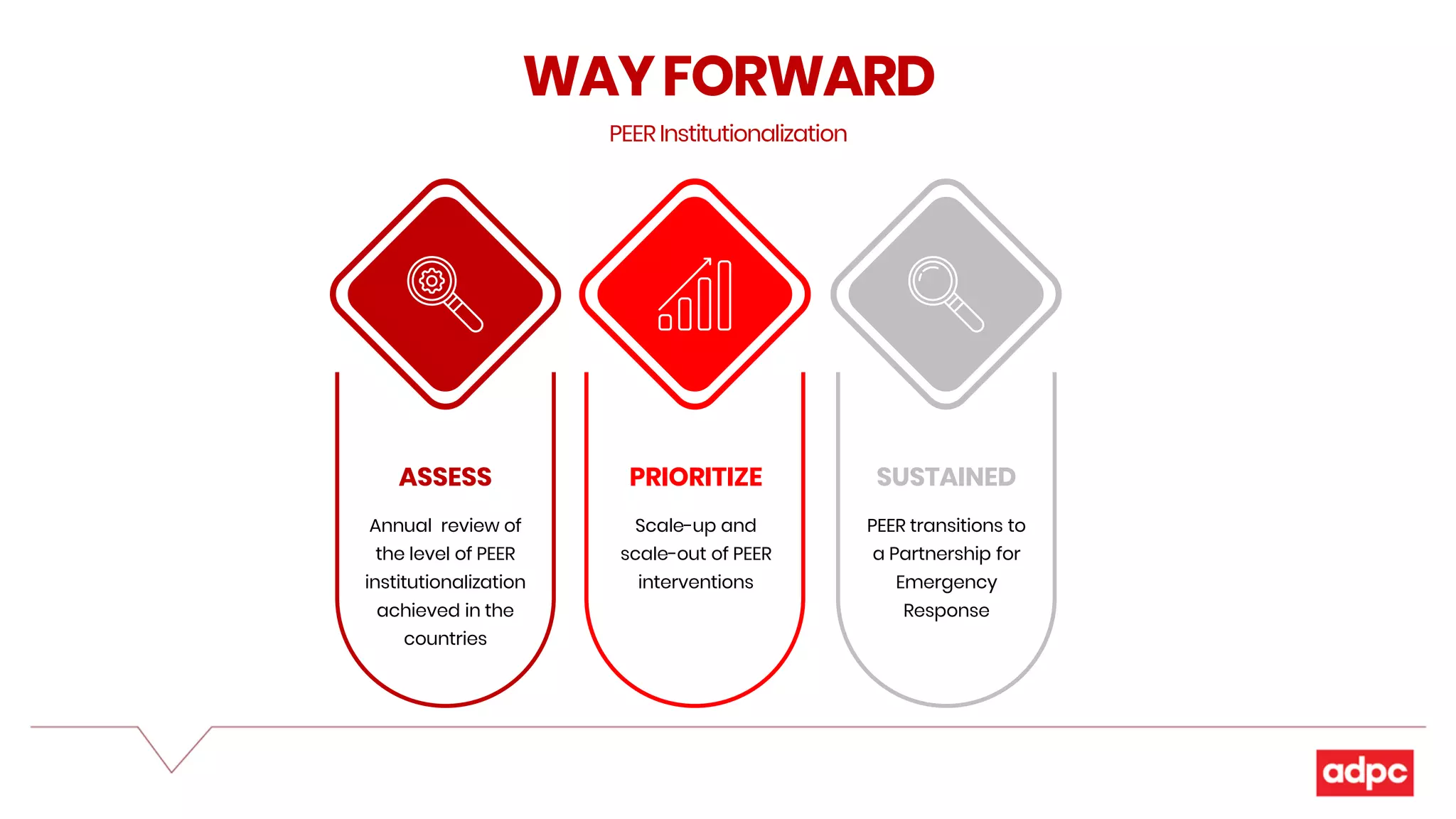
ASSESS
Annual review of
the level of PEER
institutionalization
achieved in the
countries
PRIORITIZE
Scale-up and
scale-out of PEER
interventions
SUSTAINED
PEER transitions to
a Partnership for
Emergency
Response
WAYFORWARD
PEER Institutionalization
Thank You

Peer institutionalization strategy

  • 1.
    4 August 2021 SisiraMadurapperuma Director, Preparedness for Response and Recovery ADPC, Thailand Overview PEER INSTITUTIONALIZATION
  • 2.
  • 3.
  • 4.
    From Training toInstitutionalization Developing Instructors & Graduates YOUR TITLE 01 Adopting PEER Methodology and Approach Identifying Entry- Points to integrate PEER in Annual Plans and Strategies Leveraging Funding Sources and Budgetary Allocation for Sustainability
  • 5.
    Key Ingredients forPEER Institutionalization Strengthen Technical Capacities Strengthen Institutional Capacities South-South Learning and Exchange
  • 6.
  • 7.
    PEER Institutionalization Conditions NationalyAdapted PEER Curricula National PEER Standards Established and Endorsed PEER Integrated into DRR Strategies Indentified funding sources for rollout / integration in annual budgets PEER includes as one of the training programs / modules by national / Sub national… Minimum required PEER instructors sustained One or more courses accredited by professional institutes Engagement plan for trained personnel established and endorsed Established PEER community of practice for learning and sharing
  • 8.
    PEER Institutionalization 1 Institutionally adapted,locally translated Adapted PEER Curricula 2 Training system standards, national response standards, simulations to validate and test National PEER Standards 3 Linkages in existing plans, policies, strategies, and frameworks, engagement in review and updating of PEER plans Integration into DRR Strategies 4 Annual budget allocation, leverage partner funds Funding Sources 5 Integration into Institutional Programs Inclusion in annual work plan, curricula and use of PEER materials
  • 9.
    PEER Institutionalization 6 Refresher andinstructor development training, engagement plan Minimum Instructors Maintained 7 By professional, academic institutions, international certification Accreditation 8 Mobilization procedures, simulations, and database Engagement Plan 9 Conduct After Action Review, best practices, lessons learned Community of Practice
  • 10.
    Purpose of theTool Provides an overview of the status of PEER institutionalization where measurable and sustained human and institutional capacities in the countries are identified. The tool quantifies the significant systemic changes, critical processes, and achievements of countries in integrating PEER according to the essential conditions of PEER institutionalization. Assessing Institutionalization
  • 11.
    Achievements are negligible orminor 1 2 Achievements are incomplete Achievements are moderate 3 4 Substantial achievement has been attained, but with some recognized deficiencies Comprehensive achievement has been attained 5 6 SELECT BEST ALTERNATIVES ASSESSING INSTITUTIONALIZATION PEER Institutionalization Assessment Tool
  • 12.
    PEER Institutionalization Outlook- 01 Nationaly Adapted PEER Curricula National PEER Standards Established and Endorsed PEER Integrated into DRR Strategies Indentified funding sources for rollout / integration in annual budgets PEER includes as one of the training programs / modules by national / Sub national institutes Minimum required PEER instructors sustained One or more courses accredited by professional institutes Engagement plan for trained personnel established and endorsed Established PEER community of practice for learning and sharing Country A
  • 13.
    PEER Institutionalization Outlook- 02 Nationaly Adapted PEER Curricula National PEER Standards Established and Endorsed PEER Integrated into DRR Strategies Indentified funding sources for rollout / integration in annual budgets PEER includes as one of the training programs / modules by national / Sub national institutes Minimum required PEER instructors sustained One or more courses accredited by professional institutes Engagement plan for trained personnel established and endorsed Established PEER community of practice for learning and sharing Country B
  • 14.
    ASSESS Annual review of thelevel of PEER institutionalization achieved in the countries PRIORITIZE Scale-up and scale-out of PEER interventions SUSTAINED PEER transitions to a Partnership for Emergency Response WAYFORWARD PEER Institutionalization
  • 15.