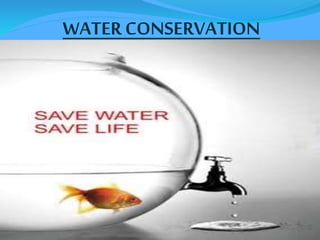



WATER CONSERVATION
PRESENTED BY: 
DIVYA SINGH
INTRODUCTION: 
India has; 
2.5% global land mass 
4% of global fresh water 
sources 
17% of global population
BENEFITS OF WATER: 
 Life Started From Water 
 Nature Flourishes With Water 
Seasons Caused By Water 
Development Progresses With Water 
Energy Formed Of Water 
Health Depends On Water 
Religion Imbibes Water 
History Made Of Water 
Trade Rides On Water 
Bio-Diversity Needs Water 
Water Sustains Life 
It Brings Prosperity and Happiness
CHALLENGES OF WATER 
RESOURCES: 
Ensuring adequate potable water supply 
Water for food security, energy 
Water for economic growth thro’ Industrial 
and 
S i erv ce sect (70 ors ‐80% GDP) 
Environmental Conservation & Preservation 
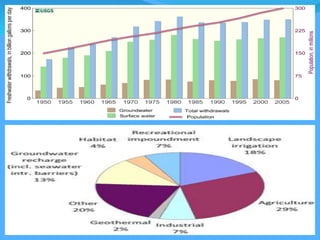
Problems Problems more acute in Urban 
areas
NEED FOR WATER 
CONSERVATION: 
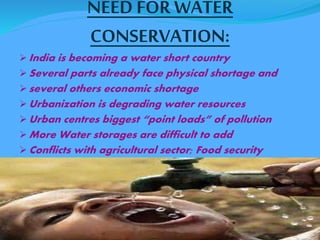
India is becoming a water short country 
Several parts already face physical shortage and 
several others economic shortage 
Urbanization is degrading water resources 
Urban centres biggest “point loads” of pollution 
More Water storages are difficult to add 
Conflicts with agricultural sector; Food security
CONSERVING WATER INDOORS: 
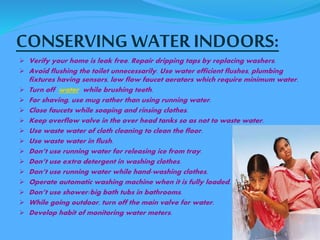
 Verify your home is leak free. Repair dripping taps by replacing washers. 
 Avoid flushing the toilet unnecessarily. Use water efficient flushes, plumbing 
fixtures having sensors, low flow faucet aerators which require minimum water. 
 Turn off water while brushing teeth. 
 For shaving, use mug rather than using running water. 
 Close faucets while soaping and rinsing clothes. 
 Keep overflow valve in the over head tanks so as not to waste water. 
 Use waste water of cloth cleaning to clean the floor. 
 Use waste water in flush. 
 Don’t use running water for releasing ice from tray. 
 Don’t use extra detergent in washing clothes. 
 Don’t use running water while hand-washing clothes. 
 Operate automatic washing machine when it is fully loaded. 
 Don’t use shower/big bath tubs in bathrooms. 
 While going outdoor, turn off the main valve for water. 
 Develop habit of monitoring water meters.
CONSERVING WATER OUTDOORS: 
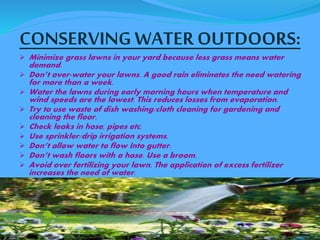
 Minimize grass lawns in your yard because less grass means water 
demand. 
 Don’t over-water your lawns. A good rain eliminates the need watering 
for more than a week. 
 Water the lawns during early morning hours when temperature and 
wind speeds are the lowest. This reduces losses from evaporation. 
 Try to use waste of dish washing/cloth cleaning for gardening and 
cleaning the floor. 
 Check leaks in hose, pipes etc. 
 Use sprinkler/drip irrigation systems. 
 Don’t allow water to flow Into gutter. 
 Don’t wash floors with a hose. Use a broom. 
 Avoid over fertilizing your lawn. The application of excess fertilizer 
increases the need of water.
PROPER USAGE OF WATER: 
 Wash fruit and vegetables in a bowl rather than with running water 
 a five minute shower uses about a third of the water of a bath 
(although a power shower will use the same amount of water as a 
bath in less than five minutes) 
 try not to leave the tap running when you brush your teeth – rinse out 
from a tumbler instead 
 Eggs release nutrients when you boil them. If you use the water once 
it's cooled for watering houseplants, they will appreciate the extra 
nourishment 
 Resist the urge to start your washing machine or dishwasher until you 
have a full load. The average wash needs about 95 litres. A full 
load uses less water than two half loads 
 use the minimum amount of water required when making a cup of 
tea – so you'll save energy as well as water 
 keep a jug of water in the fridge instead of running taps to get cold 
water
CONT.. 
 Use the dirty water when cleaning a fish tank on your houseplants. It's 
rich in nitrogen and phosphorus, which are excellent fertilizers 
 you can use less water by turning the hot tap down, rather than the 
cold tap up 
 cotton wool and tissues should be put in a waste bin rather than 
flushed down the toilet 
 Turning the taps off when you brush your teeth can save up to five 
litres a minute. 
 Use rainwater for garden watering and washing machines. This can 
save up to 50% of household water use (according to the Environment 
Agency) 
 spray taps on hand basins save up to 80% of the water 
 dual flush and low-flush toilets can cut household water by up to 20%, 
and save more than half the water used in flushing toilets 
 plan your building's plumbing system so that both water and energy 
savings can be made
CONCLUSION: 
 Climate change is having a significant impact on weather patterns, precipitation 
and the hydrological cycle, affecting surface water availability, as well as soil 
moisture and groundwater recharge. 
 The growing uncertainty of surface water availability and increasing levels of 
water pollution and water diversions threaten to disrupt social and economic 
development in many areas as well as the health of ecosystems. 
 Groundwater resources can, in many instances, supplement surface water, 
particularly as a source of drinking water. However, in many cases, these 
aquifers are being tapped at an unsustainable rate or affected by pollution. 
More attention should be paid to sustainable management of non-renewable 
groundwater. 
 Many traditional practices are being refined (e.g. rainwater harvesting), while 
more recent advances (e.g. artificial recharge, desalination and water reuse) are 
being developed further. More support needs to be given to policy options, such 
as demand management, which stress more efficient use of water resources, as 
well as to technical solutions on the supply side. 
 The projected increased variability in the availability and distribution of 
freshwater resources demands political commitment to supporting and 
advancing technology for the collection and analysis of hydrological data. More 
up-to-date information will enable policy-makers to make better informed 
decisions regarding water resources management.
Water conservation
Water conservation
Water conservation

Water conservation

  • 1.
  • 2.
  • 3.
    INTRODUCTION: India has; 2.5% global land mass 4% of global fresh water sources 17% of global population
  • 4.
    BENEFITS OF WATER:  Life Started From Water  Nature Flourishes With Water Seasons Caused By Water Development Progresses With Water Energy Formed Of Water Health Depends On Water Religion Imbibes Water History Made Of Water Trade Rides On Water Bio-Diversity Needs Water Water Sustains Life It Brings Prosperity and Happiness
  • 5.
    CHALLENGES OF WATER RESOURCES: Ensuring adequate potable water supply Water for food security, energy Water for economic growth thro’ Industrial and S i erv ce sect (70 ors ‐80% GDP) Environmental Conservation & Preservation Problems Problems more acute in Urban areas
  • 7.
    NEED FOR WATER CONSERVATION: India is becoming a water short country Several parts already face physical shortage and several others economic shortage Urbanization is degrading water resources Urban centres biggest “point loads” of pollution More Water storages are difficult to add Conflicts with agricultural sector; Food security
  • 8.
    CONSERVING WATER INDOORS:  Verify your home is leak free. Repair dripping taps by replacing washers.  Avoid flushing the toilet unnecessarily. Use water efficient flushes, plumbing fixtures having sensors, low flow faucet aerators which require minimum water.  Turn off water while brushing teeth.  For shaving, use mug rather than using running water.  Close faucets while soaping and rinsing clothes.  Keep overflow valve in the over head tanks so as not to waste water.  Use waste water of cloth cleaning to clean the floor.  Use waste water in flush.  Don’t use running water for releasing ice from tray.  Don’t use extra detergent in washing clothes.  Don’t use running water while hand-washing clothes.  Operate automatic washing machine when it is fully loaded.  Don’t use shower/big bath tubs in bathrooms.  While going outdoor, turn off the main valve for water.  Develop habit of monitoring water meters.
  • 9.
    CONSERVING WATER OUTDOORS:  Minimize grass lawns in your yard because less grass means water demand.  Don’t over-water your lawns. A good rain eliminates the need watering for more than a week.  Water the lawns during early morning hours when temperature and wind speeds are the lowest. This reduces losses from evaporation.  Try to use waste of dish washing/cloth cleaning for gardening and cleaning the floor.  Check leaks in hose, pipes etc.  Use sprinkler/drip irrigation systems.  Don’t allow water to flow Into gutter.  Don’t wash floors with a hose. Use a broom.  Avoid over fertilizing your lawn. The application of excess fertilizer increases the need of water.
  • 10.
    PROPER USAGE OFWATER:  Wash fruit and vegetables in a bowl rather than with running water  a five minute shower uses about a third of the water of a bath (although a power shower will use the same amount of water as a bath in less than five minutes)  try not to leave the tap running when you brush your teeth – rinse out from a tumbler instead  Eggs release nutrients when you boil them. If you use the water once it's cooled for watering houseplants, they will appreciate the extra nourishment  Resist the urge to start your washing machine or dishwasher until you have a full load. The average wash needs about 95 litres. A full load uses less water than two half loads  use the minimum amount of water required when making a cup of tea – so you'll save energy as well as water  keep a jug of water in the fridge instead of running taps to get cold water
  • 11.
    CONT..  Usethe dirty water when cleaning a fish tank on your houseplants. It's rich in nitrogen and phosphorus, which are excellent fertilizers  you can use less water by turning the hot tap down, rather than the cold tap up  cotton wool and tissues should be put in a waste bin rather than flushed down the toilet  Turning the taps off when you brush your teeth can save up to five litres a minute.  Use rainwater for garden watering and washing machines. This can save up to 50% of household water use (according to the Environment Agency)  spray taps on hand basins save up to 80% of the water  dual flush and low-flush toilets can cut household water by up to 20%, and save more than half the water used in flushing toilets  plan your building's plumbing system so that both water and energy savings can be made
  • 14.
    CONCLUSION:  Climatechange is having a significant impact on weather patterns, precipitation and the hydrological cycle, affecting surface water availability, as well as soil moisture and groundwater recharge.  The growing uncertainty of surface water availability and increasing levels of water pollution and water diversions threaten to disrupt social and economic development in many areas as well as the health of ecosystems.  Groundwater resources can, in many instances, supplement surface water, particularly as a source of drinking water. However, in many cases, these aquifers are being tapped at an unsustainable rate or affected by pollution. More attention should be paid to sustainable management of non-renewable groundwater.  Many traditional practices are being refined (e.g. rainwater harvesting), while more recent advances (e.g. artificial recharge, desalination and water reuse) are being developed further. More support needs to be given to policy options, such as demand management, which stress more efficient use of water resources, as well as to technical solutions on the supply side.  The projected increased variability in the availability and distribution of freshwater resources demands political commitment to supporting and advancing technology for the collection and analysis of hydrological data. More up-to-date information will enable policy-makers to make better informed decisions regarding water resources management.