2
Content
1.RCREEE Introduction
2.Arab Region in Numbers
3.NDCs and Climate Finance in the
Arab Region
4.High Level Policy Dialogue
3
The Role of Regional Coordination ….
RCREEE Introduction
4
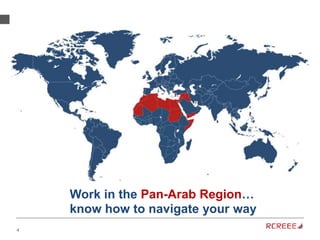
Work in the Pan-Arab Region…
know how to navigate your way
5
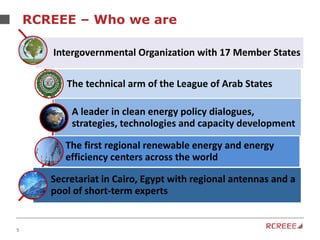
RCREEE – Who we are
Intergovernmental Organization with 17 Member States
The technical arm of the League of Arab States
A leader in clean energy policy dialogues,
strategies, technologies and capacity development
The first regional renewable energy and energy
efficiency centers across the world
Secretariat in Cairo, Egypt with regional antennas and a
pool of short-term experts
6
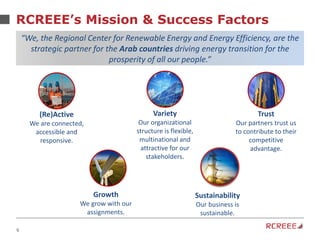
RCREEE’s Mission & Success Factors
“We, the Regional Center for Renewable Energy and Energy Efficiency, are the
strategic partner for the Arab countries driving energy transition for the
prosperity of all our people.”
Growth
We grow with our
assignments.
(Re)Active
We are connected,
accessible and
responsive.
Variety
Our organizational
structure is flexible,
multinational and
attractive for our
stakeholders.
Trust
Our partners trust us
to contribute to their
competitive
advantage.
Sustainability
Our business is
sustainable.
7
Energy Challenges and Climate Risks…
Arab Region in Numbers
8
Facts and Figures
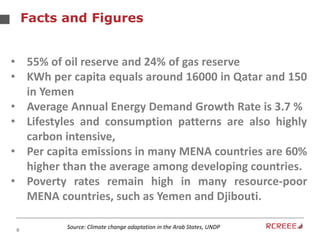
• 55% of oil reserve and 24% of gas reserve
• KWh per capita equals around 16000 in Qatar and 150
in Yemen
• Average Annual Energy Demand Growth Rate is 3.7 %
• Lifestyles and consumption patterns are also highly
carbon intensive,
• Per capita emissions in many MENA countries are 60%
higher than the average among developing countries.
• Poverty rates remain high in many resource-poor
MENA countries, such as Yemen and Djibouti.
Source: Climate change adaptation in the Arab States, UNDP
9
Climate Risks in Arab Countries
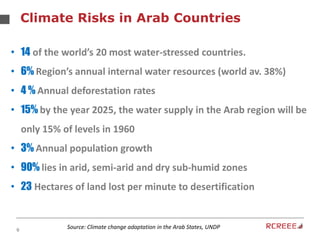
• 14 of the world’s 20 most water-stressed countries.
• 6% Region’s annual internal water resources (world av. 38%)
• 4 % Annual deforestation rates
• 15% by the year 2025, the water supply in the Arab region will be
only 15% of levels in 1960
• 3% Annual population growth
• 90% lies in arid, semi-arid and dry sub-humid zones
• 23 Hectares of land lost per minute to desertification
Source: Climate change adaptation in the Arab States, UNDP
10
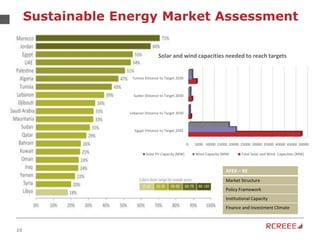
Sustainable Energy Market Assessment
0 5000 10000 15000 20000 25000 30000 35000 40000 45000 50000
Egypt Distance to Target 2035
Lebanon Distance to Target 2030
Sudan Distance to Target 2030
Tunisia Distance to Target 2030
Solar and wind capacities needed to reach targets
Solar PV Capacity (MW) Wind Capacity (MW) Total Solar and Wind Capacities (MW)
AFEX – RE
Market Structure
Policy Framework
Institutional Capacity
Finance and Investment Climate
11
Needs and Gaps…
NDCs and Climate Finance
in the Arab Region
12
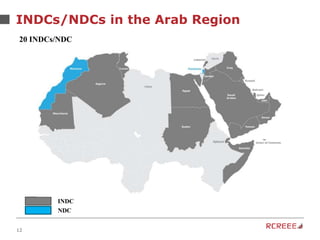
INDCs/NDCs in the Arab Region
INDC
NDC
20 INDCs/NDC
13
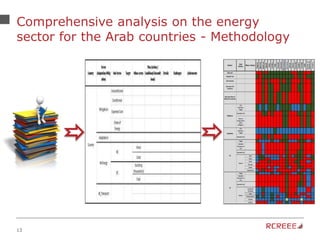
Comprehensive analysis on the energy
sector for the Arab countries - Methodology
14
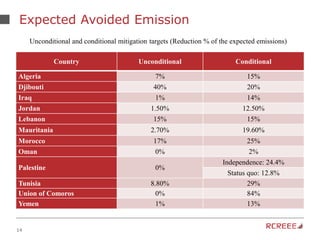
Expected Avoided Emission
Country Unconditional Conditional
Algeria 7% 15%
Djibouti 40% 20%
Iraq 1% 14%
Jordan 1.50% 12.50%
Lebanon 15% 15%
Mauritania 2.70% 19.60%
Morocco 17% 25%
Oman 0% 2%
Palestine 0%
Independence: 24.4%
Status quo: 12.8%
Tunisia 8.80% 29%
Union of Comoros 0% 84%
Yemen 1% 13%
Unconditional and conditional mitigation targets (Reduction % of the expected emissions)
15
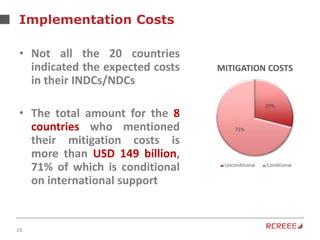
• Not all the 20 countries
indicated the expected costs
in their INDCs/NDCs
• The total amount for the 8
countries who mentioned
their mitigation costs is
more than USD 149 billion,
71% of which is conditional
on international support
29%
71%
MITIGATION COSTS
Unconditional Conditional
Implementation Costs
16
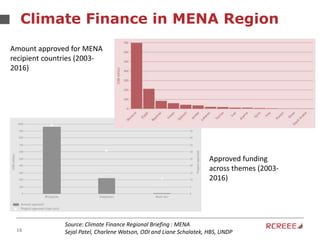
Climate Finance in MENA Region
Amount approved for MENA
recipient countries (2003-
2016)
Approved funding
across themes (2003-
2016)
Source: Climate Finance Regional Briefing : MENA
Sejal Patel, Charlene Watson, ODI and Liane Schalatek, HBS, UNDP
17
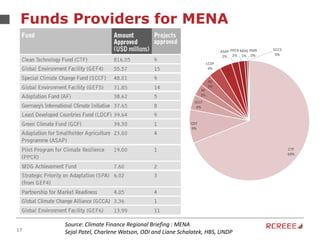
Funds Providers for MENA
Source: Climate Finance Regional Briefing : MENA
Sejal Patel, Charlene Watson, ODI and Liane Schalatek, HBS, UNDP
CTF
69%
GEF
9%
SCCF
4%
AF
3%
IKI
3%
LCDF
4% GCF
3%
ASAP
2%
PPCR
2%
MDG
1%
PMR
0%
GCCS
0%
18
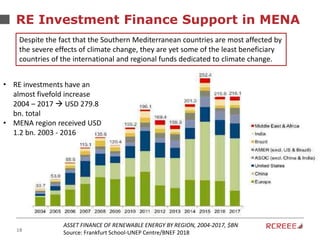
RE Investment Finance Support in MENA
ASSET FINANCE OF RENEWABLE ENERGY BY REGION, 2004-2017, $BN
Source: Frankfurt School-UNEP Centre/BNEF 2018
• RE investments have an
almost fivefold increase
2004 – 2017  USD 279.8
bn. total
• MENA region received USD
1.2 bn. 2003 - 2016
Despite the fact that the Southern Mediterranean countries are most affected by
the severe effects of climate change, they are yet some of the least beneficiary
countries of the international and regional funds dedicated to climate change.
19
Modus Operandi and Way Forward….
High Level Policy Dialogue
20
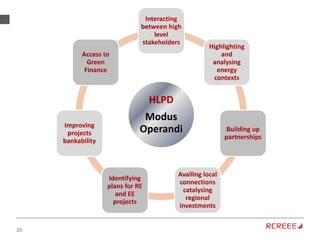
Modus
Operandi
21
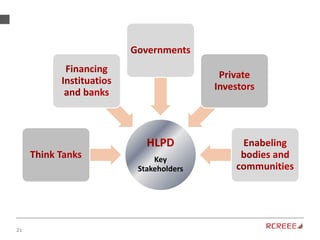
Key
Stakeholders
22
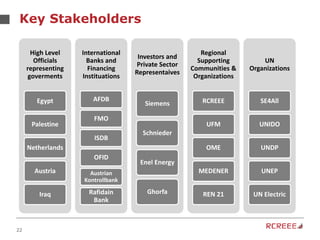
High Level
Officials
representing
goverments
Egypt
Palestine
Netherlands
Austria
Iraq
International
Banks and
Financing
Instituations
AFDB
FMO
ISDB
OFID
Austrian
Kontrollbank
Rafidain
Bank
Investors and
Private Sector
Representaives
Siemens
Schnieder
Enel Energy
Ghorfa
Regional
Supporting
Communities &
Organizations
RCREEE
UFM
OME
MEDENER
REN 21
UN
Organizations
SE4All
UNIDO
UNDP
UNEP
UN Electric
Key Stakeholders
23
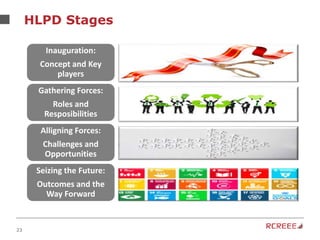
Inauguration:
Concept and Key
players
Gathering Forces:
Roles and
Resposibilities
Alligning Forces:
Challenges and
Opportunities
Seizing the Future:
Outcomes and the
Way Forward
HLPD Stages
24
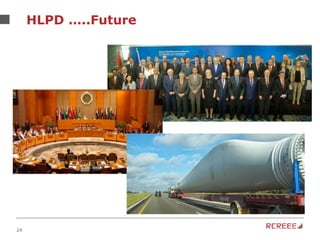
HLPD …..Future
25
Are We Thinking the Same …..

HLPD_Setting the scene

  • 2.
    2 Content 1.RCREEE Introduction 2.Arab Regionin Numbers 3.NDCs and Climate Finance in the Arab Region 4.High Level Policy Dialogue
  • 3.
    3 The Role ofRegional Coordination …. RCREEE Introduction
  • 4.
    4 Work in thePan-Arab Region… know how to navigate your way
  • 5.
    5 RCREEE – Whowe are Intergovernmental Organization with 17 Member States The technical arm of the League of Arab States A leader in clean energy policy dialogues, strategies, technologies and capacity development The first regional renewable energy and energy efficiency centers across the world Secretariat in Cairo, Egypt with regional antennas and a pool of short-term experts
  • 6.
    6 RCREEE’s Mission &Success Factors “We, the Regional Center for Renewable Energy and Energy Efficiency, are the strategic partner for the Arab countries driving energy transition for the prosperity of all our people.” Growth We grow with our assignments. (Re)Active We are connected, accessible and responsive. Variety Our organizational structure is flexible, multinational and attractive for our stakeholders. Trust Our partners trust us to contribute to their competitive advantage. Sustainability Our business is sustainable.
  • 7.
    7 Energy Challenges andClimate Risks… Arab Region in Numbers
  • 8.
    8 Facts and Figures •55% of oil reserve and 24% of gas reserve • KWh per capita equals around 16000 in Qatar and 150 in Yemen • Average Annual Energy Demand Growth Rate is 3.7 % • Lifestyles and consumption patterns are also highly carbon intensive, • Per capita emissions in many MENA countries are 60% higher than the average among developing countries. • Poverty rates remain high in many resource-poor MENA countries, such as Yemen and Djibouti. Source: Climate change adaptation in the Arab States, UNDP
  • 9.
    9 Climate Risks inArab Countries • 14 of the world’s 20 most water-stressed countries. • 6% Region’s annual internal water resources (world av. 38%) • 4 % Annual deforestation rates • 15% by the year 2025, the water supply in the Arab region will be only 15% of levels in 1960 • 3% Annual population growth • 90% lies in arid, semi-arid and dry sub-humid zones • 23 Hectares of land lost per minute to desertification Source: Climate change adaptation in the Arab States, UNDP
  • 10.
    10 Sustainable Energy MarketAssessment 0 5000 10000 15000 20000 25000 30000 35000 40000 45000 50000 Egypt Distance to Target 2035 Lebanon Distance to Target 2030 Sudan Distance to Target 2030 Tunisia Distance to Target 2030 Solar and wind capacities needed to reach targets Solar PV Capacity (MW) Wind Capacity (MW) Total Solar and Wind Capacities (MW) AFEX – RE Market Structure Policy Framework Institutional Capacity Finance and Investment Climate
  • 11.
    11 Needs and Gaps… NDCsand Climate Finance in the Arab Region
  • 12.
    12 INDCs/NDCs in theArab Region INDC NDC 20 INDCs/NDC
  • 13.
    13 Comprehensive analysis onthe energy sector for the Arab countries - Methodology
  • 14.
    14 Expected Avoided Emission CountryUnconditional Conditional Algeria 7% 15% Djibouti 40% 20% Iraq 1% 14% Jordan 1.50% 12.50% Lebanon 15% 15% Mauritania 2.70% 19.60% Morocco 17% 25% Oman 0% 2% Palestine 0% Independence: 24.4% Status quo: 12.8% Tunisia 8.80% 29% Union of Comoros 0% 84% Yemen 1% 13% Unconditional and conditional mitigation targets (Reduction % of the expected emissions)
  • 15.
    15 • Not allthe 20 countries indicated the expected costs in their INDCs/NDCs • The total amount for the 8 countries who mentioned their mitigation costs is more than USD 149 billion, 71% of which is conditional on international support 29% 71% MITIGATION COSTS Unconditional Conditional Implementation Costs
  • 16.
    16 Climate Finance inMENA Region Amount approved for MENA recipient countries (2003- 2016) Approved funding across themes (2003- 2016) Source: Climate Finance Regional Briefing : MENA Sejal Patel, Charlene Watson, ODI and Liane Schalatek, HBS, UNDP
  • 17.
    17 Funds Providers forMENA Source: Climate Finance Regional Briefing : MENA Sejal Patel, Charlene Watson, ODI and Liane Schalatek, HBS, UNDP CTF 69% GEF 9% SCCF 4% AF 3% IKI 3% LCDF 4% GCF 3% ASAP 2% PPCR 2% MDG 1% PMR 0% GCCS 0%
  • 18.
    18 RE Investment FinanceSupport in MENA ASSET FINANCE OF RENEWABLE ENERGY BY REGION, 2004-2017, $BN Source: Frankfurt School-UNEP Centre/BNEF 2018 • RE investments have an almost fivefold increase 2004 – 2017  USD 279.8 bn. total • MENA region received USD 1.2 bn. 2003 - 2016 Despite the fact that the Southern Mediterranean countries are most affected by the severe effects of climate change, they are yet some of the least beneficiary countries of the international and regional funds dedicated to climate change.
  • 19.
    19 Modus Operandi andWay Forward…. High Level Policy Dialogue
  • 20.
  • 21.
  • 22.
    22 High Level Officials representing goverments Egypt Palestine Netherlands Austria Iraq International Banks and Financing Instituations AFDB FMO ISDB OFID Austrian Kontrollbank Rafidain Bank Investorsand Private Sector Representaives Siemens Schnieder Enel Energy Ghorfa Regional Supporting Communities & Organizations RCREEE UFM OME MEDENER REN 21 UN Organizations SE4All UNIDO UNDP UNEP UN Electric Key Stakeholders
  • 23.
    23 Inauguration: Concept and Key players GatheringForces: Roles and Resposibilities Alligning Forces: Challenges and Opportunities Seizing the Future: Outcomes and the Way Forward HLPD Stages
  • 24.
  • 25.
    25 Are We Thinkingthe Same …..