
By Dr. Ravikanth Moka
JR/Post Graduate in General Medicine
K.V.G.M.C.H.
Sullia, D.K.
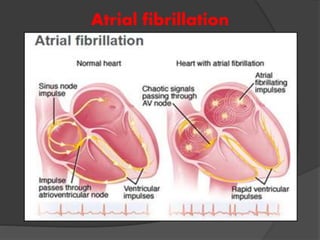
Atrial fibrillation
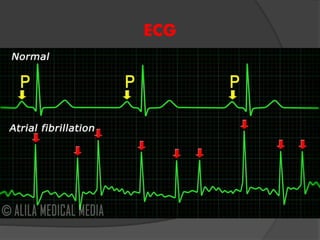
ECG
Atrial fibrillation
 Atrial fibrillation(AF or A fib), is a
supraventricular arrhythmia characterised
electrocardiographically by low-amplitude
baseline oscillations(fibrillatory or ‘f’ waves)
and an irregularly irregular ventricular rhythm.
 The ‘f’ waves have a rate of 300-600 bpm
and are variable in amplitude, shape and
timing.
 The ventricular rate during Afib typically is
100-160 bpm
Definition
 Atrial fibrillation(AF or A fib), is a
supraventricular arrhythmia characterised
electrocardiographically by low-amplitude
baseline oscillations(fibrillatory or ‘f’ waves)
and an irregularly irregular ventricular rhythm.
 Atrial fibrillation Vs Atrial flutter??
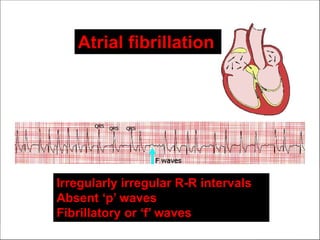
Irregularly irregular R-R intervals
Absent ‘p’ waves
Fibrillatory or ‘f’ waves
Atrial fibrillation
Incidence
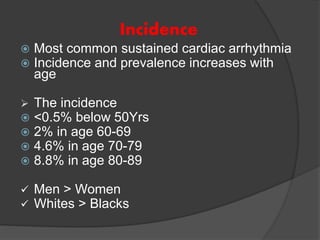
 Most common sustained cardiac arrhythmia
 Incidence and prevalence increases with
age
 The incidence
 <0.5% below 50Yrs
 2% in age 60-69
 4.6% in age 70-79
 8.8% in age 80-89
 Men > Women
 Whites > Blacks
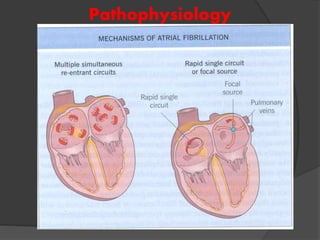
Pathophysiology
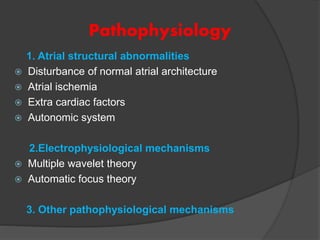
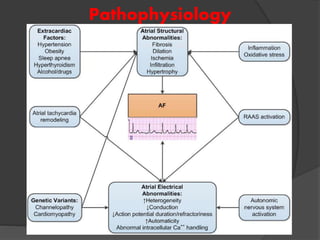
1. Atrial structural abnormalities
 Disturbance of normal atrial architecture
 Atrial ischemia
 Extra cardiac factors
 Autonomic system
2.Electrophysiological mechanisms
 Multiple wavelet theory
 Automatic focus theory
3. Other pathophysiological mechanisms
Pathophysiology
Pathophysiology
Causes & risk factor a/w Afib
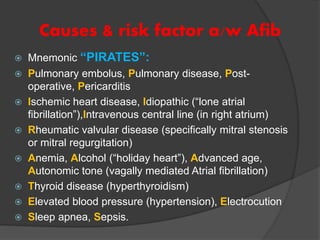
 Mnemonic “PIRATES”:
 Pulmonary embolus, Pulmonary disease, Post-
operative, Pericarditis
 Ischemic heart disease, Idiopathic (“lone atrial
fibrillation”),Intravenous central line (in right atrium)
 Rheumatic valvular disease (specifically mitral stenosis
or mitral regurgitation)
 Anemia, Alcohol (“holiday heart”), Advanced age,
Autonomic tone (vagally mediated Atrial fibrillation)
 Thyroid disease (hyperthyroidism)
 Elevated blood pressure (hypertension), Electrocution
 Sleep apnea, Sepsis.
Causes & risk factor a/w Afib
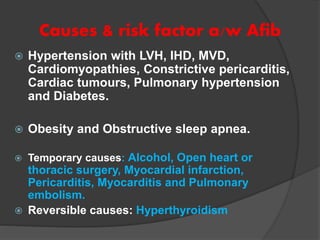
 Hypertension with LVH, IHD, MVD,
Cardiomyopathies, Constrictive pericarditis,
Cardiac tumours, Pulmonary hypertension
and Diabetes.
 Obesity and Obstructive sleep apnea.
 Temporary causes: Alcohol, Open heart or
thoracic surgery, Myocardial infarction,
Pericarditis, Myocarditis and Pulmonary
embolism.
 Reversible causes: Hyperthyroidism
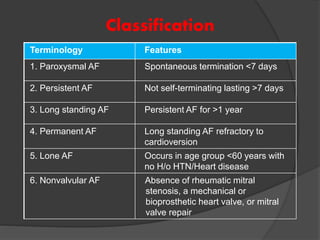
Terminology Features
1. Paroxysmal AF Spontaneous termination <7 days
2. Persistent AF Not self-terminating lasting >7 days
3. Long standing AF Persistent AF for >1 year
4. Permanent AF Long standing AF refractory to
cardioversion
5. Lone AF Occurs in age group <60 years with
no H/o HTN/Heart disease
6. Nonvalvular AF Absence of rheumatic mitral
stenosis, a mechanical or
bioprosthetic heart valve, or mitral
valve repair
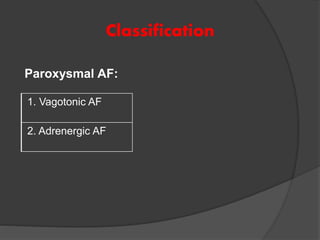
Classification
1. Vagotonic AF
2. Adrenergic AF
Classification
Paroxysmal AF:
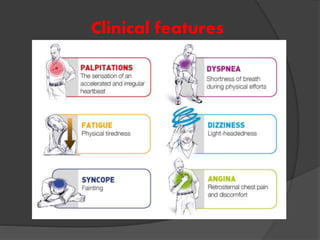
Clinical features
Clinical features
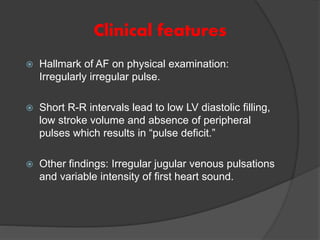
 Hallmark of AF on physical examination:
Irregularly irregular pulse.
 Short R-R intervals lead to low LV diastolic filling,
low stroke volume and absence of peripheral
pulses which results in “pulse deficit.”
 Other findings: Irregular jugular venous pulsations
and variable intensity of first heart sound.
Complications
 Stroke
 Heart failure
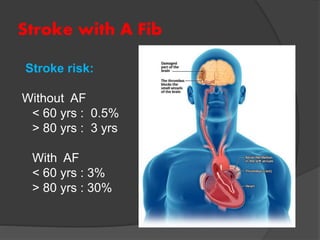
Stroke with A Fib
Stroke risk:
Without AF
< 60 yrs : 0.5%
> 80 yrs : 3 yrs
With AF
< 60 yrs : 3%
> 80 yrs : 30%
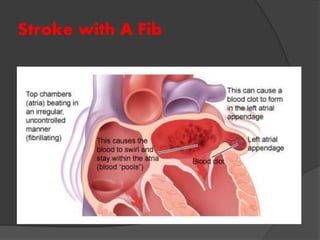
Stroke with A Fib
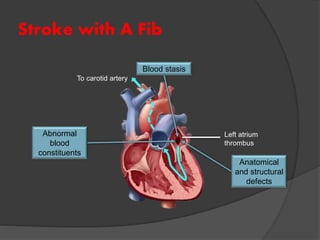
Stroke with A Fib
Blood stasis
Abnormal
blood
constituents
Left atrium
thrombus
To carotid artery
Anatomical
and structural
defects
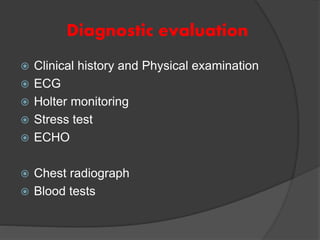
Diagnostic evaluation
 Clinical history and Physical examination
 ECG
 Holter monitoring
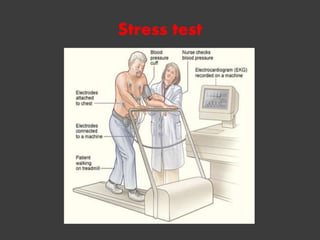
 Stress test
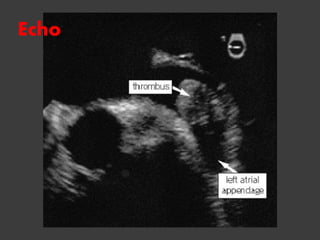
 ECHO
 Chest radiograph
 Blood tests
ECG
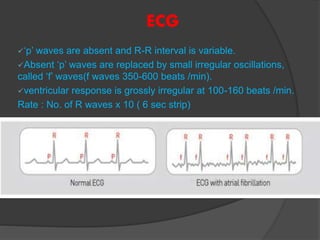
‘p’ waves are absent and R-R interval is variable.
Absent ‘p’ waves are replaced by small irregular oscillations,
called ‘f’ waves(f waves 350-600 beats /min).
ventricular response is grossly irregular at 100-160 beats /min.
Rate : No. of R waves x 10 ( 6 sec strip)
DDX
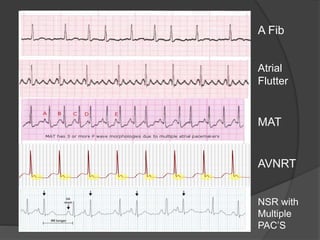
 Atrial fibrillation Vs Atrial flutter/ MAT/ AVNRT/
NSR with multiple PAC’S ??
Definition A Fib
Atrial
Flutter
MAT
AVNRT
NSR with
Multiple
PAC’S
Atrial flutter
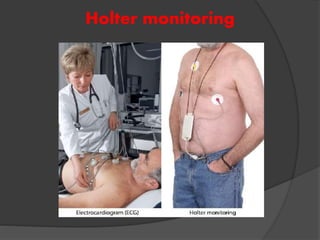
Holter monitoring
Stress test
Echo
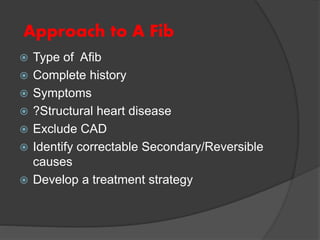
Approach to A Fib
 Type of Afib
 Complete history
 Symptoms
 ?Structural heart disease
 Exclude CAD
 Identify correctable Secondary/Reversible
causes
 Develop a treatment strategy
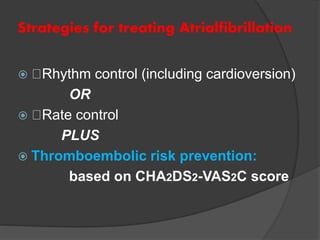
Strategies for treating Atrialfibrillation
 Rhythm control (including cardioversion)
OR
 Rate control
PLUS
 Thromboembolic risk prevention:
based on CHA2DS2-VAS2C score
Acute management
 For hemodynamically unstable patients:
 Sedate if possible and perform an immediate cardioversion.
 If refractory to cardioversion, use IV amiodarone, ibutilide, or
procainamide.
 For hemodynamically stable patients:
 Initiate anticoagulation and rate control.
 If first occurrence, consider cardioversion after adequate
anticoagulation (4 weeks) or no clot seen on TEE and therapeutic
anticoagulation initiated.
 With recurrence, consider referral to an electrophysiologist.
 Consider admission if history suggests a precipitating event (e.g.,
acute MI, PE, HF, etc.).
 Rule out secondary causes based on history.
 Perform complete evaluation.
Rhythm and rate control approaches
 Rhythm control
 Cardioversion (electrical or pharmacological)
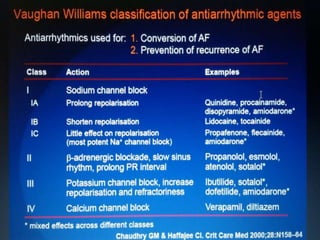
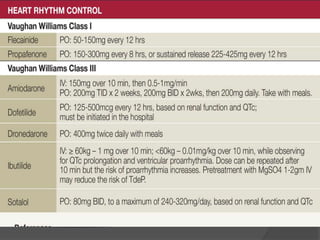
 Pharmacological agents (Class IC and III
antiarrhythmics)
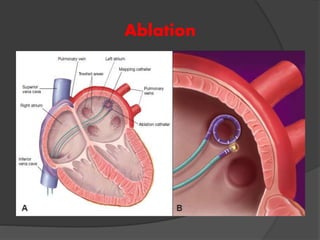
 Surgery (maze procedure, ablation)
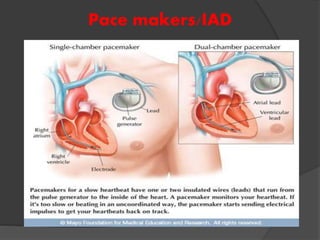
 Device implantation (pacemaker)
 Rate control
 Pharmacological agents (AV node blockers)
 Surgery with device implantation (ablation plus
pacemaker insertion)
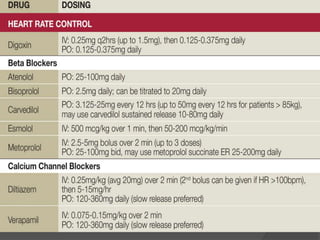
Rate control medications
 -Metoprolol / Esmolol: IV or Oral
 -Diltiazem: IV or Oral
 -Verapamil: Oral Only
 -Digoxin: Patients with hypotension
 -Amiodarone: Also for rhythm control
Rhythm control
Synchronized DC cardioversion
 -Emergencies/Hemodynamic instability
 -Greater efficacy than medications
Pharmacologic cardioversion
 -If AF < 7days –dofetilide, flecainide, ibutilide,
propaferone or amiodarone
 -If AF > 7 day –dofetilide or amiodarone
Rhythm control
Synchronized DC cardioversion
 -Emergencies/Hemodynamic instability
 -Greater efficacy than medications
Pharmacologic cardioversion
 -If AF < 7days –dofetilide, flecainide, ibutilide,
propaferone or amiodarone
 -If AF > 7 day –dofetilide or amiodarone
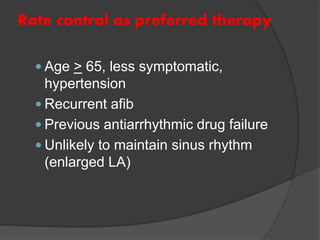
Rate control as preferred therapy
 Age > 65, less symptomatic,
hypertension
 Recurrent afib
 Previous antiarrhythmic drug failure
 Unlikely to maintain sinus rhythm
(enlarged LA)
Dosage for Rate Control of
AF Beta blockers
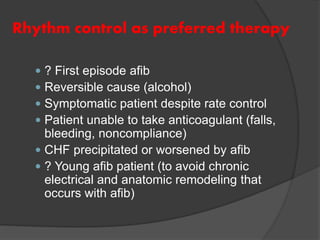
Rhythm control as preferred therapy
 ? First episode afib
 Reversible cause (alcohol)
 Symptomatic patient despite rate control
 Patient unable to take anticoagulant (falls,
bleeding, noncompliance)
 CHF precipitated or worsened by afib
 ? Young afib patient (to avoid chronic
electrical and anatomic remodeling that
occurs with afib)
Dosage for Rate Control of
AF Beta blockers
Pace makers/IAD
Ablation
Thrombo-embolic Risk and Treatment
Risk Based Antithrombotic Therapy
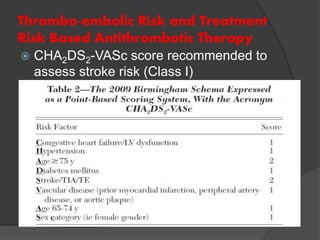
 CHA2DS2-VASc score recommended to
assess stroke risk (Class I)
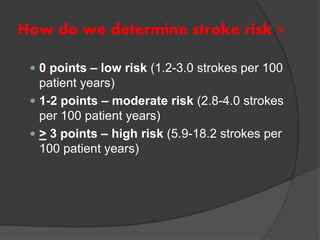
How do we determine stroke risk ?
 0 points – low risk (1.2-3.0 strokes per 100
patient years)
 1-2 points – moderate risk (2.8-4.0 strokes
per 100 patient years)
 > 3 points – high risk (5.9-18.2 strokes per
100 patient years)
Thrombo-embolic Risk and Treatment
Risk Based Antithrombotic Therapy
Contd…
 With prior stroke, TIA, or CHA2DS2-VASc
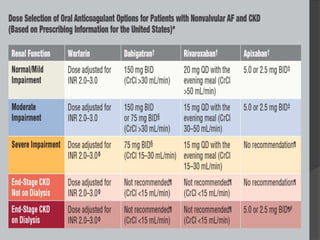
score ≥2, oral anticoagulants recommended.
Options include:
 Warfarin
 Dabigatran, rivaroxaban, or apixaban (Class I)
 With nonvalvular AF and CHA2DS2-VASc
score of 0, it is reasonable to omit
antithrombotic therapy (Class IIa)
Thrombo-embolic Risk and Treatment
Risk Based Antithrombotic Therapy
 With CHA2DS2-VASc score ≥2 and end-stage
CKD (CrCl <15 mL/min) or on hemodialysis, it
is reasonable to prescribe warfarin for oral
anticoagulation (Class IIa)
 With nonvalvular AF and a CHA2DS2-VASc
score of 1, no antithrombotic therapy or
treatment with oral anticoagulant or aspirin
may be considered (Class IIb)
 After coronary revascularization in patients
with CHA2DS2-VASc score ≥2, it may be
reasonable to use clopidogrel concurrently
with oral anticoagulants but without aspirin
(Class IIb)
Management
 Acute management
 Long term management
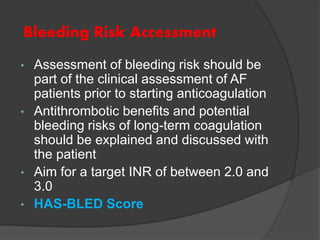
Bleeding Risk Accessment
• Assessment of bleeding risk should be
part of the clinical assessment of AF
patients prior to starting anticoagulation
• Antithrombotic benefits and potential
bleeding risks of long-term coagulation
should be explained and discussed with
the patient
• Aim for a target INR of between 2.0 and
3.0
• HAS-BLED Score
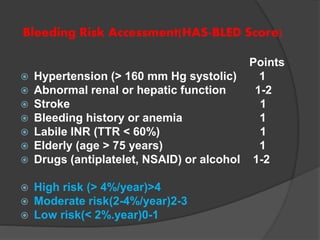
Bleeding Risk Accessment(HAS-BLED Score)
Points
 Hypertension (> 160 mm Hg systolic) 1
 Abnormal renal or hepatic function 1-2
 Stroke 1
 Bleeding history or anemia 1
 Labile INR (TTR < 60%) 1
 Elderly (age > 75 years) 1
 Drugs (antiplatelet, NSAID) or alcohol 1-2
 High risk (> 4%/year)>4
 Moderate risk(2-4%/year)2-3
 Low risk(< 2%.year)0-1
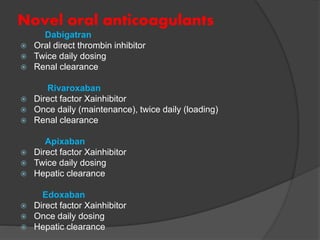
Novel oral anticoagulants
Dabigatran
 Oral direct thrombin inhibitor
 Twice daily dosing
 Renal clearance
Rivaroxaban
 Direct factor Xainhibitor
 Once daily (maintenance), twice daily (loading)
 Renal clearance
Apixaban
 Direct factor Xainhibitor
 Twice daily dosing
 Hepatic clearance
Edoxaban
 Direct factor Xainhibitor
 Once daily dosing
 Hepatic clearance
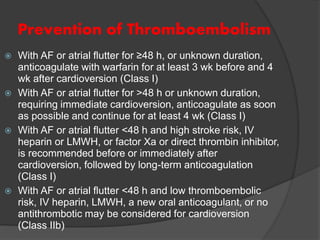
Prevention of Thromboembolism
 With AF or atrial flutter for ≥48 h, or unknown duration,
anticoagulate with warfarin for at least 3 wk before and 4
wk after cardioversion (Class I)
 With AF or atrial flutter for >48 h or unknown duration,
requiring immediate cardioversion, anticoagulate as soon
as possible and continue for at least 4 wk (Class I)
 With AF or atrial flutter <48 h and high stroke risk, IV
heparin or LMWH, or factor Xa or direct thrombin inhibitor,
is recommended before or immediately after
cardioversion, followed by long-term anticoagulation
(Class I)
 With AF or atrial flutter <48 h and low thromboembolic
risk, IV heparin, LMWH, a new oral anticoagulant, or no
antithrombotic may be considered for cardioversion
(Class IIb)
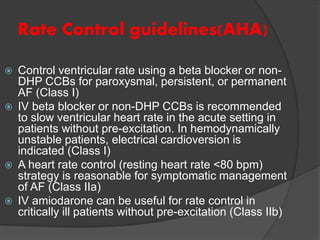
Rate Control guidelines(AHA)
 Control ventricular rate using a beta blocker or non-
DHP CCBs for paroxysmal, persistent, or permanent
AF (Class I)
 IV beta blocker or non-DHP CCBs is recommended
to slow ventricular heart rate in the acute setting in
patients without pre-excitation. In hemodynamically
unstable patients, electrical cardioversion is
indicated (Class I)
 A heart rate control (resting heart rate <80 bpm)
strategy is reasonable for symptomatic management
of AF (Class IIa)
 IV amiodarone can be useful for rate control in
critically ill patients without pre-excitation (Class IIb)
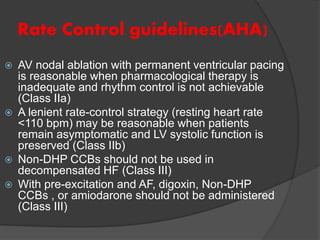
Rate Control guidelines(AHA)
 AV nodal ablation with permanent ventricular pacing
is reasonable when pharmacological therapy is
inadequate and rhythm control is not achievable
(Class IIa)
 A lenient rate-control strategy (resting heart rate
<110 bpm) may be reasonable when patients
remain asymptomatic and LV systolic function is
preserved (Class IIb)
 Non-DHP CCBs should not be used in
decompensated HF (Class III)
 With pre-excitation and AF, digoxin, Non-DHP
CCBs , or amiodarone should not be administered
(Class III)
Restoration of Sinus Rhythm
guidelines(AHA)
Principles of Cardioversion:
 CV may be achieved by means of a drug or an electrical shock.
 Direct-current CV is more effective than pharmacological CV.
 The more recent the onset of AF, the more effective is
pharmacological CV.
 The primary disadvantage of electrical CV is that it requires
sedation or anesthesia.
 The primary disadvantage of pharmacological CV is the risk of
ventricular proarrhythmia.
 The risk of thromboembolism or stroke does not differ between
pharmacological and electrical CV.
 Significant sinus bradycardia after CV can occur in patients on high-
dose AV nodal blocking drugs.
 Antiarrhythmic drug therapy may be administrated prior to CV to
facilitate long-term success and maintenance of normal sinus
rhythm.
Restoration of Sinus Rhythm
guidelines(AHA)
Direct Current Cardioversion:
 Shocks should be delivered synchronous to the R-wave.
 The use of a biphasic defibrillator should be considered with
150-200 joules as the initial energy setting.
 When a rapid ventricular response does not respond
promptly to pharmacological measures for AF patients with
ongoing myocardial ischemia, symptomatic hypotension,
angina, or HF, immediate CV is recommended.
 In case of early relapse of AF after CV, repeated direct-
current CV attempts may be made following administration of
antiarrhythmic medication.
 Electrical CV is contraindicated in patients with digitalis
toxicity or hypokalemia.
Restoration of Sinus Rhythm
guidelines(AHA)
Pharmacological Cardioversion:
 IV ibutilide is an effective drug available to convert AF.
Due to its risk of torsades de pointes, ibutilide should be
avoided in patients with severe systolic dysfunction or a
prolonged QTc (>480 ms).
 More effective for conversion of atrial flutter than of AF;
more effective in cases of more recent onset.
 Can also be used to facilitate electrical CV when it is
unsuccessful, or when there is an immediate recurrence
of AF after initially successful CV.
 Consider IV magnesium (2 grams) prior to giving
ibutilide to reduce risk of torsades de pointes.
 ECG monitoring must be performed for 4 hours after
administration.
Restoration of Sinus Rhythm
guidelines(AHA)
Pharmacological Cardioversion:
 Flecainide and Propafenone
 Both flecainide and propafenone have been studied for
their use as a “pill-in-the pocket” approach to
cardioverting AF.
 Generally, a beta blocker or a calcium channel blocker
should be taken an hour prior to taking the
antiarrhythmic drug when trying to convert AF to SR. For
a person >70 Kg, 300 mg of flecainide or 600 mg of
propafenone should be administered. For <70 Kg, the
dose for flecainide and propafenone is 200 mg and 450
mg, respectively. After administration of the drug, heart
rhythm must be monitored for at least 4-8 hours.
Maintenance of Sinus Rhythm
guidelines(AHA)
Principles of Antiarrhythmic Drug Therapy(AAD):
 Pharmacological therapy to maintain SR is indicated in
patients who have troublesome symptoms related to
paroxysmal AF or recurrent AF after CV who can
tolerate antiarrhythmic drugs (AADs) and have a good
chance of remaining in SR.
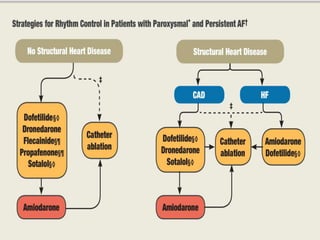
 AAD choice is based on side effect profiles and the
presence or absence of structural heart disease, HF,
and hypertension (see flow diagram).
 Drug choice should be individualized and must account
for underlying renal and hepatic function.
 Goals of drug therapy are to decrease the frequency
and duration of episodes, and to improve symptoms.
Maintenance of Sinus Rhythm
guidelines(AHA)
Principles of Antiarrhythmic Drug Therapy:
 AF recurrence while taking an AAD is not indicative of
treatment failure and does not necessitate a change in
antiarrhythmic therapy.
 An AAD should be abandoned when it does not result in
symptomatic improvement or causes adverse effects.
 Ensure normal electrolyte status and appropriate
anticoagulation prior to starting AAD therapy.
 Initiate AV nodal blockade prior to use of an AAD (e.g.
flecainide) that does not provide substantial AV node
blockade.
 Initiate therapy at low dose and titrate up as needed and
after evaluating drug effects on ECG parameters.
AF complicating ACS
 Urgent cardioversion of new-onset AF in the setting of ACS is
recommended for patients with hemodynamic compromise,
ongoing ischemia, or inadequate rate control (Class I)
 IV beta blockers are recommended to slow RVR with ACS and no
HF, hemodynamic instability, or bronchospasm (Class I)
 With ACS and AF with CHA2DS2-VASc score ≥2, anticoagulation
with warfarin is recommended unless contraindicated (Class I)
 Amiodarone or digoxin may be considered to slow RVR with ACS
and AF and severe LV dysfunction and HF or hemodynamic
instability (Class IIb)
 Non-DHP CCBs might be considered to slow RVR with ACS and
AF only in the absence of significant HF or hemodynamic
instability (Class IIb)
Hyperthyroidism
 Beta blockers are recommended to
control ventricular rate with AF
complicating thyrotoxicosis unless
contraindicated (Class I)
 When beta blockers cannot be used, a
Non-DHP CCBs is recommended to
control ventricular rate (Class I)
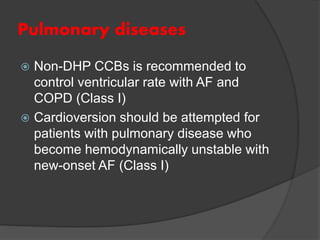
Pulmonary diseases
 Non-DHP CCBs is recommended to
control ventricular rate with AF and
COPD (Class I)
 Cardioversion should be attempted for
patients with pulmonary disease who
become hemodynamically unstable with
new-onset AF (Class I)
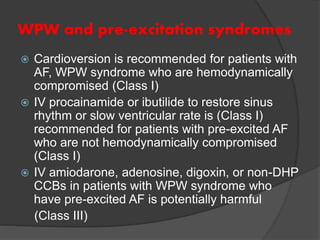
WPW and pre-excitation syndromes
 Cardioversion is recommended for patients with
AF, WPW syndrome who are hemodynamically
compromised (Class I)
 IV procainamide or ibutilide to restore sinus
rhythm or slow ventricular rate is (Class I)
recommended for patients with pre-excited AF
who are not hemodynamically compromised
(Class I)
 IV amiodarone, adenosine, digoxin, or non-DHP
CCBs in patients with WPW syndrome who
have pre-excited AF is potentially harmful
(Class III)
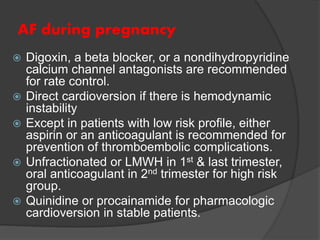
AF during pregnancy
 Digoxin, a beta blocker, or a nondihydropyridine
calcium channel antagonists are recommended
for rate control.
 Direct cardioversion if there is hemodynamic
instability
 Except in patients with low risk profile, either
aspirin or an anticoagulant is recommended for
prevention of thromboembolic complications.
 Unfractionated or LMWH in 1st & last trimester,
oral anticoagulant in 2nd trimester for high risk
group.
 Quinidine or procainamide for pharmacologic
cardioversion in stable patients.
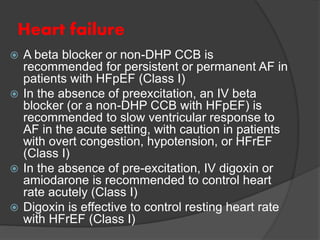
Heart failure
 A beta blocker or non-DHP CCB is
recommended for persistent or permanent AF in
patients with HFpEF (Class I)
 In the absence of preexcitation, an IV beta
blocker (or a non-DHP CCB with HFpEF) is
recommended to slow ventricular response to
AF in the acute setting, with caution in patients
with overt congestion, hypotension, or HFrEF
(Class I)
 In the absence of pre-excitation, IV digoxin or
amiodarone is recommended to control heart
rate acutely (Class I)
 Digoxin is effective to control resting heart rate
with HFrEF (Class I)
Heart failure
 IV amiodarone can be useful to control heart rate with
AF when other measures are unsuccessful or
contraindicated (Class IIa)
 In patients with chronic HF who remain symptomatic
from AF despite a rate-control strategy, it is reasonable
to use a rhythm-control strategy (Class IIa)
 Amiodarone may be considered when resting and
exercise heart rate cannot be controlled with a beta
blocker (or a non-DHP CCB with HFpEF) or digoxin,
alone or in combination (Class IIb)
 For rate control, IV non-DHP CCB, IV beta blockers, and
dronedarone should not be given with decompensated
HF (Class III)
How Can Atrial Fibrillation Be
Prevented?
 Following a healthy lifestyle and taking steps
to lower your risk for heart disease may help
you prevent atrial fibrillation (AF). These
steps include:
 Following a heart healthy diet that's low in
saturated fat, trans fat, and cholesterol. A
healthy diet includes a variety of whole
grains, fruits, and vegetables daily.
 Not smoking.
 Being physically active.
 Maintaining a healthy weight.
 If already having heart disease or other AF
risk factors, regular checkup and followup. In
addition to adopting the healthy habits
above:
 Advise DASH eating plan to help lower blood
pressure.
 Keep cholesterol and triglycerides at healthy
levels with dietary changes and medicines (if
prescribed).
 Limit or avoid alcohol.
 Control of blood sugar level if diabetic.
 Medical care and medicines as prescribed.
Summary
 Most common cardiac arrhythmia
 High prevalence
 Stroke and Heart failure – Risk
 Treatable disease with early and proper
interventions.
Questions?
.
THANK YOU FOR
YOUR PATIENCE
ravikanth.moka@gmail.com
References:
Braunwald’s
American Heart Association guidelines

ATRIAL FIBRILLATION 2016

  • 1.
    By Dr. RavikanthMoka JR/Post Graduate in General Medicine K.V.G.M.C.H. Sullia, D.K.
  • 2.
  • 3.
  • 4.
    Atrial fibrillation  Atrialfibrillation(AF or A fib), is a supraventricular arrhythmia characterised electrocardiographically by low-amplitude baseline oscillations(fibrillatory or ‘f’ waves) and an irregularly irregular ventricular rhythm.  The ‘f’ waves have a rate of 300-600 bpm and are variable in amplitude, shape and timing.  The ventricular rate during Afib typically is 100-160 bpm
  • 5.
    Definition  Atrial fibrillation(AFor A fib), is a supraventricular arrhythmia characterised electrocardiographically by low-amplitude baseline oscillations(fibrillatory or ‘f’ waves) and an irregularly irregular ventricular rhythm.  Atrial fibrillation Vs Atrial flutter?? Irregularly irregular R-R intervals Absent ‘p’ waves Fibrillatory or ‘f’ waves Atrial fibrillation
  • 6.
    Incidence  Most commonsustained cardiac arrhythmia  Incidence and prevalence increases with age  The incidence  <0.5% below 50Yrs  2% in age 60-69  4.6% in age 70-79  8.8% in age 80-89  Men > Women  Whites > Blacks
  • 7.
    Pathophysiology 1. Atrial structuralabnormalities  Disturbance of normal atrial architecture  Atrial ischemia  Extra cardiac factors  Autonomic system 2.Electrophysiological mechanisms  Multiple wavelet theory  Automatic focus theory 3. Other pathophysiological mechanisms
  • 8.
  • 9.
  • 10.
    Causes & riskfactor a/w Afib  Mnemonic “PIRATES”:  Pulmonary embolus, Pulmonary disease, Post- operative, Pericarditis  Ischemic heart disease, Idiopathic (“lone atrial fibrillation”),Intravenous central line (in right atrium)  Rheumatic valvular disease (specifically mitral stenosis or mitral regurgitation)  Anemia, Alcohol (“holiday heart”), Advanced age, Autonomic tone (vagally mediated Atrial fibrillation)  Thyroid disease (hyperthyroidism)  Elevated blood pressure (hypertension), Electrocution  Sleep apnea, Sepsis.
  • 11.
    Causes & riskfactor a/w Afib  Hypertension with LVH, IHD, MVD, Cardiomyopathies, Constrictive pericarditis, Cardiac tumours, Pulmonary hypertension and Diabetes.  Obesity and Obstructive sleep apnea.  Temporary causes: Alcohol, Open heart or thoracic surgery, Myocardial infarction, Pericarditis, Myocarditis and Pulmonary embolism.  Reversible causes: Hyperthyroidism
  • 12.
    Terminology Features 1. ParoxysmalAF Spontaneous termination <7 days 2. Persistent AF Not self-terminating lasting >7 days 3. Long standing AF Persistent AF for >1 year 4. Permanent AF Long standing AF refractory to cardioversion 5. Lone AF Occurs in age group <60 years with no H/o HTN/Heart disease 6. Nonvalvular AF Absence of rheumatic mitral stenosis, a mechanical or bioprosthetic heart valve, or mitral valve repair Classification
  • 13.
    1. Vagotonic AF 2.Adrenergic AF Classification Paroxysmal AF:
  • 14.
  • 15.
    Clinical features  Hallmarkof AF on physical examination: Irregularly irregular pulse.  Short R-R intervals lead to low LV diastolic filling, low stroke volume and absence of peripheral pulses which results in “pulse deficit.”  Other findings: Irregular jugular venous pulsations and variable intensity of first heart sound.
  • 16.
  • 17.
    Stroke with AFib Stroke risk: Without AF < 60 yrs : 0.5% > 80 yrs : 3 yrs With AF < 60 yrs : 3% > 80 yrs : 30%
  • 18.
  • 19.
    Stroke with AFib Blood stasis Abnormal blood constituents Left atrium thrombus To carotid artery Anatomical and structural defects
  • 20.
    Diagnostic evaluation  Clinicalhistory and Physical examination  ECG  Holter monitoring  Stress test  ECHO  Chest radiograph  Blood tests
  • 21.
    ECG ‘p’ waves areabsent and R-R interval is variable. Absent ‘p’ waves are replaced by small irregular oscillations, called ‘f’ waves(f waves 350-600 beats /min). ventricular response is grossly irregular at 100-160 beats /min. Rate : No. of R waves x 10 ( 6 sec strip)
  • 22.
    DDX  Atrial fibrillationVs Atrial flutter/ MAT/ AVNRT/ NSR with multiple PAC’S ??
  • 23.
    Definition A Fib Atrial Flutter MAT AVNRT NSRwith Multiple PAC’S Atrial flutter
  • 24.
  • 25.
  • 26.
  • 27.
    Approach to AFib  Type of Afib  Complete history  Symptoms  ?Structural heart disease  Exclude CAD  Identify correctable Secondary/Reversible causes  Develop a treatment strategy
  • 28.
    Strategies for treatingAtrialfibrillation  Rhythm control (including cardioversion) OR  Rate control PLUS  Thromboembolic risk prevention: based on CHA2DS2-VAS2C score
  • 29.
    Acute management  Forhemodynamically unstable patients:  Sedate if possible and perform an immediate cardioversion.  If refractory to cardioversion, use IV amiodarone, ibutilide, or procainamide.  For hemodynamically stable patients:  Initiate anticoagulation and rate control.  If first occurrence, consider cardioversion after adequate anticoagulation (4 weeks) or no clot seen on TEE and therapeutic anticoagulation initiated.  With recurrence, consider referral to an electrophysiologist.  Consider admission if history suggests a precipitating event (e.g., acute MI, PE, HF, etc.).  Rule out secondary causes based on history.  Perform complete evaluation.
  • 30.
    Rhythm and ratecontrol approaches  Rhythm control  Cardioversion (electrical or pharmacological)  Pharmacological agents (Class IC and III antiarrhythmics)  Surgery (maze procedure, ablation)  Device implantation (pacemaker)  Rate control  Pharmacological agents (AV node blockers)  Surgery with device implantation (ablation plus pacemaker insertion)
  • 31.
    Rate control medications -Metoprolol / Esmolol: IV or Oral  -Diltiazem: IV or Oral  -Verapamil: Oral Only  -Digoxin: Patients with hypotension  -Amiodarone: Also for rhythm control
  • 32.
    Rhythm control Synchronized DCcardioversion  -Emergencies/Hemodynamic instability  -Greater efficacy than medications Pharmacologic cardioversion  -If AF < 7days –dofetilide, flecainide, ibutilide, propaferone or amiodarone  -If AF > 7 day –dofetilide or amiodarone
  • 33.
    Rhythm control Synchronized DCcardioversion  -Emergencies/Hemodynamic instability  -Greater efficacy than medications Pharmacologic cardioversion  -If AF < 7days –dofetilide, flecainide, ibutilide, propaferone or amiodarone  -If AF > 7 day –dofetilide or amiodarone
  • 34.
    Rate control aspreferred therapy  Age > 65, less symptomatic, hypertension  Recurrent afib  Previous antiarrhythmic drug failure  Unlikely to maintain sinus rhythm (enlarged LA)
  • 35.
    Dosage for RateControl of AF Beta blockers
  • 36.
    Rhythm control aspreferred therapy  ? First episode afib  Reversible cause (alcohol)  Symptomatic patient despite rate control  Patient unable to take anticoagulant (falls, bleeding, noncompliance)  CHF precipitated or worsened by afib  ? Young afib patient (to avoid chronic electrical and anatomic remodeling that occurs with afib)
  • 37.
    Dosage for RateControl of AF Beta blockers
  • 39.
  • 40.
  • 41.
    Thrombo-embolic Risk andTreatment Risk Based Antithrombotic Therapy  CHA2DS2-VASc score recommended to assess stroke risk (Class I)
  • 42.
    How do wedetermine stroke risk ?  0 points – low risk (1.2-3.0 strokes per 100 patient years)  1-2 points – moderate risk (2.8-4.0 strokes per 100 patient years)  > 3 points – high risk (5.9-18.2 strokes per 100 patient years)
  • 43.
    Thrombo-embolic Risk andTreatment Risk Based Antithrombotic Therapy Contd…  With prior stroke, TIA, or CHA2DS2-VASc score ≥2, oral anticoagulants recommended. Options include:  Warfarin  Dabigatran, rivaroxaban, or apixaban (Class I)  With nonvalvular AF and CHA2DS2-VASc score of 0, it is reasonable to omit antithrombotic therapy (Class IIa)
  • 44.
    Thrombo-embolic Risk andTreatment Risk Based Antithrombotic Therapy  With CHA2DS2-VASc score ≥2 and end-stage CKD (CrCl <15 mL/min) or on hemodialysis, it is reasonable to prescribe warfarin for oral anticoagulation (Class IIa)  With nonvalvular AF and a CHA2DS2-VASc score of 1, no antithrombotic therapy or treatment with oral anticoagulant or aspirin may be considered (Class IIb)  After coronary revascularization in patients with CHA2DS2-VASc score ≥2, it may be reasonable to use clopidogrel concurrently with oral anticoagulants but without aspirin (Class IIb)
  • 45.
  • 46.
    Bleeding Risk Accessment •Assessment of bleeding risk should be part of the clinical assessment of AF patients prior to starting anticoagulation • Antithrombotic benefits and potential bleeding risks of long-term coagulation should be explained and discussed with the patient • Aim for a target INR of between 2.0 and 3.0 • HAS-BLED Score
  • 47.
    Bleeding Risk Accessment(HAS-BLEDScore) Points  Hypertension (> 160 mm Hg systolic) 1  Abnormal renal or hepatic function 1-2  Stroke 1  Bleeding history or anemia 1  Labile INR (TTR < 60%) 1  Elderly (age > 75 years) 1  Drugs (antiplatelet, NSAID) or alcohol 1-2  High risk (> 4%/year)>4  Moderate risk(2-4%/year)2-3  Low risk(< 2%.year)0-1
  • 49.
    Novel oral anticoagulants Dabigatran Oral direct thrombin inhibitor  Twice daily dosing  Renal clearance Rivaroxaban  Direct factor Xainhibitor  Once daily (maintenance), twice daily (loading)  Renal clearance Apixaban  Direct factor Xainhibitor  Twice daily dosing  Hepatic clearance Edoxaban  Direct factor Xainhibitor  Once daily dosing  Hepatic clearance
  • 50.
    Prevention of Thromboembolism With AF or atrial flutter for ≥48 h, or unknown duration, anticoagulate with warfarin for at least 3 wk before and 4 wk after cardioversion (Class I)  With AF or atrial flutter for >48 h or unknown duration, requiring immediate cardioversion, anticoagulate as soon as possible and continue for at least 4 wk (Class I)  With AF or atrial flutter <48 h and high stroke risk, IV heparin or LMWH, or factor Xa or direct thrombin inhibitor, is recommended before or immediately after cardioversion, followed by long-term anticoagulation (Class I)  With AF or atrial flutter <48 h and low thromboembolic risk, IV heparin, LMWH, a new oral anticoagulant, or no antithrombotic may be considered for cardioversion (Class IIb)
  • 51.
    Rate Control guidelines(AHA) Control ventricular rate using a beta blocker or non- DHP CCBs for paroxysmal, persistent, or permanent AF (Class I)  IV beta blocker or non-DHP CCBs is recommended to slow ventricular heart rate in the acute setting in patients without pre-excitation. In hemodynamically unstable patients, electrical cardioversion is indicated (Class I)  A heart rate control (resting heart rate <80 bpm) strategy is reasonable for symptomatic management of AF (Class IIa)  IV amiodarone can be useful for rate control in critically ill patients without pre-excitation (Class IIb)
  • 52.
    Rate Control guidelines(AHA) AV nodal ablation with permanent ventricular pacing is reasonable when pharmacological therapy is inadequate and rhythm control is not achievable (Class IIa)  A lenient rate-control strategy (resting heart rate <110 bpm) may be reasonable when patients remain asymptomatic and LV systolic function is preserved (Class IIb)  Non-DHP CCBs should not be used in decompensated HF (Class III)  With pre-excitation and AF, digoxin, Non-DHP CCBs , or amiodarone should not be administered (Class III)
  • 53.
    Restoration of SinusRhythm guidelines(AHA) Principles of Cardioversion:  CV may be achieved by means of a drug or an electrical shock.  Direct-current CV is more effective than pharmacological CV.  The more recent the onset of AF, the more effective is pharmacological CV.  The primary disadvantage of electrical CV is that it requires sedation or anesthesia.  The primary disadvantage of pharmacological CV is the risk of ventricular proarrhythmia.  The risk of thromboembolism or stroke does not differ between pharmacological and electrical CV.  Significant sinus bradycardia after CV can occur in patients on high- dose AV nodal blocking drugs.  Antiarrhythmic drug therapy may be administrated prior to CV to facilitate long-term success and maintenance of normal sinus rhythm.
  • 54.
    Restoration of SinusRhythm guidelines(AHA) Direct Current Cardioversion:  Shocks should be delivered synchronous to the R-wave.  The use of a biphasic defibrillator should be considered with 150-200 joules as the initial energy setting.  When a rapid ventricular response does not respond promptly to pharmacological measures for AF patients with ongoing myocardial ischemia, symptomatic hypotension, angina, or HF, immediate CV is recommended.  In case of early relapse of AF after CV, repeated direct- current CV attempts may be made following administration of antiarrhythmic medication.  Electrical CV is contraindicated in patients with digitalis toxicity or hypokalemia.
  • 55.
    Restoration of SinusRhythm guidelines(AHA) Pharmacological Cardioversion:  IV ibutilide is an effective drug available to convert AF. Due to its risk of torsades de pointes, ibutilide should be avoided in patients with severe systolic dysfunction or a prolonged QTc (>480 ms).  More effective for conversion of atrial flutter than of AF; more effective in cases of more recent onset.  Can also be used to facilitate electrical CV when it is unsuccessful, or when there is an immediate recurrence of AF after initially successful CV.  Consider IV magnesium (2 grams) prior to giving ibutilide to reduce risk of torsades de pointes.  ECG monitoring must be performed for 4 hours after administration.
  • 56.
    Restoration of SinusRhythm guidelines(AHA) Pharmacological Cardioversion:  Flecainide and Propafenone  Both flecainide and propafenone have been studied for their use as a “pill-in-the pocket” approach to cardioverting AF.  Generally, a beta blocker or a calcium channel blocker should be taken an hour prior to taking the antiarrhythmic drug when trying to convert AF to SR. For a person >70 Kg, 300 mg of flecainide or 600 mg of propafenone should be administered. For <70 Kg, the dose for flecainide and propafenone is 200 mg and 450 mg, respectively. After administration of the drug, heart rhythm must be monitored for at least 4-8 hours.
  • 57.
    Maintenance of SinusRhythm guidelines(AHA) Principles of Antiarrhythmic Drug Therapy(AAD):  Pharmacological therapy to maintain SR is indicated in patients who have troublesome symptoms related to paroxysmal AF or recurrent AF after CV who can tolerate antiarrhythmic drugs (AADs) and have a good chance of remaining in SR.  AAD choice is based on side effect profiles and the presence or absence of structural heart disease, HF, and hypertension (see flow diagram).  Drug choice should be individualized and must account for underlying renal and hepatic function.  Goals of drug therapy are to decrease the frequency and duration of episodes, and to improve symptoms.
  • 58.
    Maintenance of SinusRhythm guidelines(AHA) Principles of Antiarrhythmic Drug Therapy:  AF recurrence while taking an AAD is not indicative of treatment failure and does not necessitate a change in antiarrhythmic therapy.  An AAD should be abandoned when it does not result in symptomatic improvement or causes adverse effects.  Ensure normal electrolyte status and appropriate anticoagulation prior to starting AAD therapy.  Initiate AV nodal blockade prior to use of an AAD (e.g. flecainide) that does not provide substantial AV node blockade.  Initiate therapy at low dose and titrate up as needed and after evaluating drug effects on ECG parameters.
  • 59.
    AF complicating ACS Urgent cardioversion of new-onset AF in the setting of ACS is recommended for patients with hemodynamic compromise, ongoing ischemia, or inadequate rate control (Class I)  IV beta blockers are recommended to slow RVR with ACS and no HF, hemodynamic instability, or bronchospasm (Class I)  With ACS and AF with CHA2DS2-VASc score ≥2, anticoagulation with warfarin is recommended unless contraindicated (Class I)  Amiodarone or digoxin may be considered to slow RVR with ACS and AF and severe LV dysfunction and HF or hemodynamic instability (Class IIb)  Non-DHP CCBs might be considered to slow RVR with ACS and AF only in the absence of significant HF or hemodynamic instability (Class IIb)
  • 60.
    Hyperthyroidism  Beta blockersare recommended to control ventricular rate with AF complicating thyrotoxicosis unless contraindicated (Class I)  When beta blockers cannot be used, a Non-DHP CCBs is recommended to control ventricular rate (Class I)
  • 61.
    Pulmonary diseases  Non-DHPCCBs is recommended to control ventricular rate with AF and COPD (Class I)  Cardioversion should be attempted for patients with pulmonary disease who become hemodynamically unstable with new-onset AF (Class I)
  • 62.
    WPW and pre-excitationsyndromes  Cardioversion is recommended for patients with AF, WPW syndrome who are hemodynamically compromised (Class I)  IV procainamide or ibutilide to restore sinus rhythm or slow ventricular rate is (Class I) recommended for patients with pre-excited AF who are not hemodynamically compromised (Class I)  IV amiodarone, adenosine, digoxin, or non-DHP CCBs in patients with WPW syndrome who have pre-excited AF is potentially harmful (Class III)
  • 63.
    AF during pregnancy Digoxin, a beta blocker, or a nondihydropyridine calcium channel antagonists are recommended for rate control.  Direct cardioversion if there is hemodynamic instability  Except in patients with low risk profile, either aspirin or an anticoagulant is recommended for prevention of thromboembolic complications.  Unfractionated or LMWH in 1st & last trimester, oral anticoagulant in 2nd trimester for high risk group.  Quinidine or procainamide for pharmacologic cardioversion in stable patients.
  • 64.
    Heart failure  Abeta blocker or non-DHP CCB is recommended for persistent or permanent AF in patients with HFpEF (Class I)  In the absence of preexcitation, an IV beta blocker (or a non-DHP CCB with HFpEF) is recommended to slow ventricular response to AF in the acute setting, with caution in patients with overt congestion, hypotension, or HFrEF (Class I)  In the absence of pre-excitation, IV digoxin or amiodarone is recommended to control heart rate acutely (Class I)  Digoxin is effective to control resting heart rate with HFrEF (Class I)
  • 65.
    Heart failure  IVamiodarone can be useful to control heart rate with AF when other measures are unsuccessful or contraindicated (Class IIa)  In patients with chronic HF who remain symptomatic from AF despite a rate-control strategy, it is reasonable to use a rhythm-control strategy (Class IIa)  Amiodarone may be considered when resting and exercise heart rate cannot be controlled with a beta blocker (or a non-DHP CCB with HFpEF) or digoxin, alone or in combination (Class IIb)  For rate control, IV non-DHP CCB, IV beta blockers, and dronedarone should not be given with decompensated HF (Class III)
  • 66.
    How Can AtrialFibrillation Be Prevented?  Following a healthy lifestyle and taking steps to lower your risk for heart disease may help you prevent atrial fibrillation (AF). These steps include:  Following a heart healthy diet that's low in saturated fat, trans fat, and cholesterol. A healthy diet includes a variety of whole grains, fruits, and vegetables daily.  Not smoking.  Being physically active.  Maintaining a healthy weight.
  • 67.
     If alreadyhaving heart disease or other AF risk factors, regular checkup and followup. In addition to adopting the healthy habits above:  Advise DASH eating plan to help lower blood pressure.  Keep cholesterol and triglycerides at healthy levels with dietary changes and medicines (if prescribed).  Limit or avoid alcohol.  Control of blood sugar level if diabetic.  Medical care and medicines as prescribed.
  • 68.
    Summary  Most commoncardiac arrhythmia  High prevalence  Stroke and Heart failure – Risk  Treatable disease with early and proper interventions.
  • 69.
  • 70.
    . THANK YOU FOR YOURPATIENCE ravikanth.moka@gmail.com References: Braunwald’s American Heart Association guidelines