YEARBOOK  PHOTOGRAPHY Show  & Photos by K. Lahti
Motion Emotion Relationship All  photos  must contain. . . or or
MOTION
Example  # 1
Example  # 2
Example  # 3
Example  # 4
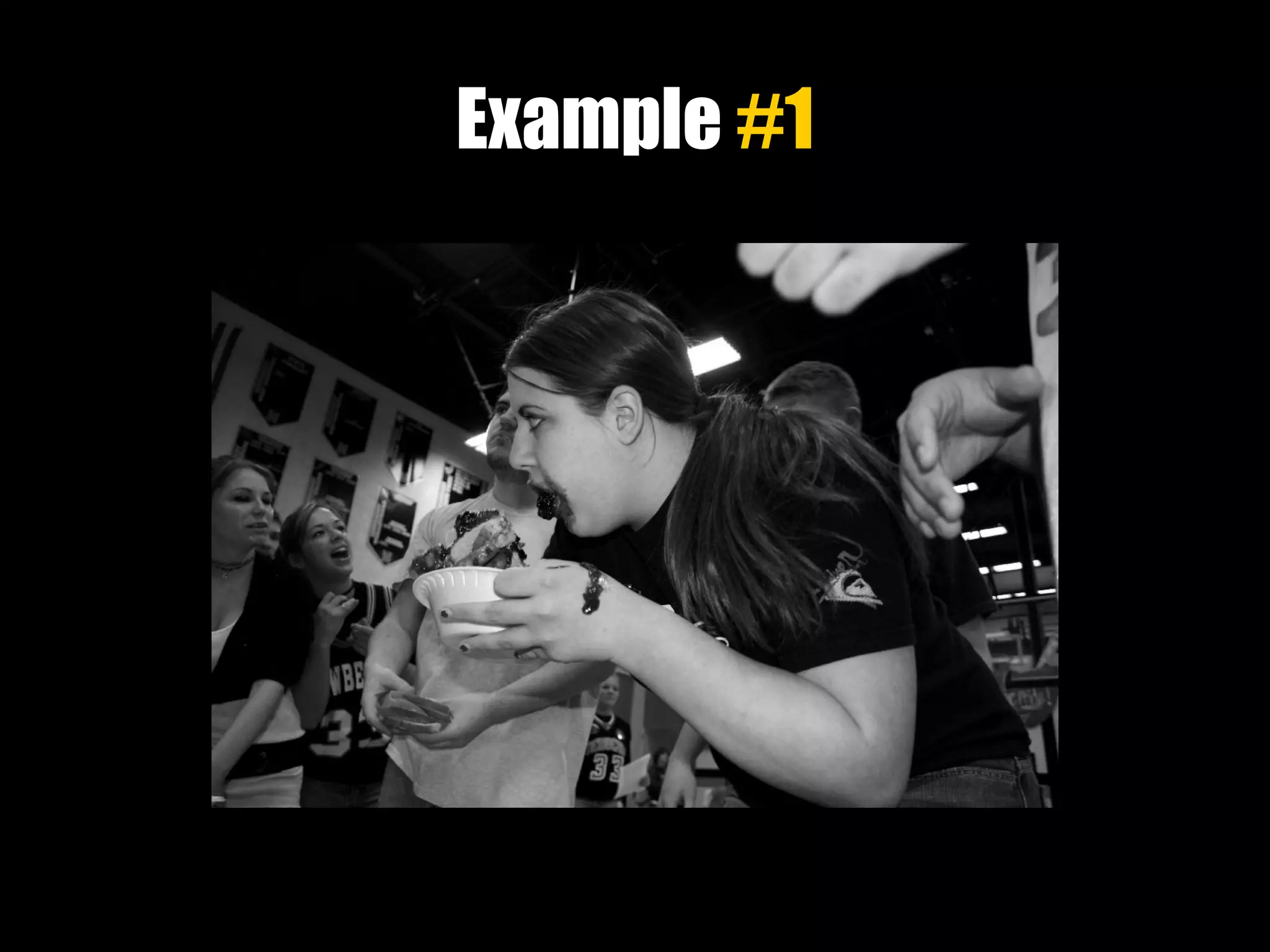
EMOTION
Example  # 1
Example  # 2
Example  # 3
Example  #4
Example  #5
RELATIONSHIP
Example  # 1
Example  # 2
Example  # 3
Composition  rules. . . Rule of thirds Close detail Framing Patterns Leading lines Unique angle
RULE OF  THIRDS
Example  #1
Example  #2
Example  #3
CLOSE  DETAIL
Example  #1
Example  #2
Example  #3
FRAMING
Example  #1
PATTERNS
Example  #1
Example  #2
LEADING  LINES
Example  #1
Example  #2
Example  #3
UNIQUE  ANGLE
Example  #1
Example  #2
Example  #3
QUICK  TIPS
Posed but  not  really. . . Posed shots are  not  good. But shots of people posing for  other  people often work. Since they aren’t posing for you, the shot is candid and the angle is interesting.
Always have your  camera Keep your camera with you.  It’s not hard.  Just put it in your purse or backpack.  So if there’s, let’s say, a chemistry lab you’ll be all set.
Take lots of  photos  but. . .  Do all of these things before pressing the button: Compose your shot Don’t blindly shoot Try for rule of thirds Get close enough Pay attention to all corners of the screen/viewfinder Avoid distractions (other people, cars, books) Again, make sure you’re close enough (no wasted space) “ Compose your shot… Don’t blindly shoot….”
Busy vs  simple Very very VERY distracting Much more simplistic
Sell the  story Don’t rely on captions Pictures are more interesting when they tell a story. (left) This person is obviously engaged in conversation about something, but the picture doesn’t tell what and the emotion in his face isn’t great enough to stand on its own.… (right) By simply widening the shot and including another person you can better understand that they are talking about a picture or the camera she is holding… This makes  the viewer understand the picture and want to look at it.

Yearbook Photography