Download to read offline
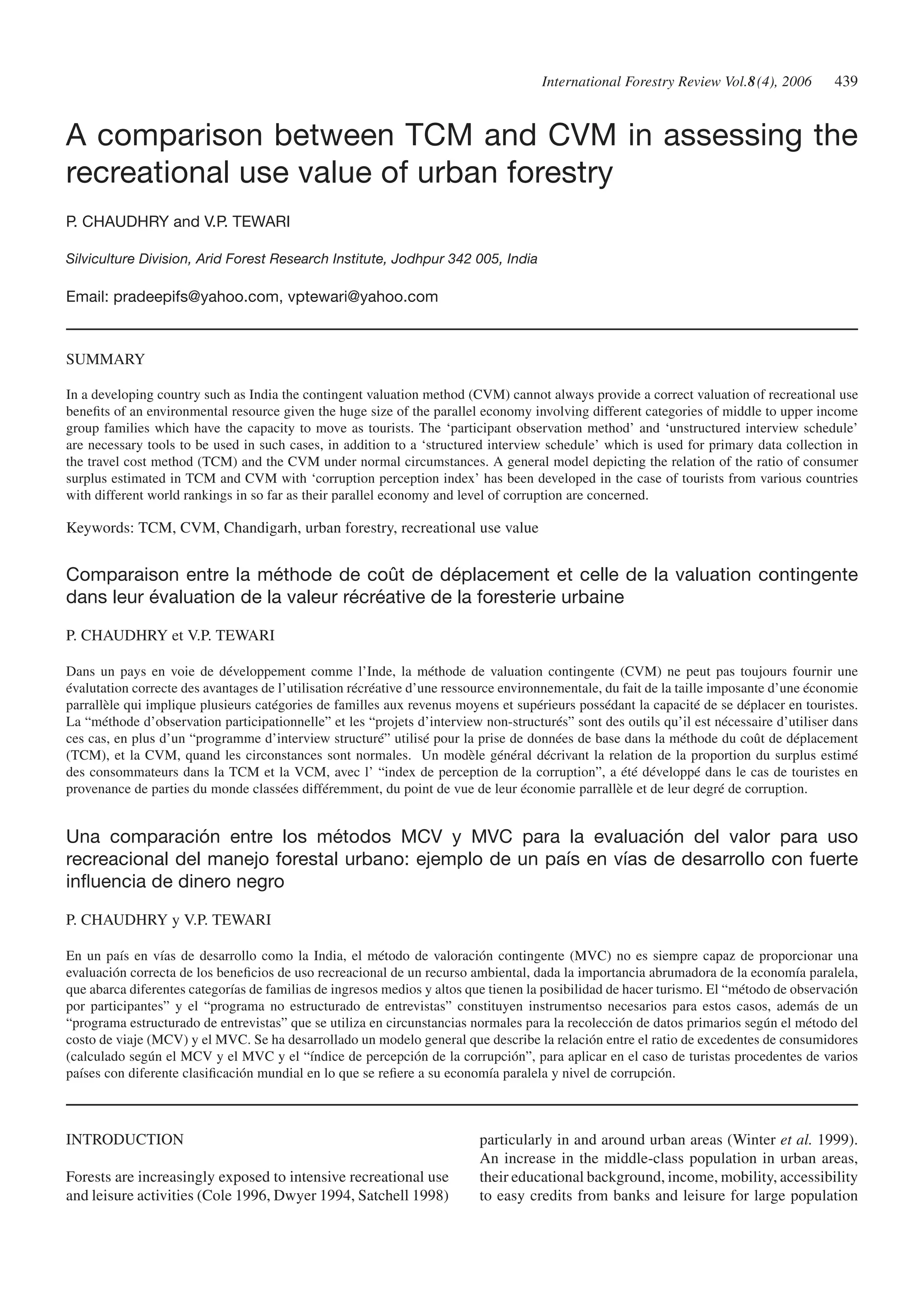
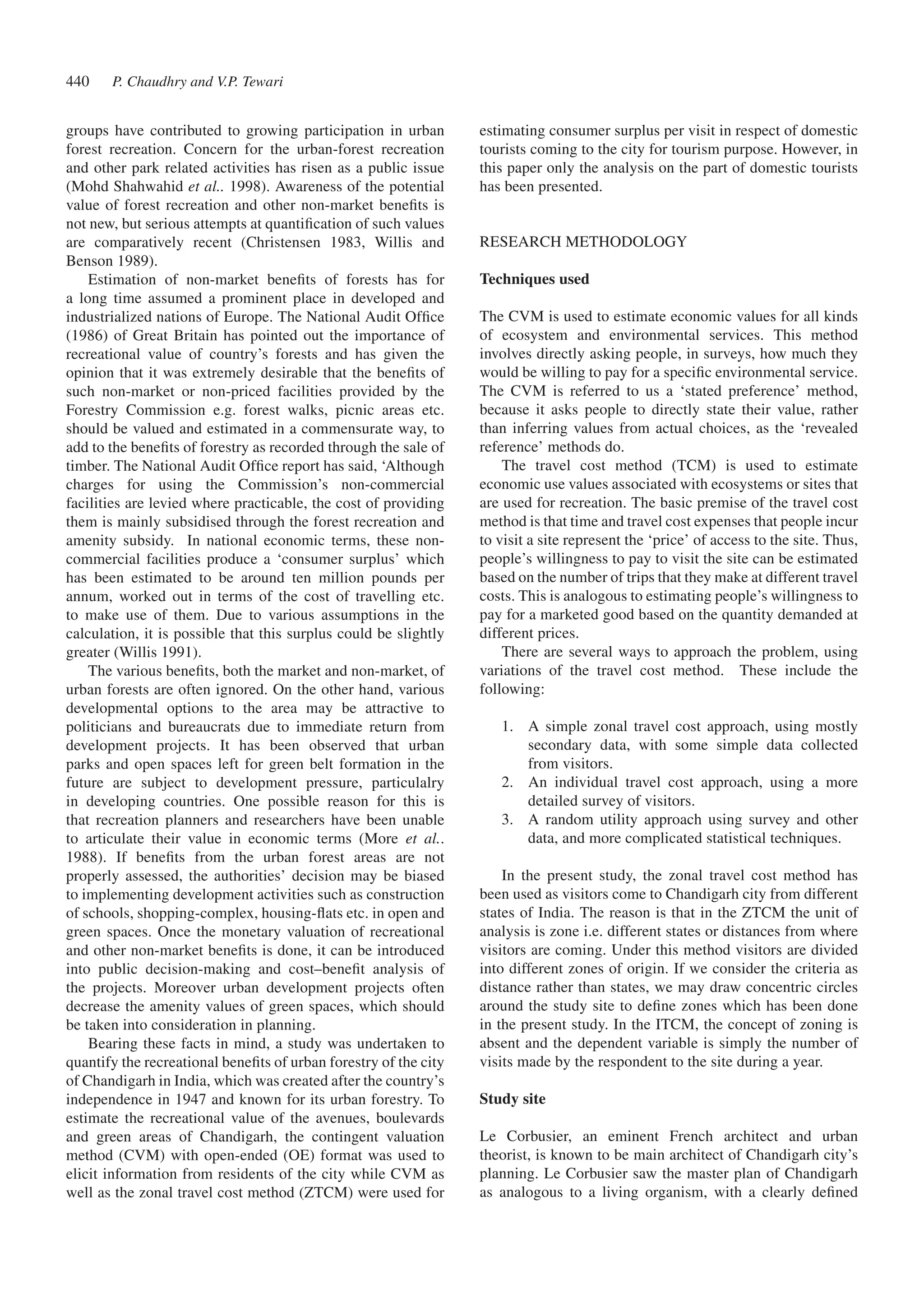
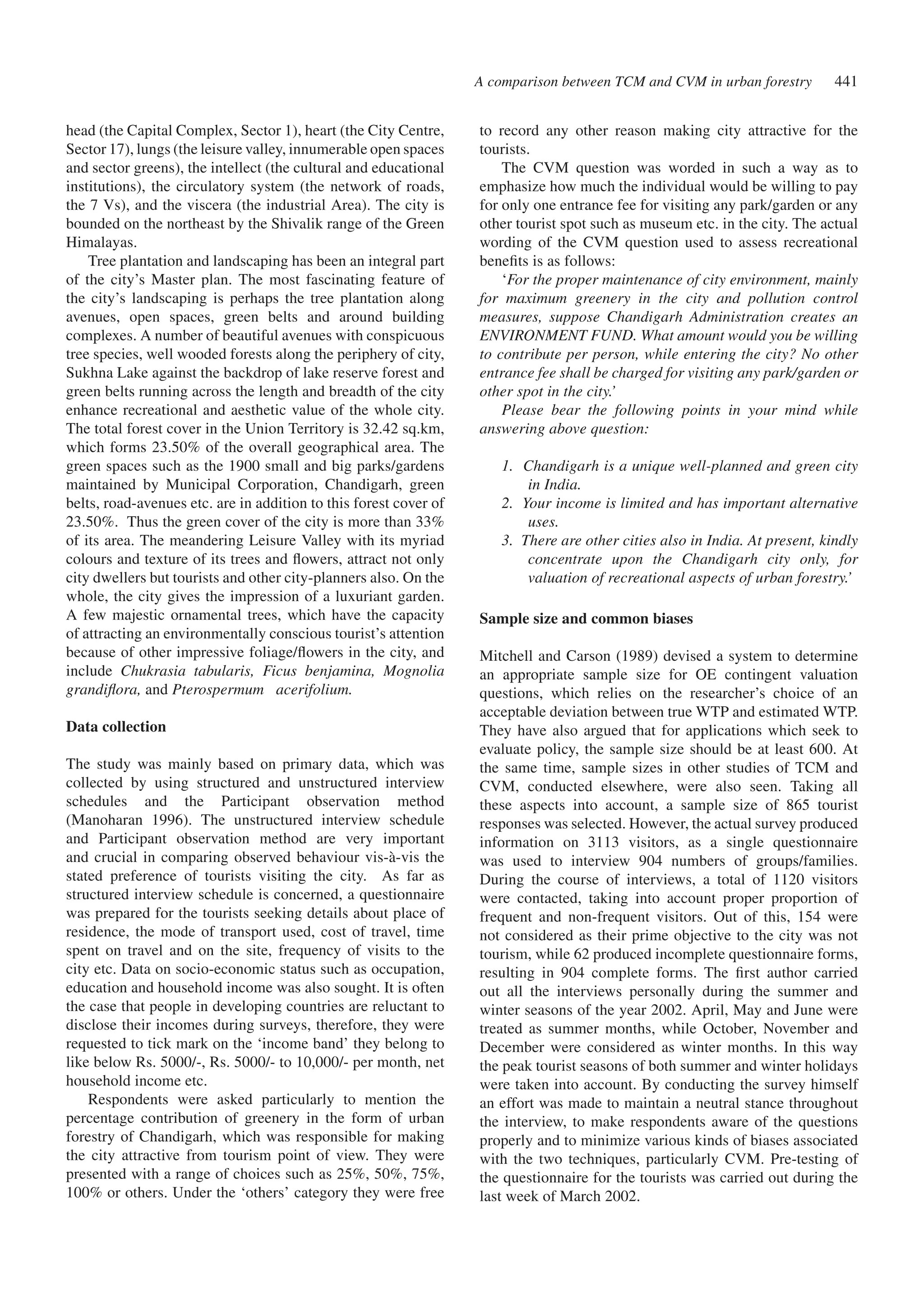
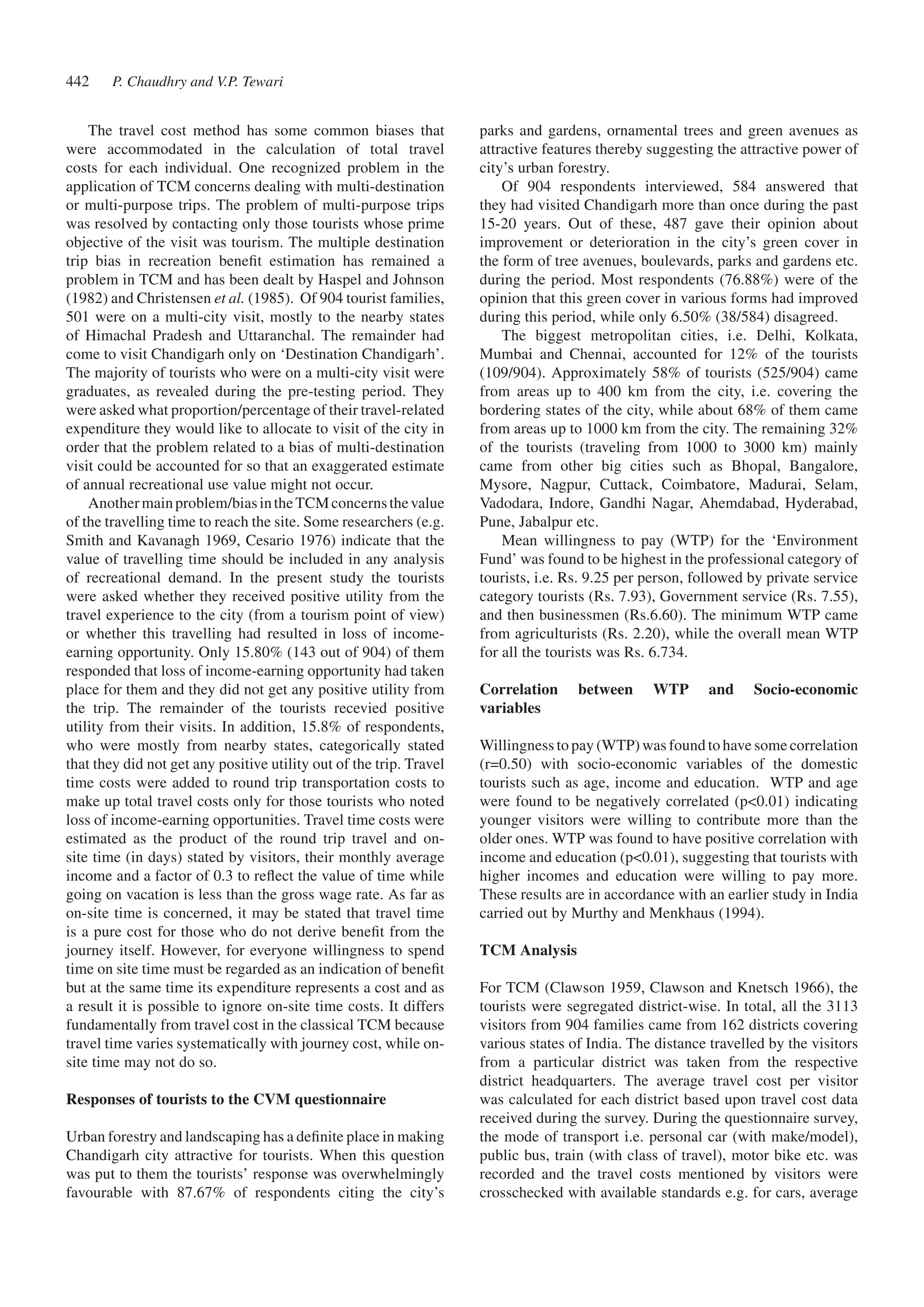
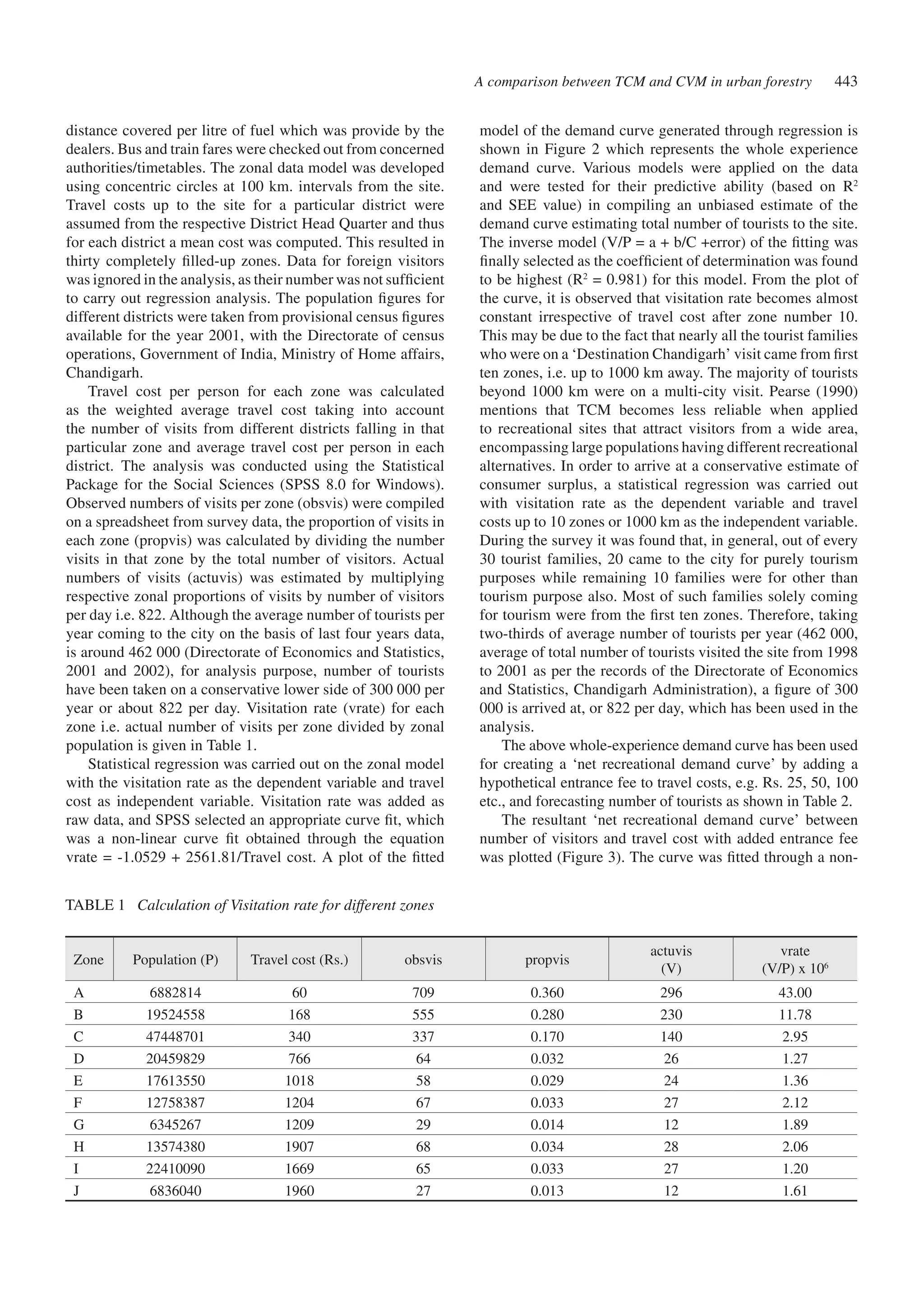
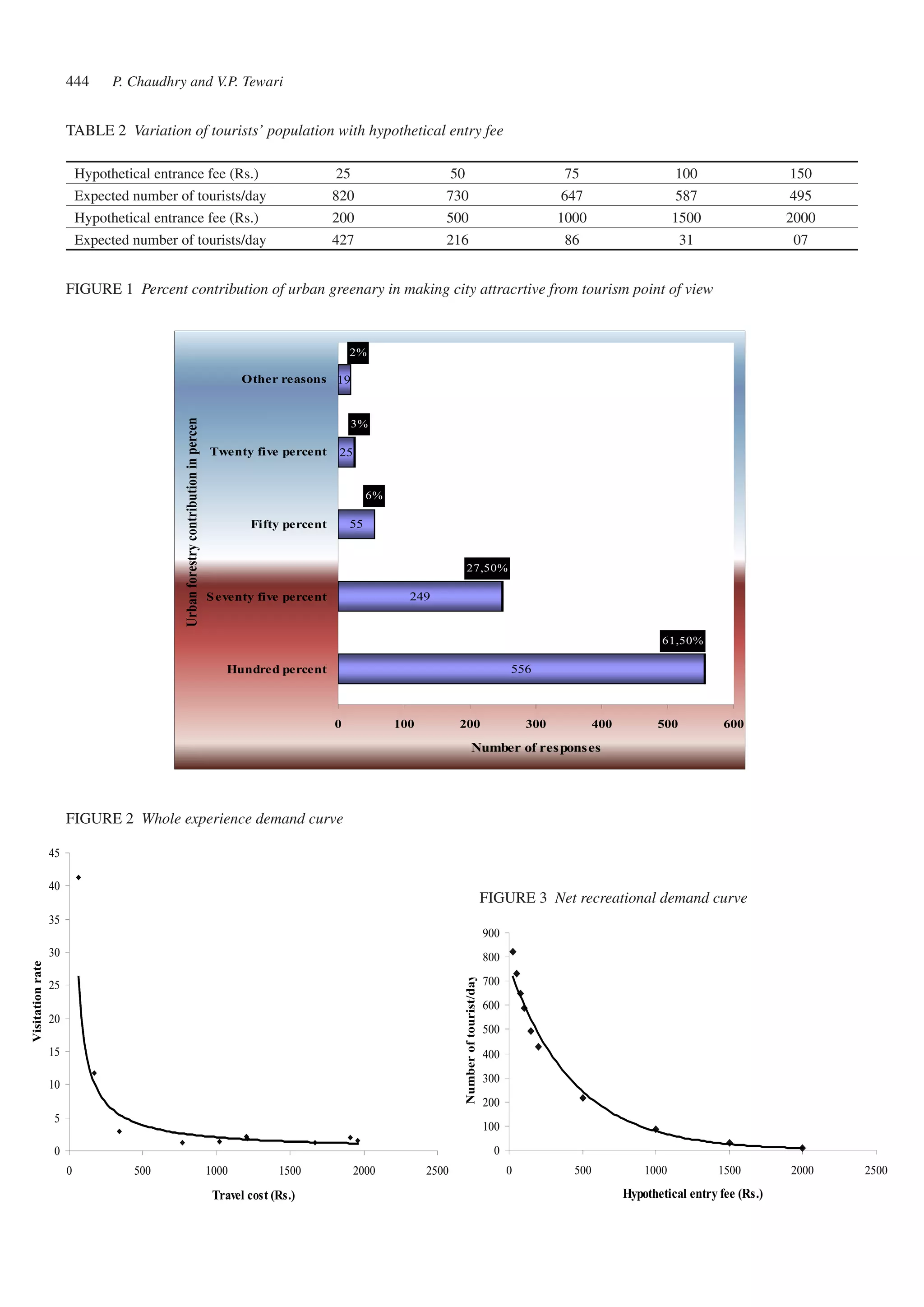
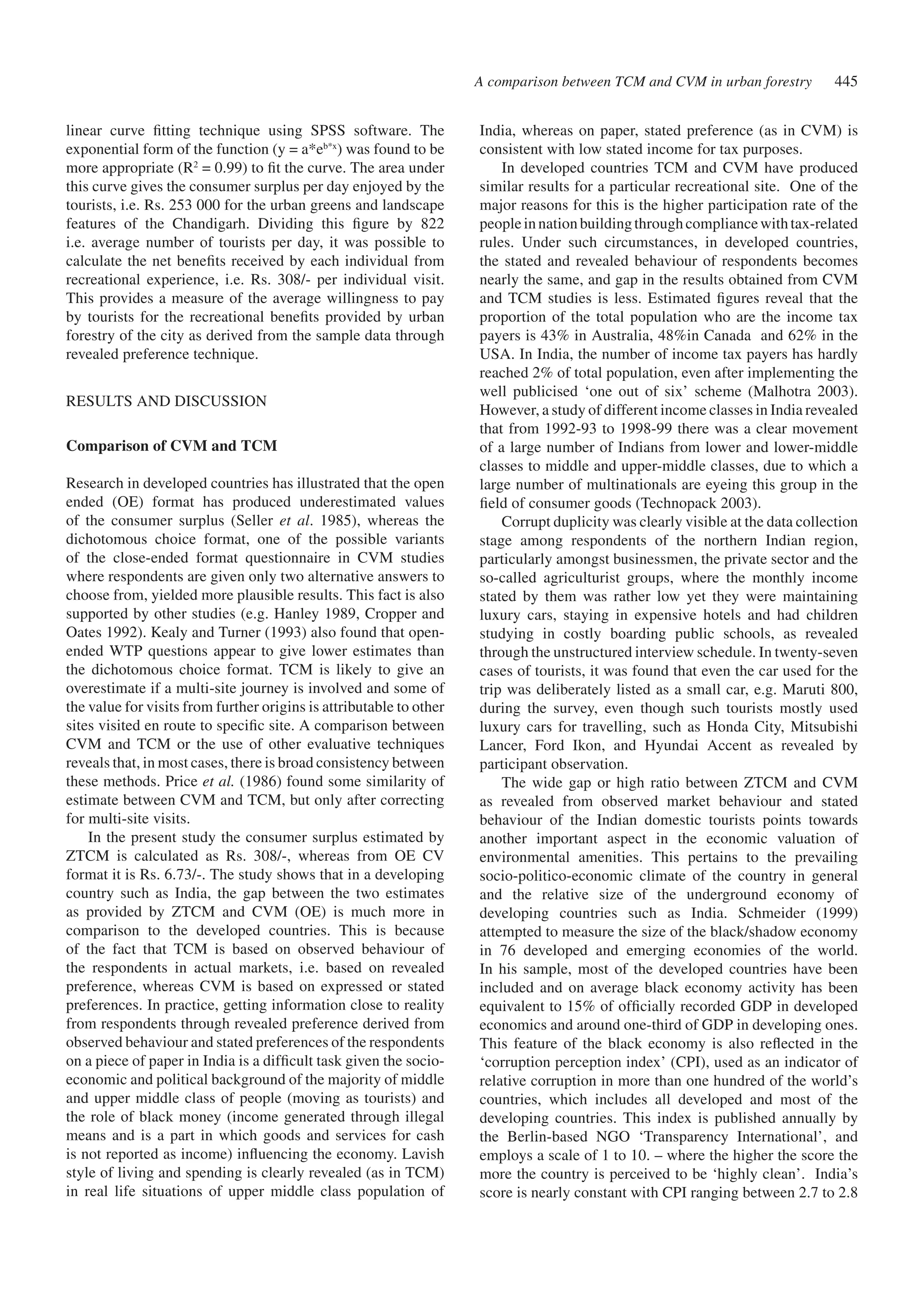
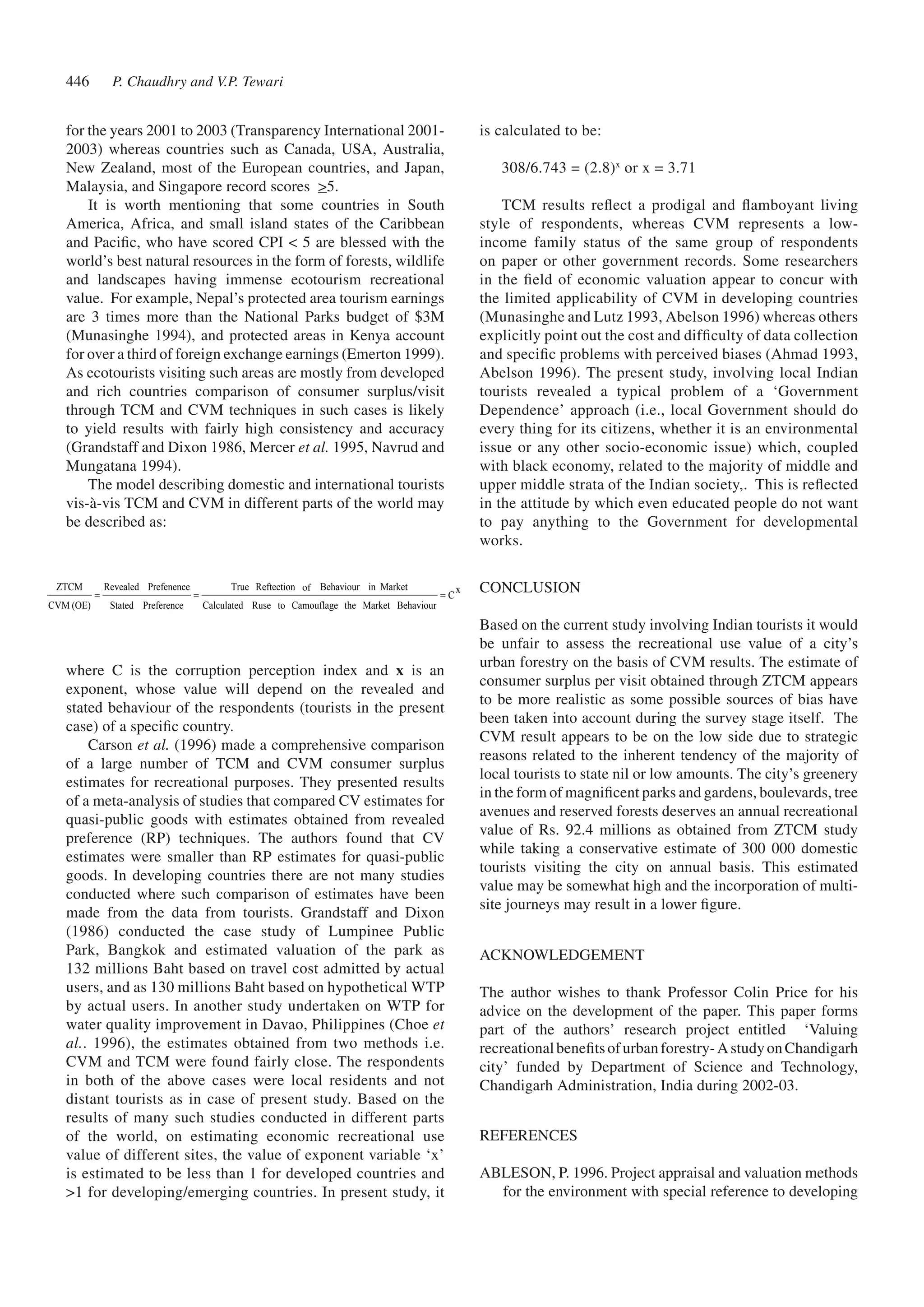

In the context of urban forestry in India, the contingent valuation method (CVM) can be inadequate for accurately assessing recreational use values due to the influence of a parallel economy. The study suggests using participant observation and unstructured interviews alongside traditional methods for better valuation, highlighting a model that correlates estimated consumer surplus with a country's corruption perception index. Data from Chandigarh reveals the significance of urban green spaces, indicating that accurate valuation is essential for informed public decision-making regarding urban development.


