Decontamination
&
Chlorine Dioxide Gas
Dr. Henry S. Luftman
Consultant – Odor Science
Presentation
•  Microbes – particularly fungi
•  Decontamination
–  Terms
–  Types
–  Decontaminants
•  Chlorine Dioxide
–  Properties
–  Compared to Hydrogen Peroxide and others
•  Chlorine Dioxide applications
–  Non-fungal
–  Fungal
•  Review and Compare
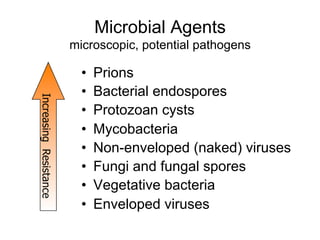
Microbial Agents
microscopic, potential pathogens
•  Prions
•  Bacterial endospores
•  Protozoan cysts
•  Mycobacteria
•  Non-enveloped (naked) viruses
•  Fungi and fungal spores
•  Vegetative bacteria
•  Enveloped viruses
IncreasingResistance
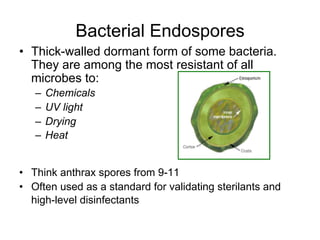
•  Thick-walled dormant form of some bacteria.
They are among the most resistant of all
microbes to:
–  Chemicals
–  UV light
–  Drying
–  Heat
•  Think anthrax spores from 9-11
•  Often used as a standard for validating sterilants and
high-level disinfectants
Bacterial Endospores
Fungi
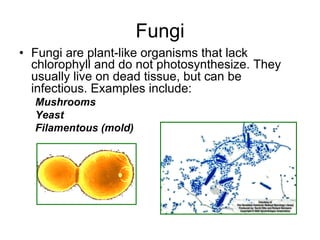
•  Fungi are plant-like organisms that lack
chlorophyll and do not photosynthesize. They
usually live on dead tissue, but can be
infectious. Examples include:
Mushrooms
Yeast
Filamentous (mold)
Fungi Terms
•  Eukaryotic cells (nuclei, DNA)
•  Cell wall with glycoproteins and polysacharides
(80%)
–  Adds resistance to chemicals
•  Requirements
–  Organic nutrients: decaying matter, paper or
cardboard
–  Moisture
•  Mycoses – fungal infectious diseases
Fungi terms (cont.)
•  Filamentous – molds (0.5 x 5 µm)
–  Hyphae à mycelia (accumulation of cell walls)
–  Trichophyton – dermatology issues
–  Asperillus – infections. Produces aflatoxinà food
(contaminant, carcinogen) – most resistant to
chemicals
–  Penicillium – rubratoxins à liver and kidney disease
–  Stachybotys – mycotoxins à headaches, allergies,
sick building
•  Unicellular – yeasts (8-10 µm)
•  Spores
–  Resistance > veg. mold > veg. yeast > veg. bacteria
–  Conidia: asexual spore
–  Ascospore: sexual (meiotic) spore, more resistant.
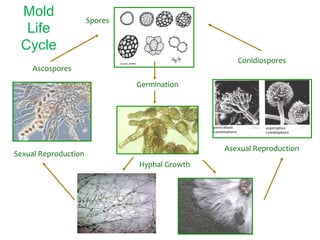
Ascospores	
  
Sexual	
  Reproduction	
  
Hyphal	
  Growth	
  
Germination	
  
Conidiospores	
  
Spores	
  
Asexual	
  Reproduction	
  
Mold
Life
Cycle
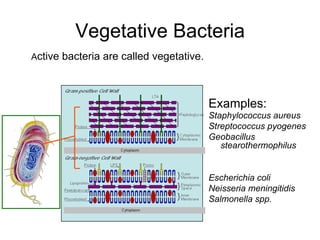
Vegetative Bacteria
Active bacteria are called vegetative.
Examples:
Staphylococcus aureus
Streptococcus pyogenes
Geobacillus
stearothermophilus
Escherichia coli
Neisseria meningitidis
Salmonella spp.
Types of Disinfection
•  Chemical – our focus
•  Radiation – ultraviolet light
•  Thermal – an autoclave
•  Filtration – a liquid filter
Types of Disinfectants
•  Sterilants can kill all microbes, spores and
viruses, given enough time.
•  High-Level disinfectants kill all viruses,
most fungi and vegetative cells, but they may
not kill endospores reliably.
•  Intermediate-Level disinfectants destroy all
vegetative cells including mycobacteria, fungi,
and most, but not all viruses. They cannot kill
endospores.
•  Low-Level (General Purpose) disinfectants
destroy vegetative bacteria, except
mycobacteria, fungi and enveloped viruses
•  Antiseptic – A substance that prevents or inhibits
the growth of microorganisms on living tissues.
•  Sanitizer – A chemical agent that kills 99.999% of
a specific test bacterium in 30 seconds under
specified test conditions.
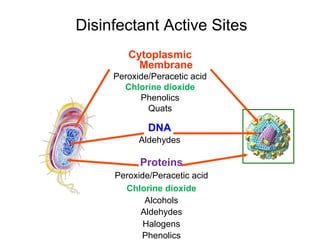
Disinfectant Active Sites
Cytoplasmic
Membrane
Peroxide/Peracetic acid
Chlorine dioxide
Phenolics
Quats
Proteins
Peroxide/Peracetic acid
Chlorine dioxide
Alcohols
Aldehydes
Halogens
Phenolics
DNA
Aldehydes
Disinfectant Vocabulary
•  Viable – capable of living
•  Pathogen – microorganism capable of
causing disease
–  Bacteria - vegetative and sporal
–  Virus
–  Fungus – vegetative and sporal
–  Prion
•  Disinfection
–  Chemical or physical inactivation of pathogenic
micro-organisms on inanimate surfaces.
Vocabulary (Continued)
•  Decontamination
The use of physical or chemical means to remove,
inactivate, or destroy bloodborne pathogens on a
surface or item to the point where they are no
longer capable of transmitting infectious particles
and the surface or item is render safe for handling,
use, or disposal.
•  Sterilization
Destruction of ALL microorganisms by procedure or
exposure to chemical or physical agents, or to
ionizing radiation.
•  Biocide - (germicide) Kills all living organisms,
pathogenic and harmless.
•  Sporicide - Destroys bacterial spores.
•  Tuberculocide - Kills Mycobacterium tuberculosis
•  Fungicide – Kills fungal spores.
•  Bactericide – Kill pathogenic and harmless
bacteria, but not necessarily spores.
-Disinfection, Sterilization and Preservation, 5th ed., Block, S.S.
Vocabulary (Continued)
•  Colony Forming Unit (CFU) – single
macroscopic colony formed after introducing
microorganisms into growth medium
•  Biological Indicator (BI) – a monitor
impregnated with microbes to test the efficacy
of a decontamination event
•  Log Reduction – Reduction of a microbial
population by 90%
–  Example:Starting point 1,000,000
–  1 log 100,000
–  2 log 10,000
–  4 log 100
–  6 log 1
Properties of Ideal Disinfectants
•  Broad spectrum
•  High efficiency
•  Unaffected by contaminants
•  Nontoxic, non-corrosive, nonflammable
•  Odorless
•  Cheap
•  Stable
•  Environmentally friendly
What affects a disinfectant s efficiency?
• Surface condition – Rough and/or porous surfaces will be
more difficult to disinfect.
• Surface temperature – Higher temperatures will speed up
disinfection rates, but it will also increase evaporation.
• Organic load – Blood, sputum, bodily fluids, media, urine,
feces, etc. can protect and stabilize microorganisms.
Organics may also react with the disinfectant, consuming it.
What affects a disinfectant s efficiency?
• Contact time – Disinfectants that evaporate quickly may
require multiple applications to complete the contact time.
• Dried spills – Dried media, blood, etc. will decrease a
disinfectant's efficiency.
• Dirt, grease, or oils – All can protect microbes, and
grease and oil can repel water-based disinfectants.
Surface Decontamination
•  Cleaning
–  Physically removing dirt to towels or rinse
–  Detergents best
•  Sanitization
–  Killing viables
•  Bacteria – vegetative
•  Viruses
•  Mold / Fungus
•  Bacteria - spores
–  Alcohol, bleach, quats, phenols, peroxide, ClO2
Space Decontamination
•  Exposing a confined space to a gas or vapor
with sporicidal capability
•  Space can be a
–  Room(s) or laboratory(ies)
–  Building
–  HVAC component or system
–  Combination of any of the above
•  Non technical space
–  Home
–  Business
Items Within Space
•  Furniture
•  Technical equipment
•  Refrigerators, freezers
•  Computers and other electronic devices
•  Sinks, showers
Requirements for a
Successful Decontamination
•  Disinfection – To what degree?
•  Choice of disinfectant
•  Penetration to all surfaces (optional ?)
•  Penetration through HVAC system
(optional)
•  Temperature and humidity control
•  Containment of fumigant
Requirements for a Successful
Decontamination (Cont.)
•  Disposal of disinfectant or residue?
– Vent, isloate, clean
•  Validation of disinfection
– Biological indicators
•  Material compatibility
•  Safety
Safety
•  If a decontaminant at a specified concentration
can kill bacterial spores, it cannot be good for
people
•  Relevant Material Safety Data Sheets (MSDS s)
•  Appropriate personal protective equipment for
the application
•  Appropriate isolation from bystanders
•  Monitors for residual gases
Disinfectant Phase
•  Liquid (Beach, peroxide, aqueous CD,
quats, phenols, oils, alcohol, …)
– Ideal for accessible surfaces
– Can spray, line-of-sight decontamination
•  Gas (CD, formaldehyde,
hydrogen peroxide (?))
– Ideal for spaces, 3 dimensional objects
– Containment?
•  Aerosol – a middle ground
When are Gas
Decontaminations Needed?
•  Cannot reach some surfaces with liquid or
fog
– Contaminated plenums
– Internal surfaces within equipment sets
– Porous surfaces
– Unassembled ductwork and HVAC systems
– Interstitial spaces
– Other hidden spaces
When are Gas Decontaminations
Needed? (cont.)
•  Bacterial endospore contamination
– Difficult to maintain adequate contact time
with sporicidal liquid disinfectants
– Easier to validate decon via biological
indicators
•  Material compatibility issues
– Liquids are wet and often corrosive
– Electronics, certain metals, …
Choice of Gas Decontaminants
•  Formaldehyde Gas
•  Hydrogen Peroxide Vapor
•  Chlorine Dioxide Gas
•  Others
–  Methyl Bromide – Green House, bad with Al
–  Ethylene Oxide – carcinogen, explosive
–  Ozone – very corrosive, unstable
–  Peracetic Acid Vapor – corrosive, unstable, high BP
Formaldehyde Gas CH2OH–
Issues
•  Fall-out residue
– Added clean-up time
•  Carcinogen
•  Potential residual odor
•  Polymerization on cold surfaces
•  Deactivated by some fungi
Hydrogen Peroxide Vapor
(H2O2)
•  Typically delivered by flash vaporization of
aqueous peroxide mixture
– The mixture is generally close to or above
saturation in air
•  Mechanism: oxidation
•  Required contact time less than
formaldehyde
HP Vapor Issues
•  Instability of HP toward decomposition
– Flow pattern is critical to beat
decomposition rate
•  Decomposition may block access of
decontaminant
•  Condensation may cause control issues
– Heat-tracing or pre-thermal treatment
HP Vapor Issues (cont.)
•  Cellulose materials absorb or decompose
– May effect decontamination or aeration
•  Some material issues – nylon, cellulose,
copper, lead, iron oxide, epoxy
– Condensation may effect painted surfaces
•  Capital equipment cost
•  If delivered as aerosol, line-of-sight decon
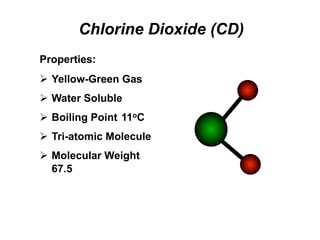
Chlorine Dioxide (CD)
Properties:
Ø  Yellow-Green Gas
Ø  Water Soluble
Ø  Boiling Point 11oC
Ø  Tri-atomic Molecule
Ø  Molecular Weight
67.5
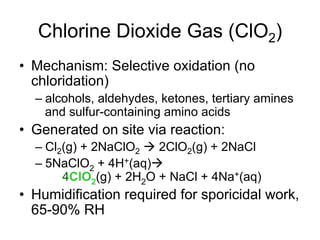
Chlorine Dioxide Gas (ClO2)
•  Mechanism: Selective oxidation (no
chloridation)
– alcohols, aldehydes, ketones, tertiary amines
and sulfur-containing amino acids
•  Generated on site via reaction:
– Cl2(g) + 2NaClO2 à 2ClO2(g) + 2NaCl
– 5NaClO2 + 4H+(aq)à
4ClO2(g) + 2H2O + NaCl + 4Na+(aq)
•  Humidification required for sporicidal work,
65-90% RH
Chlorine Dioxide Applications
Ø  National Security Issues
Ø  Post office anthrax cleanup
Ø  Bio-terrorism
Ø  Contamination elimination
Ø  Samonella newport contamination (16 fatalities) at University of
Pennsylvania
Ø  BioSafety Level applications (BSL1-2-3-4)
Ø  Products and equipment entering/leaving controlled
environments
Ø  Experiment change
Ø  Food Safety and Food Spoilage Reduction
Ø  Fungicide after Katrina
Ø  Water Treatment
Ø  Pulp and Paper (water treatment and paper bleaching)
Chlorine Dioxide Gas –
Advantages
•  Safe by-products (oxygen and salt)
•  No residue
•  Not flammable / explosive
•  True gas – no condensation issues
•  Reputation for use in Anthrax
decontamination
•  Is toxic – and it is an irritant to the eyes,
skin and respiratory system.
•  Is noncorrosive to stainless steel, and is
compatible with most rubber and
plastics, and is nonflammable.
•  It is not stable after preparation.
•  Cost is more than bleach.
•  It can be disposed of by
dilution in the sewer.
Chlorine dioxide
Chlorine Dioxide - Issues
•  Less well-known or characterized
•  Mild corrosion/discoloring to cold steel,
copper, brass at high concentrations
– Particularly in the presence of water
•  Low PEL limit (0.1 ppm)
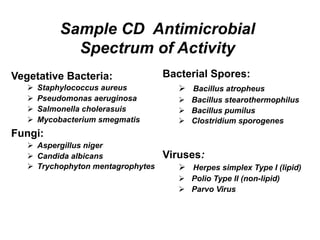
Sample CD Antimicrobial
Spectrum of Activity
Vegetative Bacteria:
Ø  Staphylococcus aureus
Ø  Pseudomonas aeruginosa
Ø  Salmonella cholerasuis
Ø  Mycobacterium smegmatis
Fungi:
Ø  Aspergillus niger
Ø  Candida albicans
Ø  Trychophyton mentagrophytes
Bacterial Spores:
Ø  Bacillus atropheus
Ø  Bacillus stearothermophilus
Ø  Bacillus pumilus
Ø  Clostridium sporogenes
Viruses:
Ø  Herpes simplex Type I (lipid)
Ø  Polio Type II (non-lipid)
Ø  Parvo Virus
Environmental Technology
Verification (ETV) Program
In 2002, EPA established the Building
Decontamination Technology Center at
Battelle. Battelle plans, coordinates, and
conducts verification tests of decontamination
technologies and reports the results to the
community at large. Information concerning
this specific environmental technology area
can be found on the Internet at http://
www.epa.gov/etv/centers/center9.html.
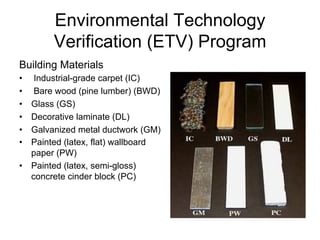
Environmental Technology
Verification (ETV) Program
Building Materials
•  Industrial-grade carpet (IC)
•  Bare wood (pine lumber) (BWD)
•  Glass (GS)
•  Decorative laminate (DL)
•  Galvanized metal ductwork (GM)
•  Painted (latex, flat) wallboard
paper (PW)
•  Painted (latex, semi-gloss)
concrete cinder block (PC)
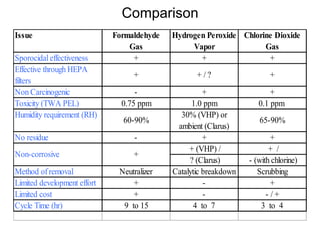
Issue Formaldehyde
Gas
Hydrogen Peroxide
Vapor
Chlorine Dioxide
Gas
Sporocidaleffectiveness + + +
Effective through HEPA
filters
+ + / ? +
Non Carcinogenic - + +
Toxicity (TWA PEL) 0.75 ppm 1.0 ppm 0.1 ppm
Humidity requirement (RH)
60-90%
30% (VHP) or
ambient (Clarus)
65-90%
No residue - + +
+ (VHP) / + /
? (Clarus) - (with chlorine)
Method of removal Neutralizer Catalytic breakdown Scrubbing
Limited development effort + - +
Limited cost + - - / +
Cycle Time (hr) 9 to 15 4 to 7 3 to 4
Non-corrosive +
Comparison
Widener Large Animal ICU/
NICUThe image cannot be displayed. Your computer may not have enough memory to open the image, or the image may have been corrupted. Restart your computer, and then open the file again. If the red x still appears, you may have to delete the image and then insert it again.
George D. Widener
Large Animal Hospital,
New Bolton Center
•  Part of University of Pennsylvania
•  Largest equine hospital in U.S.
~ 6000 patients per year
•  Possible Salmonella outbreak detected in
March 2004
–  Increased environmental surveillance
–  Fecal samples from all animals
–  Improved collection and bacteria isolation methods
Widener Large Animal ICU/
NICU
•  Center quarantined in May 2004, following
16 equine fatalities
•  Multi-drug resistant Salmonella Newport
identified
– Gram-negative, non-spore forming bacteria
– No human infections noted
•  Multiple attempts at surface
decontamination of ICU/NICU
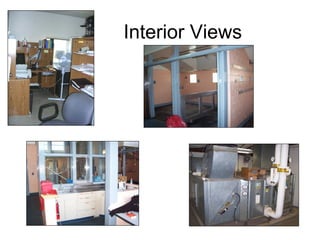
Interior Views
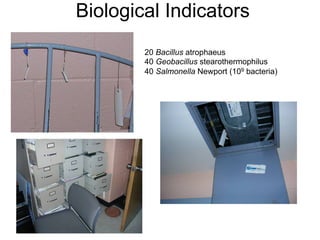
Biological Indicators
20 Bacillus atrophaeus
40 Geobacillus stearothermophilus
40 Salmonella Newport (109 bacteria)
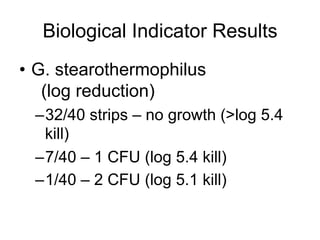
Biological Indicator Results
•  G. stearothermophilus
(log reduction)
– 32/40 strips – no growth (>log 5.4
kill)
– 7/40 – 1 CFU (log 5.4 kill)
– 1/40 – 2 CFU (log 5.1 kill)
Validation Study for Biological
Safety Cabinets (BSCs)
•  BSCs used to simultaneously
– protect biological material inside from external
contamination
– protect user and lab from biological material
being manipulated
•  HEPA filtration, blower(s), plenums
•  Found in medical, veterinary,
pharmaceutical, and biotech labs
BSC Decontamination
•  Formaldehyde gas had been the standard
method for >30 yrs
•  National Sanitation Foundation holds the
standard for BSC maintenance
•  Until 2009, only formaldehyde considered
pre-validated
•  Study to confirm similar status to CD
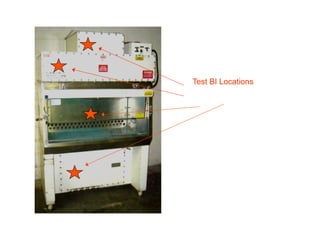
NSF Biological Indicator
Criteria (for each trial)
•  6 pairs of BIs
– 3 pairs in downstream side of exhaust
HEPA filter (center and opposite corners)
– 1 pair within positive pressure plenum
– 1 pair beneath cabinet workspace
– 1 pair in center of upstream (dirty) side of
down flow HEPA
Test BI Locations
Validation Experiments
•  Experimenters – Micro-Clean
•  BSC Manufacturer – NuAire
•  Location – NuAire (Plymouth, MN)
•  Conditions:
– 60 – 75% RH
– CD amount - 0.1 g/ft3
– Exposure time – 80 min
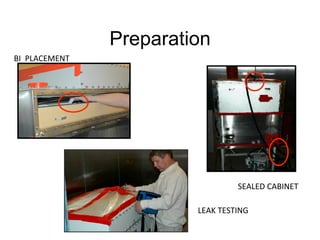
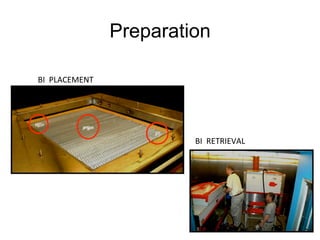
Preparation
BI	
  	
  PLACEMENT	
  
SEALED	
  CABINET	
  
LEAK	
  TESTING	
  
Preparation
BI	
  	
  PLACEMENT	
  
BI	
  	
  RETRIEVAL	
  
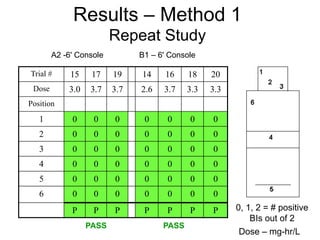
Results – Method 1
Repeat Study
Trial # 15 17 19 14 16 18 20
Dose 3.0 3.7 3.7 2.6 3.7 3.3 3.3
Position
1 0 0 0 0 0 0 0
2 0 0 0 0 0 0 0
3 0 0 0 0 0 0 0
4 0 0 0 0 0 0 0
5 0 0 0 0 0 0 0
6 0 0 0 0 0 0 0
P P P P P P P 0, 1, 2 = # positive
BIs out of 2
A2 -6' Console B1 – 6' Console
Dose – mg-hr/L
PASS PASS
Results
•  Method successfully validated on A2
console, A2 bench top, B1 and B2
cabinets
•  Chlorine dioxide added to National
Sanitation Foundation protocol (2009)
Other Large Scale CD Events
•  9-11 anthrax spore decontamnations
– Hart Senate Building, Miami Media Center, NJ
Post Office
•  Hospital decontamination (~2008)
•  Multiple anti-fungal fumigations in New
Orleans following Katrina
Note: It s all the same Chlorine Dioxide
Published works about
Chlorine Dioxide as a
Decontaminant
Comparison of Multiple Systems for Laboratory
Whole Room Fumigation
•  Applied Biosafety 16 (2011) 139-157
•  Alan Beswick et al., The Health and Safety
Laboratory, UK
•  Tested HP(3), formaldehyde, CD and ozone vs 3
bacterial spore and virus.
•  Tested on bench, in centrifuge, on floor, within
spill
•  CD at top for almost all, beating HP by more
than x100 on Mycobacterium fortuitum,
particularly in spill
Effect of CD Gas on Fungi and Mycotoxins
Associated with Sick Building Syndrome
•  Appl. Environ Microbiol 71 (2005) 5399
•  S.C.Wilson et al, Texas Tech Univ.
•  Stachybotrys chartarum, Cladosporium
cladosporiodes, Penicillium chrysogenum,
Chaetomium globosum
•  500 to 1000 ppm CD via dry chemicals in water
•  100% inactivation of conidia (asexual spores),
90% of ascospores (sexual, meiotic).
•  While Stachy inactivated, remains toxic
Inactivation of Stachybotrys chartarum
grown on gypsum board using aerosolized
chemical agents.
•  J. Environ. Eng. Sci. 5 (2006) 75
•  Andrew Wagner et al., Univ. of Cincinnati
•  10% bleach (0.6% NaOCl), thiabendazole,
0.05% CD (aq), copper(II) sulfate – 4 and 8 hr.
•  Only bleach and CD worked (~100%)
•  Aerosols delivered directly to dry wall surface –
not real world for regular building.
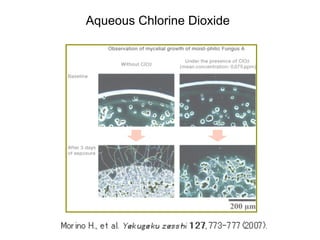
Aqueous Chlorine Dioxide
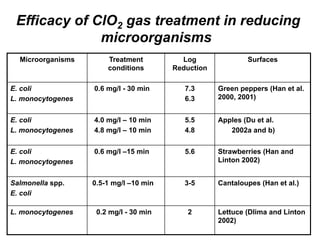
Microorganisms Treatment
conditions
Log
Reduction
Surfaces
E. coli
L. monocytogenes
0.6 mg/l - 30 min 7.3
6.3
Green peppers (Han et al.
2000, 2001)
E. coli
L. monocytogenes
4.0 mg/l – 10 min
4.8 mg/l – 10 min
5.5
4.8
Apples (Du et al.
2002a and b)
E. coli
L. monocytogenes
0.6 mg/l –15 min 5.6 Strawberries (Han and
Linton 2002)
Salmonella spp.
E. coli
0.5-1 mg/l –10 min 3-5 Cantaloupes (Han et al.)
L. monocytogenes 0.2 mg/l - 30 min 2 Lettuce (Dlima and Linton
2002)
Efficacy of ClO2 gas treatment in reducing
microorganisms
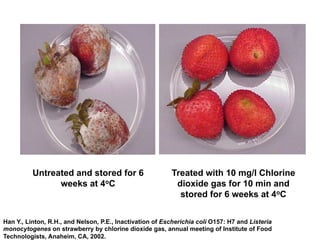
Treated with 10 mg/l Chlorine
dioxide gas for 10 min and
stored for 6 weeks at 4oC
Untreated and stored for 6
weeks at 4oC
Han Y., Linton, R.H., and Nelson, P.E., Inactivation of Escherichia coli O157: H7 and Listeria
monocytogenes on strawberry by chlorine dioxide gas, annual meeting of Institute of Food
Technologists, Anaheim, CA, 2002.
Non-Experimental CD/MODEC Comparison
•  Both have been shown as fungicidal under
laboratory conditions
•  The real world is not under laboratory
conditions
– Surfaces are porous: Liquids and most
aerosols will not penetrate
– Surfaces are not all glass: Some chemicals,
such as hydrogen peroxide, decompose on
paper
– Water based decontaminants corrode
Other CD Applications
•  Janitorial sanitation • Antiseptic
•  Odor elimination • Produce protection
•  Restoration • Water purification
•  Insecticide
•  Instrument sterilization
•  Hospitals, Locker rooms, Restaurants
•  Anti-Fungal station

Henry decontamination clo2 060512

  • 1.
    Decontamination & Chlorine Dioxide Gas Dr.Henry S. Luftman Consultant – Odor Science
  • 2.
    Presentation •  Microbes –particularly fungi •  Decontamination –  Terms –  Types –  Decontaminants •  Chlorine Dioxide –  Properties –  Compared to Hydrogen Peroxide and others •  Chlorine Dioxide applications –  Non-fungal –  Fungal •  Review and Compare
  • 3.
    Microbial Agents microscopic, potentialpathogens •  Prions •  Bacterial endospores •  Protozoan cysts •  Mycobacteria •  Non-enveloped (naked) viruses •  Fungi and fungal spores •  Vegetative bacteria •  Enveloped viruses IncreasingResistance
  • 4.
    •  Thick-walled dormantform of some bacteria. They are among the most resistant of all microbes to: –  Chemicals –  UV light –  Drying –  Heat •  Think anthrax spores from 9-11 •  Often used as a standard for validating sterilants and high-level disinfectants Bacterial Endospores
  • 5.
    Fungi •  Fungi areplant-like organisms that lack chlorophyll and do not photosynthesize. They usually live on dead tissue, but can be infectious. Examples include: Mushrooms Yeast Filamentous (mold)
  • 6.
    Fungi Terms •  Eukaryoticcells (nuclei, DNA) •  Cell wall with glycoproteins and polysacharides (80%) –  Adds resistance to chemicals •  Requirements –  Organic nutrients: decaying matter, paper or cardboard –  Moisture •  Mycoses – fungal infectious diseases
  • 7.
    Fungi terms (cont.) • Filamentous – molds (0.5 x 5 µm) –  Hyphae à mycelia (accumulation of cell walls) –  Trichophyton – dermatology issues –  Asperillus – infections. Produces aflatoxinà food (contaminant, carcinogen) – most resistant to chemicals –  Penicillium – rubratoxins à liver and kidney disease –  Stachybotys – mycotoxins à headaches, allergies, sick building •  Unicellular – yeasts (8-10 µm) •  Spores –  Resistance > veg. mold > veg. yeast > veg. bacteria –  Conidia: asexual spore –  Ascospore: sexual (meiotic) spore, more resistant.
  • 8.
    Ascospores   Sexual  Reproduction   Hyphal  Growth   Germination   Conidiospores   Spores   Asexual  Reproduction   Mold Life Cycle
  • 9.
    Vegetative Bacteria Active bacteriaare called vegetative. Examples: Staphylococcus aureus Streptococcus pyogenes Geobacillus stearothermophilus Escherichia coli Neisseria meningitidis Salmonella spp.
  • 10.
    Types of Disinfection • Chemical – our focus •  Radiation – ultraviolet light •  Thermal – an autoclave •  Filtration – a liquid filter
  • 11.
    Types of Disinfectants • Sterilants can kill all microbes, spores and viruses, given enough time. •  High-Level disinfectants kill all viruses, most fungi and vegetative cells, but they may not kill endospores reliably. •  Intermediate-Level disinfectants destroy all vegetative cells including mycobacteria, fungi, and most, but not all viruses. They cannot kill endospores. •  Low-Level (General Purpose) disinfectants destroy vegetative bacteria, except mycobacteria, fungi and enveloped viruses
  • 12.
    •  Antiseptic –A substance that prevents or inhibits the growth of microorganisms on living tissues. •  Sanitizer – A chemical agent that kills 99.999% of a specific test bacterium in 30 seconds under specified test conditions.
  • 13.
    Disinfectant Active Sites Cytoplasmic Membrane Peroxide/Peraceticacid Chlorine dioxide Phenolics Quats Proteins Peroxide/Peracetic acid Chlorine dioxide Alcohols Aldehydes Halogens Phenolics DNA Aldehydes
  • 14.
    Disinfectant Vocabulary •  Viable– capable of living •  Pathogen – microorganism capable of causing disease –  Bacteria - vegetative and sporal –  Virus –  Fungus – vegetative and sporal –  Prion •  Disinfection –  Chemical or physical inactivation of pathogenic micro-organisms on inanimate surfaces.
  • 15.
    Vocabulary (Continued) •  Decontamination Theuse of physical or chemical means to remove, inactivate, or destroy bloodborne pathogens on a surface or item to the point where they are no longer capable of transmitting infectious particles and the surface or item is render safe for handling, use, or disposal. •  Sterilization Destruction of ALL microorganisms by procedure or exposure to chemical or physical agents, or to ionizing radiation.
  • 16.
    •  Biocide -(germicide) Kills all living organisms, pathogenic and harmless. •  Sporicide - Destroys bacterial spores. •  Tuberculocide - Kills Mycobacterium tuberculosis •  Fungicide – Kills fungal spores. •  Bactericide – Kill pathogenic and harmless bacteria, but not necessarily spores. -Disinfection, Sterilization and Preservation, 5th ed., Block, S.S.
  • 17.
    Vocabulary (Continued) •  ColonyForming Unit (CFU) – single macroscopic colony formed after introducing microorganisms into growth medium •  Biological Indicator (BI) – a monitor impregnated with microbes to test the efficacy of a decontamination event •  Log Reduction – Reduction of a microbial population by 90% –  Example:Starting point 1,000,000 –  1 log 100,000 –  2 log 10,000 –  4 log 100 –  6 log 1
  • 18.
    Properties of IdealDisinfectants •  Broad spectrum •  High efficiency •  Unaffected by contaminants •  Nontoxic, non-corrosive, nonflammable •  Odorless •  Cheap •  Stable •  Environmentally friendly
  • 19.
    What affects adisinfectant s efficiency? • Surface condition – Rough and/or porous surfaces will be more difficult to disinfect. • Surface temperature – Higher temperatures will speed up disinfection rates, but it will also increase evaporation. • Organic load – Blood, sputum, bodily fluids, media, urine, feces, etc. can protect and stabilize microorganisms. Organics may also react with the disinfectant, consuming it.
  • 20.
    What affects adisinfectant s efficiency? • Contact time – Disinfectants that evaporate quickly may require multiple applications to complete the contact time. • Dried spills – Dried media, blood, etc. will decrease a disinfectant's efficiency. • Dirt, grease, or oils – All can protect microbes, and grease and oil can repel water-based disinfectants.
  • 21.
    Surface Decontamination •  Cleaning – Physically removing dirt to towels or rinse –  Detergents best •  Sanitization –  Killing viables •  Bacteria – vegetative •  Viruses •  Mold / Fungus •  Bacteria - spores –  Alcohol, bleach, quats, phenols, peroxide, ClO2
  • 22.
    Space Decontamination •  Exposinga confined space to a gas or vapor with sporicidal capability •  Space can be a –  Room(s) or laboratory(ies) –  Building –  HVAC component or system –  Combination of any of the above •  Non technical space –  Home –  Business
  • 23.
    Items Within Space • Furniture •  Technical equipment •  Refrigerators, freezers •  Computers and other electronic devices •  Sinks, showers
  • 24.
    Requirements for a SuccessfulDecontamination •  Disinfection – To what degree? •  Choice of disinfectant •  Penetration to all surfaces (optional ?) •  Penetration through HVAC system (optional) •  Temperature and humidity control •  Containment of fumigant
  • 25.
    Requirements for aSuccessful Decontamination (Cont.) •  Disposal of disinfectant or residue? – Vent, isloate, clean •  Validation of disinfection – Biological indicators •  Material compatibility •  Safety
  • 26.
    Safety •  If adecontaminant at a specified concentration can kill bacterial spores, it cannot be good for people •  Relevant Material Safety Data Sheets (MSDS s) •  Appropriate personal protective equipment for the application •  Appropriate isolation from bystanders •  Monitors for residual gases
  • 27.
    Disinfectant Phase •  Liquid(Beach, peroxide, aqueous CD, quats, phenols, oils, alcohol, …) – Ideal for accessible surfaces – Can spray, line-of-sight decontamination •  Gas (CD, formaldehyde, hydrogen peroxide (?)) – Ideal for spaces, 3 dimensional objects – Containment? •  Aerosol – a middle ground
  • 28.
    When are Gas DecontaminationsNeeded? •  Cannot reach some surfaces with liquid or fog – Contaminated plenums – Internal surfaces within equipment sets – Porous surfaces – Unassembled ductwork and HVAC systems – Interstitial spaces – Other hidden spaces
  • 29.
    When are GasDecontaminations Needed? (cont.) •  Bacterial endospore contamination – Difficult to maintain adequate contact time with sporicidal liquid disinfectants – Easier to validate decon via biological indicators •  Material compatibility issues – Liquids are wet and often corrosive – Electronics, certain metals, …
  • 30.
    Choice of GasDecontaminants •  Formaldehyde Gas •  Hydrogen Peroxide Vapor •  Chlorine Dioxide Gas •  Others –  Methyl Bromide – Green House, bad with Al –  Ethylene Oxide – carcinogen, explosive –  Ozone – very corrosive, unstable –  Peracetic Acid Vapor – corrosive, unstable, high BP
  • 31.
    Formaldehyde Gas CH2OH– Issues • Fall-out residue – Added clean-up time •  Carcinogen •  Potential residual odor •  Polymerization on cold surfaces •  Deactivated by some fungi
  • 32.
    Hydrogen Peroxide Vapor (H2O2) • Typically delivered by flash vaporization of aqueous peroxide mixture – The mixture is generally close to or above saturation in air •  Mechanism: oxidation •  Required contact time less than formaldehyde
  • 33.
    HP Vapor Issues • Instability of HP toward decomposition – Flow pattern is critical to beat decomposition rate •  Decomposition may block access of decontaminant •  Condensation may cause control issues – Heat-tracing or pre-thermal treatment
  • 34.
    HP Vapor Issues(cont.) •  Cellulose materials absorb or decompose – May effect decontamination or aeration •  Some material issues – nylon, cellulose, copper, lead, iron oxide, epoxy – Condensation may effect painted surfaces •  Capital equipment cost •  If delivered as aerosol, line-of-sight decon
  • 35.
    Chlorine Dioxide (CD) Properties: Ø Yellow-Green Gas Ø  Water Soluble Ø  Boiling Point 11oC Ø  Tri-atomic Molecule Ø  Molecular Weight 67.5
  • 36.
    Chlorine Dioxide Gas(ClO2) •  Mechanism: Selective oxidation (no chloridation) – alcohols, aldehydes, ketones, tertiary amines and sulfur-containing amino acids •  Generated on site via reaction: – Cl2(g) + 2NaClO2 à 2ClO2(g) + 2NaCl – 5NaClO2 + 4H+(aq)à 4ClO2(g) + 2H2O + NaCl + 4Na+(aq) •  Humidification required for sporicidal work, 65-90% RH
  • 37.
    Chlorine Dioxide Applications Ø National Security Issues Ø  Post office anthrax cleanup Ø  Bio-terrorism Ø  Contamination elimination Ø  Samonella newport contamination (16 fatalities) at University of Pennsylvania Ø  BioSafety Level applications (BSL1-2-3-4) Ø  Products and equipment entering/leaving controlled environments Ø  Experiment change Ø  Food Safety and Food Spoilage Reduction Ø  Fungicide after Katrina Ø  Water Treatment Ø  Pulp and Paper (water treatment and paper bleaching)
  • 38.
    Chlorine Dioxide Gas– Advantages •  Safe by-products (oxygen and salt) •  No residue •  Not flammable / explosive •  True gas – no condensation issues •  Reputation for use in Anthrax decontamination
  • 39.
    •  Is toxic– and it is an irritant to the eyes, skin and respiratory system. •  Is noncorrosive to stainless steel, and is compatible with most rubber and plastics, and is nonflammable. •  It is not stable after preparation. •  Cost is more than bleach. •  It can be disposed of by dilution in the sewer. Chlorine dioxide
  • 40.
    Chlorine Dioxide -Issues •  Less well-known or characterized •  Mild corrosion/discoloring to cold steel, copper, brass at high concentrations – Particularly in the presence of water •  Low PEL limit (0.1 ppm)
  • 41.
    Sample CD Antimicrobial Spectrumof Activity Vegetative Bacteria: Ø  Staphylococcus aureus Ø  Pseudomonas aeruginosa Ø  Salmonella cholerasuis Ø  Mycobacterium smegmatis Fungi: Ø  Aspergillus niger Ø  Candida albicans Ø  Trychophyton mentagrophytes Bacterial Spores: Ø  Bacillus atropheus Ø  Bacillus stearothermophilus Ø  Bacillus pumilus Ø  Clostridium sporogenes Viruses: Ø  Herpes simplex Type I (lipid) Ø  Polio Type II (non-lipid) Ø  Parvo Virus
  • 42.
    Environmental Technology Verification (ETV)Program In 2002, EPA established the Building Decontamination Technology Center at Battelle. Battelle plans, coordinates, and conducts verification tests of decontamination technologies and reports the results to the community at large. Information concerning this specific environmental technology area can be found on the Internet at http:// www.epa.gov/etv/centers/center9.html.
  • 43.
    Environmental Technology Verification (ETV)Program Building Materials •  Industrial-grade carpet (IC) •  Bare wood (pine lumber) (BWD) •  Glass (GS) •  Decorative laminate (DL) •  Galvanized metal ductwork (GM) •  Painted (latex, flat) wallboard paper (PW) •  Painted (latex, semi-gloss) concrete cinder block (PC)
  • 44.
    Issue Formaldehyde Gas Hydrogen Peroxide Vapor ChlorineDioxide Gas Sporocidaleffectiveness + + + Effective through HEPA filters + + / ? + Non Carcinogenic - + + Toxicity (TWA PEL) 0.75 ppm 1.0 ppm 0.1 ppm Humidity requirement (RH) 60-90% 30% (VHP) or ambient (Clarus) 65-90% No residue - + + + (VHP) / + / ? (Clarus) - (with chlorine) Method of removal Neutralizer Catalytic breakdown Scrubbing Limited development effort + - + Limited cost + - - / + Cycle Time (hr) 9 to 15 4 to 7 3 to 4 Non-corrosive + Comparison
  • 45.
    Widener Large AnimalICU/ NICUThe image cannot be displayed. Your computer may not have enough memory to open the image, or the image may have been corrupted. Restart your computer, and then open the file again. If the red x still appears, you may have to delete the image and then insert it again.
  • 46.
    George D. Widener LargeAnimal Hospital, New Bolton Center •  Part of University of Pennsylvania •  Largest equine hospital in U.S. ~ 6000 patients per year •  Possible Salmonella outbreak detected in March 2004 –  Increased environmental surveillance –  Fecal samples from all animals –  Improved collection and bacteria isolation methods
  • 47.
    Widener Large AnimalICU/ NICU •  Center quarantined in May 2004, following 16 equine fatalities •  Multi-drug resistant Salmonella Newport identified – Gram-negative, non-spore forming bacteria – No human infections noted •  Multiple attempts at surface decontamination of ICU/NICU
  • 48.
  • 49.
    Biological Indicators 20 Bacillusatrophaeus 40 Geobacillus stearothermophilus 40 Salmonella Newport (109 bacteria)
  • 50.
    Biological Indicator Results • G. stearothermophilus (log reduction) – 32/40 strips – no growth (>log 5.4 kill) – 7/40 – 1 CFU (log 5.4 kill) – 1/40 – 2 CFU (log 5.1 kill)
  • 51.
    Validation Study forBiological Safety Cabinets (BSCs) •  BSCs used to simultaneously – protect biological material inside from external contamination – protect user and lab from biological material being manipulated •  HEPA filtration, blower(s), plenums •  Found in medical, veterinary, pharmaceutical, and biotech labs
  • 52.
    BSC Decontamination •  Formaldehydegas had been the standard method for >30 yrs •  National Sanitation Foundation holds the standard for BSC maintenance •  Until 2009, only formaldehyde considered pre-validated •  Study to confirm similar status to CD
  • 53.
    NSF Biological Indicator Criteria(for each trial) •  6 pairs of BIs – 3 pairs in downstream side of exhaust HEPA filter (center and opposite corners) – 1 pair within positive pressure plenum – 1 pair beneath cabinet workspace – 1 pair in center of upstream (dirty) side of down flow HEPA
  • 54.
  • 55.
    Validation Experiments •  Experimenters– Micro-Clean •  BSC Manufacturer – NuAire •  Location – NuAire (Plymouth, MN) •  Conditions: – 60 – 75% RH – CD amount - 0.1 g/ft3 – Exposure time – 80 min
  • 56.
    Preparation BI    PLACEMENT   SEALED  CABINET   LEAK  TESTING  
  • 57.
    Preparation BI    PLACEMENT   BI    RETRIEVAL  
  • 58.
    Results – Method1 Repeat Study Trial # 15 17 19 14 16 18 20 Dose 3.0 3.7 3.7 2.6 3.7 3.3 3.3 Position 1 0 0 0 0 0 0 0 2 0 0 0 0 0 0 0 3 0 0 0 0 0 0 0 4 0 0 0 0 0 0 0 5 0 0 0 0 0 0 0 6 0 0 0 0 0 0 0 P P P P P P P 0, 1, 2 = # positive BIs out of 2 A2 -6' Console B1 – 6' Console Dose – mg-hr/L PASS PASS
  • 59.
    Results •  Method successfullyvalidated on A2 console, A2 bench top, B1 and B2 cabinets •  Chlorine dioxide added to National Sanitation Foundation protocol (2009)
  • 60.
    Other Large ScaleCD Events •  9-11 anthrax spore decontamnations – Hart Senate Building, Miami Media Center, NJ Post Office •  Hospital decontamination (~2008) •  Multiple anti-fungal fumigations in New Orleans following Katrina Note: It s all the same Chlorine Dioxide
  • 61.
    Published works about ChlorineDioxide as a Decontaminant
  • 62.
    Comparison of MultipleSystems for Laboratory Whole Room Fumigation •  Applied Biosafety 16 (2011) 139-157 •  Alan Beswick et al., The Health and Safety Laboratory, UK •  Tested HP(3), formaldehyde, CD and ozone vs 3 bacterial spore and virus. •  Tested on bench, in centrifuge, on floor, within spill •  CD at top for almost all, beating HP by more than x100 on Mycobacterium fortuitum, particularly in spill
  • 63.
    Effect of CDGas on Fungi and Mycotoxins Associated with Sick Building Syndrome •  Appl. Environ Microbiol 71 (2005) 5399 •  S.C.Wilson et al, Texas Tech Univ. •  Stachybotrys chartarum, Cladosporium cladosporiodes, Penicillium chrysogenum, Chaetomium globosum •  500 to 1000 ppm CD via dry chemicals in water •  100% inactivation of conidia (asexual spores), 90% of ascospores (sexual, meiotic). •  While Stachy inactivated, remains toxic
  • 64.
    Inactivation of Stachybotryschartarum grown on gypsum board using aerosolized chemical agents. •  J. Environ. Eng. Sci. 5 (2006) 75 •  Andrew Wagner et al., Univ. of Cincinnati •  10% bleach (0.6% NaOCl), thiabendazole, 0.05% CD (aq), copper(II) sulfate – 4 and 8 hr. •  Only bleach and CD worked (~100%) •  Aerosols delivered directly to dry wall surface – not real world for regular building.
  • 65.
  • 66.
    Microorganisms Treatment conditions Log Reduction Surfaces E. coli L.monocytogenes 0.6 mg/l - 30 min 7.3 6.3 Green peppers (Han et al. 2000, 2001) E. coli L. monocytogenes 4.0 mg/l – 10 min 4.8 mg/l – 10 min 5.5 4.8 Apples (Du et al. 2002a and b) E. coli L. monocytogenes 0.6 mg/l –15 min 5.6 Strawberries (Han and Linton 2002) Salmonella spp. E. coli 0.5-1 mg/l –10 min 3-5 Cantaloupes (Han et al.) L. monocytogenes 0.2 mg/l - 30 min 2 Lettuce (Dlima and Linton 2002) Efficacy of ClO2 gas treatment in reducing microorganisms
  • 67.
    Treated with 10mg/l Chlorine dioxide gas for 10 min and stored for 6 weeks at 4oC Untreated and stored for 6 weeks at 4oC Han Y., Linton, R.H., and Nelson, P.E., Inactivation of Escherichia coli O157: H7 and Listeria monocytogenes on strawberry by chlorine dioxide gas, annual meeting of Institute of Food Technologists, Anaheim, CA, 2002.
  • 68.
    Non-Experimental CD/MODEC Comparison • Both have been shown as fungicidal under laboratory conditions •  The real world is not under laboratory conditions – Surfaces are porous: Liquids and most aerosols will not penetrate – Surfaces are not all glass: Some chemicals, such as hydrogen peroxide, decompose on paper – Water based decontaminants corrode
  • 69.
    Other CD Applications • Janitorial sanitation • Antiseptic •  Odor elimination • Produce protection •  Restoration • Water purification •  Insecticide •  Instrument sterilization •  Hospitals, Locker rooms, Restaurants •  Anti-Fungal station