



STUDENT
TEACHING ON
EARLY
MOBILIZATION
FOR ICU
PATIENTS
PRESENTED BY:
NIKITA DAS
GUIDED BY:
MAM SHERIN SUSAN
Mobilization in intensive care….
Any activity that is done at the
regular basis inside intensive
care whether passively or
actively in the view of
improving hemodynamic
parameter, reverse short term
shock or bed rest
complications.
Linda Denhey, Kathe Stiller 2006
DEFINITION
Mobilization has been defined as “physical activity
sufficient to elicit acute physiological effects that
enhance ventilation, central and peripheral
perfusion, circulation, muscle metabolism and
alertness and are counter measures for venous
stasis and deep vein thrombosis” .
A current definition of early mobilization refers to
the application of physical activity within the first
2 to 5 days of critical illness or injury ; however, it
is important to note that some of the research
published on “early” mobilization is beyond this
window.
Effects of Prolonged hospital stays with
mechanical ventilation
Increased
morbidity/mortality
 Increased cost of care
 Increased length of stay
Respiratory muscle
weakness and increased
duration of ventilation
Sleep deprivation
 Lack of social interaction
 Prolonged sedation
Delirium
Goal and benefits of mobilization
 To reduce incidence of critical illness myoneuropathy (72
hrs)
 Improves sleep wake cycle
 Improves and regulates hemodynamic parameters
 Improves patient confidence of coming out of ICU
 Improve respiratory function .

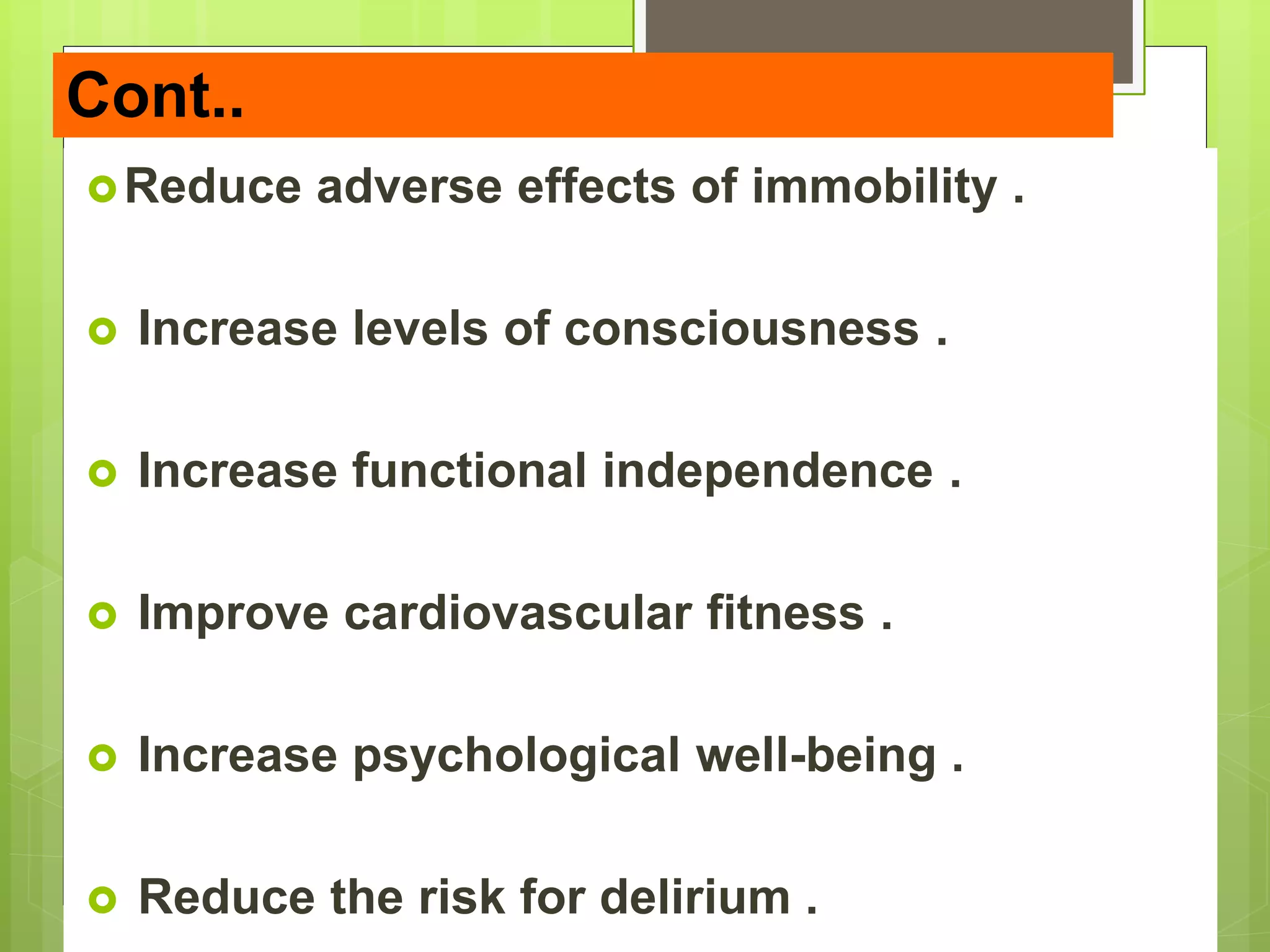
Cont..
Reduce adverse effects of immobility .
 Increase levels of consciousness .
 Increase functional independence .
 Improve cardiovascular fitness .
 Increase psychological well-being .
 Reduce the risk for delirium .
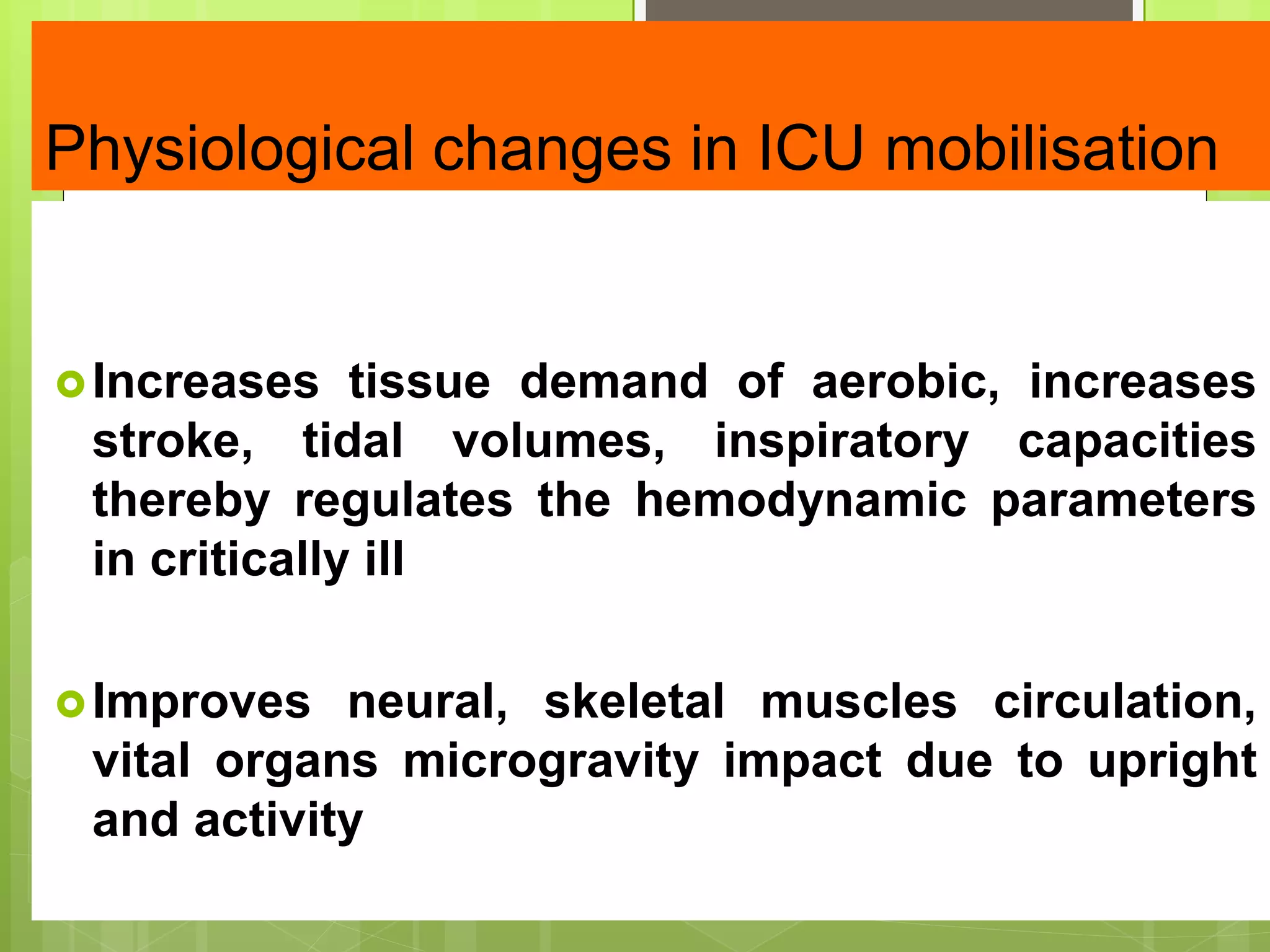
Physiological changes in ICU mobilisation
Increases tissue demand of aerobic, increases
stroke, tidal volumes, inspiratory capacities
thereby regulates the hemodynamic parameters
in critically ill
Improves neural, skeletal muscles circulation,
vital organs microgravity impact due to upright
and activity
Pathophysiological
changes due to
immobility
METABOLIC CHANGES
RESPIRATORY CHANGES
Pooling of secretions in dependent regions of lungs
in supine position.
Thrombus formation in a vessel.
Musculoskeletal Changes
 Loss of endurance, strength, and
muscle mass
Decreased stability and balance.
 Impaired calcium metabolism and
joint mobility
Joint contracture
Foot drop
Footdrop. Ankle is fixed in plantar flexion. Normally ankle is
able to flex (dotted line), which eases walking.
Stasis of urine with reflux to ureters.
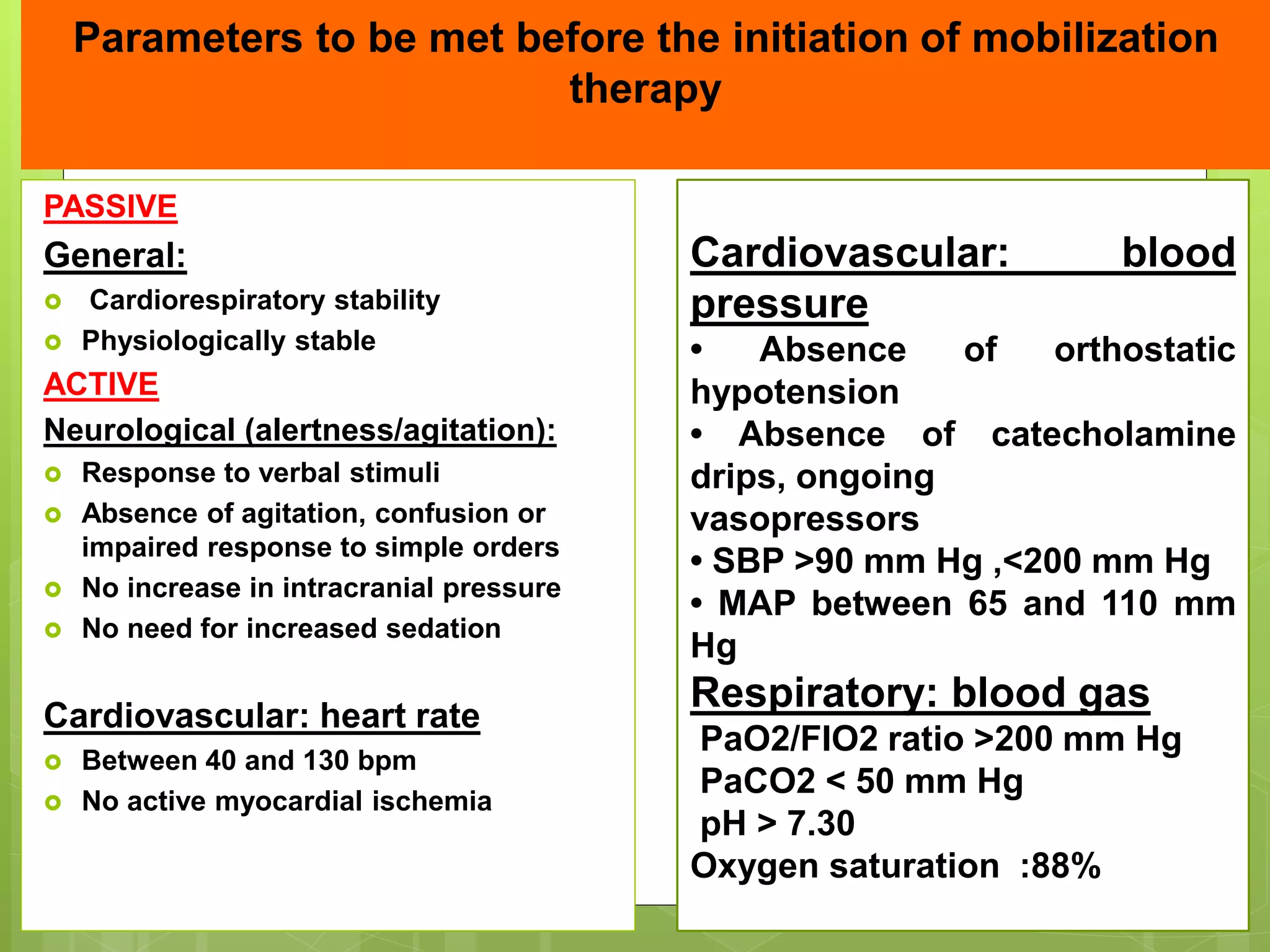
Parameters to be met before the initiation of mobilization
therapy
PASSIVE
General:
 Cardiorespiratory stability
 Physiologically stable
ACTIVE
Neurological (alertness/agitation):
 Response to verbal stimuli
 Absence of agitation, confusion or
impaired response to simple orders
 No increase in intracranial pressure
 No need for increased sedation
Cardiovascular: heart rate
 Between 40 and 130 bpm
 No active myocardial ischemia
Cardiovascular: blood
pressure
• Absence of orthostatic
hypotension
• Absence of catecholamine
drips, ongoing
vasopressors
• SBP >90 mm Hg ,<200 mm Hg
• MAP between 65 and 110 mm
Hg
Respiratory: blood gas
PaO2/FIO2 ratio >200 mm Hg
PaCO2 < 50 mm Hg
pH > 7.30
Oxygen saturation :88%
Cont..
Respiratory:
Respiratory rate
<35 breaths/min
, 5-40
breaths/min
FIO2 <60%
PEEP<10 cm
H2O
General:
 No ongoing renal
replacement therapy
No ongoing
intravenous sedation
No scheduled
extubation
No active GI blood
loss
No continuing
procedures (eg,,
hemodialysis)
Criteria for terminating physical activity and
mobilization
HEART RATE
o > 20% decrease in resting HR
o < 40 beats/minute; > 130 beats/minute
New onset dysrhythmia
New anti-arrhythmia medication
New MI by ECG or cardiac enzymes
PULSE OXIMETRY/SPO2:
> 4% decrease
< 88%- 90%
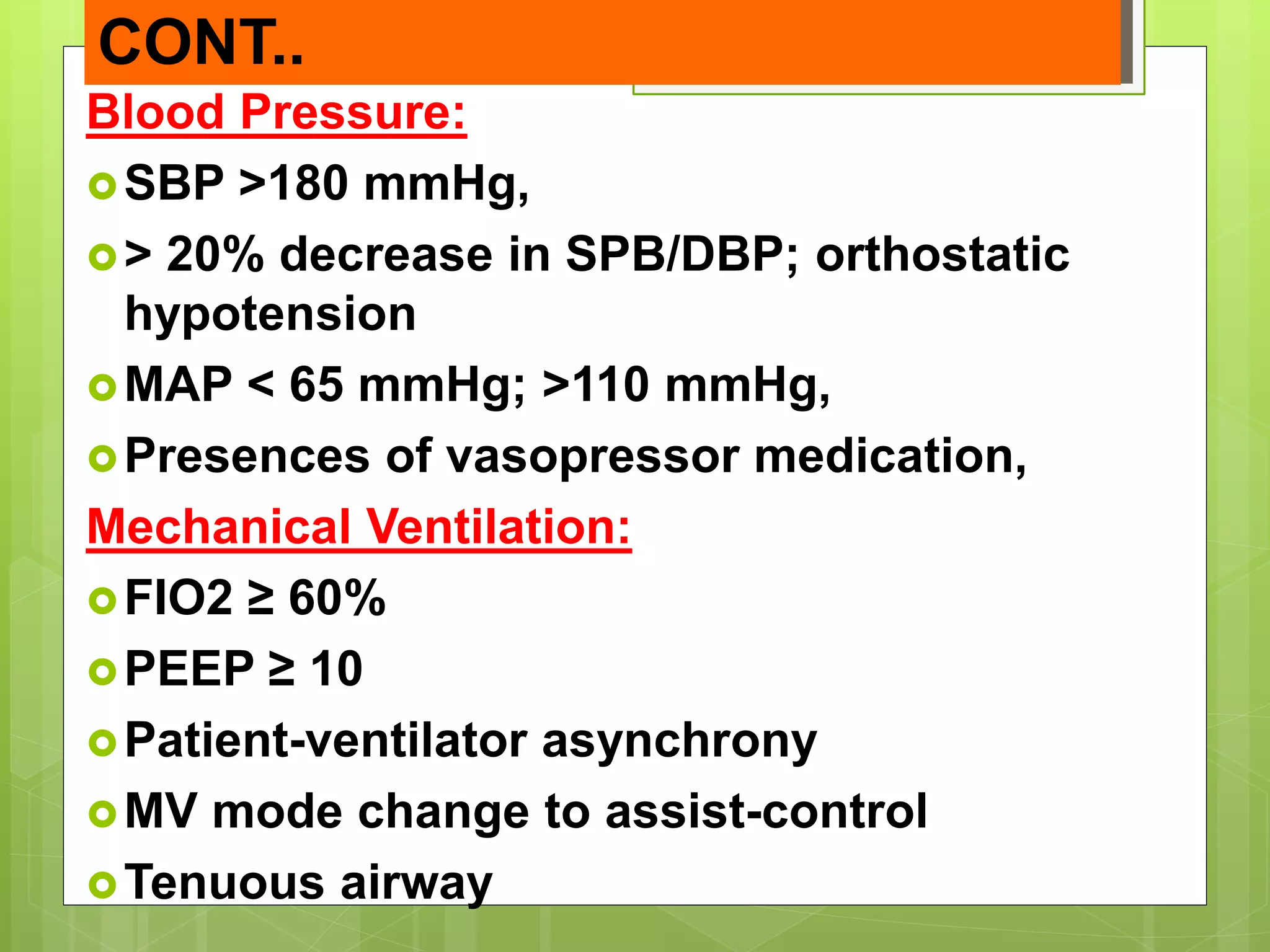
CONT..
Blood Pressure:
SBP >180 mmHg,
> 20% decrease in SPB/DBP; orthostatic
hypotension
MAP < 65 mmHg; >110 mmHg,
Presences of vasopressor medication,
Mechanical Ventilation:
FIO2 ≥ 60%
PEEP ≥ 10
Patient-ventilator asynchrony
MV mode change to assist-control
Tenuous airway
CONT…
Respiratory Rate:
< 5 breaths/minute,
> 40 breaths/minute
Alertness/Agitation and Patient symptoms:
Patient sedation or coma – RASS ≤ −3
Patient agitation requiring addition or
escalation of sedative medication- RASS >2
Patient refusal
Cardiopulm Phys Ther J. 2012 Mar; 23(1): 5–13.
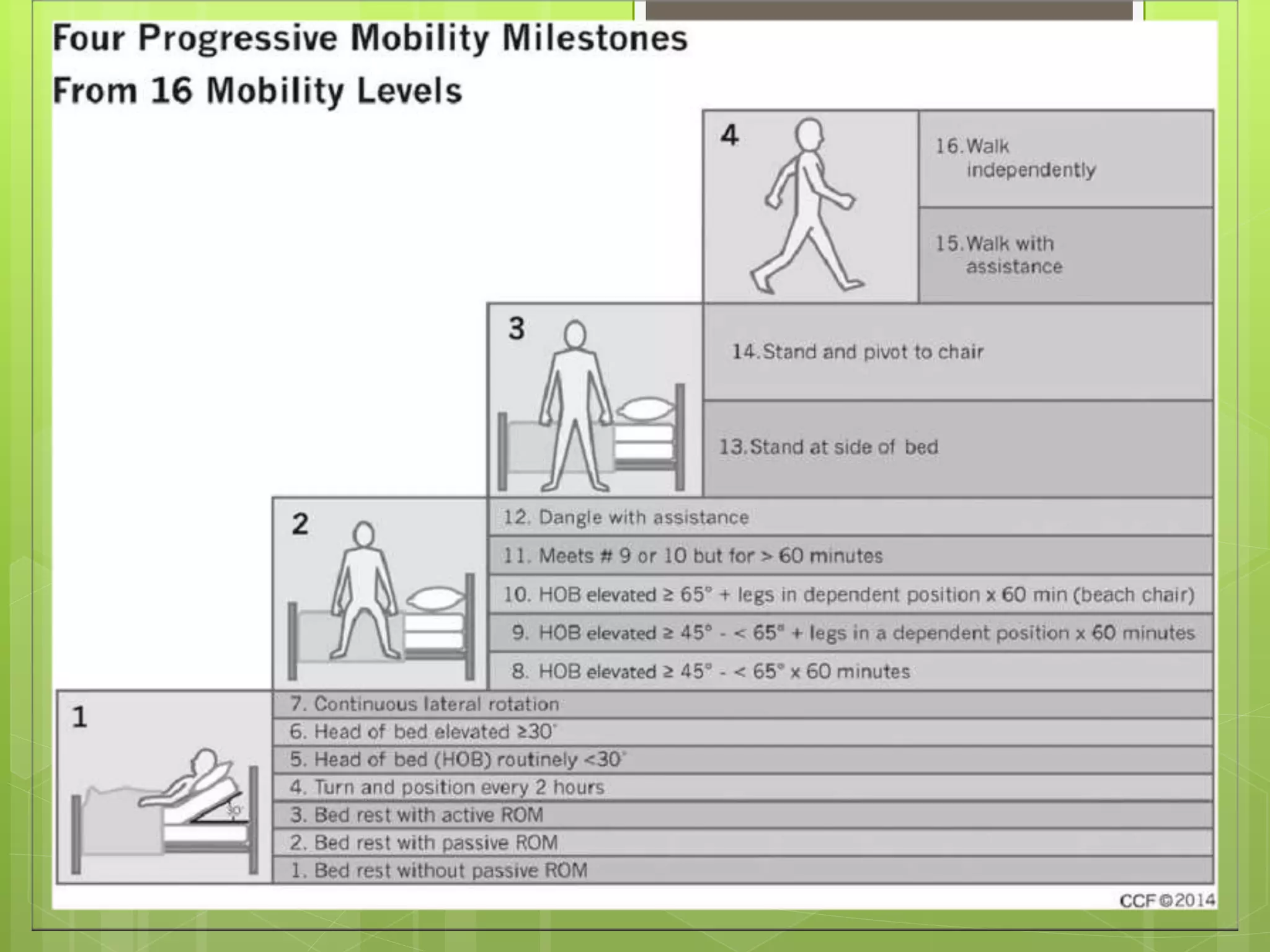
Early mobilization programs
2nd hourly position
PROM
Turning side to side
Sitting on the side of the bed
Active strengthening exercises
Long sitting within bed
High sitting
Chair sitting
Standing with or without support
walking
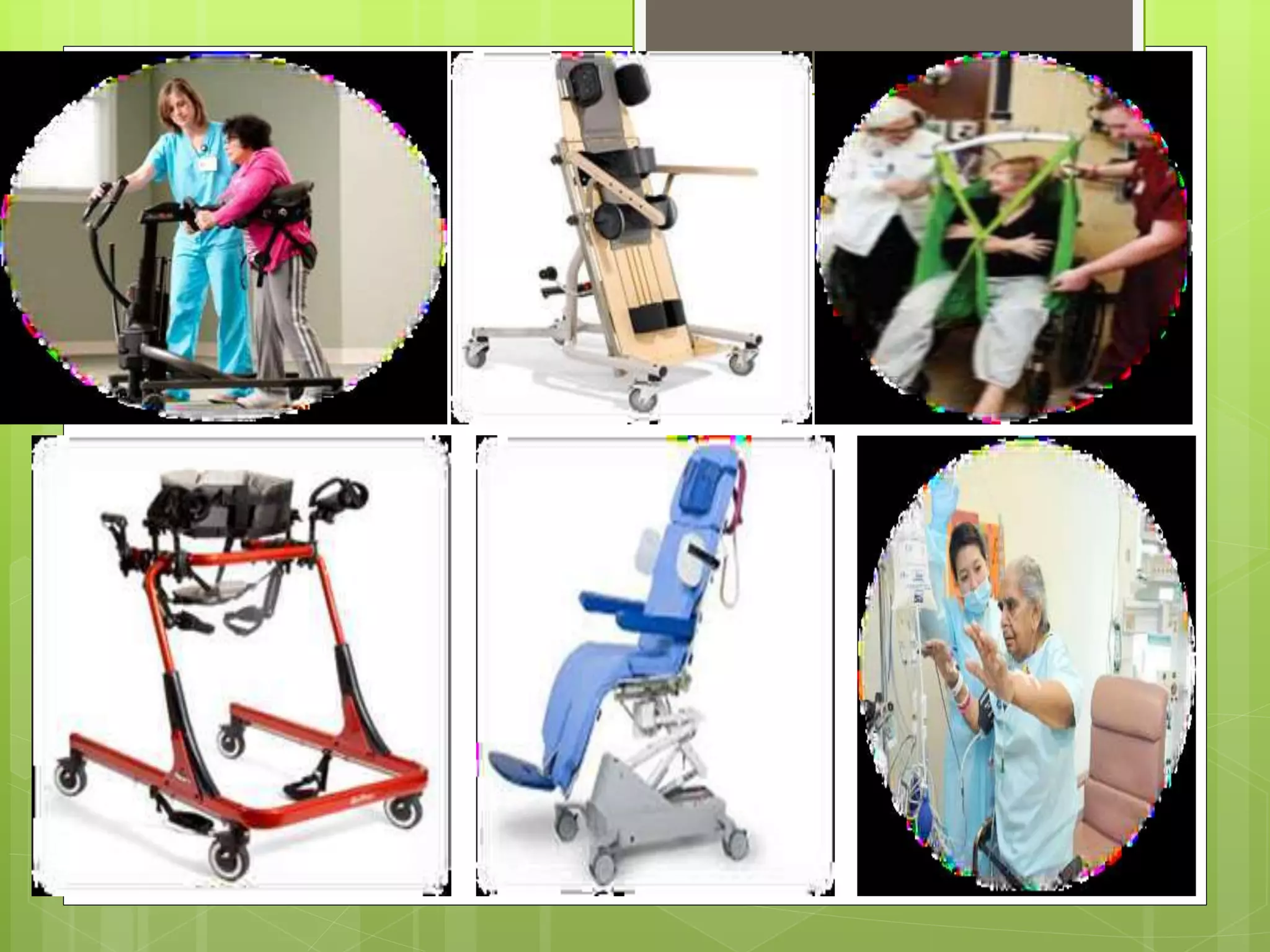
Standing position
during mechanical
ventilation improves the
respiratory
function, compliance
and oxygen, and it
stimulates autonomic
activity, and reduces
cardiac stress from
compression.(Hoste
2005, Zhu Chang 2004b,
Gosselink
The upright position
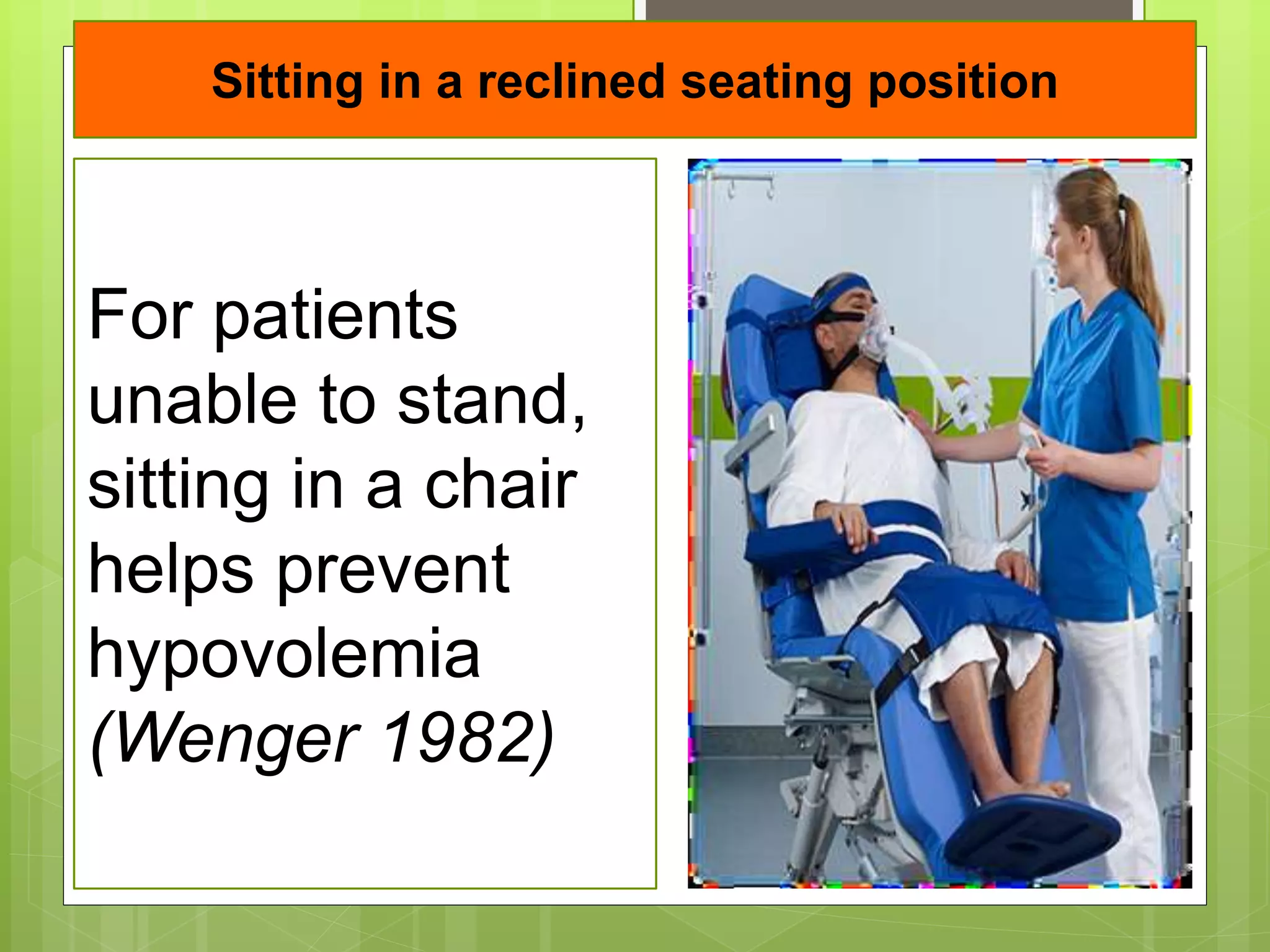
For patients
unable to stand,
sitting in a chair
helps prevent
hypovolemia
(Wenger 1982)
Sitting in a reclined seating position
Barriers to early mobilization
o Patient too sick
Hemodynamic instability
Respiratory instability
Pain
Poor nutritional status
Obesity
New immobility or weakness
Deep sedation
Delirium , agitation
Patient refusal
Continue…
Palliative care
Hemodynamic monitoring equipment
ICU related devices
Limited staff, time constraints
Lack of early mobility
program/protocol(no routine delivery
of PT)
Inadequate staff training
Cont..
Limited equipment
Early discharge
Lack of staff knowledge and
expertise about risks/benefits of
mobility
Lack of patient / family
knowledge
Risk for mobility
providers(stress, injuries)
THANK
YOU

early Mobility in ICU

  • 1.
  • 2.
    Mobilization in intensivecare…. Any activity that is done at the regular basis inside intensive care whether passively or actively in the view of improving hemodynamic parameter, reverse short term shock or bed rest complications. Linda Denhey, Kathe Stiller 2006
  • 3.
    DEFINITION Mobilization has beendefined as “physical activity sufficient to elicit acute physiological effects that enhance ventilation, central and peripheral perfusion, circulation, muscle metabolism and alertness and are counter measures for venous stasis and deep vein thrombosis” . A current definition of early mobilization refers to the application of physical activity within the first 2 to 5 days of critical illness or injury ; however, it is important to note that some of the research published on “early” mobilization is beyond this window.
  • 4.
    Effects of Prolongedhospital stays with mechanical ventilation Increased morbidity/mortality  Increased cost of care  Increased length of stay Respiratory muscle weakness and increased duration of ventilation Sleep deprivation  Lack of social interaction  Prolonged sedation Delirium
  • 5.
    Goal and benefitsof mobilization  To reduce incidence of critical illness myoneuropathy (72 hrs)  Improves sleep wake cycle  Improves and regulates hemodynamic parameters  Improves patient confidence of coming out of ICU  Improve respiratory function . 
  • 6.
    Cont.. Reduce adverse effectsof immobility .  Increase levels of consciousness .  Increase functional independence .  Improve cardiovascular fitness .  Increase psychological well-being .  Reduce the risk for delirium .
  • 7.
    Physiological changes inICU mobilisation Increases tissue demand of aerobic, increases stroke, tidal volumes, inspiratory capacities thereby regulates the hemodynamic parameters in critically ill Improves neural, skeletal muscles circulation, vital organs microgravity impact due to upright and activity
  • 8.
  • 9.
  • 10.
  • 11.
    Pooling of secretionsin dependent regions of lungs in supine position.
  • 12.
  • 13.
    Musculoskeletal Changes  Lossof endurance, strength, and muscle mass Decreased stability and balance.  Impaired calcium metabolism and joint mobility Joint contracture Foot drop
  • 14.
    Footdrop. Ankle isfixed in plantar flexion. Normally ankle is able to flex (dotted line), which eases walking.
  • 15.
    Stasis of urinewith reflux to ureters.
  • 16.
    Parameters to bemet before the initiation of mobilization therapy PASSIVE General:  Cardiorespiratory stability  Physiologically stable ACTIVE Neurological (alertness/agitation):  Response to verbal stimuli  Absence of agitation, confusion or impaired response to simple orders  No increase in intracranial pressure  No need for increased sedation Cardiovascular: heart rate  Between 40 and 130 bpm  No active myocardial ischemia Cardiovascular: blood pressure • Absence of orthostatic hypotension • Absence of catecholamine drips, ongoing vasopressors • SBP >90 mm Hg ,<200 mm Hg • MAP between 65 and 110 mm Hg Respiratory: blood gas PaO2/FIO2 ratio >200 mm Hg PaCO2 < 50 mm Hg pH > 7.30 Oxygen saturation :88%
  • 17.
    Cont.. Respiratory: Respiratory rate <35 breaths/min ,5-40 breaths/min FIO2 <60% PEEP<10 cm H2O General:  No ongoing renal replacement therapy No ongoing intravenous sedation No scheduled extubation No active GI blood loss No continuing procedures (eg,, hemodialysis)
  • 18.
    Criteria for terminatingphysical activity and mobilization HEART RATE o > 20% decrease in resting HR o < 40 beats/minute; > 130 beats/minute New onset dysrhythmia New anti-arrhythmia medication New MI by ECG or cardiac enzymes PULSE OXIMETRY/SPO2: > 4% decrease < 88%- 90%
  • 19.
    CONT.. Blood Pressure: SBP >180mmHg, > 20% decrease in SPB/DBP; orthostatic hypotension MAP < 65 mmHg; >110 mmHg, Presences of vasopressor medication, Mechanical Ventilation: FIO2 ≥ 60% PEEP ≥ 10 Patient-ventilator asynchrony MV mode change to assist-control Tenuous airway
  • 20.
    CONT… Respiratory Rate: < 5breaths/minute, > 40 breaths/minute Alertness/Agitation and Patient symptoms: Patient sedation or coma – RASS ≤ −3 Patient agitation requiring addition or escalation of sedative medication- RASS >2 Patient refusal Cardiopulm Phys Ther J. 2012 Mar; 23(1): 5–13.
  • 21.
    Early mobilization programs 2ndhourly position PROM Turning side to side Sitting on the side of the bed Active strengthening exercises Long sitting within bed High sitting Chair sitting Standing with or without support walking
  • 26.
    Standing position during mechanical ventilationimproves the respiratory function, compliance and oxygen, and it stimulates autonomic activity, and reduces cardiac stress from compression.(Hoste 2005, Zhu Chang 2004b, Gosselink The upright position
  • 27.
    For patients unable tostand, sitting in a chair helps prevent hypovolemia (Wenger 1982) Sitting in a reclined seating position
  • 28.
    Barriers to earlymobilization o Patient too sick Hemodynamic instability Respiratory instability Pain Poor nutritional status Obesity New immobility or weakness Deep sedation Delirium , agitation Patient refusal
  • 29.
    Continue… Palliative care Hemodynamic monitoringequipment ICU related devices Limited staff, time constraints Lack of early mobility program/protocol(no routine delivery of PT) Inadequate staff training
  • 30.
    Cont.. Limited equipment Early discharge Lackof staff knowledge and expertise about risks/benefits of mobility Lack of patient / family knowledge Risk for mobility providers(stress, injuries)
  • 34.