Electronic Health Records
               empowering patients


             Presented by: Sandy Etienne
Introduction
This presentation seeks to highlight the
foundation and purpose of Electronic Health
Records (EHR). This is a new way of storing and
organizing patient’s medical information.
EHR patient files are divided into sections
where health care providers and staff can find
the information they need to provide patient
care
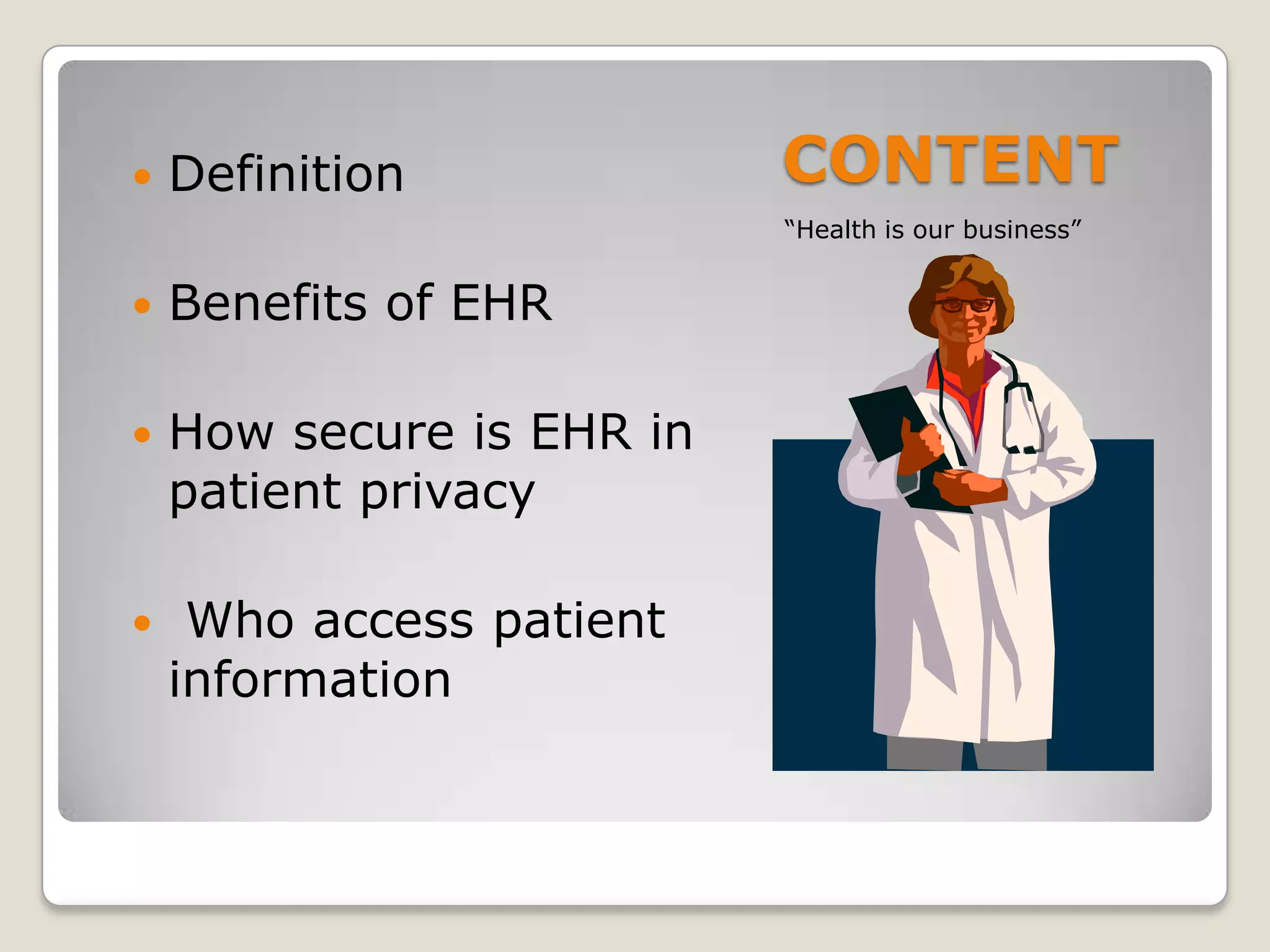
   Definition             CONTENT
                           “Health is our business”


   Benefits of EHR

   How secure is EHR in
    patient privacy

    Who access patient
    information
   is a digital format or documentation of an
    individual’s medical history that is maintained by
    health care providers or health institutions.


   It includes information on patient’s demographics
    progress notes, medication problems, vital signs,
    past history, diagnostic results and vaccination.


             Definition of EHR
1.   Medical errors

   EHR enables patients’ safety by eliminating medical error
    through illegible handwriting by physicians. Medical
    documentation in EHR appears to be clear and legible and
    thus reduces legal implications.
   Fewer forms to fill out during a visit
   Fewer repetitive questions – regarding past medical history
   alert system ensure proper dosage and drugs are
    administered.
                          Benefits
2. Improves patients quality of life

    EHR assist in better disease management and client
    education. It also enhances communication among
    healthcare providers.


   When patient are educated and healthcare providers
    work collaboratively better patient outcome is
    achieved.


                      Benefits
3.Reduces cost of healthcare

EHR reduces transcription, re-filling and storage
 cost. It saves time and cost through eliminating
 redundant diagnostic testing, paper charting and
 decreasing storage and retrieval cost. This digital
 format enables healthcare professionals to
 communicate and track data for specific patients


                  Benefits
HIPAA law protects:

   any information that your doctors, nurses, or other
    health care providers put in the medical record
   conversations between doctors and others about your
    family's care or treatment
   information about your family in the health insurance
    carrier's computer system
   billing information


EHR maintains patient privacy
   Access to information is done through hospital
    database that can be access through every
    computer.
   To open a patient's health record, health care
    providers would log into the system with a
    username and password or thumbprint
    identification.


    Who has access to information?
   Nemours Foundation (2013),
    Electronic health records. Retrieved
    February 21st 2013 from
    http://kidshealth.org/parent/system/
    ill/ehrs.html#a_Is_Patient_Privacy_P
    rotected_

   Thede, L., Sewell, J., (2010);
    Informatics and Nursing;
    Opportunities and Challenges, (4th
    ed.), PA. Lippincott William & Wilkins


                      References

Powerpoint on electronic health record lab 1

  • 1.
    Electronic Health Records empowering patients Presented by: Sandy Etienne
  • 2.
    Introduction This presentation seeksto highlight the foundation and purpose of Electronic Health Records (EHR). This is a new way of storing and organizing patient’s medical information. EHR patient files are divided into sections where health care providers and staff can find the information they need to provide patient care
  • 3.
    Definition CONTENT “Health is our business”  Benefits of EHR  How secure is EHR in patient privacy  Who access patient information
  • 4.
    is a digital format or documentation of an individual’s medical history that is maintained by health care providers or health institutions.  It includes information on patient’s demographics progress notes, medication problems, vital signs, past history, diagnostic results and vaccination. Definition of EHR
  • 5.
    1. Medical errors  EHR enables patients’ safety by eliminating medical error through illegible handwriting by physicians. Medical documentation in EHR appears to be clear and legible and thus reduces legal implications.  Fewer forms to fill out during a visit  Fewer repetitive questions – regarding past medical history  alert system ensure proper dosage and drugs are administered. Benefits
  • 6.
    2. Improves patientsquality of life  EHR assist in better disease management and client education. It also enhances communication among healthcare providers.  When patient are educated and healthcare providers work collaboratively better patient outcome is achieved. Benefits
  • 7.
    3.Reduces cost ofhealthcare EHR reduces transcription, re-filling and storage cost. It saves time and cost through eliminating redundant diagnostic testing, paper charting and decreasing storage and retrieval cost. This digital format enables healthcare professionals to communicate and track data for specific patients Benefits
  • 8.
    HIPAA law protects:  any information that your doctors, nurses, or other health care providers put in the medical record  conversations between doctors and others about your family's care or treatment  information about your family in the health insurance carrier's computer system  billing information EHR maintains patient privacy
  • 9.
    Access to information is done through hospital database that can be access through every computer.  To open a patient's health record, health care providers would log into the system with a username and password or thumbprint identification. Who has access to information?
  • 10.
    Nemours Foundation (2013), Electronic health records. Retrieved February 21st 2013 from http://kidshealth.org/parent/system/ ill/ehrs.html#a_Is_Patient_Privacy_P rotected_  Thede, L., Sewell, J., (2010); Informatics and Nursing; Opportunities and Challenges, (4th ed.), PA. Lippincott William & Wilkins References

Editor's Notes

  • #2 Educating patients and families