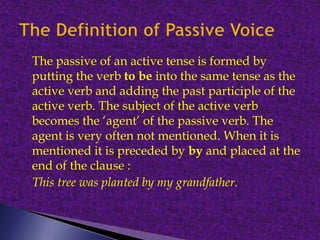
The passive of an active tense is formed by
putting the verb to be into the same tense as the
active verb and adding the past participle of the
active verb. The subject of the active verb
becomes the ‘agent’ of the passive verb. The
agent is very often not mentioned. When it is
mentioned it is preceded by by and placed at the
end of the clause :
This tree was planted by my grandfather.
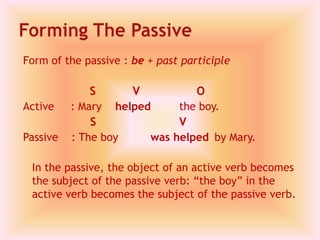
Form of the passive : be + past participle

Active

Passive

S
V
O
: Mary helped
the boy.
S
V
: The boy
was helped by Mary.

In the passive, the object of an active verb becomes
the subject of the passive verb: “the boy” in the
active verb becomes the subject of the passive verb.
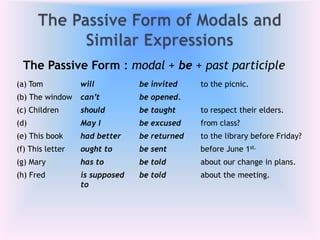
The Passive Form : modal + be + past participle
(a) Tom

will

be invited

to the picnic.

(b) The window

can’t

be opened.

(c) Children

should

be taught

to respect their elders.

(d)

May I

be excused

from class?

(e) This book

had better

be returned

to the library before Friday?

(f) This letter

ought to

be sent

before June 1st.

(g) Mary

has to

be told

about our change in plans.

(h) Fred

is supposed
to

be told

about the meeting.
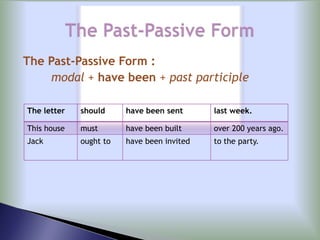
The Past-Passive Form :
modal + have been + past participle
The letter

should

have been sent

last week.

This house

must

have been built

over 200 years ago.

Jack

ought to

have been invited

to the party.
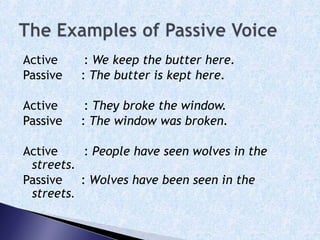
Active
Passive

: We keep the butter here.
: The butter is kept here.

Active
Passive

: They broke the window.
: The window was broken.

Active
: People have seen wolves in the
streets.
Passive
: Wolves have been seen in the
streets.
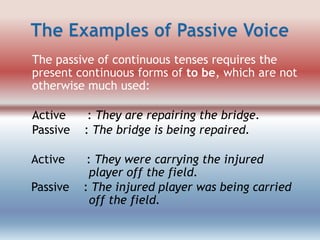
The passive of continuous tenses requires the
present continuous forms of to be, which are not
otherwise much used:
Active
Passive

: They are repairing the bridge.
: The bridge is being repaired.

Active

: They were carrying the injured
player off the field.
: The injured player was being carried
off the field.

Passive
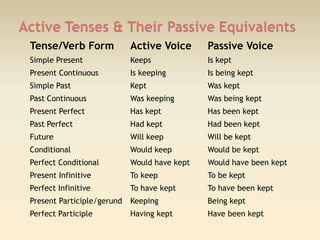
Tense/Verb Form

Active Voice

Passive Voice

Simple Present

Keeps

Is kept

Present Continuous

Is keeping

Is being kept

Simple Past

Kept

Was kept

Past Continuous

Was keeping

Was being kept

Present Perfect

Has kept

Has been kept

Past Perfect

Had kept

Had been kept

Future

Will keep

Will be kept

Conditional

Would keep

Would be kept

Perfect Conditional

Would have kept

Would have been kept

Present Infinitive

To keep

To be kept

Perfect Infinitive

To have kept

To have been kept

Present Participle/gerund

Keeping

Being kept

Perfect Participle

Having kept

Have been kept






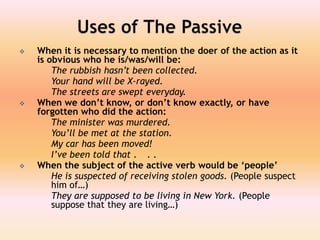
When it is necessary to mention the doer of the action as it
is obvious who he is/was/will be:
The rubbish hasn’t been collected.
Your hand will be X-rayed.
The streets are swept everyday.
When we don’t know, or don’t know exactly, or have
forgotten who did the action:
The minister was murdered.
You’ll be met at the station.
My car has been moved!
I’ve been told that . . .
When the subject of the active verb would be ‘people’
He is suspected of receiving stolen goods. (People suspect
him of…)
They are supposed to be living in New York. (People
suppose that they are living…)
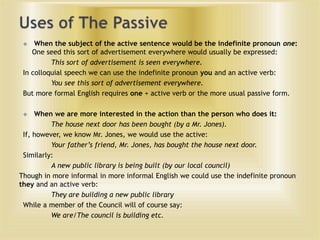
When the subject of the active sentence would be the indefinite pronoun one:
One seed this sort of advertisement everywhere would usually be expressed:
This sort of advertisement is seen everywhere.
In colloquial speech we can use the indefinite pronoun you and an active verb:
You see this sort of advertisement everywhere.
But more formal English requires one + active verb or the more usual passive form.


When we are more interested in the action than the person who does it:
The house next door has been bought (by a Mr. Jones).
If, however, we know Mr. Jones, we would use the active:
Your father’s friend, Mr. Jones, has bought the house next door.
Similarly:
A new public library is being built (by our local council)
Though in more informal in more informal English we could use the indefinite pronoun
they and an active verb:
They are building a new public library
While a member of the Council will of course say:
We are/The council is building etc.

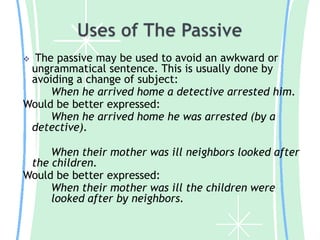
The passive may be used to avoid an awkward or
ungrammatical sentence. This is usually done by
avoiding a change of subject:
When he arrived home a detective arrested him.
Would be better expressed:
When he arrived home he was arrested (by a
detective).


When their mother was ill neighbors looked after
the children.
Would be better expressed:
When their mother was ill the children were
looked after by neighbors.
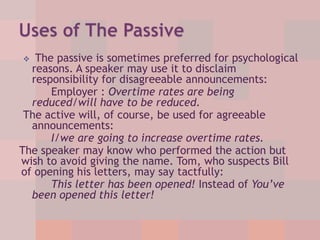
The passive is sometimes preferred for psychological
reasons. A speaker may use it to disclaim
responsibility for disagreeable announcements:
Employer : Overtime rates are being
reduced/will have to be reduced.
The active will, of course, be used for agreeable
announcements:
I/we are going to increase overtime rates.
The speaker may know who performed the action but
wish to avoid giving the name. Tom, who suspects Bill
of opening his letters, may say tactfully:
This letter has been opened! Instead of You’ve
been opened this letter!

Understanding and Using English Grammar (Betty
S. Azar)
A practical English Grammar (A.J. Thomson and
A.V. Martinet)
The active & passive voice

The active & passive voice

  • 2.
    The passive ofan active tense is formed by putting the verb to be into the same tense as the active verb and adding the past participle of the active verb. The subject of the active verb becomes the ‘agent’ of the passive verb. The agent is very often not mentioned. When it is mentioned it is preceded by by and placed at the end of the clause : This tree was planted by my grandfather.
  • 3.
    Form of thepassive : be + past participle Active Passive S V O : Mary helped the boy. S V : The boy was helped by Mary. In the passive, the object of an active verb becomes the subject of the passive verb: “the boy” in the active verb becomes the subject of the passive verb.
  • 4.
    The Passive Form: modal + be + past participle (a) Tom will be invited to the picnic. (b) The window can’t be opened. (c) Children should be taught to respect their elders. (d) May I be excused from class? (e) This book had better be returned to the library before Friday? (f) This letter ought to be sent before June 1st. (g) Mary has to be told about our change in plans. (h) Fred is supposed to be told about the meeting.
  • 5.
    The Past-Passive Form: modal + have been + past participle The letter should have been sent last week. This house must have been built over 200 years ago. Jack ought to have been invited to the party.
  • 6.
    Active Passive : We keepthe butter here. : The butter is kept here. Active Passive : They broke the window. : The window was broken. Active : People have seen wolves in the streets. Passive : Wolves have been seen in the streets.
  • 7.
    The passive ofcontinuous tenses requires the present continuous forms of to be, which are not otherwise much used: Active Passive : They are repairing the bridge. : The bridge is being repaired. Active : They were carrying the injured player off the field. : The injured player was being carried off the field. Passive
  • 8.
    Tense/Verb Form Active Voice PassiveVoice Simple Present Keeps Is kept Present Continuous Is keeping Is being kept Simple Past Kept Was kept Past Continuous Was keeping Was being kept Present Perfect Has kept Has been kept Past Perfect Had kept Had been kept Future Will keep Will be kept Conditional Would keep Would be kept Perfect Conditional Would have kept Would have been kept Present Infinitive To keep To be kept Perfect Infinitive To have kept To have been kept Present Participle/gerund Keeping Being kept Perfect Participle Having kept Have been kept
  • 9.
       When it isnecessary to mention the doer of the action as it is obvious who he is/was/will be: The rubbish hasn’t been collected. Your hand will be X-rayed. The streets are swept everyday. When we don’t know, or don’t know exactly, or have forgotten who did the action: The minister was murdered. You’ll be met at the station. My car has been moved! I’ve been told that . . . When the subject of the active verb would be ‘people’ He is suspected of receiving stolen goods. (People suspect him of…) They are supposed to be living in New York. (People suppose that they are living…)
  • 10.
    When the subjectof the active sentence would be the indefinite pronoun one: One seed this sort of advertisement everywhere would usually be expressed: This sort of advertisement is seen everywhere. In colloquial speech we can use the indefinite pronoun you and an active verb: You see this sort of advertisement everywhere. But more formal English requires one + active verb or the more usual passive form.  When we are more interested in the action than the person who does it: The house next door has been bought (by a Mr. Jones). If, however, we know Mr. Jones, we would use the active: Your father’s friend, Mr. Jones, has bought the house next door. Similarly: A new public library is being built (by our local council) Though in more informal in more informal English we could use the indefinite pronoun they and an active verb: They are building a new public library While a member of the Council will of course say: We are/The council is building etc. 
  • 11.
    The passive maybe used to avoid an awkward or ungrammatical sentence. This is usually done by avoiding a change of subject: When he arrived home a detective arrested him. Would be better expressed: When he arrived home he was arrested (by a detective).  When their mother was ill neighbors looked after the children. Would be better expressed: When their mother was ill the children were looked after by neighbors.
  • 12.
    The passive issometimes preferred for psychological reasons. A speaker may use it to disclaim responsibility for disagreeable announcements: Employer : Overtime rates are being reduced/will have to be reduced. The active will, of course, be used for agreeable announcements: I/we are going to increase overtime rates. The speaker may know who performed the action but wish to avoid giving the name. Tom, who suspects Bill of opening his letters, may say tactfully: This letter has been opened! Instead of You’ve been opened this letter! 
  • 13.
    Understanding and UsingEnglish Grammar (Betty S. Azar) A practical English Grammar (A.J. Thomson and A.V. Martinet)