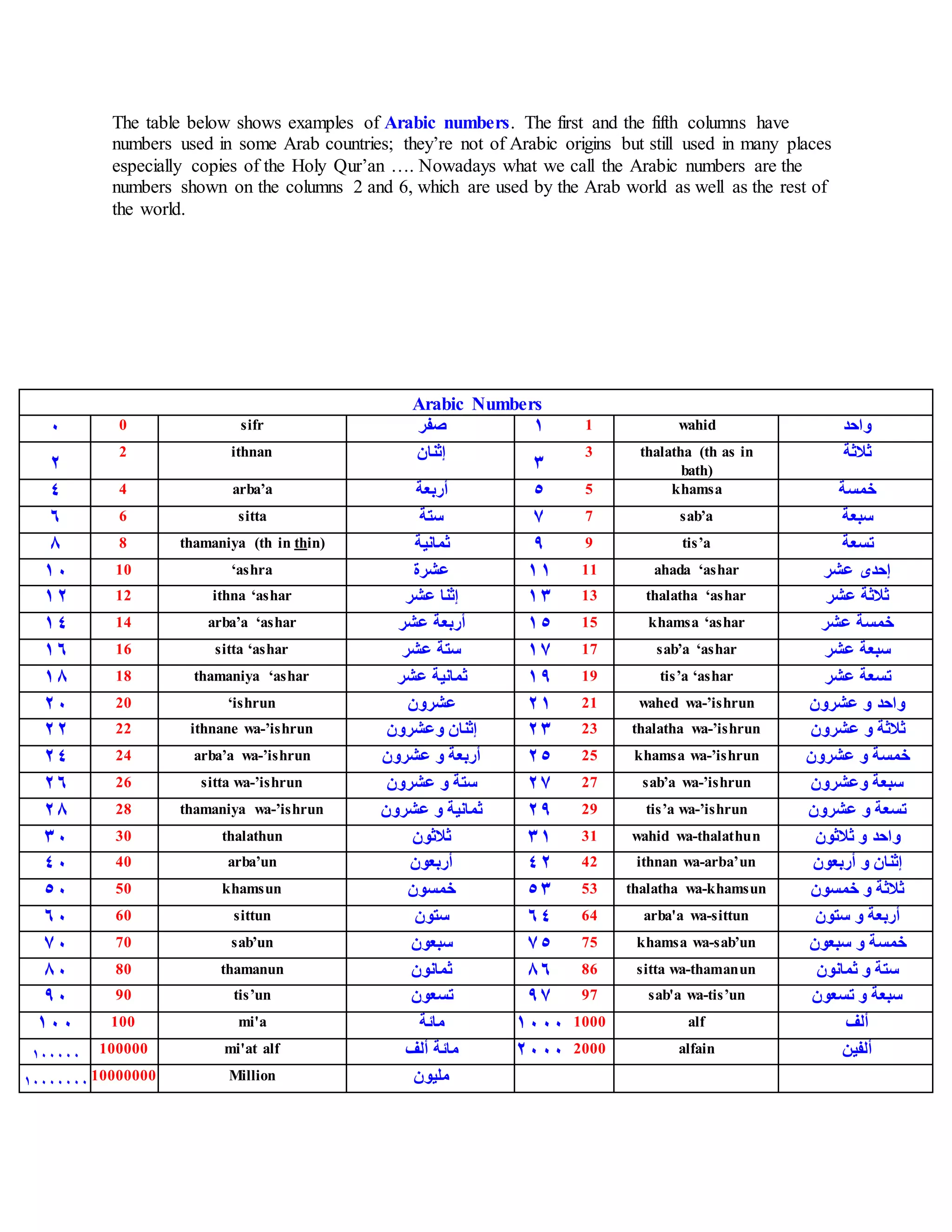
The table below shows examples of Arabic numbers. The first and the fifth columns have
numbers used in some Arab countries; they’re not of Arabic origins but still used in many places
especially copies of the Holy Qur’an …. Nowadays what we call the Arabic numbers are the
numbers shown on the columns 2 and 6, which are used by the Arab world as well as the rest of
the world.
Arabic Numbers
٠ 0 sifr ‫صفر‬ ١ 1 wahid ‫واحد‬
٢
2 ithnan ‫إثنان‬
٣
3 thalatha (th as in
bath)
‫ثالثة‬
٤ 4 arba’a ‫أربعة‬ ٥ 5 khamsa ‫خمسة‬
٦ 6 sitta ‫ستة‬ ٧ 7 sab’a ‫سبعة‬
٨ 8 thamaniya (th in thin) ‫ثمانية‬ ٩ 9 tis’a ‫تسعة‬
١٠ 10 ‘ashra ‫عشرة‬ ١١ 11 ahada ‘ashar ‫عشر‬ ‫إحدى‬
١٢ 12 ithna ‘ashar ‫عشر‬ ‫إثنا‬ ١٣ 13 thalatha ‘ashar ‫عشر‬ ‫ثالثة‬
١٤ 14 arba’a ‘ashar ‫عشر‬ ‫أربعة‬ ١٥ 15 khamsa ‘ashar ‫خمسة‬‫عشر‬
١٦ 16 sitta ‘ashar ‫عشر‬ ‫ستة‬ ١٧ 17 sab’a ‘ashar ‫عشر‬ ‫سبعة‬
١٨ 18 thamaniya ‘ashar ‫عشر‬ ‫ثمانية‬ ١٩ 19 tis’a ‘ashar ‫عشر‬ ‫تسعة‬
٢٠ 20 ‘ishrun ‫عشرون‬ ٢١ 21 wahed wa-’ishrun ‫عشرون‬ ‫و‬ ‫واحد‬
٢٢ 22 ithnane wa-’ishrun ‫وعشرون‬ ‫إثنان‬ ٢٣ 23 thalatha wa-’ishrun ‫و‬ ‫ثالثة‬‫عشرون‬
٢٤ 24 arba’a wa-’ishrun ‫عشرون‬ ‫و‬ ‫أربعة‬ ٢٥ 25 khamsa wa-’ishrun ‫عشرون‬ ‫و‬ ‫خمسة‬
٢٦ 26 sitta wa-’ishrun ‫عشرون‬ ‫و‬ ‫ستة‬ ٢٧ 27 sab’a wa-’ishrun ‫وعشرون‬ ‫سبعة‬
٢٨ 28 thamaniya wa-’ishrun ‫عشرون‬ ‫و‬ ‫ثمانية‬ ٢٩ 29 tis’a wa-’ishrun ‫عشرون‬ ‫و‬ ‫تسعة‬
٣٠ 30 thalathun ‫ثالثون‬ ٣١ 31 wahid wa-thalathun ‫ثالثون‬ ‫و‬ ‫واحد‬
٤٠ 40 arba’un ‫أربعون‬ ٤٢ 42 ithnan wa-arba’un ‫أربعون‬ ‫و‬ ‫إثنان‬
٥٠ 50 khamsun ‫خمسون‬ ٥٣ 53 thalatha wa-khamsun ‫خمسون‬ ‫و‬ ‫ثالثة‬
٦٠ 60 sittun ‫ستون‬ ٦٤ 64 arba'a wa-sittun ‫ستون‬ ‫و‬ ‫أربعة‬
٧٠ 70 sab’un ‫سبعون‬ ٧٥ 75 khamsa wa-sab’un ‫خمسة‬‫سبعون‬ ‫و‬
٨٠ 80 thamanun ‫ثمانون‬ ٨٦ 86 sitta wa-thamanun ‫ثمانون‬ ‫و‬ ‫ستة‬
٩٠ 90 tis’un ‫تسعون‬ ٩٧ 97 sab'a wa-tis’un ‫تسعون‬ ‫و‬ ‫سبعة‬
١٠٠ 100 mi'a ‫مائة‬ ١٠٠٠ 1000 alf ‫ألف‬
١٠٠٠٠٠ 100000 mi'at alf ‫ألف‬ ‫مائة‬ ٢٠٠٠ 2000 alfain ‫ألفين‬
١٠٠٠٠٠٠٠10000000 Million ‫مليون‬
Forming numbers in Arabic is quite easy, from 13 to 19 you just place a number before ten for
example 13 = three ten, instead of thirteen in English, 17 is seven ten in Arabic. From 21 to 99
you just need to reverse the numbers and add (wa- between the two numbers) 36 would be six
wa- thirty instead of thirty six (sitta wa-thalathun), (wa means and).
0 is sifr in Arabic, from which the word cipher came. For 11 and 12 they’re irregular, so just
remember how to write them by now (11 = ehda ‘ashar, 12 = ithna ‘ashar).
So in general, numbers standing alone are easy to use, or say. The hard part is that numbers 3 to
10 have a unique rule of agreement with nouns known as polarity: A numeral in masculine
gender should agree with a feminine referrer and vice versa (thalathatu awlaad = three boys),
boys are masculine plural, so the feminine form of number 3 should be used (which is thalathatu,
and not thalathu which is the masculine form, the u at the end of numbers is used when a number
is followed by another word to make an easy jump to the next word) (thalathu banaat = three
girls) banaat = girls, which is feminine plural, therefore a masculine form of number 3 should be
used (thalathu). That may sound complicated but once you get used to it, it will not be as hard as
it seems now, besides most Arab natives make mistakes or simply don’t care about matching the
gender and the number.
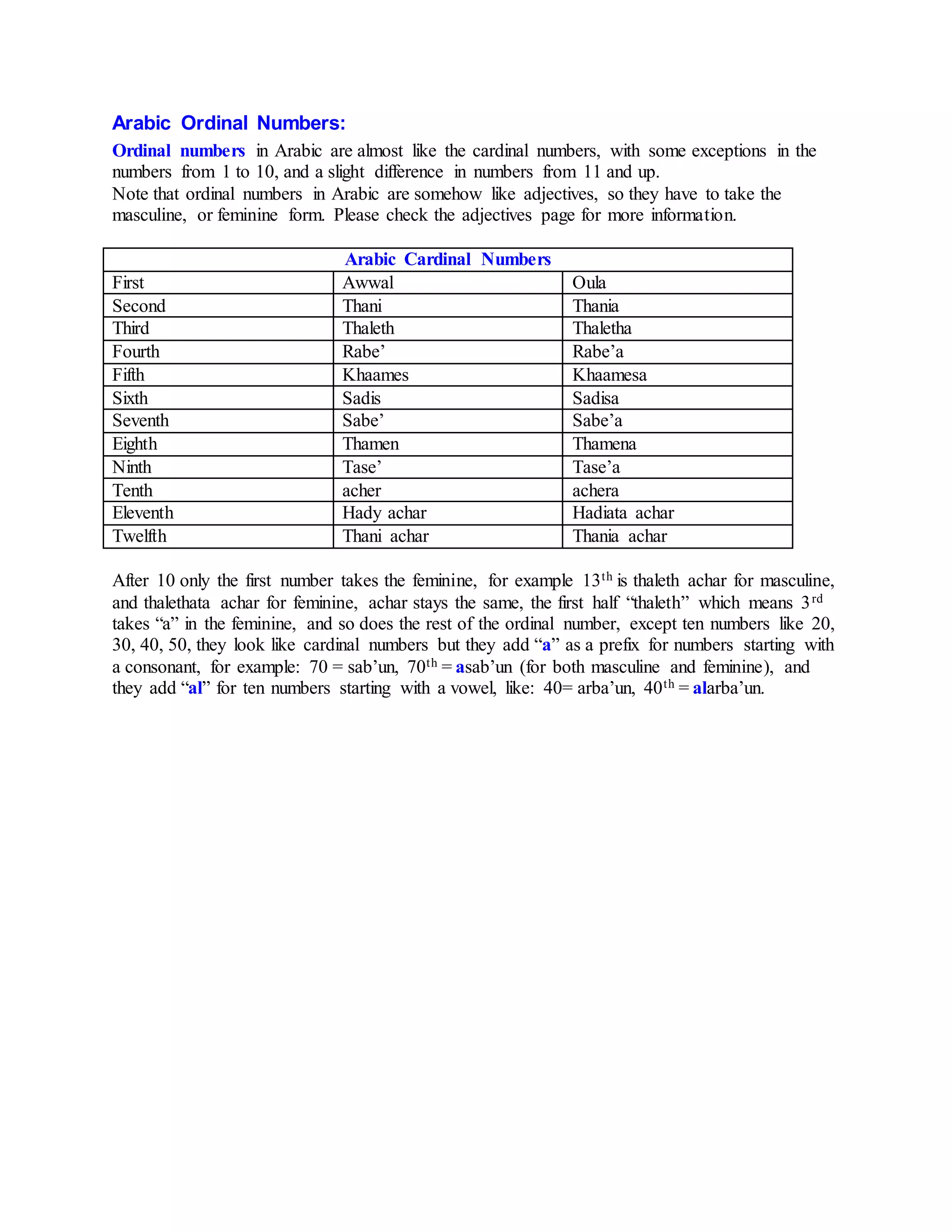
Arabic Ordinal Numbers:
Ordinal numbers in Arabic are almost like the cardinal numbers, with some exceptions in the
numbers from 1 to 10, and a slight difference in numbers from 11 and up.
Note that ordinal numbers in Arabic are somehow like adjectives, so they have to take the
masculine, or feminine form. Please check the adjectives page for more information.
Arabic Cardinal Numbers
First Awwal Oula
Second Thani Thania
Third Thaleth Thaletha
Fourth Rabe’ Rabe’a
Fifth Khaames Khaamesa
Sixth Sadis Sadisa
Seventh Sabe’ Sabe’a
Eighth Thamen Thamena
Ninth Tase’ Tase’a
Tenth acher achera
Eleventh Hady achar Hadiata achar
Twelfth Thani achar Thania achar
After 10 only the first number takes the feminine, for example 13th is thaleth achar for masculine,
and thalethata achar for feminine, achar stays the same, the first half “thaleth” which means 3rd
takes “a” in the feminine, and so does the rest of the ordinal number, except ten numbers like 20,
30, 40, 50, they look like cardinal numbers but they add “a” as a prefix for numbers starting with
a consonant, for example: 70 = sab’un, 70th = asab’un (for both masculine and feminine), and
they add “al” for ten numbers starting with a vowel, like: 40= arba’un, 40th = alarba’un.

The table below shows examples of arabic numbers

  • 1.
    The table belowshows examples of Arabic numbers. The first and the fifth columns have numbers used in some Arab countries; they’re not of Arabic origins but still used in many places especially copies of the Holy Qur’an …. Nowadays what we call the Arabic numbers are the numbers shown on the columns 2 and 6, which are used by the Arab world as well as the rest of the world. Arabic Numbers ٠ 0 sifr ‫صفر‬ ١ 1 wahid ‫واحد‬ ٢ 2 ithnan ‫إثنان‬ ٣ 3 thalatha (th as in bath) ‫ثالثة‬ ٤ 4 arba’a ‫أربعة‬ ٥ 5 khamsa ‫خمسة‬ ٦ 6 sitta ‫ستة‬ ٧ 7 sab’a ‫سبعة‬ ٨ 8 thamaniya (th in thin) ‫ثمانية‬ ٩ 9 tis’a ‫تسعة‬ ١٠ 10 ‘ashra ‫عشرة‬ ١١ 11 ahada ‘ashar ‫عشر‬ ‫إحدى‬ ١٢ 12 ithna ‘ashar ‫عشر‬ ‫إثنا‬ ١٣ 13 thalatha ‘ashar ‫عشر‬ ‫ثالثة‬ ١٤ 14 arba’a ‘ashar ‫عشر‬ ‫أربعة‬ ١٥ 15 khamsa ‘ashar ‫خمسة‬‫عشر‬ ١٦ 16 sitta ‘ashar ‫عشر‬ ‫ستة‬ ١٧ 17 sab’a ‘ashar ‫عشر‬ ‫سبعة‬ ١٨ 18 thamaniya ‘ashar ‫عشر‬ ‫ثمانية‬ ١٩ 19 tis’a ‘ashar ‫عشر‬ ‫تسعة‬ ٢٠ 20 ‘ishrun ‫عشرون‬ ٢١ 21 wahed wa-’ishrun ‫عشرون‬ ‫و‬ ‫واحد‬ ٢٢ 22 ithnane wa-’ishrun ‫وعشرون‬ ‫إثنان‬ ٢٣ 23 thalatha wa-’ishrun ‫و‬ ‫ثالثة‬‫عشرون‬ ٢٤ 24 arba’a wa-’ishrun ‫عشرون‬ ‫و‬ ‫أربعة‬ ٢٥ 25 khamsa wa-’ishrun ‫عشرون‬ ‫و‬ ‫خمسة‬ ٢٦ 26 sitta wa-’ishrun ‫عشرون‬ ‫و‬ ‫ستة‬ ٢٧ 27 sab’a wa-’ishrun ‫وعشرون‬ ‫سبعة‬ ٢٨ 28 thamaniya wa-’ishrun ‫عشرون‬ ‫و‬ ‫ثمانية‬ ٢٩ 29 tis’a wa-’ishrun ‫عشرون‬ ‫و‬ ‫تسعة‬ ٣٠ 30 thalathun ‫ثالثون‬ ٣١ 31 wahid wa-thalathun ‫ثالثون‬ ‫و‬ ‫واحد‬ ٤٠ 40 arba’un ‫أربعون‬ ٤٢ 42 ithnan wa-arba’un ‫أربعون‬ ‫و‬ ‫إثنان‬ ٥٠ 50 khamsun ‫خمسون‬ ٥٣ 53 thalatha wa-khamsun ‫خمسون‬ ‫و‬ ‫ثالثة‬ ٦٠ 60 sittun ‫ستون‬ ٦٤ 64 arba'a wa-sittun ‫ستون‬ ‫و‬ ‫أربعة‬ ٧٠ 70 sab’un ‫سبعون‬ ٧٥ 75 khamsa wa-sab’un ‫خمسة‬‫سبعون‬ ‫و‬ ٨٠ 80 thamanun ‫ثمانون‬ ٨٦ 86 sitta wa-thamanun ‫ثمانون‬ ‫و‬ ‫ستة‬ ٩٠ 90 tis’un ‫تسعون‬ ٩٧ 97 sab'a wa-tis’un ‫تسعون‬ ‫و‬ ‫سبعة‬ ١٠٠ 100 mi'a ‫مائة‬ ١٠٠٠ 1000 alf ‫ألف‬ ١٠٠٠٠٠ 100000 mi'at alf ‫ألف‬ ‫مائة‬ ٢٠٠٠ 2000 alfain ‫ألفين‬ ١٠٠٠٠٠٠٠10000000 Million ‫مليون‬
  • 2.
    Forming numbers inArabic is quite easy, from 13 to 19 you just place a number before ten for example 13 = three ten, instead of thirteen in English, 17 is seven ten in Arabic. From 21 to 99 you just need to reverse the numbers and add (wa- between the two numbers) 36 would be six wa- thirty instead of thirty six (sitta wa-thalathun), (wa means and). 0 is sifr in Arabic, from which the word cipher came. For 11 and 12 they’re irregular, so just remember how to write them by now (11 = ehda ‘ashar, 12 = ithna ‘ashar). So in general, numbers standing alone are easy to use, or say. The hard part is that numbers 3 to 10 have a unique rule of agreement with nouns known as polarity: A numeral in masculine gender should agree with a feminine referrer and vice versa (thalathatu awlaad = three boys), boys are masculine plural, so the feminine form of number 3 should be used (which is thalathatu, and not thalathu which is the masculine form, the u at the end of numbers is used when a number is followed by another word to make an easy jump to the next word) (thalathu banaat = three girls) banaat = girls, which is feminine plural, therefore a masculine form of number 3 should be used (thalathu). That may sound complicated but once you get used to it, it will not be as hard as it seems now, besides most Arab natives make mistakes or simply don’t care about matching the gender and the number.
  • 3.
    Arabic Ordinal Numbers: Ordinalnumbers in Arabic are almost like the cardinal numbers, with some exceptions in the numbers from 1 to 10, and a slight difference in numbers from 11 and up. Note that ordinal numbers in Arabic are somehow like adjectives, so they have to take the masculine, or feminine form. Please check the adjectives page for more information. Arabic Cardinal Numbers First Awwal Oula Second Thani Thania Third Thaleth Thaletha Fourth Rabe’ Rabe’a Fifth Khaames Khaamesa Sixth Sadis Sadisa Seventh Sabe’ Sabe’a Eighth Thamen Thamena Ninth Tase’ Tase’a Tenth acher achera Eleventh Hady achar Hadiata achar Twelfth Thani achar Thania achar After 10 only the first number takes the feminine, for example 13th is thaleth achar for masculine, and thalethata achar for feminine, achar stays the same, the first half “thaleth” which means 3rd takes “a” in the feminine, and so does the rest of the ordinal number, except ten numbers like 20, 30, 40, 50, they look like cardinal numbers but they add “a” as a prefix for numbers starting with a consonant, for example: 70 = sab’un, 70th = asab’un (for both masculine and feminine), and they add “al” for ten numbers starting with a vowel, like: 40= arba’un, 40th = alarba’un.