ETHICS & VALUES
IN SPORTS

Name :- MRIDUL KAWAR
ID No :-2012B3A3574G
1
SPORTS IN SOCIETY
 The world is connected in Sports culture with

millions of individuals across different countries.

 Sports bring new challenges and new life

lessons.

 There is variety of sports played around the

world. Different sports are played in different
countries
1
WHY STUDY SPORT ETHICS?


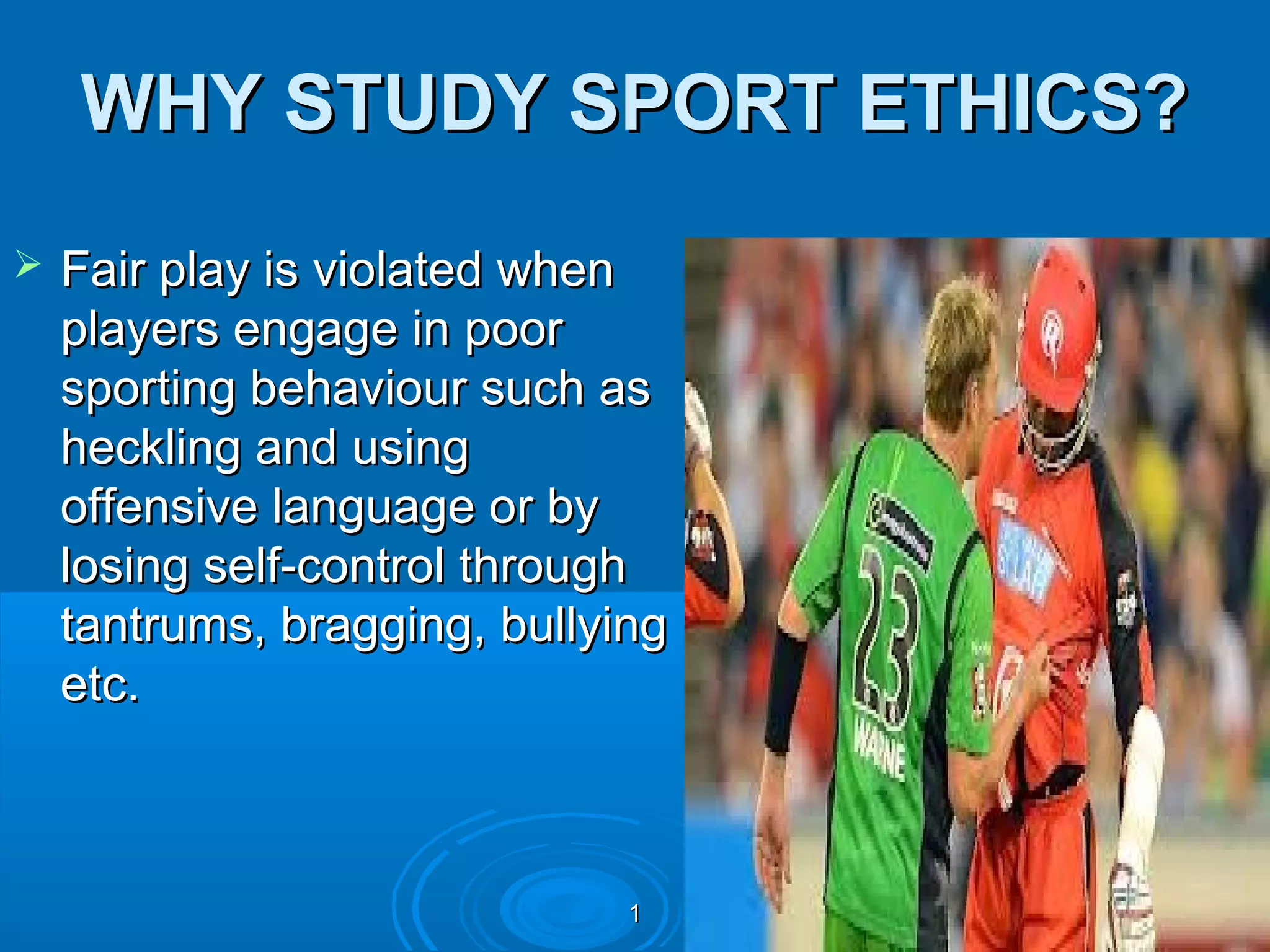
Fair play is violated when
players engage in poor
sporting behaviour such as
heckling and using
offensive language or by
losing self-control through
tantrums, bragging, bullying
etc.

1
SPORTMANSHIP AND ITS
VALUES


Sportsmanship is a matter of being good and doing
right in sports.



Sportsmanship looks like



Playing fair



Respecting the judgments of officials



Treating opponents with respect
1
1
MAJOR ETHICAL ISSUES IN
SPORT
Major issues are


Coaches having inappropriate
relationships with players



Athletes purchasing steroids
and selling them to teammates.



Corrupt officials fixing
competitions.
1
DOPING IN SPORTS


The use of banned performance enhancing
drugs in sports is commonly referred to as doping
particularly by the organizations that regulate sporting
competitions.

Lance Edward Armstrong is an American former
professional road racing cyclist was caught engaged
in doping.
Michael Fred Phelps is a retired American
swimmer and won a 22 gold medals in Olympics .
1
1
MATCH FIXING
 Match fixing is the arranging in advance of the

outcome of a match, or of events within that
match, usually for the purpose of making
money, often from betting.
 Former world number five Stephen Lee must

sentence for snooker match-fixing.


Sreesanth has been handed a life ban by the
BCCI for his involvement in spot-fixing in IPL .
1
1
The 6 Pillars Of Ethical Decision
Making In Sports
 Six Pillars of Characters, from Pursuing Victory

With Honour, provide the framework.
 trustworthiness
 respect
 responsibility
 fairness
 caring
 citizenship
1
TRUSTWORTHINESS
 Always pursue victory with honour
Observe and enforce the spirit and letter of the
rules.
Do not engage in or tolerate dishonesty,
cheating, or dishonourable conduct

RESPECT
Treat the traditions of the sport and other
participants with respect.
Win with grace and lose1with dignity
 RESPONSIBILITY
 Be a positive role model on and off the field.
 Just because a substance is legal or natural

doesn’t mean it’s permitted or safe. Safeguard
your health. Know what you’re putting in your
body.

FAIRNESS
Adhere to high standards of fair play.
 Never take an unfair advantage.
1
1
 CARING
 Demonstrate concern for others.

The team by encouraging your teammates.
 Encourage your teammates to make healthy
choices and be prepared to report the
dangerous behaviour if it continues
 CITIZENSHIP
 Play by the rules.
 Take pride in your performance while abiding
by the rules.
 Think about how your choices impact other
community members.


1
Role Of Sports Related
Organizations
 To publish clear guidelines on what is

considered to be ethical or unethical
behaviour and ensure that, at all levels of
participation and involvement.
 To provide help and support to the media to

promote good behaviour.
1
1
Role Of Government
Support those organizations and individuals who
have demonstrated sound ethical principles in
their work with sport.
Encourage the education profession to include
the promotion of sport and fair play as a central
part of the physical education curriculum.

1
1
CONCLUSION
The conclusion drawn from this report is that
Participation is more important than victory
Ethics is an integral part of sport.
Win with dignity and lose with dignity.

1

.
1

Ethics in sports

  • 1.
    ETHICS & VALUES INSPORTS Name :- MRIDUL KAWAR ID No :-2012B3A3574G 1
  • 2.
    SPORTS IN SOCIETY The world is connected in Sports culture with millions of individuals across different countries.  Sports bring new challenges and new life lessons.  There is variety of sports played around the world. Different sports are played in different countries 1
  • 3.
    WHY STUDY SPORTETHICS?  Fair play is violated when players engage in poor sporting behaviour such as heckling and using offensive language or by losing self-control through tantrums, bragging, bullying etc. 1
  • 4.
    SPORTMANSHIP AND ITS VALUES  Sportsmanshipis a matter of being good and doing right in sports.  Sportsmanship looks like  Playing fair  Respecting the judgments of officials  Treating opponents with respect 1
  • 5.
  • 6.
    MAJOR ETHICAL ISSUESIN SPORT Major issues are  Coaches having inappropriate relationships with players  Athletes purchasing steroids and selling them to teammates.  Corrupt officials fixing competitions. 1
  • 7.
    DOPING IN SPORTS  Theuse of banned performance enhancing drugs in sports is commonly referred to as doping particularly by the organizations that regulate sporting competitions. Lance Edward Armstrong is an American former professional road racing cyclist was caught engaged in doping. Michael Fred Phelps is a retired American swimmer and won a 22 gold medals in Olympics . 1
  • 8.
  • 9.
    MATCH FIXING  Matchfixing is the arranging in advance of the outcome of a match, or of events within that match, usually for the purpose of making money, often from betting.  Former world number five Stephen Lee must sentence for snooker match-fixing.  Sreesanth has been handed a life ban by the BCCI for his involvement in spot-fixing in IPL . 1
  • 10.
  • 11.
    The 6 PillarsOf Ethical Decision Making In Sports  Six Pillars of Characters, from Pursuing Victory With Honour, provide the framework.  trustworthiness  respect  responsibility  fairness  caring  citizenship 1
  • 12.
    TRUSTWORTHINESS  Always pursuevictory with honour Observe and enforce the spirit and letter of the rules. Do not engage in or tolerate dishonesty, cheating, or dishonourable conduct RESPECT Treat the traditions of the sport and other participants with respect. Win with grace and lose1with dignity
  • 13.
     RESPONSIBILITY  Bea positive role model on and off the field.  Just because a substance is legal or natural doesn’t mean it’s permitted or safe. Safeguard your health. Know what you’re putting in your body. FAIRNESS Adhere to high standards of fair play.  Never take an unfair advantage. 1
  • 14.
  • 15.
     CARING  Demonstrateconcern for others. The team by encouraging your teammates.  Encourage your teammates to make healthy choices and be prepared to report the dangerous behaviour if it continues  CITIZENSHIP  Play by the rules.  Take pride in your performance while abiding by the rules.  Think about how your choices impact other community members.  1
  • 16.
    Role Of SportsRelated Organizations  To publish clear guidelines on what is considered to be ethical or unethical behaviour and ensure that, at all levels of participation and involvement.  To provide help and support to the media to promote good behaviour. 1
  • 17.
  • 18.
    Role Of Government Supportthose organizations and individuals who have demonstrated sound ethical principles in their work with sport. Encourage the education profession to include the promotion of sport and fair play as a central part of the physical education curriculum. 1
  • 19.
  • 20.
    CONCLUSION The conclusion drawnfrom this report is that Participation is more important than victory Ethics is an integral part of sport. Win with dignity and lose with dignity. 1 .
  • 21.