By Mounika Ramachandruni
Introduction
• Performance audits typically examine the effectiveness,
economy or efficiency of a government program.
• Auditors might analyse the services of an entire agency
or division, compare actual agency practices against the
practices called for in law or policy, seek possible cost
savings, or identify the outcomes achieved by a
program or service.
Definition
• "Performance auditing is an assessment of the
activities of an organisation to see if the resources
are being managed with due regard for economy,
efficiency and effectiveness and accountability
requirements are being met reasonably."
Meaning
• A performance audit typically reviews the
employee’s performance against the expected goals
or objectives of goal description.
• It is a tool used to determine what is working and
what is not working.
• It measures the efficiency, effectiveness and
economy for an employee.
Objectives :
• To provide clear view of people view performance
• To provide clear picture of how people think the system
should change
• “Gap analysis” that shows graphically what is working
and what is not working.
• To prepare questionnaire process that is cost-effective
and time efficient , designed by in-house personnel.
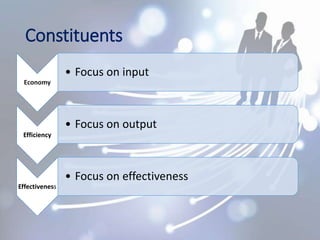
Constituents
Economy
• Focus on input
Efficiency
• Focus on output
Effectiveness
• Focus on effectiveness
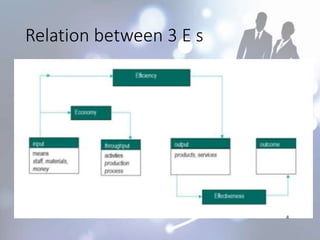
Relation between 3 E s
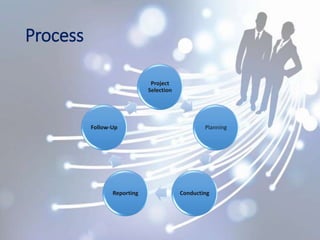
Process
Project
Selection
Planning
ConductingReporting
Follow-Up
Project Selection
• It includes the process we use to choose topics
included in the Performance Audit Coverage Plan and
the preliminary work with the organization to
determine the focus of the audit.
• During this phase, you will be asked to assist the audit
team in making arrangements for access to staff, and
documents.
Planning
• . During the planning phase, the team will continue to
gather information to develop the audit plan. Through this
process the audit team discusses the audit’s purpose,
timeline, scope and criteria with your organization.
• At the end of this process, the head of the organization
review a summary of the audit plan and acknowledge that
the organization is responsible for the subject matter of the
audit.
Conducting
• At the end of this phase, the audit team discusses their
findings and conclusions with the organization.
• It also request that the organization confirm that the
audit team has received all the evidence requested
and/or would impact the audit findings and conclusions
Reporting
• At the end of the audit ,audit team will produce a
formal draft report. Organization will have the
opportunity to review and discuss the draft and
prepare a response for inclusion in the final
version.
• The Minister receives the final report at least seven
days before the Speaker tables it with the
Legislative Assembly. Once tabled, it is posted on
our website.
Follow –up
• Organization will be requested by the Select Standing
Committee on Public Accounts (PAC) to prepare an
action plan for implementing the recommendations.
• In addition it will be asked for an annual update of this
plan until all the recommendations are implemented.
• Therefore it is important that the action plan is an
accurate assessment of progress
Performance Audit

Performance Audit

  • 1.
  • 2.
    Introduction • Performance auditstypically examine the effectiveness, economy or efficiency of a government program. • Auditors might analyse the services of an entire agency or division, compare actual agency practices against the practices called for in law or policy, seek possible cost savings, or identify the outcomes achieved by a program or service.
  • 3.
    Definition • "Performance auditingis an assessment of the activities of an organisation to see if the resources are being managed with due regard for economy, efficiency and effectiveness and accountability requirements are being met reasonably."
  • 4.
    Meaning • A performanceaudit typically reviews the employee’s performance against the expected goals or objectives of goal description. • It is a tool used to determine what is working and what is not working. • It measures the efficiency, effectiveness and economy for an employee.
  • 5.
    Objectives : • Toprovide clear view of people view performance • To provide clear picture of how people think the system should change • “Gap analysis” that shows graphically what is working and what is not working. • To prepare questionnaire process that is cost-effective and time efficient , designed by in-house personnel.
  • 6.
    Constituents Economy • Focus oninput Efficiency • Focus on output Effectiveness • Focus on effectiveness
  • 7.
  • 8.
  • 9.
    Project Selection • Itincludes the process we use to choose topics included in the Performance Audit Coverage Plan and the preliminary work with the organization to determine the focus of the audit. • During this phase, you will be asked to assist the audit team in making arrangements for access to staff, and documents.
  • 10.
    Planning • . Duringthe planning phase, the team will continue to gather information to develop the audit plan. Through this process the audit team discusses the audit’s purpose, timeline, scope and criteria with your organization. • At the end of this process, the head of the organization review a summary of the audit plan and acknowledge that the organization is responsible for the subject matter of the audit.
  • 11.
    Conducting • At theend of this phase, the audit team discusses their findings and conclusions with the organization. • It also request that the organization confirm that the audit team has received all the evidence requested and/or would impact the audit findings and conclusions
  • 12.
    Reporting • At theend of the audit ,audit team will produce a formal draft report. Organization will have the opportunity to review and discuss the draft and prepare a response for inclusion in the final version. • The Minister receives the final report at least seven days before the Speaker tables it with the Legislative Assembly. Once tabled, it is posted on our website.
  • 13.
    Follow –up • Organizationwill be requested by the Select Standing Committee on Public Accounts (PAC) to prepare an action plan for implementing the recommendations. • In addition it will be asked for an annual update of this plan until all the recommendations are implemented. • Therefore it is important that the action plan is an accurate assessment of progress