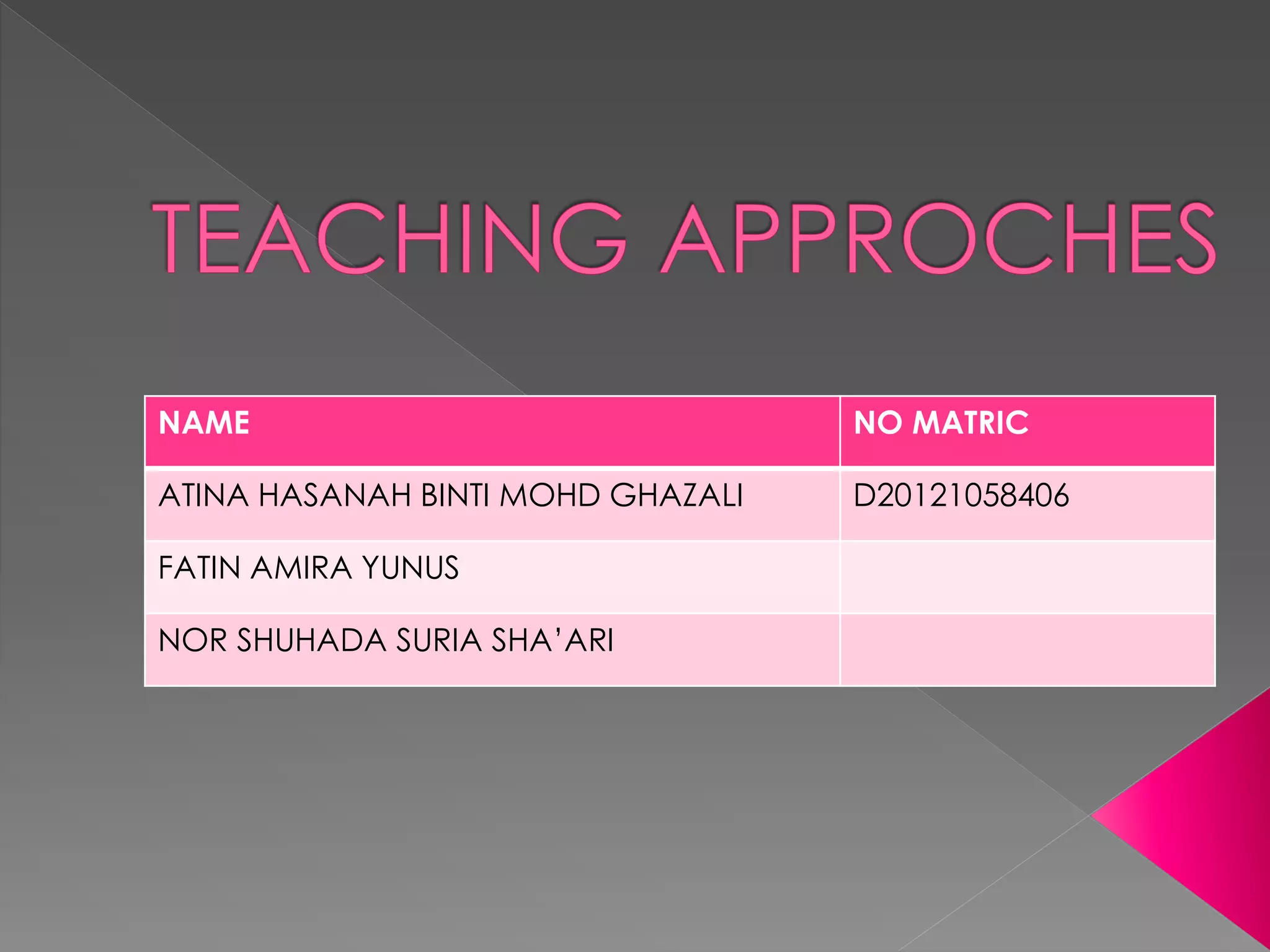
NAME NO MATRIC 
ATINA HASANAH BINTI MOHD GHAZALI D20121058406 
FATIN AMIRA YUNUS 
NOR SHUHADA SURIA SHA’ARI
 Different approaches different in the level 
of teacher and student participation. We 
start describing these approaches from that 
approach with the highest to the lowest 
level of teacher direction or from the lowest 
to the highest level of student participation. 
On the basis of student and teacher 
involvement, these methods are 
categorized as direct/expository approach 
or guided/exploratory approach
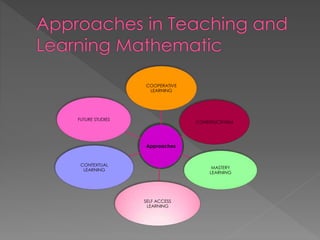
COOPERATIVE 
LEARNING 
Approaches 
CONSTRUCTIVISM 
MASTERY 
LEARNING 
SELF ACCESS 
LEARNING 
FUTURE STUDIES 
CONTEXTUAL 
LEARNING
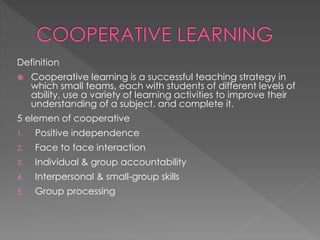
Definition 
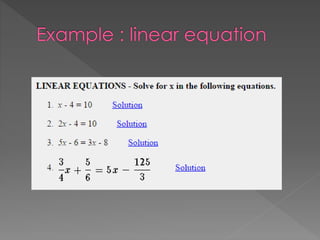
 Cooperative learning is a successful teaching strategy in 
which small teams, each with students of different levels of 
ability, use a variety of learning activities to improve their 
understanding of a subject. and complete it. 
5 elemen of cooperative 
1. Positive independence 
2. Face to face interaction 
3. Individual & group accountability 
4. Interpersonal & small-group skills 
5. Group processing
 Divide students into 4 or 5 people per 
group and make sure students discuss 
the questions given with friends and 
make presentation in front of the class 
after they complete answer the 
question.
Definition 
 Contextual learning is based on a constructivist 
theory of teaching and learning. Learing takes place 
when teachers are able to present information in a 
way that students are able to construct meaning 
based on their own experiences. 
5 Elements of contextual 
1. Relating 
2. Experiencing 
3. Applying 
4. Cooperating 
5. Transferring
 By relating common experiences to new 
problems, students gain an appreciation 
for the power of mathematics and its 
ability to model the real world.
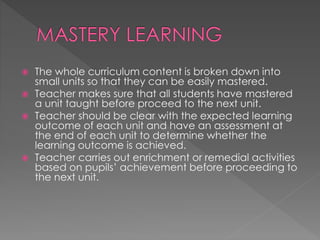
 The whole curriculum content is broken down into 
small units so that they can be easily mastered. 
 Teacher makes sure that all students have mastered 
a unit taught before proceed to the next unit. 
 Teacher should be clear with the expected learning 
outcome of each unit and have an assessment at 
the end of each unit to determine whether the 
learning outcome is achieved. 
 Teacher carries out enrichment or remedial activities 
based on pupils’ achievement before proceeding to 
the next unit.
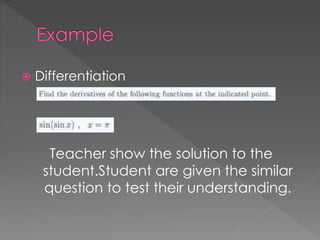
 Differentiation 
Teacher show the solution to the 
student.Student are given the similar 
question to test their understanding.
 Pupils construct their own knowledge by 
testing ideas and approaches based on 
their prior knowledge and experience . 
 Teacher should engage pupils’ curiosity 
and create interest in gaining new 
knowledge . 
 Teacher should lead pupils to explore and 
investigate by using systematic inquiry. 
 Teacher should help to explain the concept 
involved and make connection to their 
previous experiences.
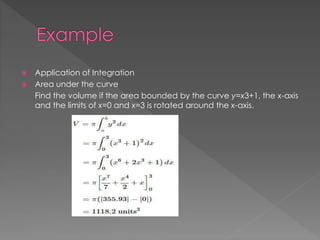
 Application of Integration 
 Area under the curve 
Find the volume if the area bounded by the curve y=x3+1, the x-axis 
and the limits of x=0 and x=3 is rotated around the x-axis.
 Pupils access learning materials and 
acquire knowledge and skills 
independently. 
 Learning materials are created based on 
the pupils’ needs, interests, level of 
achievement and learning style. 
 Teacher should provide pupils with learning 
skills and train them to self access learning. 
 Teacher should guide the pupils when 
needed.
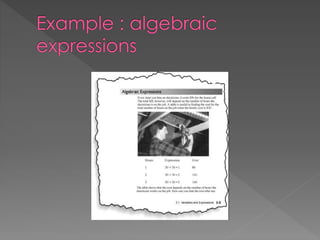
 Formulating algebraic expression 
Nimal bought sugar and tea powder 
from a boutique. The price of sugar is 
Rs. X and that of tea powder is Rs. Y. 
write an expression for the remainder, 
if the gave Rs. 500 to the vendor.
 Teacher leads pupils to understand the 
most important issues, problems and 
opportunities they may face and teach 
them the skills they need to continue to 
look ahead on their own . 
 In future studies approach, teacher 
provides pupils with the necessary 
techniques for becoming independent 
thinkers and lifelong learners
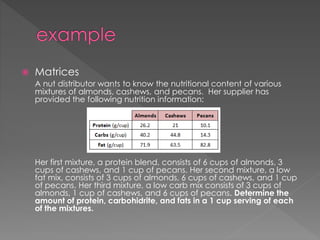
 Matrices 
A nut distributor wants to know the nutritional content of various 
mixtures of almonds, cashews, and pecans. Her supplier has 
provided the following nutrition information: 
Her first mixture, a protein blend, consists of 6 cups of almonds, 3 
cups of cashews, and 1 cup of pecans. Her second mixture, a low 
fat mix, consists of 3 cups of almonds, 6 cups of cashews, and 1 cup 
of pecans. Her third mixture, a low carb mix consists of 3 cups of 
almonds, 1 cup of cashews, and 6 cups of pecans. Determine the 
amount of protein, carbohidrite, and fats in a 1 cup serving of each 
of the mixtures.
 As a conclusion, teachers must be very 
concerned when planning for the 
teaching process, particularly when 
choosing the teaching approaches. 
Teaching and learning process will be 
more suitable if teachers combined the 
learning process with technology. It is 
important because the world is 
changing a lot due to the discovery of 
new technologies.

Teaching approches

  • 1.
    NAME NO MATRIC ATINA HASANAH BINTI MOHD GHAZALI D20121058406 FATIN AMIRA YUNUS NOR SHUHADA SURIA SHA’ARI
  • 2.
     Different approachesdifferent in the level of teacher and student participation. We start describing these approaches from that approach with the highest to the lowest level of teacher direction or from the lowest to the highest level of student participation. On the basis of student and teacher involvement, these methods are categorized as direct/expository approach or guided/exploratory approach
  • 3.
    COOPERATIVE LEARNING Approaches CONSTRUCTIVISM MASTERY LEARNING SELF ACCESS LEARNING FUTURE STUDIES CONTEXTUAL LEARNING
  • 4.
    Definition  Cooperativelearning is a successful teaching strategy in which small teams, each with students of different levels of ability, use a variety of learning activities to improve their understanding of a subject. and complete it. 5 elemen of cooperative 1. Positive independence 2. Face to face interaction 3. Individual & group accountability 4. Interpersonal & small-group skills 5. Group processing
  • 6.
     Divide studentsinto 4 or 5 people per group and make sure students discuss the questions given with friends and make presentation in front of the class after they complete answer the question.
  • 7.
    Definition  Contextuallearning is based on a constructivist theory of teaching and learning. Learing takes place when teachers are able to present information in a way that students are able to construct meaning based on their own experiences. 5 Elements of contextual 1. Relating 2. Experiencing 3. Applying 4. Cooperating 5. Transferring
  • 9.
     By relatingcommon experiences to new problems, students gain an appreciation for the power of mathematics and its ability to model the real world.
  • 10.
     The wholecurriculum content is broken down into small units so that they can be easily mastered.  Teacher makes sure that all students have mastered a unit taught before proceed to the next unit.  Teacher should be clear with the expected learning outcome of each unit and have an assessment at the end of each unit to determine whether the learning outcome is achieved.  Teacher carries out enrichment or remedial activities based on pupils’ achievement before proceeding to the next unit.
  • 11.
     Differentiation Teachershow the solution to the student.Student are given the similar question to test their understanding.
  • 12.
     Pupils constructtheir own knowledge by testing ideas and approaches based on their prior knowledge and experience .  Teacher should engage pupils’ curiosity and create interest in gaining new knowledge .  Teacher should lead pupils to explore and investigate by using systematic inquiry.  Teacher should help to explain the concept involved and make connection to their previous experiences.
  • 13.
     Application ofIntegration  Area under the curve Find the volume if the area bounded by the curve y=x3+1, the x-axis and the limits of x=0 and x=3 is rotated around the x-axis.
  • 14.
     Pupils accesslearning materials and acquire knowledge and skills independently.  Learning materials are created based on the pupils’ needs, interests, level of achievement and learning style.  Teacher should provide pupils with learning skills and train them to self access learning.  Teacher should guide the pupils when needed.
  • 15.
     Formulating algebraicexpression Nimal bought sugar and tea powder from a boutique. The price of sugar is Rs. X and that of tea powder is Rs. Y. write an expression for the remainder, if the gave Rs. 500 to the vendor.
  • 16.
     Teacher leadspupils to understand the most important issues, problems and opportunities they may face and teach them the skills they need to continue to look ahead on their own .  In future studies approach, teacher provides pupils with the necessary techniques for becoming independent thinkers and lifelong learners
  • 17.
     Matrices Anut distributor wants to know the nutritional content of various mixtures of almonds, cashews, and pecans. Her supplier has provided the following nutrition information: Her first mixture, a protein blend, consists of 6 cups of almonds, 3 cups of cashews, and 1 cup of pecans. Her second mixture, a low fat mix, consists of 3 cups of almonds, 6 cups of cashews, and 1 cup of pecans. Her third mixture, a low carb mix consists of 3 cups of almonds, 1 cup of cashews, and 6 cups of pecans. Determine the amount of protein, carbohidrite, and fats in a 1 cup serving of each of the mixtures.
  • 18.
     As aconclusion, teachers must be very concerned when planning for the teaching process, particularly when choosing the teaching approaches. Teaching and learning process will be more suitable if teachers combined the learning process with technology. It is important because the world is changing a lot due to the discovery of new technologies.