Mixing Content and Endless Collaboration Mashups: Towards Future Personal Learning Environments ( Andreas Auinger , Martin Ebner, Dietmar Nedbal, Andreas Holzinger) Andreas Auinger Department for e-Business,  School of Management  Upper Austria University of Applied Sciences Steyr, Austria
Motivation Ubiquitious and pervasive use of new media and the web dominates  Social life Working environment Teaching and learning behavior  (Chen & Kinshuk et al.) Web turns into community of loosely connected participants sharing knowledge and educational interests and communicate and collaborate on the “Web 2.0”/in the Enterprise 2.0, and turn into  prosumers  on market of freely available content and collaboration tools. Major web services have opened their systems to outside use Implementation of public APIs and data sources    resulting in Web 2.0/Enterprise 2.0 MashUps
Contribution of Mashups to E-learning 2.0 Bringing social networks into the classroom Enrich traditional Learning Management Systems Potential to integrate communication and collaboration features from the Web 2.0 Facebook, MySpace, WordPress, Technorati, Twitter etc. Freely available context-relevant interaction services Wikipedia, Google Maps, YouTube etc
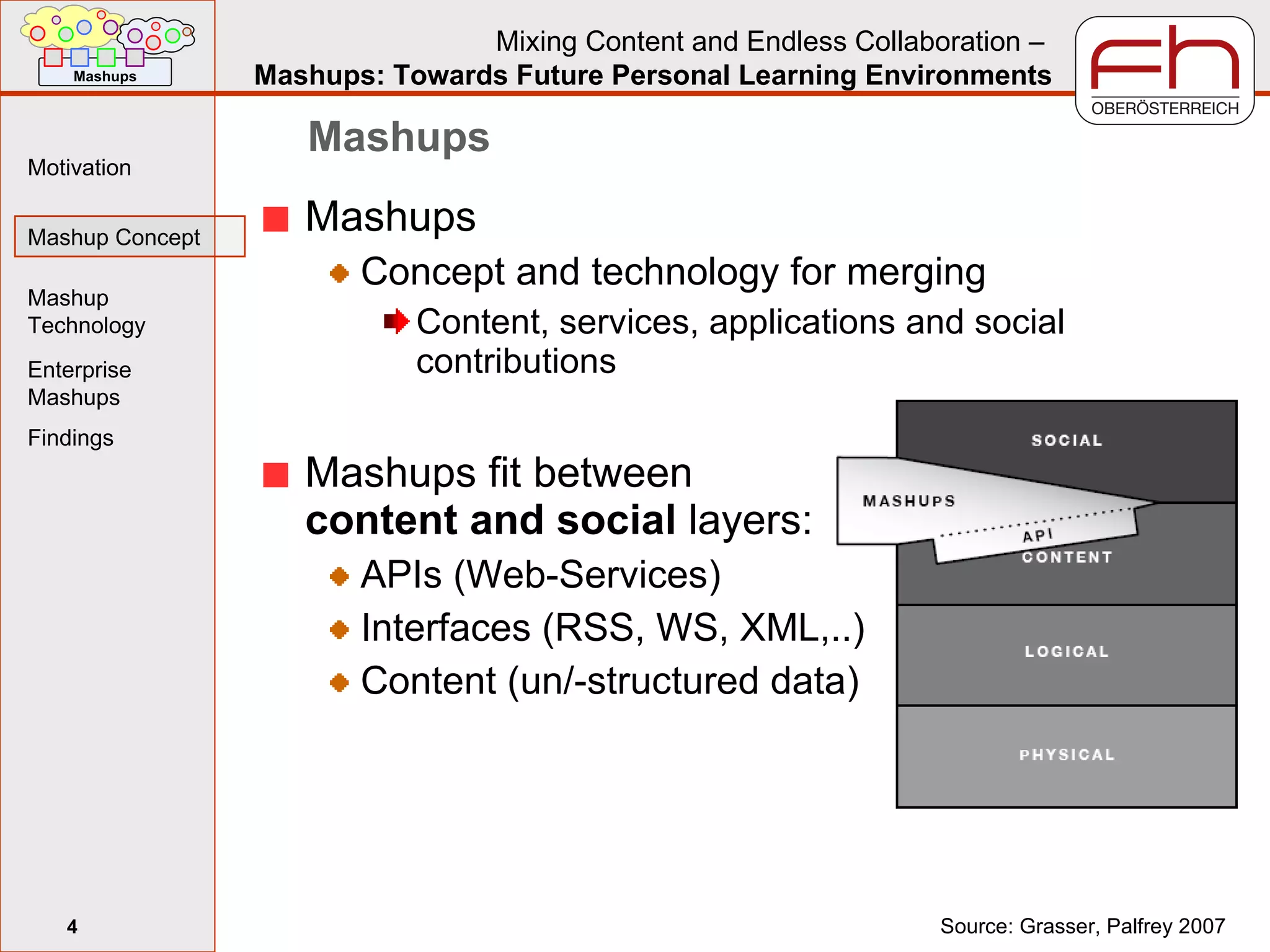
Mashups Mashups Concept and technology for merging Content, services, applications and social contributions Mashups fit between  content and social  layers: APIs (Web-Services) Interfaces (RSS, WS, XML,..) Content (un/-structured data) Source: Grasser, Palfrey 2007
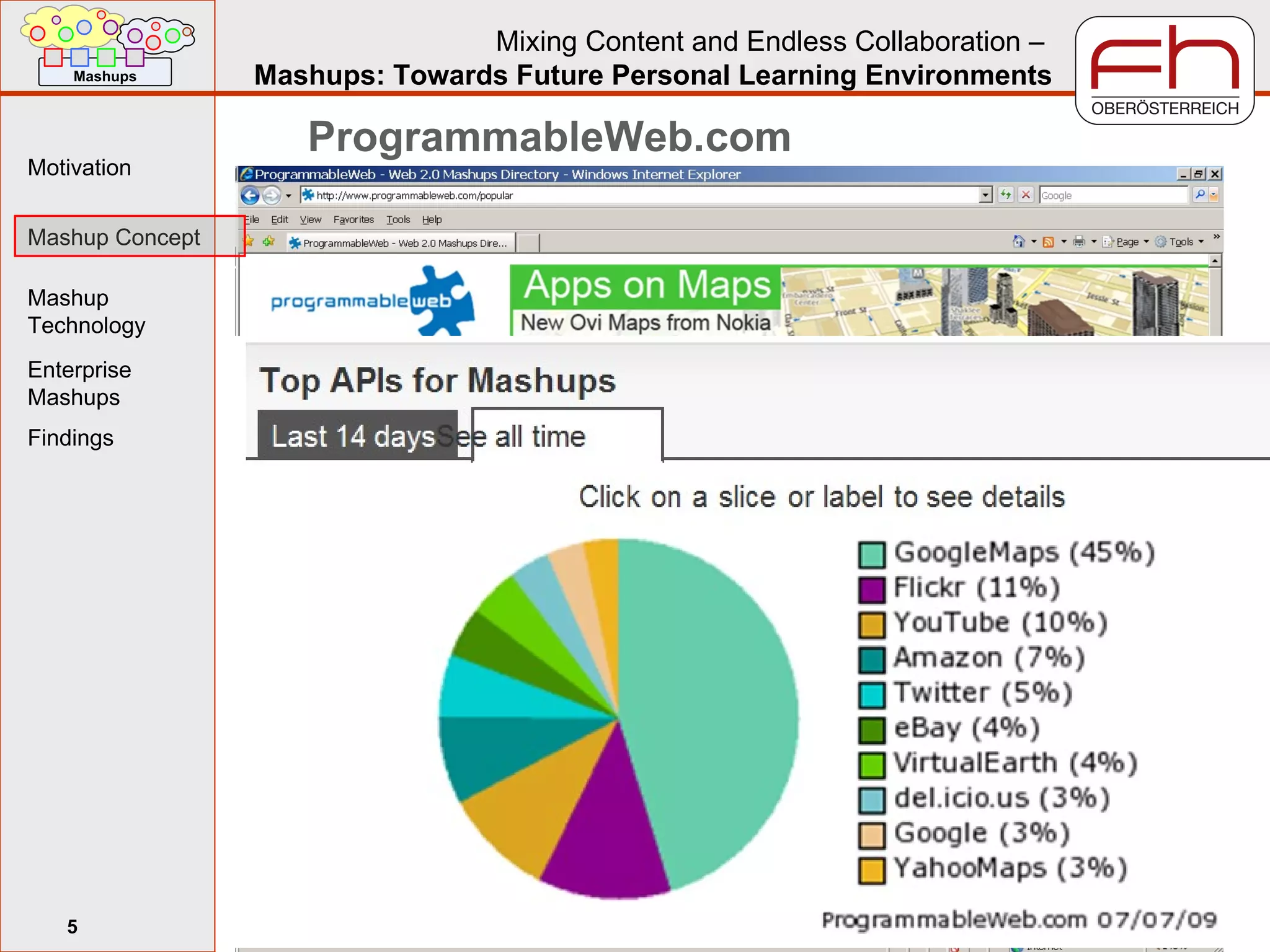
Most important Web-Mashup APIs ProgrammableWeb.com
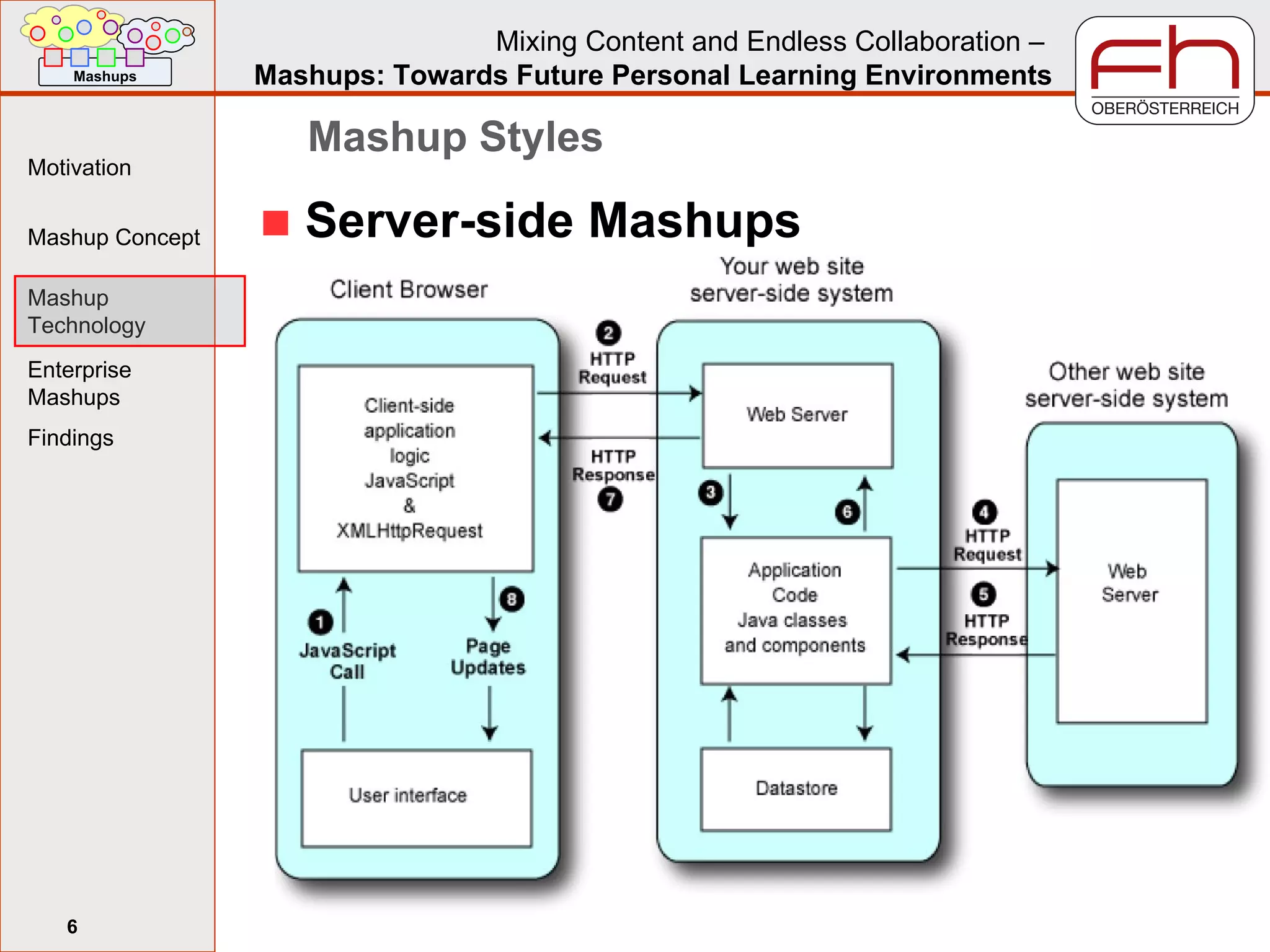
Mashup Styles Server-side Mashups
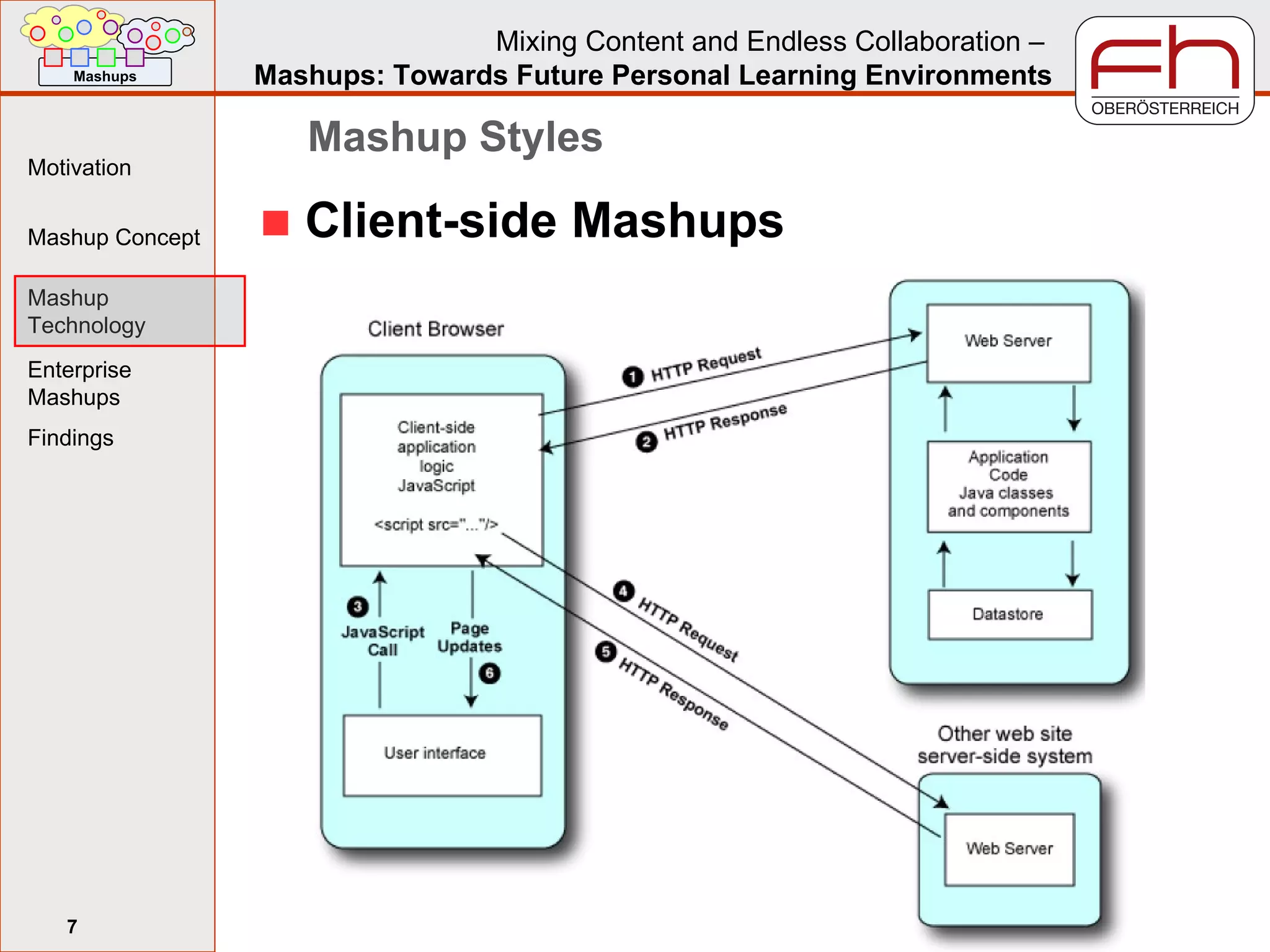
Mashup Styles Client-side Mashups
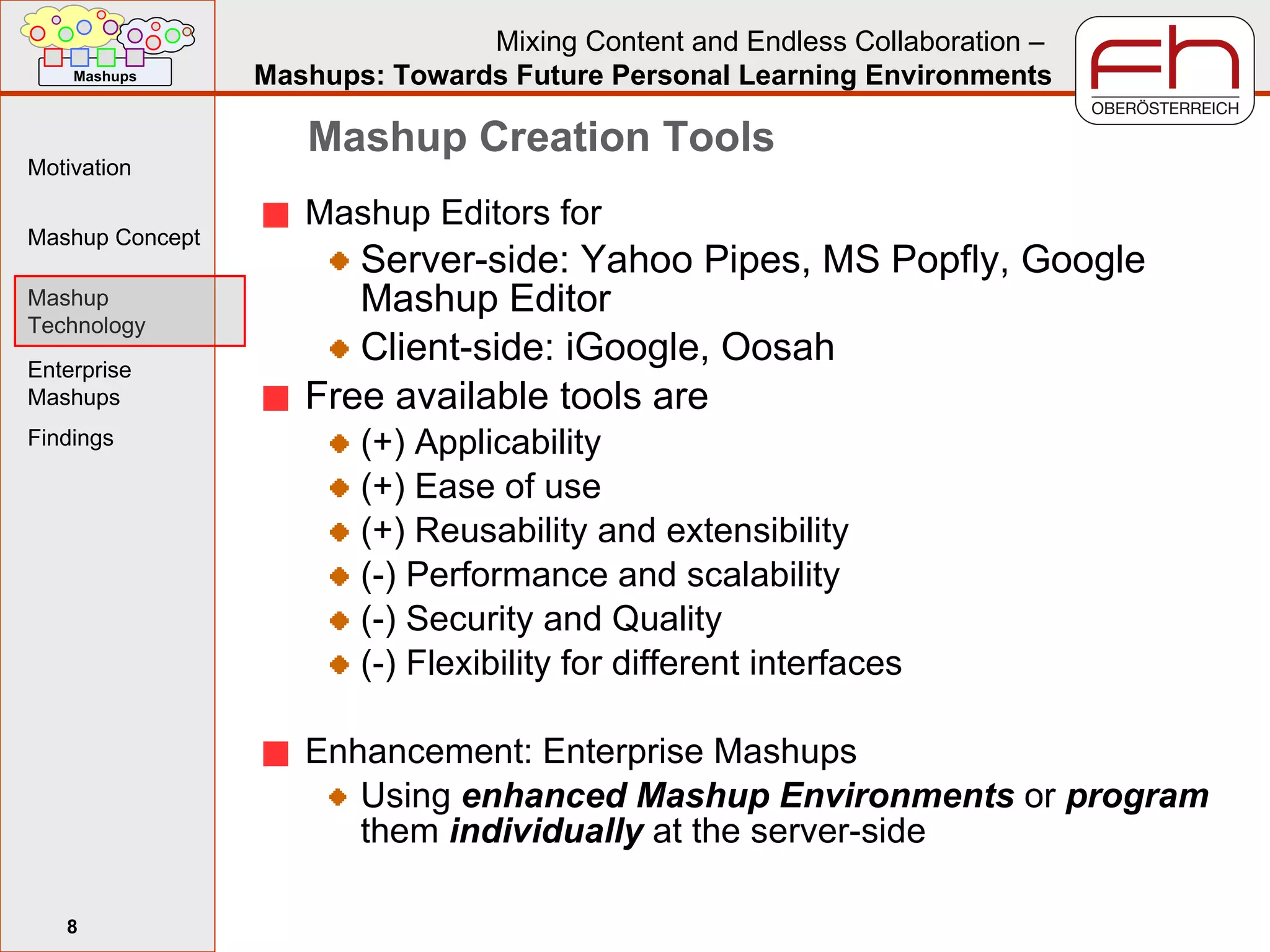
Mashup Creation Tools Mashup Editors for Server-side: Yahoo Pipes, MS Popfly, Google Mashup Editor Client-side: iGoogle, Oosah Free available tools are (+) Applicability (+) Ease of use (+) Reusability and extensibility (-) Performance and scalability (-) Security and Quality (-) Flexibility for different interfaces Enhancement: Enterprise Mashups Using  enhanced Mashup Environments  or  program  them  individually  at the server-side
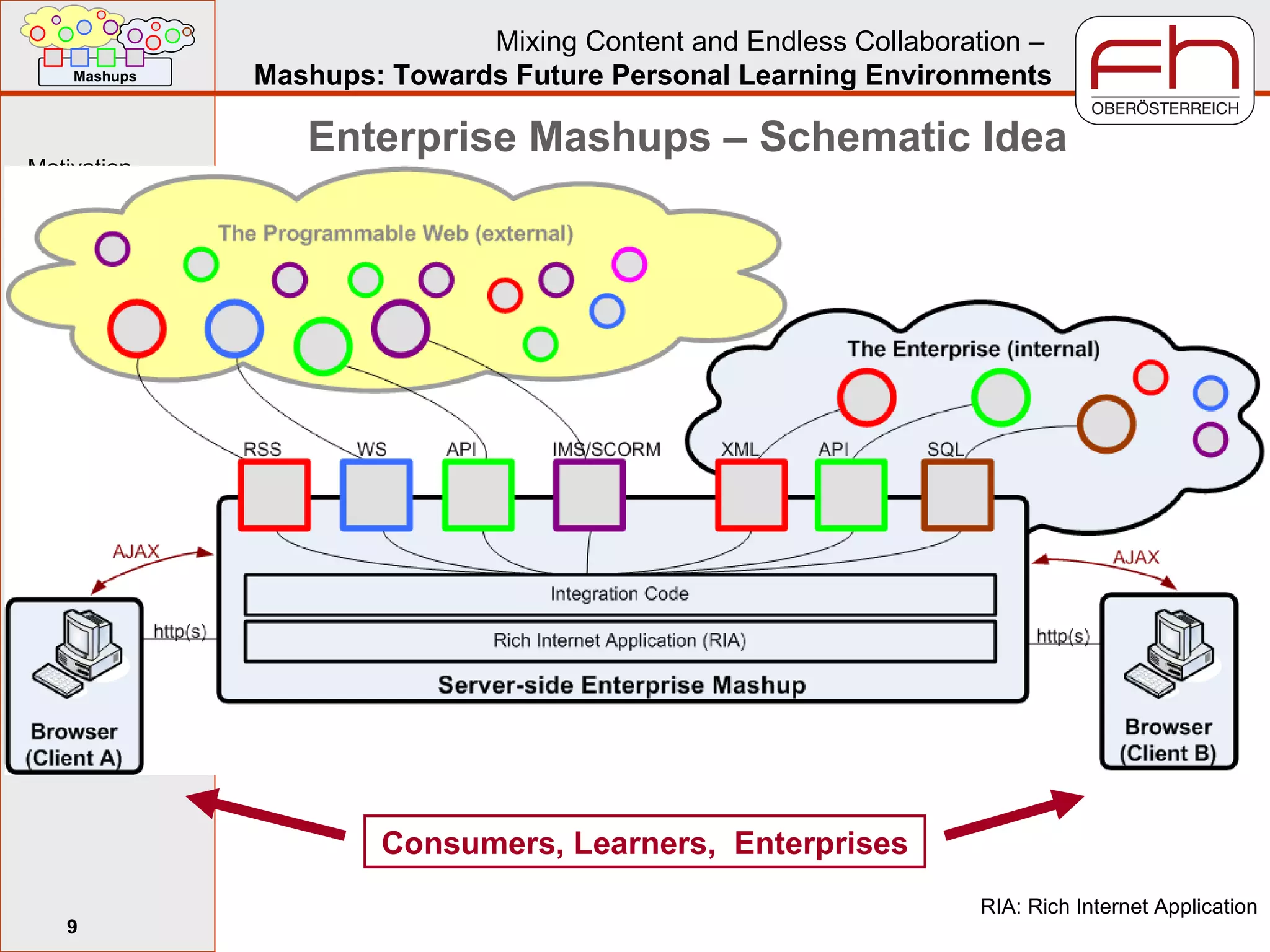
Enterprise Mashups –  Schematic Idea RIA: Rich Internet Application Consumers, Learners,  Enterprises
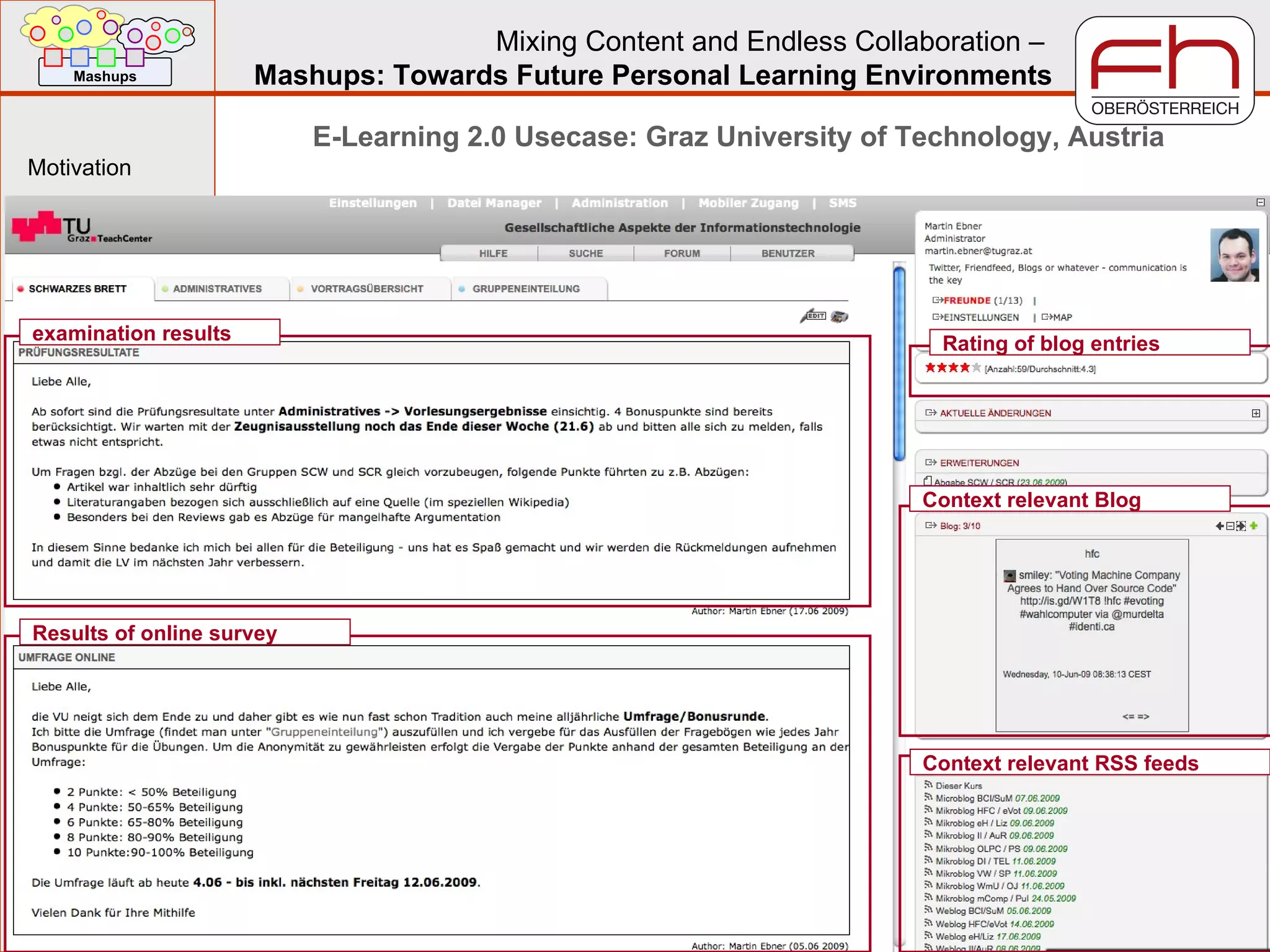
E-Learning 2.0 Usecase: Graz University of Technology, Austria examination results Results of online survey Context relevant RSS feeds Context relevant Blog Rating of blog entries
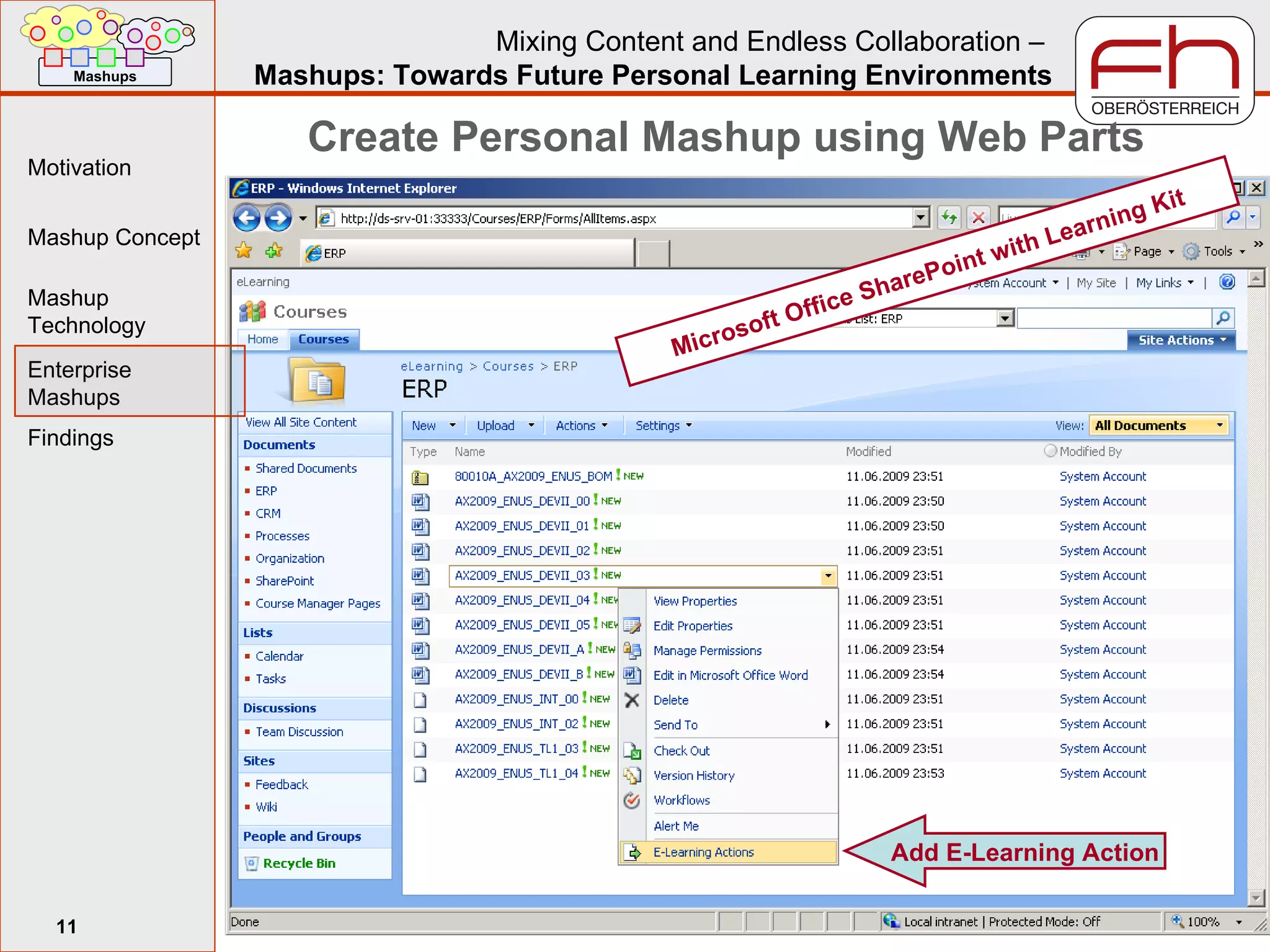
Create Personal Mashup using Web Parts Add E-Learning Action Microsoft Office SharePoint with Learning Kit
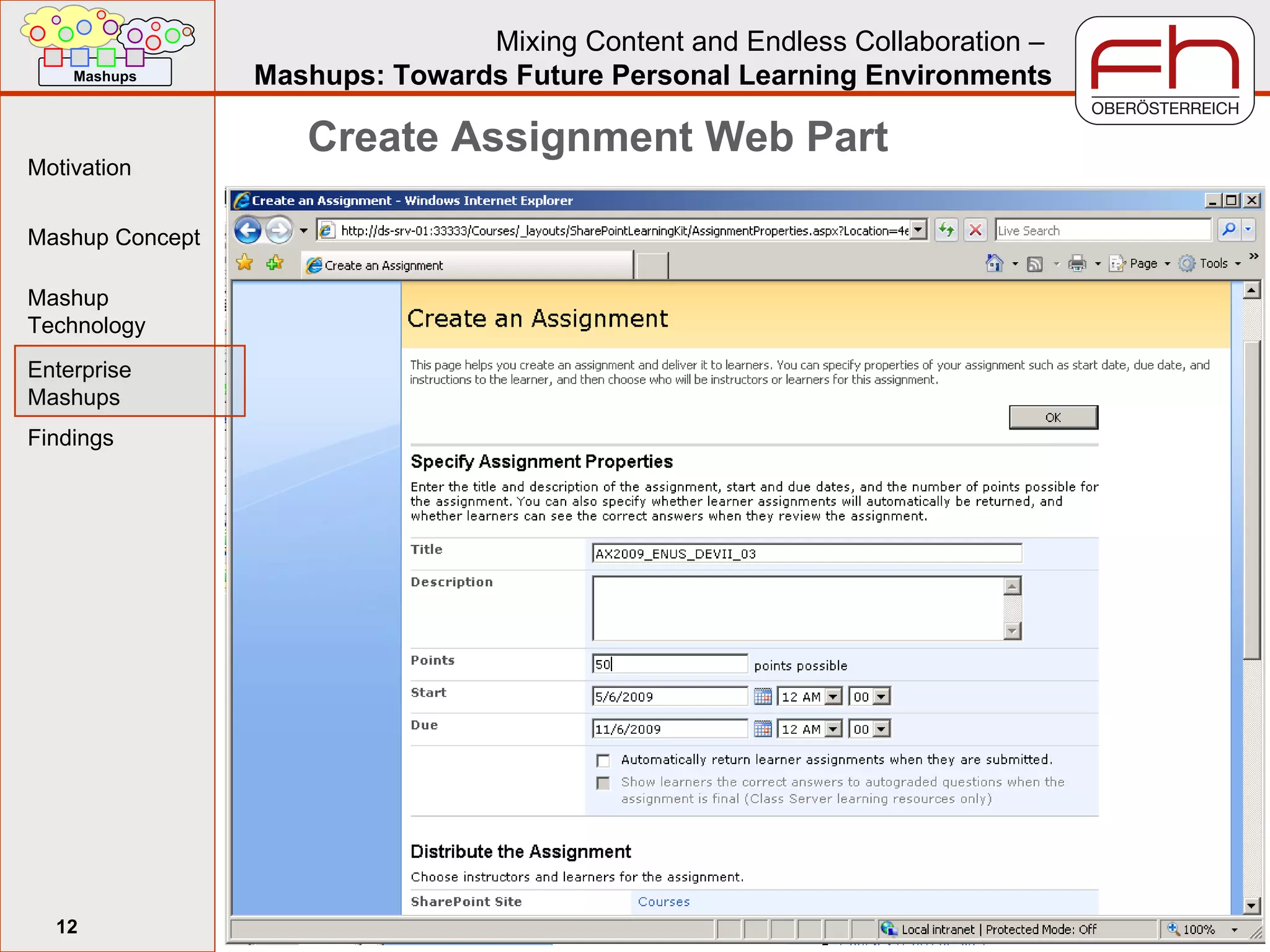
Create Assignment Web Part
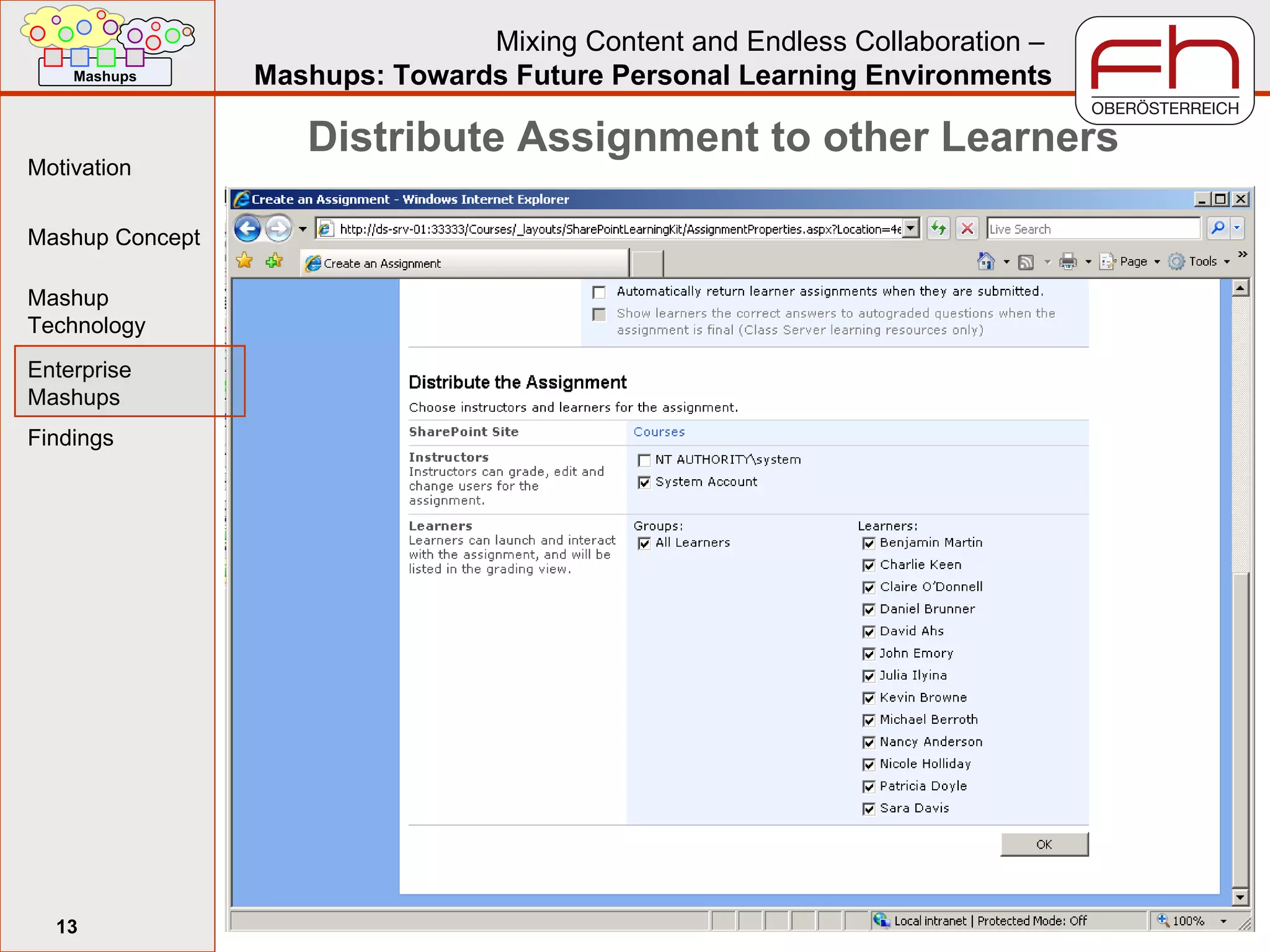
Distribute Assignment to other Learners
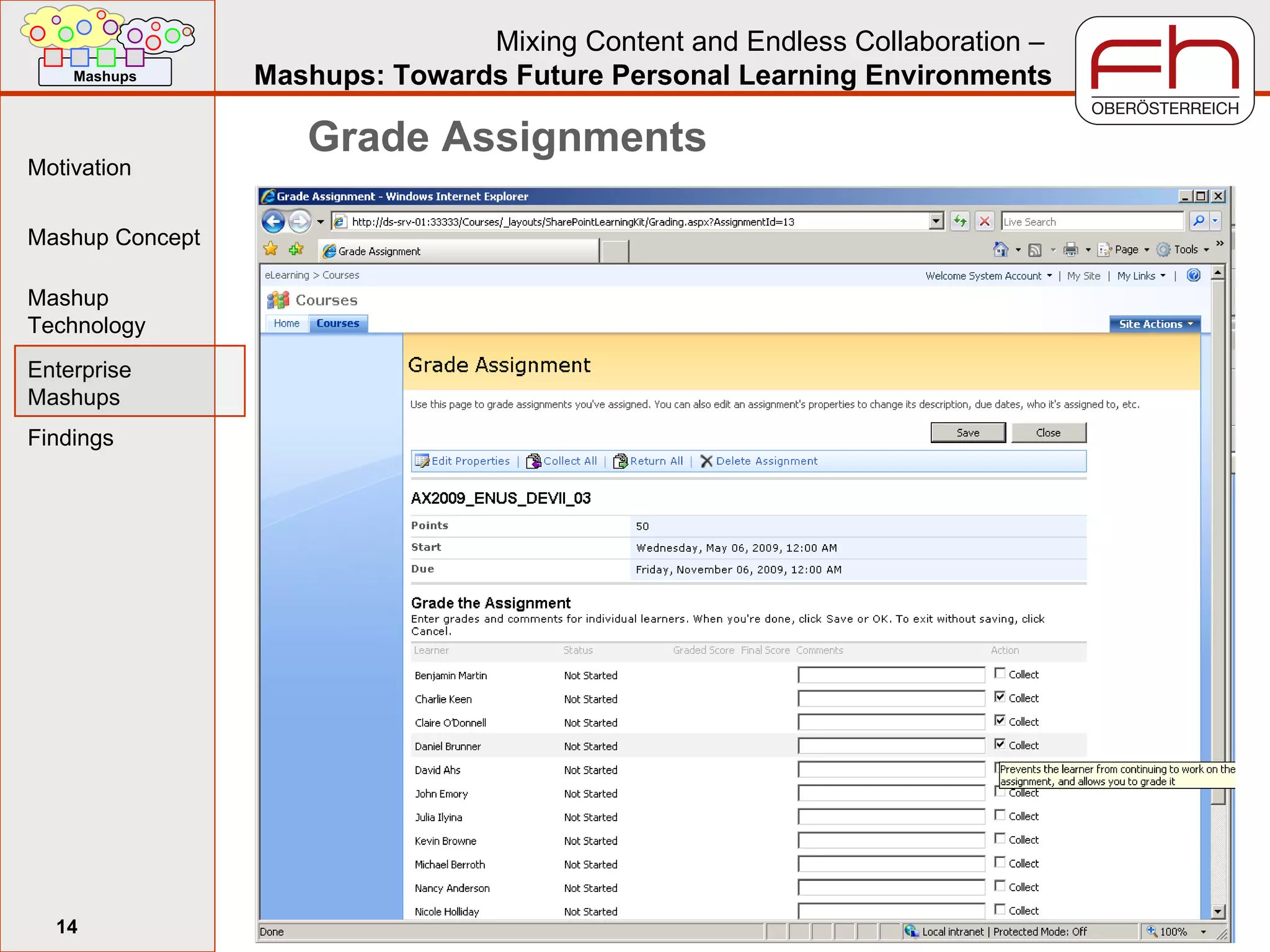
Grade Assignments
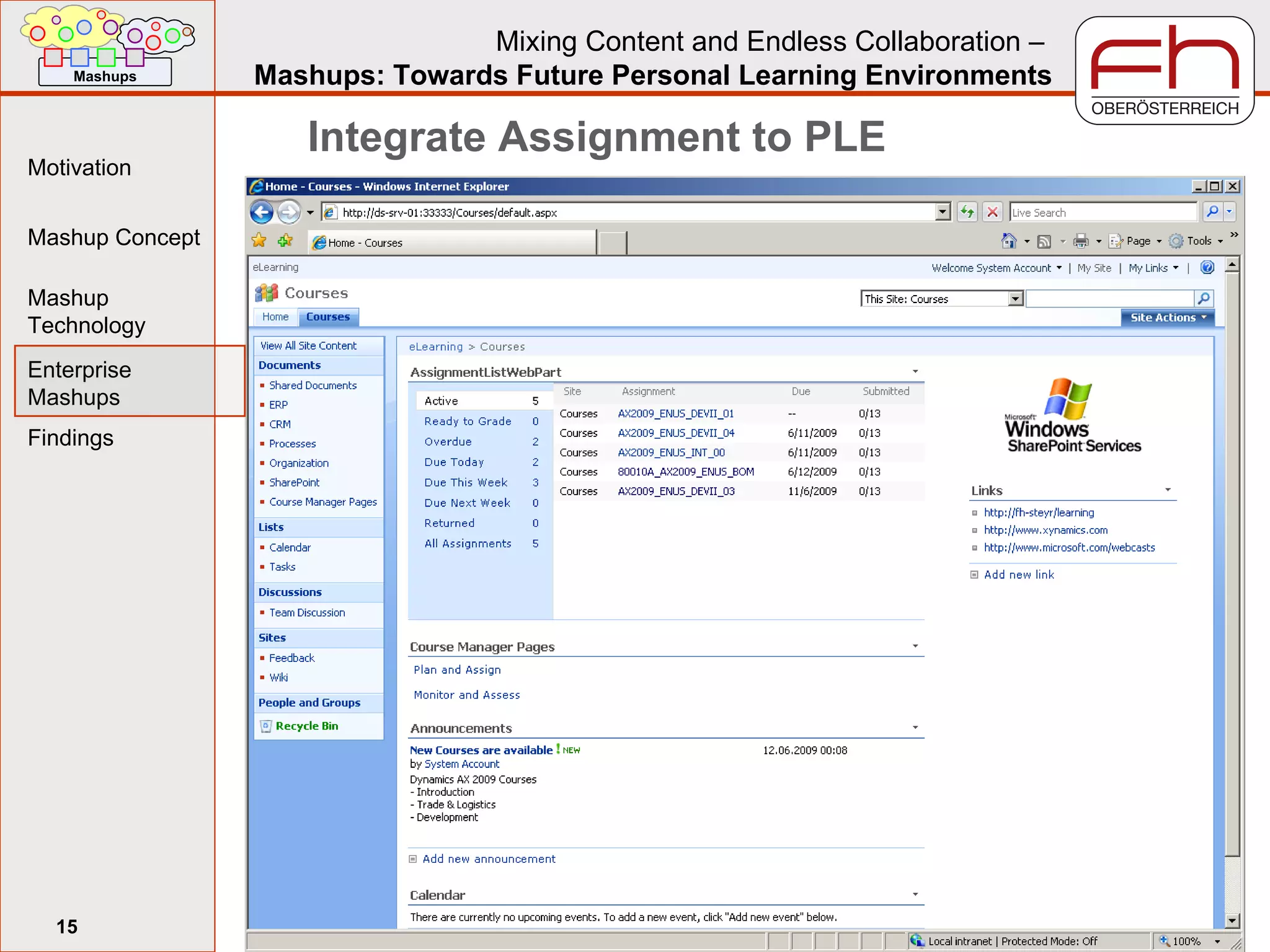
Integrate Assignment to PLE
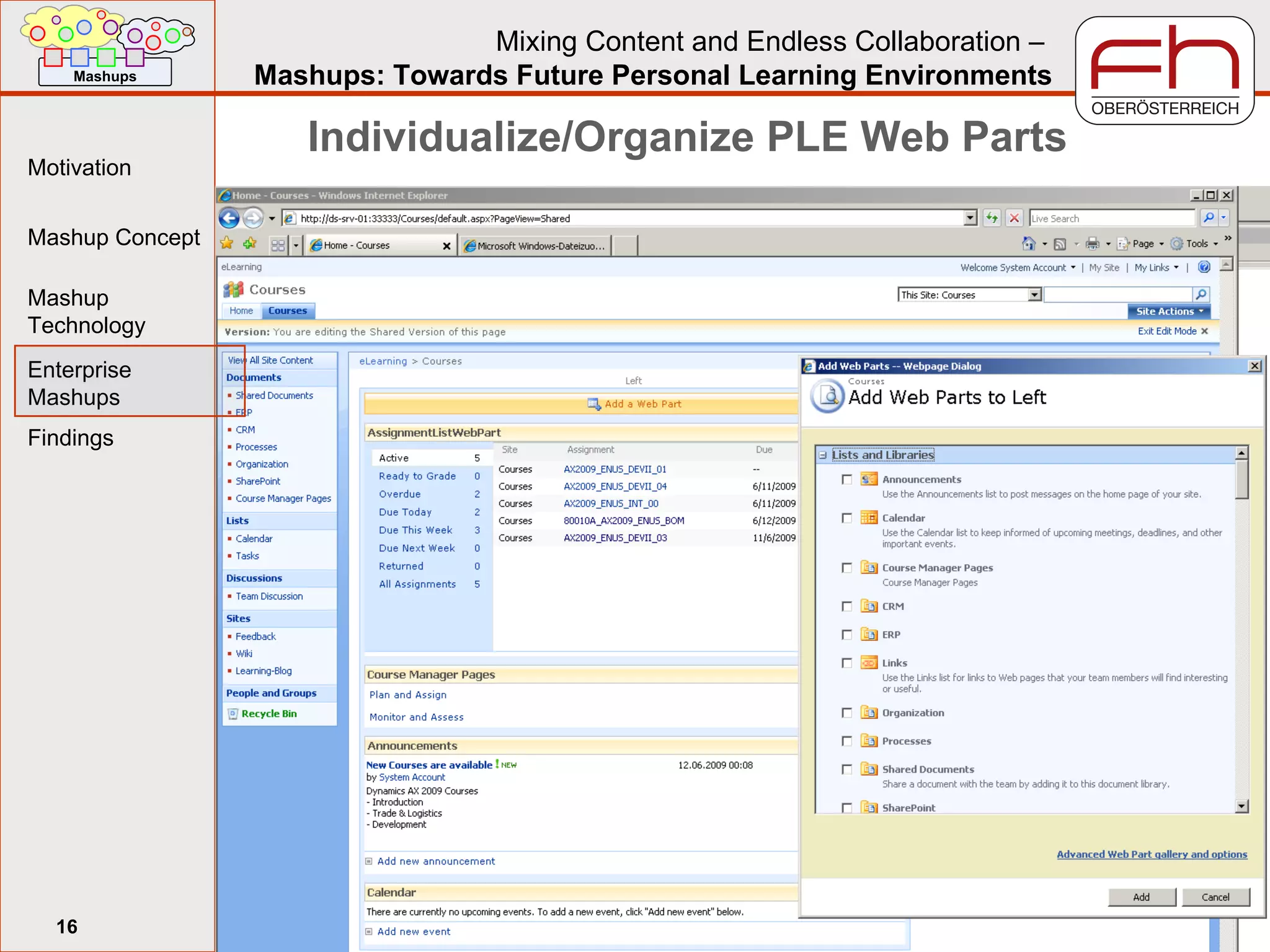
Individualize/Organize PLE Web Parts
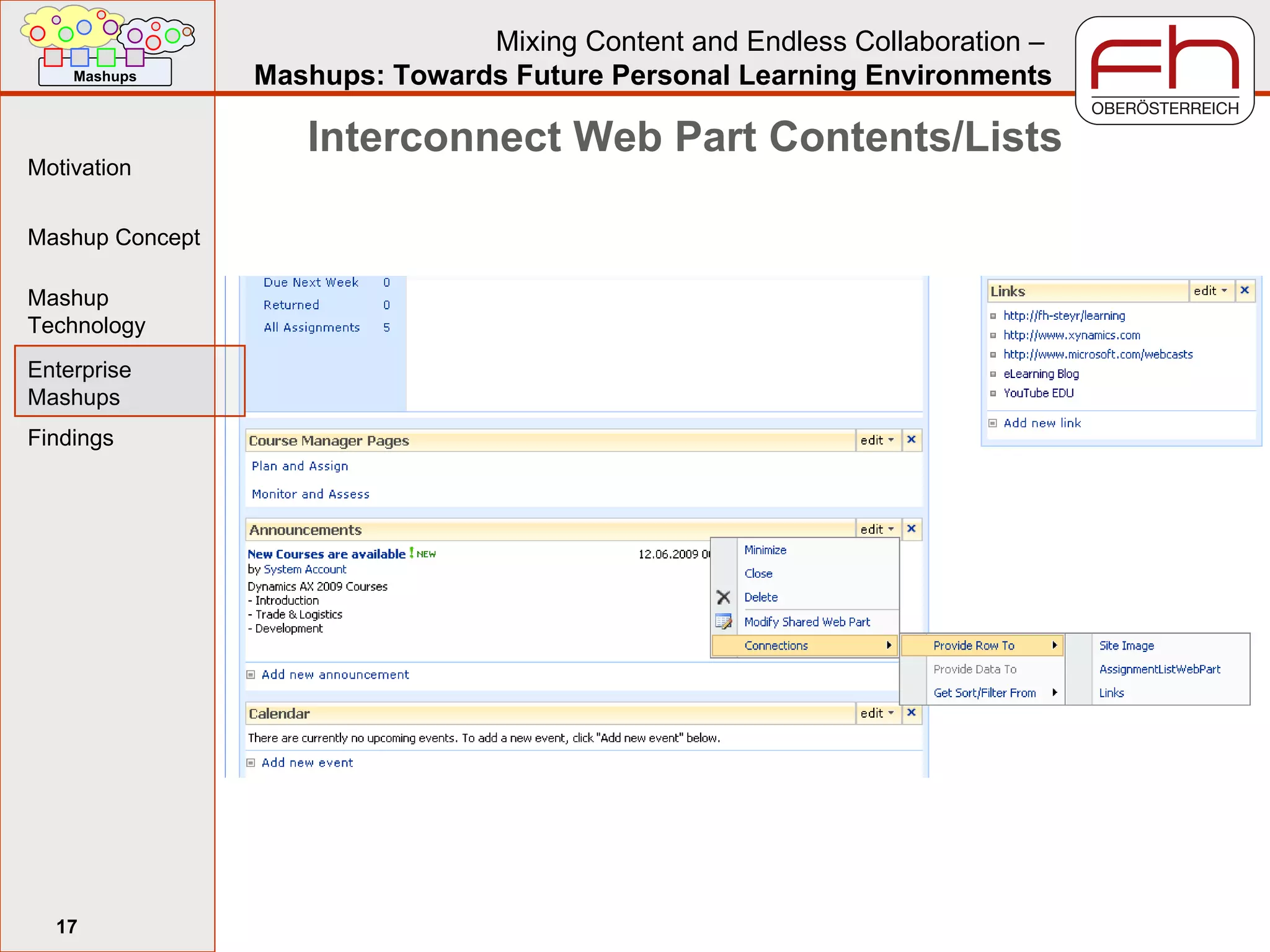
Interconnect Web Part Contents/Lists
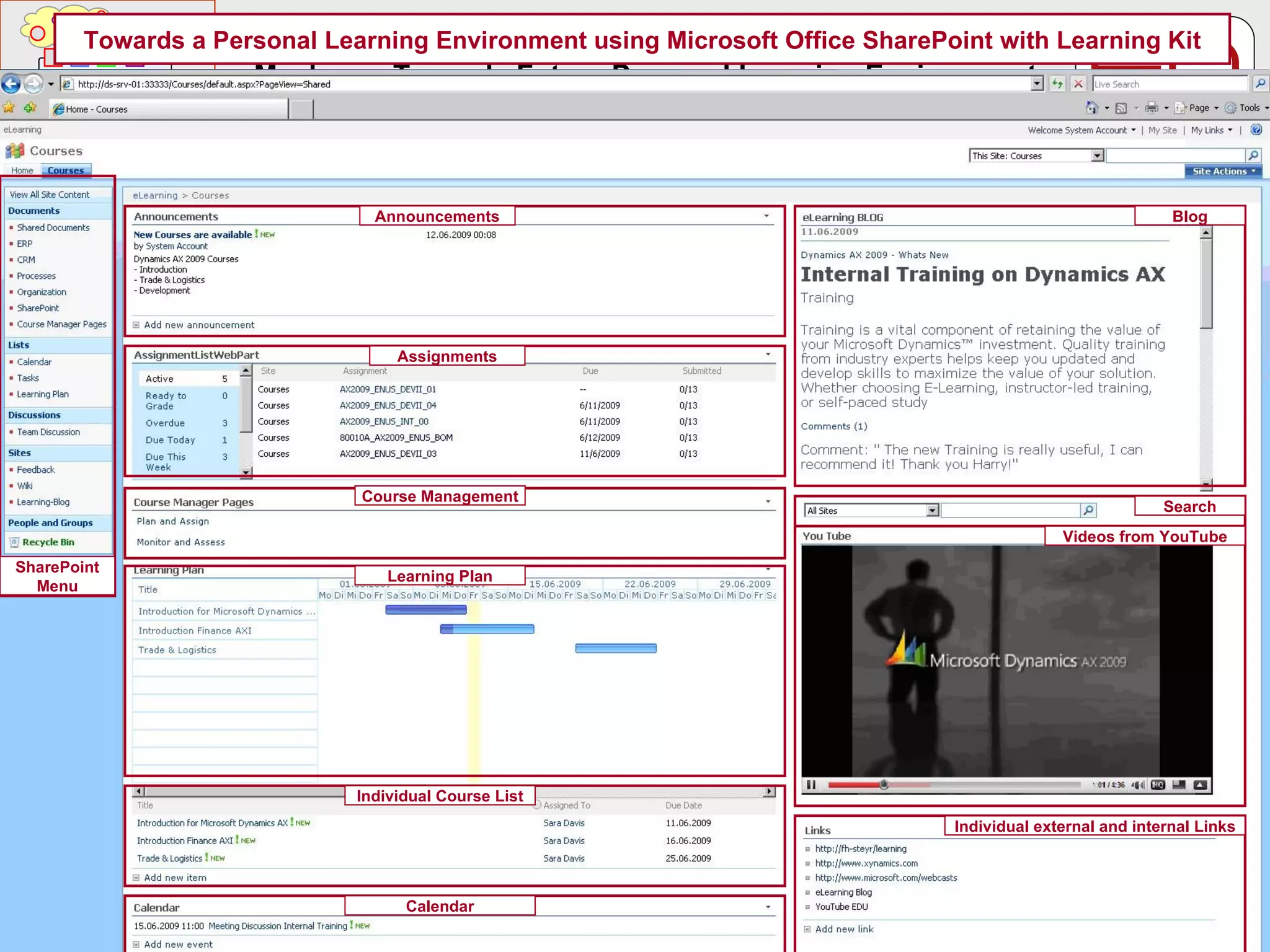
Uasecase:  SharePoint Mashup University of Applied Sciences Announcements Assignments Course Management Learning Plan Individual Course List Calendar Blog Search Videos from YouTube Individual external and internal Links SharePoint Menu Towards a Personal Learning Environment using Microsoft Office SharePoint with Learning Kit
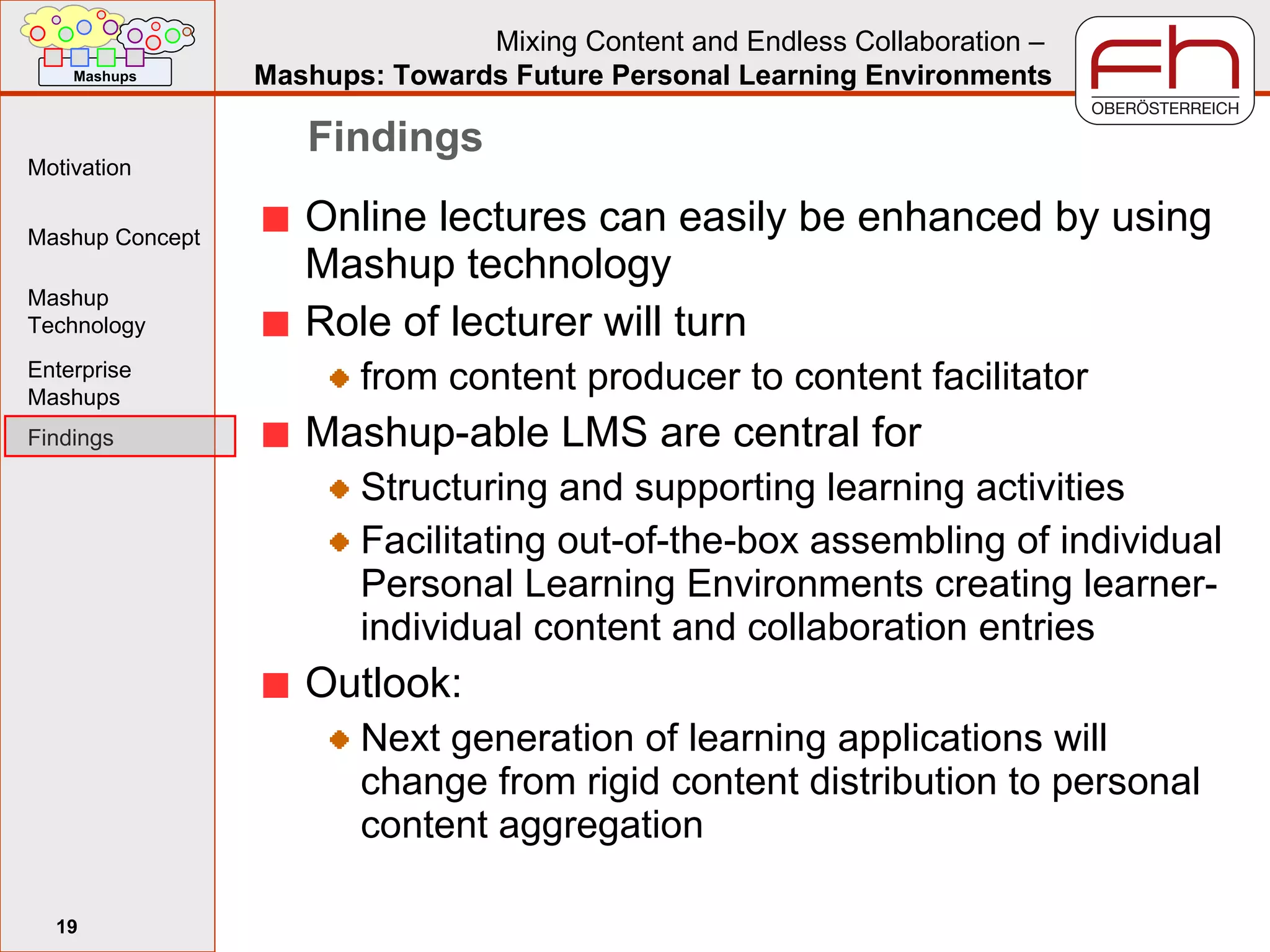
Findings Online lectures can easily be enhanced by using Mashup technology Role of lecturer will turn from content producer to content facilitator Mashup-able LMS are central for Structuring and supporting learning activities Facilitating out-of-the-box assembling of individual Personal Learning Environments creating learner-individual content and collaboration entries Outlook: Next generation of learning applications will change from rigid content distribution to personal content aggregation
Thank you for your attention! Prof. (FH) Dr. Andreas Auinger Vice-Dean for Research and Development  School of Management  Upper Austria University of Applied Science Steyr, Austria [email_address] http://www.fh-ooe.at/campus-steyr

MashUps: Towards Future Personal Learning Environments

  • 1.
    Mixing Content andEndless Collaboration Mashups: Towards Future Personal Learning Environments ( Andreas Auinger , Martin Ebner, Dietmar Nedbal, Andreas Holzinger) Andreas Auinger Department for e-Business, School of Management Upper Austria University of Applied Sciences Steyr, Austria
  • 2.
    Motivation Ubiquitious andpervasive use of new media and the web dominates Social life Working environment Teaching and learning behavior (Chen & Kinshuk et al.) Web turns into community of loosely connected participants sharing knowledge and educational interests and communicate and collaborate on the “Web 2.0”/in the Enterprise 2.0, and turn into prosumers on market of freely available content and collaboration tools. Major web services have opened their systems to outside use Implementation of public APIs and data sources  resulting in Web 2.0/Enterprise 2.0 MashUps
  • 3.
    Contribution of Mashupsto E-learning 2.0 Bringing social networks into the classroom Enrich traditional Learning Management Systems Potential to integrate communication and collaboration features from the Web 2.0 Facebook, MySpace, WordPress, Technorati, Twitter etc. Freely available context-relevant interaction services Wikipedia, Google Maps, YouTube etc
  • 4.
    Mashups Mashups Conceptand technology for merging Content, services, applications and social contributions Mashups fit between content and social layers: APIs (Web-Services) Interfaces (RSS, WS, XML,..) Content (un/-structured data) Source: Grasser, Palfrey 2007
  • 5.
    Most important Web-MashupAPIs ProgrammableWeb.com
  • 6.
  • 7.
  • 8.
    Mashup Creation ToolsMashup Editors for Server-side: Yahoo Pipes, MS Popfly, Google Mashup Editor Client-side: iGoogle, Oosah Free available tools are (+) Applicability (+) Ease of use (+) Reusability and extensibility (-) Performance and scalability (-) Security and Quality (-) Flexibility for different interfaces Enhancement: Enterprise Mashups Using enhanced Mashup Environments or program them individually at the server-side
  • 9.
    Enterprise Mashups – Schematic Idea RIA: Rich Internet Application Consumers, Learners, Enterprises
  • 10.
    E-Learning 2.0 Usecase:Graz University of Technology, Austria examination results Results of online survey Context relevant RSS feeds Context relevant Blog Rating of blog entries
  • 11.
    Create Personal Mashupusing Web Parts Add E-Learning Action Microsoft Office SharePoint with Learning Kit
  • 12.
  • 13.
  • 14.
  • 15.
  • 16.
  • 17.
    Interconnect Web PartContents/Lists
  • 18.
    Uasecase: SharePointMashup University of Applied Sciences Announcements Assignments Course Management Learning Plan Individual Course List Calendar Blog Search Videos from YouTube Individual external and internal Links SharePoint Menu Towards a Personal Learning Environment using Microsoft Office SharePoint with Learning Kit
  • 19.
    Findings Online lecturescan easily be enhanced by using Mashup technology Role of lecturer will turn from content producer to content facilitator Mashup-able LMS are central for Structuring and supporting learning activities Facilitating out-of-the-box assembling of individual Personal Learning Environments creating learner-individual content and collaboration entries Outlook: Next generation of learning applications will change from rigid content distribution to personal content aggregation
  • 20.
    Thank you foryour attention! Prof. (FH) Dr. Andreas Auinger Vice-Dean for Research and Development School of Management Upper Austria University of Applied Science Steyr, Austria [email_address] http://www.fh-ooe.at/campus-steyr

Editor's Notes

  • #6 Pie Chart
  • #7 As you can imagine from its name…
  • #8 The individual user is enabled to create his/her own personal mashup at the client-side