http://en.wikipedia.org/wiki/Animation

  (Lesson 1 – Definition of Animation)
   (Lesson 2 – History of Animation)
       Presented by Ms. Maricel C. Mallari
              DPS-HS Computer III
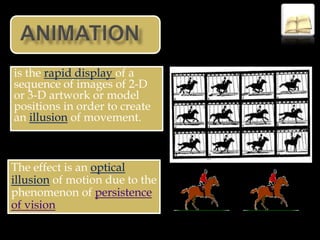
is the rapid display of a
sequence of images of 2-D
or 3-D artwork or model
positions in order to create
an illusion of movement.


The effect is an optical
illusion of motion due to the
phenomenon of persistence
of vision
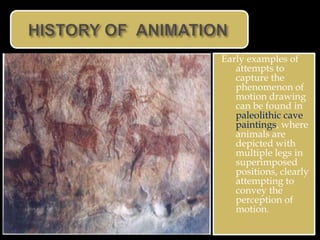
Early examples of
   attempts to
   capture the
   phenomenon of
   motion drawing
   can be found in
   paleolithic cave
   paintings, where
   animals are
   depicted with
   multiple legs in
   superimposed
   positions, clearly
   attempting to
   convey the
   perception of
   motion.
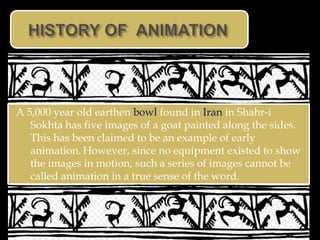
A 5,000 year old earthen bowl found in Iran in Shahr-i
   Sokhta has five images of a goat painted along the sides.
   This has been claimed to be an example of early
   animation. However, since no equipment existed to show
   the images in motion, such a series of images cannot be
   called animation in a true sense of the word.
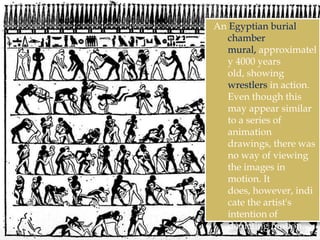
An Egyptian burial
  chamber
  mural, approximatel
  y 4000 years
  old, showing
  wrestlers in action.
  Even though this
  may appear similar
  to a series of
  animation
  drawings, there was
  no way of viewing
  the images in
  motion. It
  does, however, indi
  cate the artist's
  intention of
  depicting motion.
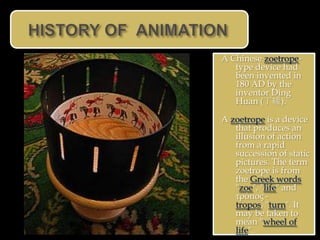
A Chinese zoetrope-
   type device had
   been invented in
   180 AD by the
   inventor Ding
   Huan (丁緩).

A zoetrope is a device
   that produces an
   illusion of action
   from a rapid
   succession of static
   pictures. The term
   zoetrope is from
   the Greek words
   "zoe", "life" and
   τρόπος -
   tropos, "turn". It
   may be taken to
   mean "wheel of
   life".
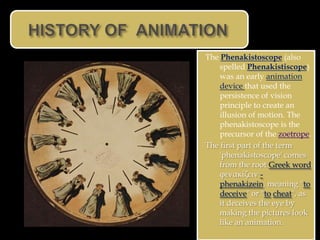
The Phenakistoscope (also
    spelled Phenakistiscope)
    was an early animation
    device that used the
    persistence of vision
    principle to create an
    illusion of motion. The
    phenakistoscope is the
    precursor of the zoetrope.
The first part of the term
    'phenakistoscope' comes
    from the root Greek word
    φενακίζειν -
    phenakizein, meaning "to
    deceive" or "to cheat", as
    it deceives the eye by
    making the pictures look
    like an animation.
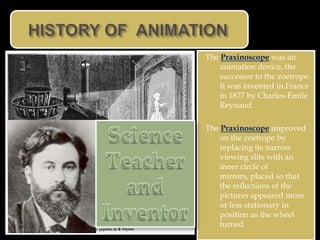
The Praxinoscope was an
    animation device, the
    successor to the zoetrope.
    It was invented in France
    in 1877 by Charles-Émile
    Reynaud.

The Praxinoscope improved
    on the zoetrope by
    replacing its narrow
    viewing slits with an
    inner circle of
    mirrors, placed so that
    the reflections of the
    pictures appeared more
    or less stationary in
    position as the wheel
    turned
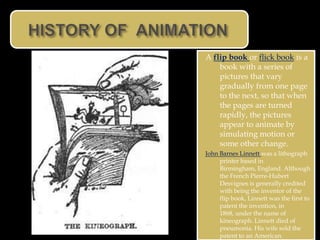
A flip book or flick book is a
    book with a series of
    pictures that vary
    gradually from one page
    to the next, so that when
    the pages are turned
    rapidly, the pictures
    appear to animate by
    simulating motion or
    some other change.
John Barnes Linnett was a lithograph
     printer based in
     Birmingham, England. Although
     the French Pierre-Hubert
     Desvignes is generally credited
     with being the inventor of the
     flip book, Linnett was the first to
     patent the invention, in
     1868, under the name of
     kineograph. Linnett died of
     pneumonia. His wife sold the
     patent to an American.
These devices produced the appearance of
    movement from sequential drawings using
 technological means, but animation did not really
      develop much further until the advent of
                 Cinematography.
    Cinematography (from Greek: kinema - κίνημα "movement" and
  graphein - γράφειν "to record") is the making of lighting and camera
  choices when recording photographic images for cinema. It is closely
related to the art of still photography. Many additional issues arise when
both the camera and elements of the scene may be in motion, though this
       also greatly increases the creative possibilities of the process.
There is no single person who can be considered the
 "creator" of film animation, as there were several
    people working on projects which could be
   considered animation at about the same time.
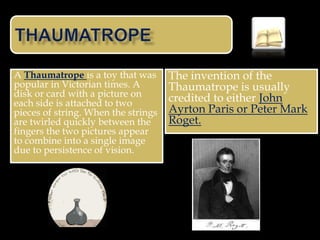
A Thaumatrope is a toy that was      The invention of the
popular in Victorian times. A        Thaumatrope is usually
disk or card with a picture on       credited to either John
each side is attached to two
pieces of string. When the strings   Ayrton Paris or Peter Mark
are twirled quickly between the      Roget.
fingers the two pictures appear
to combine into a single image
due to persistence of vision.
Is the phenomenon of the eye by
which an afterimage is thought
to persist for approximately one
twenty-fifth of a second on the
retina.

An afterimage or ghost image or
image burn-in is an optical
illusion that refers to an image
continuing to appear in one's
vision after the exposure to the
original image has ceased.
Intro to animation

Intro to animation

  • 1.
    http://en.wikipedia.org/wiki/Animation (Lesson1 – Definition of Animation) (Lesson 2 – History of Animation) Presented by Ms. Maricel C. Mallari DPS-HS Computer III
  • 2.
    is the rapiddisplay of a sequence of images of 2-D or 3-D artwork or model positions in order to create an illusion of movement. The effect is an optical illusion of motion due to the phenomenon of persistence of vision
  • 3.
    Early examples of attempts to capture the phenomenon of motion drawing can be found in paleolithic cave paintings, where animals are depicted with multiple legs in superimposed positions, clearly attempting to convey the perception of motion.
  • 4.
    A 5,000 yearold earthen bowl found in Iran in Shahr-i Sokhta has five images of a goat painted along the sides. This has been claimed to be an example of early animation. However, since no equipment existed to show the images in motion, such a series of images cannot be called animation in a true sense of the word.
  • 5.
    An Egyptian burial chamber mural, approximatel y 4000 years old, showing wrestlers in action. Even though this may appear similar to a series of animation drawings, there was no way of viewing the images in motion. It does, however, indi cate the artist's intention of depicting motion.
  • 6.
    A Chinese zoetrope- type device had been invented in 180 AD by the inventor Ding Huan (丁緩). A zoetrope is a device that produces an illusion of action from a rapid succession of static pictures. The term zoetrope is from the Greek words "zoe", "life" and τρόπος - tropos, "turn". It may be taken to mean "wheel of life".
  • 7.
    The Phenakistoscope (also spelled Phenakistiscope) was an early animation device that used the persistence of vision principle to create an illusion of motion. The phenakistoscope is the precursor of the zoetrope. The first part of the term 'phenakistoscope' comes from the root Greek word φενακίζειν - phenakizein, meaning "to deceive" or "to cheat", as it deceives the eye by making the pictures look like an animation.
  • 8.
    The Praxinoscope wasan animation device, the successor to the zoetrope. It was invented in France in 1877 by Charles-Émile Reynaud. The Praxinoscope improved on the zoetrope by replacing its narrow viewing slits with an inner circle of mirrors, placed so that the reflections of the pictures appeared more or less stationary in position as the wheel turned
  • 9.
    A flip bookor flick book is a book with a series of pictures that vary gradually from one page to the next, so that when the pages are turned rapidly, the pictures appear to animate by simulating motion or some other change. John Barnes Linnett was a lithograph printer based in Birmingham, England. Although the French Pierre-Hubert Desvignes is generally credited with being the inventor of the flip book, Linnett was the first to patent the invention, in 1868, under the name of kineograph. Linnett died of pneumonia. His wife sold the patent to an American.
  • 10.
    These devices producedthe appearance of movement from sequential drawings using technological means, but animation did not really develop much further until the advent of Cinematography. Cinematography (from Greek: kinema - κίνημα "movement" and graphein - γράφειν "to record") is the making of lighting and camera choices when recording photographic images for cinema. It is closely related to the art of still photography. Many additional issues arise when both the camera and elements of the scene may be in motion, though this also greatly increases the creative possibilities of the process. There is no single person who can be considered the "creator" of film animation, as there were several people working on projects which could be considered animation at about the same time.
  • 11.
    A Thaumatrope isa toy that was The invention of the popular in Victorian times. A Thaumatrope is usually disk or card with a picture on credited to either John each side is attached to two pieces of string. When the strings Ayrton Paris or Peter Mark are twirled quickly between the Roget. fingers the two pictures appear to combine into a single image due to persistence of vision.
  • 12.
    Is the phenomenonof the eye by which an afterimage is thought to persist for approximately one twenty-fifth of a second on the retina. An afterimage or ghost image or image burn-in is an optical illusion that refers to an image continuing to appear in one's vision after the exposure to the original image has ceased.