GREEN RATING SYSTEMS
What is Green Rating System
How does it work
Samples of Green Ratings System
Examples of high Rated Buildings
Results
Problems
Q/
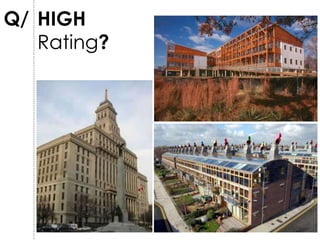
HIGH
Rating?
Q/
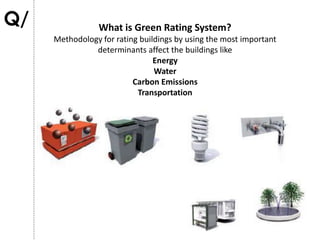
What is Green Rating System?
Methodology for rating buildings by using the most important
determinants affect the buildings like
Energy
Water
Carbon Emissions
Transportation
Q/
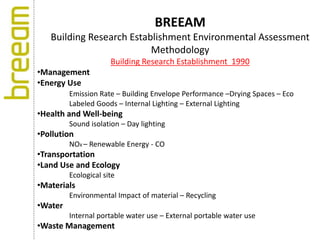
BREEAM
Building Research Establishment Environmental Assessment
Methodology
Building Research Establishment 1990
•Management
•Energy Use
Emission Rate – Building Envelope Performance –Drying Spaces – Eco
Labeled Goods – Internal Lighting – External Lighting
•Health and Well-being
Sound isolation – Day lighting
•Pollution
NOX – Renewable Energy - CO
•Transportation
•Land Use and Ecology
Ecological site
•Materials
Environmental Impact of material – Recycling
•Water
Internal portable water use – External portable water use
•Waste Management
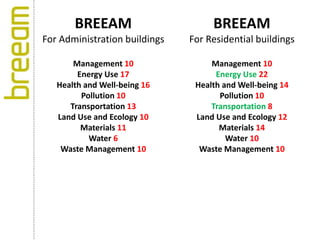
BREEAM
For Administration buildings
Management 10
Energy Use 17
Health and Well-being 16
Pollution 10
Transportation 13
Land Use and Ecology 10
Materials 11
Water 6
Waste Management 10
BREEAM
For Residential buildings
Management 10
Energy Use 22
Health and Well-being 14
Pollution 10
Transportation 8
Land Use and Ecology 12
Materials 14
Water 10
Waste Management 10
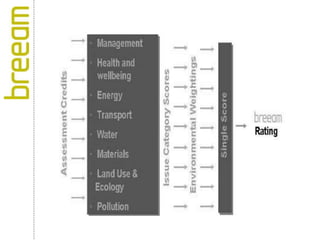
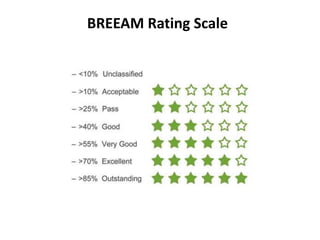
BREEAM Rating Scale
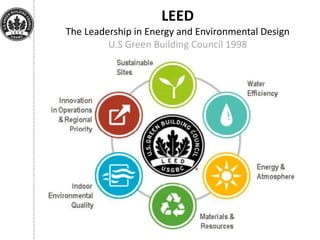
LEED
The Leadership in Energy and Environmental Design
U.S Green Building Council 1998
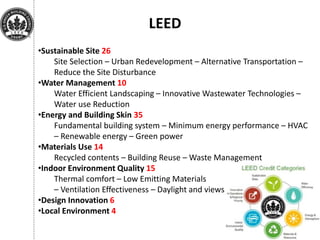
LEED
•Sustainable Site 26
Site Selection – Urban Redevelopment – Alternative Transportation –
Reduce the Site Disturbance
•Water Management 10
Water Efficient Landscaping – Innovative Wastewater Technologies –
Water use Reduction
•Energy and Building Skin 35
Fundamental building system – Minimum energy performance – HVAC
– Renewable energy – Green power
•Materials Use 14
Recycled contents – Building Reuse – Waste Management
•Indoor Environment Quality 15
Thermal comfort – Low Emitting Materials
– Ventilation Effectiveness – Daylight and views
•Design Innovation 6
•Local Environment 4
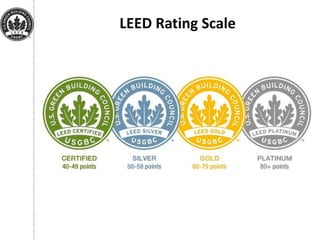
LEED Rating Scale
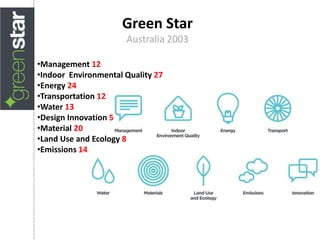
Green Star
Australia 2003
•Management 12
•Indoor Environmental Quality 27
•Energy 24
•Transportation 12
•Water 13
•Design Innovation 5
•Material 20
•Land Use and Ecology 8
•Emissions 14
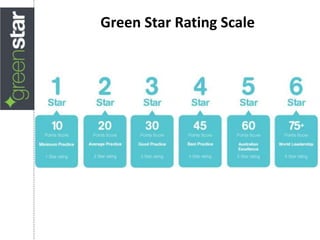
Green Star Rating Scale
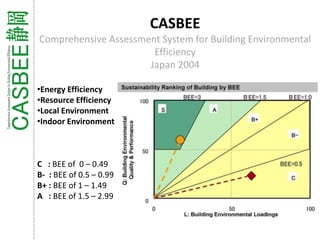
CASBEE
Comprehensive Assessment System for Building Environmental
Efficiency
Japan 2004
•Energy Efficiency
•Resource Efficiency
•Local Environment
•Indoor Environment
C : BEE of 0 – 0.49
B- : BEE of 0.5 – 0.99
B+ : BEE of 1 – 1.49
A : BEE of 1.5 – 2.99
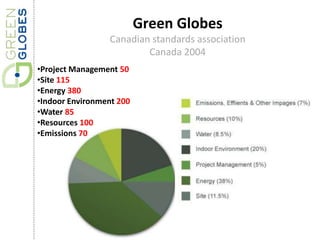
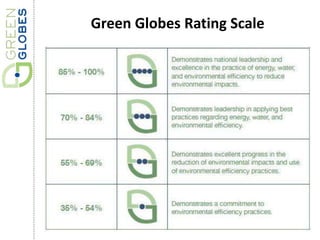
Green Globes
Canadian standards association
Canada 2004
•Project Management 50
•Site 115
•Energy 380
•Indoor Environment 200
•Water 85
•Resources 100
•Emissions 70
Green Globes Rating Scale
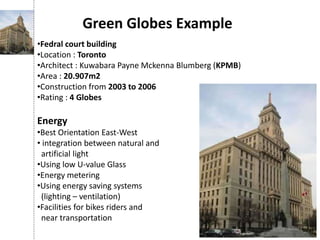
Green Globes Example
•Fedral court building
•Location : Toronto
•Architect : Kuwabara Payne Mckenna Blumberg (KPMB)
•Area : 20.907m2
•Construction from 2003 to 2006
•Rating : 4 Globes
Energy
•Best Orientation East-West
• integration between natural and
artificial light
•Using low U-value Glass
•Energy metering
•Using energy saving systems
(lighting – ventilation)
•Facilities for bikes riders and
near transportation
Green Globes Example
Water
•Using water saving systems in toilets
Material and Recourses
•Using local materials (low environmental impact)
•Materials that minimize consumption of resource (low maintenance)
• building adaptability and disassembly
•Facilities for recycling and composting (330 m2 area store)
Emissions
•As a result of above this building causes low carbon emissions
Indoor environment quality
•Monitoring systems for CO2 in car parking area
•Source control for indoor pollutants
•Ventilation system renews 100% of the indoor air
•80% of the building use natural light
•Thermal comfort
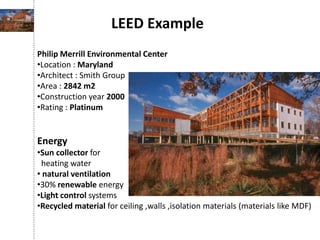
LEED Example
Philip Merrill Environmental Center
•Location : Maryland
•Architect : Smith Group
•Area : 2842 m2
•Construction year 2000
•Rating : Platinum
Energy
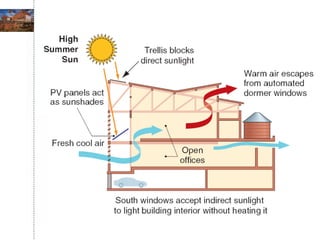
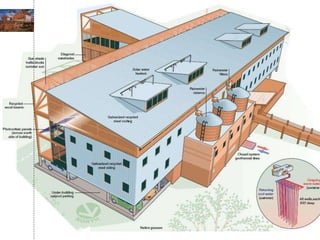
•Sun collector for
heating water
• natural ventilation
•30% renewable energy
•Light control systems
•Recycled material for ceiling ,walls ,isolation materials (materials like MDF)
LEED Example
Water
•Collect rain water for irrigation
Material and Recourses
•R-value 20 for walls (skin design)
•R-value 30 for ceiling
Indoor environment quality
•Monitoring systems for CO2 in indoor environment
BREEAM Example
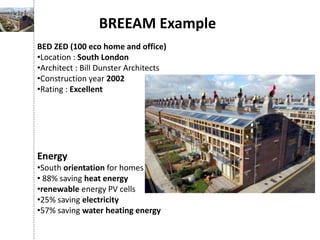
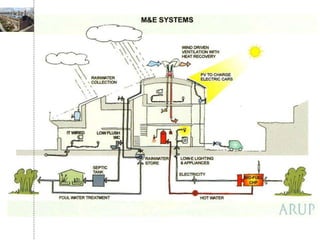
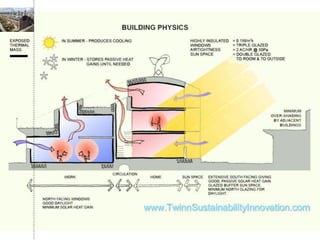
BED ZED (100 eco home and office)
•Location : South London
•Architect : Bill Dunster Architects
•Construction year 2002
•Rating : Excellent
Energy
•South orientation for homes
• 88% saving heat energy
•renewable energy PV cells
•25% saving electricity
•57% saving water heating energy
BREEAM Example
Water
•Water treatment system saving 50% of water resources (recycling)
Material and Recourses
•Using recycled materials 15% and 52% local materials
Indoor environment quality
•Monitoring systems for CO2 in indoor environment
Transportation
•Walking distances
•Cycling facilities
•Saving 65% fuel
Green Pyramid Rating System
Egypt 2009
•Site planning 200
•Energy 325
•Water 90
•Material and resources 65
•Indoor Environmental Quality 150
•Pollution and waste management 140
•Design Innovation 90
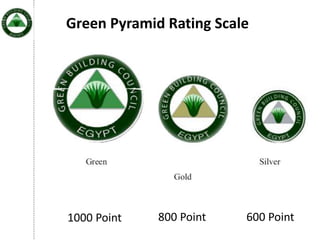
Green Pyramid Rating Scale
600 Point800 Point1000 Point
Results
•Energy – Site – Water – Indoor Environment (all systems)
•Pollution – Transportation - Emission – Management (in some systems)
•Emission/Pollution – Indoor Environment/Health (same meaning)
•Buildings type affect the rating scale
•more points means more sustainable building
•Climatic ,Economical and buildings types causes some changes in
each rating system
•Design phase is very important
*

Green rating systems

  • 1.
  • 2.
    What is GreenRating System How does it work Samples of Green Ratings System Examples of high Rated Buildings Results Problems Q/
  • 3.
  • 4.
    What is GreenRating System? Methodology for rating buildings by using the most important determinants affect the buildings like Energy Water Carbon Emissions Transportation Q/
  • 6.
    BREEAM Building Research EstablishmentEnvironmental Assessment Methodology Building Research Establishment 1990 •Management •Energy Use Emission Rate – Building Envelope Performance –Drying Spaces – Eco Labeled Goods – Internal Lighting – External Lighting •Health and Well-being Sound isolation – Day lighting •Pollution NOX – Renewable Energy - CO •Transportation •Land Use and Ecology Ecological site •Materials Environmental Impact of material – Recycling •Water Internal portable water use – External portable water use •Waste Management
  • 7.
    BREEAM For Administration buildings Management10 Energy Use 17 Health and Well-being 16 Pollution 10 Transportation 13 Land Use and Ecology 10 Materials 11 Water 6 Waste Management 10 BREEAM For Residential buildings Management 10 Energy Use 22 Health and Well-being 14 Pollution 10 Transportation 8 Land Use and Ecology 12 Materials 14 Water 10 Waste Management 10
  • 9.
  • 10.
    LEED The Leadership inEnergy and Environmental Design U.S Green Building Council 1998
  • 11.
    LEED •Sustainable Site 26 SiteSelection – Urban Redevelopment – Alternative Transportation – Reduce the Site Disturbance •Water Management 10 Water Efficient Landscaping – Innovative Wastewater Technologies – Water use Reduction •Energy and Building Skin 35 Fundamental building system – Minimum energy performance – HVAC – Renewable energy – Green power •Materials Use 14 Recycled contents – Building Reuse – Waste Management •Indoor Environment Quality 15 Thermal comfort – Low Emitting Materials – Ventilation Effectiveness – Daylight and views •Design Innovation 6 •Local Environment 4
  • 12.
  • 13.
    Green Star Australia 2003 •Management12 •Indoor Environmental Quality 27 •Energy 24 •Transportation 12 •Water 13 •Design Innovation 5 •Material 20 •Land Use and Ecology 8 •Emissions 14
  • 14.
  • 15.
    CASBEE Comprehensive Assessment Systemfor Building Environmental Efficiency Japan 2004 •Energy Efficiency •Resource Efficiency •Local Environment •Indoor Environment C : BEE of 0 – 0.49 B- : BEE of 0.5 – 0.99 B+ : BEE of 1 – 1.49 A : BEE of 1.5 – 2.99
  • 16.
    Green Globes Canadian standardsassociation Canada 2004 •Project Management 50 •Site 115 •Energy 380 •Indoor Environment 200 •Water 85 •Resources 100 •Emissions 70
  • 17.
  • 18.
    Green Globes Example •Fedralcourt building •Location : Toronto •Architect : Kuwabara Payne Mckenna Blumberg (KPMB) •Area : 20.907m2 •Construction from 2003 to 2006 •Rating : 4 Globes Energy •Best Orientation East-West • integration between natural and artificial light •Using low U-value Glass •Energy metering •Using energy saving systems (lighting – ventilation) •Facilities for bikes riders and near transportation
  • 19.
    Green Globes Example Water •Usingwater saving systems in toilets Material and Recourses •Using local materials (low environmental impact) •Materials that minimize consumption of resource (low maintenance) • building adaptability and disassembly •Facilities for recycling and composting (330 m2 area store) Emissions •As a result of above this building causes low carbon emissions Indoor environment quality •Monitoring systems for CO2 in car parking area •Source control for indoor pollutants •Ventilation system renews 100% of the indoor air •80% of the building use natural light •Thermal comfort
  • 20.
    LEED Example Philip MerrillEnvironmental Center •Location : Maryland •Architect : Smith Group •Area : 2842 m2 •Construction year 2000 •Rating : Platinum Energy •Sun collector for heating water • natural ventilation •30% renewable energy •Light control systems •Recycled material for ceiling ,walls ,isolation materials (materials like MDF)
  • 21.
    LEED Example Water •Collect rainwater for irrigation Material and Recourses •R-value 20 for walls (skin design) •R-value 30 for ceiling Indoor environment quality •Monitoring systems for CO2 in indoor environment
  • 24.
    BREEAM Example BED ZED(100 eco home and office) •Location : South London •Architect : Bill Dunster Architects •Construction year 2002 •Rating : Excellent Energy •South orientation for homes • 88% saving heat energy •renewable energy PV cells •25% saving electricity •57% saving water heating energy
  • 25.
    BREEAM Example Water •Water treatmentsystem saving 50% of water resources (recycling) Material and Recourses •Using recycled materials 15% and 52% local materials Indoor environment quality •Monitoring systems for CO2 in indoor environment Transportation •Walking distances •Cycling facilities •Saving 65% fuel
  • 28.
    Green Pyramid RatingSystem Egypt 2009 •Site planning 200 •Energy 325 •Water 90 •Material and resources 65 •Indoor Environmental Quality 150 •Pollution and waste management 140 •Design Innovation 90
  • 29.
    Green Pyramid RatingScale 600 Point800 Point1000 Point
  • 30.
    Results •Energy – Site– Water – Indoor Environment (all systems) •Pollution – Transportation - Emission – Management (in some systems) •Emission/Pollution – Indoor Environment/Health (same meaning) •Buildings type affect the rating scale •more points means more sustainable building •Climatic ,Economical and buildings types causes some changes in each rating system •Design phase is very important *