Transverse Colon Volvulus
Dr. Y. Madhu Madhava Reddy,
Department of Radio Diagnosis,
SRMC & GH, Nandyal.
Case Report
• A 48yr old male patient, came to the Radiology
department, referred by Surgery department, SRMC &
GH, with complaints of generalised pain, distension of
abdomen and constipation since 5 days. No h/o
vomitings.
• On examination Bowel sounds were sluggish.
• Patient had no past medical history of chronic
constipation, psychiatric disease, neurologic disease, or
abdominal surgery. All the lab reports were normal.
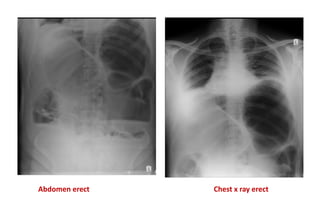
• The patient was requested X- ray of Abdomen erect.
Abdomen erect Chest x ray erect
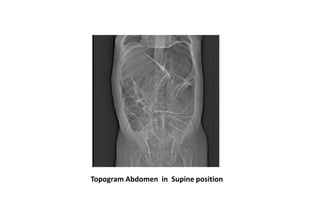
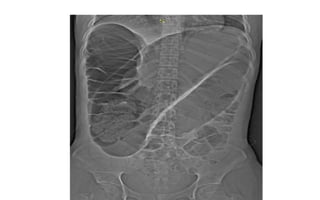
Topogram Abdomen in Supine position
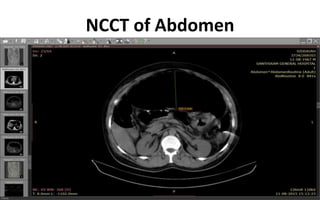
NCCT of Abdomen
Intra Operative Findings
Transverse colon volvulus was confirmed during Surgery
Discussion
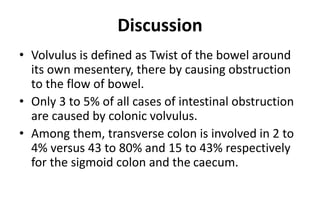
• Volvulus is defined as Twist of the bowel around
its own mesentery, there by causing obstruction
to the flow of bowel.
• Only 3 to 5% of all cases of intestinal obstruction
are caused by colonic volvulus.
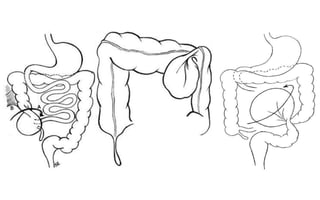
• Among them, transverse colon is involved in 2 to
4% versus 43 to 80% and 15 to 43% respectively
for the sigmoid colon and the caecum.
Caecal Volvulus Sigmoid Volvulus
Forms of presentation
• The literature describes two forms of
presentation; acute fulminating and subacute
progressive.
• Acute fulminating with sudden, severe pain,
little distension and rapid development of shock.
More common in younger patients.
• Subacute progessive with cramping, vomiting,
distension, and gradual deterioration. More
common in Older individuals.
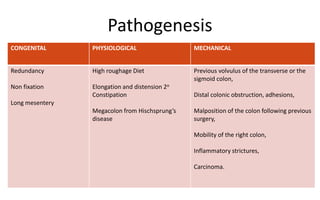
Pathogenesis
CONGENITAL PHYSIOLOGICAL MECHANICAL
Redundancy
Non fixation
Long mesentery
High roughage Diet
Elongation and distension 2o
Constipation
Megacolon from Hischsprung’s
disease
Previous volvulus of the transverse or the
sigmoid colon,
Distal colonic obstruction, adhesions,
Malposition of the colon following previous
surgery,
Mobility of the right colon,
Inflammatory strictures,
Carcinoma.
• Volvulus of the transverse colon is a rare
cause of intestinal obstruction.
• To our knowledge, only 75 cases have been
reported in the English literature to date.
• No recent reviews of transverse colon volvulus
in adult patients have been published in the
surgical literature since 1983.
• Transverse colon volvulus most often occurs in
the second and third decades of life with an
additional peak in seventh decade.
• Women outnumber men 2:1.
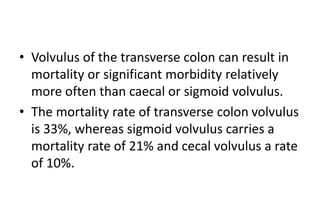
• Volvulus of the transverse colon can result in
mortality or significant morbidity relatively
more often than caecal or sigmoid volvulus.
• The mortality rate of transverse colon volvulus
is 33%, whereas sigmoid volvulus carries a
mortality rate of 21% and cecal volvulus a rate
of 10%.
• Twisting in volvulus usually occurs along the
mesenteric axis of the bowel, resulting in
venous obstruction and eventually arterial
compromise.
• Compression of the duodenojejunal junction
at the root of its mesentery may cause severe
vomiting in this condition.
• Volvulus of sigmoid colon is decompressed
colonoscopically, but where as volvulus of the
transverse colon has to be detorsed surgically.
• Resection of the affected segment constitutes
the treatment of choice to prevent
recurrence.
Another similar case
• Recently we observed similar findings as in
previous case in a 16 year old female.
• Patient present with complaints of Pain and
distension of abdomen.
Liver overlap sign
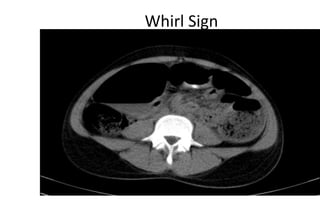
Whirl Sign
Conclusion
• Transverse colon volvulus is very rare and causes
high risk of mortality and morbidity than sigmoid
and caecal volvulus.
• Diagnosis can be challenging and the effective
management remains controversial.
• Prompt recognition with emergency intervention
constitutes the key to successful outcome.
References
• Text book of gastrointestinal Radiology
• Text book of Current Surgical theraphy
• The Radiological Examination of the Colon:
Practical Diagnosis By D.J. Miller, Jovitas
Skucas
• The ASCRS Textbook of Colon and Rectal
Surgery: Second Edition

Transverse colon volvulus

  • 1.
    Transverse Colon Volvulus Dr.Y. Madhu Madhava Reddy, Department of Radio Diagnosis, SRMC & GH, Nandyal.
  • 2.
    Case Report • A48yr old male patient, came to the Radiology department, referred by Surgery department, SRMC & GH, with complaints of generalised pain, distension of abdomen and constipation since 5 days. No h/o vomitings. • On examination Bowel sounds were sluggish. • Patient had no past medical history of chronic constipation, psychiatric disease, neurologic disease, or abdominal surgery. All the lab reports were normal. • The patient was requested X- ray of Abdomen erect.
  • 3.
  • 4.
    Topogram Abdomen inSupine position
  • 5.
  • 7.
    Intra Operative Findings Transversecolon volvulus was confirmed during Surgery
  • 8.
    Discussion • Volvulus isdefined as Twist of the bowel around its own mesentery, there by causing obstruction to the flow of bowel. • Only 3 to 5% of all cases of intestinal obstruction are caused by colonic volvulus. • Among them, transverse colon is involved in 2 to 4% versus 43 to 80% and 15 to 43% respectively for the sigmoid colon and the caecum.
  • 10.
  • 11.
    Forms of presentation •The literature describes two forms of presentation; acute fulminating and subacute progressive. • Acute fulminating with sudden, severe pain, little distension and rapid development of shock. More common in younger patients. • Subacute progessive with cramping, vomiting, distension, and gradual deterioration. More common in Older individuals.
  • 12.
    Pathogenesis CONGENITAL PHYSIOLOGICAL MECHANICAL Redundancy Nonfixation Long mesentery High roughage Diet Elongation and distension 2o Constipation Megacolon from Hischsprung’s disease Previous volvulus of the transverse or the sigmoid colon, Distal colonic obstruction, adhesions, Malposition of the colon following previous surgery, Mobility of the right colon, Inflammatory strictures, Carcinoma.
  • 13.
    • Volvulus ofthe transverse colon is a rare cause of intestinal obstruction. • To our knowledge, only 75 cases have been reported in the English literature to date. • No recent reviews of transverse colon volvulus in adult patients have been published in the surgical literature since 1983.
  • 14.
    • Transverse colonvolvulus most often occurs in the second and third decades of life with an additional peak in seventh decade. • Women outnumber men 2:1.
  • 15.
    • Volvulus ofthe transverse colon can result in mortality or significant morbidity relatively more often than caecal or sigmoid volvulus. • The mortality rate of transverse colon volvulus is 33%, whereas sigmoid volvulus carries a mortality rate of 21% and cecal volvulus a rate of 10%.
  • 16.
    • Twisting involvulus usually occurs along the mesenteric axis of the bowel, resulting in venous obstruction and eventually arterial compromise. • Compression of the duodenojejunal junction at the root of its mesentery may cause severe vomiting in this condition.
  • 17.
    • Volvulus ofsigmoid colon is decompressed colonoscopically, but where as volvulus of the transverse colon has to be detorsed surgically. • Resection of the affected segment constitutes the treatment of choice to prevent recurrence.
  • 18.
    Another similar case •Recently we observed similar findings as in previous case in a 16 year old female. • Patient present with complaints of Pain and distension of abdomen.
  • 20.
  • 21.
  • 23.
    Conclusion • Transverse colonvolvulus is very rare and causes high risk of mortality and morbidity than sigmoid and caecal volvulus. • Diagnosis can be challenging and the effective management remains controversial. • Prompt recognition with emergency intervention constitutes the key to successful outcome.
  • 24.
    References • Text bookof gastrointestinal Radiology • Text book of Current Surgical theraphy • The Radiological Examination of the Colon: Practical Diagnosis By D.J. Miller, Jovitas Skucas • The ASCRS Textbook of Colon and Rectal Surgery: Second Edition