B Y : L I N G G A W A S T U
D I G I T A L S T R A T E G I S T
THE DIFFERENCE
BETWEEN
STRATEGY AND TACTICS 
The terms tactic and strategy are often
confused: tactics are the actual means used
to gain an objective, while strategy is the
overall campaign plan, which may involve
complex operational patterns, activity, and
decision-making that govern tactical
execution.
"
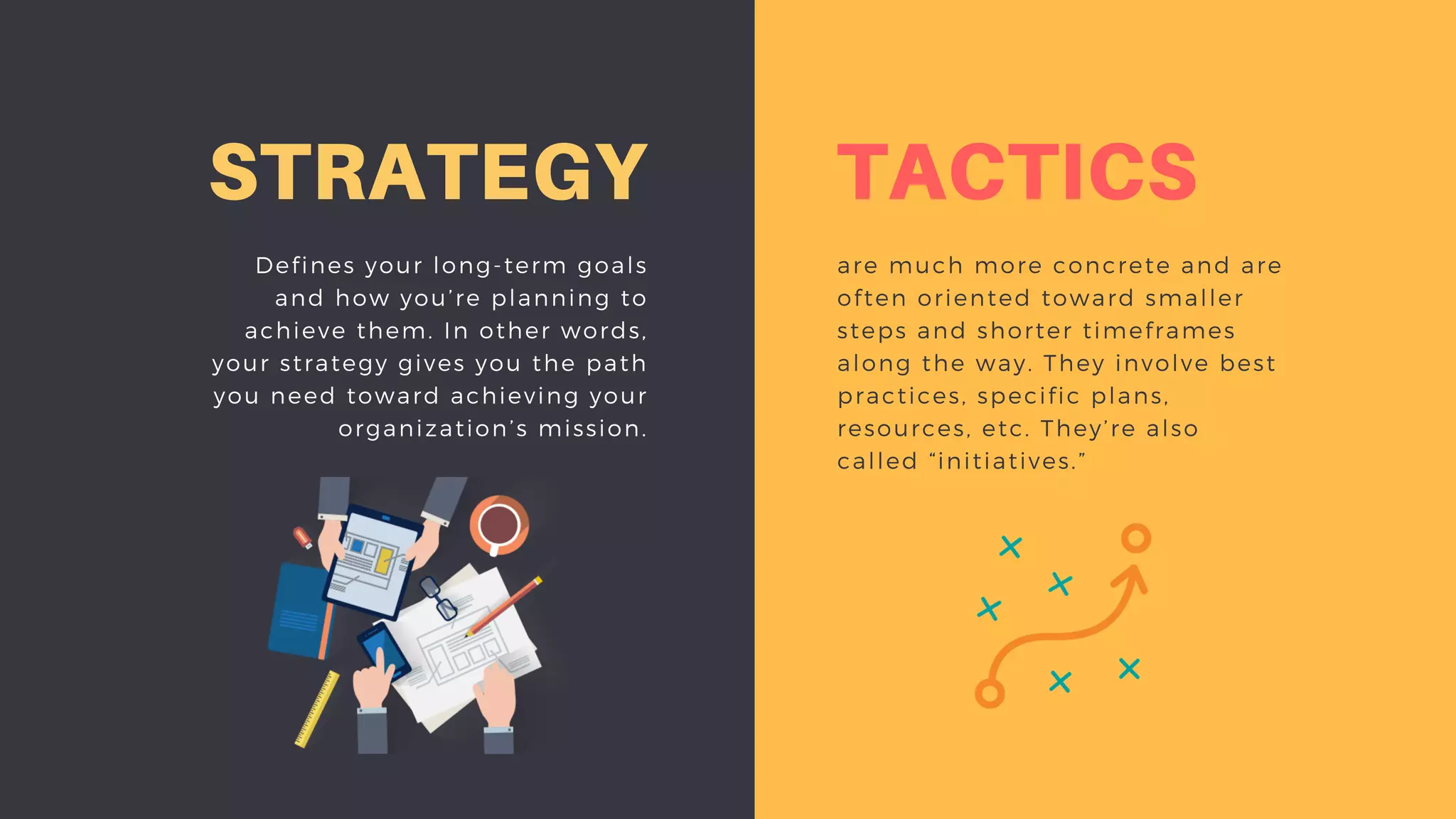
STRATEGY
Defines your long-term goals
and how you’re planning to
achieve them. In other words,
your strategy gives you the path
you need toward achieving your
organization’s mission.
TACTICS
are much more concrete and are
often oriented toward smaller
steps and shorter timeframes
along the way. They involve best
practices, specific plans,
resources, etc. They’re also
called “initiatives.”
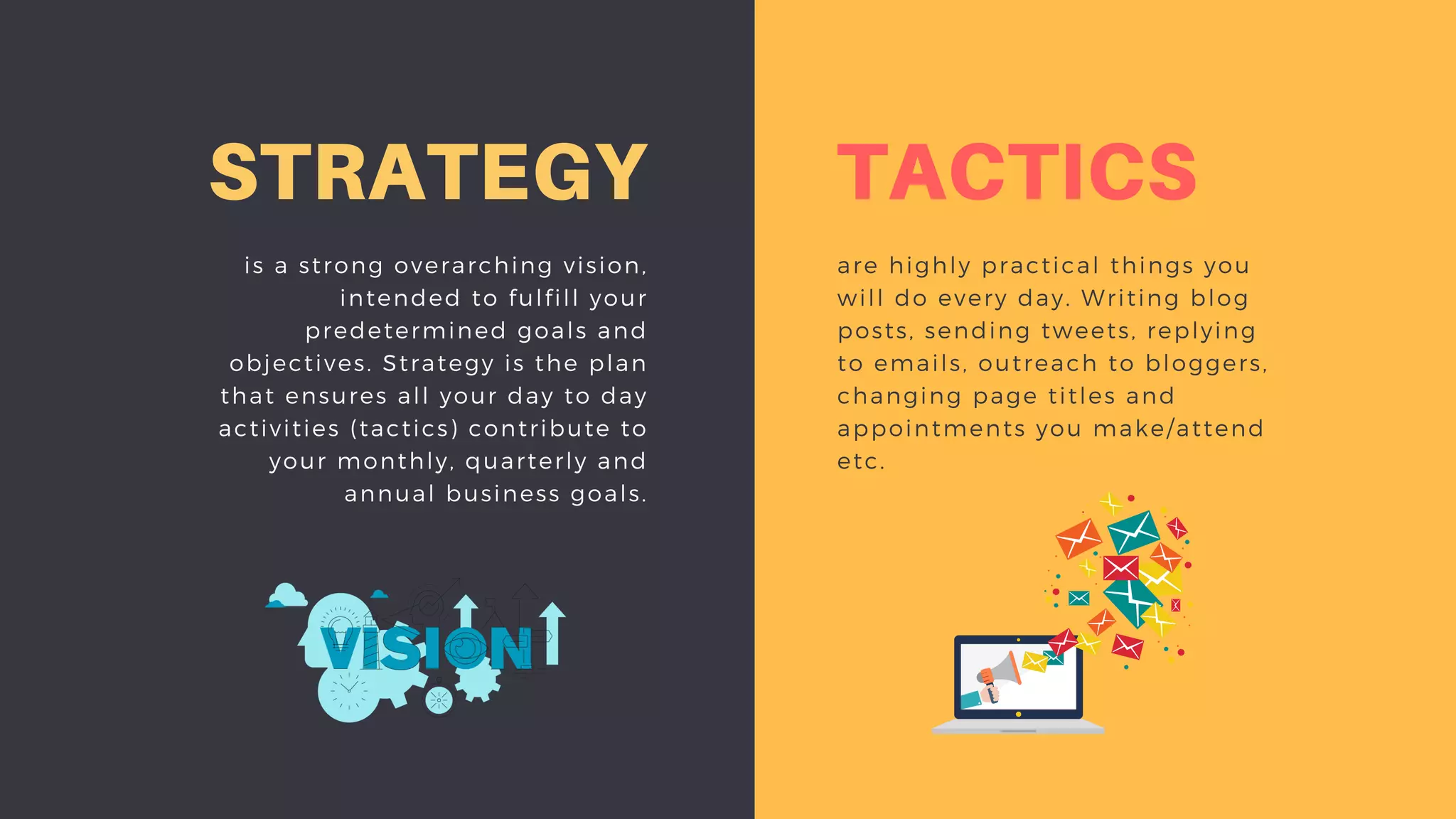
STRATEGY
is a strong overarching vision,
intended to fulfill your
predetermined goals and
objectives. Strategy is the plan
that ensures all your day to day
activities (tactics) contribute to
your monthly, quarterly and
annual business goals.
TACTICS
are highly practical things you
will do every day. Writing blog
posts, sending tweets, replying
to emails, outreach to bloggers,
changing page titles and
appointments you make/attend
etc.
S T R A T E G Y I S M O R E
C O N C R E T E A N D L O N G - T E R M
— B U T Y O U R T A C T I C S C A N
C H A N G E B A S E D O N H O W
S U C C E S S F U L Y O U R
S T R A T E G Y I S .  
NOTE THAT
I F Y O U R M A R K E T I N G
S T R A T E G Y I S T O I M P R O V E
Y O U R I N F L U E N C E A N D
P E R F O R M A N C E I N S O C I A L
M E D I A , T H E N Y O U T A C T I C S
M I G H T B E T O D E T E R M I N E
W H A T C H A N N E L I S B E S T
F O R Y O U R B U S I N E S S A N D
W H A T M E S S A G E S W O R K
B E S T F O R Y O U R
A U D I E N C E S .
THROUGH SMART GOALS
I N O R D E R T O R E A C H Y O U R S T R A T E G I C
O B J E C T I V E S , Y O U N E E D T O S E T G O A L S –
S H O R T T E R M , M O R E I M M E D I A T E
M I L E S T O N E S T H A T S T R E T C H Y O U R
C O M P A N Y T O R E A C H I T S F U L L P O T E N T I A L .
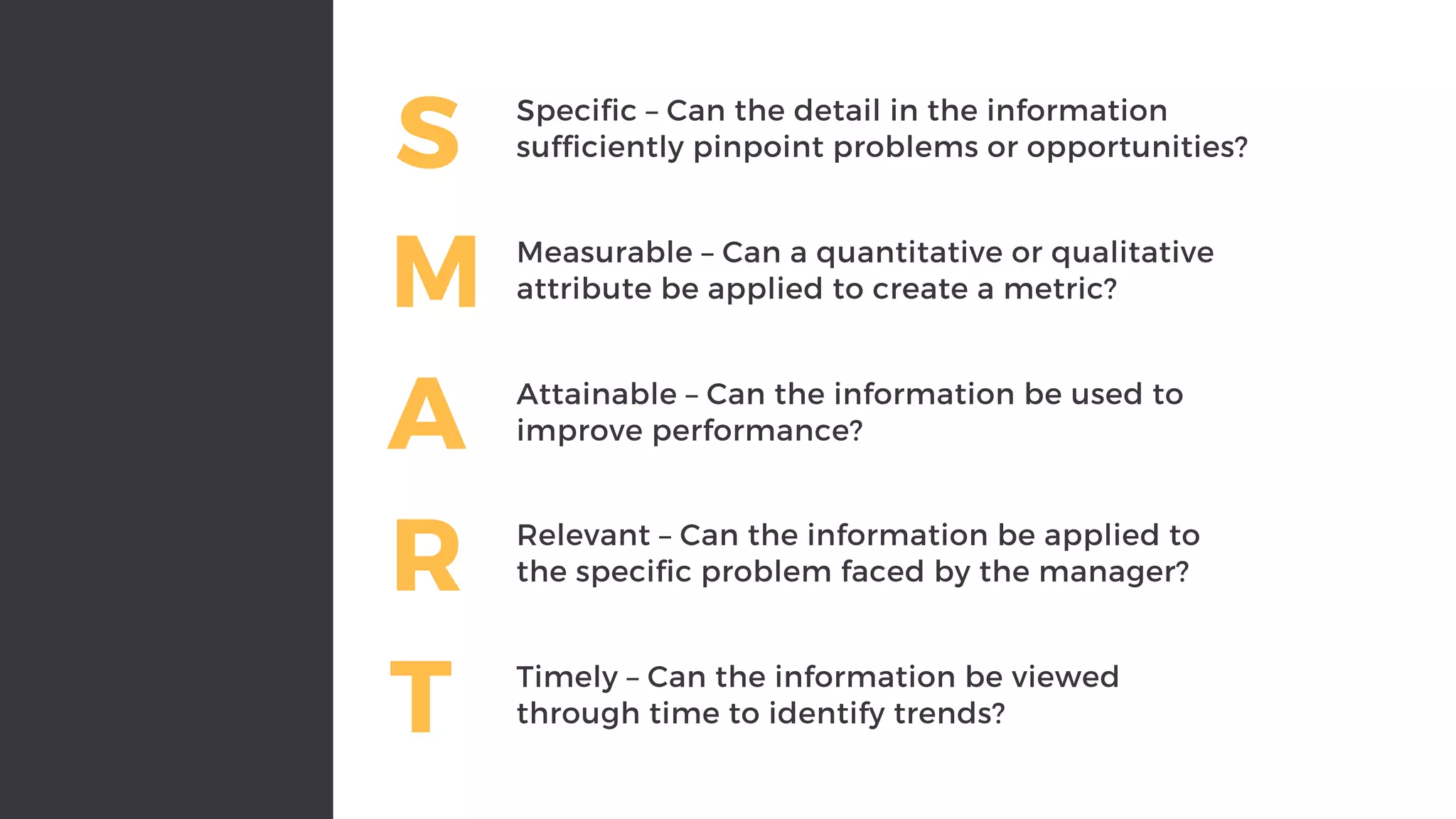
S Specific – Can the detail in the information
sufficiently pinpoint problems or opportunities?
M Measurable – Can a quantitative or qualitative
attribute be applied to create a metric?
A Attainable – Can the information be used to
improve performance?
R Relevant – Can the information be applied to
the specific problem faced by the manager?
T Timely – Can the information be viewed
through time to identify trends?
EXAMPLE
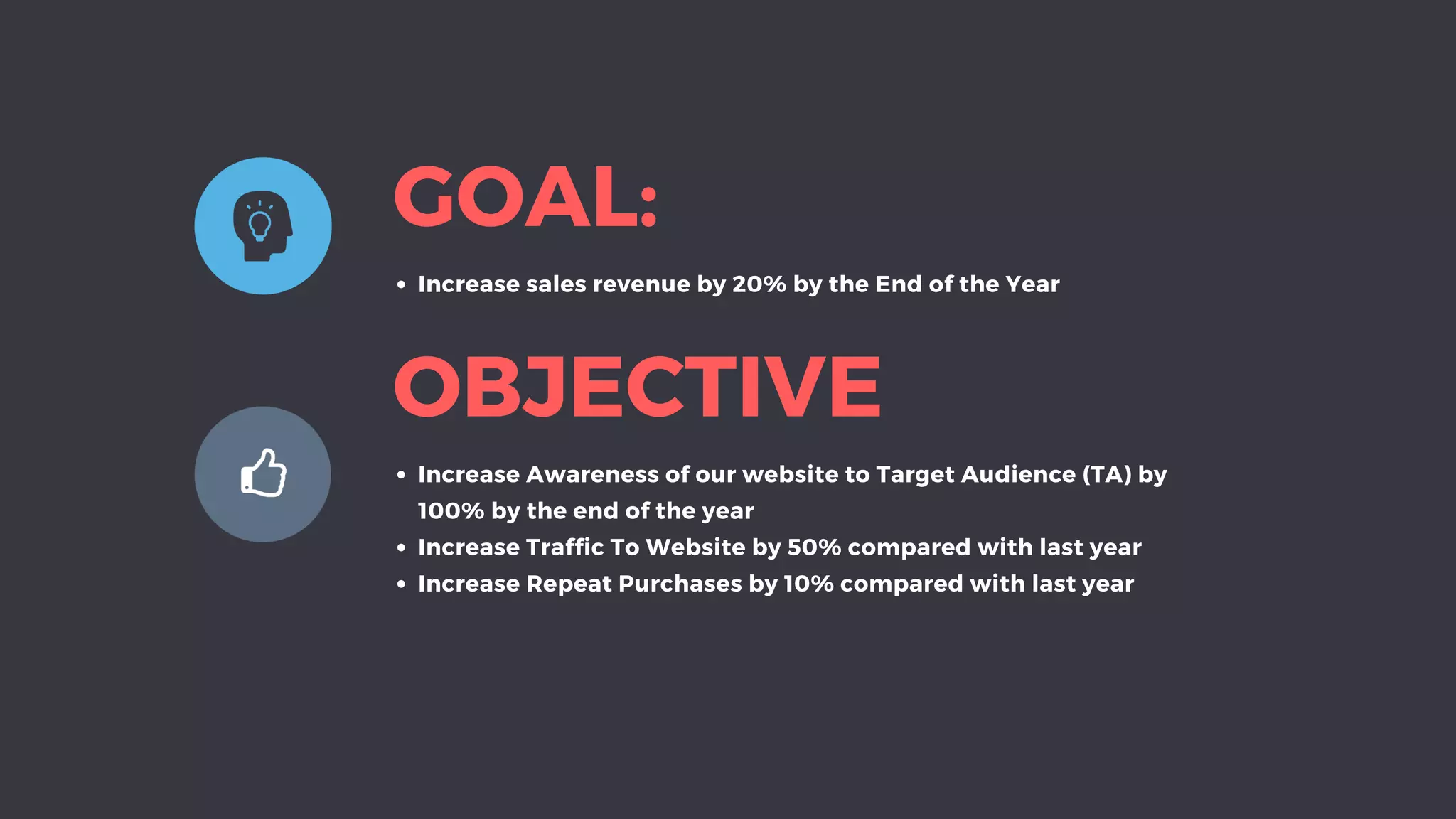
GOAL:
Increase sales revenue by 20% by the End of the Year
OBJECTIVE
Increase Awareness of our website to Target Audience (TA) by
100% by the end of the year
Increase Traffic To Website by 50% compared with last year
Increase Repeat Purchases by 10% compared with last year
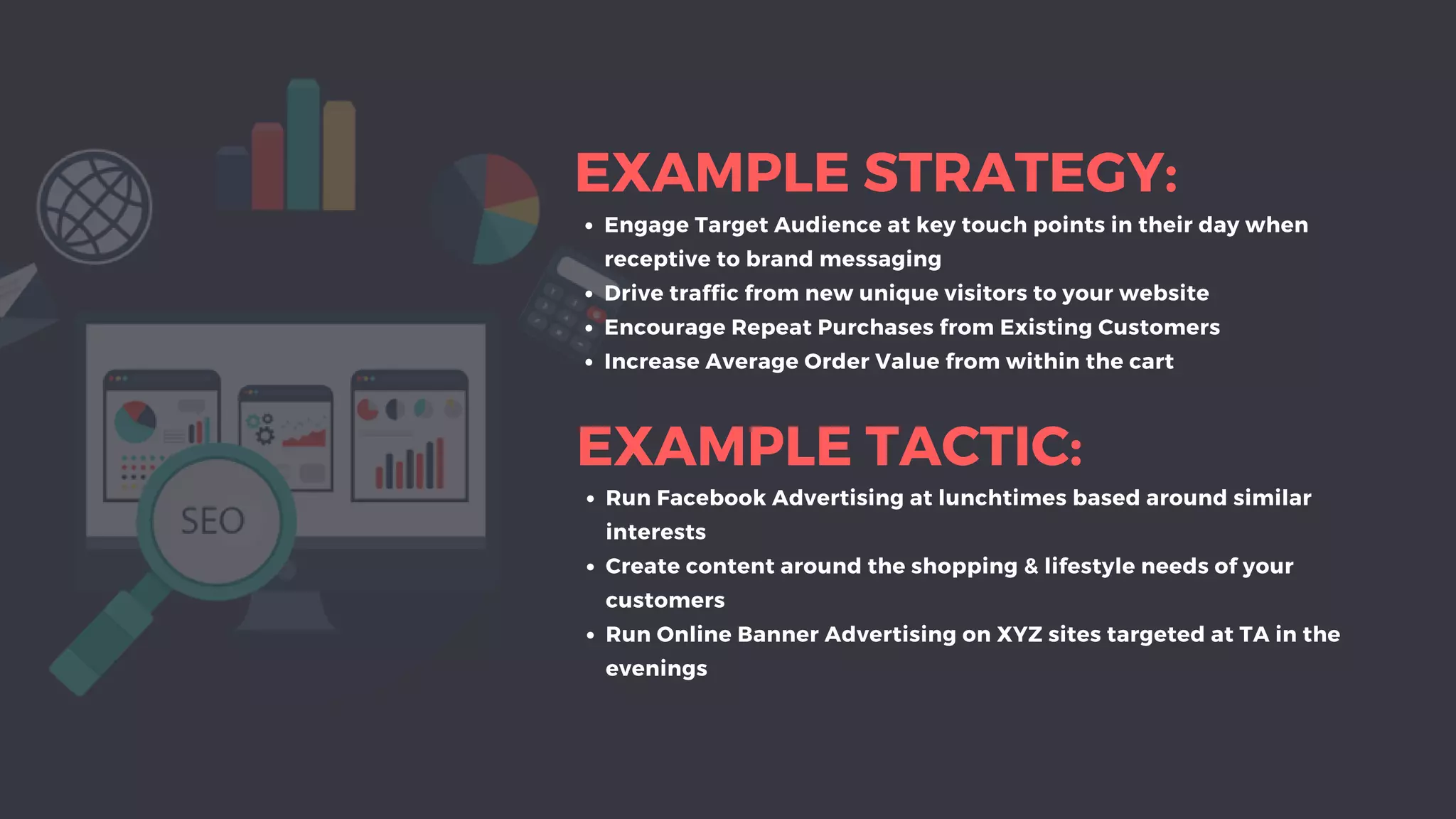
EXAMPLE STRATEGY:
Engage Target Audience at key touch points in their day when
receptive to brand messaging
Drive traffic from new unique visitors to your website
Encourage Repeat Purchases from Existing Customers
Increase Average Order Value from within the cart
EXAMPLE TACTIC:
Run Facebook Advertising at lunchtimes based around similar
interests
Create content around the shopping & lifestyle needs of your
customers
Run Online Banner Advertising on XYZ sites targeted at TA in the
evenings
THANK'S FOR
READING!

The Difference Between Strategy and Tactics

  • 1.
    B Y :L I N G G A W A S T U D I G I T A L S T R A T E G I S T THE DIFFERENCE BETWEEN STRATEGY AND TACTICS 
  • 2.
    The terms tacticand strategy are often confused: tactics are the actual means used to gain an objective, while strategy is the overall campaign plan, which may involve complex operational patterns, activity, and decision-making that govern tactical execution. "
  • 3.
    STRATEGY Defines your long-termgoals and how you’re planning to achieve them. In other words, your strategy gives you the path you need toward achieving your organization’s mission. TACTICS are much more concrete and are often oriented toward smaller steps and shorter timeframes along the way. They involve best practices, specific plans, resources, etc. They’re also called “initiatives.”
  • 4.
    STRATEGY is a strongoverarching vision, intended to fulfill your predetermined goals and objectives. Strategy is the plan that ensures all your day to day activities (tactics) contribute to your monthly, quarterly and annual business goals. TACTICS are highly practical things you will do every day. Writing blog posts, sending tweets, replying to emails, outreach to bloggers, changing page titles and appointments you make/attend etc.
  • 5.
    S T RA T E G Y I S M O R E C O N C R E T E A N D L O N G - T E R M — B U T Y O U R T A C T I C S C A N C H A N G E B A S E D O N H O W S U C C E S S F U L Y O U R S T R A T E G Y I S .   NOTE THAT
  • 6.
    I F YO U R M A R K E T I N G S T R A T E G Y I S T O I M P R O V E Y O U R I N F L U E N C E A N D P E R F O R M A N C E I N S O C I A L M E D I A , T H E N Y O U T A C T I C S M I G H T B E T O D E T E R M I N E W H A T C H A N N E L I S B E S T F O R Y O U R B U S I N E S S A N D W H A T M E S S A G E S W O R K B E S T F O R Y O U R A U D I E N C E S .
  • 7.
    THROUGH SMART GOALS IN O R D E R T O R E A C H Y O U R S T R A T E G I C O B J E C T I V E S , Y O U N E E D T O S E T G O A L S – S H O R T T E R M , M O R E I M M E D I A T E M I L E S T O N E S T H A T S T R E T C H Y O U R C O M P A N Y T O R E A C H I T S F U L L P O T E N T I A L .
  • 8.
    S Specific –Can the detail in the information sufficiently pinpoint problems or opportunities? M Measurable – Can a quantitative or qualitative attribute be applied to create a metric? A Attainable – Can the information be used to improve performance? R Relevant – Can the information be applied to the specific problem faced by the manager? T Timely – Can the information be viewed through time to identify trends?
  • 9.
  • 10.
    GOAL: Increase sales revenueby 20% by the End of the Year OBJECTIVE Increase Awareness of our website to Target Audience (TA) by 100% by the end of the year Increase Traffic To Website by 50% compared with last year Increase Repeat Purchases by 10% compared with last year
  • 11.
    EXAMPLE STRATEGY: Engage TargetAudience at key touch points in their day when receptive to brand messaging Drive traffic from new unique visitors to your website Encourage Repeat Purchases from Existing Customers Increase Average Order Value from within the cart EXAMPLE TACTIC: Run Facebook Advertising at lunchtimes based around similar interests Create content around the shopping & lifestyle needs of your customers Run Online Banner Advertising on XYZ sites targeted at TA in the evenings
  • 12.