The LEGaTO project has received funding from the European Union's Horizon 2020
research and innovation programme under the grant agreement No 780681
LEGaTO:
Machine Learning Use Case
AI4EU Café Webinar
Hans Salomonsson
CEO and co-founder of EmbeDL
28/October/2020
AI4EU Cafe
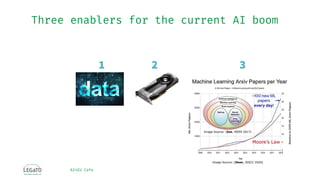
Three enablers for the current AI boom
1 2 3
AI4EU Cafe
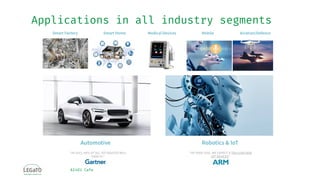
Applications in all industry segments
Automotive
Robotics & IoT
Medical Devices Mobile Aviation/DefenceSmart HomeSmart Factory
“BY YEAR 2035, WE EXPECT A TRILLION NEW
IOT DEVICES”
“IN 2022, 80% OF ALL IOT DEVICES WILL
HAVE AI.”
Automotive
AI4EU Cafe
Self-driving Cars have an Energy Problem
Life Cycle Assessment of Connected and Automated Vehicles: Sensing and Computing Subsystem and Vehicle Level Effects
James H. Gawron, Gregory A. Keoleian, Robert D. De Kleine, Timothy J. Wallington, and Hyung Chul Kim
Environmental Science & Technology 2018 52 (5), 3249-3256
Researchers at University of Michigan estimate that
Autonomous Vehicles will increase energy consumption
and green house gases by 3–20% due to increase in power
consumption, weight, drag, and data transmission.
AI4EU Cafe
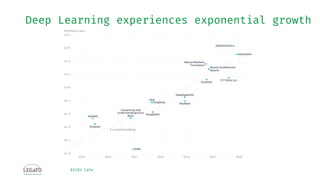
Deep Learning experiences exponential growth
AI4EU Cafe
Lack of comparative studies
Source: Blalock, D., Ortiz, J.J.G., Frankle, J. and Guttag, J., 2020. What is the
State of Neural Network Pruning?. arXiv preprint arXiv:2003.03033.
AI4EU Cafe
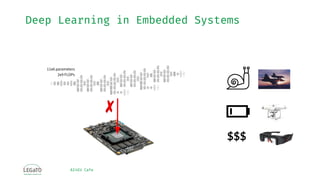
Deep Learning in Embedded Systems
$$$•
•
•
11e6 parameters
2e9 FLOPs
AI4EU Cafe
Deep Learning in Embedded Systems
1. ML IS A FAST GROWING FIELD AND DL OPTIMIZATION IS A HIGHLY SPECIALIZED NICHE, ORTHOGONAL TO MODEL DEVELOPMENT
2. NEED FOR SYSTEMATIC EVALUATION OF METHODS
3. NEED FOR OPTIMALLY COMBINING AND UNIFYING METHODS
Efficient Deep Learning In Automotive and IoT
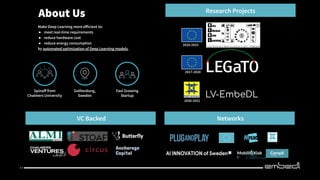
About Us
Make Deep Learning more efficient to:
● meet real-time requirements
● reduce hardware cost
● reduce energy consumption
by automated optimization of Deep Learning models.
Spinoff from
Chalmers University
Gothenburg,
Sweden
Fast Growing
Startup
Anchorage
Capital
VC Backed
2017-2020
2020-2023
LV-EmbeDL2020-2021
Research Projects
Networks
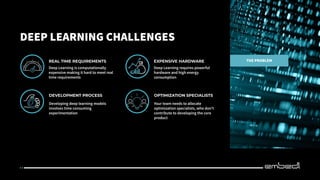
DEEP LEARNING CHALLENGES
THE PROBLEM
Developing deep learning models
involves time consuming
experimentation
DEVELOPMENT PROCESS
Deep Learning is computationally
expensive making it hard to meet real
time requirements
REAL TIME REQUIREMENTS
Your team needs to allocate
optimization specialists, who don’t
contribute to developing the core
product
OPTIMIZATION SPECIALISTS
Deep Learning requires powerful
hardware and high energy
consumption
EXPENSIVE HARDWARE
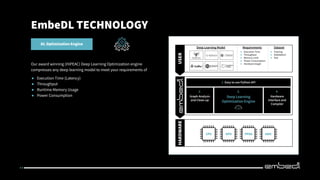
EmbeDL TECHNOLOGY
Our award winning (HiPEAC) Deep Learning Optimization engine
compresses any deep learning model to meet your requirements of
● Execution Time (Latency)
● Throughput
● Runtime Memory Usage
● Power Consumption
DL Optimization Engine
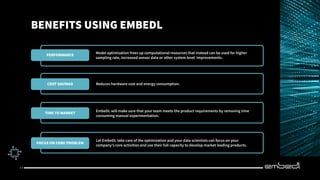
BENEFITS USING EMBEDL
PERFORMANCE
COST SAVINGS
TIME TO MARKET
FOCUS ON CORE PROBLEM
EmbeDL will make sure that your team meets the product requirements by removing time
consuming manual experimentation.
Let EmbeDL take care of the optimization and your data scientists can focus on your
company’s core activities and use their full capacity to develop market leading products.
Model optimization frees up computational resources that instead can be used for higher
sampling rate, increased sensor data or other system level improvements.
Reduces hardware cost and energy consumption.
Benchmarks, Energy
EmbeDL improves energy efficiency up to 11x compared to hardware vendor’s deep learning inference optimization tools.
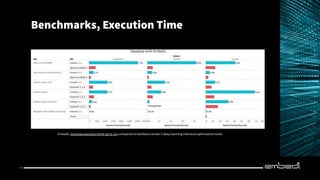
Benchmarks, Execution Time
EmbeDL improves execution time up to 11x compared to hardware vendor’s deep learning inference optimization tools.
Demo
● EmbeDL has been spun-out as a startup with private funding
● Our mission is to make Deep Learning efficient in Automotive and AIoT
● EmbeDL’s optimization approach bridges DL SW tools and HW platforms
● By using optimization by EmbeDL you can:
○ Reduce energy consumption
○ Reduce hardware costs
○ Free up time of internal resources to focus on the core problem
○ Faster time to market
SUMMARY
THE END
THANK YOU
Hans Salomonsson
CEO
hans@embedl.ai

LEGaTO: Machine Learning Use Case

  • 1.
    The LEGaTO projecthas received funding from the European Union's Horizon 2020 research and innovation programme under the grant agreement No 780681 LEGaTO: Machine Learning Use Case AI4EU Café Webinar Hans Salomonsson CEO and co-founder of EmbeDL 28/October/2020
  • 2.
    AI4EU Cafe Three enablersfor the current AI boom 1 2 3
  • 3.
    AI4EU Cafe Applications inall industry segments Automotive Robotics & IoT Medical Devices Mobile Aviation/DefenceSmart HomeSmart Factory “BY YEAR 2035, WE EXPECT A TRILLION NEW IOT DEVICES” “IN 2022, 80% OF ALL IOT DEVICES WILL HAVE AI.” Automotive
  • 4.
    AI4EU Cafe Self-driving Carshave an Energy Problem Life Cycle Assessment of Connected and Automated Vehicles: Sensing and Computing Subsystem and Vehicle Level Effects James H. Gawron, Gregory A. Keoleian, Robert D. De Kleine, Timothy J. Wallington, and Hyung Chul Kim Environmental Science & Technology 2018 52 (5), 3249-3256 Researchers at University of Michigan estimate that Autonomous Vehicles will increase energy consumption and green house gases by 3–20% due to increase in power consumption, weight, drag, and data transmission.
  • 5.
    AI4EU Cafe Deep Learningexperiences exponential growth
  • 6.
    AI4EU Cafe Lack ofcomparative studies Source: Blalock, D., Ortiz, J.J.G., Frankle, J. and Guttag, J., 2020. What is the State of Neural Network Pruning?. arXiv preprint arXiv:2003.03033.
  • 7.
    AI4EU Cafe Deep Learningin Embedded Systems $$$• • • 11e6 parameters 2e9 FLOPs
  • 8.
    AI4EU Cafe Deep Learningin Embedded Systems 1. ML IS A FAST GROWING FIELD AND DL OPTIMIZATION IS A HIGHLY SPECIALIZED NICHE, ORTHOGONAL TO MODEL DEVELOPMENT 2. NEED FOR SYSTEMATIC EVALUATION OF METHODS 3. NEED FOR OPTIMALLY COMBINING AND UNIFYING METHODS
  • 9.
    Efficient Deep LearningIn Automotive and IoT
  • 10.
    About Us Make DeepLearning more efficient to: ● meet real-time requirements ● reduce hardware cost ● reduce energy consumption by automated optimization of Deep Learning models. Spinoff from Chalmers University Gothenburg, Sweden Fast Growing Startup Anchorage Capital VC Backed 2017-2020 2020-2023 LV-EmbeDL2020-2021 Research Projects Networks
  • 11.
    DEEP LEARNING CHALLENGES THEPROBLEM Developing deep learning models involves time consuming experimentation DEVELOPMENT PROCESS Deep Learning is computationally expensive making it hard to meet real time requirements REAL TIME REQUIREMENTS Your team needs to allocate optimization specialists, who don’t contribute to developing the core product OPTIMIZATION SPECIALISTS Deep Learning requires powerful hardware and high energy consumption EXPENSIVE HARDWARE
  • 12.
    EmbeDL TECHNOLOGY Our awardwinning (HiPEAC) Deep Learning Optimization engine compresses any deep learning model to meet your requirements of ● Execution Time (Latency) ● Throughput ● Runtime Memory Usage ● Power Consumption DL Optimization Engine
  • 13.
    BENEFITS USING EMBEDL PERFORMANCE COSTSAVINGS TIME TO MARKET FOCUS ON CORE PROBLEM EmbeDL will make sure that your team meets the product requirements by removing time consuming manual experimentation. Let EmbeDL take care of the optimization and your data scientists can focus on your company’s core activities and use their full capacity to develop market leading products. Model optimization frees up computational resources that instead can be used for higher sampling rate, increased sensor data or other system level improvements. Reduces hardware cost and energy consumption.
  • 14.
    Benchmarks, Energy EmbeDL improvesenergy efficiency up to 11x compared to hardware vendor’s deep learning inference optimization tools.
  • 15.
    Benchmarks, Execution Time EmbeDLimproves execution time up to 11x compared to hardware vendor’s deep learning inference optimization tools.
  • 16.
  • 17.
    ● EmbeDL hasbeen spun-out as a startup with private funding ● Our mission is to make Deep Learning efficient in Automotive and AIoT ● EmbeDL’s optimization approach bridges DL SW tools and HW platforms ● By using optimization by EmbeDL you can: ○ Reduce energy consumption ○ Reduce hardware costs ○ Free up time of internal resources to focus on the core problem ○ Faster time to market SUMMARY THE END
  • 18.