Name:
Mohd. Airil Solehan bin Johari
Supervisor :
Dr. Wan Aezwani
Wan Abu Bakar
No.Matric :
043911
Medic: AR
Methodology Propose
© 2018 Slidefabric.com All rights reserved. S L I D E 2
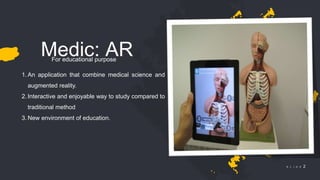
1. An application that combine medical science and
augmented reality.
2. Interactive and enjoyable way to study compared to
traditional method
3. New environment of education.
Medic: ARFor educational purpose
© 2018 Slidefabric.com All rights reserved. S L I D E 3
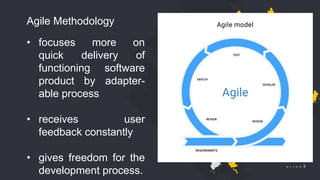
Agile Methodology
• focuses more on
quick delivery of
functioning software
product by adapter-
able process
• receives user
feedback constantly
• gives freedom for the
development process.
© 2018 Slidefabric.com All rights reserved. S L I D E 4
Agile model has several principles which are
1.Individual and Interactions
2.Working Software
3.End-User Collaboration
4.Responding-to-Changes
© 2018 Slidefabric.com All rights reserved. S L I D E 5
Agile Methodology Software
Development Life Cycle
(Agile SDLC)
Planning /
Analysis Phase
• Content of Medic: AR
• Analysis Previous App
1
© 2018 Slidefabric.com All rights reserved. S L I D E 6
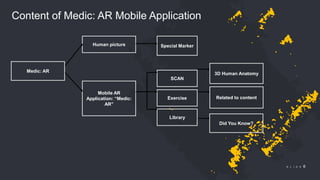
Content of Medic: AR Mobile Application
Medic: AR
Human picture
Mobile AR
Application: “Medic:
AR”
Special Marker
SCAN
Exercise
Library
Did You Know?
Related to content
3D Human Anatomy
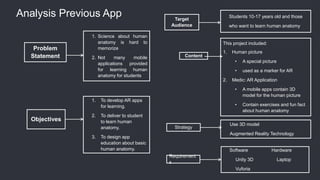
Analysis Previous App
Problem
Statement
1. Science about human
anatomy is hard to
memorize
2. Not many mobile
applications provided
for learning human
anatomy for students
Objectives
1. To develop AR apps
for learning.
2. To deliver to student
to learn human
anatomy.
3. To design app
education about basic
human anatomy.
Target
Audience
Students 10-17 years old and those
who want to learn human anatomy
Content
This project included:
1. Human picture
• A special picture
• used as a marker for AR
2. Medic: AR Application
• A mobile apps contain 3D
model for the human picture
• Contain exercises and fun fact
about human anatomy
Strategy
Use 3D model
Augmented Reality Technology
Requirement
s
Software Hardware
Unity 3D Laptop
Vuforia
© 2018 Slidefabric.com All rights reserved. S L I D E 8
Agile Methodology Software
Development Life Cycle
(Agile SDLC)
Design
Phase
• Conceptual Model
• Flowchart for Medic: AR
• Storyboard
2
© 2018 Slidefabric.com All rights reserved. S L I D E 9
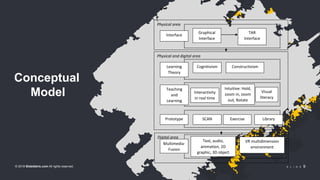
Physical area
Digital area

Interface
Physical and digital area
Graphical
Interface
TAR
Interface
Learning
Theory
Cognitivism Constructivism
Teaching
and
Learning
Approach
Interactivity
in real time
Intuitive: Hold,
zoom in, zoom
out, Rotate
Multimedia-
Fusion
Text, audio,
animation, 2D
graphic, 3D object
VR multidimension
environment
Prototype SCAN Exercise Library
Visual
literacy
Conceptual
Model
© 2018 Slidefabric.com All rights reserved. S L I D E 10
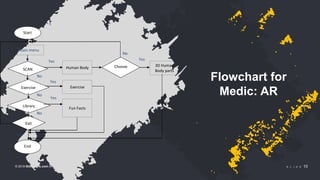
No
Start
Main menu
SCAN
Exercise
Library
Exit
End
Human Body
Exercise
Fun Facts
Choose
letter
3D Human
Body parts
Yes
No
Yes
Yes
Yes
No
No
Yes
Flowchart for
Medic: AR
© 2018 Slidefabric.com All rights reserved. S L I D E 11
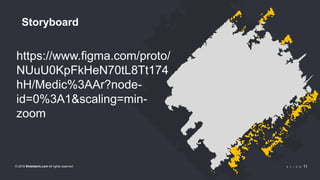
Storyboard
https://www.figma.com/proto/
NUuU0KpFkHeN70tL8Tt174
hH/Medic%3AAr?node-
id=0%3A1&scaling=min-
zoom
© 2018 Slidefabric.com All rights reserved. S L I D E 12
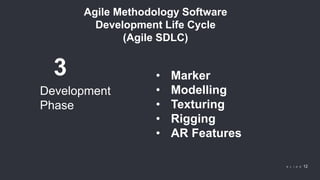
Agile Methodology Software
Development Life Cycle
(Agile SDLC)
Development
Phase
• Marker
• Modelling
• Texturing
• Rigging
• AR Features
3
© 2018 Slidefabric.com All rights reserved. S L I D E 13
Agile Methodology Software
Development Life Cycle
(Agile SDLC)
Testing
Phase
• Alpha Test
• Beta Test
4
© 2018 Slidefabric.com All rights reserved. S L I D E 14
Agile Methodology Software
Development Life Cycle
(Agile SDLC)
Evaluate/Review
Phase
• Measurement of
effectiveness and
efficiency
• the final product is
ready to be presented
5
Result
Debug
Final Output
© 2018 Slidefabric.com All rights reserved. S L I D E 15
Agile Model vs Traditional SDLC Model
Difference Between
Agile Model Traditional SDLC Model
 Based on adaptive approach
 No detailed planning
 There is clarity on future tasks
only in respect of what features
need to be developed
 Driven person or team to adapt
to be changing product
requirements dynamically.
 Tested frequently
 Minimize risk of major failures in
future
 Based on predictive approach,
 detailed planning and complete
forecast on exact tasks
 Depends entirely on deep
analysis and planning
 Any change needs a strict
change control management and
prioritization
 Tested only at the end of SDLC
 Higher risk of major failures in
future
© 2018 Slidefabric.com All rights reserved. S L I D E 16
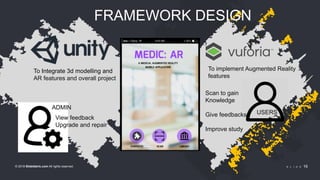
FRAMEWORK DESIGN
To implement Augmented Reality
features
To Integrate 3d modelling and
AR features and overall project
ADMIN
USERS
View feedback
Upgrade and repair
Scan to gain
Knowledge
Give feedbacks
Improve study
© 2018 Slidefabric.com All rights reserved. S L I D E 17
PROOF OF CONCEPT
© 2018 Slidefabric.com All rights reserved. S L I D E 18
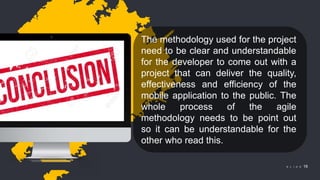
The methodology used for the project
need to be clear and understandable
for the developer to come out with a
project that can deliver the quality,
effectiveness and efficiency of the
mobile application to the public. The
whole process of the agile
methodology needs to be point out
so it can be understandable for the
other who read this.
THANK YOU

043911 methodology medic ar

  • 1.
    Name: Mohd. Airil Solehanbin Johari Supervisor : Dr. Wan Aezwani Wan Abu Bakar No.Matric : 043911 Medic: AR Methodology Propose
  • 2.
    © 2018 Slidefabric.comAll rights reserved. S L I D E 2 1. An application that combine medical science and augmented reality. 2. Interactive and enjoyable way to study compared to traditional method 3. New environment of education. Medic: ARFor educational purpose
  • 3.
    © 2018 Slidefabric.comAll rights reserved. S L I D E 3 Agile Methodology • focuses more on quick delivery of functioning software product by adapter- able process • receives user feedback constantly • gives freedom for the development process.
  • 4.
    © 2018 Slidefabric.comAll rights reserved. S L I D E 4 Agile model has several principles which are 1.Individual and Interactions 2.Working Software 3.End-User Collaboration 4.Responding-to-Changes
  • 5.
    © 2018 Slidefabric.comAll rights reserved. S L I D E 5 Agile Methodology Software Development Life Cycle (Agile SDLC) Planning / Analysis Phase • Content of Medic: AR • Analysis Previous App 1
  • 6.
    © 2018 Slidefabric.comAll rights reserved. S L I D E 6 Content of Medic: AR Mobile Application Medic: AR Human picture Mobile AR Application: “Medic: AR” Special Marker SCAN Exercise Library Did You Know? Related to content 3D Human Anatomy
  • 7.
    Analysis Previous App Problem Statement 1.Science about human anatomy is hard to memorize 2. Not many mobile applications provided for learning human anatomy for students Objectives 1. To develop AR apps for learning. 2. To deliver to student to learn human anatomy. 3. To design app education about basic human anatomy. Target Audience Students 10-17 years old and those who want to learn human anatomy Content This project included: 1. Human picture • A special picture • used as a marker for AR 2. Medic: AR Application • A mobile apps contain 3D model for the human picture • Contain exercises and fun fact about human anatomy Strategy Use 3D model Augmented Reality Technology Requirement s Software Hardware Unity 3D Laptop Vuforia
  • 8.
    © 2018 Slidefabric.comAll rights reserved. S L I D E 8 Agile Methodology Software Development Life Cycle (Agile SDLC) Design Phase • Conceptual Model • Flowchart for Medic: AR • Storyboard 2
  • 9.
    © 2018 Slidefabric.comAll rights reserved. S L I D E 9 Physical area Digital area  Interface Physical and digital area Graphical Interface TAR Interface Learning Theory Cognitivism Constructivism Teaching and Learning Approach Interactivity in real time Intuitive: Hold, zoom in, zoom out, Rotate Multimedia- Fusion Text, audio, animation, 2D graphic, 3D object VR multidimension environment Prototype SCAN Exercise Library Visual literacy Conceptual Model
  • 10.
    © 2018 Slidefabric.comAll rights reserved. S L I D E 10 No Start Main menu SCAN Exercise Library Exit End Human Body Exercise Fun Facts Choose letter 3D Human Body parts Yes No Yes Yes Yes No No Yes Flowchart for Medic: AR
  • 11.
    © 2018 Slidefabric.comAll rights reserved. S L I D E 11 Storyboard https://www.figma.com/proto/ NUuU0KpFkHeN70tL8Tt174 hH/Medic%3AAr?node- id=0%3A1&scaling=min- zoom
  • 12.
    © 2018 Slidefabric.comAll rights reserved. S L I D E 12 Agile Methodology Software Development Life Cycle (Agile SDLC) Development Phase • Marker • Modelling • Texturing • Rigging • AR Features 3
  • 13.
    © 2018 Slidefabric.comAll rights reserved. S L I D E 13 Agile Methodology Software Development Life Cycle (Agile SDLC) Testing Phase • Alpha Test • Beta Test 4
  • 14.
    © 2018 Slidefabric.comAll rights reserved. S L I D E 14 Agile Methodology Software Development Life Cycle (Agile SDLC) Evaluate/Review Phase • Measurement of effectiveness and efficiency • the final product is ready to be presented 5 Result Debug Final Output
  • 15.
    © 2018 Slidefabric.comAll rights reserved. S L I D E 15 Agile Model vs Traditional SDLC Model Difference Between Agile Model Traditional SDLC Model  Based on adaptive approach  No detailed planning  There is clarity on future tasks only in respect of what features need to be developed  Driven person or team to adapt to be changing product requirements dynamically.  Tested frequently  Minimize risk of major failures in future  Based on predictive approach,  detailed planning and complete forecast on exact tasks  Depends entirely on deep analysis and planning  Any change needs a strict change control management and prioritization  Tested only at the end of SDLC  Higher risk of major failures in future
  • 16.
    © 2018 Slidefabric.comAll rights reserved. S L I D E 16 FRAMEWORK DESIGN To implement Augmented Reality features To Integrate 3d modelling and AR features and overall project ADMIN USERS View feedback Upgrade and repair Scan to gain Knowledge Give feedbacks Improve study
  • 17.
    © 2018 Slidefabric.comAll rights reserved. S L I D E 17 PROOF OF CONCEPT
  • 18.
    © 2018 Slidefabric.comAll rights reserved. S L I D E 18 The methodology used for the project need to be clear and understandable for the developer to come out with a project that can deliver the quality, effectiveness and efficiency of the mobile application to the public. The whole process of the agile methodology needs to be point out so it can be understandable for the other who read this.
  • 19.