Playing with Your Stress: Balancing Your LifeUniversity Counseling Center
What is STRESS?The reaction of the body to a physical or psychological threat. Sources of StressEnvironmental stressorsSocial stressorsPhysiological stressorsThought stressors
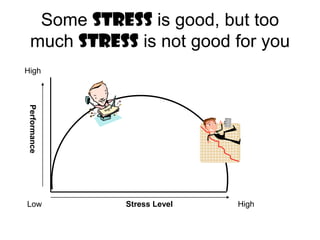
Some STRESS is good, but too much STRESS is not good for youHighPerformanceStress LevelLowHigh
Positive & NegativeStress is a natural part of life.Stress can be both positive and negative.Positive stress is a stress that can help motivate individuals to accomplish something good. Positive stress helps an individual to make any necessary changes in their lives. Negative stress is a stress that a person feels they cannot handle.
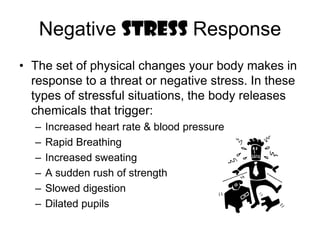
Negative STRESS ResponseThe set of physical changes your body makes in response to a threat or negative stress. In these types of stressful situations, the body releases chemicals that trigger: Increased heart rate & blood pressureRapid BreathingIncreased sweating A sudden rush of strength Slowed digestionDilated pupils
STRESS IndicatorsIt is not always easy to know when you are stressed. Sometimes stress can go undetected but here are some helpful indicators that may let you know if you in fact are stressed or becoming stressed.There are three ways in which stress can negatively impact you life. Physically, emotionally and behaviorally. By examining these aspects of you life you may be able to recognize when you are or are becoming stressed.
Physical Stress  IndicatorsYou can feel physical stress when you have too much to do, or when you've had too little sleep, aren't eating properly or have been ill. 	Key Indicators:	Headaches, Arthritis, Neck Pain, Jaw Pain, Allergies, Stomach Cramps, Diarrhea, Fatigue, Poor appetite, Cardiovascular Problems, Cancer, Back Pain, High blood Pressure, Asthma, Constipation, Viral Infections
Emotional Stress IndicatorsStress can also be emotional: you can feel it when you worry about money, your job or a loved one's illness, or when you experience a devastating life event, such as the death of a spouse or the loss of a job. 	Key Indicators:	Nervousness, Hostility, Depression, Low Self-worth, Apathy, Hypersensitivity, Poor Memory, Anger, Phobias, Low Self-confidence, Boredom, Annoy Easily, Poor Concentration
Behavioral Stress Indicators	You can notice behavioral stress when you begin to act abnormally. If you are acting out of character then you might be experiencing behavioral stress.	Key Indicators:	Drug Abuse, Poor Relationships, Sleep Problems, Compulsive Thoughts, Nervous Fidgeting,     Alcohol Abuse, Poor Performance, Sexual Performance Problems, Eating Problems
STRESS Can Lead To..When negative stress is not addressed, it can affect many parts of your life. It can lead to depression, anxiety, lower self esteem and other mental health issues.
Drugs & AlcoholWhen under negative stress for long period of time people may turn drugs or alcoholTurning to drugs or alcohol to relieve stress is not a healthy channel of stress reductionDangerous life altering consequencesDUI, drug arrest, drug addiction, alcoholismBe responsibleEnjoy alcohol but do so in moderation. Do not use alcohol as a stress reliever.
Irrational ThinkingJumping to Conclusions is making a negative assumption even though there are no clear facts supporting the conclusion
Personalizing is assuming external events are automatically being caused by or directed at yourself when in fact they are not
Selective Attention is ignoring accomplishments and positive experiences and focusing only on negative events and perceived failures. This colors your perception of all future experiences and you selectively look for only negative results and reactions
Catastrophizing is exaggerating the significance of an unpleasant event or eventsIrrational Thinking (continued)Predicting Doom is deciding that failure is imminent before the task is even begun
 Should and Musts are punitive self-statements. They are based on the faulty belief that you are inherently bad or worthless. Therefore, the only way to motivate yourself or succeed in life is to beat and whip yourself into shape. You do this by placing unrealistic demands on yourself.
Dualistic Thinking is perceiving situations and people, including yourself, as either all good or all bad with no room in between.
Labeling is taking one or two instances of your own or other’s behavior and over generalizing by attaching an exaggerated label.Challenging Thinking Mistakes1.	Thinking Mistake (over-generalization)“Workers on the new job are not going to be friendly.”2. Support“The guy in the next office wasn’t friendly and he only spoke with me in a very cursory manner.”3. Refutation“Several other people were friendly. The boss seems warm. One day is not enough time to decide about how friendly anyone will be. I was nervous and perhaps not very approachable.”4. Better generalization“ Things seemed to go fairly well the first day. Most people were friendly.”Adapted from Archer, J. Jr. (1991). Managing Anxiety & Stress.
Overcoming STRESSThe key to coping with stress is to determine your personal tolerance levels for stressful situations. You must learn to accept or change stressful or tense situations whenever possible.
Stress management presentation online ver

  • 1.
    Playing with YourStress: Balancing Your LifeUniversity Counseling Center
  • 2.
    What is STRESS?Thereaction of the body to a physical or psychological threat. Sources of StressEnvironmental stressorsSocial stressorsPhysiological stressorsThought stressors
  • 3.
    Some STRESS isgood, but too much STRESS is not good for youHighPerformanceStress LevelLowHigh
  • 4.
    Positive & NegativeStressis a natural part of life.Stress can be both positive and negative.Positive stress is a stress that can help motivate individuals to accomplish something good. Positive stress helps an individual to make any necessary changes in their lives. Negative stress is a stress that a person feels they cannot handle.
  • 5.
    Negative STRESS ResponseTheset of physical changes your body makes in response to a threat or negative stress. In these types of stressful situations, the body releases chemicals that trigger: Increased heart rate & blood pressureRapid BreathingIncreased sweating A sudden rush of strength Slowed digestionDilated pupils
  • 6.
    STRESS IndicatorsIt isnot always easy to know when you are stressed. Sometimes stress can go undetected but here are some helpful indicators that may let you know if you in fact are stressed or becoming stressed.There are three ways in which stress can negatively impact you life. Physically, emotionally and behaviorally. By examining these aspects of you life you may be able to recognize when you are or are becoming stressed.
  • 7.
    Physical Stress IndicatorsYou can feel physical stress when you have too much to do, or when you've had too little sleep, aren't eating properly or have been ill. Key Indicators: Headaches, Arthritis, Neck Pain, Jaw Pain, Allergies, Stomach Cramps, Diarrhea, Fatigue, Poor appetite, Cardiovascular Problems, Cancer, Back Pain, High blood Pressure, Asthma, Constipation, Viral Infections
  • 8.
    Emotional Stress IndicatorsStresscan also be emotional: you can feel it when you worry about money, your job or a loved one's illness, or when you experience a devastating life event, such as the death of a spouse or the loss of a job. Key Indicators: Nervousness, Hostility, Depression, Low Self-worth, Apathy, Hypersensitivity, Poor Memory, Anger, Phobias, Low Self-confidence, Boredom, Annoy Easily, Poor Concentration
  • 9.
    Behavioral Stress Indicators Youcan notice behavioral stress when you begin to act abnormally. If you are acting out of character then you might be experiencing behavioral stress. Key Indicators: Drug Abuse, Poor Relationships, Sleep Problems, Compulsive Thoughts, Nervous Fidgeting, Alcohol Abuse, Poor Performance, Sexual Performance Problems, Eating Problems
  • 10.
    STRESS Can LeadTo..When negative stress is not addressed, it can affect many parts of your life. It can lead to depression, anxiety, lower self esteem and other mental health issues.
  • 11.
    Drugs & AlcoholWhenunder negative stress for long period of time people may turn drugs or alcoholTurning to drugs or alcohol to relieve stress is not a healthy channel of stress reductionDangerous life altering consequencesDUI, drug arrest, drug addiction, alcoholismBe responsibleEnjoy alcohol but do so in moderation. Do not use alcohol as a stress reliever.
  • 12.
    Irrational ThinkingJumping toConclusions is making a negative assumption even though there are no clear facts supporting the conclusion
  • 13.
    Personalizing is assumingexternal events are automatically being caused by or directed at yourself when in fact they are not
  • 14.
    Selective Attention isignoring accomplishments and positive experiences and focusing only on negative events and perceived failures. This colors your perception of all future experiences and you selectively look for only negative results and reactions
  • 15.
    Catastrophizing is exaggeratingthe significance of an unpleasant event or eventsIrrational Thinking (continued)Predicting Doom is deciding that failure is imminent before the task is even begun
  • 16.
    Should andMusts are punitive self-statements. They are based on the faulty belief that you are inherently bad or worthless. Therefore, the only way to motivate yourself or succeed in life is to beat and whip yourself into shape. You do this by placing unrealistic demands on yourself.
  • 17.
    Dualistic Thinking isperceiving situations and people, including yourself, as either all good or all bad with no room in between.
  • 18.
    Labeling is takingone or two instances of your own or other’s behavior and over generalizing by attaching an exaggerated label.Challenging Thinking Mistakes1. Thinking Mistake (over-generalization)“Workers on the new job are not going to be friendly.”2. Support“The guy in the next office wasn’t friendly and he only spoke with me in a very cursory manner.”3. Refutation“Several other people were friendly. The boss seems warm. One day is not enough time to decide about how friendly anyone will be. I was nervous and perhaps not very approachable.”4. Better generalization“ Things seemed to go fairly well the first day. Most people were friendly.”Adapted from Archer, J. Jr. (1991). Managing Anxiety & Stress.
  • 19.
    Overcoming STRESSThe keyto coping with stress is to determine your personal tolerance levels for stressful situations. You must learn to accept or change stressful or tense situations whenever possible.