Trace the events that shaped the revolutionary
movement in America, including the French and
Indian War, British Imperial Policy that led to the
1765 Stamp Act, the slogan “no taxation without
representation,” the activities of the Sons of
Liberty, and the Boston Tea Party.
2
AS YOU READ THE
INFORMATION, STOP AND DO
INVESTIGATION
NOTES AND QUESTIONS!
The Quartering Act and The Stamp Act!
New Laws = Unhappy Colonists!
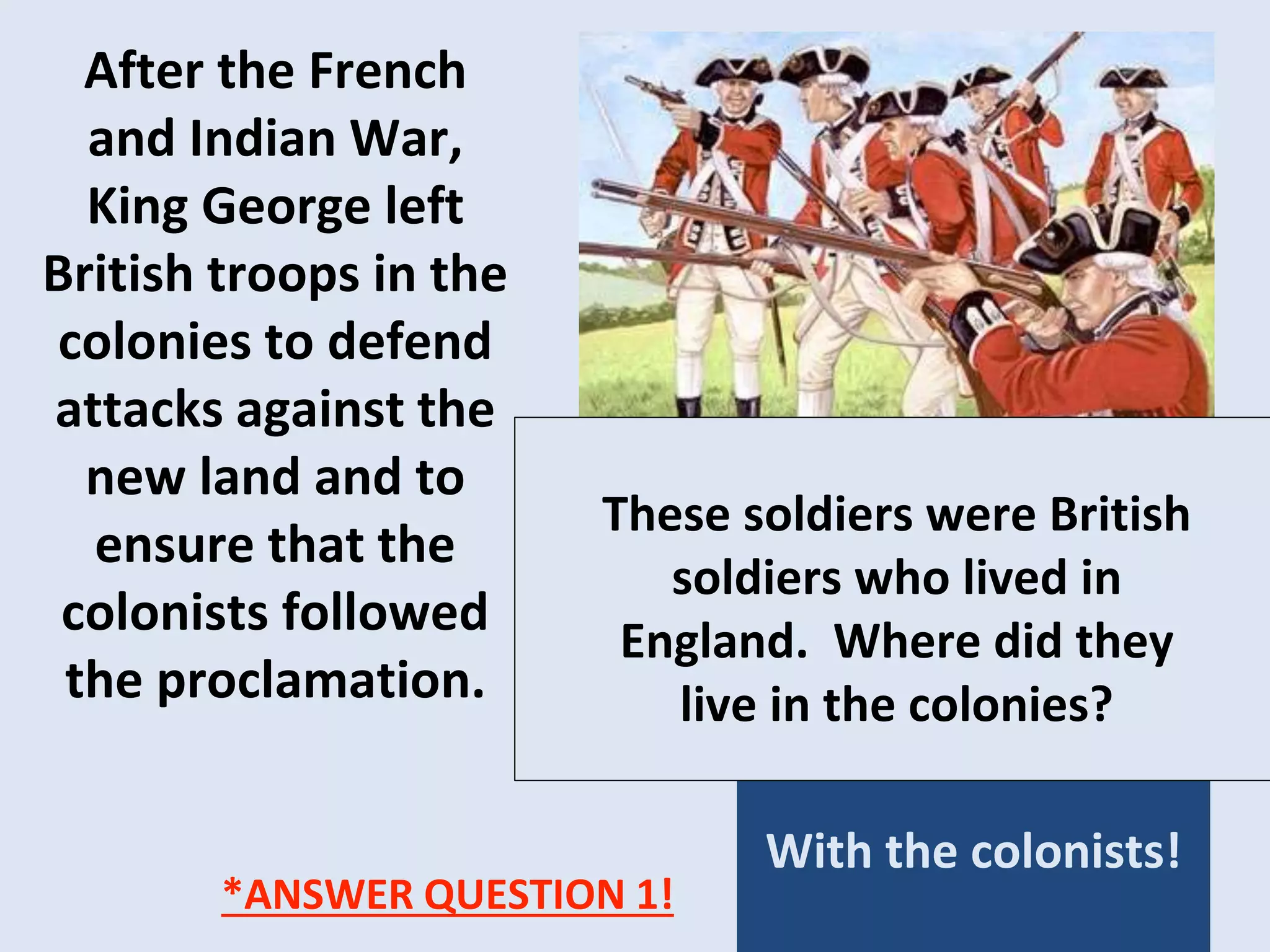
After the French
and Indian War,
King George left
British troops in the
colonies to defend
attacks against the
new land and to
ensure that the
colonists followed
the proclamation.
With the colonists!
These soldiers were British
soldiers who lived in
England. Where did they
live in the colonies?
*ANSWER QUESTION 1!
The
Quartering Act
1765
*TAKE NOTES ON THE FOLLOWING TWO POINTS AS YOU
READ ON…
2)What was the Quartering Act?
3) How did the colonists feel about
the Quartering Act?
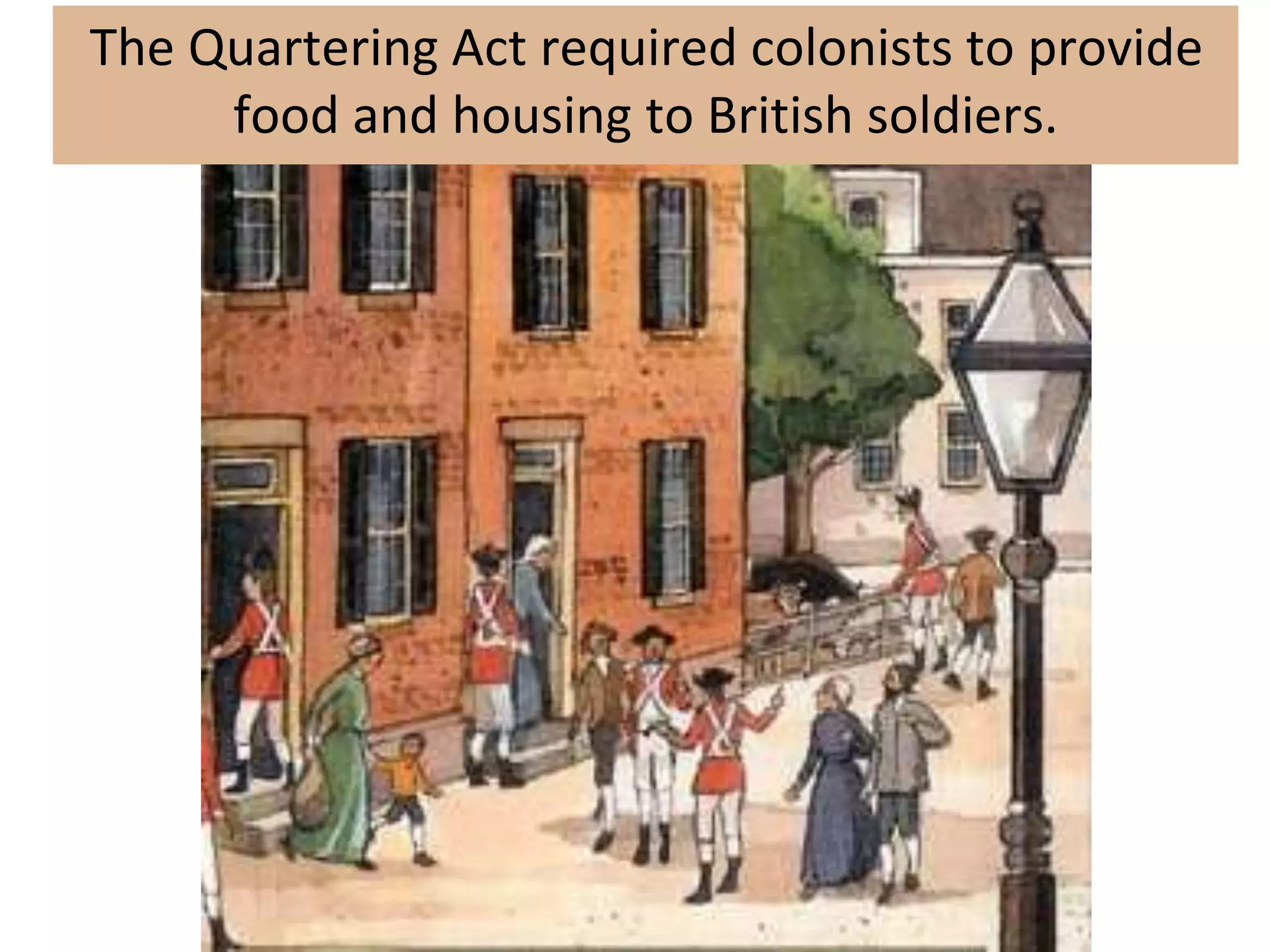
The Quartering Act required colonists to provide
food and housing to British soldiers.
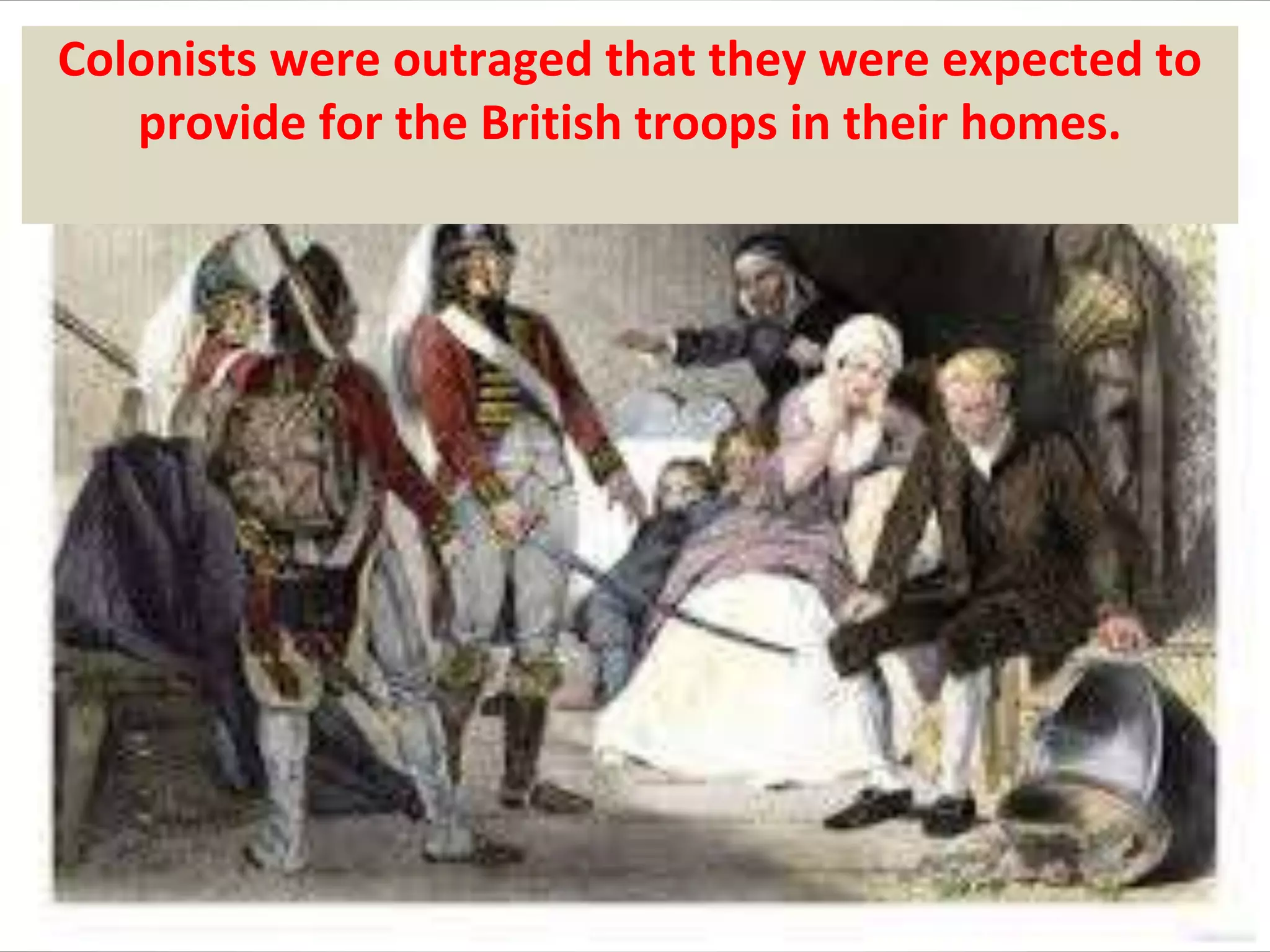
Colonists were outraged that they were expected to
provide for the British troops in their homes.
The Stamp Act
1765
Take notes about the following
questions as you read on…
What was the purpose of the Stamp Act?
How did colonists feel about and
react to the Stamp Act?
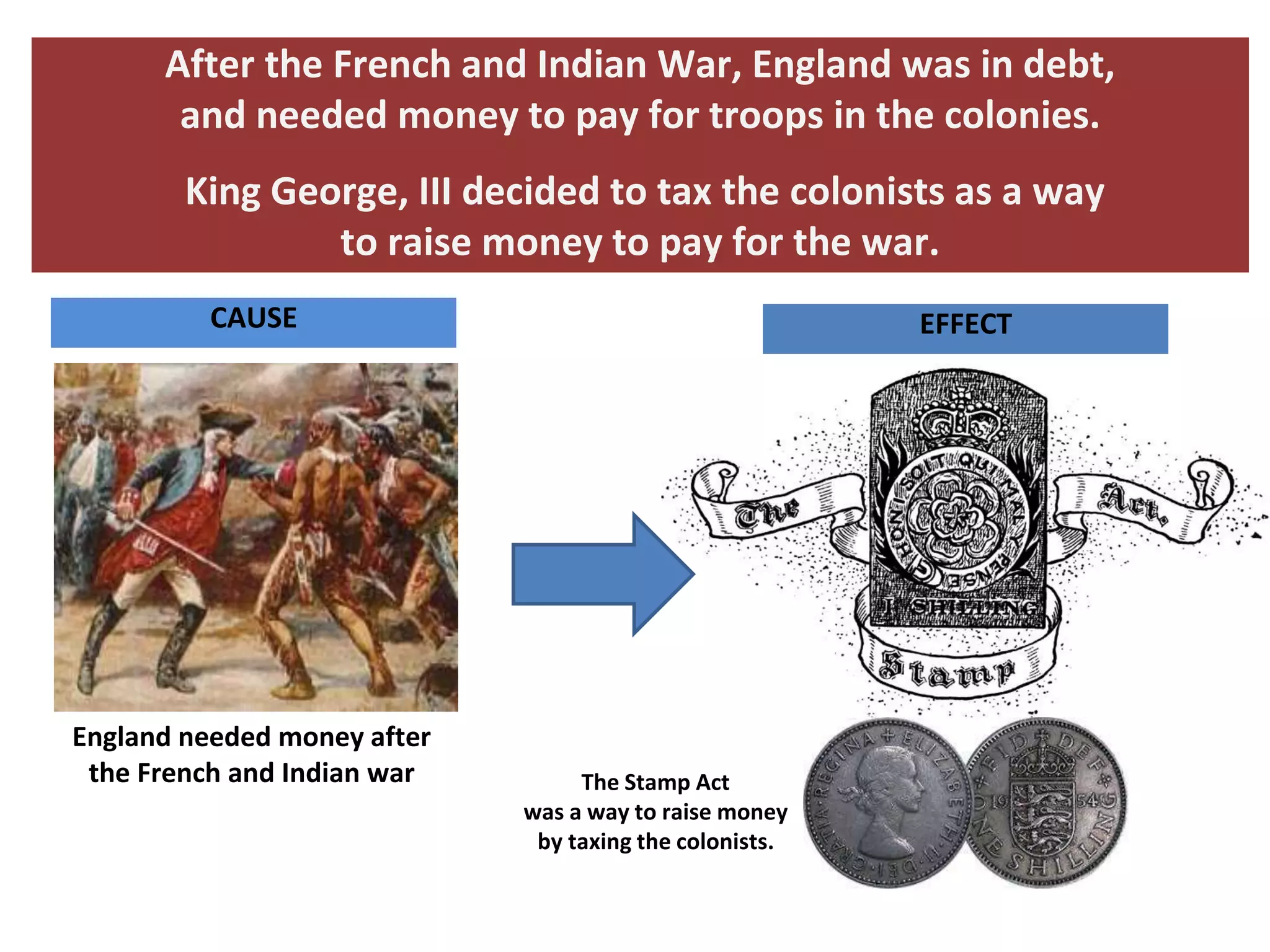
After the French and Indian War, England was in debt,
and needed money to pay for troops in the colonies.
King George, III decided to tax the colonists as a way
to raise money to pay for the war.
England needed money after
the French and Indian war
CAUSE EFFECT
The Stamp Act
was a way to raise money
by taxing the colonists.
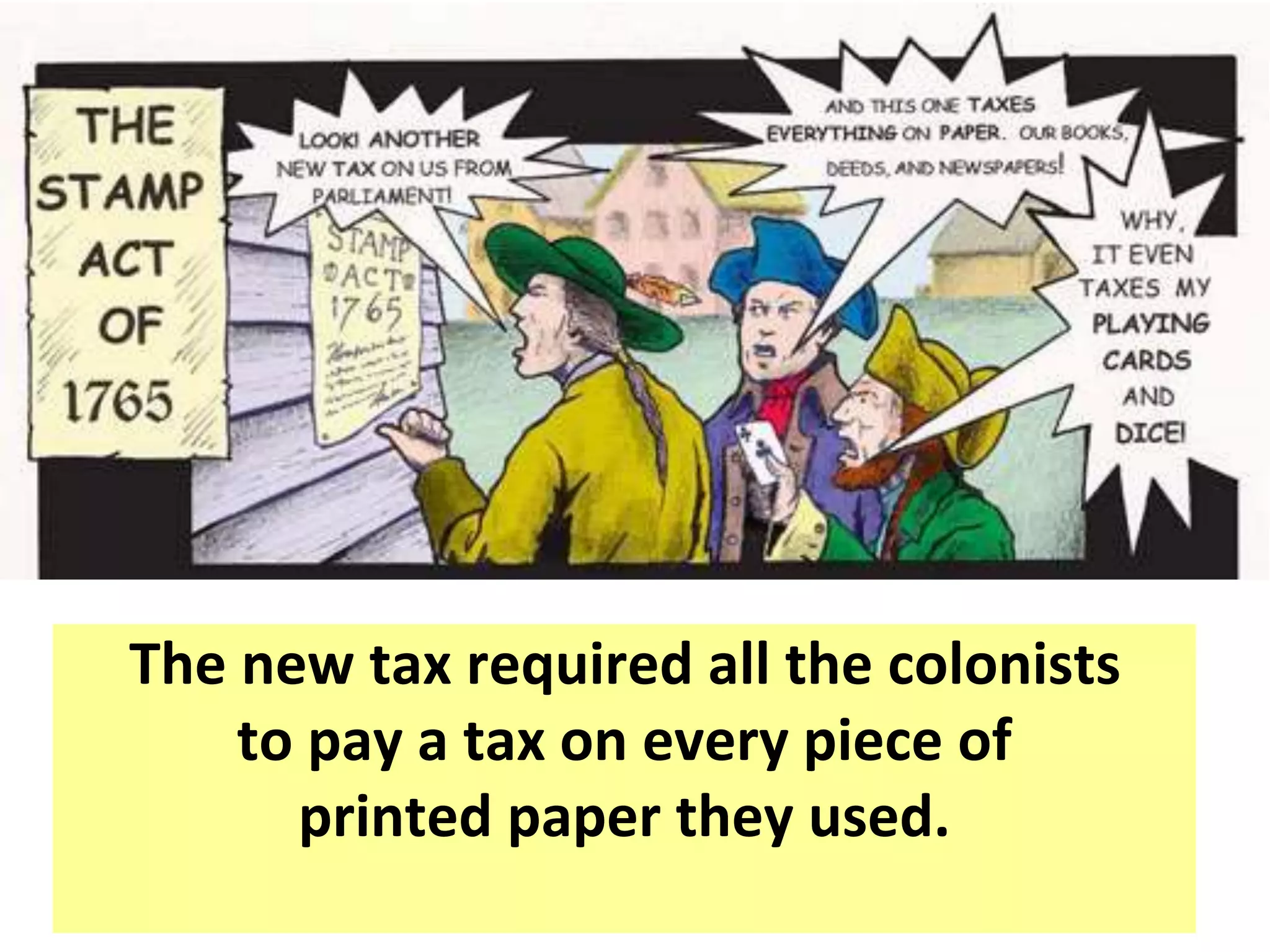
The new tax required all the colonists
to pay a tax on every piece of
printed paper they used.
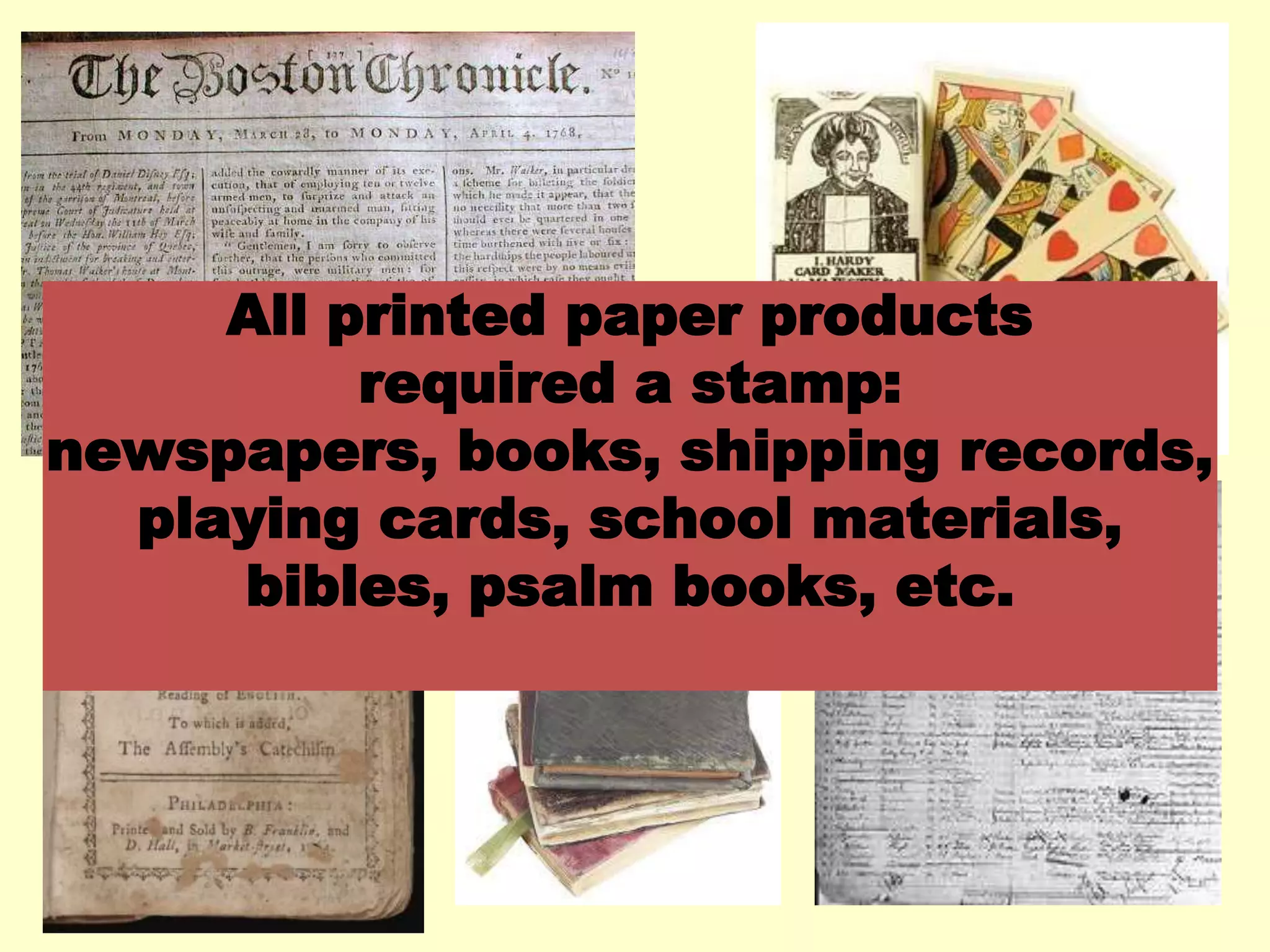
All printed paper products
required a stamp:
newspapers, books, shipping records,
playing cards, school materials,
bibles, psalm books, etc.
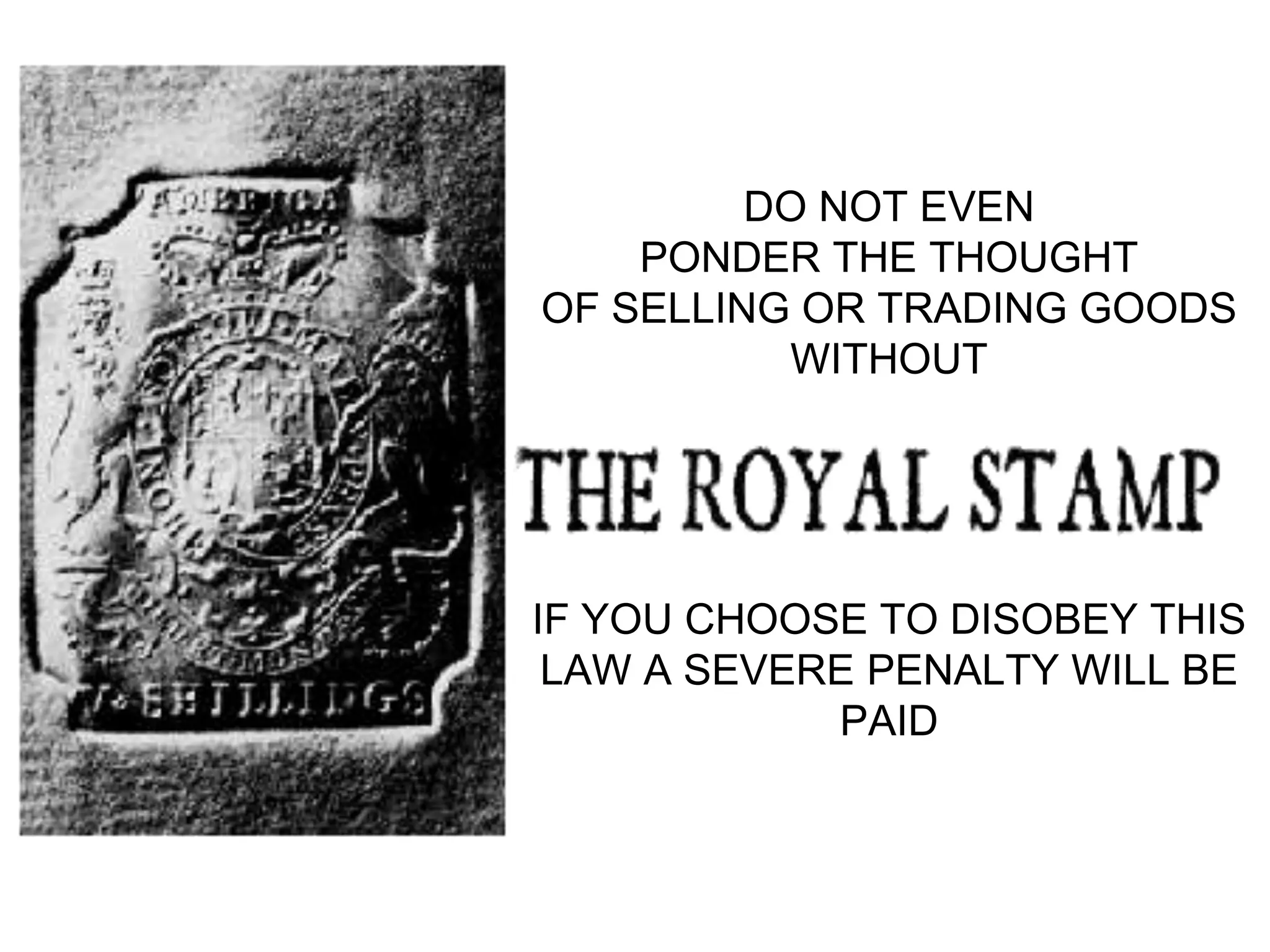
DO NOT EVEN
PONDER THE THOUGHT
OF SELLING OR TRADING GOODS
WITHOUT
IF YOU CHOOSE TO DISOBEY THIS
LAW A SEVERE PENALTY WILL BE
PAID
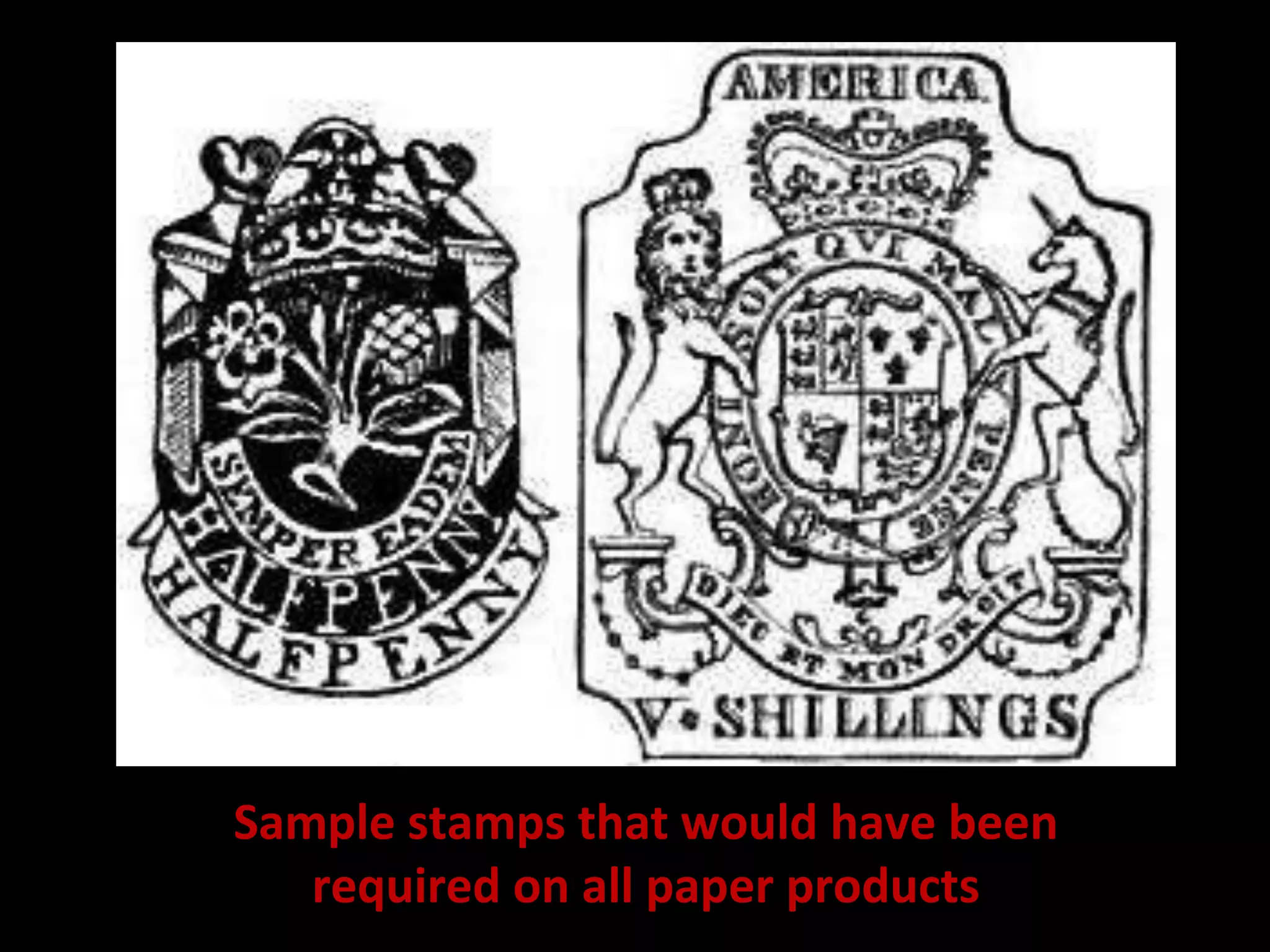
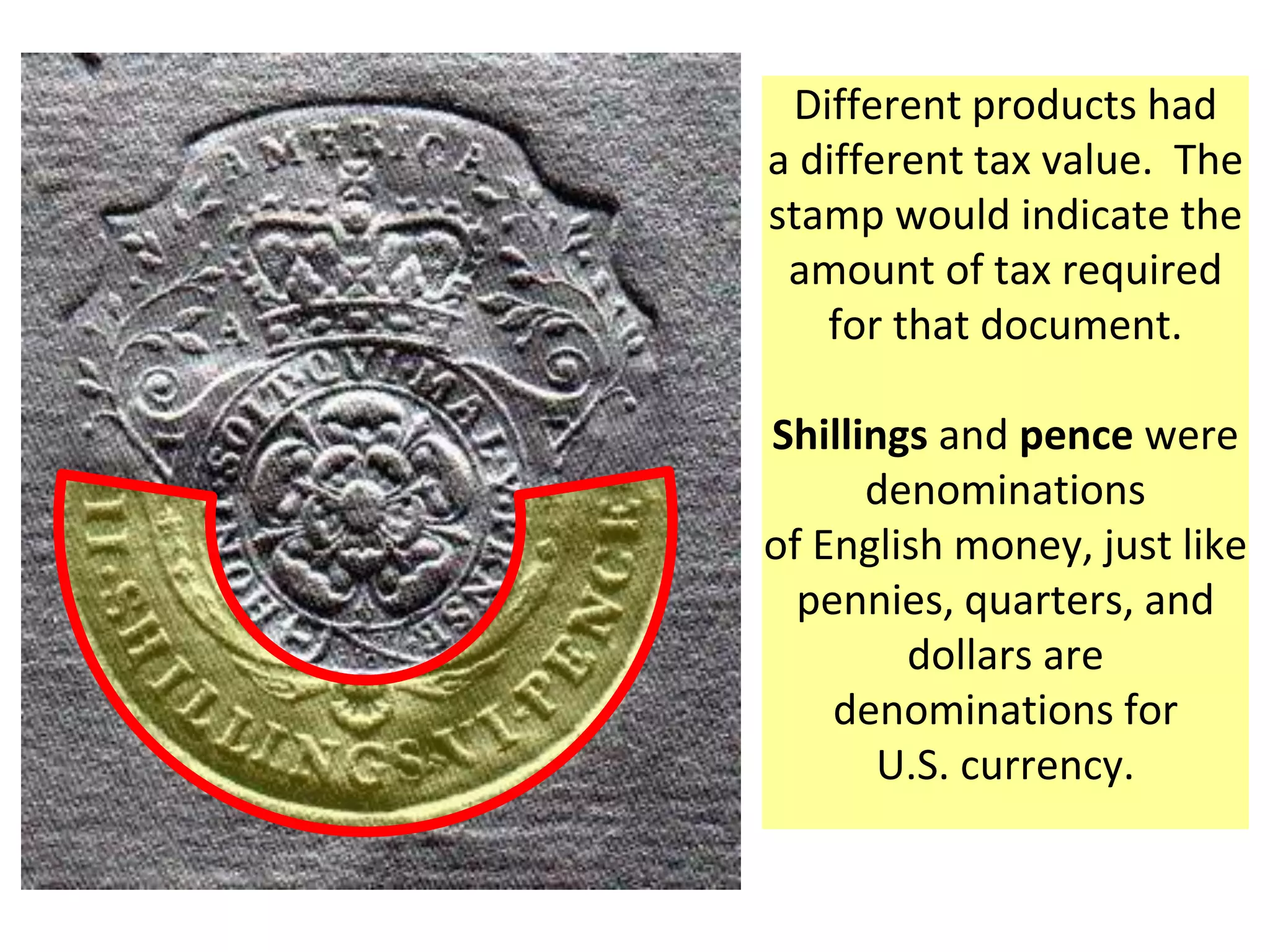
Sample stamps that would have been
required on all paper products
Different products had
a different tax value. The
stamp would indicate the
amount of tax required
for that document.
Shillings and pence were
denominations
of English money, just like
pennies, quarters, and
dollars are
denominations for
U.S. currency.
Colonists did not like
being taxed by Great Britain.
Many felt that only their own
governments in the colonies had
the right to tax them.
15
What do you
predict the
colonists did about
this taxation
that angered
them?

Ppt the stamp act and quartering act copy

  • 1.
    Trace the eventsthat shaped the revolutionary movement in America, including the French and Indian War, British Imperial Policy that led to the 1765 Stamp Act, the slogan “no taxation without representation,” the activities of the Sons of Liberty, and the Boston Tea Party.
  • 2.
    2 AS YOU READTHE INFORMATION, STOP AND DO INVESTIGATION NOTES AND QUESTIONS! The Quartering Act and The Stamp Act! New Laws = Unhappy Colonists!
  • 3.
    After the French andIndian War, King George left British troops in the colonies to defend attacks against the new land and to ensure that the colonists followed the proclamation. With the colonists! These soldiers were British soldiers who lived in England. Where did they live in the colonies? *ANSWER QUESTION 1!
  • 4.
    The Quartering Act 1765 *TAKE NOTESON THE FOLLOWING TWO POINTS AS YOU READ ON… 2)What was the Quartering Act? 3) How did the colonists feel about the Quartering Act?
  • 5.
    The Quartering Actrequired colonists to provide food and housing to British soldiers.
  • 6.
    Colonists were outragedthat they were expected to provide for the British troops in their homes.
  • 7.
    The Stamp Act 1765 Takenotes about the following questions as you read on… What was the purpose of the Stamp Act? How did colonists feel about and react to the Stamp Act?
  • 8.
    After the Frenchand Indian War, England was in debt, and needed money to pay for troops in the colonies. King George, III decided to tax the colonists as a way to raise money to pay for the war. England needed money after the French and Indian war CAUSE EFFECT The Stamp Act was a way to raise money by taxing the colonists.
  • 9.
    The new taxrequired all the colonists to pay a tax on every piece of printed paper they used.
  • 10.
    All printed paperproducts required a stamp: newspapers, books, shipping records, playing cards, school materials, bibles, psalm books, etc.
  • 11.
    DO NOT EVEN PONDERTHE THOUGHT OF SELLING OR TRADING GOODS WITHOUT IF YOU CHOOSE TO DISOBEY THIS LAW A SEVERE PENALTY WILL BE PAID
  • 12.
    Sample stamps thatwould have been required on all paper products
  • 13.
    Different products had adifferent tax value. The stamp would indicate the amount of tax required for that document. Shillings and pence were denominations of English money, just like pennies, quarters, and dollars are denominations for U.S. currency.
  • 14.
    Colonists did notlike being taxed by Great Britain. Many felt that only their own governments in the colonies had the right to tax them.
  • 15.
    15 What do you predictthe colonists did about this taxation that angered them?