© Richard Thomas 123RF.com
The Key Principles and Steps
In Designing an
Organisational Structure
Supporting Organisational High Performance
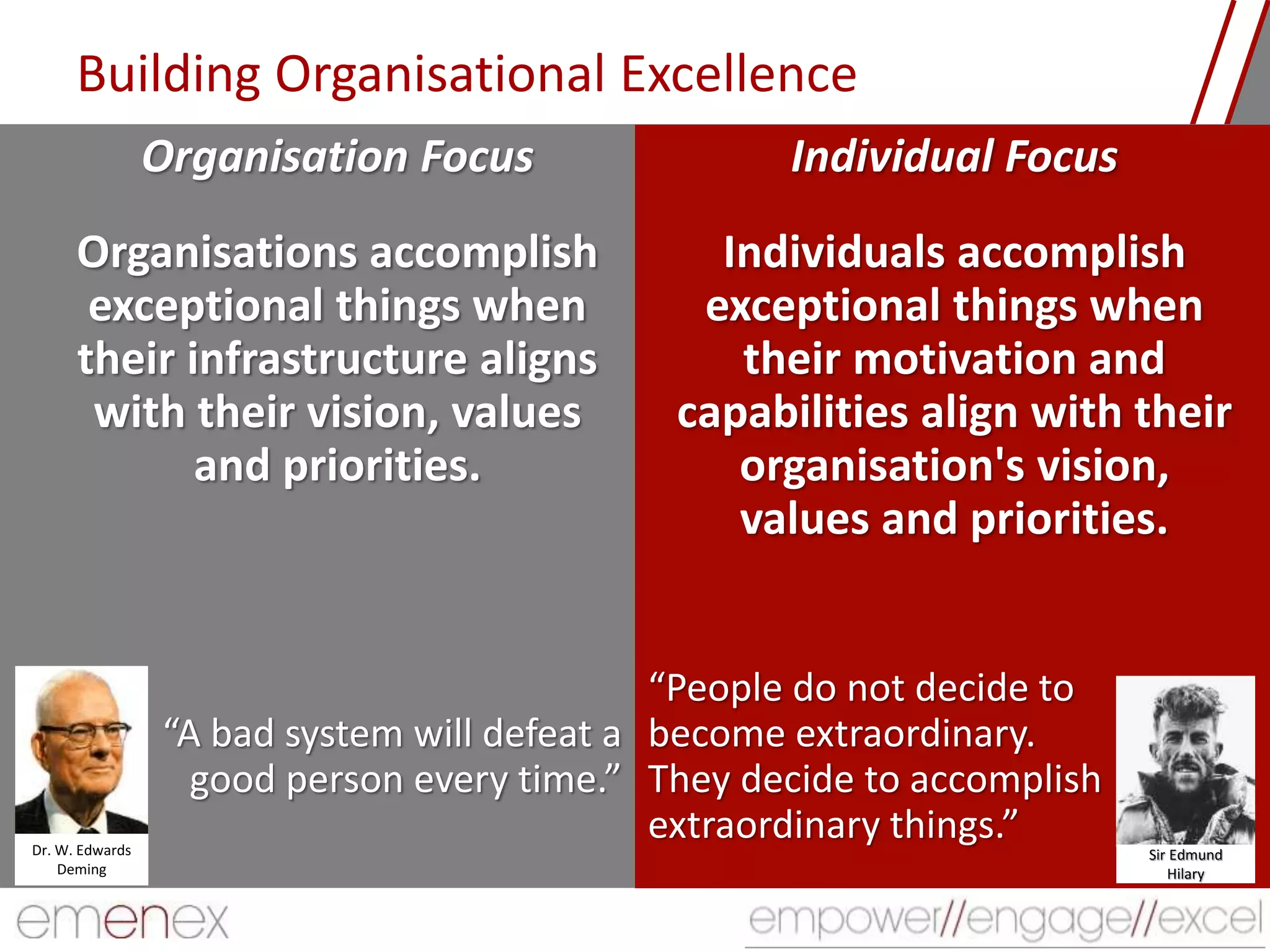
Building Organisational Excellence
Organisation Focus
Organisations accomplish
exceptional things when
their infrastructure aligns
with their vision, values
and priorities.
“A bad system will defeat a
good person every time.”
Individual Focus
Individuals accomplish
exceptional things when
their motivation and
capabilities align with their
organisation's vision,
values and priorities.
“People do not decide to
become extraordinary.
They decide to accomplish
extraordinary things.”Dr. W. Edwards
Deming
Sir Edmund
Hilary
Designing Organisational Structure
© Richard Thomas 123RF.com
Five Principles
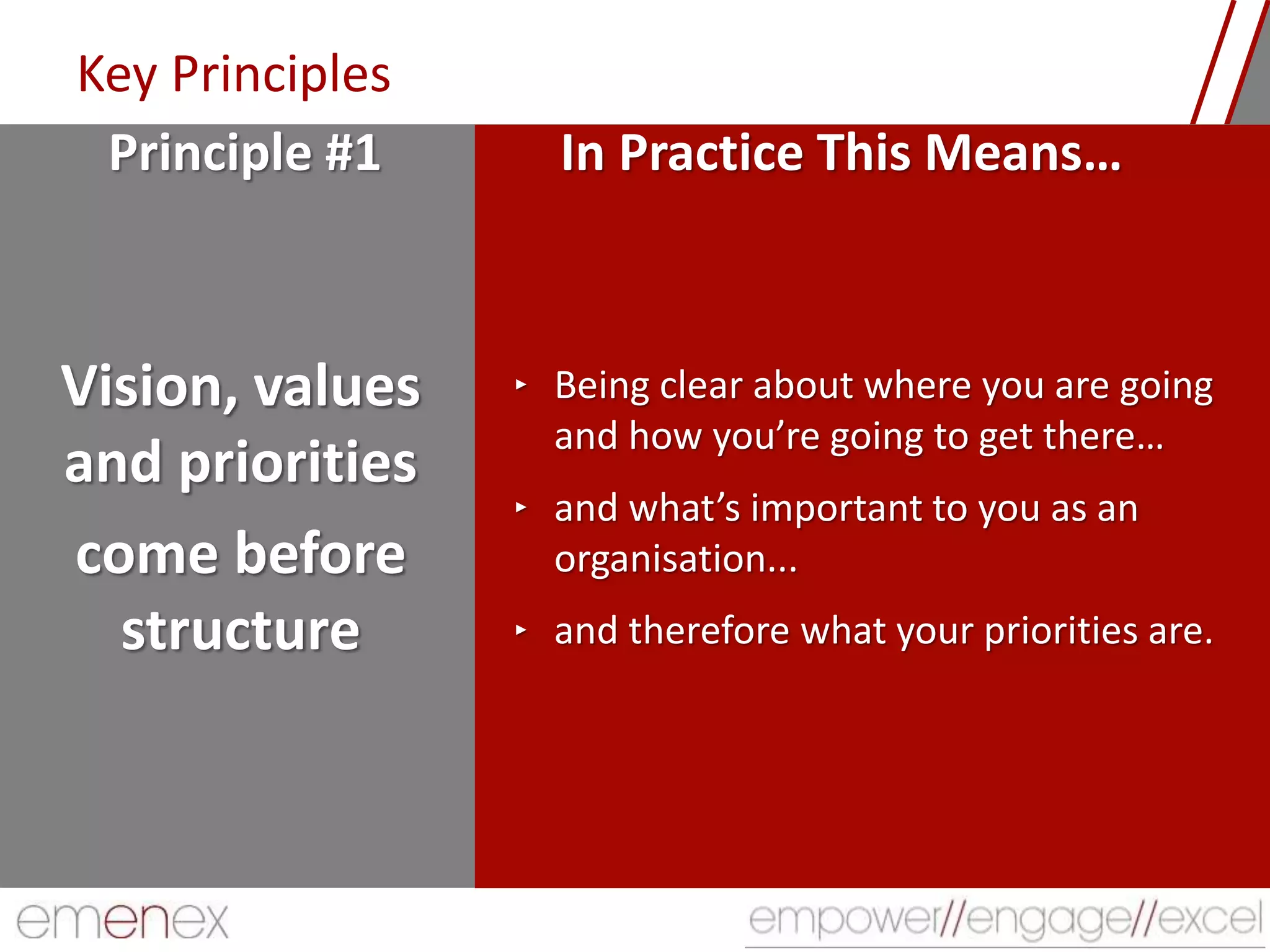
Key Principles
Vision, values
and priorities
come before
structure
‣ Being clear about where you are going
and how you’re going to get there…
‣ and what’s important to you as an
organisation...
‣ and therefore what your priorities are.
Principle #1 In Practice This Means…
Key Principles
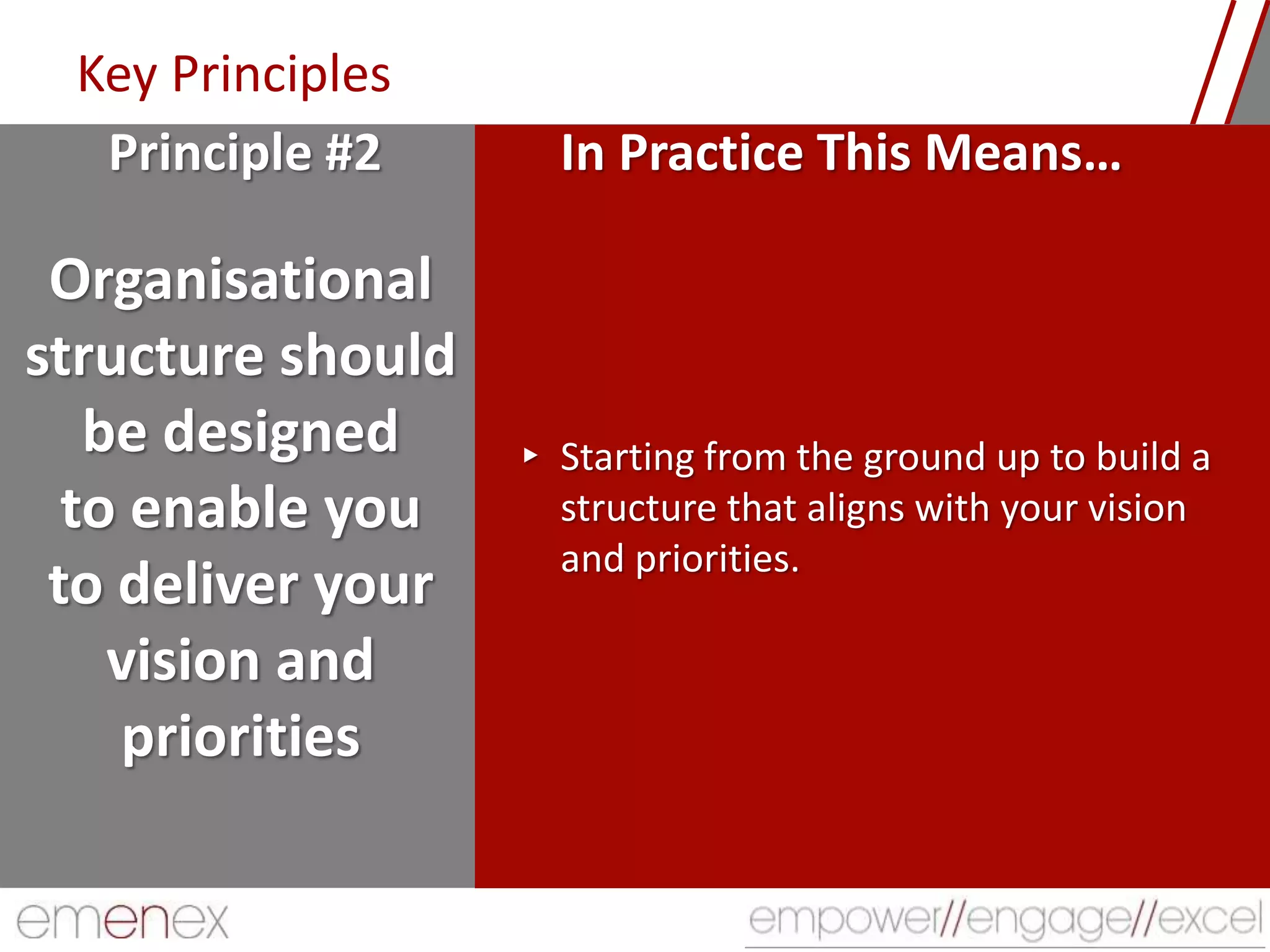
Organisational
structure should
be designed
to enable you
to deliver your
vision and
priorities
▸ Starting from the ground up to build a
structure that aligns with your vision
and priorities.
Principle #2 In Practice This Means…
Key Principles
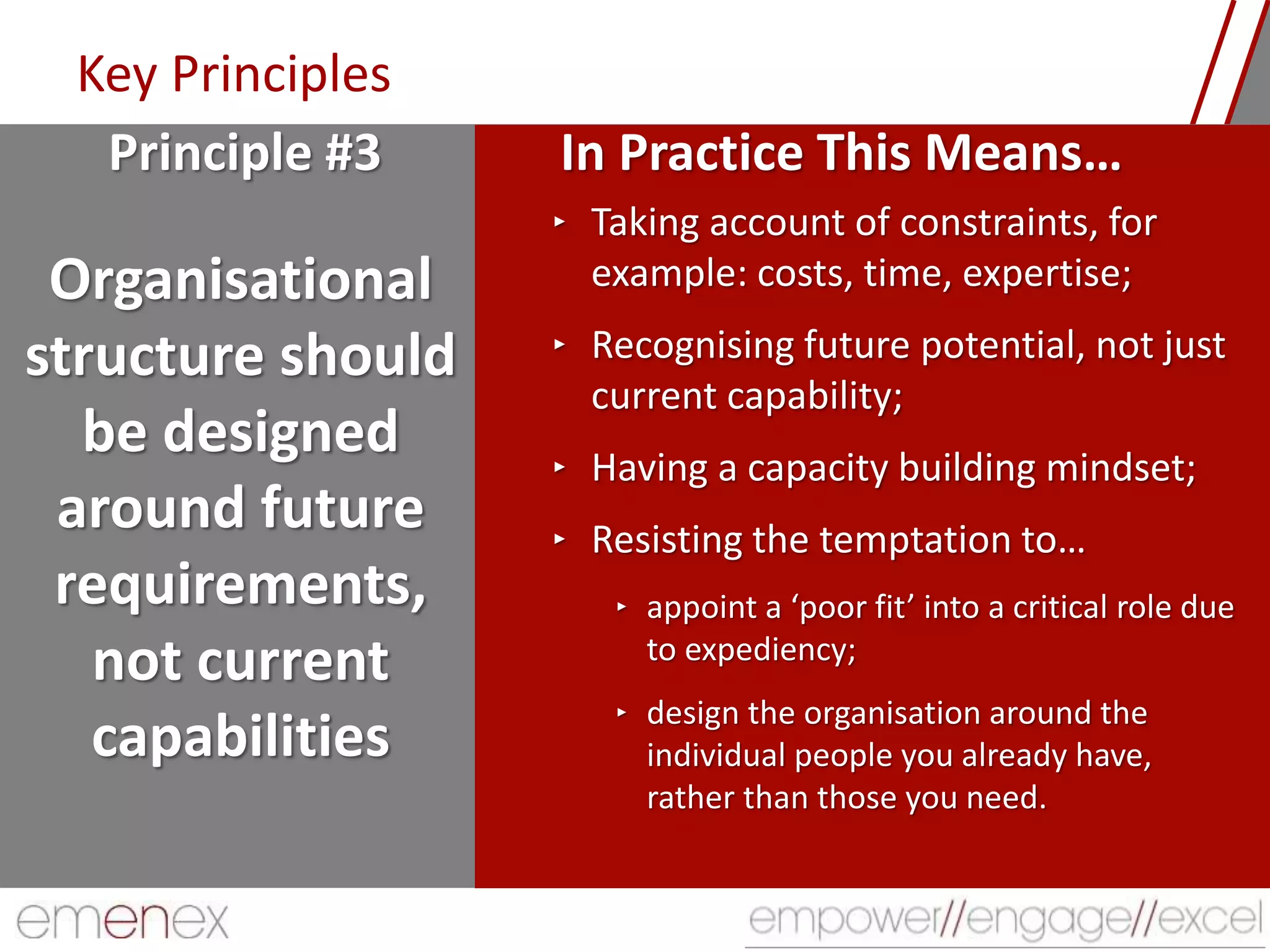
Organisational
structure should
be designed
around future
requirements,
not current
capabilities
‣ Taking account of constraints, for
example: costs, time, expertise;
‣ Recognising future potential, not just
current capability;
‣ Having a capacity building mindset;
‣ Resisting the temptation to…
‣ appoint a ‘poor fit’ into a critical role due
to expediency;
‣ design the organisation around the
individual people you already have,
rather than those you need.
Principle #3 In Practice This Means…
Key Principles
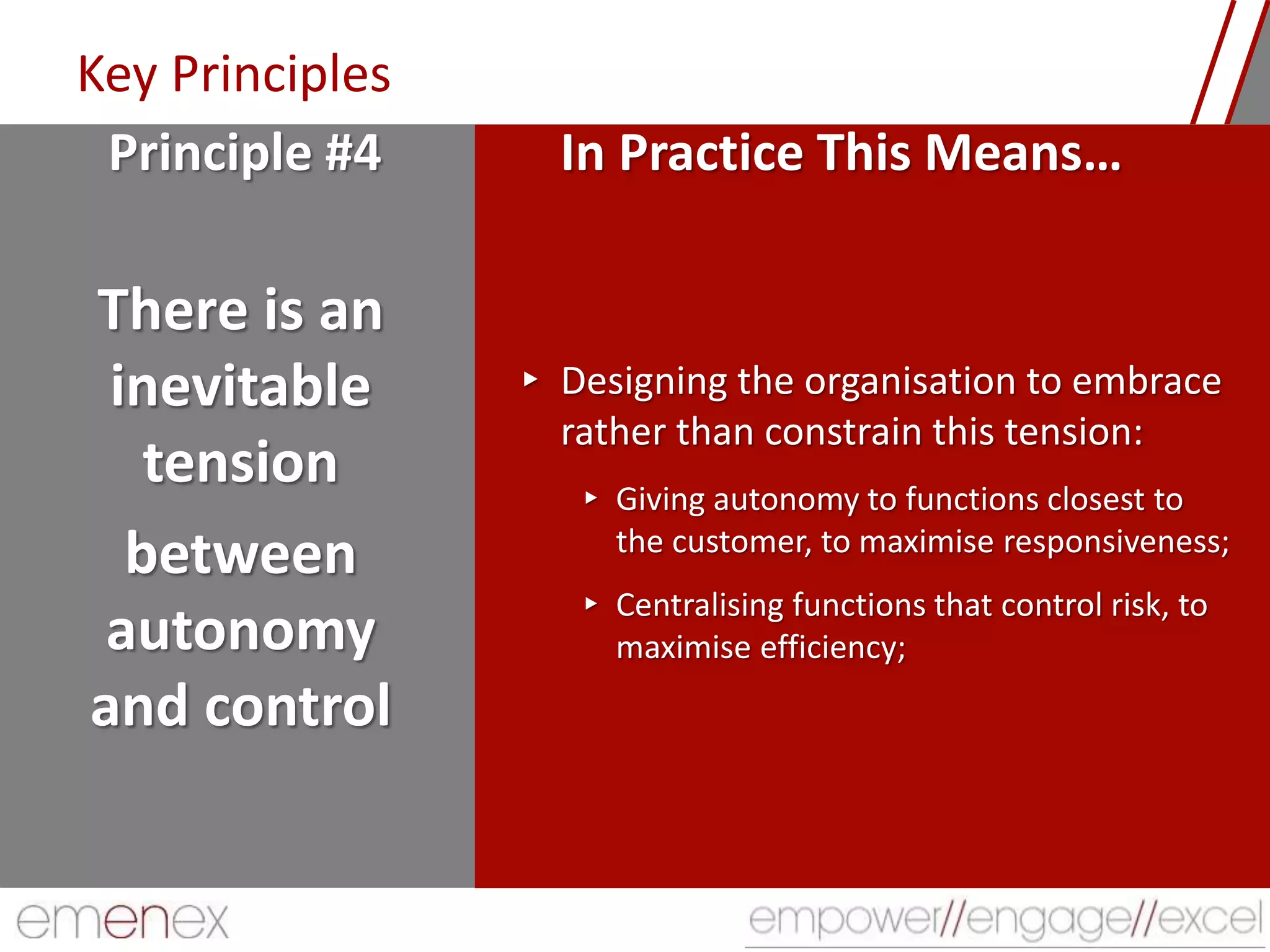
There is an
inevitable
tension
between
autonomy
and control
▸ Designing the organisation to embrace
rather than constrain this tension:
▸ Giving autonomy to functions closest to
the customer, to maximise responsiveness;
▸ Centralising functions that control risk, to
maximise efficiency;
Principle #4 In Practice This Means…
Key Principles
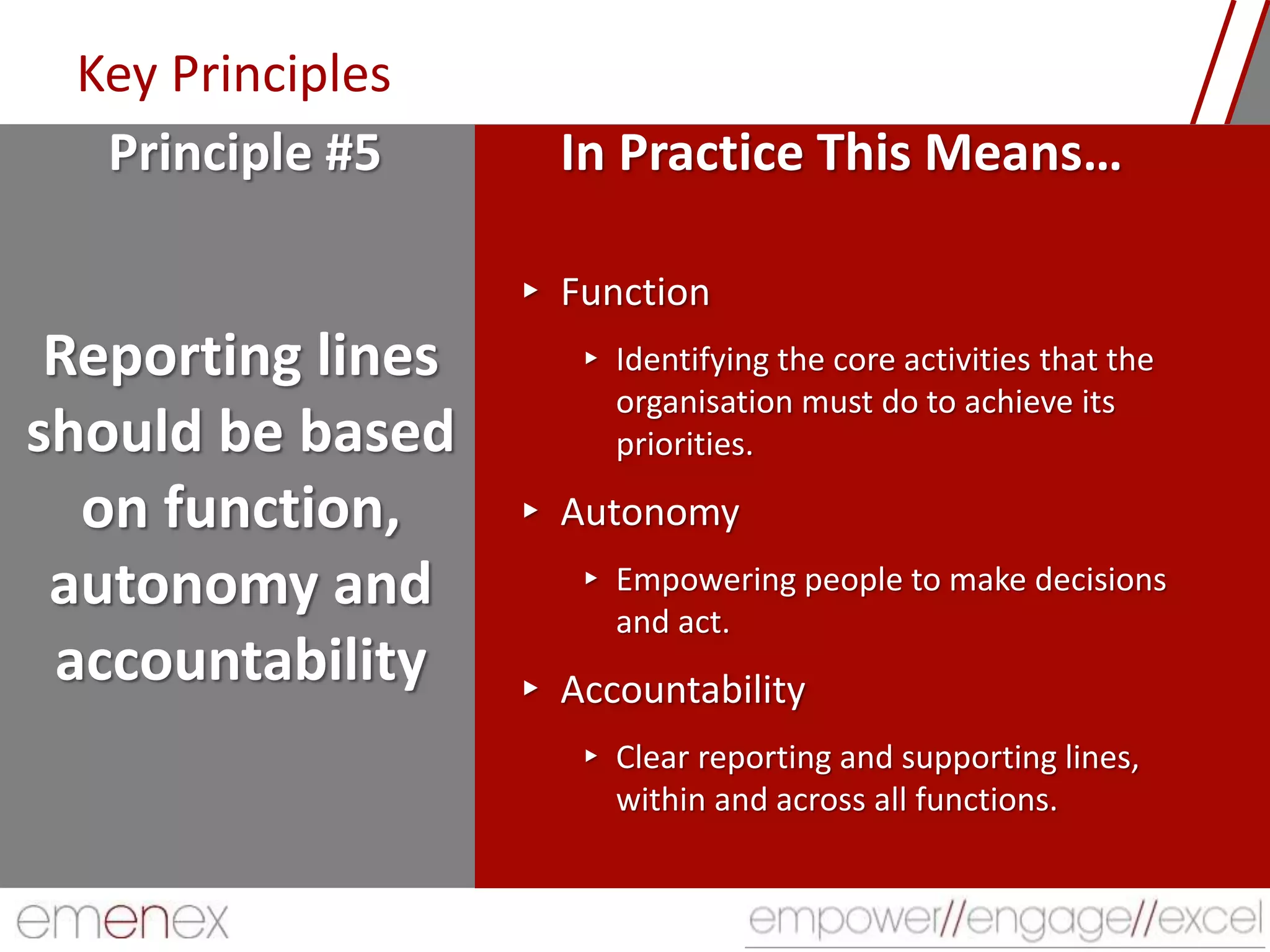
Reporting lines
should be based
on function,
autonomy and
accountability
▸ Function
▸ Identifying the core activities that the
organisation must do to achieve its
priorities.
▸ Autonomy
▸ Empowering people to make decisions
and act.
▸ Accountability
▸ Clear reporting and supporting lines,
within and across all functions.
Principle #5 In Practice This Means…
Key Steps in Designing Organisational Structure
© Richard Thomas 123RF.com
The Process
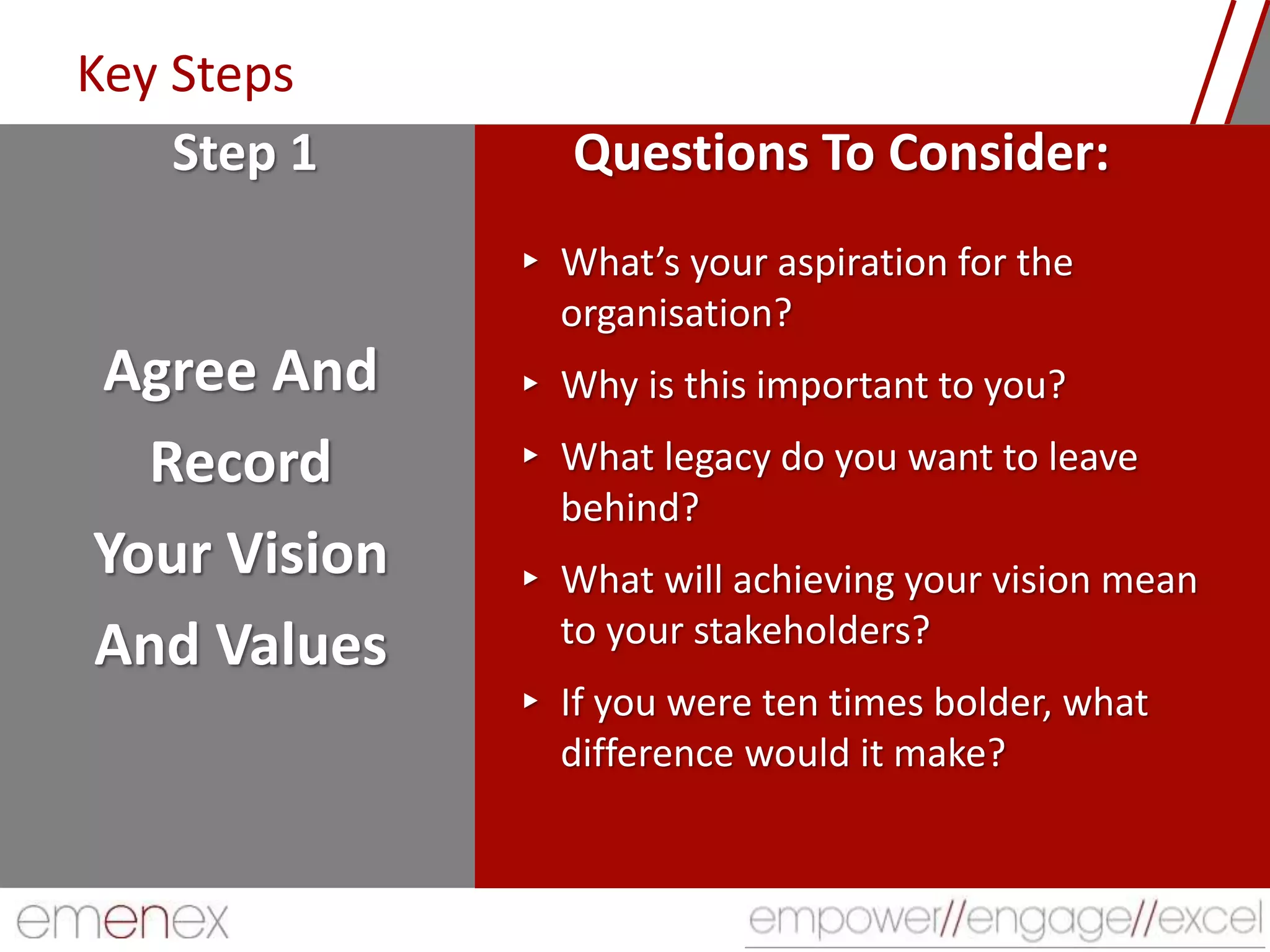
Key Steps
Agree And
Record
Your Vision
And Values
▸ What’s your aspiration for the
organisation?
▸ Why is this important to you?
▸ What legacy do you want to leave
behind?
▸ What will achieving your vision mean
to your stakeholders?
▸ If you were ten times bolder, what
difference would it make?
Step 1 Questions To Consider:
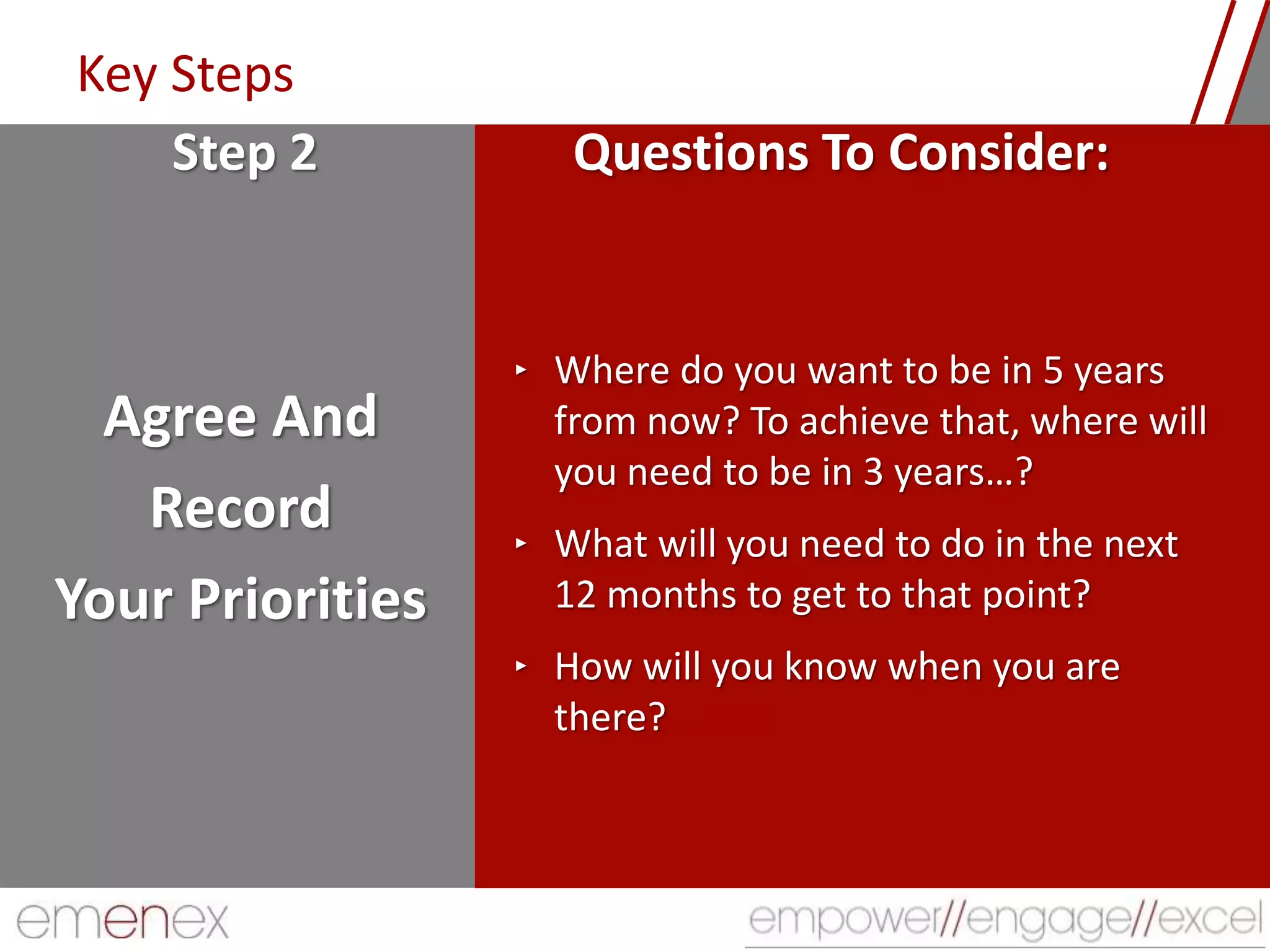
Key Steps
Agree And
Record
Your Priorities
‣ Where do you want to be in 5 years
from now? To achieve that, where will
you need to be in 3 years…?
‣ What will you need to do in the next
12 months to get to that point?
‣ How will you know when you are
there?
Step 2 Questions To Consider:
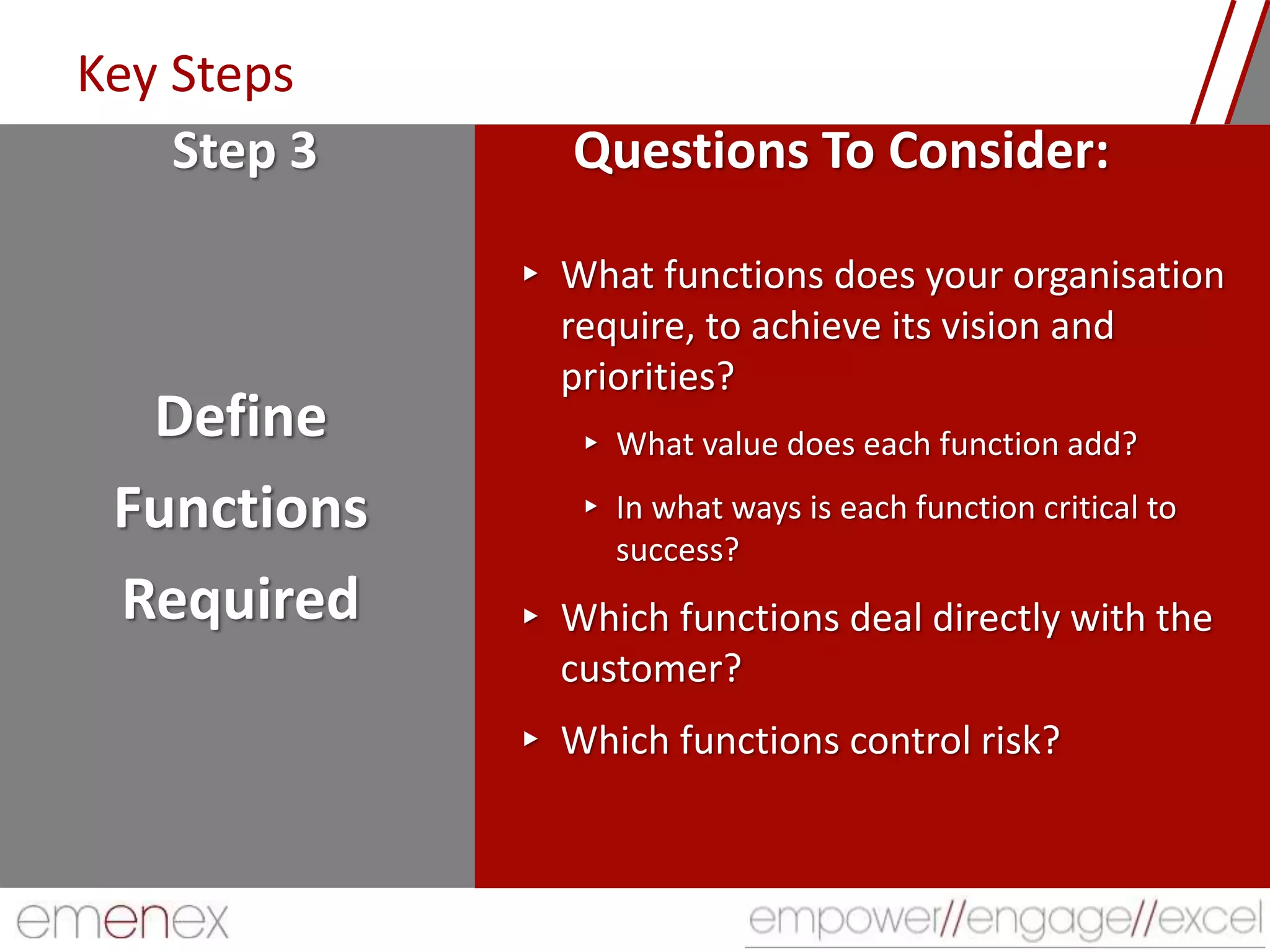
Key Steps
Define
Functions
Required
▸ What functions does your organisation
require, to achieve its vision and
priorities?
▸ What value does each function add?
▸ In what ways is each function critical to
success?
▸ Which functions deal directly with the
customer?
▸ Which functions control risk?
Step 3 Questions To Consider:
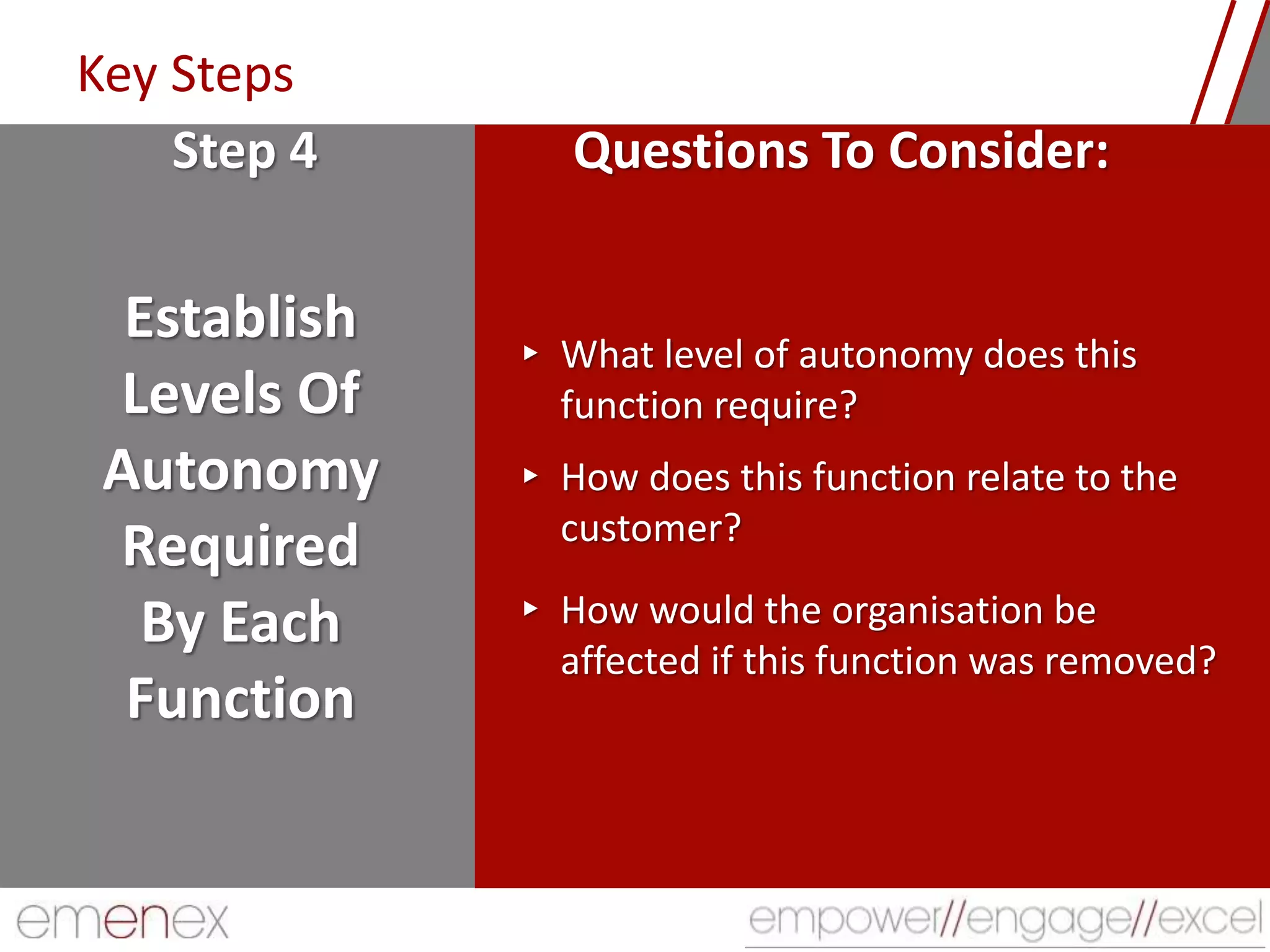
Key Steps
Establish
Levels Of
Autonomy
Required
By Each
Function
▸ What level of autonomy does this
function require?
▸ How does this function relate to the
customer?
▸ How would the organisation be
affected if this function was removed?
Step 4 Questions To Consider:
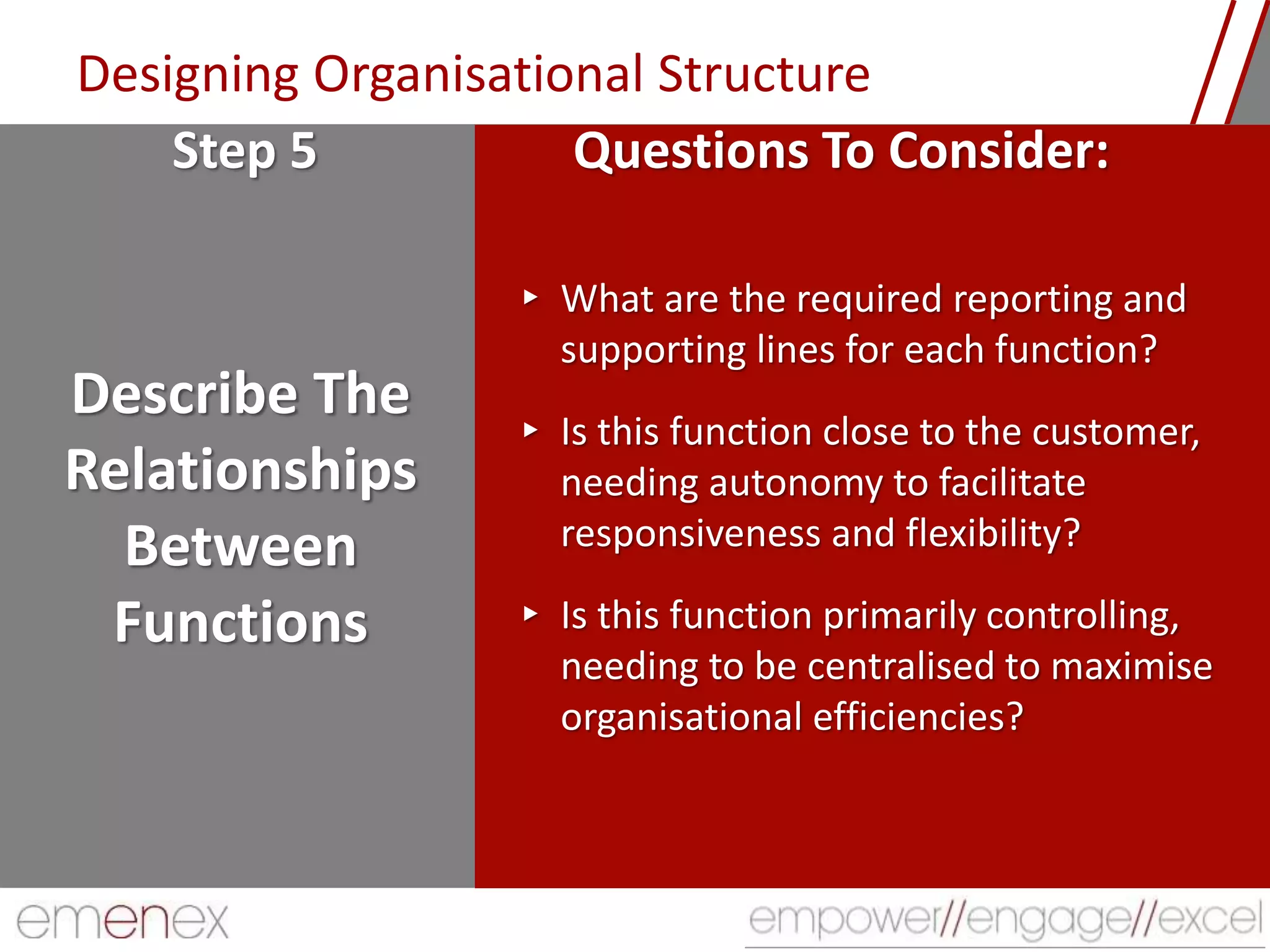
Designing Organisational Structure
Describe The
Relationships
Between
Functions
▸ What are the required reporting and
supporting lines for each function?
▸ Is this function close to the customer,
needing autonomy to facilitate
responsiveness and flexibility?
▸ Is this function primarily controlling,
needing to be centralised to maximise
organisational efficiencies?
Step 5 Questions To Consider:
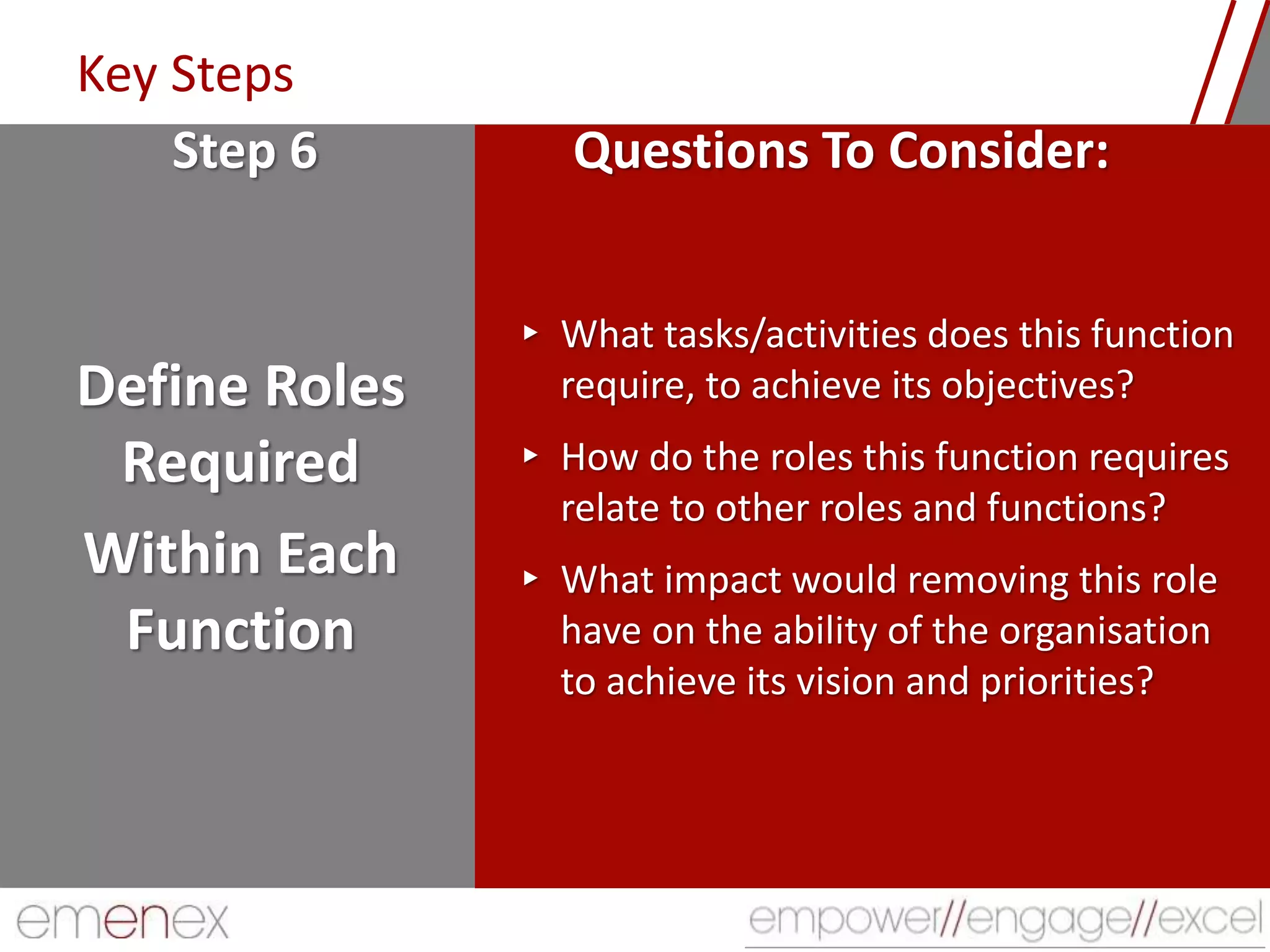
Key Steps
Define Roles
Required
Within Each
Function
▸ What tasks/activities does this function
require, to achieve its objectives?
▸ How do the roles this function requires
relate to other roles and functions?
▸ What impact would removing this role
have on the ability of the organisation
to achieve its vision and priorities?
Step 6 Questions To Consider:
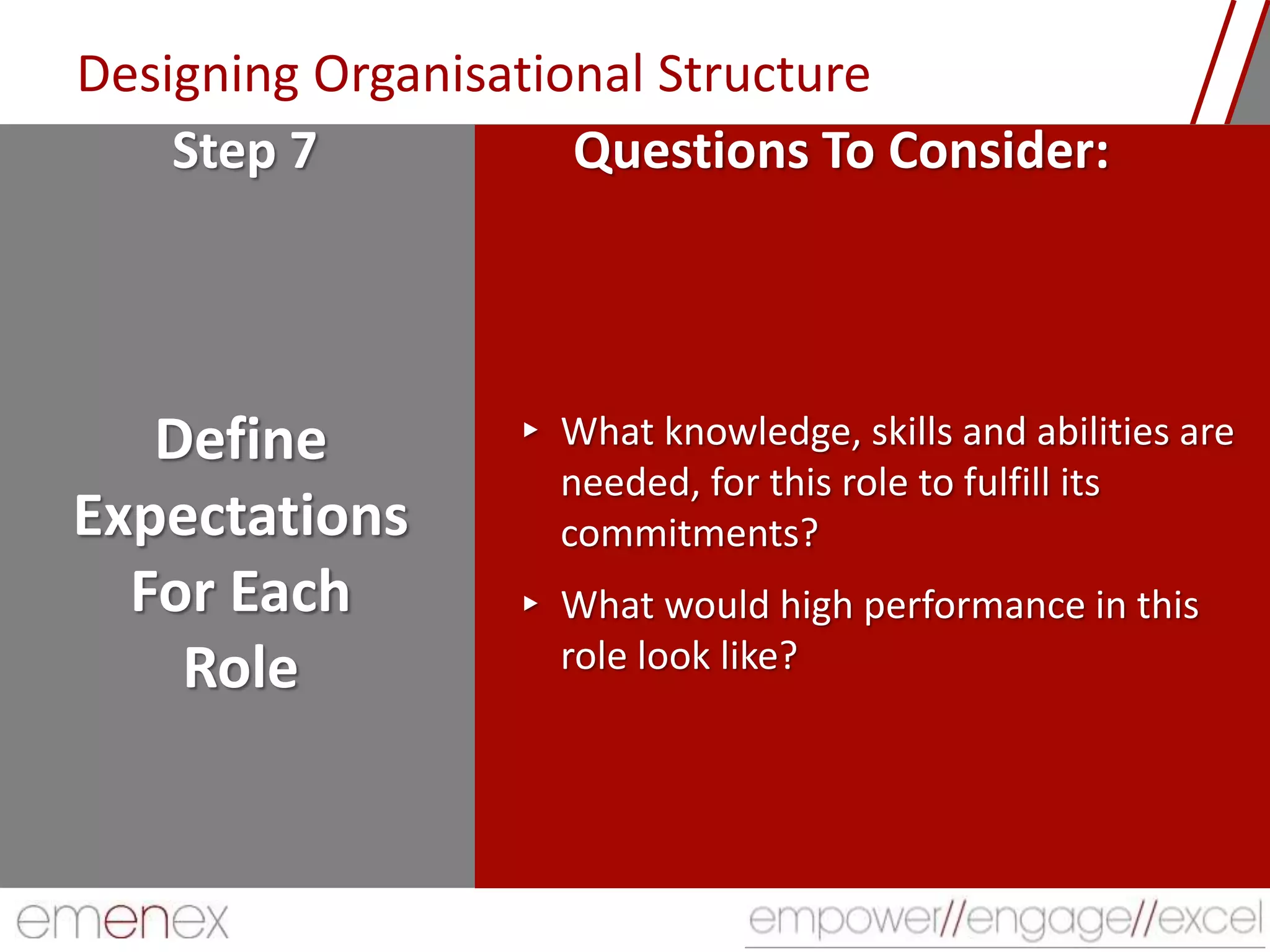
Designing Organisational Structure
Define
Expectations
For Each
Role
▸ What knowledge, skills and abilities are
needed, for this role to fulfill its
commitments?
▸ What would high performance in this
role look like?
Step 7 Questions To Consider:
Key Steps
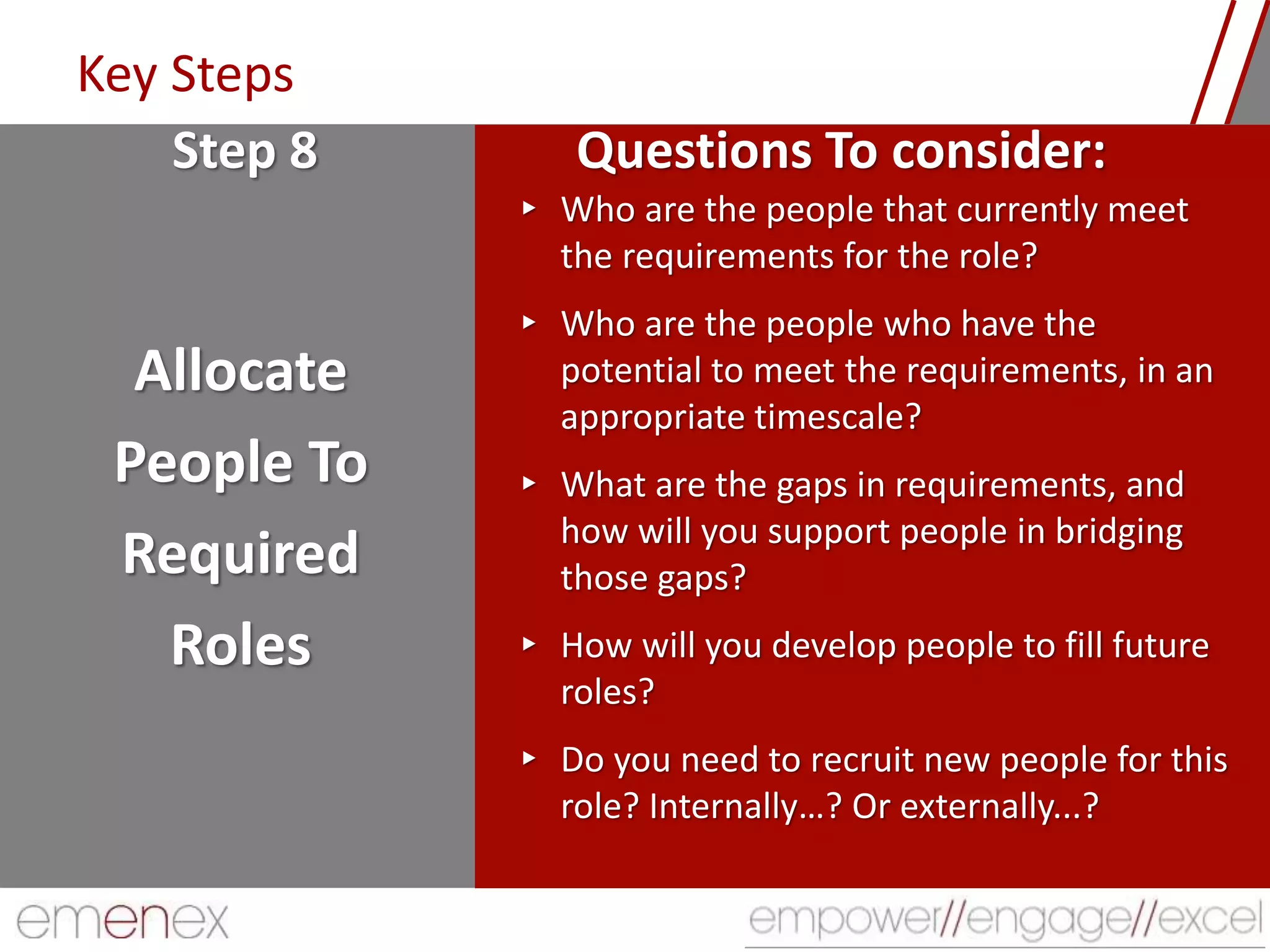
Allocate
People To
Required
Roles
▸ Who are the people that currently meet
the requirements for the role?
▸ Who are the people who have the
potential to meet the requirements, in an
appropriate timescale?
▸ What are the gaps in requirements, and
how will you support people in bridging
those gaps?
▸ How will you develop people to fill future
roles?
▸ Do you need to recruit new people for this
role? Internally…? Or externally...?
Step 8 Questions To consider:
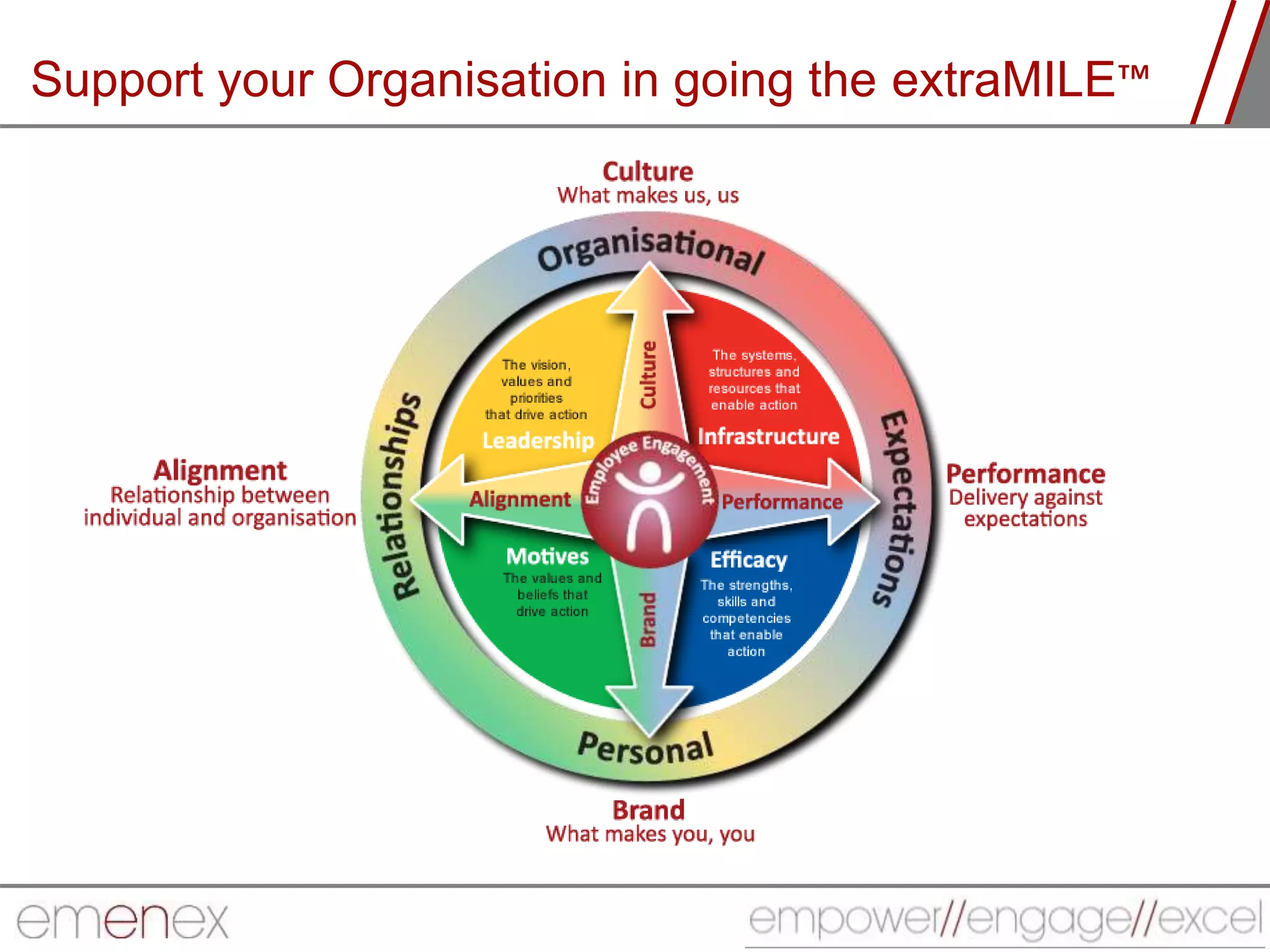
Support your Organisation in going the extraMILE™
Emenex Ltd.
www.emenex.co.uk
+44 (0)3450 523 593

Organisation Structure Principles

  • 1.
    © Richard Thomas123RF.com The Key Principles and Steps In Designing an Organisational Structure Supporting Organisational High Performance
  • 2.
    Building Organisational Excellence OrganisationFocus Organisations accomplish exceptional things when their infrastructure aligns with their vision, values and priorities. “A bad system will defeat a good person every time.” Individual Focus Individuals accomplish exceptional things when their motivation and capabilities align with their organisation's vision, values and priorities. “People do not decide to become extraordinary. They decide to accomplish extraordinary things.”Dr. W. Edwards Deming Sir Edmund Hilary
  • 3.
    Designing Organisational Structure ©Richard Thomas 123RF.com Five Principles
  • 4.
    Key Principles Vision, values andpriorities come before structure ‣ Being clear about where you are going and how you’re going to get there… ‣ and what’s important to you as an organisation... ‣ and therefore what your priorities are. Principle #1 In Practice This Means…
  • 5.
    Key Principles Organisational structure should bedesigned to enable you to deliver your vision and priorities ▸ Starting from the ground up to build a structure that aligns with your vision and priorities. Principle #2 In Practice This Means…
  • 6.
    Key Principles Organisational structure should bedesigned around future requirements, not current capabilities ‣ Taking account of constraints, for example: costs, time, expertise; ‣ Recognising future potential, not just current capability; ‣ Having a capacity building mindset; ‣ Resisting the temptation to… ‣ appoint a ‘poor fit’ into a critical role due to expediency; ‣ design the organisation around the individual people you already have, rather than those you need. Principle #3 In Practice This Means…
  • 7.
    Key Principles There isan inevitable tension between autonomy and control ▸ Designing the organisation to embrace rather than constrain this tension: ▸ Giving autonomy to functions closest to the customer, to maximise responsiveness; ▸ Centralising functions that control risk, to maximise efficiency; Principle #4 In Practice This Means…
  • 8.
    Key Principles Reporting lines shouldbe based on function, autonomy and accountability ▸ Function ▸ Identifying the core activities that the organisation must do to achieve its priorities. ▸ Autonomy ▸ Empowering people to make decisions and act. ▸ Accountability ▸ Clear reporting and supporting lines, within and across all functions. Principle #5 In Practice This Means…
  • 9.
    Key Steps inDesigning Organisational Structure © Richard Thomas 123RF.com The Process
  • 10.
    Key Steps Agree And Record YourVision And Values ▸ What’s your aspiration for the organisation? ▸ Why is this important to you? ▸ What legacy do you want to leave behind? ▸ What will achieving your vision mean to your stakeholders? ▸ If you were ten times bolder, what difference would it make? Step 1 Questions To Consider:
  • 11.
    Key Steps Agree And Record YourPriorities ‣ Where do you want to be in 5 years from now? To achieve that, where will you need to be in 3 years…? ‣ What will you need to do in the next 12 months to get to that point? ‣ How will you know when you are there? Step 2 Questions To Consider:
  • 12.
    Key Steps Define Functions Required ▸ Whatfunctions does your organisation require, to achieve its vision and priorities? ▸ What value does each function add? ▸ In what ways is each function critical to success? ▸ Which functions deal directly with the customer? ▸ Which functions control risk? Step 3 Questions To Consider:
  • 13.
    Key Steps Establish Levels Of Autonomy Required ByEach Function ▸ What level of autonomy does this function require? ▸ How does this function relate to the customer? ▸ How would the organisation be affected if this function was removed? Step 4 Questions To Consider:
  • 14.
    Designing Organisational Structure DescribeThe Relationships Between Functions ▸ What are the required reporting and supporting lines for each function? ▸ Is this function close to the customer, needing autonomy to facilitate responsiveness and flexibility? ▸ Is this function primarily controlling, needing to be centralised to maximise organisational efficiencies? Step 5 Questions To Consider:
  • 15.
    Key Steps Define Roles Required WithinEach Function ▸ What tasks/activities does this function require, to achieve its objectives? ▸ How do the roles this function requires relate to other roles and functions? ▸ What impact would removing this role have on the ability of the organisation to achieve its vision and priorities? Step 6 Questions To Consider:
  • 16.
    Designing Organisational Structure Define Expectations ForEach Role ▸ What knowledge, skills and abilities are needed, for this role to fulfill its commitments? ▸ What would high performance in this role look like? Step 7 Questions To Consider:
  • 17.
    Key Steps Allocate People To Required Roles ▸Who are the people that currently meet the requirements for the role? ▸ Who are the people who have the potential to meet the requirements, in an appropriate timescale? ▸ What are the gaps in requirements, and how will you support people in bridging those gaps? ▸ How will you develop people to fill future roles? ▸ Do you need to recruit new people for this role? Internally…? Or externally...? Step 8 Questions To consider:
  • 18.
    Support your Organisationin going the extraMILE™
  • 19.