Obstacles to Adequate Nutrition in Human Immunodeficiency VirusPrepared by: Jessica McGovern
ObjectivesExplain HIV’s effect on the immune systemExamine HIV’s effect on the bodyIdentify risk factors for contracting the virusState methods of assessing an HIV patientDiscuss obstacles to maintaining nutritional statusIdentify nutrition interventions for HIV Examine methods of monitoring nutritional status in this populationDiscuss a case study of an HIV patient with oral feeding difficultyExplain various oral issues and associated medical nutrition therapy
Patient AW46 year old Hispanic male, 5’7”, UBW-180lbs Admitted on September 14th with sore throat, ulcers in the oral cavity and esophagus, and significant weight loss.Admitting diagnosis of esophagitis.HIV test reveals patient is HIV positive.http://www.health.com/health/static/hw/media/medical/hw/n5551186.jpg
What is HIV?A retro-virus (contains RNA) that uses the body’s own cells to reproduce. Transmitted through sexual contact, infectious bodily fluids, needle/syringe sharing, tainted blood transfusions, or through birth/breast feeding.Not easily transmitted. Often asymptomatic in the earliest stages .http://www.hivnorfolk.com/images/illustrations/hiv_virus.jpg(1)
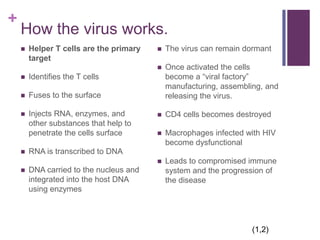
Overview of Immune CellsB Cells- Identify foreign cells, produces antibodies, able to neutralize and destroy invaders that are not already incorporated into the host cellsHelper T (CD4)- Directs the immune response once a foreign entity is identifiedCytotoxic T (CD8)- kills the targeted cells based on the presence of a foreign antigen on  the surface of the cellMacrophages- engulf foreign material(2)
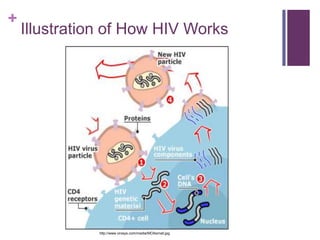
How the virus works.Helper T cells are the primary targetIdentifies the T cellsFuses to the surfaceInjects RNA, enzymes, and other substances that help to penetrate the cells surfaceRNA is transcribed to DNADNA carried to the nucleus and integrated into the host DNA using enzymesThe virus can remain dormantOnce activated the cells become a “viral factory” manufacturing, assembling, and releasing the virus. CD4 cells becomes destroyedMacrophages infected with HIV become dysfunctionalLeads to compromised immune system and the progression of the disease(1,2)
Illustration of How HIV Workshttp://www.virxsys.com/media/MOAsmall.jpg
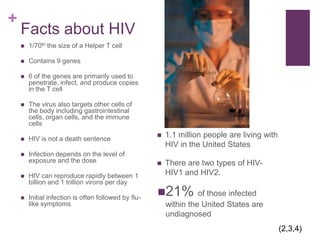
Facts about HIV 1/70th the size of a Helper T cellContains 9 genes6 of the genes are primarily used to penetrate, infect, and produce copies in the T cellThe virus also targets other cells of the body including gastrointestinal cells, organ cells, and the immune cellsHIV is not a death sentenceInfection depends on the level of exposure and the doseHIV can reproduce rapidly between 1 billion and 1 trillion virons per dayInitial infection is often followed by flu-like symptoms1.1 million people are living with HIV in the United StatesThere are two types of HIV- HIV1 and HIV2.21% of those infected within the United States are undiagnosed(2,3,4)
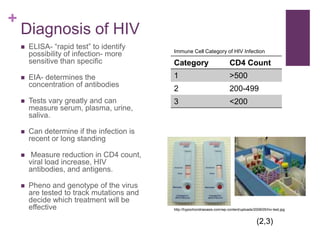
Diagnosis of HIVELISA- “rapid test” to identify possibility of infection- more sensitive than specificEIA- determines the concentration of antibodiesTests vary greatly and can measure serum, plasma, urine, saliva.Can determine if the infection is recent or long standing Measure reduction in CD4 count, viral load increase, HIV antibodies, and antigens. Pheno and genotype of the virus are tested to track mutations and decide which treatment will be effectiveImmune Cell Category of HIV Infectionhttp://hypochondriaoasis.com/wp-content/uploads/2008/05/hiv-test.jpg(2,3)
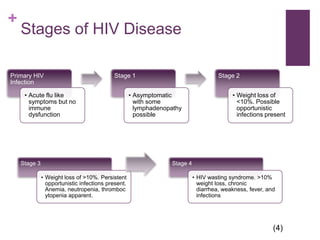
Stages of HIV Disease(4)
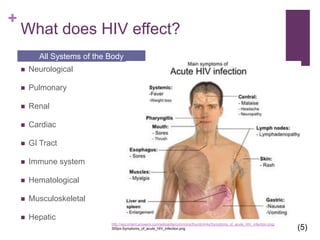
What does HIV effect?NeurologicalPulmonaryRenalCardiacGI TractImmune systemHematologicalMusculoskeletalHepaticAll Systems of the Body(5)http://wpcontent.answers.com/wikipedia/commons/thumb/4/4a/Symptoms_of_acute_HIV_infection.png/300px-Symptoms_of_acute_HIV_infection.png
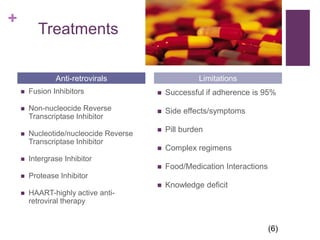
    TreatmentsFusion InhibitorsNon-nucleocide Reverse Transcriptase InhibitorNucleotide/nucleocide Reverse Transcriptase InhibitorIntergrase InhibitorProtease InhibitorHAART-highly active anti-retroviral therapySuccessful if adherence is 95%Side effects/symptomsPill burdenComplex regimens Food/Medication InteractionsKnowledge deficitAnti-retroviralsLimitations(6)
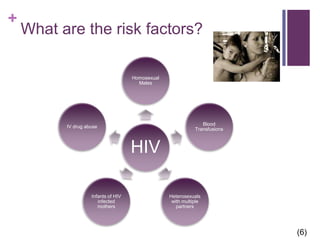
What are the risk factors?(6)
      Assessing Dietary Intake of Drug-Abusing Hispanic Adults with and with out Human Immunodeficiency Virus InfectionSahni S, Forrester JE, Tucker KL. Assessing Dietary Intake of Drug-Abusing Hispanic Adults with and without Human Immunodeficiency Virus Infection. J Am Diet Assoc. 2007;107(6):968-976.Objective:
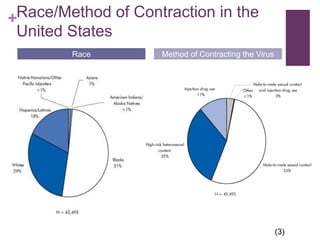
-20% of HIV/AIDS cases in the United States are related to injection drug use
-Both drug abuse and HIV are identified as leading to nutritional deficiencies in macro and micronutrients
-Drug abuse among Hispanics in the Northeastern United States is a significant risk factor
-The dietary assessment of a drug user often proves difficult to obtain and may be inaccurate
-Develop an assessment method tailored to the Hispanic populationDesign used 3 groups:-HIV infected drug users-HIV –non-infected drug users-HIV infected non drug users 7)
Assessing Dietary Intake of Drug-Abusing Hispanic Adults with and with out Human Immunodeficiency Virus Infection24 hour recall and FFQ recorded by interviewer on 1st visitHalf of 3 day records not completedTotal kcal, protein, carbohydrates, fat, saturated fat, cholesterol, fiber, Vitamins A, D, K, Riboflavin, Niacin, Folate, B6, B12, C and Zeaxanthhin, Calcium, Iron, Zinc, Sodium, Potassium, Magnesium, PhosphorusConclusion-24 hour recall and FFQ most effective3 assessment methods 3 day recall, 24 hour recall, and FFQ 286 participated282 FFQ142 3 day records270 24 hour recalls28% of subject women24% reported homelessness>50% has less than a high school education(7)
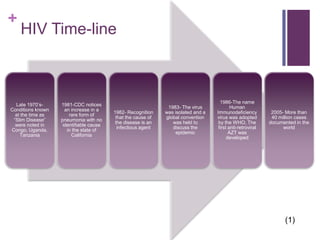
HIV Time-line(1)
Race/Method of Contraction in the United StatesRaceMethod of Contracting the Virus(3)
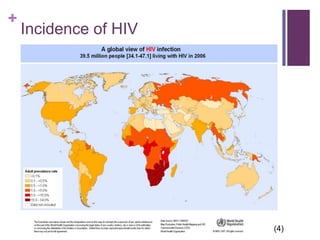
Incidence of HIV(4)
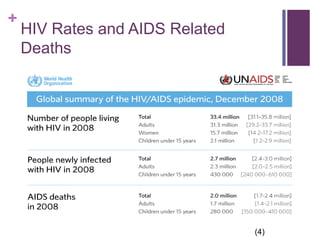
HIV Rates and AIDS Related Deaths(4)
Nutrition AssessmentLifestyle choices (smoking, drug abuse, alcohol)Economic statusLack of healthcareAccess to safe foodFood insecuritySocial History(1,6)
Nutrition AssessmentFood recall/frequency/questionnaireMeals per dayIntake analysisFood allergiesAppetiteAbility to chew/swallowSigns/symptoms of GI distressTaste changes/dry mouthDietary History(1,6)
Nutrition AssessmentWeight- changeHeightBMIClinical signs of deficiency AnthropometricsBody composition analysisLipodystrophyPhysical Assessment(1,6)
Nutrition AssessmentPast and current medical diagnosisFamily historyMedicationsSurgeryMedical History(1,6)
Nutrition AssessmentImmunologic profileHematologic profileLiver functionLipid profileRenal profileGlucose/InsulinInflammatory markersBiochemical Assessment(1)
Nutrition AssessmentKcals- BEE x 1.3 for weight maintenance, BEE x 1.5 for weight gainProtein- 1-1.4g/kg body weight for maintenance, 1.5-2g/kg for repletionFluids- 30-35mL/kg body weightVitamins-A,C, B6, B12, and Folate may be poorly absorbedMinerals-Selenium and Zinc may be deficientCalculating Estimated Needs(1,6)
Nutrition’s relation to immunityHIV causes dysfunction of the GI tractIncreases risk for malabsorption of nutrientsMalnutrition continues leading to a decline in health and wasting processBreakdown of protein stores to feed the inflammatory processOpportunistic diseases/cancers increase catabolic state causing weight loss(1)
Methods:-3 day food record-Included Vitamin/Mineral supplementsObjectives:-To evaluate the connection between state of HIV disease and nutritional intakeSubjects:-516 total subjects-25% women, 30% minorities-Categorized by CD4 count, gender, and white VS non-white-Clinical Status Questionnaire-Physical Activity Questionnaire-Physical Exam-Blood Tests-CD4-Stool Specimen-fecal fat-Serum Vit levelsNutrient Intake and body weight in a large HIV cohort that includes women and minoritiesWoods MN, Spiegelman D, Knox TA, Forrester JE, Connors JL, Skinner SC, Silva M, Kim JH, Gorbach SL. Nutrient Intake and Body Weight in a Large Cohort That Includes Women and Minorities.  J Am Diet Assoc. 2002;102:203-211.(8)
      Nutrient Intake and body weight in a large HIV cohort that includes women and minorities Results:-As CD4 count decreased, macronutrient intake increased in men-25-30% of women consumed <75% DRI’s for A, C, E, B6, and Iron.-White men had higher micronutrient intakes-Macronutrient intake was higher among white vs non-white men-25% of men did not meet DRI of Zinc, Folate, and vitamin E-90% of the subjects provided a 3 day recall-The remaining submitted a 1-2 day recall-Nutrition Data Software was used to analyze the diet(8)
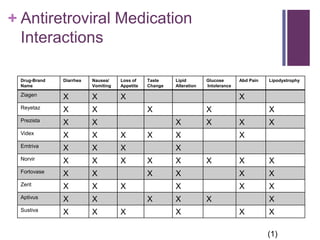
Obstacles to maintaining nutritional statusPolypharmacyDisease complicationsCo-Infections/opportunistic infectionsSymptoms(6)
Antiretroviral Medication Interactions(1)
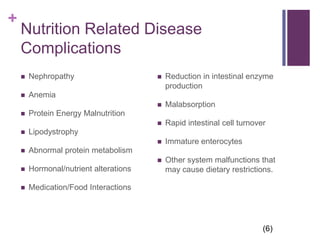
Nutrition Related Disease ComplicationsNephropathyAnemiaProtein Energy MalnutritionLipodystrophyAbnormal protein metabolismHormonal/nutrient alterations Medication/Food InteractionsReduction in intestinal enzyme productionMalabsorptionRapid intestinal cell turnoverImmature enterocytesOther system malfunctions that may cause dietary restrictions.(6)
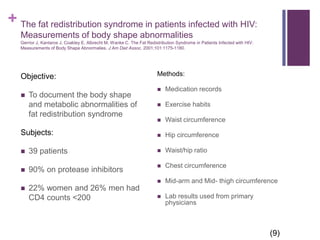
The fat redistribution syndrome in patients infected with HIV: Measurements of body shape abnormalitiesGerrior J, Kantaros J, Coakley E, Albrecht M, Wanke C. The Fat Redistribution Syndrome in Patients Infected with HIV: Measurements of Body Shape Abnormalies. J Am Diet Assoc. 2001;101:1175-1180.Objective:To document the body shape and metabolic abnormalities of fat redistribution syndromeSubjects: 39 patients90% on protease inhibitors22% women and 26% men had CD4 counts <200Methods:Medication recordsExercise habitsWaist circumferenceHip circumferenceWaist/hip ratioChest circumferenceMid-arm and Mid- thigh circumferenceLab results used from primary physicians(9)
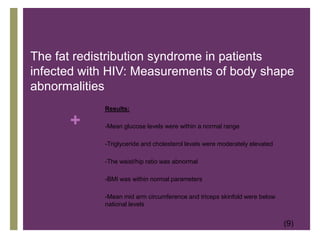
The fat redistribution syndrome in patients infected with HIV: Measurements of body shape abnormalitiesResults:-Mean glucose levels were within a normal range-Triglyceride and cholesterol levels were moderately elevated-The waist/hip ratio was abnormal-BMI was within normal parameters-Mean mid arm circumference and triceps skinfold were below national levels(9)
Opportunistic DiseasesFungal infections-ThrushViral infections- HerpesBacterial infections- salivary gland disease, periodontal disease, pneumonia, upper respiratory tract infection Various cancers- Kaposi’s sarcoma, Hodgkins Disease(1,5)
SymptomsNauseaVomitingDiarrheaAbdominal PainAnorexiaTaste changesFatigueChillsSore ThroatHeadacheWeight lossFeverAnxietyFrequent infections(1,5,6)
Goals of Nutrition Intervention in HIVRestore macro/micro nutrient deficienciesManage symptoms of disease and/or medicationsWeight maintenanceHydrationAlter diet if co-disease exists that warrants nutritional therapyAvoid fatigue during meal times by providing small, frequent mealsInitiate tube feeding if necessary(5)
Methods of Monitoring and Evaluating HIV PatientsWeight recordsReports of GI distress and symptomsFood recordsLaboratory results(1,5)
Nutrition Education Food SafetyProtein sourcesFluidsKilocaloriesMicronutrientsExerciseFood/Medication InteractionsSymptom managementWeight changesManagement of nutritionally pertinent co-diseasesThe relationship between nutrition and immunityAdditional resources for educational information on the disease process(1,5,6)
       Application of a Five-Step Message Development Model for Food Safety Education Materials Targeting People with HIV/AIDSNeeds Assessment:-8 focus groups-65 HIV infected people-18 health care providers interviewedObjective:-Assess the needs of those with HIV-Develop educational materials on food safety-Evaluate effectiveness and how the material is received by the audience of HIV participantsAssessment of Acceptance:4 focus groups-32 HIV infected people-25 health care provider surveysHoffman EW, Bergmann V, Armstrong J, Kendall P, Medieros LC, Hillers VN. Applications of a Five-Step Message Development Model for Food Safety Education Materials Targeting people with HIV/AIDS.J Am Diet Assoc. 2005;105:1597-1604.(10)
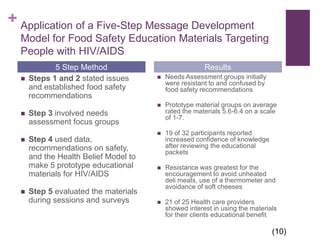
Application of a Five-Step Message Development Model for Food Safety Education Materials Targeting People with HIV/AIDS5 Step MethodResultsSteps 1 and 2 stated issues and established food safety recommendationsStep 3 involved needs assessment focus groupsStep 4 used data, recommendations on safety, and the Health Belief Model to make 5 prototype educational materials for HIV/AIDSStep 5 evaluated the materials during sessions and surveysNeeds Assessment groups initially were resistant to and confused by food safety recommendationsPrototype material groups on average rated the materials 5.6-6.4 on a scale of 1-7.19 of 32 participants reported increased confidence of knowledge after reviewing the educational packetsResistance was greatest for the encouragement to avoid unheated deli meats, use of a thermometer and avoidance of soft cheeses21 of 25 Health care providers showed interest in using the materials for their clients educational benefit(10)
In Depth-Initial Visit to DoctorVisit primary doctor with c/o 10 lbs weight loss and sore throat since the beginning of AugustPt placed on antibiotics (amoxicillan, levaquin, Diflucan)Return to primary doctor- patient is no longer able to swallow liquids and still losing weightAdmitted to the hospital with diagnosis of esophagitis
Signs/Symptoms on AdmissionUnable to swallowPain in the mouth and throatDizzinessUnable to open mouth all of the way18 lb weight loss by the time of admissionN/V/DChewing/Swallowing difficulty due to mouth ulcers
Past Medical History/ Social HistoryHTNHepatitis CIV Drug Abuse (Heroin, Cocaine)Tobacco use (quit in January of 2003)Married with one sonLives at home with his wifeMaintained on Methadone
Physical ExamPhysician Notes:General: Well developed, well nourished, in no distress, alert and orientedVital Signs: Tmax is 100.2. All other vitals are stableHEENT: Significant for thrush, small ulcer inside of left side of pharynx. Looks normal but is unable to open mouth. Nodes are slightly swollen.Neck: SuppleChest: ClearExtremities: - for cyanosis, clubbing, edemaAbdomen: Soft, non tender, + for bowel soundsNeurologic: Grossly intactSkin: Warm, no rashes
Tests/ProceduresBiopsy of ulcer to r/o cancerFull lab work-up- HIV +CT scan of throat/abdomen to r/o perforationsEsophageal gastroduodenoscopySpeech therapy evaluation for swallowing to r/o aspiration pneumoniaChest X-rayMRI of brainEKGCT scan of the head because of change in mental statusEEG because of seizure
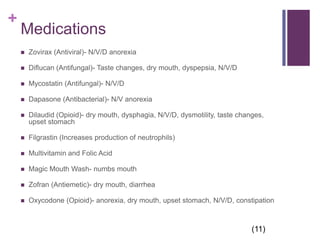
MedicationsZovirax (Antiviral)- N/V/D anorexiaDiflucan (Antifungal)- Taste changes, dry mouth, dyspepsia, N/V/DMycostatin (Antifungal)- N/V/DDapasone (Antibacterial)- N/V anorexiaDilaudid (Opioid)- dry mouth, dysphagia, N/V/D, dysmotility, taste changes, upset stomachFilgrastin (Increases production of neutrophils)Multivitamin and Folic AcidMagic Mouth Wash- numbs mouthZofran (Antiemetic)- dry mouth, diarrheaOxycodone (Opioid)- anorexia, dry mouth, upset stomach, N/V/D, constipation(11)
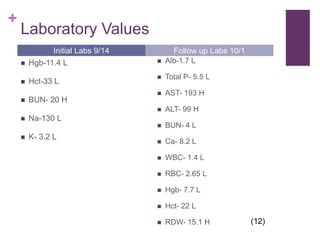
Laboratory ValuesInitial Labs 9/14Follow up Labs 10/1Alb-1.7 LTotal P- 5.5 LAST- 193 HALT- 99 HBUN- 4 LCa- 8.2 LWBC- 1.4 LRBC- 2.65 LHgb- 7.7 LHct- 22 LRDW- 15.1 HHgb-11.4 LHct-33 LBUN- 20 HNa-130 LK- 3.2 L(12)
DietPlaced on a full fluid dietPatient cannot tolerate acidic foods Cannot manage solid foods<50% consumption of mealsNeutrapenic precautions due to low WBC countFood recall taken
(13,14)
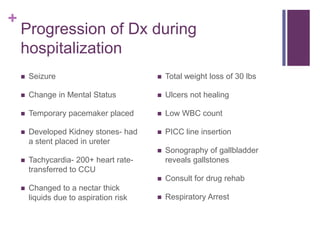
Progression of Dx during hospitalizationSeizureChange in Mental StatusTemporary pacemaker placedDeveloped Kidney stones- had a stent placed in ureterTachycardia- 200+ heart rate- transferred to CCUChanged to a nectar thick liquids due to aspiration risk Total weight loss of 30 lbsUlcers not healingLow WBC countPICC line insertionSonography of gallbladder reveals gallstonesConsult for drug rehabRespiratory Arrest
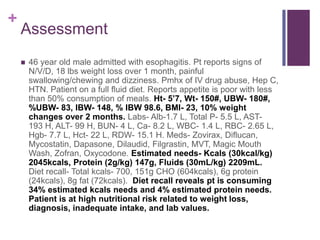
Assessment46 year old male admitted with esophagitis. Pt reports signs of N/V/D, 18 lbs weight loss over 1 month, painful swallowing/chewing and dizziness. Pmhx of IV drug abuse, Hep C, HTN. Patient on a full fluid diet. Reports appetite is poor with less than 50% consumption of meals. Ht- 5’7, Wt- 150#, UBW- 180#, %UBW- 83, IBW- 148, % IBW 98.6, BMI- 23, 10% weight changes over 2 months. Labs- Alb-1.7 L, Total P- 5.5 L, AST- 193 H, ALT- 99 H, BUN- 4 L, Ca- 8.2 L, WBC- 1.4 L, RBC- 2.65 L, Hgb- 7.7 L, Hct- 22 L, RDW- 15.1 H. Meds- Zovirax, Diflucan, Mycostatin, Dapasone, Dilaudid, Filgrastin, MVT, Magic Mouth Wash, Zofran, Oxycodone. Estimated needs- Kcals (30kcal/kg) 2045kcals, Protein (2g/kg) 147g, Fluids (30mL/kg) 2209mL. Diet recall- Total kcals- 700, 151g CHO (604kcals), 6g protein (24kcals), 8g fat (72kcals).  Diet recall reveals pt is consuming 34% estimated kcals needs and 4% estimated protein needs. Patient is at high nutritional risk related to weight loss, diagnosis, inadequate intake, and lab values.
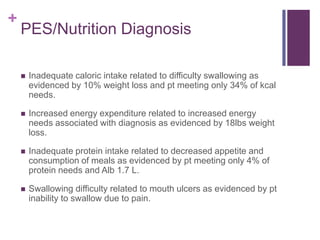
PES/Nutrition DiagnosisInadequate caloric intake related to difficulty swallowing as evidenced by 10% weight loss and pt meeting only 34% of kcal needs.Increased energy expenditure related to increased energy needs associated with diagnosis as evidenced by 18lbs weight loss. Inadequate protein intake related to decreased appetite and consumption of meals as evidenced by pt meeting only 4% of protein needs and Alb 1.7 L.Swallowing difficulty related to mouth ulcers as evidenced by pt inability to swallow due to pain.
InterventionsProvide patient with Ensure Plus 3x day for an extra 1050kcalsRecommend diet be advanced as tolerated to soft foods to increase caloriesProvide patient with Prostat 3x day for an additional 45g proteinEducate patient on high biological value proteins and high calorie foods
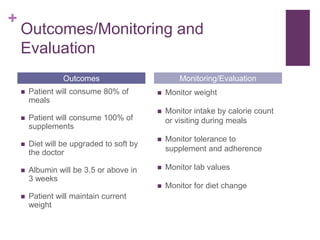
Outcomes/Monitoring and EvaluationPatient will consume 80% of mealsPatient will consume 100% of supplementsDiet will be upgraded to soft by the doctorAlbumin will be 3.5 or above in 3 weeksPatient will maintain current weightMonitor weightMonitor intake by calorie count or visiting during mealsMonitor tolerance to supplement and adherence Monitor lab valuesMonitor for diet changeOutcomesMonitoring/Evaluation
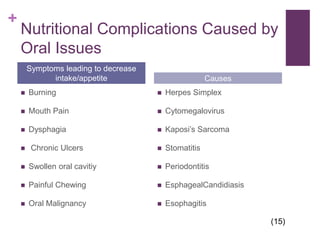
Nutritional Complications Caused by Oral IssuesBurningMouth PainDysphagia Chronic UlcersSwollen oral cavitiyPainful ChewingOral MalignancyHerpes SimplexCytomegalovirusKaposi’s SarcomaStomatitisPeriodontitisEsphagealCandidiasisEsophagitisSymptoms leading to decrease intake/appetiteCauses(15)

Hiv Case Study Presentation

  • 1.
    Obstacles to AdequateNutrition in Human Immunodeficiency VirusPrepared by: Jessica McGovern
  • 2.
    ObjectivesExplain HIV’s effecton the immune systemExamine HIV’s effect on the bodyIdentify risk factors for contracting the virusState methods of assessing an HIV patientDiscuss obstacles to maintaining nutritional statusIdentify nutrition interventions for HIV Examine methods of monitoring nutritional status in this populationDiscuss a case study of an HIV patient with oral feeding difficultyExplain various oral issues and associated medical nutrition therapy
  • 3.
    Patient AW46 yearold Hispanic male, 5’7”, UBW-180lbs Admitted on September 14th with sore throat, ulcers in the oral cavity and esophagus, and significant weight loss.Admitting diagnosis of esophagitis.HIV test reveals patient is HIV positive.http://www.health.com/health/static/hw/media/medical/hw/n5551186.jpg
  • 4.
    What is HIV?Aretro-virus (contains RNA) that uses the body’s own cells to reproduce. Transmitted through sexual contact, infectious bodily fluids, needle/syringe sharing, tainted blood transfusions, or through birth/breast feeding.Not easily transmitted. Often asymptomatic in the earliest stages .http://www.hivnorfolk.com/images/illustrations/hiv_virus.jpg(1)
  • 5.
    Overview of ImmuneCellsB Cells- Identify foreign cells, produces antibodies, able to neutralize and destroy invaders that are not already incorporated into the host cellsHelper T (CD4)- Directs the immune response once a foreign entity is identifiedCytotoxic T (CD8)- kills the targeted cells based on the presence of a foreign antigen on the surface of the cellMacrophages- engulf foreign material(2)
  • 6.
    How the virusworks.Helper T cells are the primary targetIdentifies the T cellsFuses to the surfaceInjects RNA, enzymes, and other substances that help to penetrate the cells surfaceRNA is transcribed to DNADNA carried to the nucleus and integrated into the host DNA using enzymesThe virus can remain dormantOnce activated the cells become a “viral factory” manufacturing, assembling, and releasing the virus. CD4 cells becomes destroyedMacrophages infected with HIV become dysfunctionalLeads to compromised immune system and the progression of the disease(1,2)
  • 7.
    Illustration of HowHIV Workshttp://www.virxsys.com/media/MOAsmall.jpg
  • 8.
    Facts about HIV1/70th the size of a Helper T cellContains 9 genes6 of the genes are primarily used to penetrate, infect, and produce copies in the T cellThe virus also targets other cells of the body including gastrointestinal cells, organ cells, and the immune cellsHIV is not a death sentenceInfection depends on the level of exposure and the doseHIV can reproduce rapidly between 1 billion and 1 trillion virons per dayInitial infection is often followed by flu-like symptoms1.1 million people are living with HIV in the United StatesThere are two types of HIV- HIV1 and HIV2.21% of those infected within the United States are undiagnosed(2,3,4)
  • 9.
    Diagnosis of HIVELISA-“rapid test” to identify possibility of infection- more sensitive than specificEIA- determines the concentration of antibodiesTests vary greatly and can measure serum, plasma, urine, saliva.Can determine if the infection is recent or long standing Measure reduction in CD4 count, viral load increase, HIV antibodies, and antigens. Pheno and genotype of the virus are tested to track mutations and decide which treatment will be effectiveImmune Cell Category of HIV Infectionhttp://hypochondriaoasis.com/wp-content/uploads/2008/05/hiv-test.jpg(2,3)
  • 10.
    Stages of HIVDisease(4)
  • 11.
    What does HIVeffect?NeurologicalPulmonaryRenalCardiacGI TractImmune systemHematologicalMusculoskeletalHepaticAll Systems of the Body(5)http://wpcontent.answers.com/wikipedia/commons/thumb/4/4a/Symptoms_of_acute_HIV_infection.png/300px-Symptoms_of_acute_HIV_infection.png
  • 12.
    TreatmentsFusion InhibitorsNon-nucleocide Reverse Transcriptase InhibitorNucleotide/nucleocide Reverse Transcriptase InhibitorIntergrase InhibitorProtease InhibitorHAART-highly active anti-retroviral therapySuccessful if adherence is 95%Side effects/symptomsPill burdenComplex regimens Food/Medication InteractionsKnowledge deficitAnti-retroviralsLimitations(6)
  • 13.
    What are therisk factors?(6)
  • 14.
    Assessing Dietary Intake of Drug-Abusing Hispanic Adults with and with out Human Immunodeficiency Virus InfectionSahni S, Forrester JE, Tucker KL. Assessing Dietary Intake of Drug-Abusing Hispanic Adults with and without Human Immunodeficiency Virus Infection. J Am Diet Assoc. 2007;107(6):968-976.Objective:
  • 15.
    -20% of HIV/AIDScases in the United States are related to injection drug use
  • 16.
    -Both drug abuseand HIV are identified as leading to nutritional deficiencies in macro and micronutrients
  • 17.
    -Drug abuse amongHispanics in the Northeastern United States is a significant risk factor
  • 18.
    -The dietary assessmentof a drug user often proves difficult to obtain and may be inaccurate
  • 19.
    -Develop an assessmentmethod tailored to the Hispanic populationDesign used 3 groups:-HIV infected drug users-HIV –non-infected drug users-HIV infected non drug users 7)
  • 20.
    Assessing Dietary Intakeof Drug-Abusing Hispanic Adults with and with out Human Immunodeficiency Virus Infection24 hour recall and FFQ recorded by interviewer on 1st visitHalf of 3 day records not completedTotal kcal, protein, carbohydrates, fat, saturated fat, cholesterol, fiber, Vitamins A, D, K, Riboflavin, Niacin, Folate, B6, B12, C and Zeaxanthhin, Calcium, Iron, Zinc, Sodium, Potassium, Magnesium, PhosphorusConclusion-24 hour recall and FFQ most effective3 assessment methods 3 day recall, 24 hour recall, and FFQ 286 participated282 FFQ142 3 day records270 24 hour recalls28% of subject women24% reported homelessness>50% has less than a high school education(7)
  • 21.
  • 22.
    Race/Method of Contractionin the United StatesRaceMethod of Contracting the Virus(3)
  • 23.
  • 24.
    HIV Rates andAIDS Related Deaths(4)
  • 25.
    Nutrition AssessmentLifestyle choices(smoking, drug abuse, alcohol)Economic statusLack of healthcareAccess to safe foodFood insecuritySocial History(1,6)
  • 26.
    Nutrition AssessmentFood recall/frequency/questionnaireMealsper dayIntake analysisFood allergiesAppetiteAbility to chew/swallowSigns/symptoms of GI distressTaste changes/dry mouthDietary History(1,6)
  • 27.
    Nutrition AssessmentWeight- changeHeightBMIClinicalsigns of deficiency AnthropometricsBody composition analysisLipodystrophyPhysical Assessment(1,6)
  • 28.
    Nutrition AssessmentPast andcurrent medical diagnosisFamily historyMedicationsSurgeryMedical History(1,6)
  • 29.
    Nutrition AssessmentImmunologic profileHematologicprofileLiver functionLipid profileRenal profileGlucose/InsulinInflammatory markersBiochemical Assessment(1)
  • 30.
    Nutrition AssessmentKcals- BEEx 1.3 for weight maintenance, BEE x 1.5 for weight gainProtein- 1-1.4g/kg body weight for maintenance, 1.5-2g/kg for repletionFluids- 30-35mL/kg body weightVitamins-A,C, B6, B12, and Folate may be poorly absorbedMinerals-Selenium and Zinc may be deficientCalculating Estimated Needs(1,6)
  • 31.
    Nutrition’s relation toimmunityHIV causes dysfunction of the GI tractIncreases risk for malabsorption of nutrientsMalnutrition continues leading to a decline in health and wasting processBreakdown of protein stores to feed the inflammatory processOpportunistic diseases/cancers increase catabolic state causing weight loss(1)
  • 32.
    Methods:-3 day foodrecord-Included Vitamin/Mineral supplementsObjectives:-To evaluate the connection between state of HIV disease and nutritional intakeSubjects:-516 total subjects-25% women, 30% minorities-Categorized by CD4 count, gender, and white VS non-white-Clinical Status Questionnaire-Physical Activity Questionnaire-Physical Exam-Blood Tests-CD4-Stool Specimen-fecal fat-Serum Vit levelsNutrient Intake and body weight in a large HIV cohort that includes women and minoritiesWoods MN, Spiegelman D, Knox TA, Forrester JE, Connors JL, Skinner SC, Silva M, Kim JH, Gorbach SL. Nutrient Intake and Body Weight in a Large Cohort That Includes Women and Minorities. J Am Diet Assoc. 2002;102:203-211.(8)
  • 33.
    Nutrient Intake and body weight in a large HIV cohort that includes women and minorities Results:-As CD4 count decreased, macronutrient intake increased in men-25-30% of women consumed <75% DRI’s for A, C, E, B6, and Iron.-White men had higher micronutrient intakes-Macronutrient intake was higher among white vs non-white men-25% of men did not meet DRI of Zinc, Folate, and vitamin E-90% of the subjects provided a 3 day recall-The remaining submitted a 1-2 day recall-Nutrition Data Software was used to analyze the diet(8)
  • 34.
    Obstacles to maintainingnutritional statusPolypharmacyDisease complicationsCo-Infections/opportunistic infectionsSymptoms(6)
  • 35.
  • 36.
    Nutrition Related DiseaseComplicationsNephropathyAnemiaProtein Energy MalnutritionLipodystrophyAbnormal protein metabolismHormonal/nutrient alterations Medication/Food InteractionsReduction in intestinal enzyme productionMalabsorptionRapid intestinal cell turnoverImmature enterocytesOther system malfunctions that may cause dietary restrictions.(6)
  • 37.
    The fat redistributionsyndrome in patients infected with HIV: Measurements of body shape abnormalitiesGerrior J, Kantaros J, Coakley E, Albrecht M, Wanke C. The Fat Redistribution Syndrome in Patients Infected with HIV: Measurements of Body Shape Abnormalies. J Am Diet Assoc. 2001;101:1175-1180.Objective:To document the body shape and metabolic abnormalities of fat redistribution syndromeSubjects: 39 patients90% on protease inhibitors22% women and 26% men had CD4 counts <200Methods:Medication recordsExercise habitsWaist circumferenceHip circumferenceWaist/hip ratioChest circumferenceMid-arm and Mid- thigh circumferenceLab results used from primary physicians(9)
  • 38.
    The fat redistributionsyndrome in patients infected with HIV: Measurements of body shape abnormalitiesResults:-Mean glucose levels were within a normal range-Triglyceride and cholesterol levels were moderately elevated-The waist/hip ratio was abnormal-BMI was within normal parameters-Mean mid arm circumference and triceps skinfold were below national levels(9)
  • 39.
    Opportunistic DiseasesFungal infections-ThrushViralinfections- HerpesBacterial infections- salivary gland disease, periodontal disease, pneumonia, upper respiratory tract infection Various cancers- Kaposi’s sarcoma, Hodgkins Disease(1,5)
  • 40.
    SymptomsNauseaVomitingDiarrheaAbdominal PainAnorexiaTaste changesFatigueChillsSoreThroatHeadacheWeight lossFeverAnxietyFrequent infections(1,5,6)
  • 41.
    Goals of NutritionIntervention in HIVRestore macro/micro nutrient deficienciesManage symptoms of disease and/or medicationsWeight maintenanceHydrationAlter diet if co-disease exists that warrants nutritional therapyAvoid fatigue during meal times by providing small, frequent mealsInitiate tube feeding if necessary(5)
  • 42.
    Methods of Monitoringand Evaluating HIV PatientsWeight recordsReports of GI distress and symptomsFood recordsLaboratory results(1,5)
  • 43.
    Nutrition Education FoodSafetyProtein sourcesFluidsKilocaloriesMicronutrientsExerciseFood/Medication InteractionsSymptom managementWeight changesManagement of nutritionally pertinent co-diseasesThe relationship between nutrition and immunityAdditional resources for educational information on the disease process(1,5,6)
  • 44.
    Application of a Five-Step Message Development Model for Food Safety Education Materials Targeting People with HIV/AIDSNeeds Assessment:-8 focus groups-65 HIV infected people-18 health care providers interviewedObjective:-Assess the needs of those with HIV-Develop educational materials on food safety-Evaluate effectiveness and how the material is received by the audience of HIV participantsAssessment of Acceptance:4 focus groups-32 HIV infected people-25 health care provider surveysHoffman EW, Bergmann V, Armstrong J, Kendall P, Medieros LC, Hillers VN. Applications of a Five-Step Message Development Model for Food Safety Education Materials Targeting people with HIV/AIDS.J Am Diet Assoc. 2005;105:1597-1604.(10)
  • 45.
    Application of aFive-Step Message Development Model for Food Safety Education Materials Targeting People with HIV/AIDS5 Step MethodResultsSteps 1 and 2 stated issues and established food safety recommendationsStep 3 involved needs assessment focus groupsStep 4 used data, recommendations on safety, and the Health Belief Model to make 5 prototype educational materials for HIV/AIDSStep 5 evaluated the materials during sessions and surveysNeeds Assessment groups initially were resistant to and confused by food safety recommendationsPrototype material groups on average rated the materials 5.6-6.4 on a scale of 1-7.19 of 32 participants reported increased confidence of knowledge after reviewing the educational packetsResistance was greatest for the encouragement to avoid unheated deli meats, use of a thermometer and avoidance of soft cheeses21 of 25 Health care providers showed interest in using the materials for their clients educational benefit(10)
  • 46.
    In Depth-Initial Visitto DoctorVisit primary doctor with c/o 10 lbs weight loss and sore throat since the beginning of AugustPt placed on antibiotics (amoxicillan, levaquin, Diflucan)Return to primary doctor- patient is no longer able to swallow liquids and still losing weightAdmitted to the hospital with diagnosis of esophagitis
  • 47.
    Signs/Symptoms on AdmissionUnableto swallowPain in the mouth and throatDizzinessUnable to open mouth all of the way18 lb weight loss by the time of admissionN/V/DChewing/Swallowing difficulty due to mouth ulcers
  • 48.
    Past Medical History/Social HistoryHTNHepatitis CIV Drug Abuse (Heroin, Cocaine)Tobacco use (quit in January of 2003)Married with one sonLives at home with his wifeMaintained on Methadone
  • 49.
    Physical ExamPhysician Notes:General:Well developed, well nourished, in no distress, alert and orientedVital Signs: Tmax is 100.2. All other vitals are stableHEENT: Significant for thrush, small ulcer inside of left side of pharynx. Looks normal but is unable to open mouth. Nodes are slightly swollen.Neck: SuppleChest: ClearExtremities: - for cyanosis, clubbing, edemaAbdomen: Soft, non tender, + for bowel soundsNeurologic: Grossly intactSkin: Warm, no rashes
  • 50.
    Tests/ProceduresBiopsy of ulcerto r/o cancerFull lab work-up- HIV +CT scan of throat/abdomen to r/o perforationsEsophageal gastroduodenoscopySpeech therapy evaluation for swallowing to r/o aspiration pneumoniaChest X-rayMRI of brainEKGCT scan of the head because of change in mental statusEEG because of seizure
  • 51.
    MedicationsZovirax (Antiviral)- N/V/DanorexiaDiflucan (Antifungal)- Taste changes, dry mouth, dyspepsia, N/V/DMycostatin (Antifungal)- N/V/DDapasone (Antibacterial)- N/V anorexiaDilaudid (Opioid)- dry mouth, dysphagia, N/V/D, dysmotility, taste changes, upset stomachFilgrastin (Increases production of neutrophils)Multivitamin and Folic AcidMagic Mouth Wash- numbs mouthZofran (Antiemetic)- dry mouth, diarrheaOxycodone (Opioid)- anorexia, dry mouth, upset stomach, N/V/D, constipation(11)
  • 52.
    Laboratory ValuesInitial Labs9/14Follow up Labs 10/1Alb-1.7 LTotal P- 5.5 LAST- 193 HALT- 99 HBUN- 4 LCa- 8.2 LWBC- 1.4 LRBC- 2.65 LHgb- 7.7 LHct- 22 LRDW- 15.1 HHgb-11.4 LHct-33 LBUN- 20 HNa-130 LK- 3.2 L(12)
  • 53.
    DietPlaced on afull fluid dietPatient cannot tolerate acidic foods Cannot manage solid foods<50% consumption of mealsNeutrapenic precautions due to low WBC countFood recall taken
  • 54.
  • 55.
    Progression of Dxduring hospitalizationSeizureChange in Mental StatusTemporary pacemaker placedDeveloped Kidney stones- had a stent placed in ureterTachycardia- 200+ heart rate- transferred to CCUChanged to a nectar thick liquids due to aspiration risk Total weight loss of 30 lbsUlcers not healingLow WBC countPICC line insertionSonography of gallbladder reveals gallstonesConsult for drug rehabRespiratory Arrest
  • 56.
    Assessment46 year oldmale admitted with esophagitis. Pt reports signs of N/V/D, 18 lbs weight loss over 1 month, painful swallowing/chewing and dizziness. Pmhx of IV drug abuse, Hep C, HTN. Patient on a full fluid diet. Reports appetite is poor with less than 50% consumption of meals. Ht- 5’7, Wt- 150#, UBW- 180#, %UBW- 83, IBW- 148, % IBW 98.6, BMI- 23, 10% weight changes over 2 months. Labs- Alb-1.7 L, Total P- 5.5 L, AST- 193 H, ALT- 99 H, BUN- 4 L, Ca- 8.2 L, WBC- 1.4 L, RBC- 2.65 L, Hgb- 7.7 L, Hct- 22 L, RDW- 15.1 H. Meds- Zovirax, Diflucan, Mycostatin, Dapasone, Dilaudid, Filgrastin, MVT, Magic Mouth Wash, Zofran, Oxycodone. Estimated needs- Kcals (30kcal/kg) 2045kcals, Protein (2g/kg) 147g, Fluids (30mL/kg) 2209mL. Diet recall- Total kcals- 700, 151g CHO (604kcals), 6g protein (24kcals), 8g fat (72kcals). Diet recall reveals pt is consuming 34% estimated kcals needs and 4% estimated protein needs. Patient is at high nutritional risk related to weight loss, diagnosis, inadequate intake, and lab values.
  • 57.
    PES/Nutrition DiagnosisInadequate caloricintake related to difficulty swallowing as evidenced by 10% weight loss and pt meeting only 34% of kcal needs.Increased energy expenditure related to increased energy needs associated with diagnosis as evidenced by 18lbs weight loss. Inadequate protein intake related to decreased appetite and consumption of meals as evidenced by pt meeting only 4% of protein needs and Alb 1.7 L.Swallowing difficulty related to mouth ulcers as evidenced by pt inability to swallow due to pain.
  • 58.
    InterventionsProvide patient withEnsure Plus 3x day for an extra 1050kcalsRecommend diet be advanced as tolerated to soft foods to increase caloriesProvide patient with Prostat 3x day for an additional 45g proteinEducate patient on high biological value proteins and high calorie foods
  • 59.
    Outcomes/Monitoring and EvaluationPatientwill consume 80% of mealsPatient will consume 100% of supplementsDiet will be upgraded to soft by the doctorAlbumin will be 3.5 or above in 3 weeksPatient will maintain current weightMonitor weightMonitor intake by calorie count or visiting during mealsMonitor tolerance to supplement and adherence Monitor lab valuesMonitor for diet changeOutcomesMonitoring/Evaluation
  • 60.
    Nutritional Complications Causedby Oral IssuesBurningMouth PainDysphagia Chronic UlcersSwollen oral cavitiyPainful ChewingOral MalignancyHerpes SimplexCytomegalovirusKaposi’s SarcomaStomatitisPeriodontitisEsphagealCandidiasisEsophagitisSymptoms leading to decrease intake/appetiteCauses(15)