Micro biotechnology
acetic acid production (using microbes)
Submitted By
J JAYAVARDHINI
DEPARTMENT OF BOTANY&BIOTECHNOLOGY
BON SECOURS COLLEGE FOR WOMEN
INTRODUCTION
• Acetic Acid is systematically named as ethanoic
acid
• It is a colorless liquid organic compound.
• It has a pungent/ vinegar-like odor
• Vinegar is product of Acetic acid
• It has melting point 16 to 17°C; 61 to 62°F
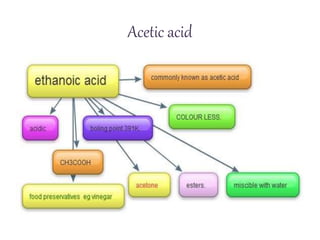
Acetic acid
Acetic acid bacteria
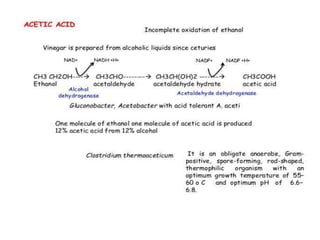
• Acetic acid bacteria is a gram-negative
bacteria which oxidize sugar or ethanol and
produce acetic acid during fermentation.
• Acetic acid bacteria are rod-shaped & obligate
aerobes.
• Pasteur in 1864 claimed that the
transformation of wine into vinegar was due
to the veil of Mycoderma aceti on it surface
pungency of acetic acid.
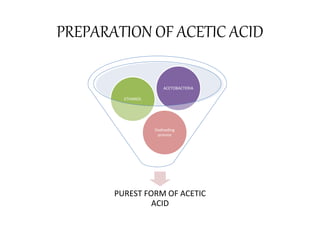
PREPARATION OF ACETIC ACID
PUREST FORM OF ACETIC
ACID
Oxdiseding
process
ETHANOL
ACETOBACTERIA
Raw materials
• Biomass Feedstock (beach wood, Silicon tube,
sieving, wood chips)
• Ethanol is used as substrate
Microbes
Acetic Acid Bacteria (Acetobacter aceti ) used as
bio reactor
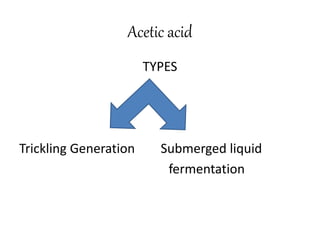
Acetic acid
TYPES
Trickling Generation Submerged liquid
fermentation
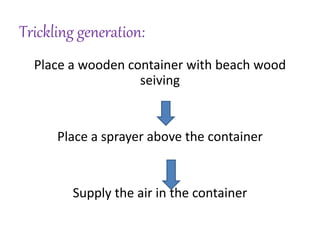
Trickling generation:
Place a wooden container with beach wood
seiving
Place a sprayer above the container
Supply the air in the container
z
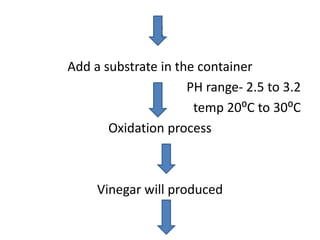
Add a substrate in the container
PH range- 2.5 to 3.2
temp 20⁰C to 30⁰C
Oxidation process
Vinegar will produced
Process with again continuous with
TBV
80 TO 88% Vinegar will be produced
DISADVANTAGES:
• It is high costliest process
• It does not get a purest form of Vinegar
• In the process there is waste of substrate
during the continuous process
• It consume more time for this process
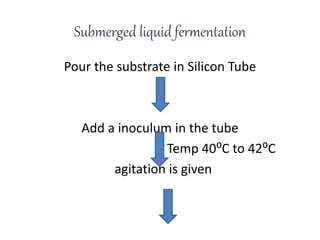
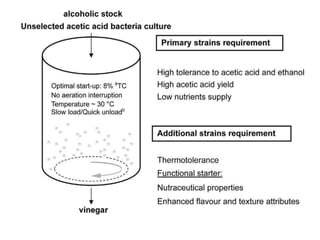
Submerged liquid fermentation
Pour the substrate in Silicon Tube
Add a inoculum in the tube
Temp 40⁰C to 42⁰C
agitation is given
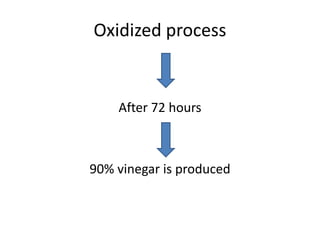
Oxidized process
After 72 hours
90% vinegar is produced
Advantages of submerged liquid fermentation:
• It is early and convenent process
• It is cost effective process
• It given a purest form of vinegar
• It is used for mass production
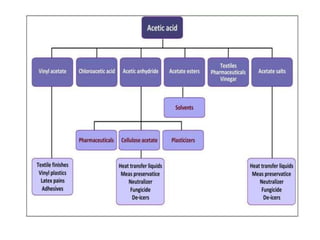
• As a Coagulant for latex in rubber industry
• In the manufacture of Plastic (polyvinyl
acetate) rayon (cellulose acetate) and silk.
• In medicine as a local irritant
• As a solvent in the laboratory for carrying out
reactions
• In the manufacture of many organic
compound like acetone, acetates &ester.
Uses of acetic acid:
Thank you

acetic acid production using microbes

  • 1.
    Micro biotechnology acetic acidproduction (using microbes) Submitted By J JAYAVARDHINI DEPARTMENT OF BOTANY&BIOTECHNOLOGY BON SECOURS COLLEGE FOR WOMEN
  • 2.
    INTRODUCTION • Acetic Acidis systematically named as ethanoic acid • It is a colorless liquid organic compound. • It has a pungent/ vinegar-like odor • Vinegar is product of Acetic acid • It has melting point 16 to 17°C; 61 to 62°F
  • 3.
  • 4.
    Acetic acid bacteria •Acetic acid bacteria is a gram-negative bacteria which oxidize sugar or ethanol and produce acetic acid during fermentation. • Acetic acid bacteria are rod-shaped & obligate aerobes. • Pasteur in 1864 claimed that the transformation of wine into vinegar was due to the veil of Mycoderma aceti on it surface pungency of acetic acid.
  • 5.
    PREPARATION OF ACETICACID PUREST FORM OF ACETIC ACID Oxdiseding process ETHANOL ACETOBACTERIA
  • 6.
    Raw materials • BiomassFeedstock (beach wood, Silicon tube, sieving, wood chips) • Ethanol is used as substrate Microbes Acetic Acid Bacteria (Acetobacter aceti ) used as bio reactor
  • 7.
    Acetic acid TYPES Trickling GenerationSubmerged liquid fermentation
  • 8.
    Trickling generation: Place awooden container with beach wood seiving Place a sprayer above the container Supply the air in the container
  • 9.
    z Add a substratein the container PH range- 2.5 to 3.2 temp 20⁰C to 30⁰C Oxidation process Vinegar will produced
  • 10.
    Process with againcontinuous with TBV 80 TO 88% Vinegar will be produced
  • 12.
    DISADVANTAGES: • It ishigh costliest process • It does not get a purest form of Vinegar • In the process there is waste of substrate during the continuous process • It consume more time for this process
  • 13.
    Submerged liquid fermentation Pourthe substrate in Silicon Tube Add a inoculum in the tube Temp 40⁰C to 42⁰C agitation is given
  • 14.
    Oxidized process After 72hours 90% vinegar is produced
  • 18.
    Advantages of submergedliquid fermentation: • It is early and convenent process • It is cost effective process • It given a purest form of vinegar • It is used for mass production
  • 19.
    • As aCoagulant for latex in rubber industry • In the manufacture of Plastic (polyvinyl acetate) rayon (cellulose acetate) and silk. • In medicine as a local irritant • As a solvent in the laboratory for carrying out reactions • In the manufacture of many organic compound like acetone, acetates &ester. Uses of acetic acid:
  • 21.