ARB + Statin Evidence from emerging concepts as the rationale
The topics for discussion The existing situation and observations The rationale for combining ARB & Statin The effects of combining ARB & Statin The benefits of combining ARB & Statin The choice of telmisartan as the ARB in combination therapy The indications for Telmisartan + Statin
The exisiting situation Evidence and observations
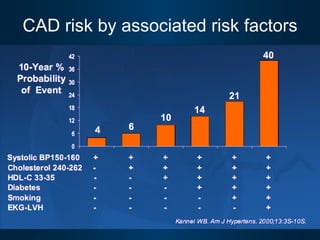
The observations There is strong synergy between hypertension and hypercholesterolemia in terms of risk factors for the development of CVD. Both hypertension and hypercholesterolemia result in endothelial dysfunction and consequently the development of atherosclerosis.
CAD risk by associated risk factors
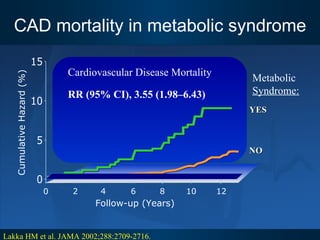
CAD mortality in metabolic syndrome Lakka HM et al. JAMA 2002;288:2709-2716.  Cumulative Hazard (%) 0 2 6 8 12 Follow-up (Years) YES Metabolic  Syndrome: NO Cardiovascular Disease Mortality RR (95% CI), 3.55 (1.98–6.43) 4 10
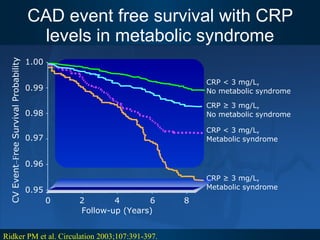
CAD event free survival with CRP levels in metabolic syndrome Ridker PM et al. Circulation 2003;107:391-397.  CV Event –F ree Survival Probability Follow-up (Years) 0 CRP < 3 mg/L,  No metabolic syndrome 1.00 0.99 0.98 0.97 0.96 0.95 2 4 6 8 CRP ≥ 3 mg/L,  No metabolic syndrome CRP < 3 mg/L,  Metabolic syndrome CRP ≥ 3 mg/L,  Metabolic syndrome
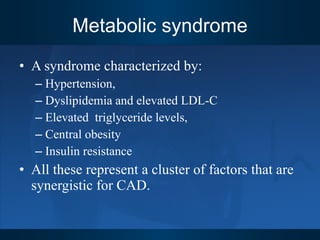
Metabolic syndrome A syndrome characterized by: Hypertension, Dyslipidemia and elevated LDL-C Elevated  triglyceride levels,  Central obesity Insulin resistance All these represent a cluster of factors that are synergistic for CAD.
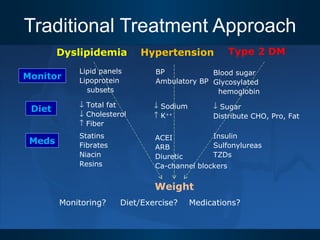
Traditional Treatment Approach ACEI ARB Diuretic  Ca-channel blockers Sodium     K ++ BP Ambulatory BP Insulin Sulfonylureas TZDs Sugar Distribute CHO, Pro, Fat  Blood sugar Glycosylated hemoglobin Monitor Diet Meds Weight Monitoring?  Diet/Exercise?  Medications? Type 2 DM Dyslipidemia Hypertension Statins Fibrates Niacin Resins Lipid panels Lipoprotein subsets    Total  fat    Cholesterol    Fiber
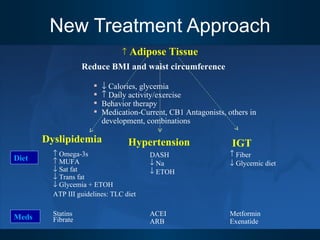
New Treatment Approach Reduce BMI and waist circumference    Calories, glycemia    Daily activity/e xercise Behavior therapy Medication-Current, CB1 Antagonists, others in development, combinations    Adipose Tissue Diet Meds DASH Na ETOH Hypertension ACEI ARB Fiber    Glycemic diet IGT Metformin Exenatide    O mega-3s    MUFA    Sat fat    Trans fat    Glycemia + ETOH ATP III guidelines: TLC diet Dyslipidemia Statins Fibrate
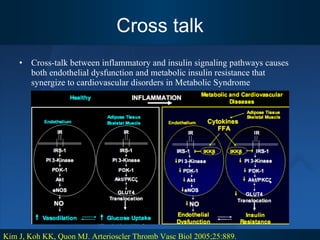
Cross talk Cross-talk between inflammatory and insulin signaling pathways causes both endothelial dysfunction and metabolic insulin resistance that synergize to cardiovascular disorders in Metabolic Syndrome Kim J, Koh KK, Quon MJ. Arterioscler Thromb Vasc Biol 2005;25:889.
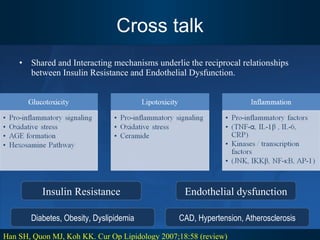
Cross talk Shared and Interacting mechanisms underlie the reciprocal relationships between Insulin Resistance and Endothelial Dysfunction. Han SH, Quon MJ, Koh KK. Cur Op Lipidology 2007;18:58 (review) Insulin Resistance Endothelial dysfunction Diabetes, Obesity, Dyslipidemia CAD, Hypertension, Atherosclerosis
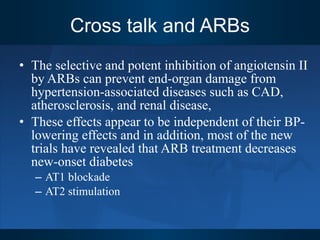
Cross talk and ARBs The selective and potent inhibition of angiotensin II by ARBs can prevent end-organ damage from hypertension-associated diseases such as CAD, atherosclerosis, and renal disease,  These effects appear to be independent of their BP-lowering effects and in addition, most of the new  trials have revealed that ARB treatment decreases new-onset diabetes AT1 blockade AT2 stimulation
The big question? Will ARBs combined with  statins be better than monotherapy in a defined section of patients?
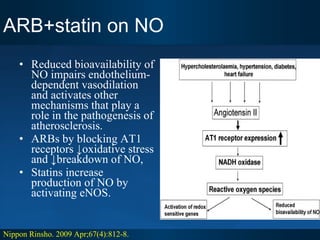
Hypercholesterolaemia  & hypertension Hypercholesterolemia, diabetes, hypertension, and heart failure result in release of angiotensin II, which acts on AT1 receptors.  Activation of AT1 receptors stimulates NADH oxidase in endothelial cells,  This leads to oxidative stress resulting in generation of reactive oxygen species in vascular cells and eventually, endothelial dysfunction. ROS leads to proinflammatory status and plays critical roles in initiation and progression of atherosclerosis,  All this reduces bioavailability of NO in vascular wall, which appears to result from increased breakdown and decreased NO production. Nippon Rinsho. 2009 Apr;67(4):812-8.
ARB+statin on NO Reduced bioavailability of NO impairs endothelium-dependent vasodilation and activates other mechanisms that play a role in the pathogenesis of atherosclerosis. ARBs by blocking AT1 receptors ↓oxidative stress and ↓breakdown of NO,  Statins increase production of NO by activating eNOS. Nippon Rinsho. 2009 Apr;67(4):812-8.
ARB+statin on NO ARB increases NO level by ↓ the breakdown.  Angiotensin II increases lipid uptake in cells and lipid accumulation in the vessel wall  ARB prevents this from happening. Nippon Rinsho. 2009 Apr;67(4):812-8. Thus, the combination of ARB with statin seems to be more effective through: Increase in NO levels, Reduced possibility of lipid uptake in cell walls. Better reduction in inflammation or effects of oxidative stress,
ARB+statin & phospholipase This study was done in patients with CAD to evaluate the impact of a combined treatment of ARB and statin on: the secretory phospholipase and  oxidized low density lipoprotein (oxLDL). 60 patients with angiographically documented CAD and a history of arterial hypertension were randomized in a double-blinded fashion to statin or statin + ARB for 3 months.  The findings show that in patients with CAD, the combined treatment of statin with ARB reduced  phospholipase-activity,  phospholipase-protein concentration, and  oxLDL, suggesting a novel anti-atherogenic effect by combining ARB with statin treatment. European Heart Journal 2008 29(16):1956-1965
ARB & age-related hypercholesterolaemia Angiotensin II Type 1 (AT1) Receptor Deficiency Halts the Progression of Age-Related Atherosclerosis in Hypercholesterolemia This study establishes a molecular link between the AT1 Receptor and hypercholesterolemia and thus shows that amongst all antihypertensives, ARBs have the best anticholesterol effect. Hypertension Research (2008) 31, 1495–1497 .
ARB+statin and cross talk Experimental studies have shown a cross-talk  between hyperlipidemia and renin-angiotensin-aldosterone system at multiple steps.  Combined therapy with statins and ARBs show additive beneficial effects on ED and insulin resistance (IR) when compared with monotherapies in patients with CV risk factors by both distinct and interrelated mechanisms. Combined therapy is useful in treating and preventing atherosclerosis, CHD, and co-morbid metabolic disorders characterized by ED and IR.
ARB+statin on LV remodelling Both ARB and statins have been shown to attenuate cardiomyocyte hypertrophy after myocardial infarction.  Whether combination treatment may be superior to either drug alone on cardiomyocyte hypertrophy remains unclear.  This study showed that dual therapy with a statin and ARB,  produced an additive reduction in cardiomyocyte hypertrophy and cardiac fibrosis after myocardial infarction through different mechanisms,  also decreases the propensity of the heart to arrhythmogenesis.  The statin provided favorable ventricular remodeling, probably through decreased tissue endothelin-1 level and the ARB-related attenuated cardiomyocyte hypertrophy is independent of endothelin-1 pathway. Am J Physiol Heart Circ Physiol 291: H1281-H1289, 2006.
ARBs and EPCs Ischemia is a major component of most of end-target damages of hypertension;  Thus, treatments aiming to promote neovascularization could have new and unexpected beneficial effects. The formation of new capillaries to provide oxygen supply for ischemic tissues was believed to be exclusively mediated by the proliferation and migration of existing endothelial cells.  However, increasing evidence suggests that circulating cells home to sites of ischemia and contribute to adult neovascularization.  Treatment with ARBs increases the number of regenerative endothelial progenitor cells (EPCs) in patients with type II diabetes and this action may be of therapeutic relevance contributing to their beneficial cardiovascular effects. Hypertension 2005;45;491-492, 526-529.
ARB+statin on plaque size The combined treatment with a statin and an ARB may have additive protective effects on endothelial function as well as atherosclerotic change. CT and histology of the thoracic aorta revealed that the plaque area decreased significantly more with the combination than with the monotherapy.  Hypertension Research (2008) 31, 1199–1208.
Summary ↓  PLAQUE SIZE ↑  EPCs ↓  LV REMODELLING ↓  CROSS TALK ↓  OXI.  LDL ↓  PHOSPO LIPASES ↓  LIPID ACCUMULATION ↑  NO ARBITEL-AV
ARB + Statin The role
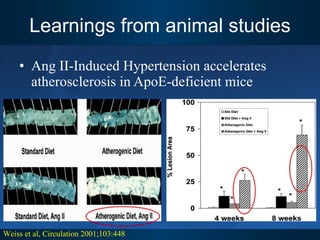
Learnings from animal studies Ang II-Induced Hypertension accelerates atherosclerosis in ApoE-deficient mice Weiss et al, Circulation 2001;103:448
Learnings from animal studies Hypercholesterolemia & Hypertension have synergistic deleterious effects on Endothelial function Rodriguez-Porcel et al, Arterioscler Thromb Vasc Biol. 2003;23:885.
ARB+Statin after stenting  Statins enhance the inhibitory effects of ARB on vascular neointimal formation in mice. The present case-control study investigated the efficacy of combined treatment with statin and ARB for preventing restenosis in patients with coronary artery disease.  210 patients with angina pectoris undergoing elective coronary stenting for de novo lesions of native coronary arteries were examined. All enrolled patients received aspirin and ticlopidine. The subjects were in 3 groups: no statin  statin treatment without ARB  Statin treatment with ARB. The rate of restenosis at 6 months after stent implantation in the statin group (19%) was significantly lower than that in the control group (32%).  Study findings indicate that combined treatment with statin and ARB after stenting is a useful strategy for the prevention of coronary restenosis as patients treated with statins and ARBs were least likely [odds ratio (95% confidence interval): 0.30(0.12-0.74)] to develop coronary restenosis. Combined Treatment With Statin and ARB after Stenting for prevention of Coronary Restenosis, NISHIKAWA et al, J Cardiol, VOL.45;NO.3;PAGE.107-113(2005)
ARB after grafting  164 patients were divided into the following 2 groups,  92 subjects who were orally administered an ARB, 72 subjects who were administered an ACE-inhibitor.  Graft angiography was performed 1 year after surgery and the RA intima was evaluated using an angioscope. The results of evaluation one year after surgery revealed  no significant difference in effects on the RA endothelium between ARB and ACE inhibitor.  ARB reduced cholesterol and its effect was confirmed with blood examination data and endoscopic findings. Ann Thorac Cardiovasc Surg 2008; 14: 25–28
Statins and kidney disease Data from small studies in glomerular disease suggest that  statins decrease proteinuria.  statins decrease the loss of glomerular filtration.  The pleiotropic effects of statins may derive from inhibition of other downstream targets (isoprenoids) of the mevalonic acid pathway that are separate from cholesterol synthesis.  These effects may lead to  decreased monocyte/macrophage infiltration in the glomerulus,  decreased mesangial proliferation and  decreased accumulation of extracellular matrix and fibrosis.  inhibition of RhoA and Ras leading to decrease inflammation and increase eNOS activity.  These effects could lead to improvement in the progression of kidney disease. Kidney Int. 2008 Sep;74(5):571-6.
ARBITEL-AV Why Telmisartan as the ARB of choice in the combination of ARB+Statin?
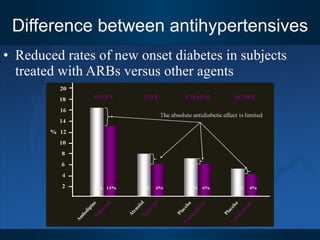
Difference between antihypertensives Reduced rates of new onset diabetes in subjects treated with ARBs versus other agents
Mechanisms of ARB action Glucose Fatty acid Transcription of insulin-responsive genes PPAR    - RXR Glucose uptake and utilization   Lipoprotein lipase   Adipogenesis lipid accumulation ↓  in Skeletal Muscle ARB    GLUT4    TNF- 
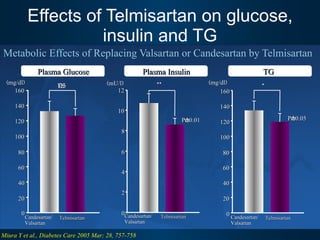
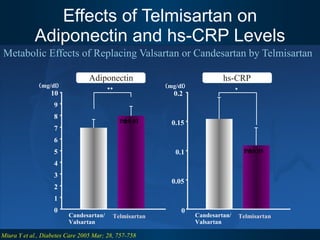
Metabolic Effects of Telmisartan Metabolic Effects of Replacing Valsartan or Candesartan by Telmisartan 18 hypertensive patients with type 2 diabetes Valsartan  80 mg/day Candesartan  8 mg/day Telmisartan  40 mg/day 12 weeks >6 months Miura Y et al., Diabetes Care 2005 Mar; 28, 757-758
Effects of Telmisartan on glucose, insulin and TG Metabolic Effects of Replacing Valsartan or Candesartan by Telmisartan Miura Y et al., Diabetes Care 2005 Mar; 28, 757-758 Candesartan/ Valsartan Candesartan/ Valsartan Candesartan/ Valsartan Plasma Glucose TG ( mU/l ) Plasma Insulin 100 120 140 160 ( mg/dl ) Telmisartan NS 0 20 40 60 80 100 120 140 160 Telmisartan ( mg/dl ) * 80 60 40 20 0 0 2 4 6 8 10 12 Telmisartan ** P < 0.01 P < 0.05
Effects of Telmisartan on Adiponectin and hs-CRP Levels Metabolic Effects of Replacing Valsartan or Candesartan by Telmisartan Miura Y et al., Diabetes Care 2005 Mar; 28, 757-758 Adiponectin hs-CRP 0 1 2 3 4 5 6 7 8 9 10 ( mg/dl ) Telmisartan Candesartan/ Valsartan ** 0 0.05 0.1 0.15 0.2 Telmisartan Candesartan/ Valsartan ( mg/dl ) * P < 0.01 P < 0.05
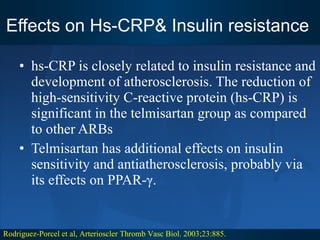
Effects on Hs-CRP& Insulin resistance  hs-CRP is closely related to insulin resistance and development of atherosclerosis. The reduction of high-sensitivity C-reactive protein (hs-CRP) is significant in the telmisartan group as compared to other ARBs Telmisartan has additional effects on insulin sensitivity and antiatherosclerosis, probably via its effects on PPAR-γ.  Rodriguez-Porcel et al, Arterioscler Thromb Vasc Biol. 2003;23:885.
PPAR modulation Adapted from Tenenbaum A et al. Intl J Cardiol. 2004;97:167-72.
Telmisartan Insulin  resistance Hypertension Cell inflammation Cell  proliferation Oxidative  stress Dyslipidemia PPAR    pathways Angiotensin pathways Atherosclerosis Activates Blocks
Who would benefit from combined therapy of ARBs and Statins? Combination therapy of an ARB and a statin in: Patients with cardiovascular risk intervention such as stenting and grafting  Patients presenting with 2 or more linked risk factors for CVD ie,  Patients with hypertension +  ↑  cholesterol levels Patients with metabolic syndrome,  Patients with hypertension and type 2 diabetes,  Patients with hypertension and a previous cardiovascular event such as stroke or myocardial infarction).   Proactively, in hypertensives without symptomatic disease but who are ≥55 years old, as age becomes a risk factor due to age related hypercholesterolaemia.
Who would not benefit from combination of ARBs and Statins? Combination therapy of an ARB and a statin not in: Patients with telmisartan and higher doses of atorvastatin Patients with hypertension and elevated TG levels. Hypertensives with myopathy.
The target audience ARB & Statin
Arbitel-AV target audience ARB & Statin

ARB + Statin

  • 1.
    ARB + StatinEvidence from emerging concepts as the rationale
  • 2.
    The topics fordiscussion The existing situation and observations The rationale for combining ARB & Statin The effects of combining ARB & Statin The benefits of combining ARB & Statin The choice of telmisartan as the ARB in combination therapy The indications for Telmisartan + Statin
  • 3.
    The exisiting situationEvidence and observations
  • 4.
    The observations Thereis strong synergy between hypertension and hypercholesterolemia in terms of risk factors for the development of CVD. Both hypertension and hypercholesterolemia result in endothelial dysfunction and consequently the development of atherosclerosis.
  • 5.
    CAD risk byassociated risk factors
  • 6.
    CAD mortality inmetabolic syndrome Lakka HM et al. JAMA 2002;288:2709-2716. Cumulative Hazard (%) 0 2 6 8 12 Follow-up (Years) YES Metabolic Syndrome: NO Cardiovascular Disease Mortality RR (95% CI), 3.55 (1.98–6.43) 4 10
  • 7.
    CAD event freesurvival with CRP levels in metabolic syndrome Ridker PM et al. Circulation 2003;107:391-397. CV Event –F ree Survival Probability Follow-up (Years) 0 CRP < 3 mg/L, No metabolic syndrome 1.00 0.99 0.98 0.97 0.96 0.95 2 4 6 8 CRP ≥ 3 mg/L, No metabolic syndrome CRP < 3 mg/L, Metabolic syndrome CRP ≥ 3 mg/L, Metabolic syndrome
  • 8.
    Metabolic syndrome Asyndrome characterized by: Hypertension, Dyslipidemia and elevated LDL-C Elevated triglyceride levels, Central obesity Insulin resistance All these represent a cluster of factors that are synergistic for CAD.
  • 9.
    Traditional Treatment ApproachACEI ARB Diuretic Ca-channel blockers Sodium  K ++ BP Ambulatory BP Insulin Sulfonylureas TZDs Sugar Distribute CHO, Pro, Fat Blood sugar Glycosylated hemoglobin Monitor Diet Meds Weight Monitoring? Diet/Exercise? Medications? Type 2 DM Dyslipidemia Hypertension Statins Fibrates Niacin Resins Lipid panels Lipoprotein subsets  Total fat  Cholesterol  Fiber
  • 10.
    New Treatment ApproachReduce BMI and waist circumference  Calories, glycemia  Daily activity/e xercise Behavior therapy Medication-Current, CB1 Antagonists, others in development, combinations  Adipose Tissue Diet Meds DASH Na ETOH Hypertension ACEI ARB Fiber  Glycemic diet IGT Metformin Exenatide  O mega-3s  MUFA  Sat fat  Trans fat  Glycemia + ETOH ATP III guidelines: TLC diet Dyslipidemia Statins Fibrate
  • 11.
    Cross talk Cross-talkbetween inflammatory and insulin signaling pathways causes both endothelial dysfunction and metabolic insulin resistance that synergize to cardiovascular disorders in Metabolic Syndrome Kim J, Koh KK, Quon MJ. Arterioscler Thromb Vasc Biol 2005;25:889.
  • 12.
    Cross talk Sharedand Interacting mechanisms underlie the reciprocal relationships between Insulin Resistance and Endothelial Dysfunction. Han SH, Quon MJ, Koh KK. Cur Op Lipidology 2007;18:58 (review) Insulin Resistance Endothelial dysfunction Diabetes, Obesity, Dyslipidemia CAD, Hypertension, Atherosclerosis
  • 13.
    Cross talk andARBs The selective and potent inhibition of angiotensin II by ARBs can prevent end-organ damage from hypertension-associated diseases such as CAD, atherosclerosis, and renal disease, These effects appear to be independent of their BP-lowering effects and in addition, most of the new trials have revealed that ARB treatment decreases new-onset diabetes AT1 blockade AT2 stimulation
  • 14.
    The big question?Will ARBs combined with statins be better than monotherapy in a defined section of patients?
  • 15.
    Hypercholesterolaemia &hypertension Hypercholesterolemia, diabetes, hypertension, and heart failure result in release of angiotensin II, which acts on AT1 receptors. Activation of AT1 receptors stimulates NADH oxidase in endothelial cells, This leads to oxidative stress resulting in generation of reactive oxygen species in vascular cells and eventually, endothelial dysfunction. ROS leads to proinflammatory status and plays critical roles in initiation and progression of atherosclerosis, All this reduces bioavailability of NO in vascular wall, which appears to result from increased breakdown and decreased NO production. Nippon Rinsho. 2009 Apr;67(4):812-8.
  • 16.
    ARB+statin on NOReduced bioavailability of NO impairs endothelium-dependent vasodilation and activates other mechanisms that play a role in the pathogenesis of atherosclerosis. ARBs by blocking AT1 receptors ↓oxidative stress and ↓breakdown of NO, Statins increase production of NO by activating eNOS. Nippon Rinsho. 2009 Apr;67(4):812-8.
  • 17.
    ARB+statin on NOARB increases NO level by ↓ the breakdown. Angiotensin II increases lipid uptake in cells and lipid accumulation in the vessel wall ARB prevents this from happening. Nippon Rinsho. 2009 Apr;67(4):812-8. Thus, the combination of ARB with statin seems to be more effective through: Increase in NO levels, Reduced possibility of lipid uptake in cell walls. Better reduction in inflammation or effects of oxidative stress,
  • 18.
    ARB+statin & phospholipaseThis study was done in patients with CAD to evaluate the impact of a combined treatment of ARB and statin on: the secretory phospholipase and oxidized low density lipoprotein (oxLDL). 60 patients with angiographically documented CAD and a history of arterial hypertension were randomized in a double-blinded fashion to statin or statin + ARB for 3 months. The findings show that in patients with CAD, the combined treatment of statin with ARB reduced phospholipase-activity, phospholipase-protein concentration, and oxLDL, suggesting a novel anti-atherogenic effect by combining ARB with statin treatment. European Heart Journal 2008 29(16):1956-1965
  • 19.
    ARB & age-relatedhypercholesterolaemia Angiotensin II Type 1 (AT1) Receptor Deficiency Halts the Progression of Age-Related Atherosclerosis in Hypercholesterolemia This study establishes a molecular link between the AT1 Receptor and hypercholesterolemia and thus shows that amongst all antihypertensives, ARBs have the best anticholesterol effect. Hypertension Research (2008) 31, 1495–1497 .
  • 20.
    ARB+statin and crosstalk Experimental studies have shown a cross-talk between hyperlipidemia and renin-angiotensin-aldosterone system at multiple steps. Combined therapy with statins and ARBs show additive beneficial effects on ED and insulin resistance (IR) when compared with monotherapies in patients with CV risk factors by both distinct and interrelated mechanisms. Combined therapy is useful in treating and preventing atherosclerosis, CHD, and co-morbid metabolic disorders characterized by ED and IR.
  • 21.
    ARB+statin on LVremodelling Both ARB and statins have been shown to attenuate cardiomyocyte hypertrophy after myocardial infarction. Whether combination treatment may be superior to either drug alone on cardiomyocyte hypertrophy remains unclear. This study showed that dual therapy with a statin and ARB, produced an additive reduction in cardiomyocyte hypertrophy and cardiac fibrosis after myocardial infarction through different mechanisms, also decreases the propensity of the heart to arrhythmogenesis. The statin provided favorable ventricular remodeling, probably through decreased tissue endothelin-1 level and the ARB-related attenuated cardiomyocyte hypertrophy is independent of endothelin-1 pathway. Am J Physiol Heart Circ Physiol 291: H1281-H1289, 2006.
  • 22.
    ARBs and EPCsIschemia is a major component of most of end-target damages of hypertension; Thus, treatments aiming to promote neovascularization could have new and unexpected beneficial effects. The formation of new capillaries to provide oxygen supply for ischemic tissues was believed to be exclusively mediated by the proliferation and migration of existing endothelial cells. However, increasing evidence suggests that circulating cells home to sites of ischemia and contribute to adult neovascularization. Treatment with ARBs increases the number of regenerative endothelial progenitor cells (EPCs) in patients with type II diabetes and this action may be of therapeutic relevance contributing to their beneficial cardiovascular effects. Hypertension 2005;45;491-492, 526-529.
  • 23.
    ARB+statin on plaquesize The combined treatment with a statin and an ARB may have additive protective effects on endothelial function as well as atherosclerotic change. CT and histology of the thoracic aorta revealed that the plaque area decreased significantly more with the combination than with the monotherapy. Hypertension Research (2008) 31, 1199–1208.
  • 24.
    Summary ↓ PLAQUE SIZE ↑ EPCs ↓ LV REMODELLING ↓ CROSS TALK ↓ OXI. LDL ↓ PHOSPO LIPASES ↓ LIPID ACCUMULATION ↑ NO ARBITEL-AV
  • 25.
    ARB + StatinThe role
  • 26.
    Learnings from animalstudies Ang II-Induced Hypertension accelerates atherosclerosis in ApoE-deficient mice Weiss et al, Circulation 2001;103:448
  • 27.
    Learnings from animalstudies Hypercholesterolemia & Hypertension have synergistic deleterious effects on Endothelial function Rodriguez-Porcel et al, Arterioscler Thromb Vasc Biol. 2003;23:885.
  • 28.
    ARB+Statin after stenting Statins enhance the inhibitory effects of ARB on vascular neointimal formation in mice. The present case-control study investigated the efficacy of combined treatment with statin and ARB for preventing restenosis in patients with coronary artery disease. 210 patients with angina pectoris undergoing elective coronary stenting for de novo lesions of native coronary arteries were examined. All enrolled patients received aspirin and ticlopidine. The subjects were in 3 groups: no statin statin treatment without ARB Statin treatment with ARB. The rate of restenosis at 6 months after stent implantation in the statin group (19%) was significantly lower than that in the control group (32%). Study findings indicate that combined treatment with statin and ARB after stenting is a useful strategy for the prevention of coronary restenosis as patients treated with statins and ARBs were least likely [odds ratio (95% confidence interval): 0.30(0.12-0.74)] to develop coronary restenosis. Combined Treatment With Statin and ARB after Stenting for prevention of Coronary Restenosis, NISHIKAWA et al, J Cardiol, VOL.45;NO.3;PAGE.107-113(2005)
  • 29.
    ARB after grafting 164 patients were divided into the following 2 groups, 92 subjects who were orally administered an ARB, 72 subjects who were administered an ACE-inhibitor. Graft angiography was performed 1 year after surgery and the RA intima was evaluated using an angioscope. The results of evaluation one year after surgery revealed no significant difference in effects on the RA endothelium between ARB and ACE inhibitor. ARB reduced cholesterol and its effect was confirmed with blood examination data and endoscopic findings. Ann Thorac Cardiovasc Surg 2008; 14: 25–28
  • 30.
    Statins and kidneydisease Data from small studies in glomerular disease suggest that statins decrease proteinuria. statins decrease the loss of glomerular filtration. The pleiotropic effects of statins may derive from inhibition of other downstream targets (isoprenoids) of the mevalonic acid pathway that are separate from cholesterol synthesis. These effects may lead to decreased monocyte/macrophage infiltration in the glomerulus, decreased mesangial proliferation and decreased accumulation of extracellular matrix and fibrosis. inhibition of RhoA and Ras leading to decrease inflammation and increase eNOS activity. These effects could lead to improvement in the progression of kidney disease. Kidney Int. 2008 Sep;74(5):571-6.
  • 31.
    ARBITEL-AV Why Telmisartanas the ARB of choice in the combination of ARB+Statin?
  • 32.
    Difference between antihypertensivesReduced rates of new onset diabetes in subjects treated with ARBs versus other agents
  • 33.
    Mechanisms of ARBaction Glucose Fatty acid Transcription of insulin-responsive genes PPAR  - RXR Glucose uptake and utilization  Lipoprotein lipase  Adipogenesis lipid accumulation ↓ in Skeletal Muscle ARB  GLUT4  TNF- 
  • 34.
    Metabolic Effects ofTelmisartan Metabolic Effects of Replacing Valsartan or Candesartan by Telmisartan 18 hypertensive patients with type 2 diabetes Valsartan 80 mg/day Candesartan 8 mg/day Telmisartan 40 mg/day 12 weeks >6 months Miura Y et al., Diabetes Care 2005 Mar; 28, 757-758
  • 35.
    Effects of Telmisartanon glucose, insulin and TG Metabolic Effects of Replacing Valsartan or Candesartan by Telmisartan Miura Y et al., Diabetes Care 2005 Mar; 28, 757-758 Candesartan/ Valsartan Candesartan/ Valsartan Candesartan/ Valsartan Plasma Glucose TG ( mU/l ) Plasma Insulin 100 120 140 160 ( mg/dl ) Telmisartan NS 0 20 40 60 80 100 120 140 160 Telmisartan ( mg/dl ) * 80 60 40 20 0 0 2 4 6 8 10 12 Telmisartan ** P < 0.01 P < 0.05
  • 36.
    Effects of Telmisartanon Adiponectin and hs-CRP Levels Metabolic Effects of Replacing Valsartan or Candesartan by Telmisartan Miura Y et al., Diabetes Care 2005 Mar; 28, 757-758 Adiponectin hs-CRP 0 1 2 3 4 5 6 7 8 9 10 ( mg/dl ) Telmisartan Candesartan/ Valsartan ** 0 0.05 0.1 0.15 0.2 Telmisartan Candesartan/ Valsartan ( mg/dl ) * P < 0.01 P < 0.05
  • 37.
    Effects on Hs-CRP&Insulin resistance hs-CRP is closely related to insulin resistance and development of atherosclerosis. The reduction of high-sensitivity C-reactive protein (hs-CRP) is significant in the telmisartan group as compared to other ARBs Telmisartan has additional effects on insulin sensitivity and antiatherosclerosis, probably via its effects on PPAR-γ. Rodriguez-Porcel et al, Arterioscler Thromb Vasc Biol. 2003;23:885.
  • 38.
    PPAR modulation Adaptedfrom Tenenbaum A et al. Intl J Cardiol. 2004;97:167-72.
  • 39.
    Telmisartan Insulin resistance Hypertension Cell inflammation Cell proliferation Oxidative stress Dyslipidemia PPAR  pathways Angiotensin pathways Atherosclerosis Activates Blocks
  • 40.
    Who would benefitfrom combined therapy of ARBs and Statins? Combination therapy of an ARB and a statin in: Patients with cardiovascular risk intervention such as stenting and grafting Patients presenting with 2 or more linked risk factors for CVD ie, Patients with hypertension + ↑ cholesterol levels Patients with metabolic syndrome, Patients with hypertension and type 2 diabetes, Patients with hypertension and a previous cardiovascular event such as stroke or myocardial infarction). Proactively, in hypertensives without symptomatic disease but who are ≥55 years old, as age becomes a risk factor due to age related hypercholesterolaemia.
  • 41.
    Who would notbenefit from combination of ARBs and Statins? Combination therapy of an ARB and a statin not in: Patients with telmisartan and higher doses of atorvastatin Patients with hypertension and elevated TG levels. Hypertensives with myopathy.
  • 42.
    The target audienceARB & Statin
  • 43.

Editor's Notes

  • #10 Traditional Treatment Approach In conclusion, physicians are headed toward a new treatment approach. Currently, the traditional treatment approach focuses on lipids, blood pressure, and treating diabetes. Patients may be monitored and given some advice on diet, but the concentration of treatment is on medical therapies for these cardiometabolic risk factors. Not much attention is paid to weight.
  • #11 New Treatment Approach In the future, medicine will shift in the way it is practiced by internists, cardiologists, and endocrinologists. More time will be spent focusing on reducing weight starting with behavior and lifestyle intervention, exercise and increasing daily life activities, and then using medication if it is appropriate. Reducing weight will be the way to prevent patients from developing lipid disorders, high blood pressure, impaired glucose tolerance, and ultimately diabetes, which leads to the cardiometabolic risk factors that require so much time to treat in internal medicine.