ORIGIN
Orchestration of Renewable Integrated
Generation In Neighbourhoods
Dr Edward Owens
Optimising energy storage within micro-grid systems
ICARB Workshop – Energy Storage for the Built
Environment
21st OCTOBER 2014,
EDINBURGH CENTRE FOR CARBON
INNOVATION
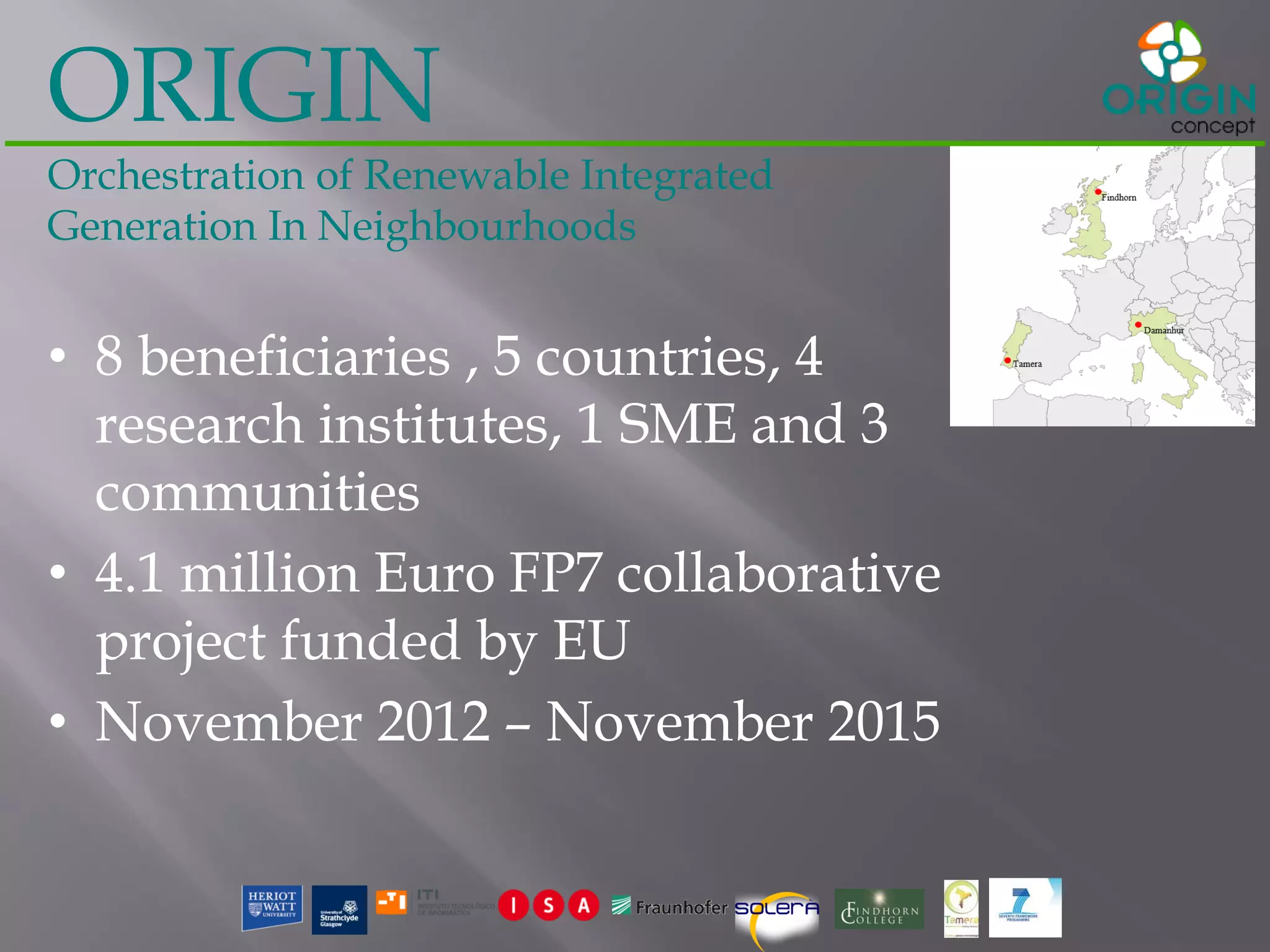
• 8 beneficiaries , 5 countries, 4
research institutes, 1 SME and 3
communities
• 4.1 million Euro FP7 collaborative
project funded by EU
• November 2012 – November 2015
ORIGIN
Orchestration of Renewable Integrated
Generation In Neighbourhoods
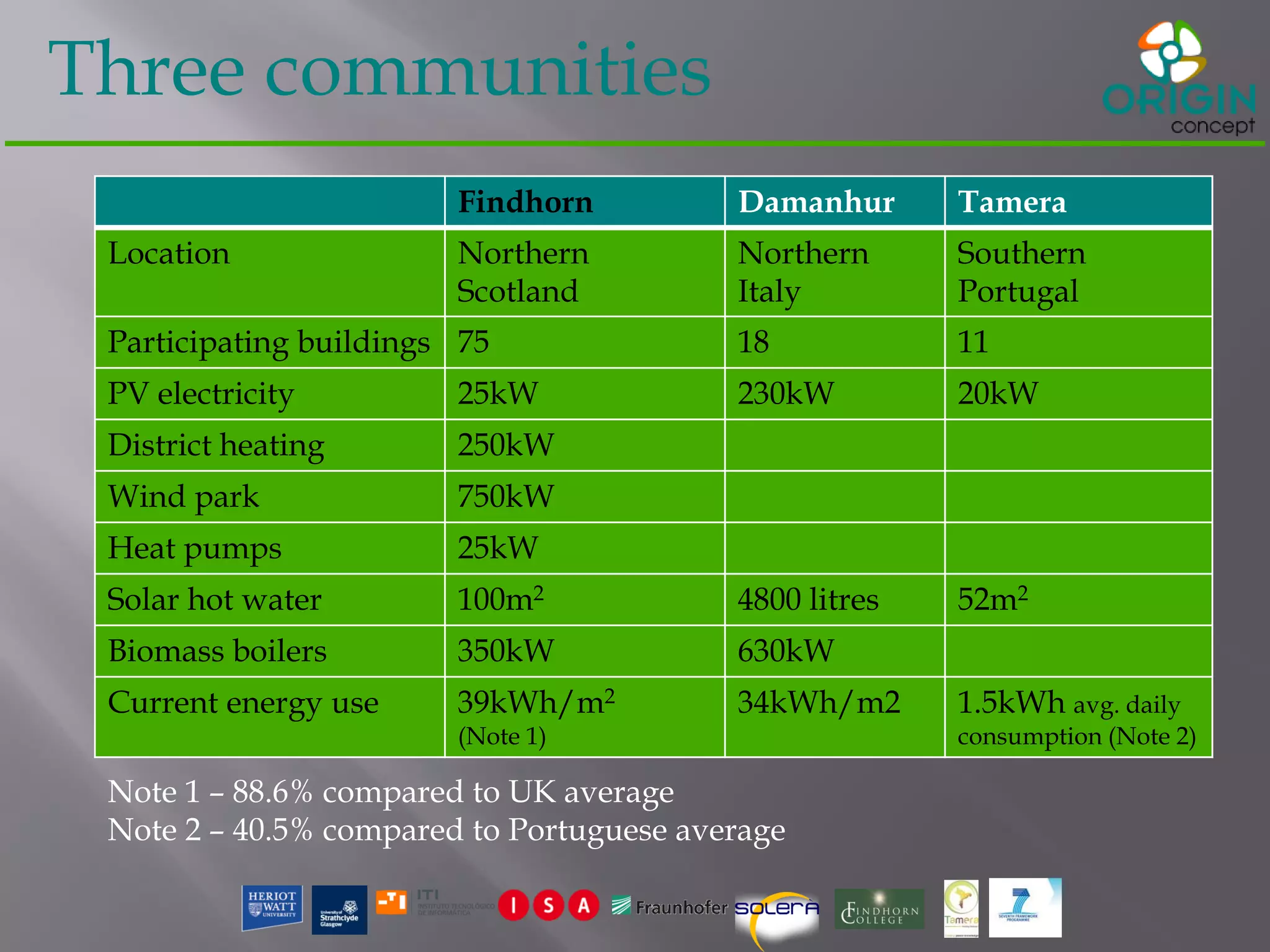
Three communities
Findhorn Damanhur Tamera
Location Northern
Scotland
Northern
Italy
Southern
Portugal
Participating buildings 75 18 11
PV electricity 25kW 230kW 20kW
District heating 250kW
Wind park 750kW
Heat pumps 25kW
Solar hot water 100m2 4800 litres 52m2
Biomass boilers 350kW 630kW
Current energy use 39kWh/m2
(Note 1)
34kWh/m2 1.5kWh avg. daily
consumption (Note 2)
Note 1 – 88.6% compared to UK average
Note 2 – 40.5% compared to Portuguese average
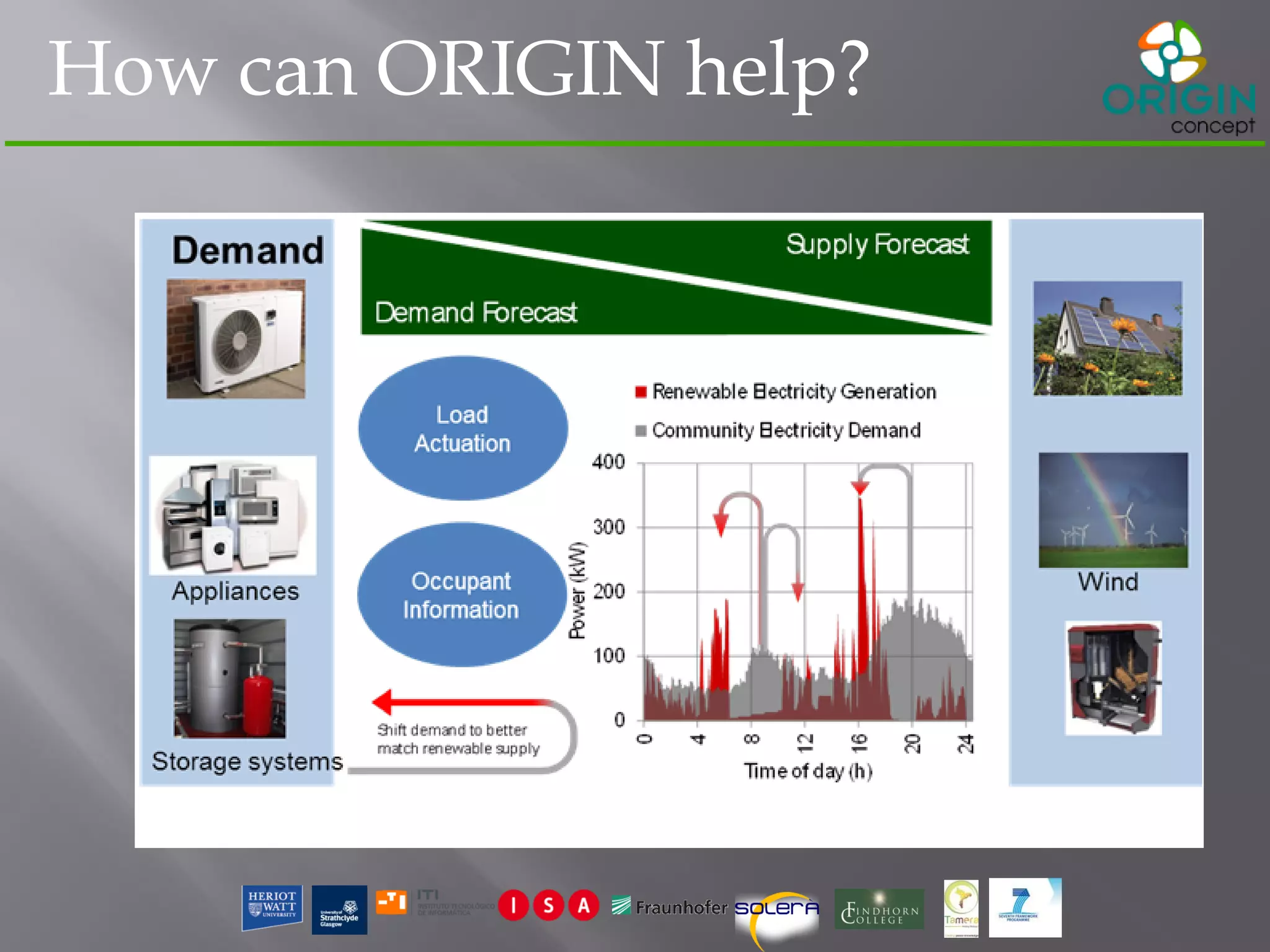
What has the EU funded?
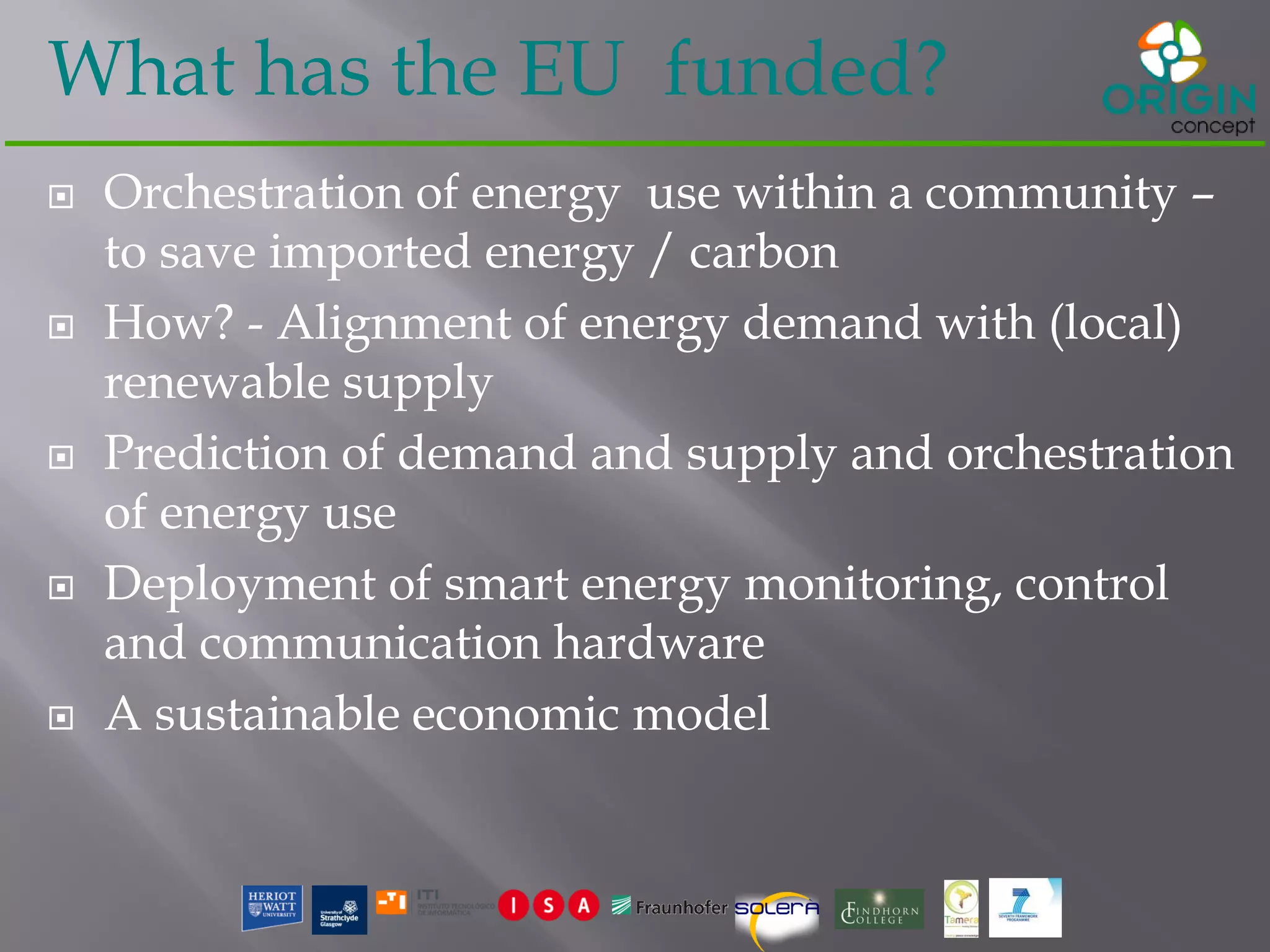
 Orchestration of energy use within a community –
to save imported energy / carbon
 How? - Alignment of energy demand with (local)
renewable supply
 Prediction of demand and supply and orchestration
of energy use
 Deployment of smart energy monitoring, control
and communication hardware
 A sustainable economic model
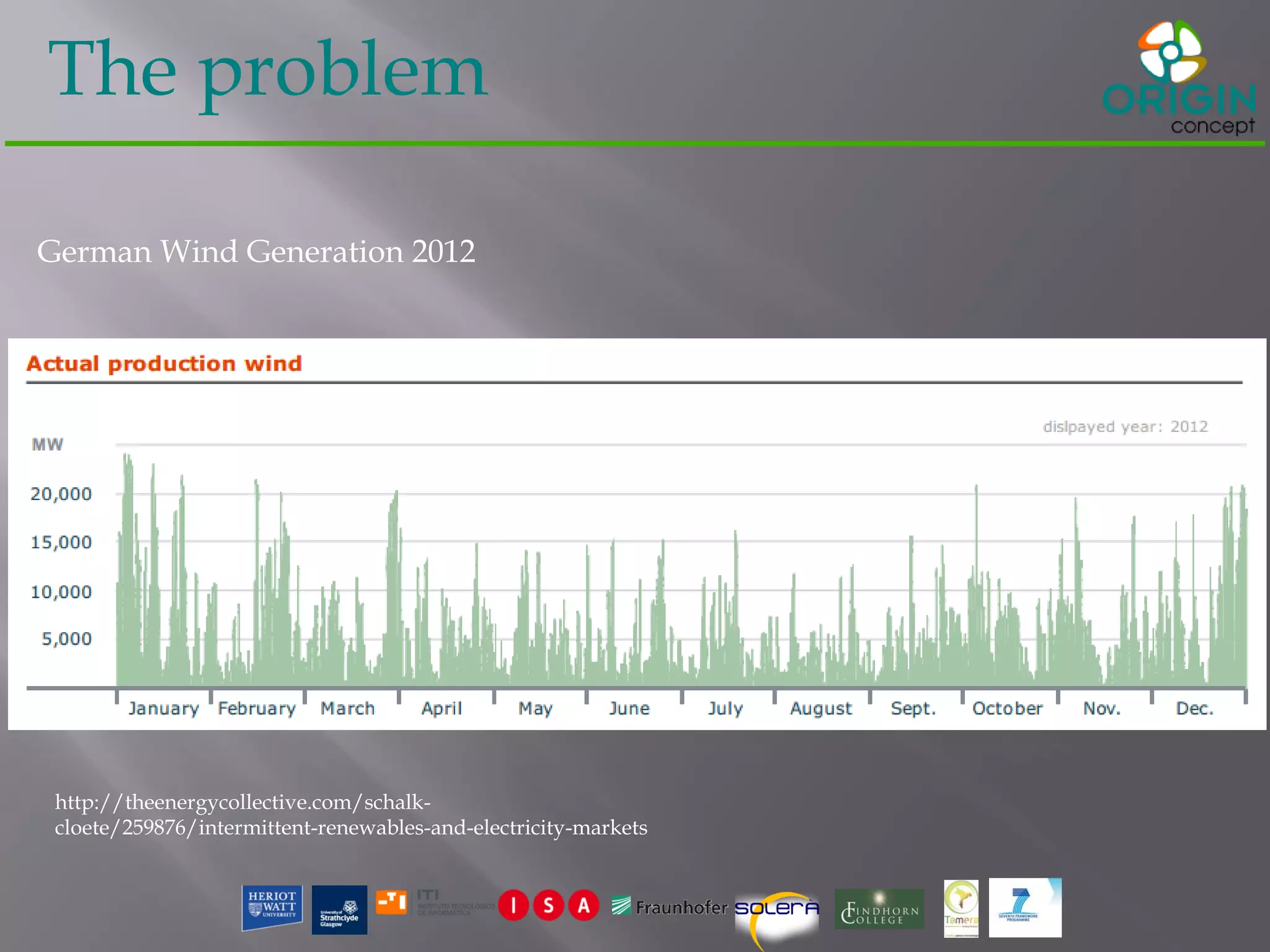
The problem
German Wind Generation 2012
http://theenergycollective.com/schalk-
cloete/259876/intermittent-renewables-and-electricity-markets
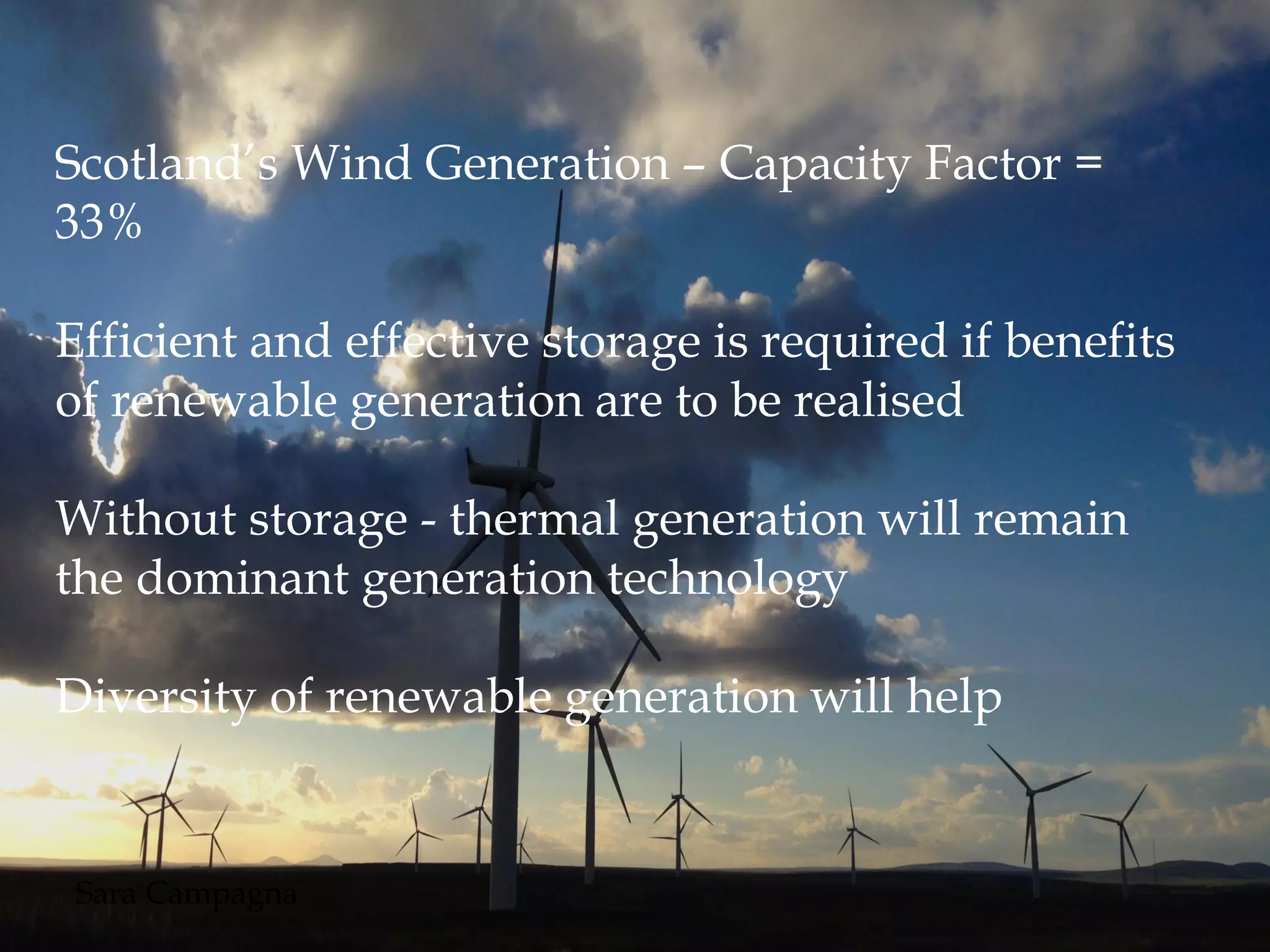
Scotland’s Wind Generation – Capacity Factor =
33%
Efficient and effective storage is required if benefits
of renewable generation are to be realised
Without storage - thermal generation will remain
the dominant generation technology
Diversity of renewable generation will help
Sara Campagna
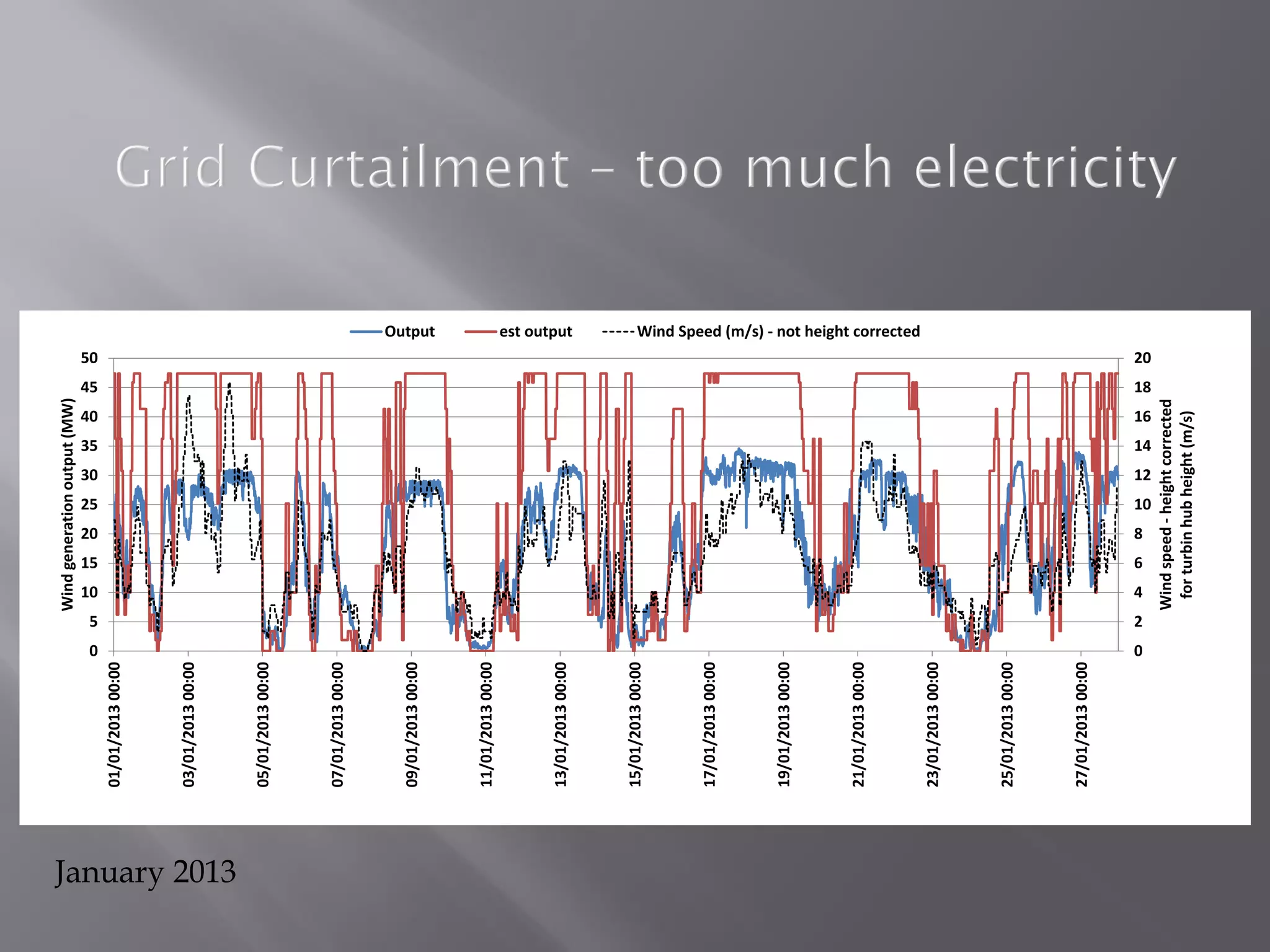
0
2
4
6
8
10
12
14
16
18
20
0
5
10
15
20
25
30
35
40
45
50
01/01/201300:00
03/01/201300:00
05/01/201300:00
07/01/201300:00
09/01/201300:00
11/01/201300:00
13/01/201300:00
15/01/201300:00
17/01/201300:00
19/01/201300:00
21/01/201300:00
23/01/201300:00
25/01/201300:00
27/01/201300:00
Windspeed-heightcorrected
forturbinhubheight(m/s)
Windgenerationoutput(MW)
Output est output Wind Speed (m/s) - not height corrected
January 2013
How can ORIGIN help?
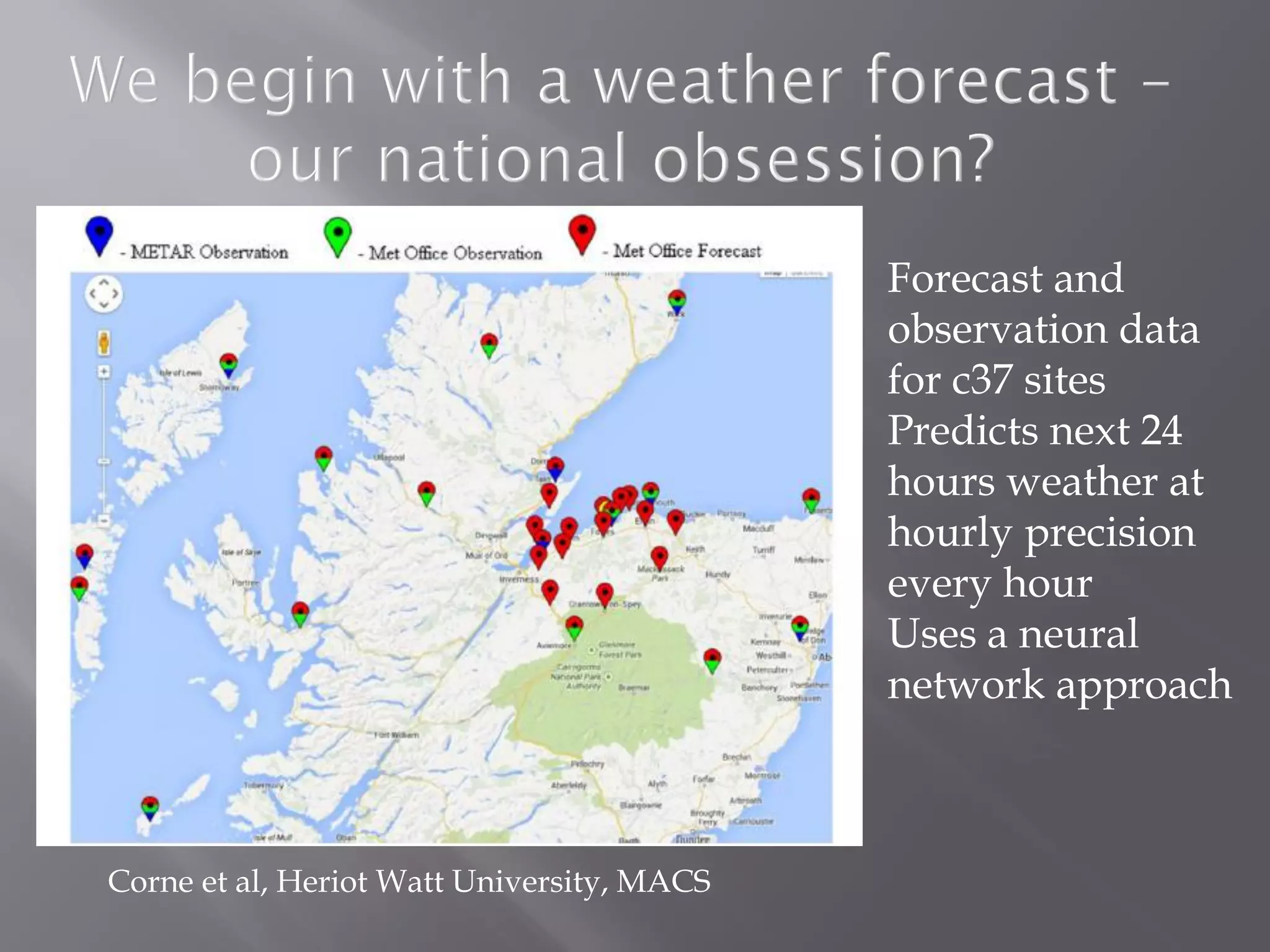
• Forecast and
observation data
for c37 sites
• Predicts next 24
hours weather at
hourly precision
every hour
• Uses a neural
network approach
Corne et al, Heriot Watt University, MACS
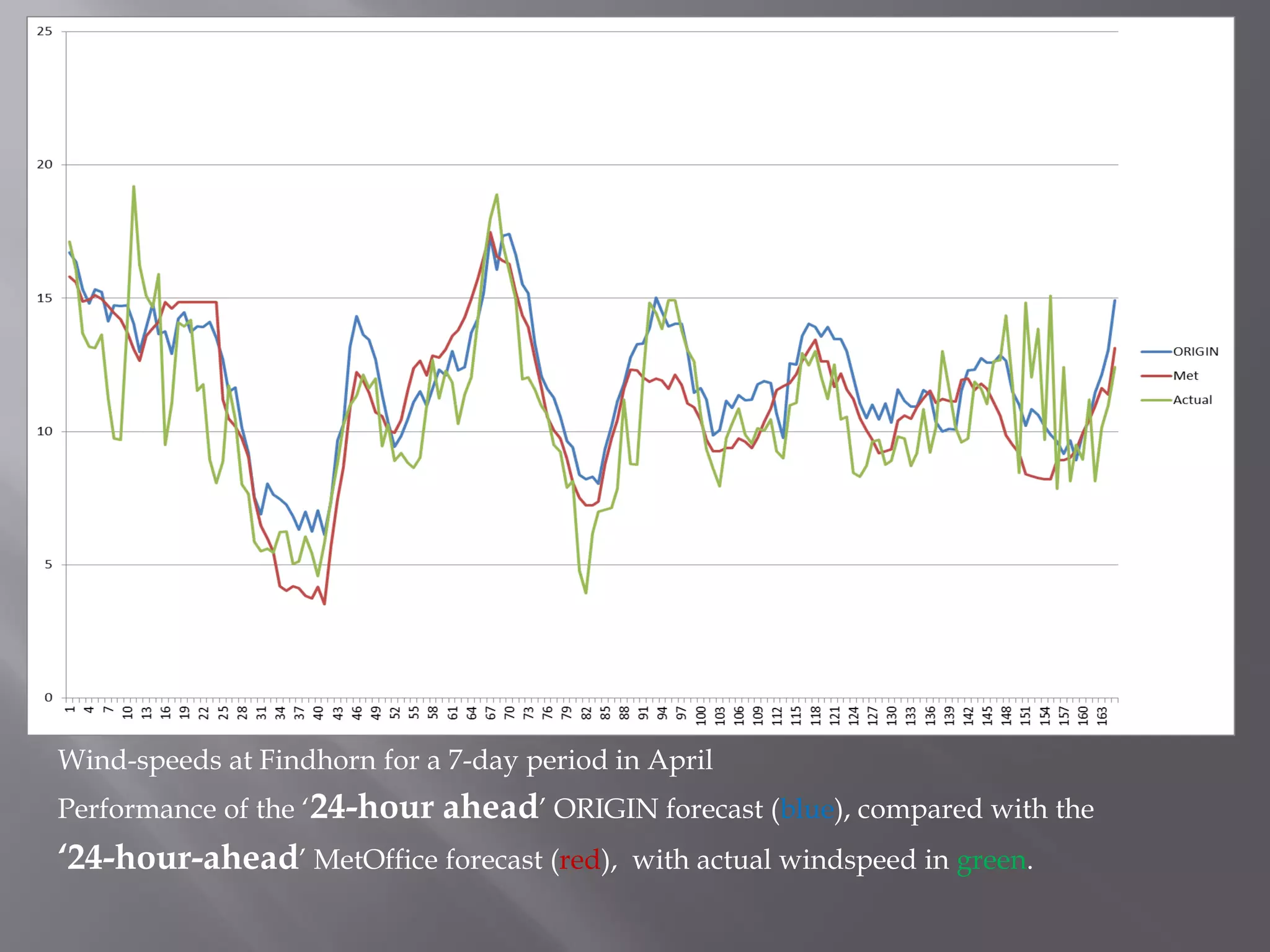
Wind-speeds at Findhorn for a 7-day period in April
Performance of the ‘24-hour ahead’ ORIGIN forecast (blue), compared with the
‘24-hour-ahead’ MetOffice forecast (red), with actual windspeed in green.
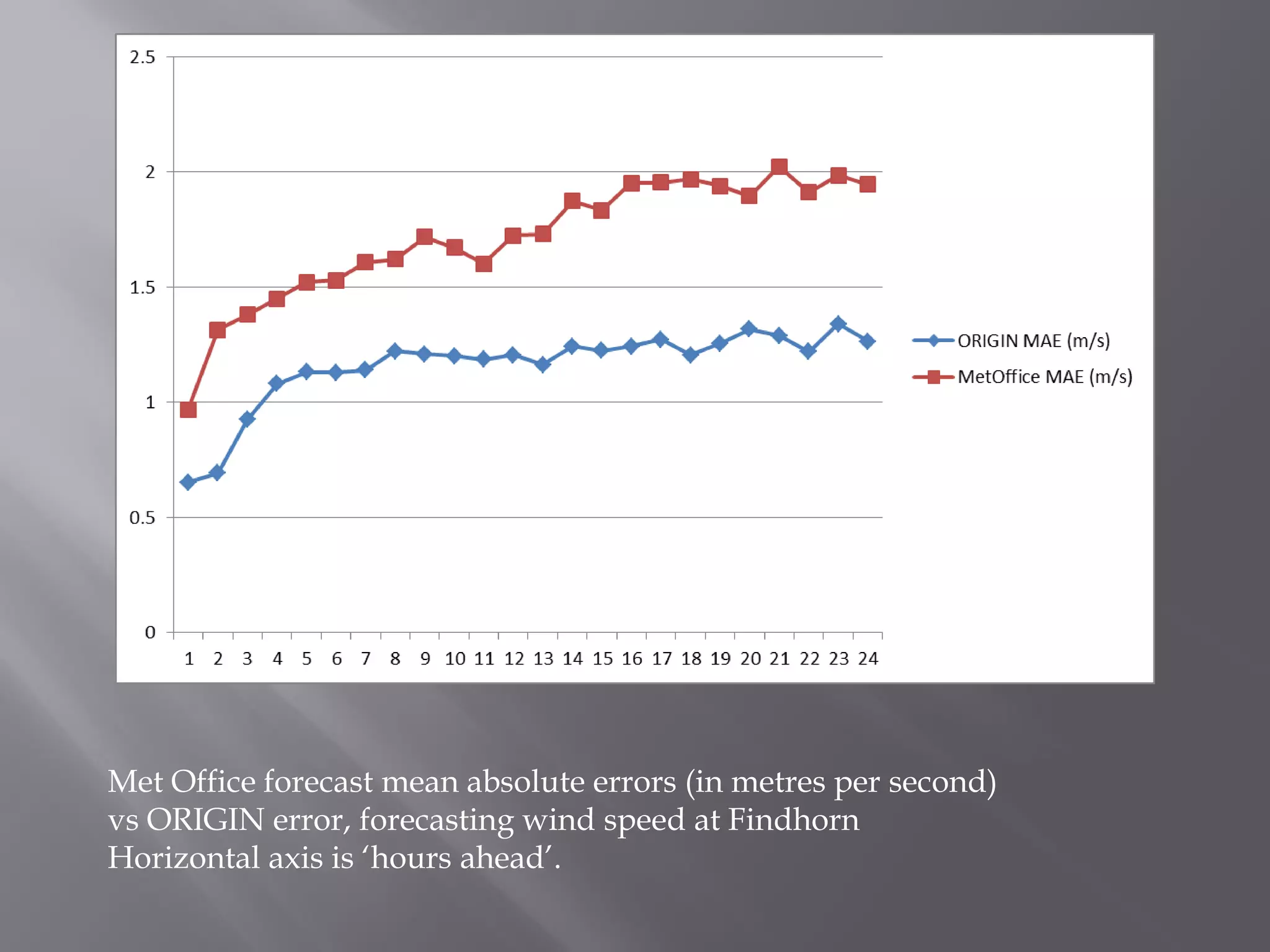
Met Office forecast mean absolute errors (in metres per second)
vs ORIGIN error, forecasting wind speed at Findhorn
Horizontal axis is ‘hours ahead’.
 For effective automated demand side
management we also need to:
 Forecast the electrical needs of the community
 Measure and forecast the thermal needs of the
community
 Expensive to automate and retrofit
 Alternatively you engage the residents with an
ergonomic user interface
 35 automated buildings at Findhorn
 40 user engaged buildings
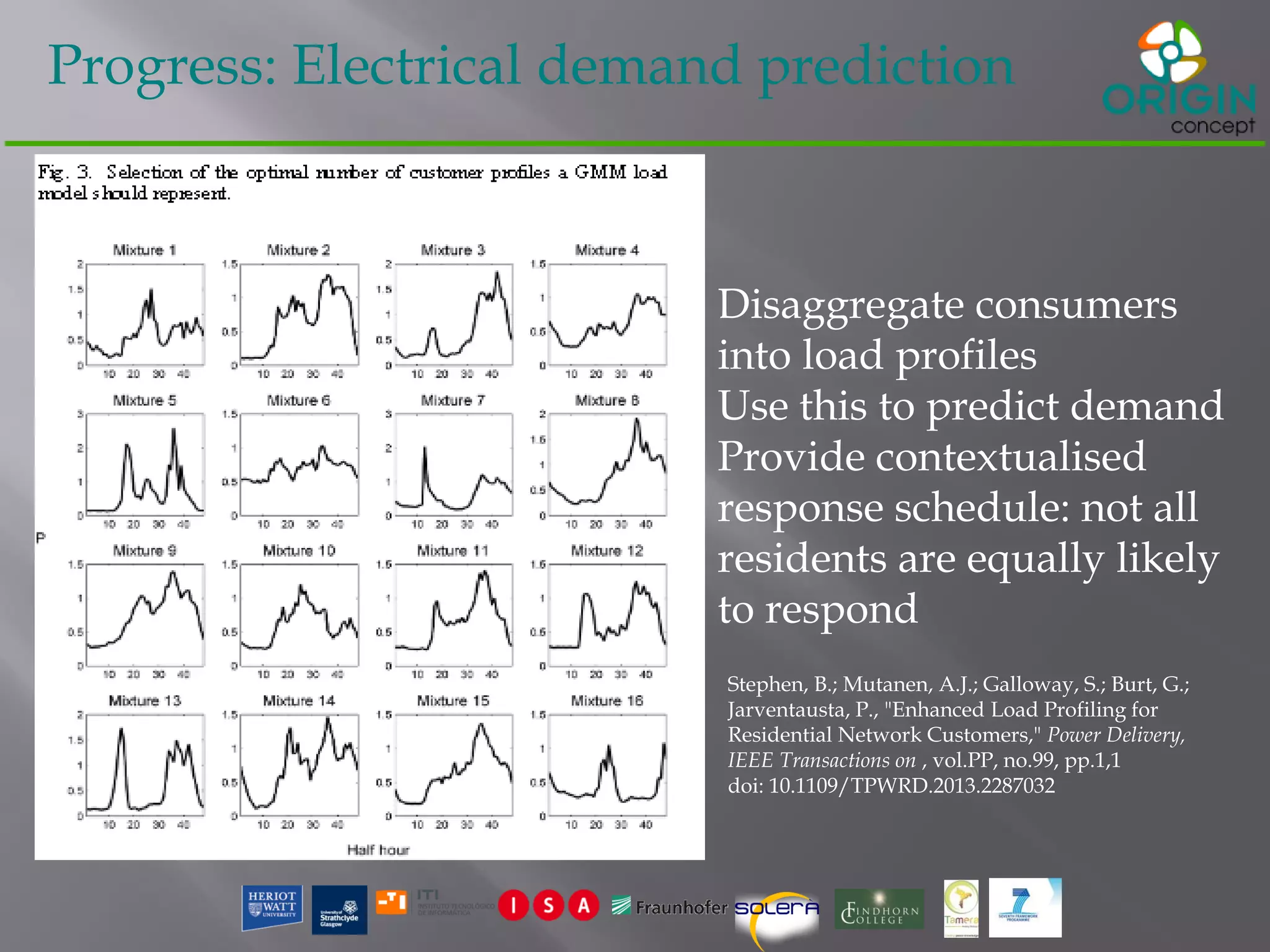
Progress: Electrical demand prediction
Stephen, B.; Mutanen, A.J.; Galloway, S.; Burt, G.;
Jarventausta, P., "Enhanced Load Profiling for
Residential Network Customers," Power Delivery,
IEEE Transactions on , vol.PP, no.99, pp.1,1
doi: 10.1109/TPWRD.2013.2287032
• Disaggregate consumers
into load profiles
• Use this to predict demand
• Provide contextualised
response schedule: not all
residents are equally likely
to respond
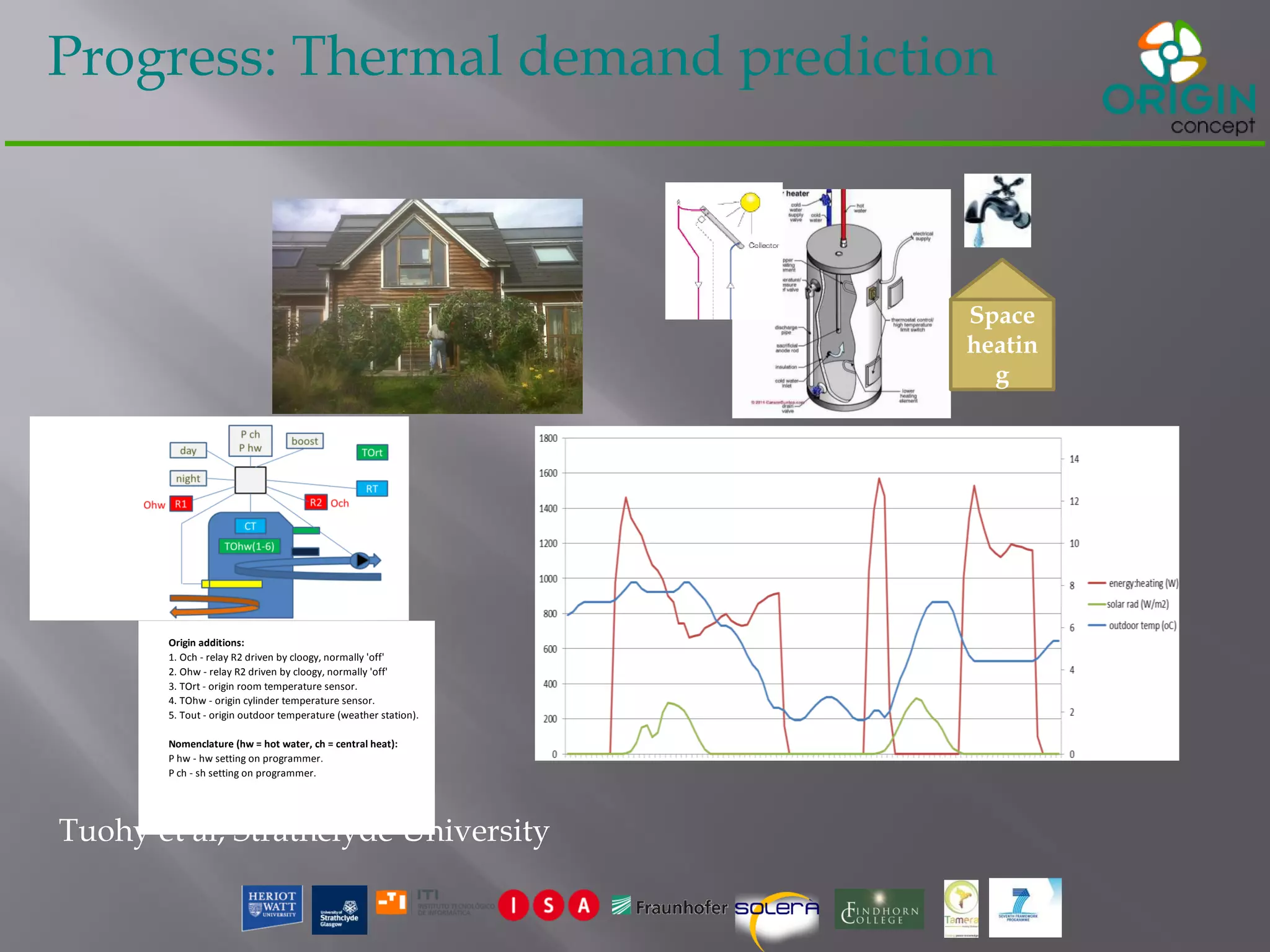
Progress: Thermal demand prediction
Origin additions:
1. Och - relay R2 driven by cloogy, normally 'off'
2. Ohw - relay R2 driven by cloogy, normally 'off'
3. TOrt - origin room temperature sensor.
4. TOhw - origin cylinder temperature sensor.
5. Tout - origin outdoor temperature (weather station).
Nomenclature (hw = hot water, ch = central heat):
P hw - hw setting on programmer.
P ch - sh setting on programmer.
CONTROL LOGIC:
hot water tank charging:
Night Sani Room Sani Night Day Night Day
Dist R1 P hw R2 P ch Stat Stat cube heater heater imm imm CH
Board DHW' CH' CT RT boost switch switch heater heater pump
ON ON DC DC DC ON DC DC ON OFF ON OFF DC ORIGIN ON (night tariff periods)
ON OFF OFF DC DC ON DC ON OFF ON OFF ON DC ask occupants not to use boost for origin control
ON OFF OFF DC DC ON DC OFF OFF OFF OFF OFF DC ORIGIN OFF (night)
ON OFF ON DC DC ON DC DC ON OFF ON OFF DC need to switch P hw to 'off' for origin control.
OFF ON DC DC DC ON DC DC OFF ON OFF ON DC ORIGIN ON (day tarriff periods)
OFF OFF OFF DC DC ON DC ON OFF ON OFF ON DC ask occupants not to use boost for origin control
OFF OFF OFF DC DC ON DC OFF OFF OFF OFF OFF DC ORIGIN OFF (day)
OFF OFF ON DC DC ON DC DC ON OFF OFF OFF DC need to switch P hw to 'off' for origin control.
space heat control
Night Sani Room Sani Night Day Night Day
Origin additions:
1. Och - relay R2 driven by cloogy, normally 'off'
2. Ohw - relay R2 driven by cloogy, normally 'off'
3. TOrt - origin room temperature sensor.
4. TOhw - origin cylinder temperature sensor.
5. Tout - origin outdoor temperature (weather station).
Nomenclature (hw = hot water, ch = central heat):
P hw - hw setting on programmer.
P ch - sh setting on programmer.
Space
heatin
g
Tuohy et al, Strathclyde University
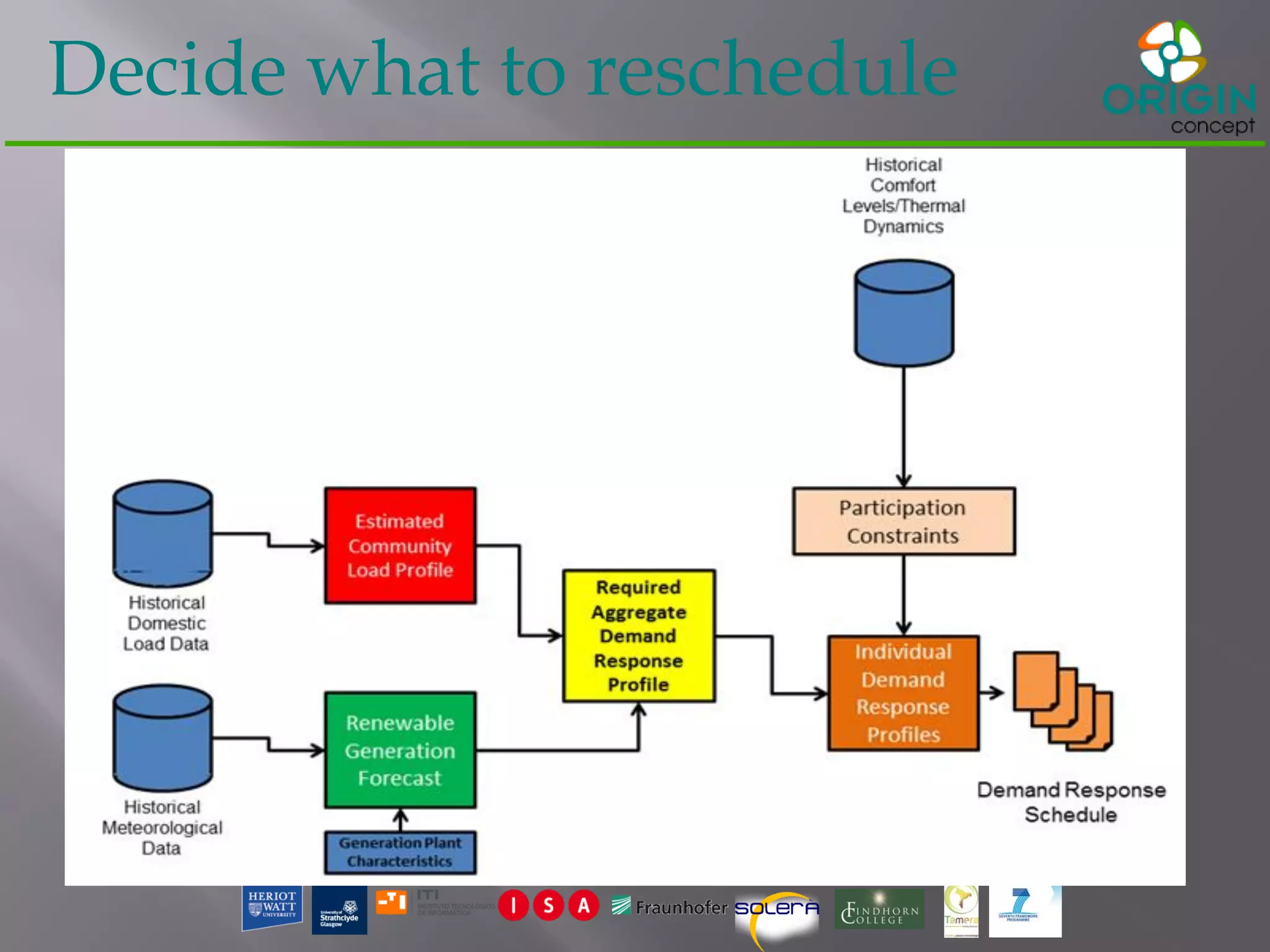
Decide what to reschedule
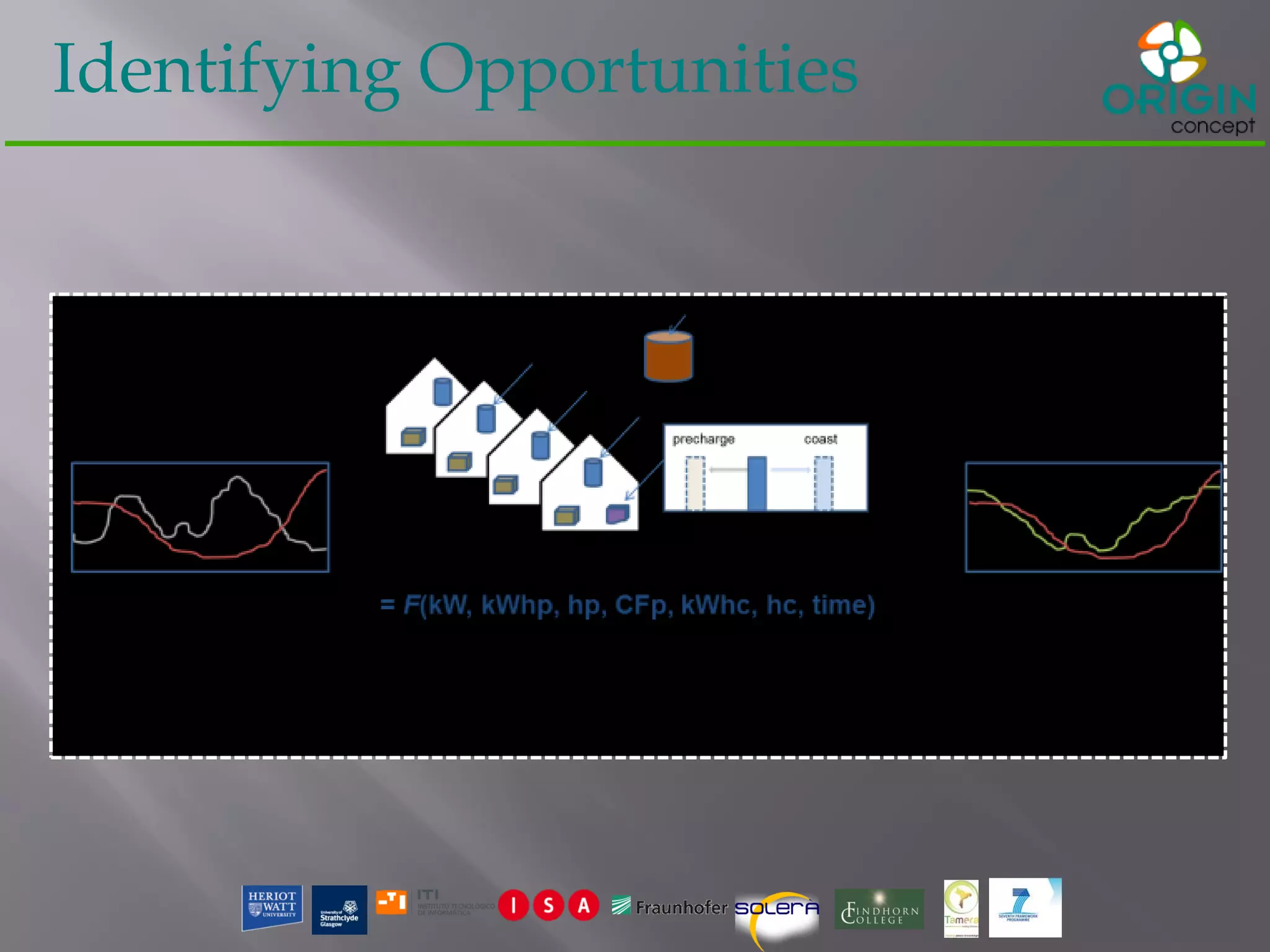
Identifying Opportunities
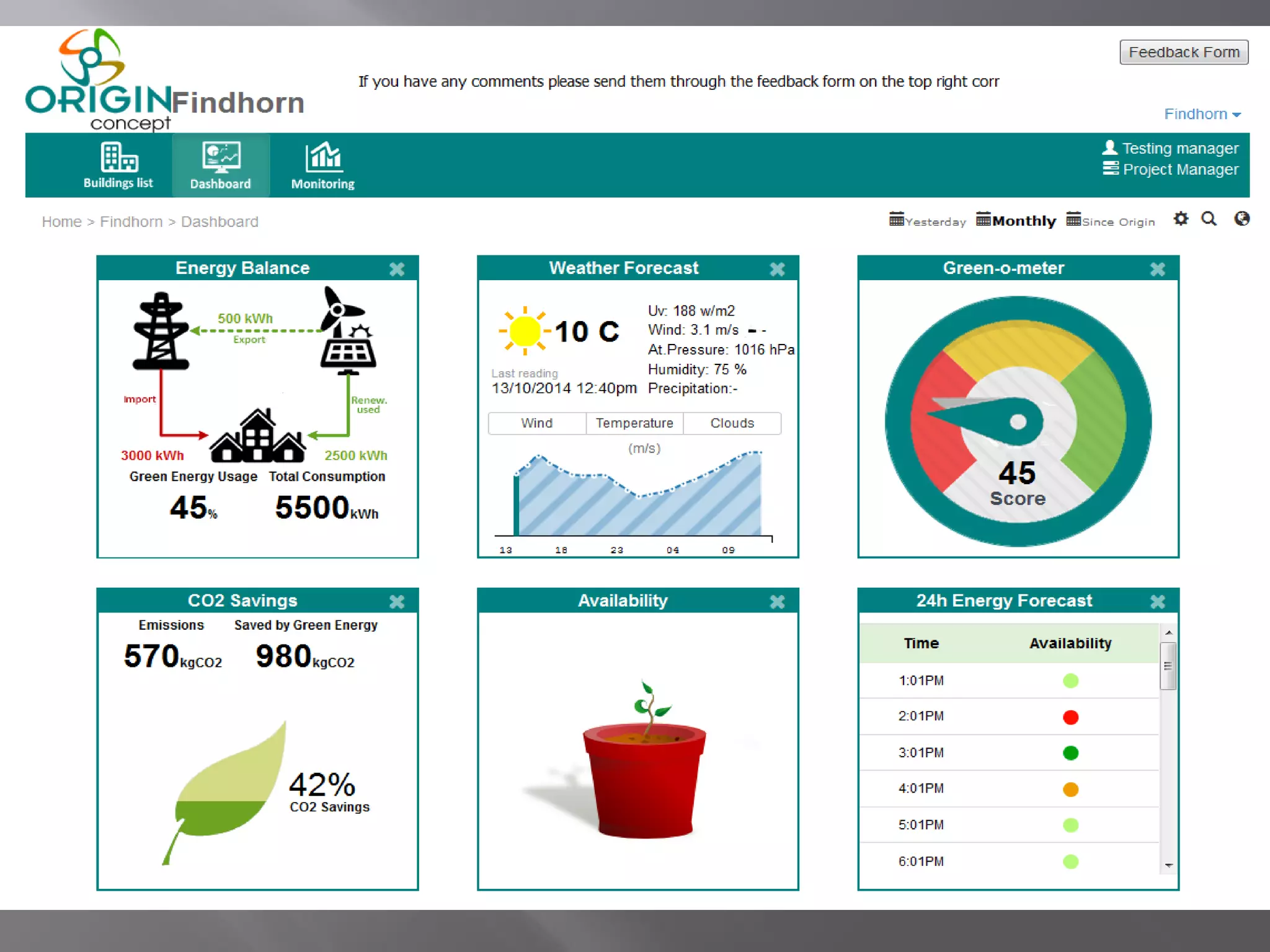
 Hardware installed and recording data from
December 2013
 Demand response system goes live in Findhorn
on 5th November 2014
 Tamera and Damanhur later that month
What do we plan to achieve?
 More efficient use of installed renewable
generation and storage
 Less imported energy to the communities
 Community confidence in use of energy
 Reported carbon dioxide emission savings
 20%+ savings should be achievable but
potential for more
 Demand side management is essentially
energy storage - usually in hot water or the
fabric of the building
Thank you
Follow ORIGIN’s progress at
http://origin-concept.eu/
@ORIGINConcept

Optimising Energy Storage Within Micro-grid Systems | Edward Owens

  • 1.
    ORIGIN Orchestration of RenewableIntegrated Generation In Neighbourhoods Dr Edward Owens Optimising energy storage within micro-grid systems ICARB Workshop – Energy Storage for the Built Environment 21st OCTOBER 2014, EDINBURGH CENTRE FOR CARBON INNOVATION
  • 2.
    • 8 beneficiaries, 5 countries, 4 research institutes, 1 SME and 3 communities • 4.1 million Euro FP7 collaborative project funded by EU • November 2012 – November 2015 ORIGIN Orchestration of Renewable Integrated Generation In Neighbourhoods
  • 3.
    Three communities Findhorn DamanhurTamera Location Northern Scotland Northern Italy Southern Portugal Participating buildings 75 18 11 PV electricity 25kW 230kW 20kW District heating 250kW Wind park 750kW Heat pumps 25kW Solar hot water 100m2 4800 litres 52m2 Biomass boilers 350kW 630kW Current energy use 39kWh/m2 (Note 1) 34kWh/m2 1.5kWh avg. daily consumption (Note 2) Note 1 – 88.6% compared to UK average Note 2 – 40.5% compared to Portuguese average
  • 5.
    What has theEU funded?  Orchestration of energy use within a community – to save imported energy / carbon  How? - Alignment of energy demand with (local) renewable supply  Prediction of demand and supply and orchestration of energy use  Deployment of smart energy monitoring, control and communication hardware  A sustainable economic model
  • 6.
    The problem German WindGeneration 2012 http://theenergycollective.com/schalk- cloete/259876/intermittent-renewables-and-electricity-markets
  • 7.
    Scotland’s Wind Generation– Capacity Factor = 33% Efficient and effective storage is required if benefits of renewable generation are to be realised Without storage - thermal generation will remain the dominant generation technology Diversity of renewable generation will help Sara Campagna
  • 8.
  • 9.
  • 10.
    • Forecast and observationdata for c37 sites • Predicts next 24 hours weather at hourly precision every hour • Uses a neural network approach Corne et al, Heriot Watt University, MACS
  • 11.
    Wind-speeds at Findhornfor a 7-day period in April Performance of the ‘24-hour ahead’ ORIGIN forecast (blue), compared with the ‘24-hour-ahead’ MetOffice forecast (red), with actual windspeed in green.
  • 12.
    Met Office forecastmean absolute errors (in metres per second) vs ORIGIN error, forecasting wind speed at Findhorn Horizontal axis is ‘hours ahead’.
  • 13.
     For effectiveautomated demand side management we also need to:  Forecast the electrical needs of the community  Measure and forecast the thermal needs of the community  Expensive to automate and retrofit  Alternatively you engage the residents with an ergonomic user interface  35 automated buildings at Findhorn  40 user engaged buildings
  • 14.
    Progress: Electrical demandprediction Stephen, B.; Mutanen, A.J.; Galloway, S.; Burt, G.; Jarventausta, P., "Enhanced Load Profiling for Residential Network Customers," Power Delivery, IEEE Transactions on , vol.PP, no.99, pp.1,1 doi: 10.1109/TPWRD.2013.2287032 • Disaggregate consumers into load profiles • Use this to predict demand • Provide contextualised response schedule: not all residents are equally likely to respond
  • 15.
    Progress: Thermal demandprediction Origin additions: 1. Och - relay R2 driven by cloogy, normally 'off' 2. Ohw - relay R2 driven by cloogy, normally 'off' 3. TOrt - origin room temperature sensor. 4. TOhw - origin cylinder temperature sensor. 5. Tout - origin outdoor temperature (weather station). Nomenclature (hw = hot water, ch = central heat): P hw - hw setting on programmer. P ch - sh setting on programmer. CONTROL LOGIC: hot water tank charging: Night Sani Room Sani Night Day Night Day Dist R1 P hw R2 P ch Stat Stat cube heater heater imm imm CH Board DHW' CH' CT RT boost switch switch heater heater pump ON ON DC DC DC ON DC DC ON OFF ON OFF DC ORIGIN ON (night tariff periods) ON OFF OFF DC DC ON DC ON OFF ON OFF ON DC ask occupants not to use boost for origin control ON OFF OFF DC DC ON DC OFF OFF OFF OFF OFF DC ORIGIN OFF (night) ON OFF ON DC DC ON DC DC ON OFF ON OFF DC need to switch P hw to 'off' for origin control. OFF ON DC DC DC ON DC DC OFF ON OFF ON DC ORIGIN ON (day tarriff periods) OFF OFF OFF DC DC ON DC ON OFF ON OFF ON DC ask occupants not to use boost for origin control OFF OFF OFF DC DC ON DC OFF OFF OFF OFF OFF DC ORIGIN OFF (day) OFF OFF ON DC DC ON DC DC ON OFF OFF OFF DC need to switch P hw to 'off' for origin control. space heat control Night Sani Room Sani Night Day Night Day Origin additions: 1. Och - relay R2 driven by cloogy, normally 'off' 2. Ohw - relay R2 driven by cloogy, normally 'off' 3. TOrt - origin room temperature sensor. 4. TOhw - origin cylinder temperature sensor. 5. Tout - origin outdoor temperature (weather station). Nomenclature (hw = hot water, ch = central heat): P hw - hw setting on programmer. P ch - sh setting on programmer. Space heatin g Tuohy et al, Strathclyde University
  • 16.
    Decide what toreschedule
  • 17.
  • 19.
     Hardware installedand recording data from December 2013  Demand response system goes live in Findhorn on 5th November 2014  Tamera and Damanhur later that month
  • 20.
    What do weplan to achieve?  More efficient use of installed renewable generation and storage  Less imported energy to the communities  Community confidence in use of energy  Reported carbon dioxide emission savings  20%+ savings should be achievable but potential for more  Demand side management is essentially energy storage - usually in hot water or the fabric of the building
  • 21.
    Thank you Follow ORIGIN’sprogress at http://origin-concept.eu/ @ORIGINConcept