ANATOMY OF MEDIASTINUM AND ITS DISORDERSDr.G.GIREESH,P.G ResidentDept.Of Gen.Medicine.
ANATOMY OF MEDIASTINUMIt is the anatomic space that lies in the midthorax Separates the two pleural cavities.It is limited by the diaphragm below and the suprasternal thoracic outlet above. It contains several vital structures in a small space,Abnormalities can produce important symptoms. For clinical purposes, Divided into Anterior, Middle, Posterior compartments

ANATOMY OF MEDIASTINUMThe Anterior compartment contains The Thymus,Substernal extensions of the thyroid Parathyroid glands, blood vesselsPericardiumLymph nodes
ANATOMY OF MEDIASTINUMThe middle compartment contains the Heart, Great vessels,Trachea, Main bronchi, Lymph nodes, Phrenic and Vagus nerves.
ANATOMY OF MEDIASTINUM     The posterior compartmentThe vertebrae Descending aorta, Oesophagus,Thoracic duct, Azygous and Hemizygous veins Lower portion of the vagus,Sympathetic chains, andPosterior mediastinal nodes.
Disorders of superior mediastinum  Enlarged lymph nodes due to  			Tuberculosis 			Leukemia 			Sarcoidosis Lymphoma Tumors of the thymus Teratomas Abscesses Intrathoracic thyroid Aneurysm Cystic hygroma Carcinoma Vascular tumours Oesophageal lesions
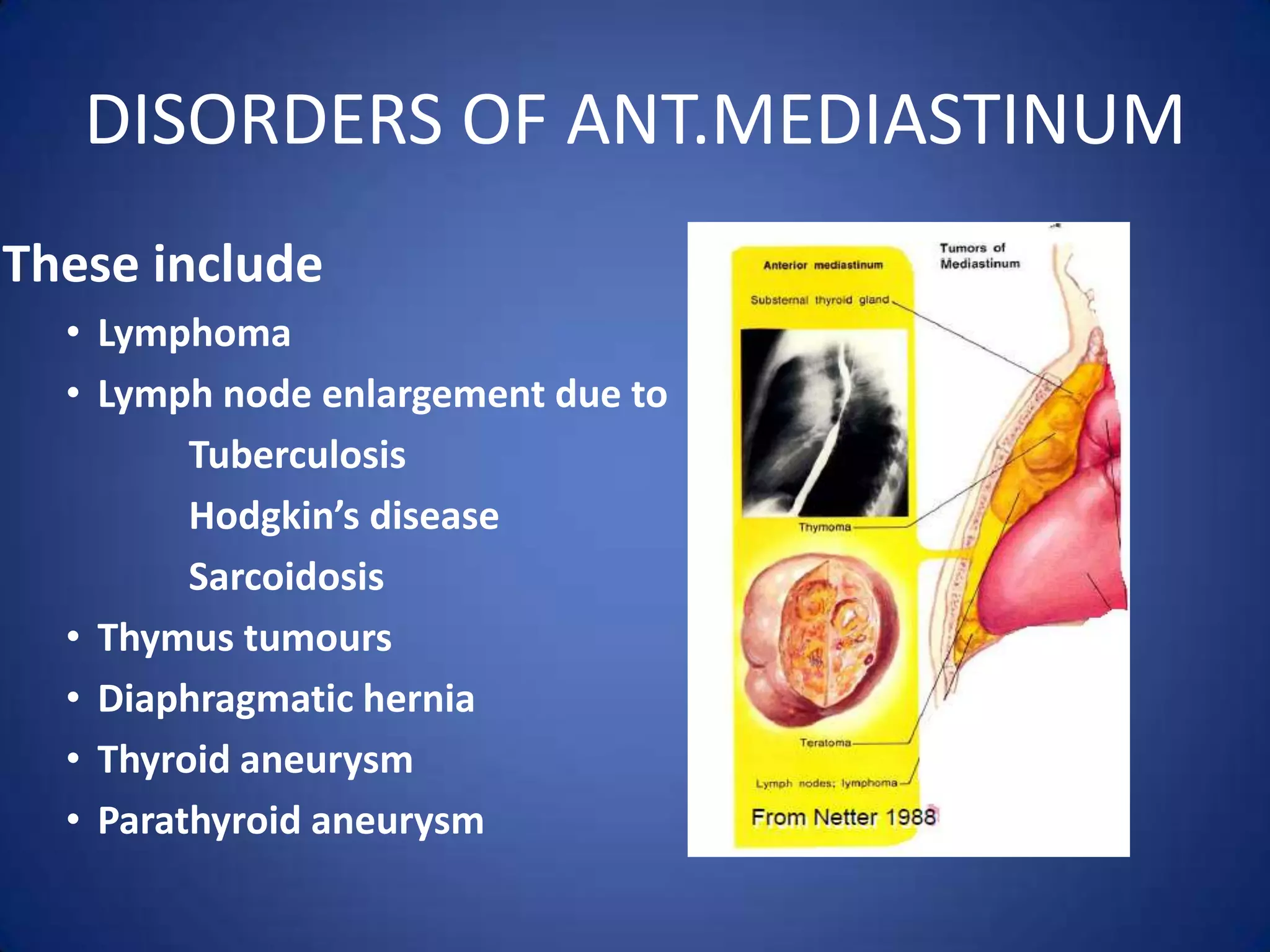
DISORDERS OF ANT.MEDIASTINUM     These includeLymphoma Lymph node enlargement due to              Tuberculosis             Hodgkin’s disease              SarcoidosisThymus tumours Diaphragmatic herniaThyroid aneurysmParathyroid aneurysm
LYMPHOMASThese arise in the anterior MediastinumHodgkin's lymphoma is the most frequent Carries the best prognosis. Other malignancies with worst prognosis are                            Non-Hodgkin's lymphoma                           Plasmacytomas                            Angiomatous lymphoid hamartomas
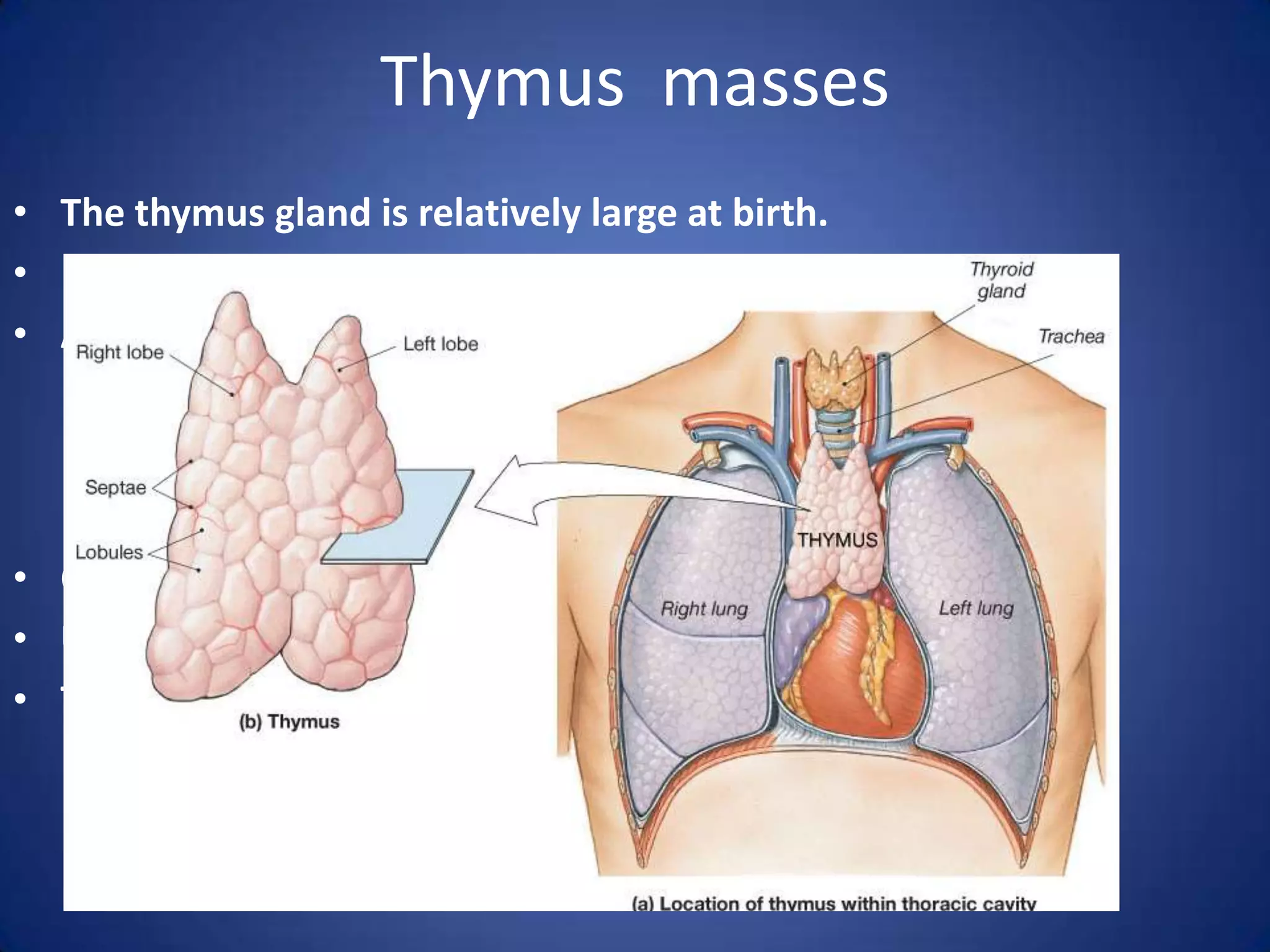
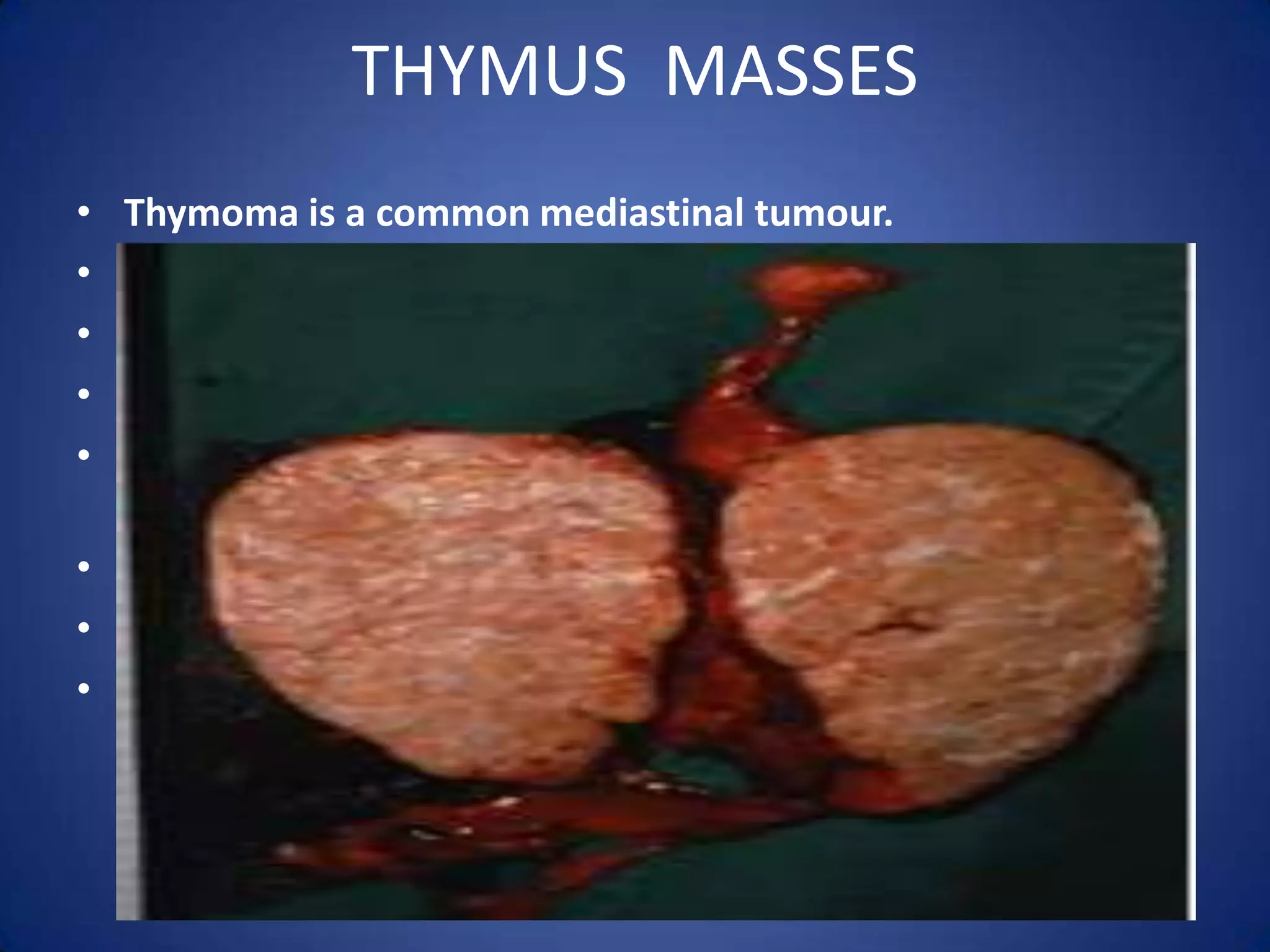
Thymus  massesThe thymus gland is relatively large at birth. After puberty, it regresses to a small size.  A  Thymic mass can be a    Tumour                                                       Cysts 					Thymic lymphoma Cysts may be single or multiple. Usually asymptomatic They manifest on chest X-ray as an enlarged thymus.
Thymus  massesThymoma is a common mediastinal tumour. It is usually malignant Usually associated with myasthenia gravis.  Some are asymptomatic. Enlarging tumours present with features of mediastinal compression syndrome Chest x-ray -Rounded shadow in the Ant. Mediastinum. Lateral view gives better delineation of the tumour. Surgical resection is the best method of treatment.
THYROID MASSESRetrosternal extension of an enlarged thyroid  Majority are multinodular benign goitres Cystic areas with hemorrhage and calcification. X-ray-show a sharply defined and often lobulated outline.  Rarely symptomaticCompress the trachea at the thoracic inlet and result in respiratory distress  Occasionally cause superior vena cava syndrome.Thyroid cancer involves the mediastinum by 			Direct extension  			Metastases to  nodes.
TERATOMASIdentical to certain testicular and ovarian neoplasms, Arise from primitive germ cells Arise by migrating to the mediastinum during oncogenesis.Dermoid  cysts  contain disorganized mixture of all 3 layers. i.e.  skin, hair, cartilage, bone, epithelium, and neural tissue. They  often contain cystic areas.Should be excised	To prevent  further expansionTo exclude malignant change
TERATOMAS				.Malignant germ cell tumours are classically divided into      			   1) Seminomas.	 	    	   2) Teratomas.  Non-seminomatous germ cell tumours (malignant teratoma) can range from well-differentiated to trophoblastic.  Serum levels of α-FP and β-HCG  are  ↑sed Seminomas tend to be non-secretory. These tumours are very malignant and invade adjacent mediastinal structures. Not cured by surgeryThese are responsive to chemotherapy using cisplatin-based regimes.
PERCARDIAL  CYSTS Occur in the anterior compartment and cardiophrenic angle They contain clear liquid and a flattened endothelial or mesothelial lining with a bland fibrous wall. Develop embryologically in relationship to the pericardium, Rarely communicate with the pericardial sacs   X-ray-Smooth, clear, demarcated densities                                                         D/D’S-Pericardial fat pad		    Hernia through the foramen of Morgagni. Aspiration reveals clear fluid. Surgical excision is not recommended.
Middle mediastinumAortic aneurysmPericardial cyst Bronchogenic cyst LipomaLymphomaNeoplasmMorgagni’s hernia
BRONCHOGENIC CYSTSArise in association with the major airways Dvp. around the paratracheal area or carina Middle and posterior compartmentsLined by respiratory epithelium. Contain inspissated mucus.Cough or wheezing due to local pressure on airwaysOccasionally   they   communicate with the tracheaThere is an increased tendency to recurrent infections. Symptomatic pt.s  need surgical removals of the cysts
MEDIASTINAL LYMPHADENOPATHYMiddle mediastinum is the commonest site of intrathoracic lymphadenopathy.Gross lymphadenopathy is a feature of					     1)Tuberculosis					     2)Histoplasmosis. 					     3) Metastatic carcinoma					     4) Lymphomas, 					     5)Sarcoidosis.
Giant follicular lymph node hyperplasia (Castleman's disease) Its Aetiology is unknown. The lesion consists of a vascular tumour with satellite lymphadenopathy.Two histological subgroups are described, (1) a more common hyaline vascular picture with lymphoid follicles and penetrating capillaries (2) a plasma cell type characterized by sheets of plasma cells between germinal centres. It   causes pressure effects Systemic symptoms with fever, anaemia, and weight loss.Small group of patients with multicentric disease have progressive hyperplasia, recurrent infections, and subsequently develop a frank lymphoma.
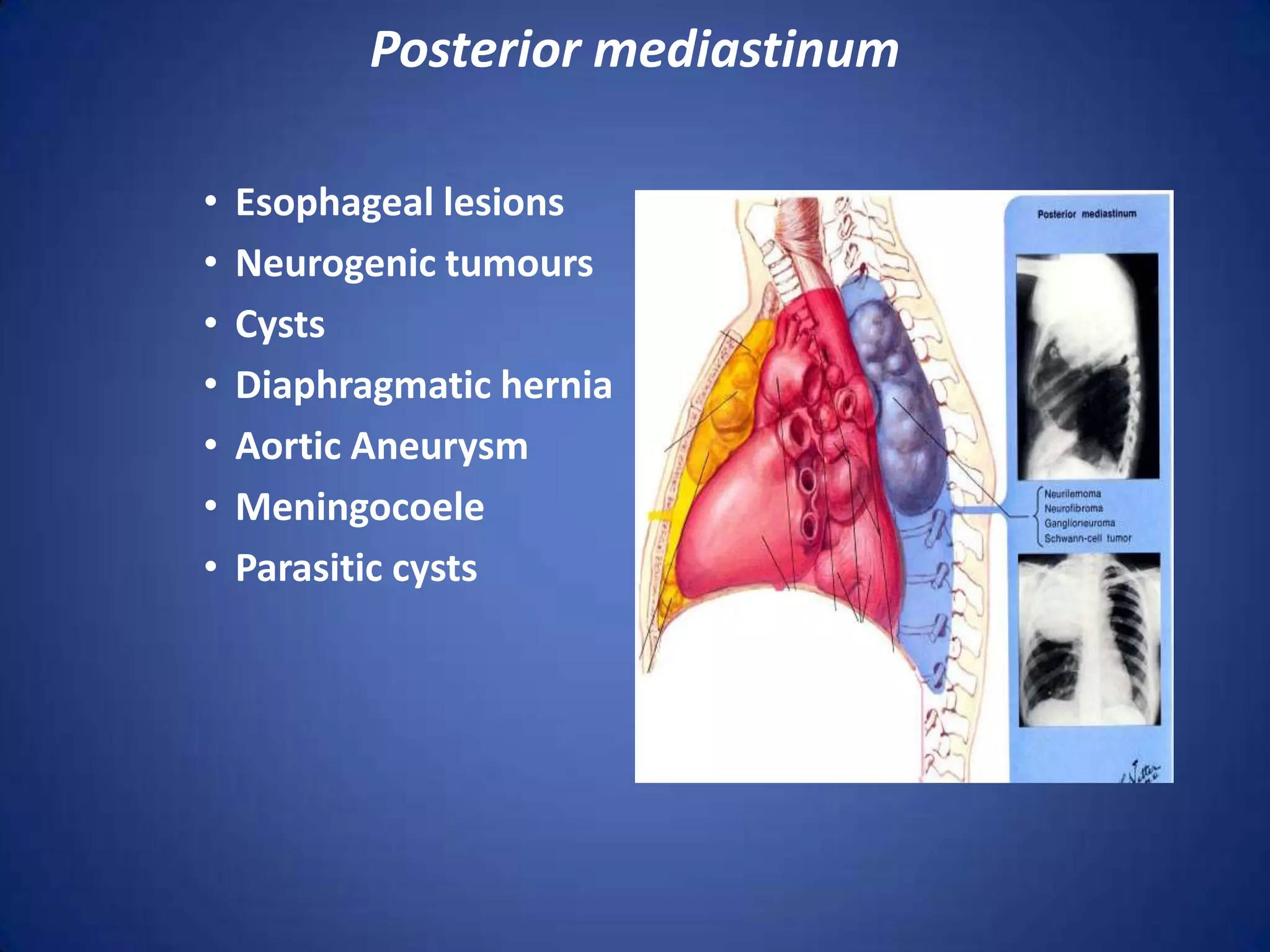
Posterior mediastinumEsophageal lesionsNeurogenic tumoursCystsDiaphragmatic herniaAortic AneurysmMeningocoeleParasitic cysts
BOCHDALEK HERNIA
Enteric cystsAre located in the posterior mediastinum Lined by gastric or intestinal epithelium. All cysts may become1) Infected                                             2) Bleed                                             3)Rupture Rupture into the   Mediastinum.                                        Pleural cavity.
Tumours of post.mediastinumFound in the paravertebral gutters,Neural in origin. Benign tumours tend to be asymptomatic, Malignant tumours cause pressure effects. Occasionally, spinal cord compression results from direct extension into the intravertebral foramen.Tumours arising from peripheral nerve cell sheaths include           Neurilemmoma (Schwannoma) Neurofibroma     Malignant counterparts. Tumours of the autonomic chain include GanglioneuromaNeuroblastoma.
NEUROGENIC TUMOURSThere are 4 histological types.1.neurilemmoma 		Benign and is classically a dumbbell-shaped mass. 	    compress the spinal cord and produce pressure  symptoms. 2.ganglioneuroma		Benign, elongated and large. 		Usually occurs in children but may be found at any age.              Causes flushing,hypertension,headache,sweating,diarrhoea.3.neurofibroma		Associated with generalized neurofibromatosis			 (von Recklinghausen's disease). 4.NEUROBLASTOMA               Malignant and found frequently in children.
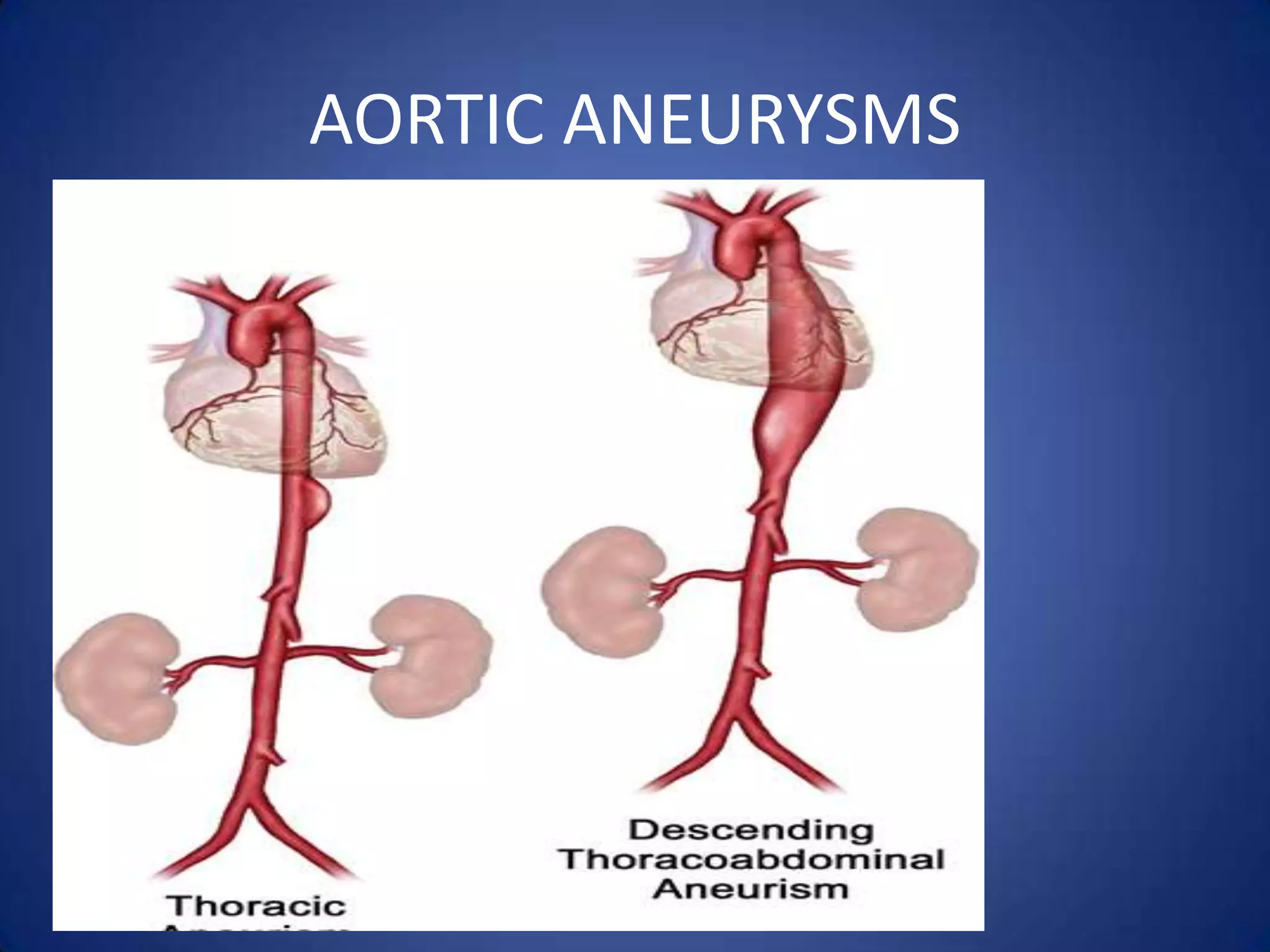
AORTIC ANEURYSMScauses :HypertensionAtherosclerosisBlunt chest traumaMycotic dissectionCystic medial necrosis in Marfans syndromeEhlers- Danlos syndromeAortitis in tertiary syphilisCoarctation of aorta
VASCULAR TUMORSVascular tumors may originate in the mediastinum. Vascular hamartomasLymphangiomas and Hemangiomas are benign tumors.Hemangiopericytomas are malignant. Mesenchymal benign -lipomaMalignant-LiposarcomaMesotheliomaRhabdomyosarcomaMesenchymomaThese rarely cause mediastinal masses.
PNEUMOMEDIASTINUMThere are 3 possible causes -                 1) penetrating chest wall injuries;                  2) tear or defect in trachea, bronchus or oesophagus;                 3) tear or defect in alveolar wall Air from alveoli enters the interstitial space, Travels along the perivascular sheath into the mediastinum Enters the subcutaneous tissues of the neck and chest wallResults in surgical emphysema.Pt. gets sudden pain in the substernal areas and dyspnoea. X-ray –Air accumulation parallel to the heart and aorta. In surgical emphysema-subcutaneous crepitations are felt .Treatment of the underlying disorder is necessary. Rarely needs surgical incision.
MEDIASTINITISIt usually results from 		Oesophageal rupture		 Bronchial ruptureTuberculous lymphadenitis. 		Infection from subphrenic abscess Osteomyelitis of spine. Treatment-		1.Appropriate Antibiotics. 		2.Surgery.
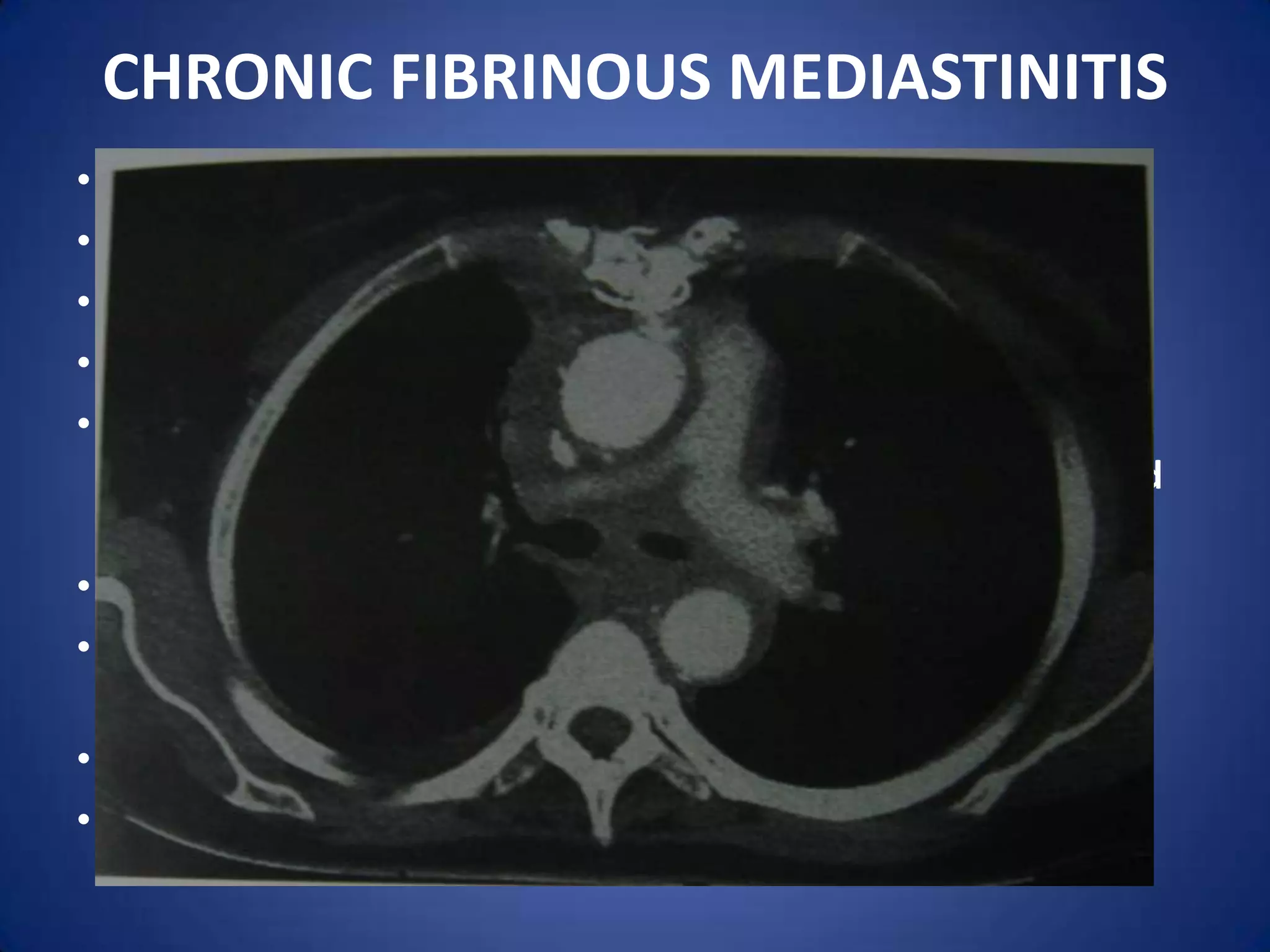
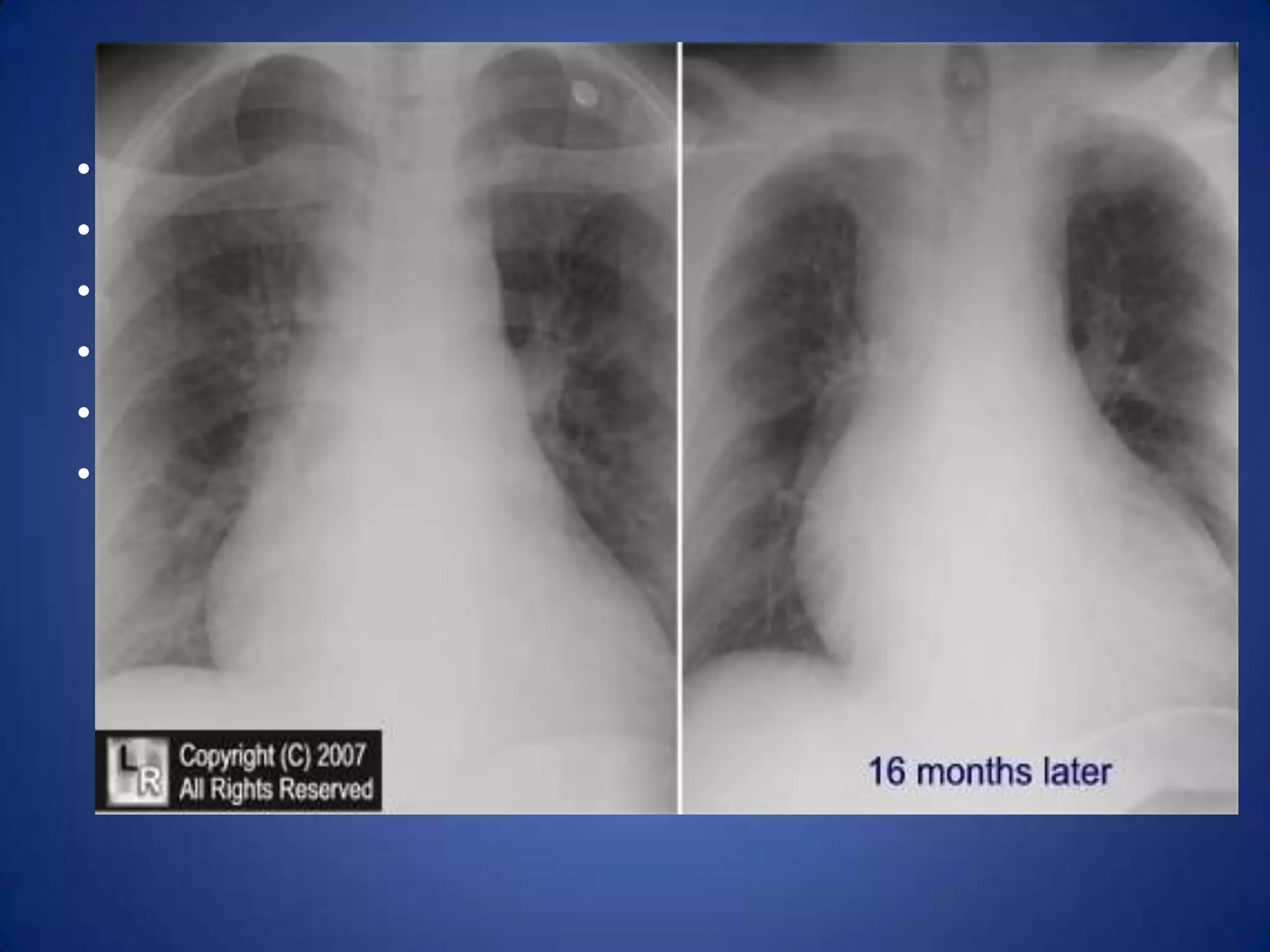
CHRONIC FIBRINOUS MEDIASTINITISIts a chronic slowly progressive fibrosis. Similar to idiopathic retroperitoneal fibrosis. Various theories have been put forward but not proven. Involves  S.V.C, Azygos and Innominate veins. Apart from engorged neck veins, swelling of face and neck, one may get headache, breathlessness, giddiness and epistaxis. X-ray chest-Widening of the upper mediastinum. Secondary causes of mediastinal fibrosis like tuberculosis and histoplasmosis must be ruled out. Corticosteroids can be tried. Surgical removal of fibrotic bands relieves the symptoms.
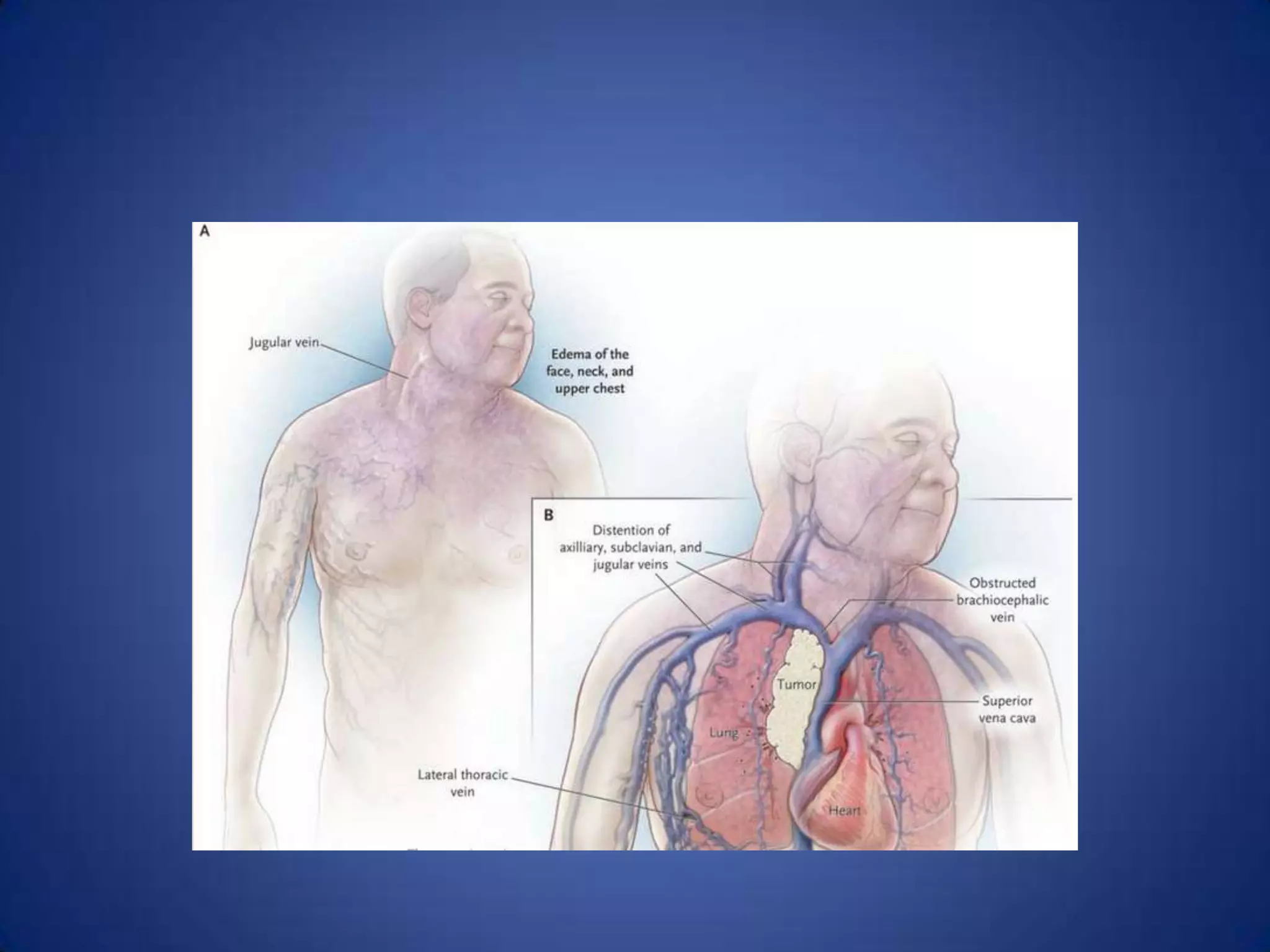
Superior Vena Cava Syndrome Obstruction of blood flow through the superior vena cava causes dilation of the collateral veins of the upper thorax and neck and edema and congestion of the face patients may have headache, dyspnea, dysphagia, and wheezes. Malignancy is the most frequent cause of this syndrome, bronchogenic carcinoma  lymphoma a distant second.FibrosingmediastinitisMethysergide ingestion. Aortic aneurysm Retrosternal thyroid  Invasive procedures are contraindicated. When the obstruction is thought to be caused by tumor, effort must be made to obtain tissue elsewhere. Irradiation, chemotherapy, or stent placement should be initiated before attempts are made to obtain mediastinal tissue.
Organ involvedSymptoms and signs1. Trachea, main bronchi -Stridor, dyspnoea, cough, features of lung collapse 2. Oesophagus- Dysphagia (extrinsic compression on barium swallow) 3. Superior vena cava -Engorged non-pulsatile neck veins, oedema and cyanosis of face, neck and arms 4. Left recurrent laryngeal nerve- Hoarseness of voice, bovine cough 5. Phrenic nerve- Hemi-diaphragm paralysis 6. Sympathetic trunk- Horner’s syndrome
Diagnostic approach1.chest x-ray2. Computed tomography (CT) –3. Magnetic resonance imaging-For spinal tumours.4.Fine-needle aspiration biopsy – valuable .5. Anterior mediastinotomy.6. Bronchoscopy –limited value
THANK  YOU
Thymoma General ConsiderationsMost common anterior mediastinal massAccounts for 50% of anterior mediastinal masses and 25% of all mediastinal tumorsMost are solid lymphoepithelial tumors of the thymus, some are cysticAbout 1/3 are malignant under 20 and over 40 years of ageAbout half are malignant in those 20-40Rare in children — most common around 5th or 6th decadeMean age of 52They can be classified into four types which occur in about equal frequencyLymphocyticEpithelialMixedSpindle cell (Hassall’s corpuscles in this type)There are World Health Organization classifications and surgical staging classifications as wellClinical FindingsMost benign thymomas are asymptomaticMost with malignant thymomas are symptomaticSymptoms includeCoughChest painDyspneaDysphagiaSuperior vena caval syndromeRed cell aplasia, hypogammaglobulinemia or collagen vascular disease such as dermatomyositisand lupusImaging FindingsConventional radiographs of the chest may show Oval round or lobulated soft tissue mass, sharply demarcated, usually smaller than teratomasSuperior aspect of anterior mediastinumProject predominantly to one side or the otherMay displace heart and great vessels posteriorlyOn CT 
Normal thymic tissue may be seen as a triangular density in the anterior mediastinum up to 30 years of age at which time fatty involution occursThymus should be < 1.8 cm up to 20 years and < 1 cm after 20 yearsA small percentage (5%) may contain curvilinear or amorphous calcificationAbsence of fat planes and invasion of adjacent structures favors malignancyA homogeneously enhancing capsule favors benignancyMRIMay be more sensitive to small thymic masses than CTHypointense to mediastinal fat on T1On T2, signal is isointense or hyperintense ro surrounding fatDifferential DiagnosisNon-Hodgkin’s lymphoma can occur in thymusThymolipomas are rare, fatty tumors of the thymus that have been associated withAplastic anemiaHypogammaglobulinemiaGrave’s diseaseHodgkin’s diseaseChronic lymphocytic leukemiaAnterior Mediastinal Masses – 3 T’s and an LThymoma Teratoma Thyroid enlargement Lymphoma TreatmentMost thymomas are treated surgicallyDegree of invasiveness rather than histopathology is best determinant of malignancy versus benignancyComplicationsAbout 15% of patients with myasthenia gravis have thymomas and about 33-50% of patients with thymomas have myastheniaThymomas are associated with leukemiaPrognosisSurgical evaluation of encapsulation or invasion is better indicator of prognosis than actual histologyIn patients with myasthenia, about 50% improve following removal of the thymomaFor those with invasive thymoma, 15 year survival is 12.5%For those with non-invasive thymoma, 15 year survival is 47%
Anatomy of mediastinum and its disorders

Anatomy of mediastinum and its disorders

  • 1.
    ANATOMY OF MEDIASTINUMAND ITS DISORDERSDr.G.GIREESH,P.G ResidentDept.Of Gen.Medicine.
  • 3.
    ANATOMY OF MEDIASTINUMItis the anatomic space that lies in the midthorax Separates the two pleural cavities.It is limited by the diaphragm below and the suprasternal thoracic outlet above. It contains several vital structures in a small space,Abnormalities can produce important symptoms. For clinical purposes, Divided into Anterior, Middle, Posterior compartments
  • 4.
    ANATOMY OF MEDIASTINUMTheAnterior compartment contains The Thymus,Substernal extensions of the thyroid Parathyroid glands, blood vesselsPericardiumLymph nodes
  • 5.
    ANATOMY OF MEDIASTINUMThemiddle compartment contains the Heart, Great vessels,Trachea, Main bronchi, Lymph nodes, Phrenic and Vagus nerves.
  • 6.
    ANATOMY OF MEDIASTINUM The posterior compartmentThe vertebrae Descending aorta, Oesophagus,Thoracic duct, Azygous and Hemizygous veins Lower portion of the vagus,Sympathetic chains, andPosterior mediastinal nodes.
  • 7.
    Disorders of superiormediastinum Enlarged lymph nodes due to Tuberculosis Leukemia Sarcoidosis Lymphoma Tumors of the thymus Teratomas Abscesses Intrathoracic thyroid Aneurysm Cystic hygroma Carcinoma Vascular tumours Oesophageal lesions
  • 8.
    DISORDERS OF ANT.MEDIASTINUM These includeLymphoma Lymph node enlargement due to Tuberculosis Hodgkin’s disease SarcoidosisThymus tumours Diaphragmatic herniaThyroid aneurysmParathyroid aneurysm
  • 9.
    LYMPHOMASThese arise inthe anterior MediastinumHodgkin's lymphoma is the most frequent Carries the best prognosis. Other malignancies with worst prognosis are Non-Hodgkin's lymphoma Plasmacytomas Angiomatous lymphoid hamartomas
  • 10.
    Thymus massesThethymus gland is relatively large at birth. After puberty, it regresses to a small size. A Thymic mass can be a Tumour Cysts Thymic lymphoma Cysts may be single or multiple. Usually asymptomatic They manifest on chest X-ray as an enlarged thymus.
  • 11.
    Thymus massesThymomais a common mediastinal tumour. It is usually malignant Usually associated with myasthenia gravis. Some are asymptomatic. Enlarging tumours present with features of mediastinal compression syndrome Chest x-ray -Rounded shadow in the Ant. Mediastinum. Lateral view gives better delineation of the tumour. Surgical resection is the best method of treatment.
  • 12.
    THYROID MASSESRetrosternal extensionof an enlarged thyroid Majority are multinodular benign goitres Cystic areas with hemorrhage and calcification. X-ray-show a sharply defined and often lobulated outline. Rarely symptomaticCompress the trachea at the thoracic inlet and result in respiratory distress Occasionally cause superior vena cava syndrome.Thyroid cancer involves the mediastinum by Direct extension Metastases to nodes.
  • 13.
    TERATOMASIdentical to certaintesticular and ovarian neoplasms, Arise from primitive germ cells Arise by migrating to the mediastinum during oncogenesis.Dermoid cysts contain disorganized mixture of all 3 layers. i.e. skin, hair, cartilage, bone, epithelium, and neural tissue. They often contain cystic areas.Should be excised To prevent further expansionTo exclude malignant change
  • 14.
    TERATOMAS .Malignant germ celltumours are classically divided into 1) Seminomas. 2) Teratomas. Non-seminomatous germ cell tumours (malignant teratoma) can range from well-differentiated to trophoblastic. Serum levels of α-FP and β-HCG are ↑sed Seminomas tend to be non-secretory. These tumours are very malignant and invade adjacent mediastinal structures. Not cured by surgeryThese are responsive to chemotherapy using cisplatin-based regimes.
  • 15.
    PERCARDIAL CYSTSOccur in the anterior compartment and cardiophrenic angle They contain clear liquid and a flattened endothelial or mesothelial lining with a bland fibrous wall. Develop embryologically in relationship to the pericardium, Rarely communicate with the pericardial sacs X-ray-Smooth, clear, demarcated densities D/D’S-Pericardial fat pad Hernia through the foramen of Morgagni. Aspiration reveals clear fluid. Surgical excision is not recommended.
  • 16.
    Middle mediastinumAortic aneurysmPericardialcyst Bronchogenic cyst LipomaLymphomaNeoplasmMorgagni’s hernia
  • 17.
    BRONCHOGENIC CYSTSArise inassociation with the major airways Dvp. around the paratracheal area or carina Middle and posterior compartmentsLined by respiratory epithelium. Contain inspissated mucus.Cough or wheezing due to local pressure on airwaysOccasionally they communicate with the tracheaThere is an increased tendency to recurrent infections. Symptomatic pt.s need surgical removals of the cysts
  • 18.
    MEDIASTINAL LYMPHADENOPATHYMiddle mediastinumis the commonest site of intrathoracic lymphadenopathy.Gross lymphadenopathy is a feature of 1)Tuberculosis 2)Histoplasmosis. 3) Metastatic carcinoma 4) Lymphomas, 5)Sarcoidosis.
  • 19.
    Giant follicular lymphnode hyperplasia (Castleman's disease) Its Aetiology is unknown. The lesion consists of a vascular tumour with satellite lymphadenopathy.Two histological subgroups are described, (1) a more common hyaline vascular picture with lymphoid follicles and penetrating capillaries (2) a plasma cell type characterized by sheets of plasma cells between germinal centres. It causes pressure effects Systemic symptoms with fever, anaemia, and weight loss.Small group of patients with multicentric disease have progressive hyperplasia, recurrent infections, and subsequently develop a frank lymphoma.
  • 20.
    Posterior mediastinumEsophageal lesionsNeurogenictumoursCystsDiaphragmatic herniaAortic AneurysmMeningocoeleParasitic cysts
  • 21.
  • 22.
    Enteric cystsAre locatedin the posterior mediastinum Lined by gastric or intestinal epithelium. All cysts may become1) Infected 2) Bleed 3)Rupture Rupture into the Mediastinum. Pleural cavity.
  • 23.
    Tumours of post.mediastinumFoundin the paravertebral gutters,Neural in origin. Benign tumours tend to be asymptomatic, Malignant tumours cause pressure effects. Occasionally, spinal cord compression results from direct extension into the intravertebral foramen.Tumours arising from peripheral nerve cell sheaths include Neurilemmoma (Schwannoma) Neurofibroma Malignant counterparts. Tumours of the autonomic chain include GanglioneuromaNeuroblastoma.
  • 24.
    NEUROGENIC TUMOURSThere are4 histological types.1.neurilemmoma Benign and is classically a dumbbell-shaped mass. compress the spinal cord and produce pressure symptoms. 2.ganglioneuroma Benign, elongated and large. Usually occurs in children but may be found at any age. Causes flushing,hypertension,headache,sweating,diarrhoea.3.neurofibroma Associated with generalized neurofibromatosis (von Recklinghausen's disease). 4.NEUROBLASTOMA Malignant and found frequently in children.
  • 25.
    AORTIC ANEURYSMScauses :HypertensionAtherosclerosisBluntchest traumaMycotic dissectionCystic medial necrosis in Marfans syndromeEhlers- Danlos syndromeAortitis in tertiary syphilisCoarctation of aorta
  • 26.
    VASCULAR TUMORSVascular tumorsmay originate in the mediastinum. Vascular hamartomasLymphangiomas and Hemangiomas are benign tumors.Hemangiopericytomas are malignant. Mesenchymal benign -lipomaMalignant-LiposarcomaMesotheliomaRhabdomyosarcomaMesenchymomaThese rarely cause mediastinal masses.
  • 27.
    PNEUMOMEDIASTINUMThere are 3possible causes - 1) penetrating chest wall injuries; 2) tear or defect in trachea, bronchus or oesophagus; 3) tear or defect in alveolar wall Air from alveoli enters the interstitial space, Travels along the perivascular sheath into the mediastinum Enters the subcutaneous tissues of the neck and chest wallResults in surgical emphysema.Pt. gets sudden pain in the substernal areas and dyspnoea. X-ray –Air accumulation parallel to the heart and aorta. In surgical emphysema-subcutaneous crepitations are felt .Treatment of the underlying disorder is necessary. Rarely needs surgical incision.
  • 28.
    MEDIASTINITISIt usually resultsfrom Oesophageal rupture Bronchial ruptureTuberculous lymphadenitis. Infection from subphrenic abscess Osteomyelitis of spine. Treatment- 1.Appropriate Antibiotics. 2.Surgery.
  • 29.
    CHRONIC FIBRINOUS MEDIASTINITISItsa chronic slowly progressive fibrosis. Similar to idiopathic retroperitoneal fibrosis. Various theories have been put forward but not proven. Involves S.V.C, Azygos and Innominate veins. Apart from engorged neck veins, swelling of face and neck, one may get headache, breathlessness, giddiness and epistaxis. X-ray chest-Widening of the upper mediastinum. Secondary causes of mediastinal fibrosis like tuberculosis and histoplasmosis must be ruled out. Corticosteroids can be tried. Surgical removal of fibrotic bands relieves the symptoms.
  • 30.
    Superior Vena CavaSyndrome Obstruction of blood flow through the superior vena cava causes dilation of the collateral veins of the upper thorax and neck and edema and congestion of the face patients may have headache, dyspnea, dysphagia, and wheezes. Malignancy is the most frequent cause of this syndrome, bronchogenic carcinoma lymphoma a distant second.FibrosingmediastinitisMethysergide ingestion. Aortic aneurysm Retrosternal thyroid Invasive procedures are contraindicated. When the obstruction is thought to be caused by tumor, effort must be made to obtain tissue elsewhere. Irradiation, chemotherapy, or stent placement should be initiated before attempts are made to obtain mediastinal tissue.
  • 32.
    Organ involvedSymptoms andsigns1. Trachea, main bronchi -Stridor, dyspnoea, cough, features of lung collapse 2. Oesophagus- Dysphagia (extrinsic compression on barium swallow) 3. Superior vena cava -Engorged non-pulsatile neck veins, oedema and cyanosis of face, neck and arms 4. Left recurrent laryngeal nerve- Hoarseness of voice, bovine cough 5. Phrenic nerve- Hemi-diaphragm paralysis 6. Sympathetic trunk- Horner’s syndrome
  • 33.
    Diagnostic approach1.chest x-ray2.Computed tomography (CT) –3. Magnetic resonance imaging-For spinal tumours.4.Fine-needle aspiration biopsy – valuable .5. Anterior mediastinotomy.6. Bronchoscopy –limited value
  • 34.
  • 35.
    Thymoma General ConsiderationsMost commonanterior mediastinal massAccounts for 50% of anterior mediastinal masses and 25% of all mediastinal tumorsMost are solid lymphoepithelial tumors of the thymus, some are cysticAbout 1/3 are malignant under 20 and over 40 years of ageAbout half are malignant in those 20-40Rare in children — most common around 5th or 6th decadeMean age of 52They can be classified into four types which occur in about equal frequencyLymphocyticEpithelialMixedSpindle cell (Hassall’s corpuscles in this type)There are World Health Organization classifications and surgical staging classifications as wellClinical FindingsMost benign thymomas are asymptomaticMost with malignant thymomas are symptomaticSymptoms includeCoughChest painDyspneaDysphagiaSuperior vena caval syndromeRed cell aplasia, hypogammaglobulinemia or collagen vascular disease such as dermatomyositisand lupusImaging FindingsConventional radiographs of the chest may show Oval round or lobulated soft tissue mass, sharply demarcated, usually smaller than teratomasSuperior aspect of anterior mediastinumProject predominantly to one side or the otherMay displace heart and great vessels posteriorlyOn CT 
  • 36.
    Normal thymic tissuemay be seen as a triangular density in the anterior mediastinum up to 30 years of age at which time fatty involution occursThymus should be < 1.8 cm up to 20 years and < 1 cm after 20 yearsA small percentage (5%) may contain curvilinear or amorphous calcificationAbsence of fat planes and invasion of adjacent structures favors malignancyA homogeneously enhancing capsule favors benignancyMRIMay be more sensitive to small thymic masses than CTHypointense to mediastinal fat on T1On T2, signal is isointense or hyperintense ro surrounding fatDifferential DiagnosisNon-Hodgkin’s lymphoma can occur in thymusThymolipomas are rare, fatty tumors of the thymus that have been associated withAplastic anemiaHypogammaglobulinemiaGrave’s diseaseHodgkin’s diseaseChronic lymphocytic leukemiaAnterior Mediastinal Masses – 3 T’s and an LThymoma Teratoma Thyroid enlargement Lymphoma TreatmentMost thymomas are treated surgicallyDegree of invasiveness rather than histopathology is best determinant of malignancy versus benignancyComplicationsAbout 15% of patients with myasthenia gravis have thymomas and about 33-50% of patients with thymomas have myastheniaThymomas are associated with leukemiaPrognosisSurgical evaluation of encapsulation or invasion is better indicator of prognosis than actual histologyIn patients with myasthenia, about 50% improve following removal of the thymomaFor those with invasive thymoma, 15 year survival is 12.5%For those with non-invasive thymoma, 15 year survival is 47%