Downloaded 37 times

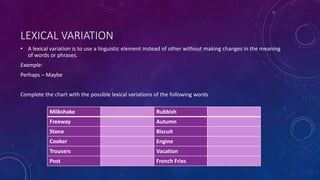
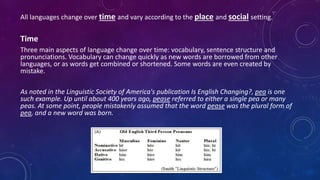
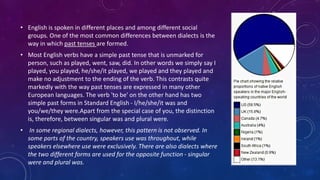



This document discusses lexical variation in language and how languages change over time. It provides an example of lexical variation, noting that it is using a linguistic element instead of another without changing the meaning. The document then discusses three main aspects of how language changes over time: vocabulary, sentence structure, and pronunciations. It provides an example of how the word "pea" developed a plural form over hundreds of years. The document also discusses regional dialects and differences in past tense formations between languages and dialects. It notes that linguistic changes occur when a new form used by a subgroup is adopted more widely as a norm.


