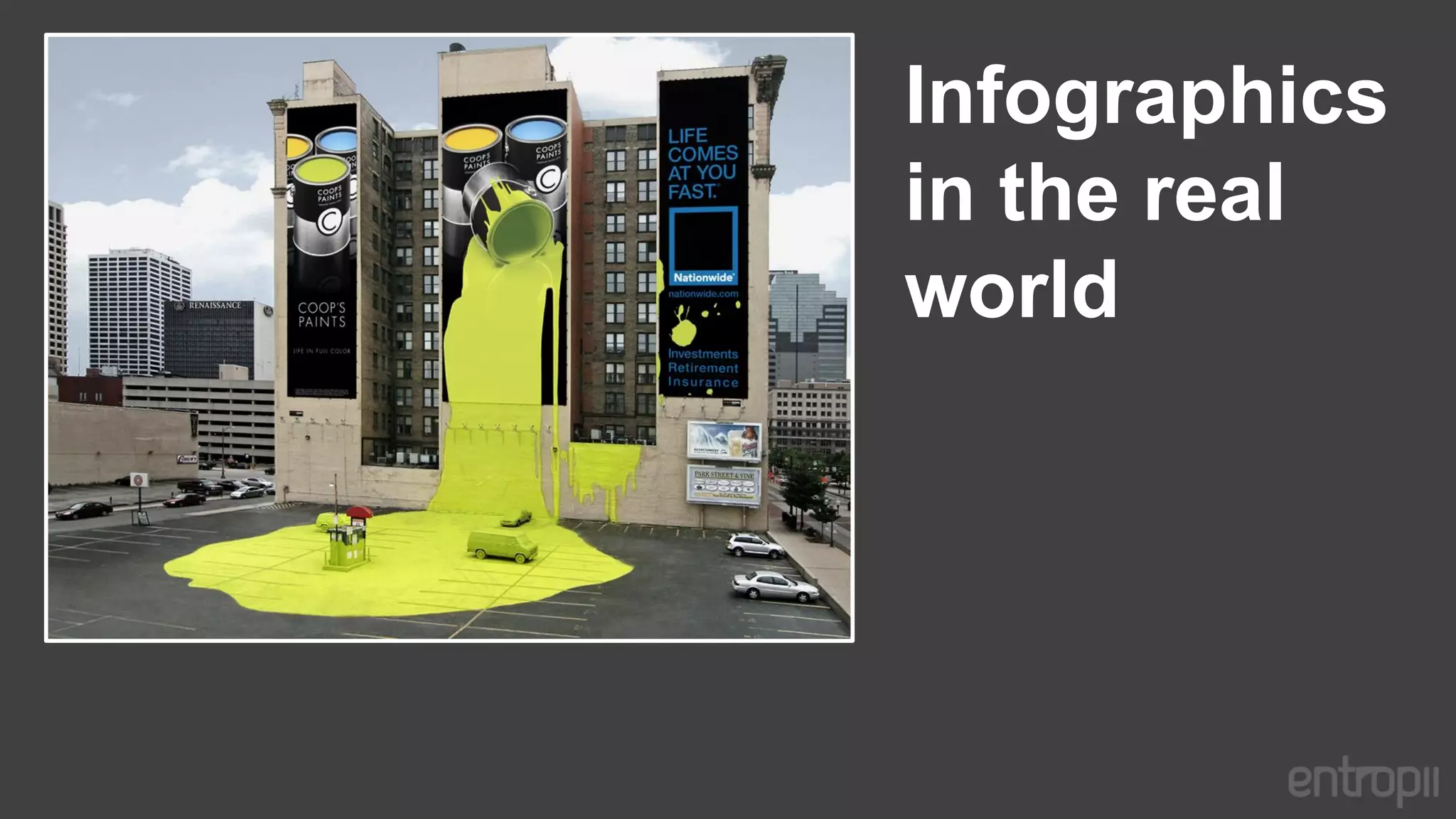
Infographics
in the real
world
“Info’ ‘graphics”
Displaying information & data
   through visual graphics
How does an infographic work?

                                What are infographics?

                                Infographics clearly and
                                creatively display interesting
                                data or knowledge in a way
                                that is engaging and
                                understandable for the user
Application of infographics

 Typically, infographics are used online

 Companies create a blog post, write a short keyword description and
  promote through social media routes – Facebook, Twitter, Email,
  Newletters etc

 This route alone proves to be unbelievably powerful and great
  infographics can potentially spread virally, reaching hundreds of
  thousands of a targeted audience

Since 2010, searches for infographics have
increased by 800%
http://infographicable.com
Can infographics be
 applicable offline?
Outdoor advertising
                       Outdoor advertising is using
                        environmental spaces to reach consumers
                        on the move or in public places

                       It is the fastest growing traditional
                        medium over the past decade, with an
                        estimated spend of £880 million in 2010

                       It can enable reaching a large number of
                        consumers quickly or it can be used to
                        target a specific population in a distinct
                        location
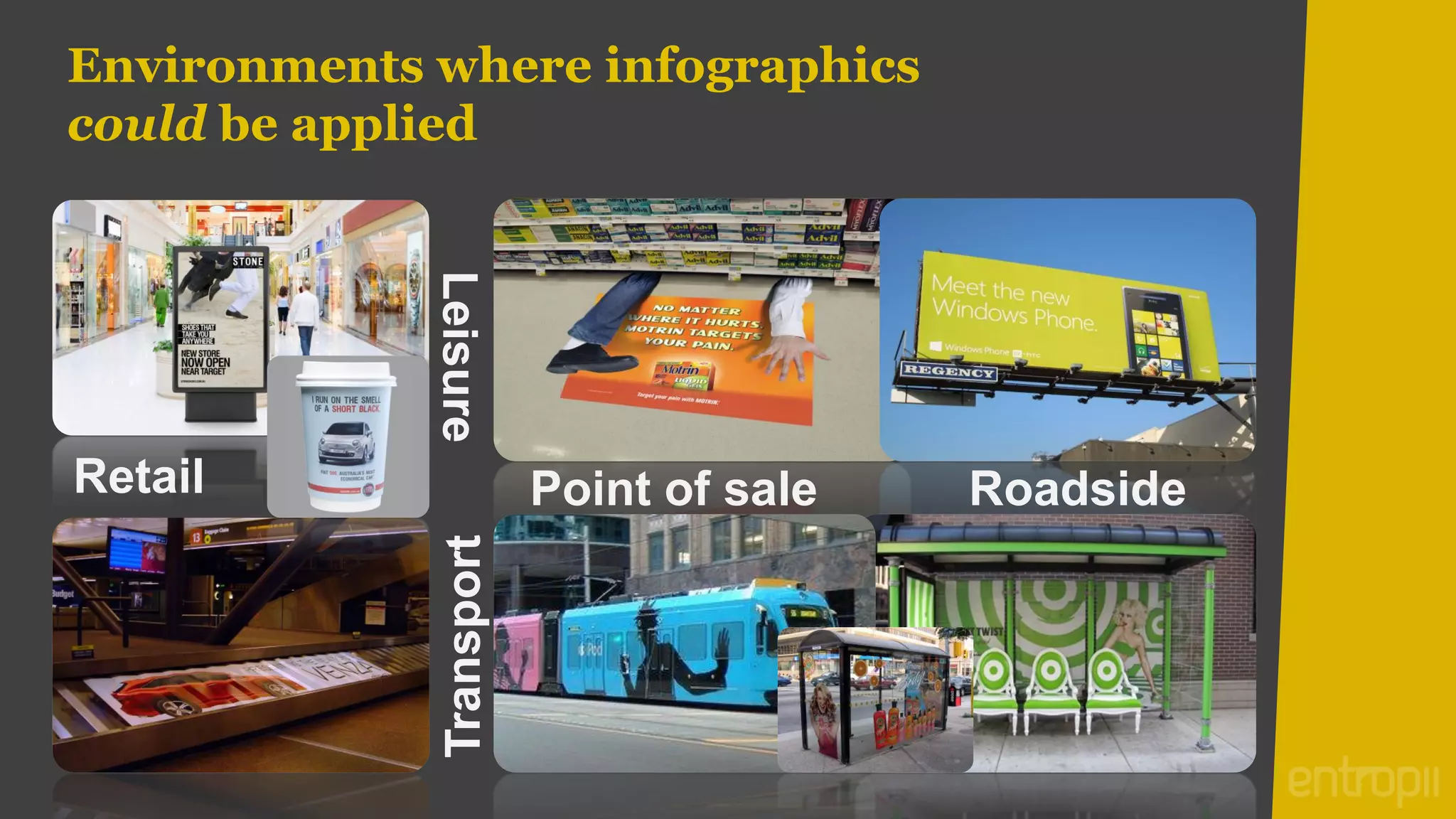
Environments where infographics
could be applied


             Leisure
Retail        Transport
                          Point of sale   Roadside
Positives of infographics in outdoor advertising
 Assurance to connect with hundreds of people, 24/7

 Flexibility – advertisements can be placed in areas where they are
  most likely to be effective

 Opportunity to be creative

 Less intrusive, not pushy advertising

 Target the untargeted – increase brand awareness & potentially
  attract new people
Negatives of infographics in outdoor advertising
 Not targeting can be risky.

 If not placed appropriately, it becomes a glance medium and not really
  engaging. Infographics on a billboard for example usually only draws 2-3
  seconds of attention: not enough to digest it and be effective.

 Hard to measure effectiveness. Online you are able to see a wealth of
  information through analytics, but it is only really through surveys that you
  can measure the effectiveness.

 Outdoor advertising by nature are longer campaigns and therefore come
  at a higher cost.

 Prime locations will come at a premium cost and usually controlled by the
  big players!
Where is appropriate
for infographics in the
      real world?
Using infographics on the
London transport networks
 Transport for London states that
  3 million people use the
  Underground every day and
  nearly two million people use
  the London Overground every
  week.

 The perfect opportunity for
  using infographics are in areas
  where passengers are forced to
  wait…
Using infographics on the platform

 With a 3 minute average wait
  time on the platform for a tube
  train, CBS Outdoor research
  say that passengers find
  advertising here a
    ‘welcome distraction’

 Huge display space used
  effectively could have real
  impact with the consumer

 The infographic would need to
  be clear and simple: quick for
  the consumer to digest
Using infographics on the train


 Each passenger has an average journey time of 13 minutes.

 It is seen as the perfect time to communicate a more detailed brand
  story

 Whilst the passenger may have time to read through a paragraph of
  text, communicating the message visually will have greater impact.
Using infographics on the interactive kiosks
Kiosks are purpose built for users to interact with in
order to find information.

Advantages
 Condensing large amounts of information to be
  easier to process and aesthetically appealing
 Communicated in-depth information more
  effectively
 Purpose made for interactive infographics

Disadvantages
 More complex to design
 Not all data is visible on the same page
 May make it harder to hook users instantly
Intelligent digital display boards
Latest digital display boards are getting more intelligent.


                                           The image shows a digital display
                                           that has a built-in webcam.
                                           It utilises face recognition software
                                           to detect whether a person walking
                                           past is male or female and targets
                                           an appropriate advertisement.
Mobile infographics
According to the infographic on mobile marketing from digitalbuzz,
by 2014 mobile internet should overtake desktop internet usage.
   Smartphone technology provides the ability to create interesting and
    interactive infographics
   Consumers can easily share infographics they like with friends, giving it
    the ability to spread virally
   Effectiveness can be measured through analytics
   Near field communication (NFC) is a group of short-range wireless
    technologies that can be used to send information to mobile devices.
    This type of technology could really benefit the consumer, if used
    effectively. Infographics can be set to provide information that will
    influence them immediately.
It’s a constant battle to engage with your audience.
Marketers are always trying new ways attract their target
audience.

Infographics are not utilised enough. The flexibility that
they provide and the attention that they draw could really
explode your consumer engagement having a great impact
on your marketing results.
Service
Design

Infographics in the real world

  • 1.
  • 2.
  • 3.
    How does aninfographic work? What are infographics? Infographics clearly and creatively display interesting data or knowledge in a way that is engaging and understandable for the user
  • 5.
    Application of infographics Typically, infographics are used online  Companies create a blog post, write a short keyword description and promote through social media routes – Facebook, Twitter, Email, Newletters etc  This route alone proves to be unbelievably powerful and great infographics can potentially spread virally, reaching hundreds of thousands of a targeted audience Since 2010, searches for infographics have increased by 800% http://infographicable.com
  • 6.
    Can infographics be applicable offline?
  • 7.
    Outdoor advertising  Outdoor advertising is using environmental spaces to reach consumers on the move or in public places  It is the fastest growing traditional medium over the past decade, with an estimated spend of £880 million in 2010  It can enable reaching a large number of consumers quickly or it can be used to target a specific population in a distinct location
  • 8.
    Environments where infographics couldbe applied Leisure Retail Transport Point of sale Roadside
  • 9.
    Positives of infographicsin outdoor advertising  Assurance to connect with hundreds of people, 24/7  Flexibility – advertisements can be placed in areas where they are most likely to be effective  Opportunity to be creative  Less intrusive, not pushy advertising  Target the untargeted – increase brand awareness & potentially attract new people
  • 10.
    Negatives of infographicsin outdoor advertising  Not targeting can be risky.  If not placed appropriately, it becomes a glance medium and not really engaging. Infographics on a billboard for example usually only draws 2-3 seconds of attention: not enough to digest it and be effective.  Hard to measure effectiveness. Online you are able to see a wealth of information through analytics, but it is only really through surveys that you can measure the effectiveness.  Outdoor advertising by nature are longer campaigns and therefore come at a higher cost.  Prime locations will come at a premium cost and usually controlled by the big players!
  • 11.
    Where is appropriate forinfographics in the real world?
  • 12.
    Using infographics onthe London transport networks  Transport for London states that 3 million people use the Underground every day and nearly two million people use the London Overground every week.  The perfect opportunity for using infographics are in areas where passengers are forced to wait…
  • 13.
    Using infographics onthe platform  With a 3 minute average wait time on the platform for a tube train, CBS Outdoor research say that passengers find advertising here a ‘welcome distraction’  Huge display space used effectively could have real impact with the consumer  The infographic would need to be clear and simple: quick for the consumer to digest
  • 14.
    Using infographics onthe train  Each passenger has an average journey time of 13 minutes.  It is seen as the perfect time to communicate a more detailed brand story  Whilst the passenger may have time to read through a paragraph of text, communicating the message visually will have greater impact.
  • 15.
    Using infographics onthe interactive kiosks Kiosks are purpose built for users to interact with in order to find information. Advantages  Condensing large amounts of information to be easier to process and aesthetically appealing  Communicated in-depth information more effectively  Purpose made for interactive infographics Disadvantages  More complex to design  Not all data is visible on the same page  May make it harder to hook users instantly
  • 16.
    Intelligent digital displayboards Latest digital display boards are getting more intelligent. The image shows a digital display that has a built-in webcam. It utilises face recognition software to detect whether a person walking past is male or female and targets an appropriate advertisement.
  • 17.
    Mobile infographics According tothe infographic on mobile marketing from digitalbuzz, by 2014 mobile internet should overtake desktop internet usage.  Smartphone technology provides the ability to create interesting and interactive infographics  Consumers can easily share infographics they like with friends, giving it the ability to spread virally  Effectiveness can be measured through analytics  Near field communication (NFC) is a group of short-range wireless technologies that can be used to send information to mobile devices. This type of technology could really benefit the consumer, if used effectively. Infographics can be set to provide information that will influence them immediately.
  • 18.
    It’s a constantbattle to engage with your audience. Marketers are always trying new ways attract their target audience. Infographics are not utilised enough. The flexibility that they provide and the attention that they draw could really explode your consumer engagement having a great impact on your marketing results.
  • 19.