Five Steps for Achieving
(Learning) Analytics Success
Ellen D. Wagner Ph.D.
Chief Research and Strategy Officer
PAR Framework
@edwsonoma
edwsonoma@gmail.com
Common Definitions for Today
Data	
  is	
  informa*on,	
  everywhere.	
  It	
  comes	
  in	
  all	
  kinds	
  and	
  shapes	
  
and	
  sizes.	
  	
  It’s	
  not	
  all	
  digital,	
  but	
  most	
  of	
  it	
  is.	
  
Analy(cs	
  are	
  methods	
  and	
  tools	
  to	
  parse	
  streams	
  of	
  digital	
  bits	
  
and	
  bytes	
  into	
  meaningful	
  pa>erns	
  that	
  can	
  be	
  explored	
  to	
  help	
  
stakeholders	
  make	
  more	
  effec*ve	
  decisions.	
  
Learning	
  analy(cs	
  are	
  methods	
  and	
  tools	
  needed	
  to	
  parse	
  the	
  
stream	
  of	
  digital	
  bits	
  into	
  meaningful	
  pa>erns	
  that	
  explore	
  
dimensions	
  of	
  cogni*on,	
  instruc*on	
  and	
  academic	
  experience,	
  
including	
  student	
  success.	
  	
  
Data-­‐readiness	
  ranges	
  from	
  essen*al	
  individual	
  knowledge	
  and	
  
skills	
  to	
  ins*tu*onal	
  capacity	
  for	
  crea*ng	
  a	
  culture	
  that	
  values	
  
evidence-­‐based	
  decision-­‐making.	


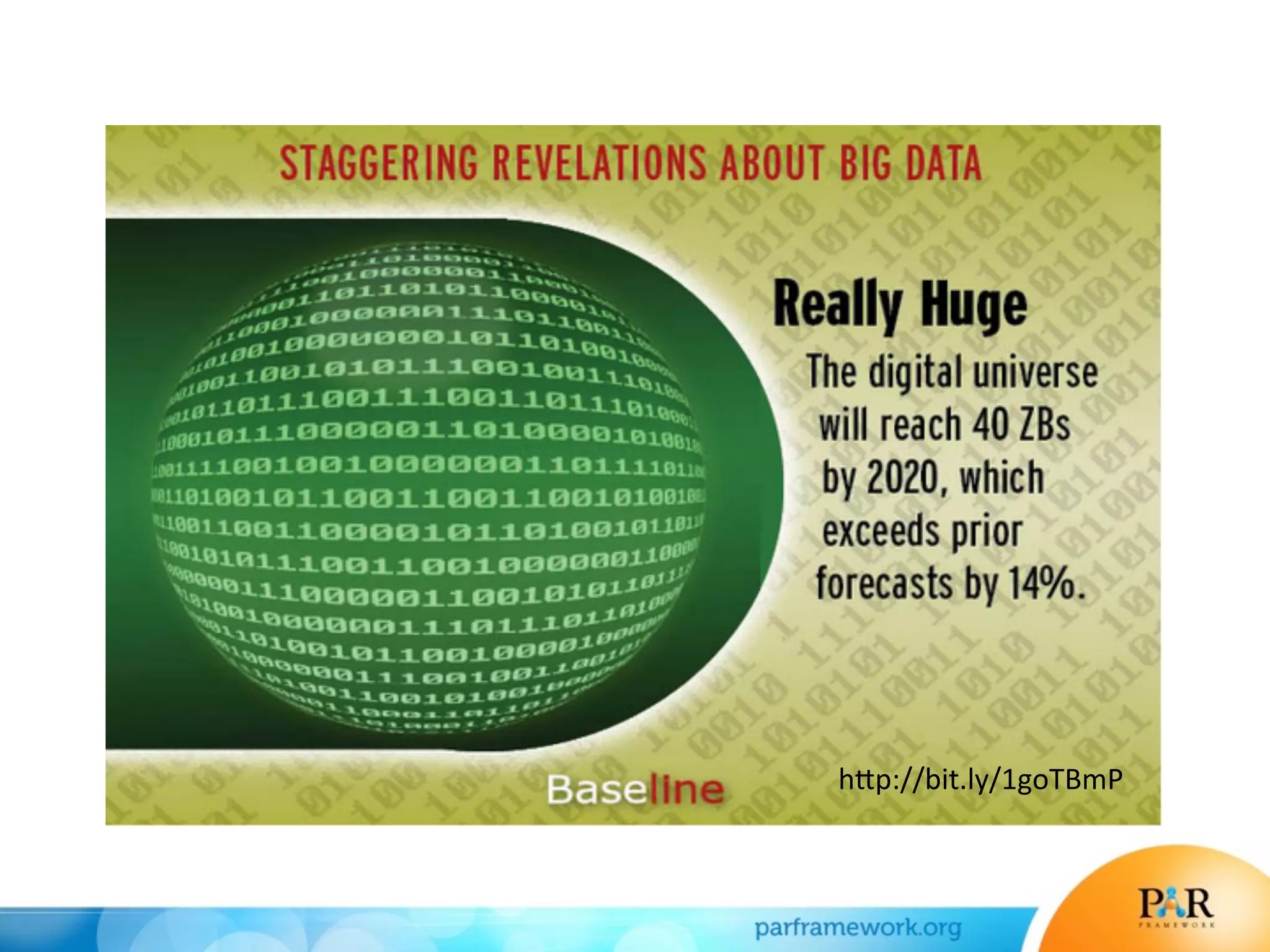
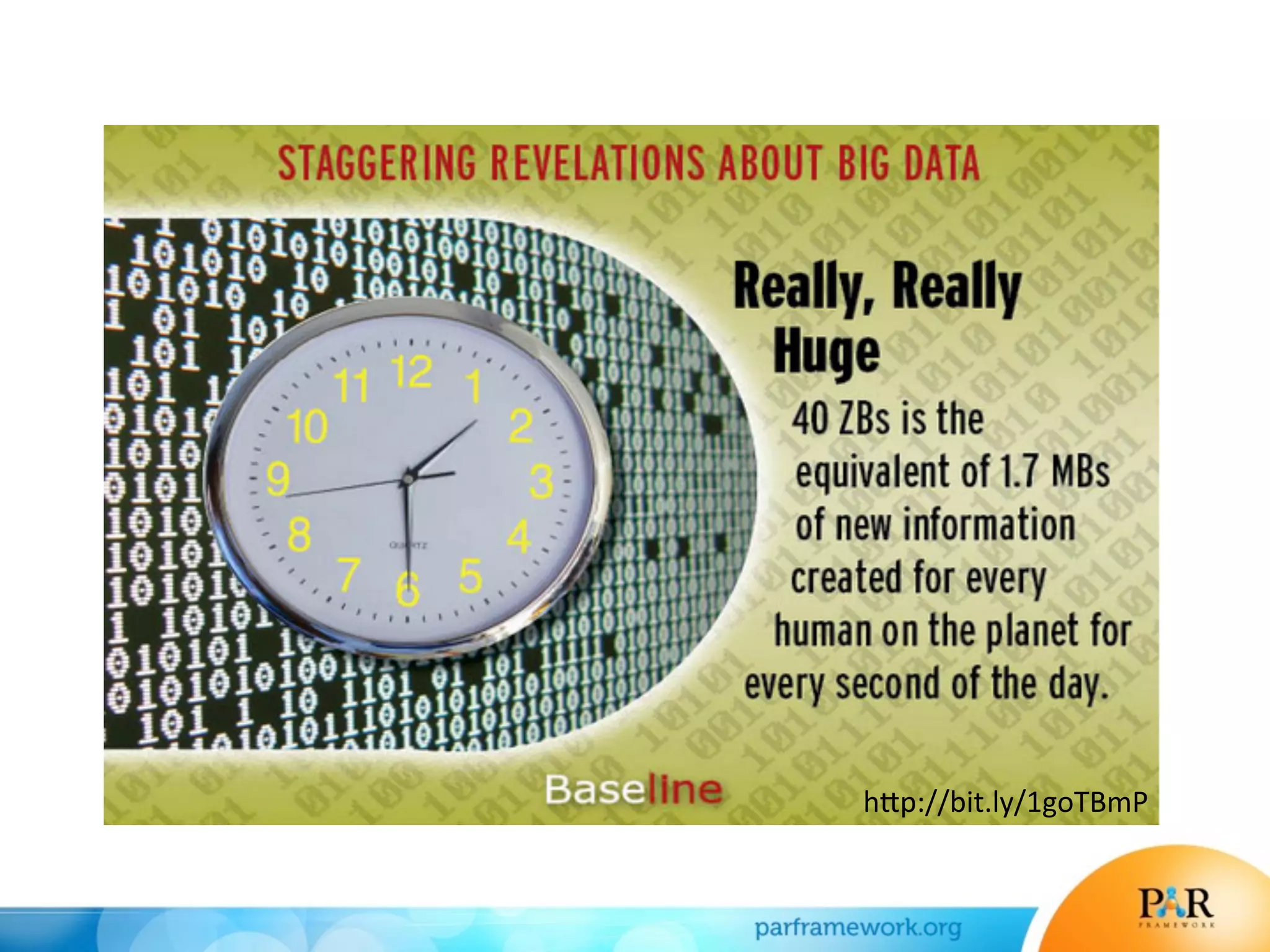
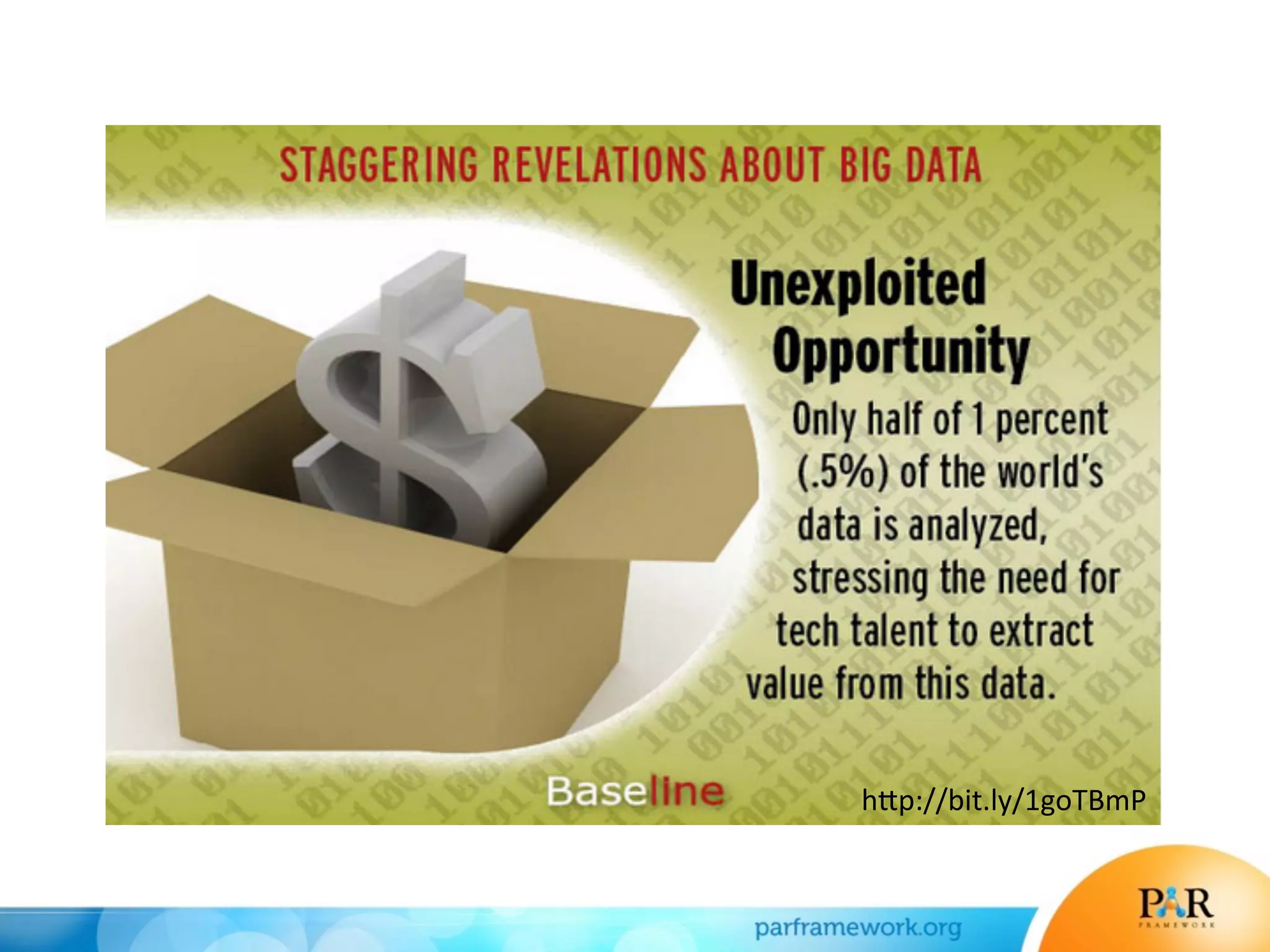
DATA ARE CHANGING EVERYTHING
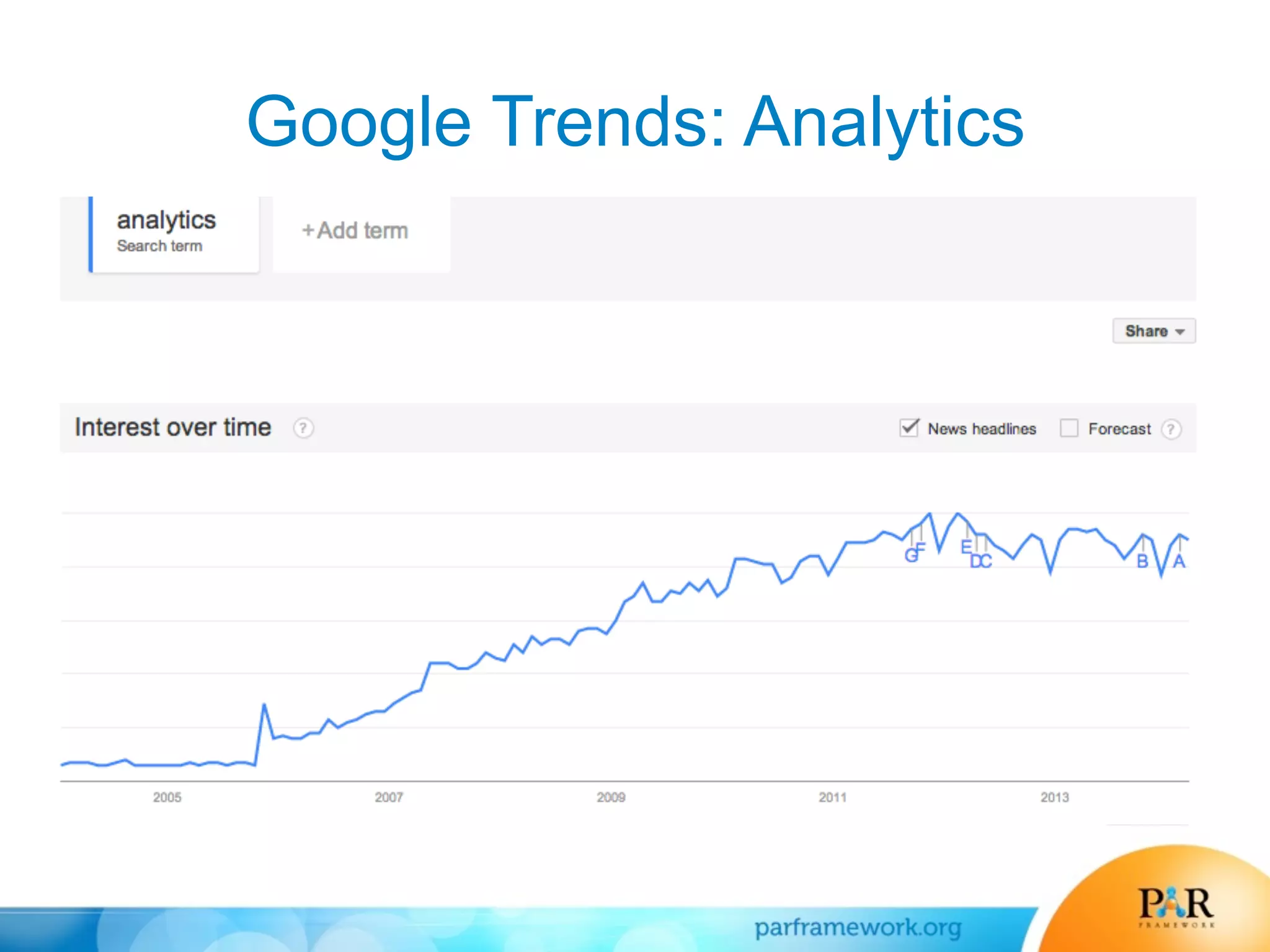
Google Trends: Analytics
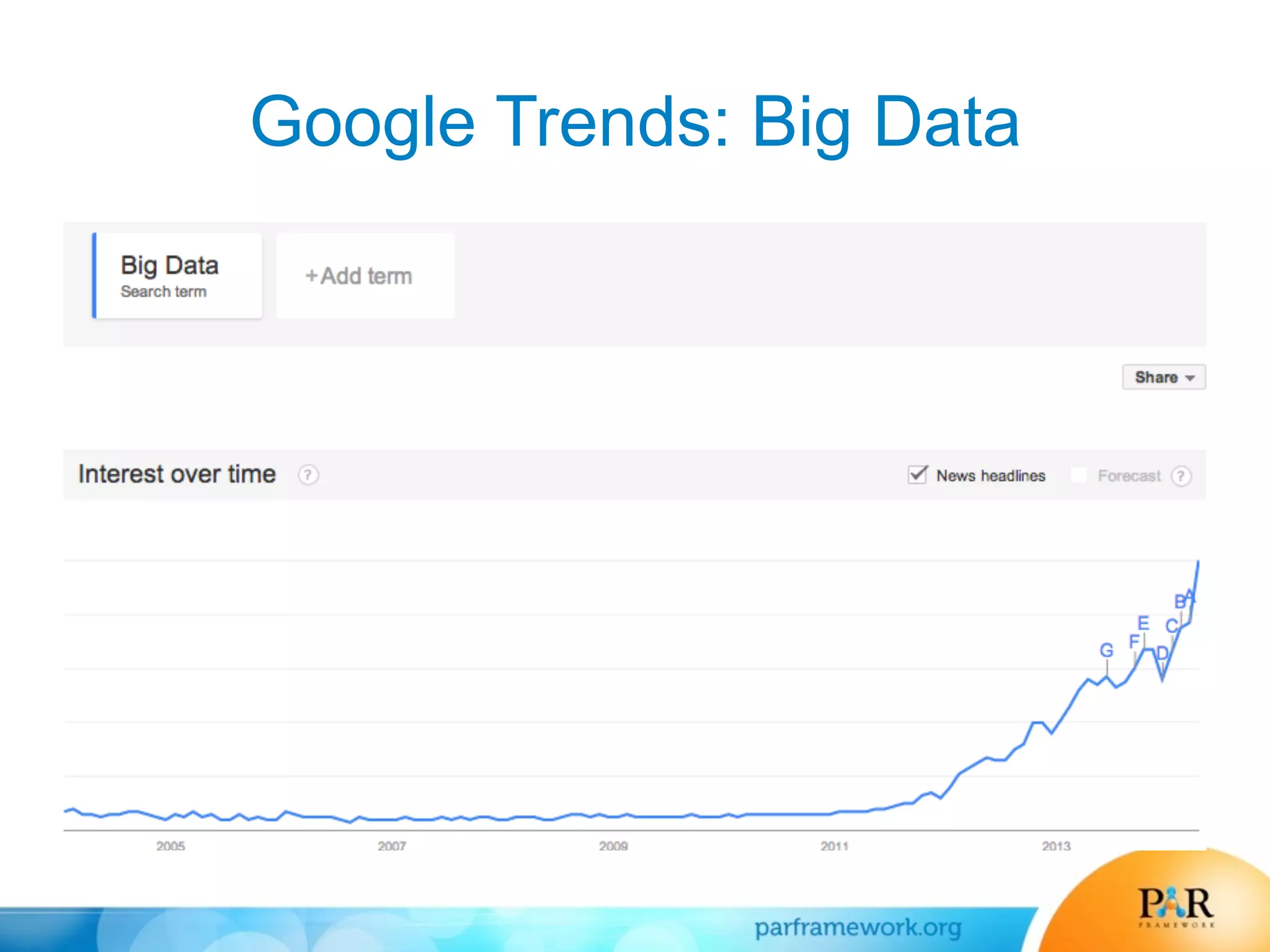
Google Trends: Big Data
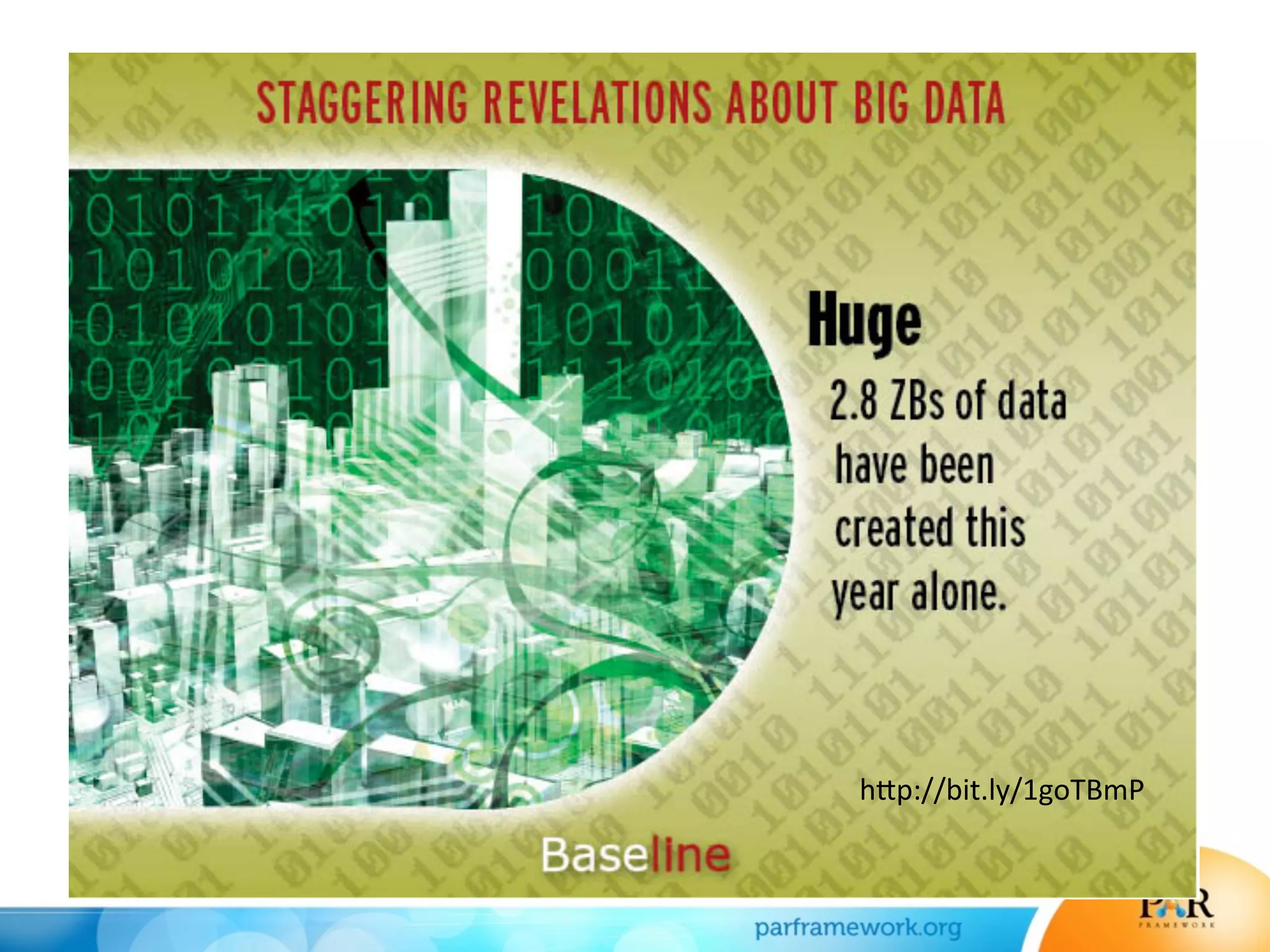
h>p://bit.ly/1goTBmP	
  
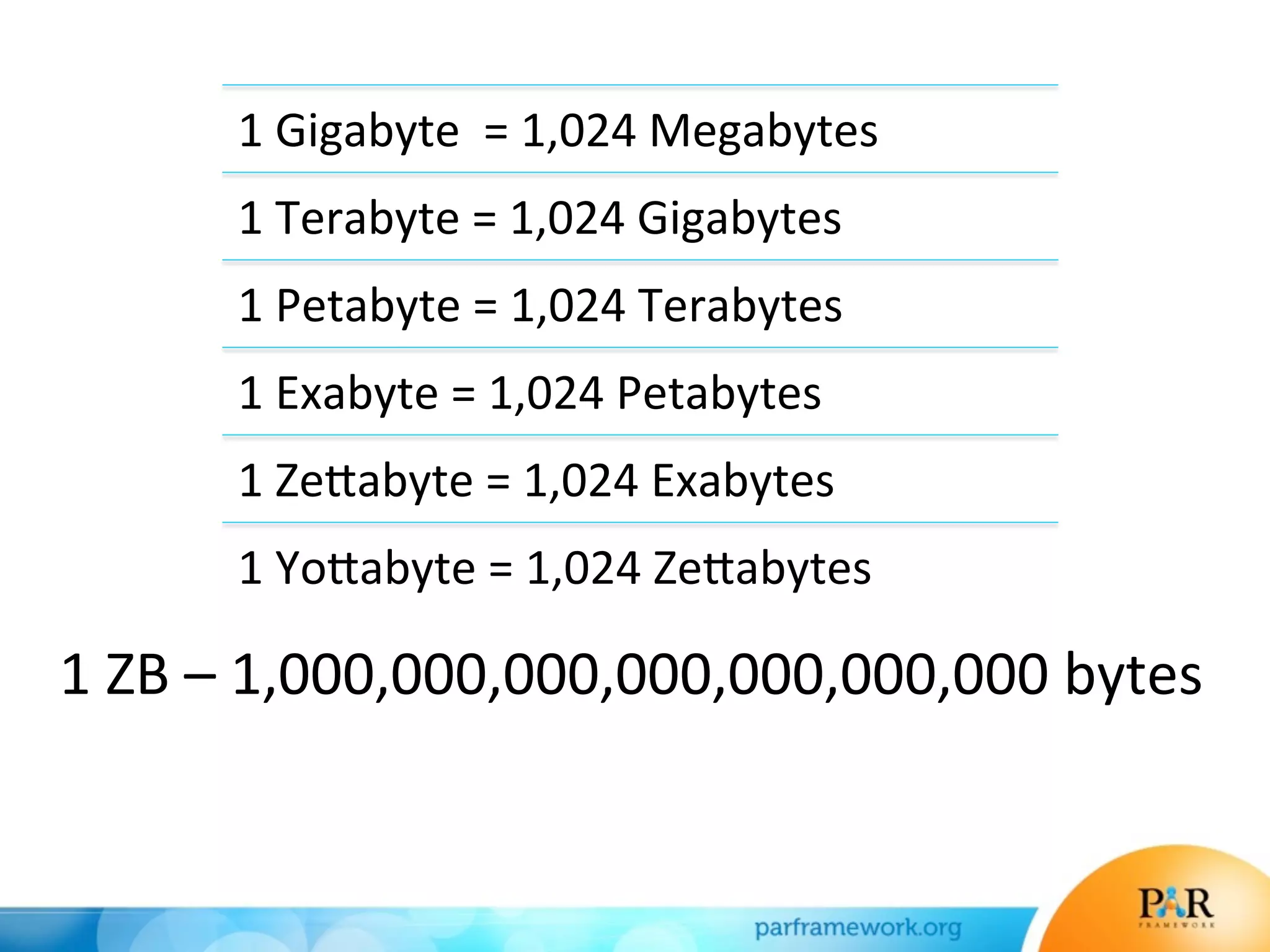
1	
  Gigabyte	
  	
  =	
  1,024	
  Megabytes	
  	
  
1	
  Terabyte	
  =	
  1,024	
  Gigabytes	
  	
  
1	
  Petabyte	
  =	
  1,024	
  Terabytes	
  
1	
  Exabyte	
  =	
  1,024	
  Petabytes	
  	
  
1	
  Ze>abyte	
  =	
  1,024	
  Exabytes	
  	
  
1	
  Yo>abyte	
  =	
  1,024	
  Ze>abytes	
  
1	
  ZB	
  –	
  1,000,000,000,000,000,000,000	
  bytes	
  
h>p://bit.ly/1goTBmP	
  
h>p://bit.ly/1goTBmP	
  
h>p://bit.ly/1goTBmP	
  
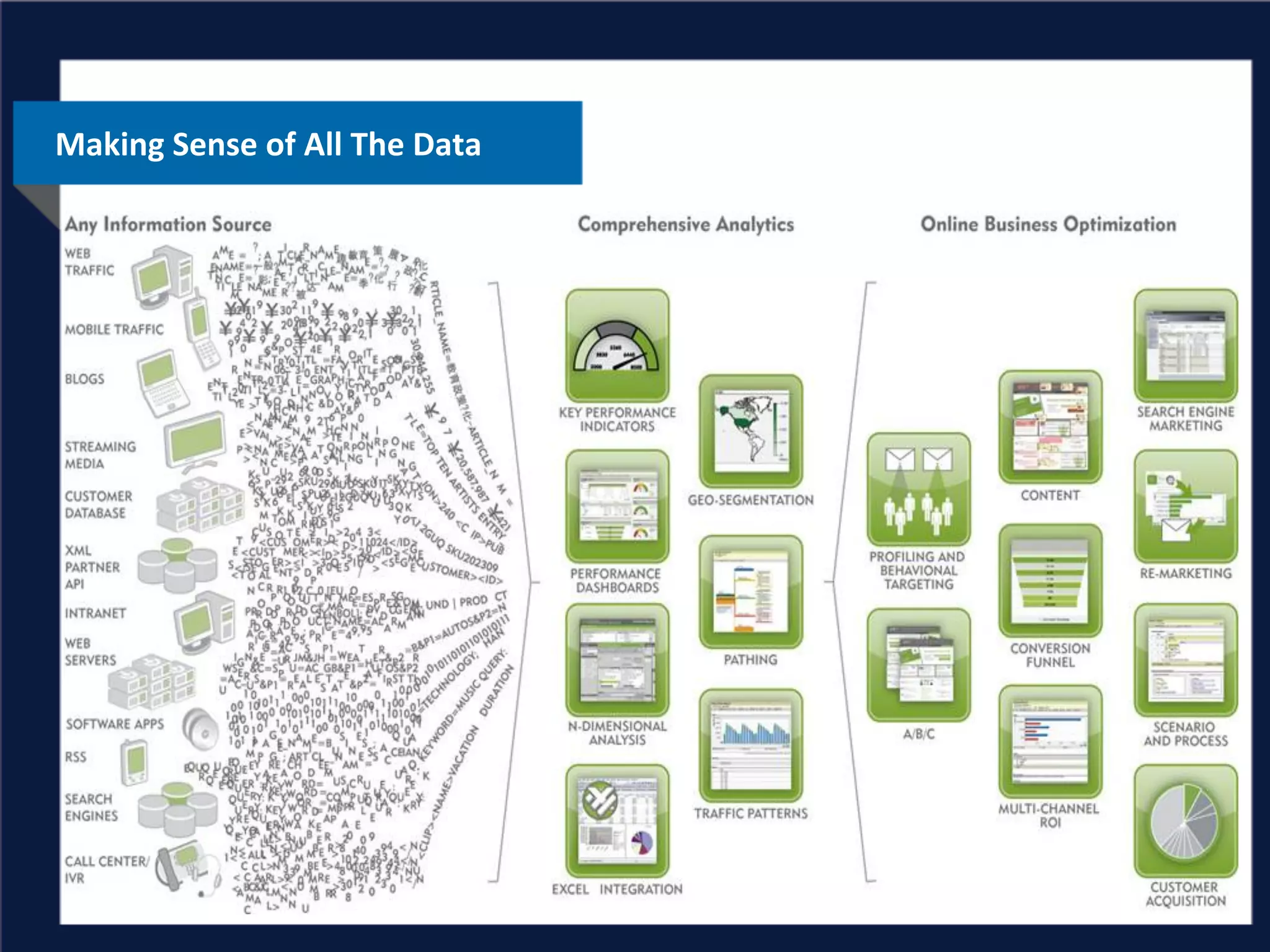
Making	
  Sense	
  of	
  All	
  The	
  Data	
  
Data Readiness in Higher Ed
Analy*cs	
  have	
  ramped	
  up	
  everyone’s	
  expecta*ons	
  of	
  
personaliza*on,	
  accountability	
  and	
  transparency.	
  
Academic	
  enterprises	
  simply	
  cannot	
  live	
  outside	
  the	
  
ins*tu*onal	
  focus	
  on	
  tangible,	
  measurable	
  results	
  
driving	
  IT,	
  finance,	
  recruitment	
  and	
  other	
  mission	
  
cri*cal	
  concerns.	
  
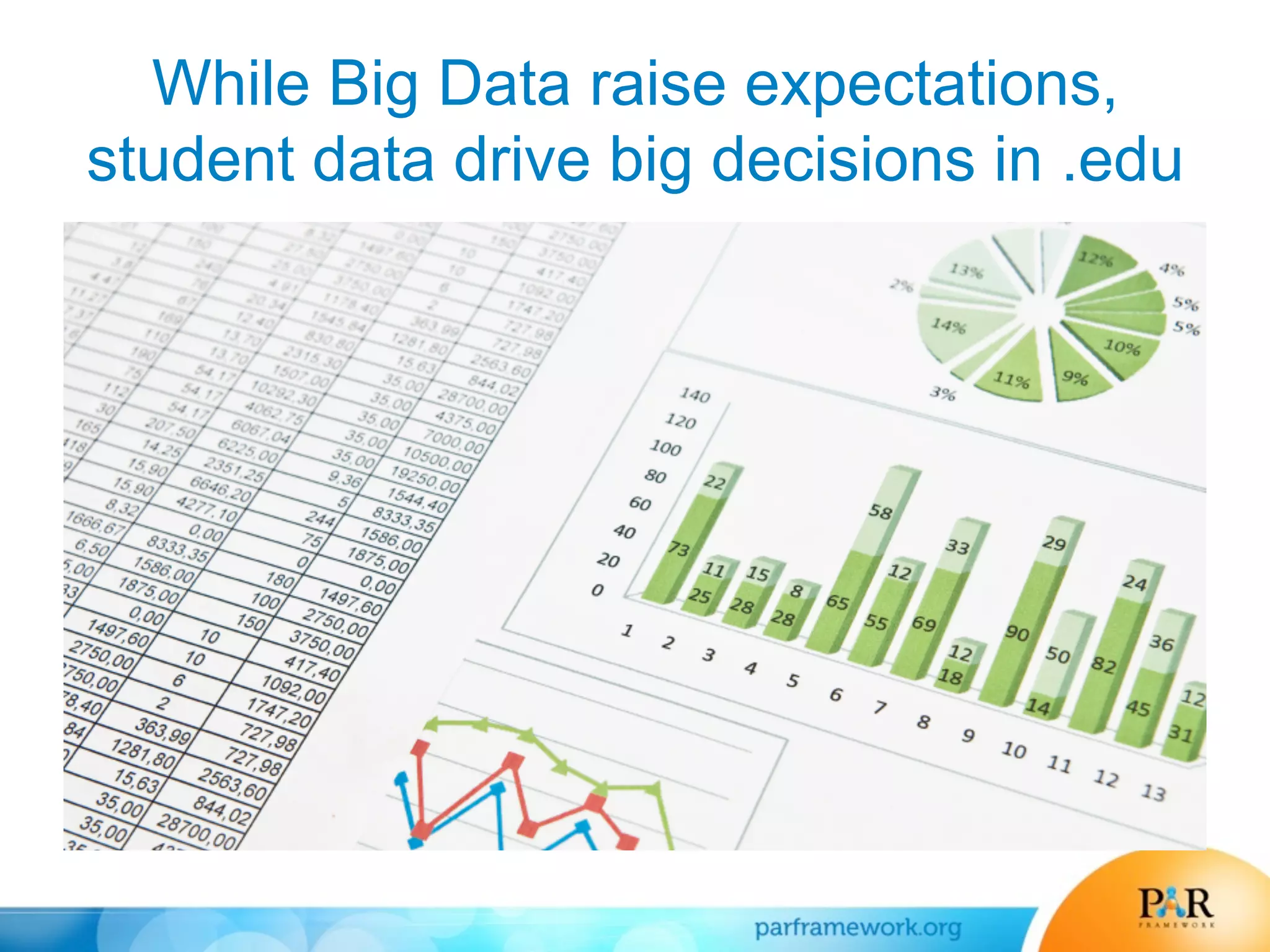
While Big Data raise expectations,
student data drive big decisions in .edu
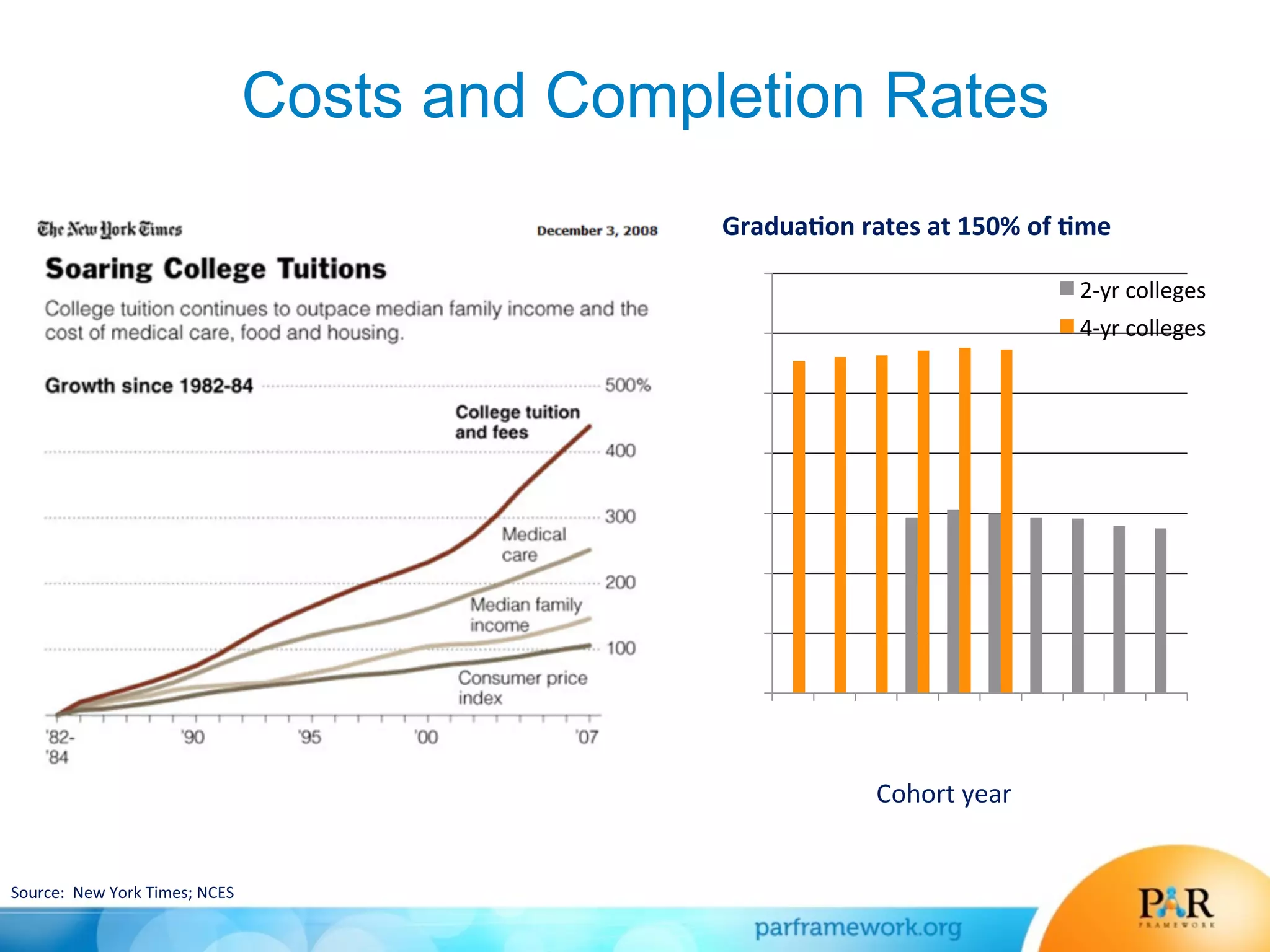
Costs and Completion Rates
Source:	
  	
  New	
  York	
  Times;	
  NCES	
  
0	
  
10	
  
20	
  
30	
  
40	
  
50	
  
60	
  
70	
  
1996	
  
1997	
  
1998	
  
1999	
  
2000	
  
2001	
  
2002	
  
2003	
  
2004	
  
2005	
  
2-­‐yr	
  colleges	
  
4-­‐yr	
  colleges	
  
Gradua7on	
  rates	
  at	
  150%	
  of	
  7me	
  
Cohort	
  year	
  
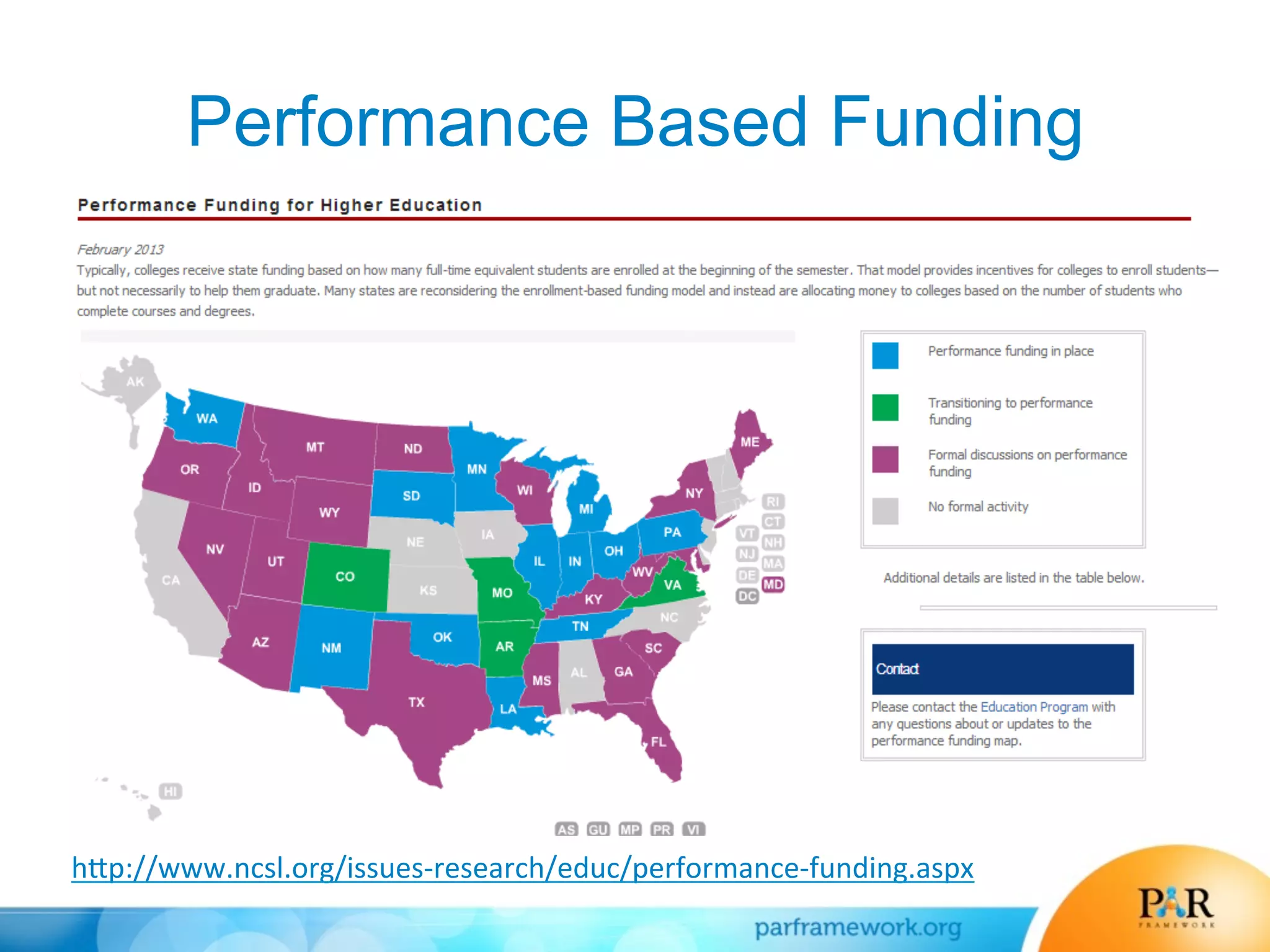
Performance Based Funding
h>p://www.ncsl.org/issues-­‐research/educ/performance-­‐funding.aspx	
  
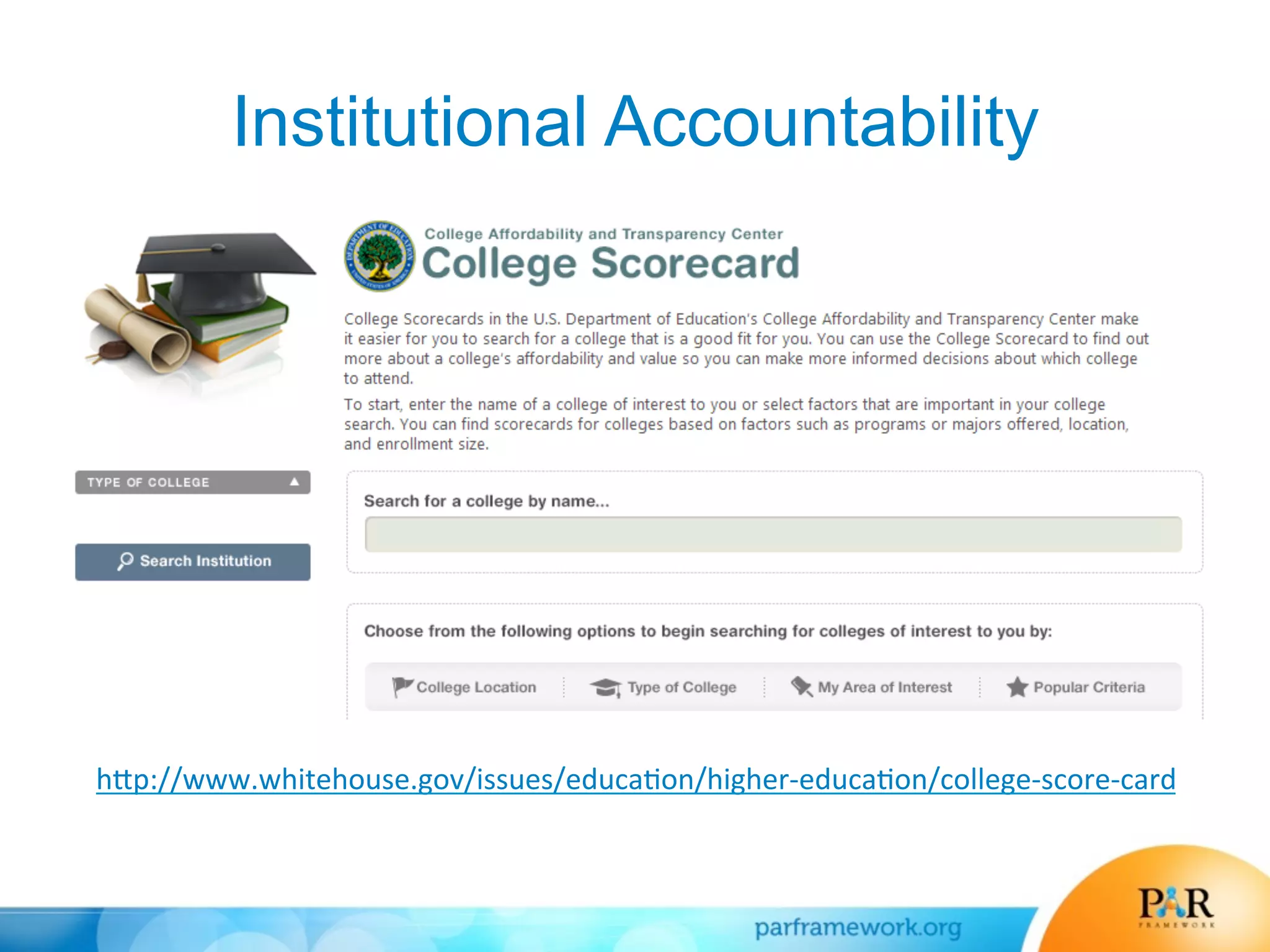
Institutional Accountability
h>p://www.whitehouse.gov/issues/educa*on/higher-­‐educa*on/college-­‐score-­‐card	
  
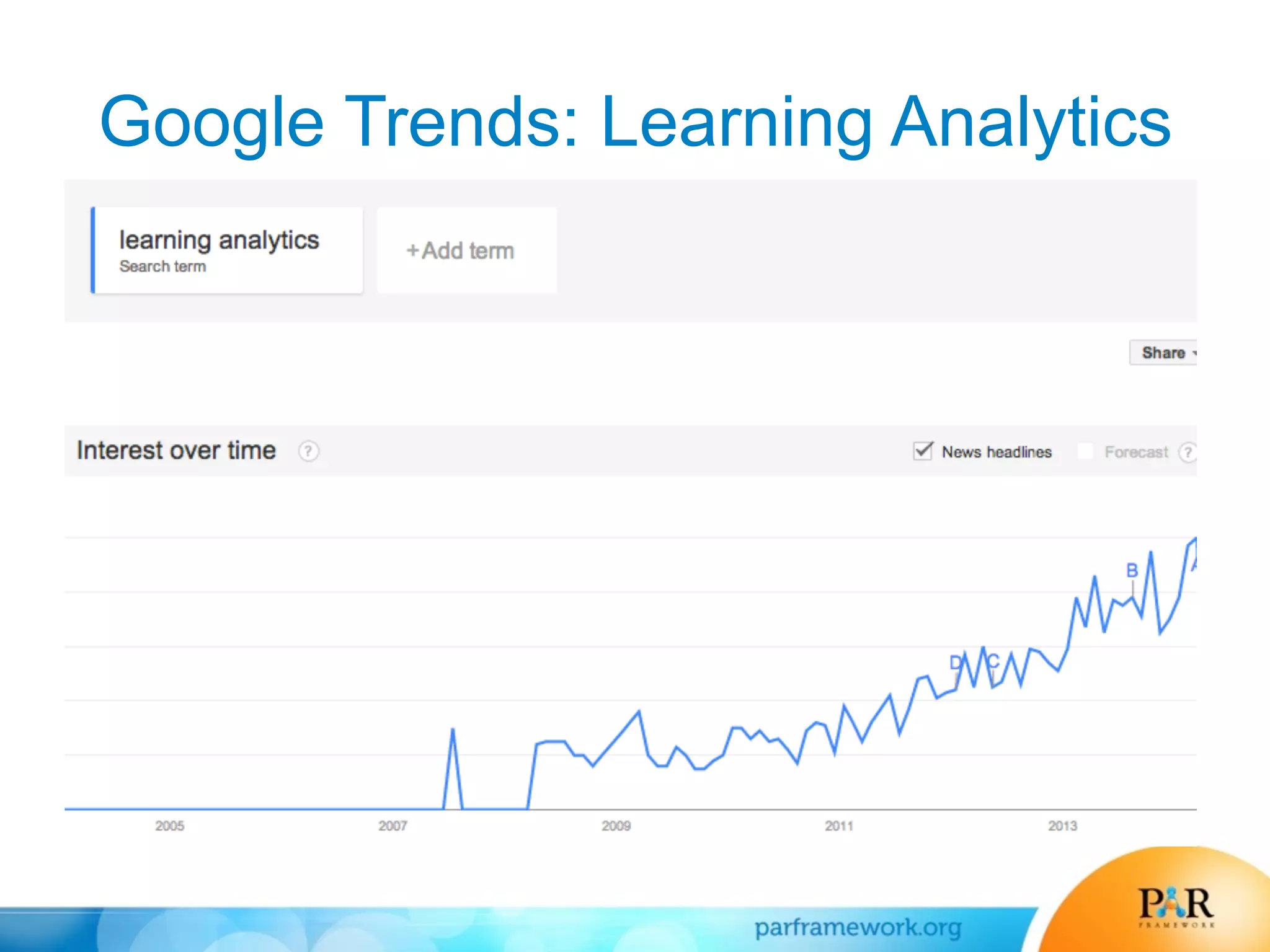
Google Trends: Learning Analytics
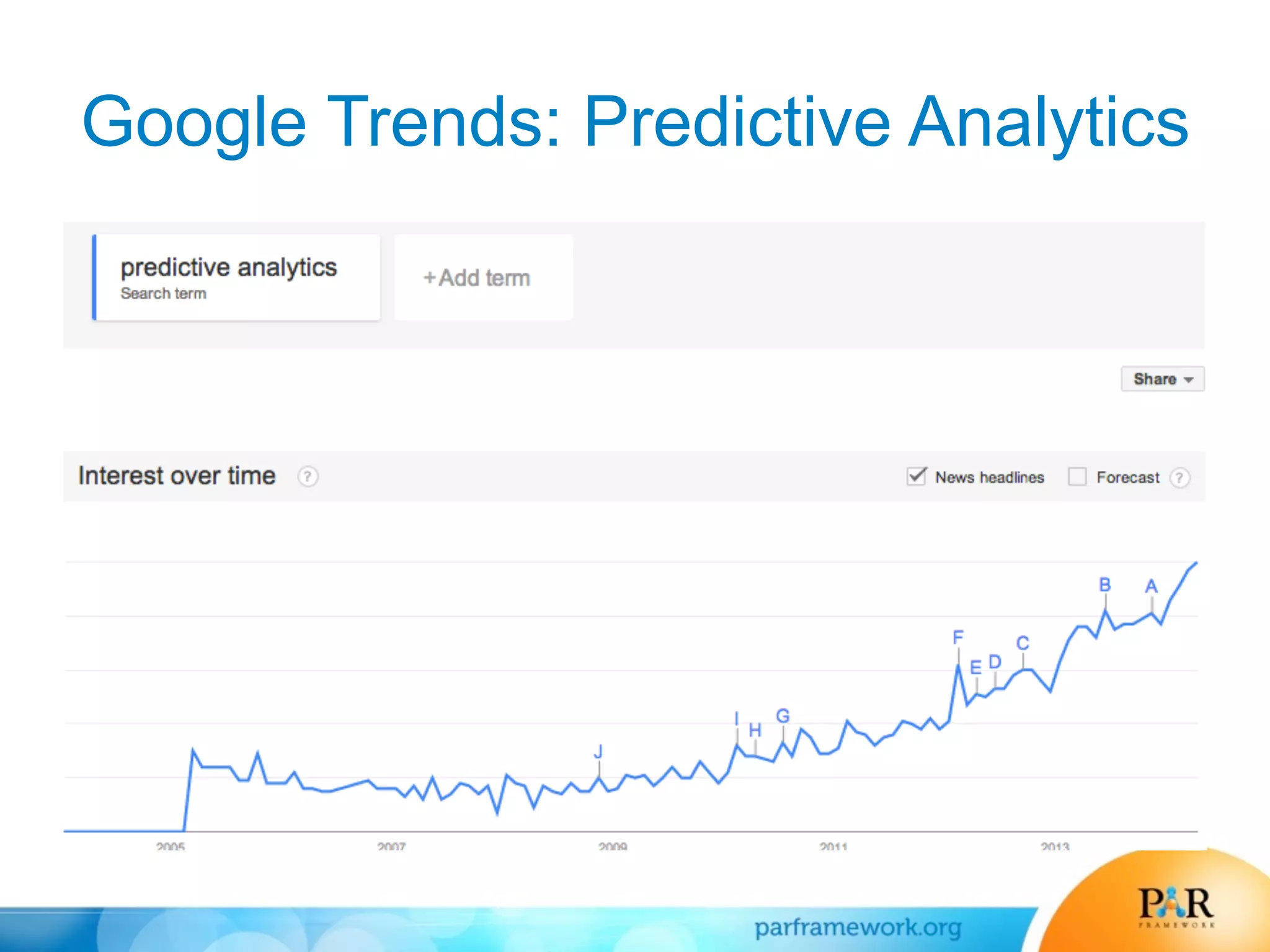
Google Trends: Predictive Analytics
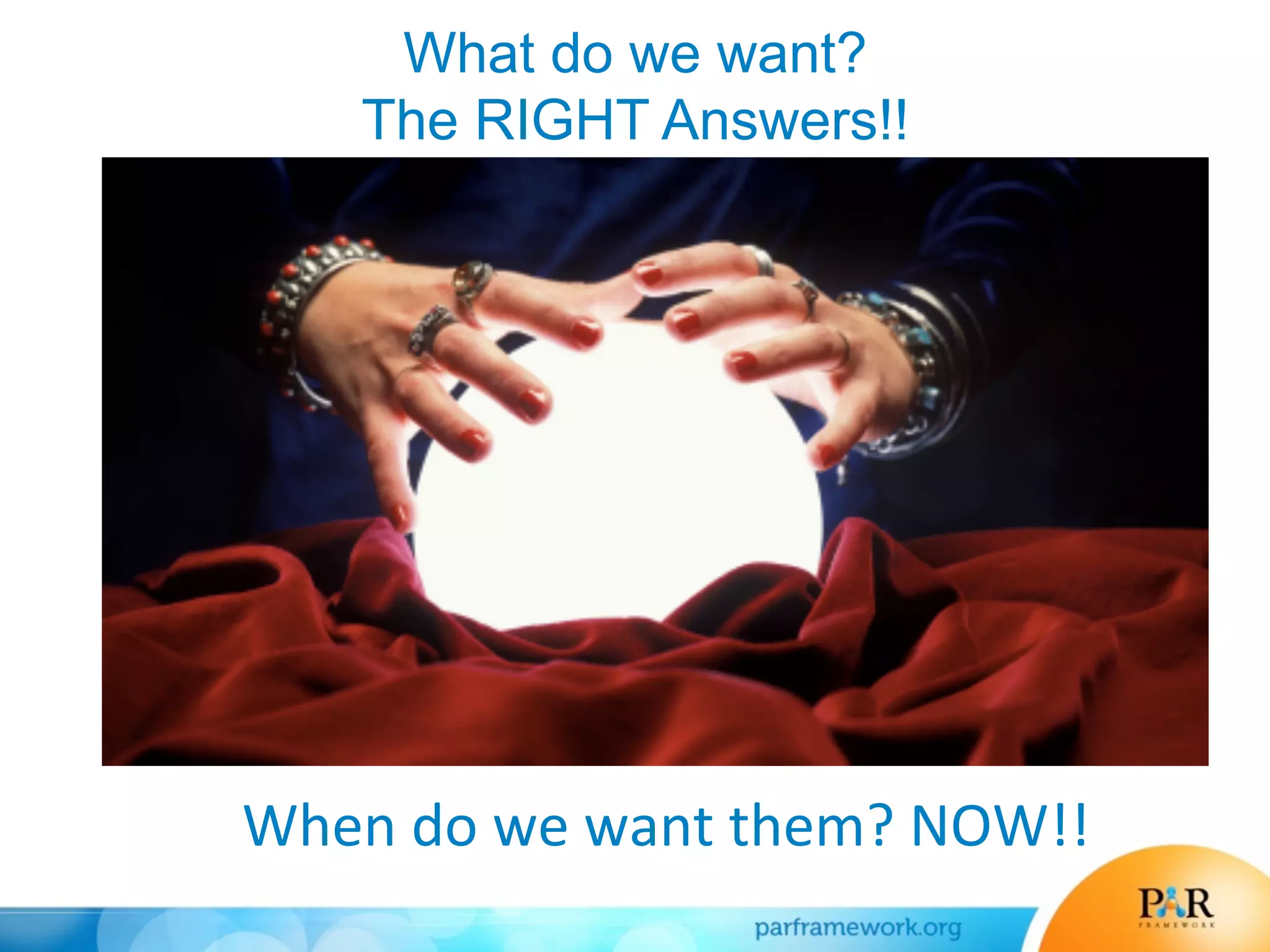
What do we want?
The RIGHT Answers!!
When	
  do	
  we	
  want	
  them?	
  NOW!!	
  
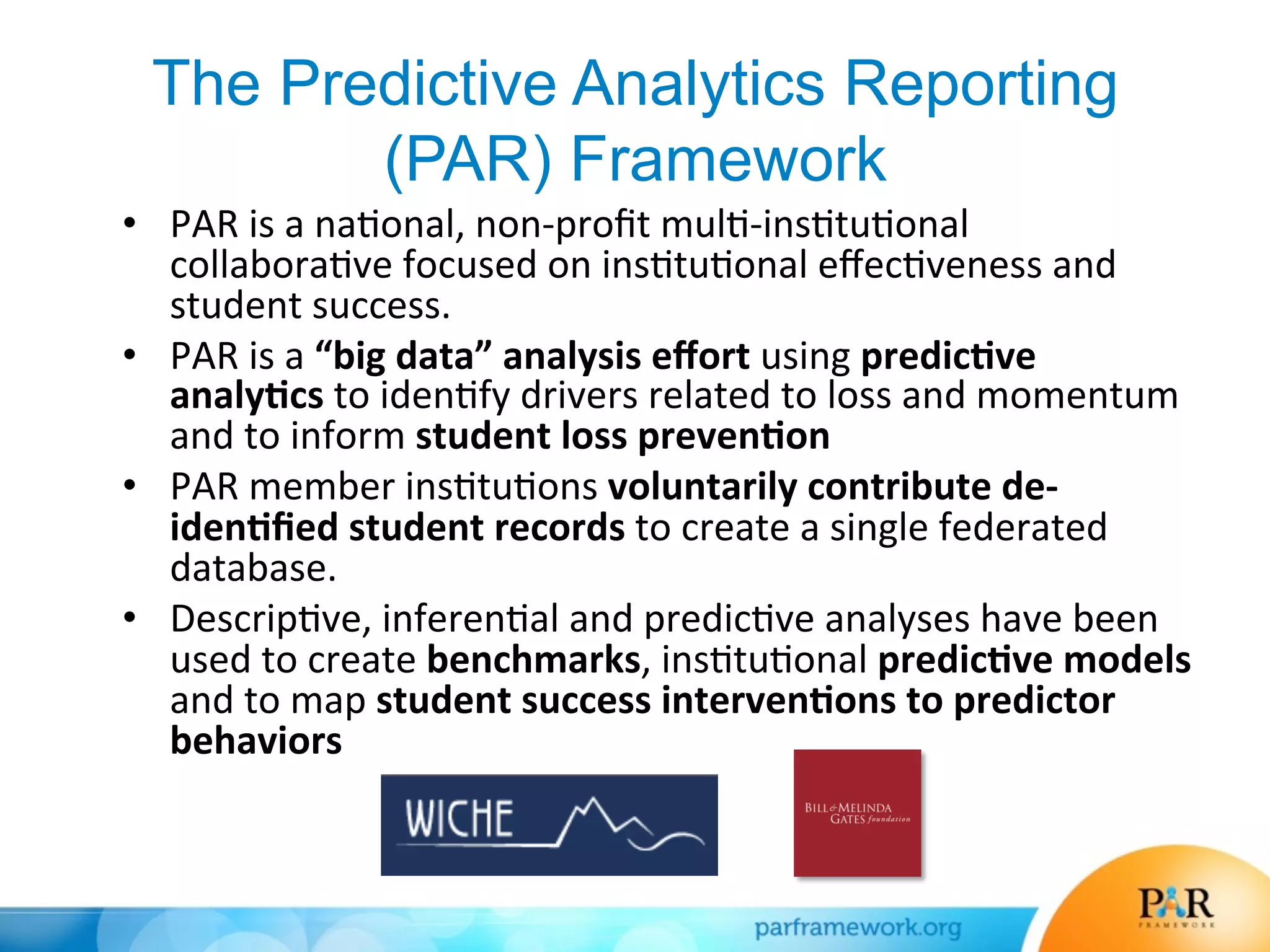
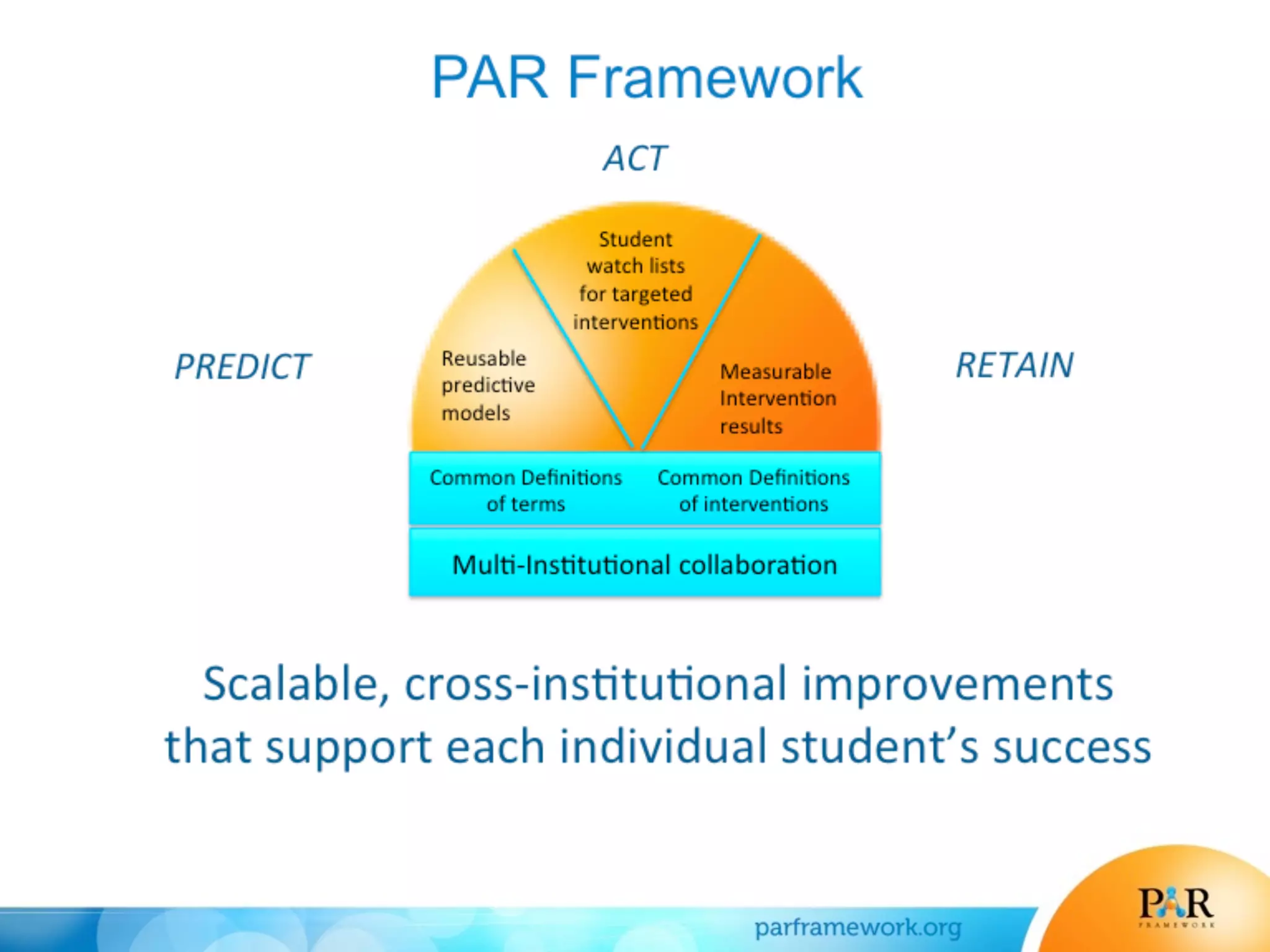
The Predictive Analytics Reporting
(PAR) Framework
•  PAR	
  is	
  a	
  na*onal,	
  non-­‐profit	
  mul*-­‐ins*tu*onal	
  
collabora*ve	
  focused	
  on	
  ins*tu*onal	
  effec*veness	
  and	
  
student	
  success.	
  
•  PAR	
  is	
  a	
  “big	
  data”	
  analysis	
  effort	
  using	
  predic7ve	
  
analy7cs	
  to	
  iden*fy	
  drivers	
  related	
  to	
  loss	
  and	
  momentum	
  
and	
  to	
  inform	
  student	
  loss	
  preven7on	
  	
  
•  PAR	
  member	
  ins*tu*ons	
  voluntarily	
  contribute	
  de-­‐
iden7fied	
  student	
  records	
  to	
  create	
  a	
  single	
  federated	
  
database.	
  
•  Descrip*ve,	
  inferen*al	
  and	
  predic*ve	
  analyses	
  have	
  been	
  
used	
  to	
  create	
  benchmarks,	
  ins*tu*onal	
  predic7ve	
  models	
  
and	
  to	
  map	
  student	
  success	
  interven7ons	
  to	
  predictor	
  
behaviors	
  
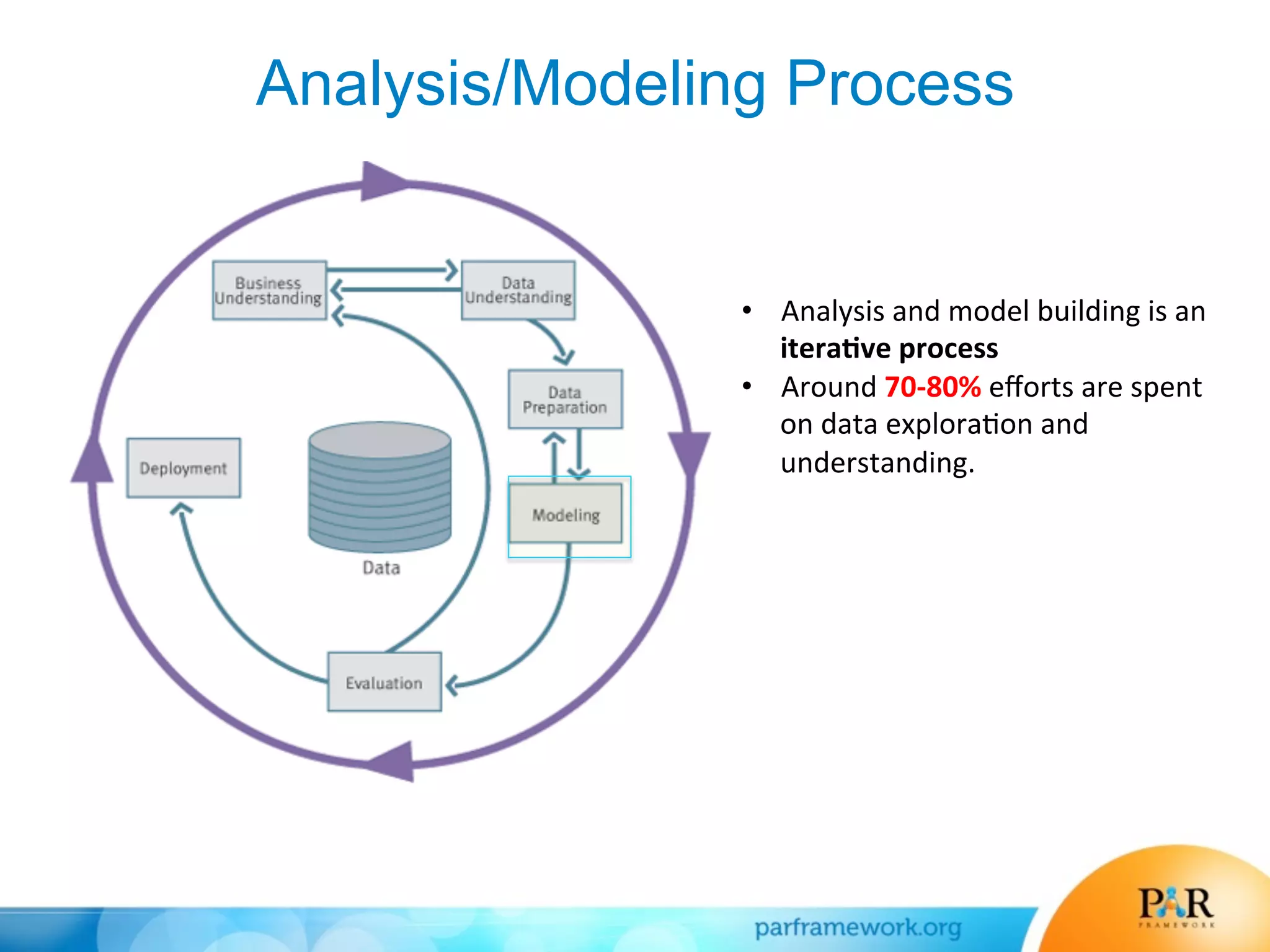
Analysis/Modeling Process
•  Analysis	
  and	
  model	
  building	
  is	
  an	
  
itera7ve	
  process	
  
•  Around	
  70-­‐80%	
  efforts	
  are	
  spent	
  
on	
  data	
  explora*on	
  and	
  
understanding.	


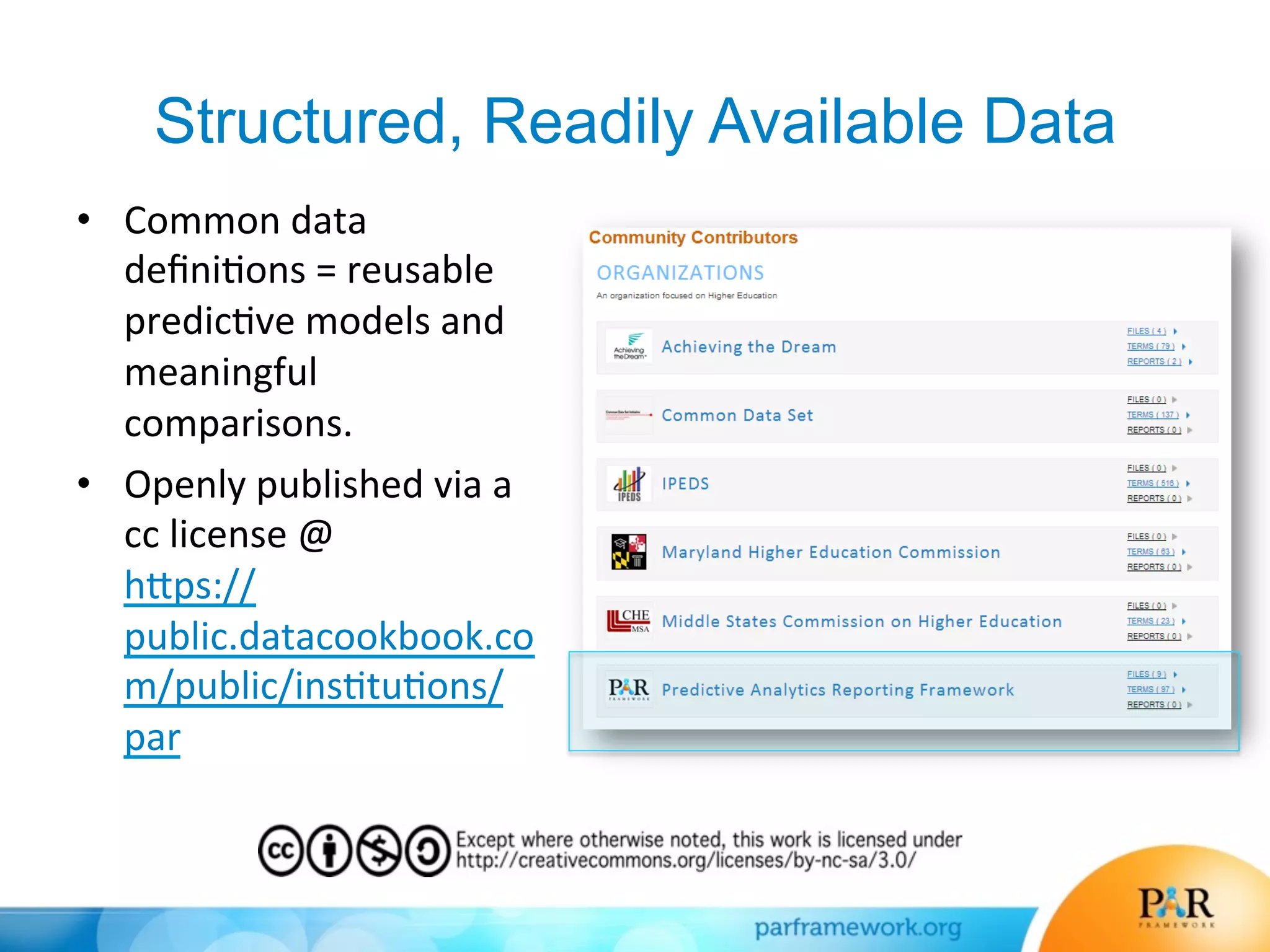
Structured, Readily Available Data
•  Common	
  data	
  
defini*ons	
  =	
  reusable	
  
predic*ve	
  models	
  and	
  
meaningful	
  
comparisons.	
  	
  
•  Openly	
  published	
  via	
  a	
  
cc	
  license	
  @	
  
h>ps://
public.datacookbook.co
m/public/ins*tu*ons/
par	
  	
  
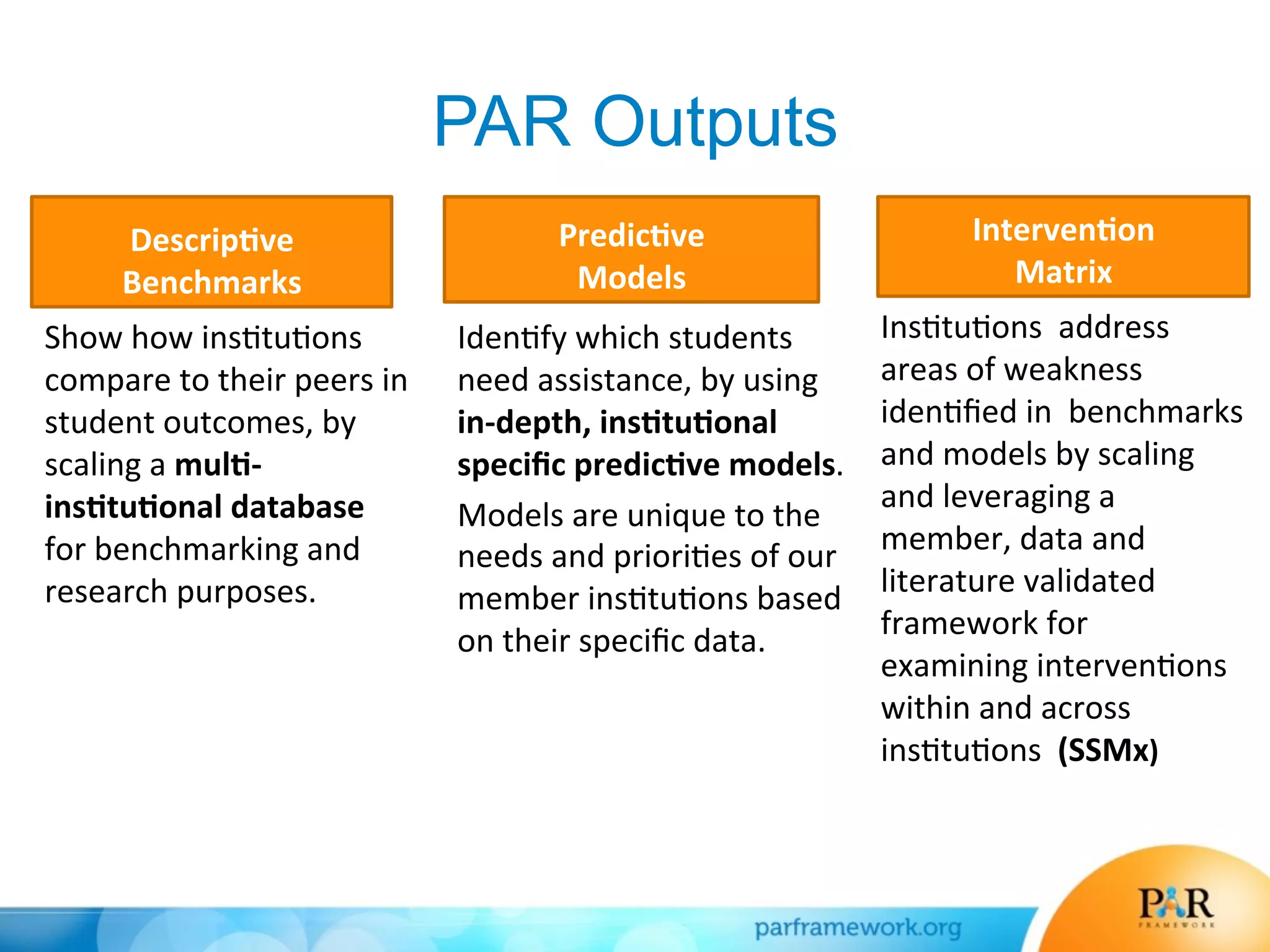
PAR Outputs
Descrip7ve	
  	
  
Benchmarks	
  	
  
Show	
  how	
  ins*tu*ons	
  
compare	
  to	
  their	
  peers	
  in	
  
student	
  outcomes,	
  by	
  
scaling	
  a	
  mul7-­‐
ins7tu7onal	
  database	
  
for	
  benchmarking	
  and	
  
research	
  purposes.	
  	
  
Predic7ve	
  	
  
Models	
  	
  
Iden*fy	
  which	
  students	
  
need	
  assistance,	
  by	
  using	
  
in-­‐depth,	
  ins7tu7onal	
  
specific	
  predic7ve	
  models.	
  	
  
Models	
  are	
  unique	
  to	
  the	
  
needs	
  and	
  priori*es	
  of	
  our	
  
member	
  ins*tu*ons	
  based	
  
on	
  their	
  specific	
  data.	


Ins*tu*ons	
  	
  address	
  
areas	
  of	
  weakness	
  
iden*fied	
  in	
  	
  benchmarks	
  
and	
  models	
  by	
  scaling	
  
and	
  leveraging	
  a	
  
member,	
  data	
  and	
  
literature	
  validated	
  
framework	
  for	
  
examining	
  interven*ons	
  
within	
  and	
  across	
  
ins*tu*ons	
  	
  (SSMx)	
  	
  
Interven7on	
  	
  
Matrix	
  	
  
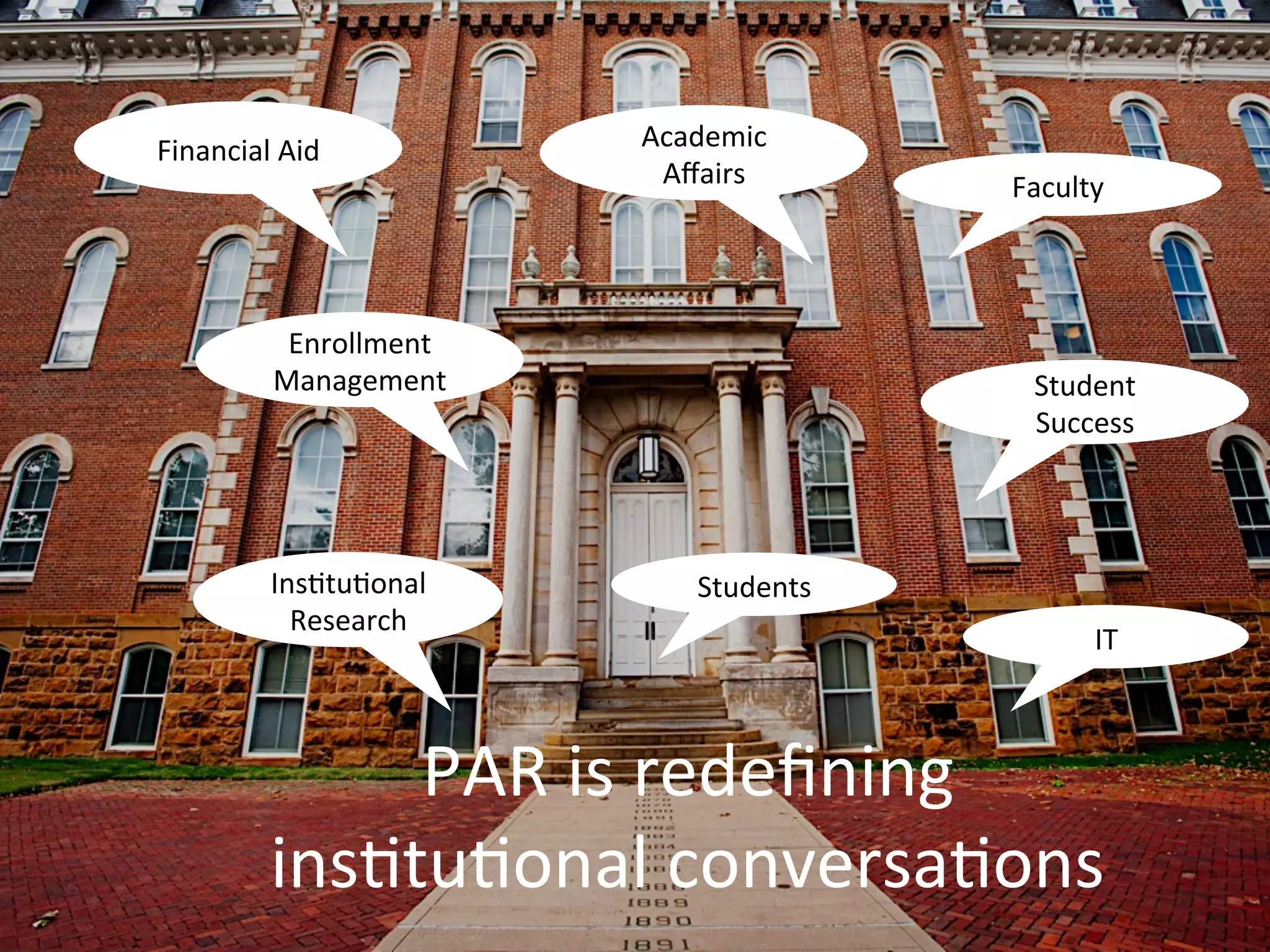
Faculty	
  
Student	
  
Success	
  
IT	
  
Academic	
  
Affairs	
  
Enrollment	
  
Management	
  
Financial	
  Aid	
  
Ins*tu*onal	
  
Research	
  
PAR	
  is	
  redefining	
  	
  
ins*tu*onal	
  conversa*ons	
  
Students	
  
5	
  Steps	
  For	
  Achieving	
  	
  
(Learning)	
  Analy*cs	
  Success	
  
START WITH AN EYE ON
YOUR OUTCOMES.
BE CLEAR ABOUT WHAT YOU
MEAN BY SUCCESS.
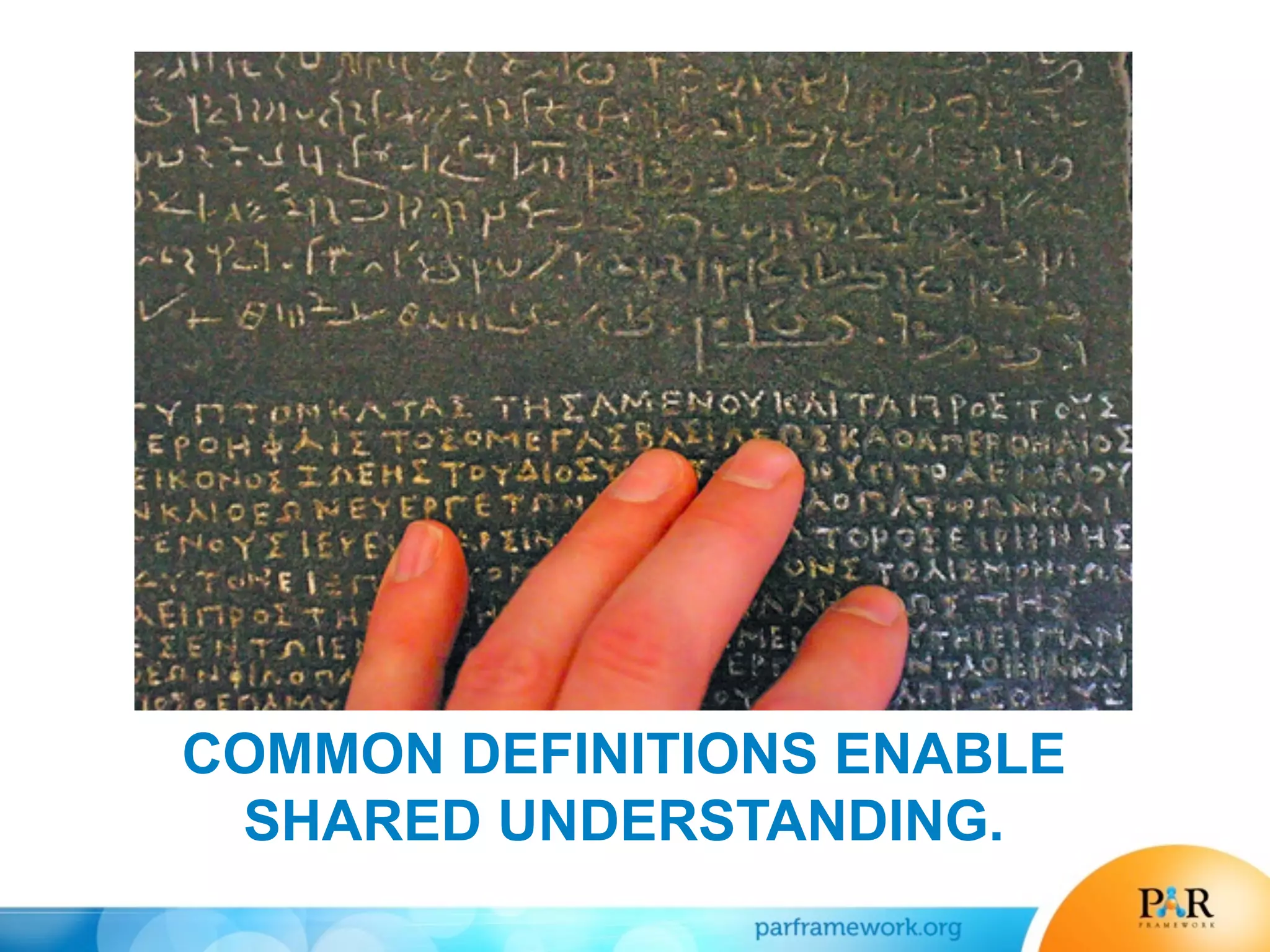
COMMON DEFINITIONS ENABLE
SHARED UNDERSTANDING.
FOCUS ON INSIGHTS,
NOT JUST ON DATA.
SHARE YOUR WORK
With	
  thanks	
  to	
  
Jane	
  Bozarth,	
  2014	
  
THANK YOU FOR YOUR
INTEREST
For	
  more	
  informa*on	
  about	
  PAR	
  please	
  visit	
  our	
  website:	
  
h>p://parframework.org	


Ellen	
  Wagner:	
  
Twi>er	
  h>p://twi>er.com/edwsonoma	
  
Google+	
  edwsonoma	
  
On	
  email	
  edwsonoma@gmail.com	


Five Steps for Achieving Learning Analytics Success

  • 1.
    Five Steps forAchieving (Learning) Analytics Success Ellen D. Wagner Ph.D. Chief Research and Strategy Officer PAR Framework @edwsonoma edwsonoma@gmail.com
  • 2.
    Common Definitions forToday Data  is  informa*on,  everywhere.  It  comes  in  all  kinds  and  shapes   and  sizes.    It’s  not  all  digital,  but  most  of  it  is.   Analy(cs  are  methods  and  tools  to  parse  streams  of  digital  bits   and  bytes  into  meaningful  pa>erns  that  can  be  explored  to  help   stakeholders  make  more  effec*ve  decisions.   Learning  analy(cs  are  methods  and  tools  needed  to  parse  the   stream  of  digital  bits  into  meaningful  pa>erns  that  explore   dimensions  of  cogni*on,  instruc*on  and  academic  experience,   including  student  success.     Data-­‐readiness  ranges  from  essen*al  individual  knowledge  and   skills  to  ins*tu*onal  capacity  for  crea*ng  a  culture  that  values   evidence-­‐based  decision-­‐making.    
  • 3.
  • 4.
  • 5.
  • 7.
  • 8.
    1  Gigabyte    =  1,024  Megabytes     1  Terabyte  =  1,024  Gigabytes     1  Petabyte  =  1,024  Terabytes   1  Exabyte  =  1,024  Petabytes     1  Ze>abyte  =  1,024  Exabytes     1  Yo>abyte  =  1,024  Ze>abytes   1  ZB  –  1,000,000,000,000,000,000,000  bytes  
  • 9.
  • 10.
  • 11.
  • 12.
    Making  Sense  of  All  The  Data  
  • 13.
    Data Readiness inHigher Ed Analy*cs  have  ramped  up  everyone’s  expecta*ons  of   personaliza*on,  accountability  and  transparency.   Academic  enterprises  simply  cannot  live  outside  the   ins*tu*onal  focus  on  tangible,  measurable  results   driving  IT,  finance,  recruitment  and  other  mission   cri*cal  concerns.  
  • 14.
    While Big Dataraise expectations, student data drive big decisions in .edu
  • 15.
    Costs and CompletionRates Source:    New  York  Times;  NCES   0   10   20   30   40   50   60   70   1996   1997   1998   1999   2000   2001   2002   2003   2004   2005   2-­‐yr  colleges   4-­‐yr  colleges   Gradua7on  rates  at  150%  of  7me   Cohort  year  
  • 16.
  • 17.
  • 18.
  • 19.
  • 20.
    What do wewant? The RIGHT Answers!! When  do  we  want  them?  NOW!!  
  • 21.
    The Predictive AnalyticsReporting (PAR) Framework •  PAR  is  a  na*onal,  non-­‐profit  mul*-­‐ins*tu*onal   collabora*ve  focused  on  ins*tu*onal  effec*veness  and   student  success.   •  PAR  is  a  “big  data”  analysis  effort  using  predic7ve   analy7cs  to  iden*fy  drivers  related  to  loss  and  momentum   and  to  inform  student  loss  preven7on     •  PAR  member  ins*tu*ons  voluntarily  contribute  de-­‐ iden7fied  student  records  to  create  a  single  federated   database.   •  Descrip*ve,  inferen*al  and  predic*ve  analyses  have  been   used  to  create  benchmarks,  ins*tu*onal  predic7ve  models   and  to  map  student  success  interven7ons  to  predictor   behaviors  
  • 23.
    Analysis/Modeling Process •  Analysis  and  model  building  is  an   itera7ve  process   •  Around  70-­‐80%  efforts  are  spent   on  data  explora*on  and   understanding.    
  • 24.
    Structured, Readily AvailableData •  Common  data   defini*ons  =  reusable   predic*ve  models  and   meaningful   comparisons.     •  Openly  published  via  a   cc  license  @   h>ps:// public.datacookbook.co m/public/ins*tu*ons/ par    
  • 25.
    PAR Outputs Descrip7ve     Benchmarks     Show  how  ins*tu*ons   compare  to  their  peers  in   student  outcomes,  by   scaling  a  mul7-­‐ ins7tu7onal  database   for  benchmarking  and   research  purposes.     Predic7ve     Models     Iden*fy  which  students   need  assistance,  by  using   in-­‐depth,  ins7tu7onal   specific  predic7ve  models.     Models  are  unique  to  the   needs  and  priori*es  of  our   member  ins*tu*ons  based   on  their  specific  data.       Ins*tu*ons    address   areas  of  weakness   iden*fied  in    benchmarks   and  models  by  scaling   and  leveraging  a   member,  data  and   literature  validated   framework  for   examining  interven*ons   within  and  across   ins*tu*ons    (SSMx)     Interven7on     Matrix    
  • 26.
    Faculty   Student   Success   IT   Academic   Affairs   Enrollment   Management   Financial  Aid   Ins*tu*onal   Research   PAR  is  redefining     ins*tu*onal  conversa*ons   Students  
  • 27.
    5  Steps  For  Achieving     (Learning)  Analy*cs  Success  
  • 28.
    START WITH ANEYE ON YOUR OUTCOMES.
  • 29.
    BE CLEAR ABOUTWHAT YOU MEAN BY SUCCESS.
  • 30.
  • 31.
  • 32.
    SHARE YOUR WORK With  thanks  to   Jane  Bozarth,  2014  
  • 33.
    THANK YOU FORYOUR INTEREST For  more  informa*on  about  PAR  please  visit  our  website:   h>p://parframework.org     Ellen  Wagner:   Twi>er  h>p://twi>er.com/edwsonoma   Google+  edwsonoma   On  email  edwsonoma@gmail.com