Health Education
Principles and Concepts

Prepared By Dr.Anees AlSaadi
CMTP R4
Jan. 2014
1
Health Education Principles and
Concepts
• Outline:
– Definition of Health Education.
– Aim and Specific Objectives of Health Education.
– Main principles of Health Education.
– Types of Health Education.
– Different approaches in Health Education.
– Stages of Health Education.
2
What is
the Definition
of
Health
Education …?

3
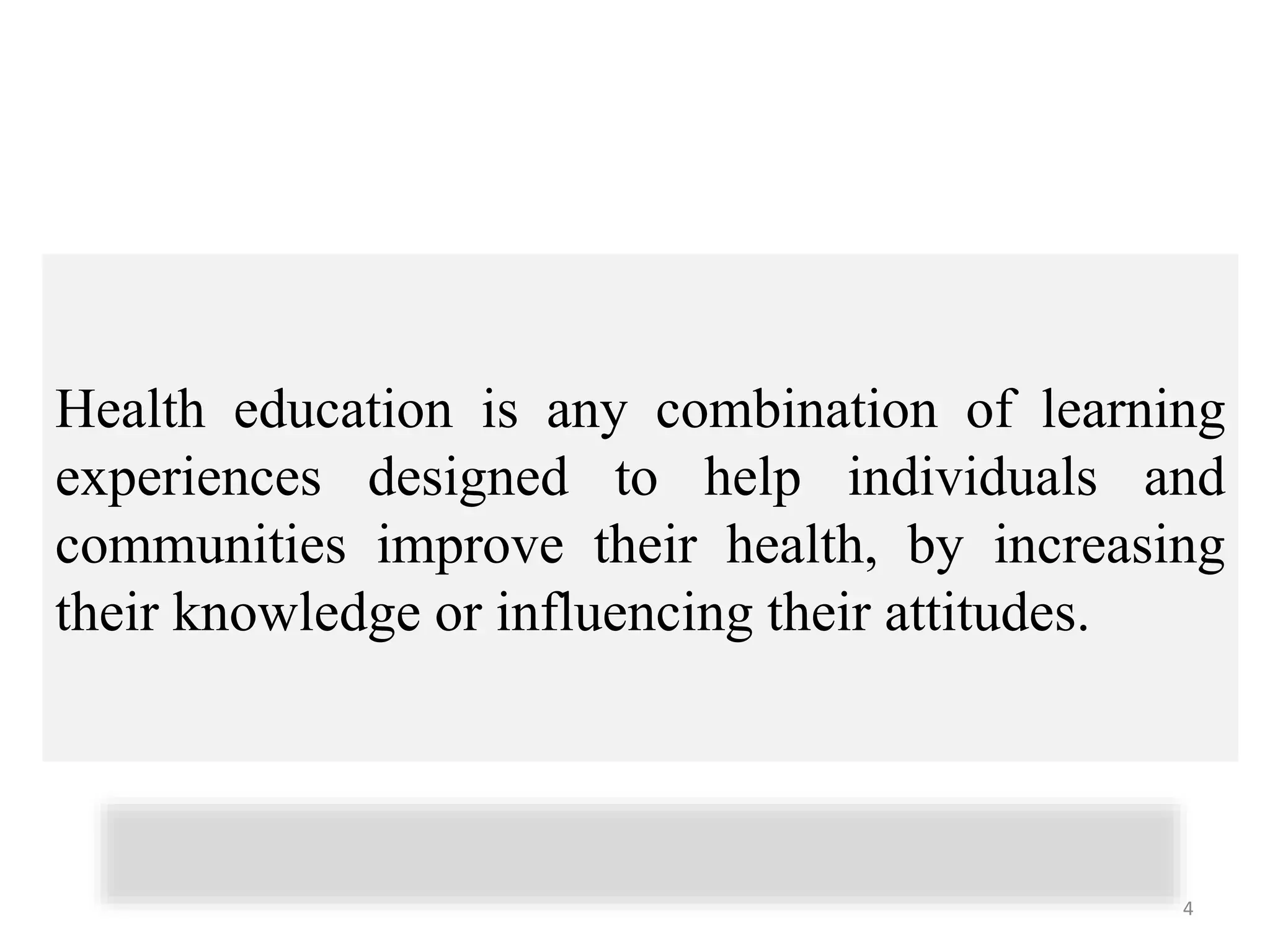
Health education is any combination of learning
experiences designed to help individuals and
communities improve their health, by increasing
their knowledge or influencing their attitudes.

4
Health Education Principles and
Concepts

Teaching process providing basic knowledge
and practice of health, so as to be
interpreted into proper health behavior.

5
What are
the Aims
of
Health Education …?

6
Health Education Principles and
Concepts
Health promotion
and disease
prevention.

Utilization of
available
health
services.

Aims of
Health
education

Early diagnosis
and
management.
7
Specific Objectives of Health
Education
To increase knowledge of the factors that affect health.
To encourage behavior which promotes and maintains health.
To enlist support for public health measures, and when necessary,
to press for appropriate governmental action.

To encourage appropriate use of health services especially
preventive services.
To inform the public about medical advances, their uses and their
limitations.
8
What are the main Principles of Health
Education ….. ?

9
Health
Supported by the latest knowledge from research.
Education
Main
principles A systematic, comprehensive and consistent
activity.
Adapted to age, gender, education and particular
health, mental or social problems of an individual
or community.
Encourages personal investment of an individual.

Respects environment/culture of an individual.
10
What are the Types of Health
Education ….?

11
Types of Health Education
• Primary Health Education.

• Secondary Healthy Education.
• Tertiary Health Education.

12
What are the Different Approaches
to Health Education ….?

13
Approaches To
Health Education.

Individual Approach

Counseling.

Clinic Consultation.

On-site Visit.

Group Approach

Mass Approach

Lectures.

Radio, T.V

Group Or Panel
Discussion.

Newspapers.

Workshop,
Seminars.

Printed Materials.

Internet
14
Individual Approach
PROS
Credible

CONS
Expensive

Permit 2 way discussion.

Time consuming.

Can be motivational,
influential and supportive.

Limited audience.

Most effective for
teaching, care and helping.
15
Group Approach
PROs
Familiar, trusted and
influential.

CONS
May not provide personal
attention.

Provide motivation/ support
more than media alone.

Needs approval from
organization.

Can be inexpensive.

Can be costly and time
consuming.

Offer shared experiences.
Reach large intended
audience in one place.

16
Mass Approach
Mass
Media

PROS

CONS

Newspapers

Reach braid intended
audience rapidly.

Larger circulating papers may
take only paid advertisement.

Can convey health
Exposure is limited only to one
news /break thoughts way.
more thoroughly than
T.V.
Article placement requires
Intended audience has contacts and may be time
the chance to clip,
consuming.
reread, contemplate
and pass along
17
martials.
Mass Approach
Mass PROS
Media
Radio

CONS

Range of intended audiences with
known listening preference.

Reaches smaller intended
audiences than TV.

Opportunity for direct intended
audience involvement.

Public service ads run infrequently
and at low listening times.

Distribution is inexpensive.

Many stations have limited
formats that may not be
conducive to health messages.

Advertisement can be inexpensive.

Difficult for intended audiences to
retain or pass on material.

18
Mass Approach
Mass
Media

PRONS

CONS

TV

Reaches potentially the largest and
widest range.

Advertisement is expensive to
produce.

Combination of audiovisual is
effective in emotional appeals and
demonstration of behaviors.

Running infrequently and in low
viewing times.

Can reach low in come audience.

Message can be obscured by
commercial culture.

Specific programs can reach
specific intended audience.

Some stations reach small intended
audience.

Opportunity for direct intended
audience involvement.

Promotion can result in huge
demand.

Difficult to retain or pass on

19
Mass Approach
Mass
Media

PRONS

CONS

Internet

Reach large number of people rapidly.

Can be expensive.

Updated and disseminated information.
Control information provided.

Many people do not have
access to internet.

Tailor information specifically for
intended audience.

Intended audience must be
proactive.

Can be interactive.

May require monitoring.

Demonstration can be by audiovisual
and graphs.

May require maintenance
over time.

Can use banner advisement to direct
intended audience.
20
How we can Select the Appropriate
Approach ….?

21
The Goal And
Objectives

Cost

Target Group

Current Interest

Health Needs

Settings And
Activities

How Can The
Approach Be
Used Most
Effectively
22
Basics of Counselling
http://fiupsychology.com/counseling.htm

23
Stages For
Health
Education

Stage of Sensitization

Stage of Publicity

Stage of Education

Stage of Attitude change

Stage of Motivation and Action

Stage of Community Transformation (social change)
24
25

Health education principles and concepts

  • 1.
    Health Education Principles andConcepts Prepared By Dr.Anees AlSaadi CMTP R4 Jan. 2014 1
  • 2.
    Health Education Principlesand Concepts • Outline: – Definition of Health Education. – Aim and Specific Objectives of Health Education. – Main principles of Health Education. – Types of Health Education. – Different approaches in Health Education. – Stages of Health Education. 2
  • 3.
  • 4.
    Health education isany combination of learning experiences designed to help individuals and communities improve their health, by increasing their knowledge or influencing their attitudes. 4
  • 5.
    Health Education Principlesand Concepts Teaching process providing basic knowledge and practice of health, so as to be interpreted into proper health behavior. 5
  • 6.
  • 7.
    Health Education Principlesand Concepts Health promotion and disease prevention. Utilization of available health services. Aims of Health education Early diagnosis and management. 7
  • 8.
    Specific Objectives ofHealth Education To increase knowledge of the factors that affect health. To encourage behavior which promotes and maintains health. To enlist support for public health measures, and when necessary, to press for appropriate governmental action. To encourage appropriate use of health services especially preventive services. To inform the public about medical advances, their uses and their limitations. 8
  • 9.
    What are themain Principles of Health Education ….. ? 9
  • 10.
    Health Supported by thelatest knowledge from research. Education Main principles A systematic, comprehensive and consistent activity. Adapted to age, gender, education and particular health, mental or social problems of an individual or community. Encourages personal investment of an individual. Respects environment/culture of an individual. 10
  • 11.
    What are theTypes of Health Education ….? 11
  • 12.
    Types of HealthEducation • Primary Health Education. • Secondary Healthy Education. • Tertiary Health Education. 12
  • 13.
    What are theDifferent Approaches to Health Education ….? 13
  • 14.
    Approaches To Health Education. IndividualApproach Counseling. Clinic Consultation. On-site Visit. Group Approach Mass Approach Lectures. Radio, T.V Group Or Panel Discussion. Newspapers. Workshop, Seminars. Printed Materials. Internet 14
  • 15.
    Individual Approach PROS Credible CONS Expensive Permit 2way discussion. Time consuming. Can be motivational, influential and supportive. Limited audience. Most effective for teaching, care and helping. 15
  • 16.
    Group Approach PROs Familiar, trustedand influential. CONS May not provide personal attention. Provide motivation/ support more than media alone. Needs approval from organization. Can be inexpensive. Can be costly and time consuming. Offer shared experiences. Reach large intended audience in one place. 16
  • 17.
    Mass Approach Mass Media PROS CONS Newspapers Reach braidintended audience rapidly. Larger circulating papers may take only paid advertisement. Can convey health Exposure is limited only to one news /break thoughts way. more thoroughly than T.V. Article placement requires Intended audience has contacts and may be time the chance to clip, consuming. reread, contemplate and pass along 17 martials.
  • 18.
    Mass Approach Mass PROS Media Radio CONS Rangeof intended audiences with known listening preference. Reaches smaller intended audiences than TV. Opportunity for direct intended audience involvement. Public service ads run infrequently and at low listening times. Distribution is inexpensive. Many stations have limited formats that may not be conducive to health messages. Advertisement can be inexpensive. Difficult for intended audiences to retain or pass on material. 18
  • 19.
    Mass Approach Mass Media PRONS CONS TV Reaches potentiallythe largest and widest range. Advertisement is expensive to produce. Combination of audiovisual is effective in emotional appeals and demonstration of behaviors. Running infrequently and in low viewing times. Can reach low in come audience. Message can be obscured by commercial culture. Specific programs can reach specific intended audience. Some stations reach small intended audience. Opportunity for direct intended audience involvement. Promotion can result in huge demand. Difficult to retain or pass on 19
  • 20.
    Mass Approach Mass Media PRONS CONS Internet Reach largenumber of people rapidly. Can be expensive. Updated and disseminated information. Control information provided. Many people do not have access to internet. Tailor information specifically for intended audience. Intended audience must be proactive. Can be interactive. May require monitoring. Demonstration can be by audiovisual and graphs. May require maintenance over time. Can use banner advisement to direct intended audience. 20
  • 21.
    How we canSelect the Appropriate Approach ….? 21
  • 22.
    The Goal And Objectives Cost TargetGroup Current Interest Health Needs Settings And Activities How Can The Approach Be Used Most Effectively 22
  • 23.
  • 24.
    Stages For Health Education Stage ofSensitization Stage of Publicity Stage of Education Stage of Attitude change Stage of Motivation and Action Stage of Community Transformation (social change) 24
  • 25.