Downloaded 671 times
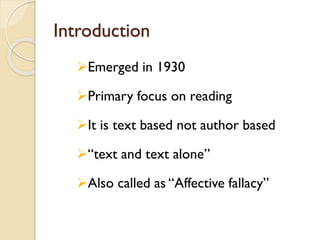
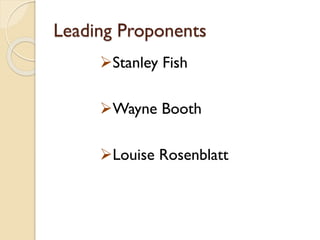
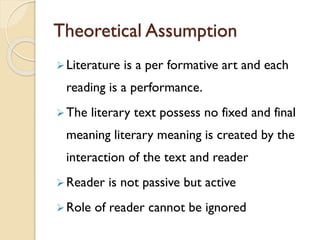
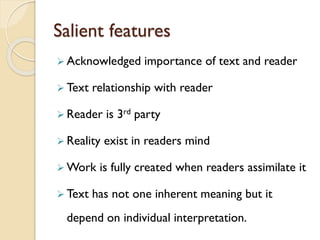
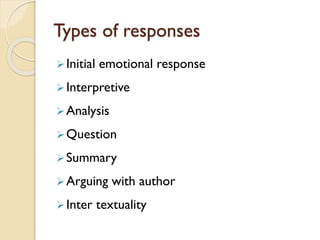
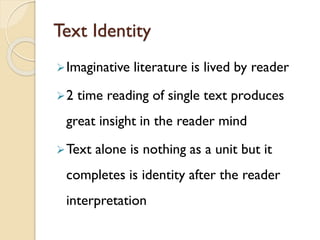
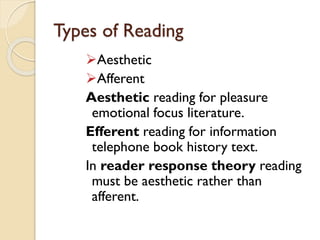
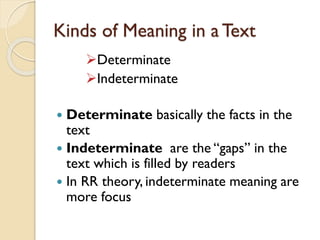

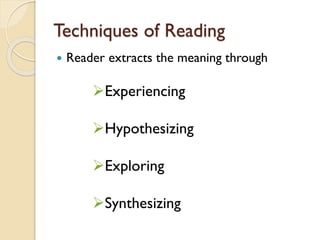
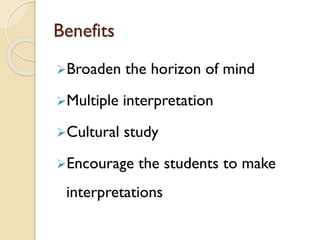
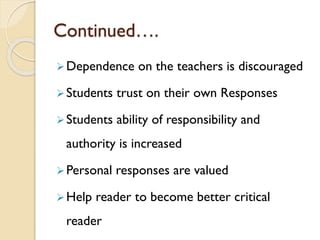
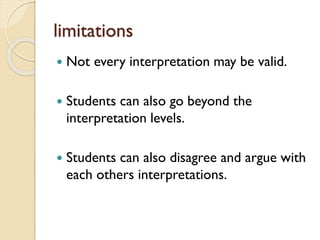
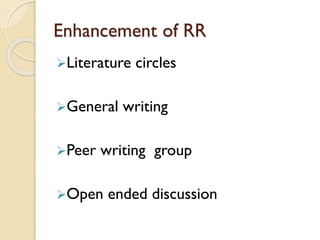
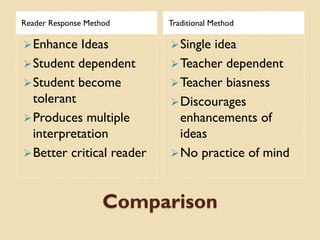
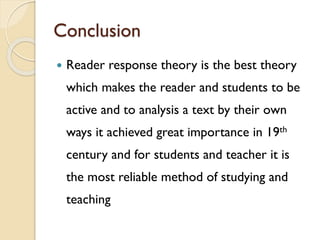

Reader Response Theory emerged in the 1930s and focuses on the reader's interaction with the text rather than the author's intentions. It is based on the idea that meaning is created through this interaction between reader and text, not inherent in the text itself. Key proponents include Stanley Fish, Wayne Booth, and Louise Rosenblatt. The theory assumes that literature is performative and each reading produces a unique interpretation. The reader plays an active role in determining meaning, not just passively receiving the author's message. Reader Response Theory emphasizes the importance of both text and reader in constructing meaning and reality through individual interpretation.


