Architecting for theWindows Azure PlatformDavid Choudavid.chou@microsoft.comblogs.msdn.com/dachou
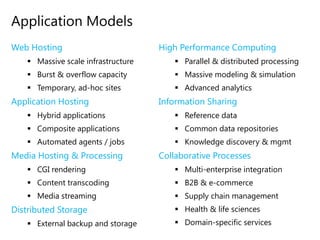
Application ModelsWeb HostingMassive scale infrastructure
Burst & overflow capacity
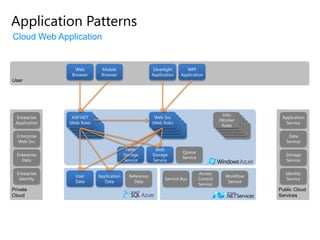
Temporary, ad-hoc sitesApplication HostingHybrid applications
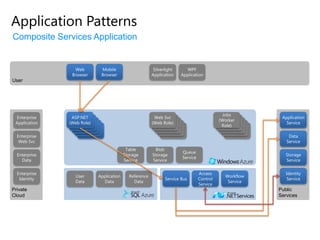
Composite applications
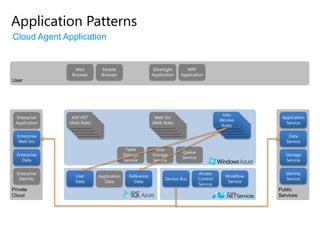
Automated agents / jobsMedia Hosting & ProcessingCGI rendering
Content transcoding
Media streamingDistributed StorageExternal backup and storageHigh Performance ComputingParallel & distributed processing
Massive modeling & simulation
Advanced analyticsInformation SharingReference data
Common data repositories
Knowledge discovery & mgmtCollaborative ProcessesMulti-enterprise integration
B2B& e-commerce
Supply chain management
Health & life sciences
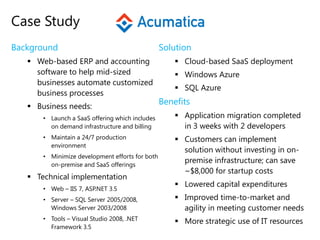
Domain-specific servicesCase StudyBackgroundWeb-based ERP and accounting software to help mid-sized businesses automate customized business processes
Business needs:Launch a SaaSoffering which includes on demand infrastructure and billingMaintain a 24/7 production environmentMinimize development efforts for both on-premise and SaaS offeringsTechnical implementationWeb – IIS 7, ASP.NET 3.5Server – SQL Server 2005/2008, Windows Server 2003/2008Tools – Visual Studio 2008, .NET Framework 3.5SolutionCloud-based SaaS deployment
Windows Azure

Architecting For The Windows Azure Platform

Editor's Notes

  • #18 Build and deploy software quickly and easily by capitalizing on the same personnel, development tools investments, and knowledge that already power your IT organization. Use the services platform’s infrastructure to power prototyping environments for experimentation, and then launch to full-scale production as soon as your business needs it. Imagine connecting existing applications with an online database that can be shared with partners, or a service bus that enables secure B2B connectivity across firewalls.Pay as you grow and reduce costs. Pay for the services you use and reduce the capital costs associated with purchasing hardware and infrastructure. Reduce operational costs by running applications on the services platform and decrease the need for maintaining on-premises infrastructure. Increase business efficiency and agility by dynamically adding and subtracting capacity in real time. Envision building an e-commerce Web site that you can scale at the click of a mouse to meet seasonal demands or spikes in traffic based on sales and promotions. Develop a new portfolio of expertise. In these early stages of software development for the cloud, businesses will be seeking the best advice on what this means for their current and future technology investments. Stay ahead of the curve and help your customers understand what cloud computing and development means to their business today and how they can pivot and extend their investments to maximize its value tomorrow. Don’t slow down. Start projects without the hurdles of lengthy training or waiting for new infrastructure to be delivered and installed. With a broad set of services already running on Microsoft global data centers, the services platform is ready to start prototyping and testing solutions.