Open Source
Intelligence - Tools
and Techniques
Session by Gowdhaman (CISO - LatentView Analytics)
2
Topics covered
▪ What is Open Source Intelligence (OSINT)
▪ How Is Open Source Intelligence Used?
▪ The Dark Side of Open Source Intelligence
▪ Open Source Intelligence Techniques
▪ Identifying Sensitive/Confidential information –
Github, Google and websites.
3
What is Open Source Intelligence (OSINT)
▪ Open-source intelligence (OSINT) is data collected
from publicly available sources to be used in an
intelligence context.
▪ According to U.S. public law, open source
intelligence:
▪ Is produced from publicly available information
▪ Is collected, analyzed, and disseminated in a timely
manner to an appropriate audience
▪ Addresses a specific intelligence requirement
▪ “Publicly Available” No Intrusion.
6 Categories of OSINT Sources
▪ Media, print newspapers, magazines, radio, and television from across and
between countries.
▪ Internet, online publications, blogs, discussion groups, citizen media
▪ Public Government Data, public government reports, budgets, hearings,
telephone directories, press conferences, websites, and speeches.
▪ Professional and Academic Publications, information acquired from journals,
conferences, symposia, academic papers, dissertations, and theses.
▪ Commercial Data, commercial imagery, financial and industrial assessments,
and databases.
▪ Grey literature, technical reports, preprints, patents, working papers, business
documents, unpublished works, and newsletters.
4
How It can be used
Security Professionals
▪ Most of the tools and techniques are used by security
professionals to conduct open source intelligence
initiatives.
▪ Accidental leaks of sensitive information, like through
social media
▪ Open ports or unsecured internet-connected devices
▪ Unpatched software, such as websites running old
versions of common CMS products
▪ Leaked or exposed assets, such as proprietary code on
paste bins
Identifying External Threats
▪ Open source intelligence enables security professionals to prioritize their
activities
▪ Threat actors continue to exploit older vulnerabilities, Focus Area is only on :
Zero Day Vulnerability
▪ Report Says - 19 % of exploited vulnerabilities Year Old
▪ With the growing use of smart devices like mobile phones and the various
products - Vulnerabilities are exploited
▪ It can help us to understand what is the awareness level of the organization or
the members.
▪ Having a clear strategy and framework in place for open source intelligence
gathering is
▪ Simple and cost effective and unbiased report
5
Dark Side of Open Source Intelligence
▪ Anything that can be found by security professionals can also be found (and used) by threat
actors.
▪ Threat actors use open source intelligence tools and techniques to identify potential targets and
exploit weaknesses in target networks.
▪ Once a vulnerability is identified, it is often an extremely quick and simple process to exploit it
and achieve a variety of malicious objectives.
▪ This process is the main reason why so many small and medium-sized enterprises get hacked
each year.
▪ Threat actors also seek out information about individuals and organizations that can be used to
inform sophisticated social engineering campaigns using phishing (email), vishing (phone or
voicemail), and SMiShing (SMS).
▪ Often, seemingly innocuous information shared through social networks and blogs can be used
to develop highly convincing social engineering campaigns, which in turn are used to trick well-
meaning users into compromising their organization’s network or assets. Ransomware.
▪ This is why using open source intelligence for security purposes is so important — It gives you
an opportunity to find and fix weaknesses in your organization’s network and remove sensitive
information before a threat actor uses the same tools and techniques to exploit them.
6
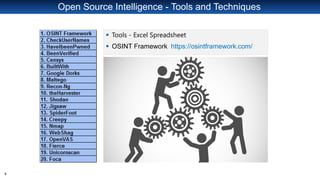
Open Source Intelligence - Tools and Techniques
▪ Tools - Excel Spreadsheet
▪ OSINT Framework https://osintframework.com/
7
Github Search
Kindly create a Github account and try using these commands.
▪ “example.com” API_key
▪ “example.com” secret_key
▪ “example.com” aws_key
▪ “example.com” Password
▪ “example.com” FTP
▪ “example.com” login
▪ “example.com” github_token
“Company.com" API_Key
Demo
8
Google Misconfiguration
Use the below script and you can identify the mis configuration in
Google groups and sites
● https://groups.google.com/forum/#!overview
● https://sites.google.com/a/company.com
Automated script
▪ https://github.com/tutorgeeks/G-Audit
9
Website Technologies
● https://www.wappalyzer.com/
● https://web.archive.org
10
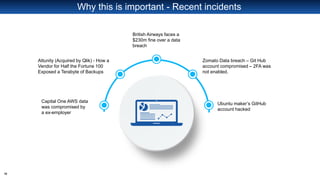
Why this is important - Recent incidents
Capital One AWS data
was compromised by
a ex-employer
Attunity (Acquired by Qlik) - How a
Vendor for Half the Fortune 100
Exposed a Terabyte of Backups
British Airways faces a
$230m fine over a data
breach
Zomato Data breach – Git Hub
account compromised – 2FA was
not enabled.
Ubuntu maker’s GitHub
account hacked
11
Reference
▪ https://securitytrails.com/
▪ https://www.recordedfuture.com/
▪ https://inteltechniques.com/menu.html
Thank you!

Osint presentation nov 2019

  • 1.
    Open Source Intelligence -Tools and Techniques Session by Gowdhaman (CISO - LatentView Analytics)
  • 2.
    2 Topics covered ▪ Whatis Open Source Intelligence (OSINT) ▪ How Is Open Source Intelligence Used? ▪ The Dark Side of Open Source Intelligence ▪ Open Source Intelligence Techniques ▪ Identifying Sensitive/Confidential information – Github, Google and websites.
  • 3.
    3 What is OpenSource Intelligence (OSINT) ▪ Open-source intelligence (OSINT) is data collected from publicly available sources to be used in an intelligence context. ▪ According to U.S. public law, open source intelligence: ▪ Is produced from publicly available information ▪ Is collected, analyzed, and disseminated in a timely manner to an appropriate audience ▪ Addresses a specific intelligence requirement ▪ “Publicly Available” No Intrusion. 6 Categories of OSINT Sources ▪ Media, print newspapers, magazines, radio, and television from across and between countries. ▪ Internet, online publications, blogs, discussion groups, citizen media ▪ Public Government Data, public government reports, budgets, hearings, telephone directories, press conferences, websites, and speeches. ▪ Professional and Academic Publications, information acquired from journals, conferences, symposia, academic papers, dissertations, and theses. ▪ Commercial Data, commercial imagery, financial and industrial assessments, and databases. ▪ Grey literature, technical reports, preprints, patents, working papers, business documents, unpublished works, and newsletters.
  • 4.
    4 How It canbe used Security Professionals ▪ Most of the tools and techniques are used by security professionals to conduct open source intelligence initiatives. ▪ Accidental leaks of sensitive information, like through social media ▪ Open ports or unsecured internet-connected devices ▪ Unpatched software, such as websites running old versions of common CMS products ▪ Leaked or exposed assets, such as proprietary code on paste bins Identifying External Threats ▪ Open source intelligence enables security professionals to prioritize their activities ▪ Threat actors continue to exploit older vulnerabilities, Focus Area is only on : Zero Day Vulnerability ▪ Report Says - 19 % of exploited vulnerabilities Year Old ▪ With the growing use of smart devices like mobile phones and the various products - Vulnerabilities are exploited ▪ It can help us to understand what is the awareness level of the organization or the members. ▪ Having a clear strategy and framework in place for open source intelligence gathering is ▪ Simple and cost effective and unbiased report
  • 5.
    5 Dark Side ofOpen Source Intelligence ▪ Anything that can be found by security professionals can also be found (and used) by threat actors. ▪ Threat actors use open source intelligence tools and techniques to identify potential targets and exploit weaknesses in target networks. ▪ Once a vulnerability is identified, it is often an extremely quick and simple process to exploit it and achieve a variety of malicious objectives. ▪ This process is the main reason why so many small and medium-sized enterprises get hacked each year. ▪ Threat actors also seek out information about individuals and organizations that can be used to inform sophisticated social engineering campaigns using phishing (email), vishing (phone or voicemail), and SMiShing (SMS). ▪ Often, seemingly innocuous information shared through social networks and blogs can be used to develop highly convincing social engineering campaigns, which in turn are used to trick well- meaning users into compromising their organization’s network or assets. Ransomware. ▪ This is why using open source intelligence for security purposes is so important — It gives you an opportunity to find and fix weaknesses in your organization’s network and remove sensitive information before a threat actor uses the same tools and techniques to exploit them.
  • 6.
    6 Open Source Intelligence- Tools and Techniques ▪ Tools - Excel Spreadsheet ▪ OSINT Framework https://osintframework.com/
  • 7.
    7 Github Search Kindly createa Github account and try using these commands. ▪ “example.com” API_key ▪ “example.com” secret_key ▪ “example.com” aws_key ▪ “example.com” Password ▪ “example.com” FTP ▪ “example.com” login ▪ “example.com” github_token “Company.com" API_Key Demo
  • 8.
    8 Google Misconfiguration Use thebelow script and you can identify the mis configuration in Google groups and sites ● https://groups.google.com/forum/#!overview ● https://sites.google.com/a/company.com Automated script ▪ https://github.com/tutorgeeks/G-Audit
  • 9.
  • 10.
    10 Why this isimportant - Recent incidents Capital One AWS data was compromised by a ex-employer Attunity (Acquired by Qlik) - How a Vendor for Half the Fortune 100 Exposed a Terabyte of Backups British Airways faces a $230m fine over a data breach Zomato Data breach – Git Hub account compromised – 2FA was not enabled. Ubuntu maker’s GitHub account hacked
  • 11.
  • 12.