2016 UK LEA Lean Learning Session
4 Types of Problems
Art Smalley
President
Art of Lean, Inc.
Keynote Outline
• Background
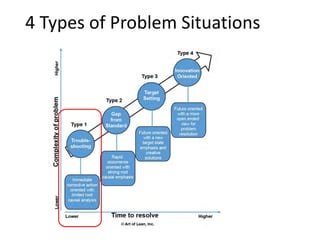
• 4 Types of Problem Situations
• Type 1 – Troubleshooting
• Type 2 – Gap from Standard
• Type 3 – Target State
• Type 4 – Innovation
• Summary
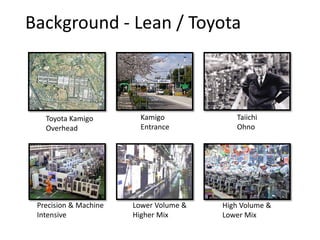
Background - Lean / Toyota
Precision & Machine
Intensive
Lower Volume &
Higher Mix
High Volume &
Lower Mix
Toyota Kamigo
Overhead
Kamigo
Entrance
Taiichi
Ohno
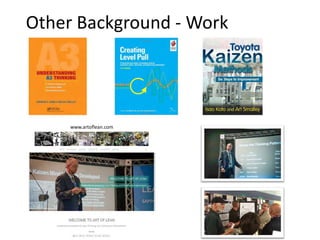
Other Background - Work
www.artoflean.com
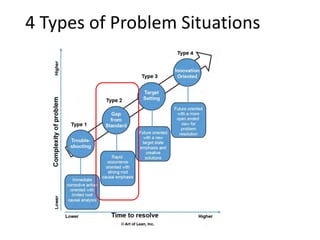
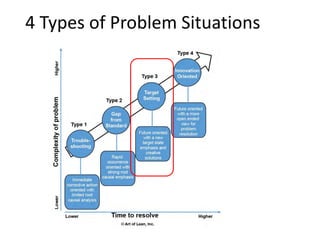
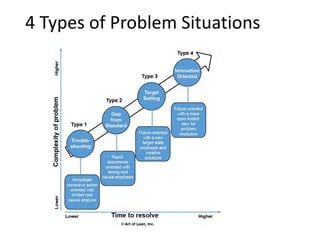
4 Types of Problem Situations
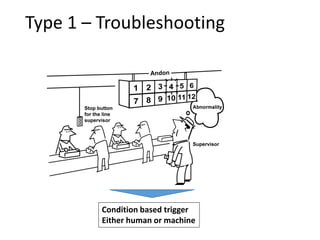
Type 1 – Troubleshooting
Condition based trigger
Either human or machine
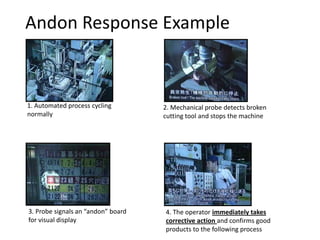
Andon Response Example
1. Automated process cycling
normally
2. Mechanical probe detects broken
cutting tool and stops the machine
3. Probe signals an “andon” board
for visual display
4. The operator immediately takes
corrective action and confirms good
products to the following process
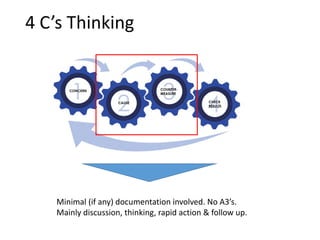
4 C’s Thinking
Minimal (if any) documentation involved. No A3’s.
Mainly discussion, thinking, rapid action & follow up.
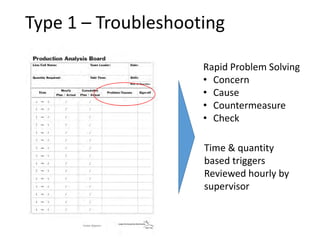
Type 1 – Troubleshooting
Rapid Problem Solving
• Concern
• Cause
• Countermeasure
• Check
Time & quantity
based triggers
Reviewed hourly by
supervisor
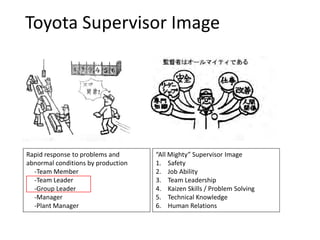
Toyota Supervisor Image
Rapid response to problems and
abnormal conditions by production
-Team Member
-Team Leader
-Group Leader
-Manager
-Plant Manager
“All Mighty” Supervisor Image
1. Safety
2. Job Ability
3. Team Leadership
4. Kaizen Skills / Problem Solving
5. Technical Knowledge
6. Human Relations
4 Types of Problem Situations
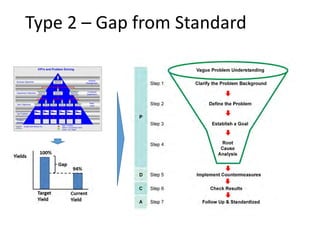
Type 2 – Gap from Standard
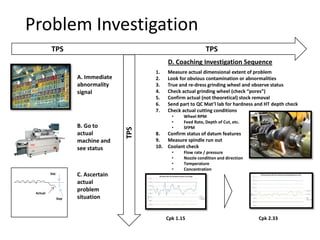
Problem Investigation
S
A. Immediate
abnormality
signal
B. Go to
actual
machine and
see status
C. Ascertain
actual
problem
situation
Std.
Actual
Gap
D. Coaching Investigation Sequence
1. Measure actual dimensional extent of problem
2. Look for obvious contamination or abnormalities
3. True and re-dress grinding wheel and observe status
4. Check actual grinding wheel (check “pores”)
5. Confirm actual (not theoretical) stock removal
6. Send part to QC Mat’l lab for hardness and HT depth check
7. Check actual cutting conditions
• Wheel RPM
• Feed Rate, Depth of Cut, etc.
• SFPM
8. Confirm status of datum features
9. Measure spindle run out
10. Coolant check
• Flow rate / pressure
• Nozzle condition and direction
• Temperature
• Concentration
Cpk 1.15 Cpk 2.33
TPS
TPS
TPS
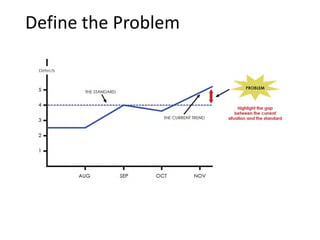
Define the Problem
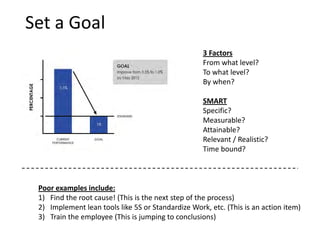
Set a Goal
3 Factors
From what level?
To what level?
By when?
SMART
Specific?
Measurable?
Attainable?
Relevant / Realistic?
Time bound?
Poor examples include:
1) Find the root cause! (This is the next step of the process)
2) Implement lean tools like 5S or Standardize Work, etc. (This is an action item)
3) Train the employee (This is jumping to conclusions)
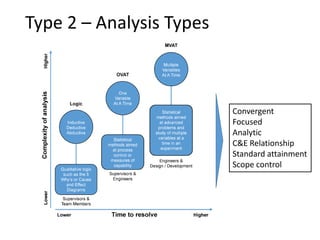
Type 2 – Analysis Types
Convergent
Focused
Analytic
C&E Relationship
Standard attainment
Scope control
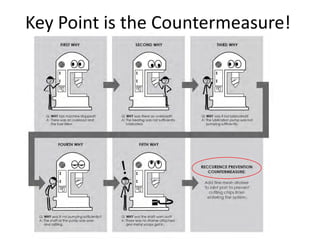
Key Point is the Countermeasure!
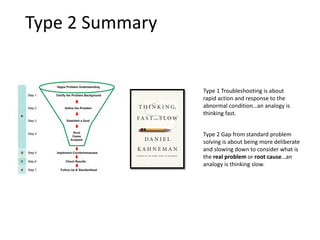
Type 2 Summary
Type 1 Troubleshooting is about
rapid action and response to the
abnormal condition…an analogy is
thinking fast.
Type 2 Gap from standard problem
solving is about being more deliberate
and slowing down to consider what is
the real problem or root cause…an
analogy is thinking slow.
4 Types of Problem Situations
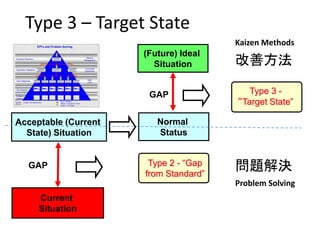
Type 3 – Target State
Type 2 - “Gap
from Standard”
GAP
Acceptable (Current
State) Situation
Current
Situation
Normal
Status
(Future) Ideal
Situation
GAP Type 3 -
“Target State”
問題解決
改善方法
Problem Solving
Kaizen Methods
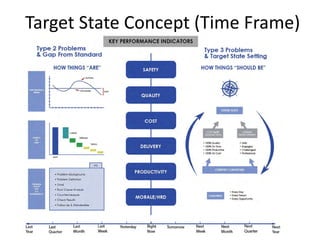
Target State Concept (Time Frame)
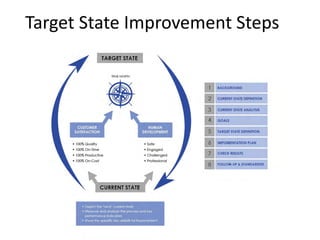
Target State Improvement Steps
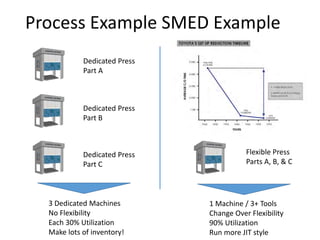
Process Example SMED Example
Dedicated Press
Part A
Dedicated Press
Part B
Dedicated Press
Part C
Flexible Press
Parts A, B, & C
3 Dedicated Machines
No Flexibility
Each 30% Utilization
Make lots of inventory!
1 Machine / 3+ Tools
Change Over Flexibility
90% Utilization
Run more JIT style
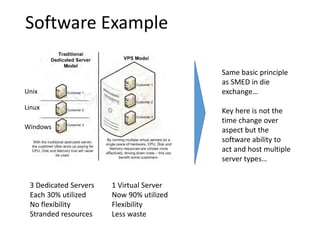
Software Example
Unix
Linux
Windows
3 Dedicated Servers
Each 30% utilized
No flexibility
Stranded resources
1 Virtual Server
Now 90% utilized
Flexibility
Less waste
Same basic principle
as SMED in die
exchange…
Key here is not the
time change over
aspect but the
software ability to
act and host multiple
server types…
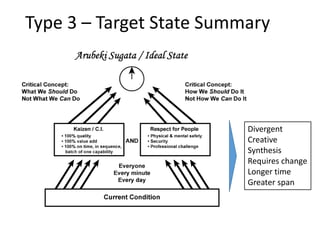
Type 3 – Target State Summary
Divergent
Creative
Synthesis
Requires change
Longer time
Greater span
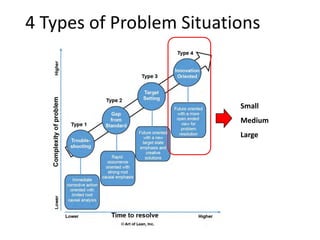
4 Types of Problem Situations
Small
Medium
Large
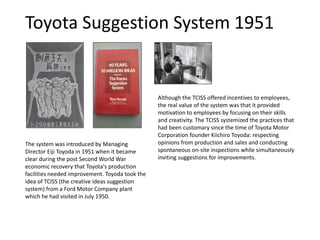
Toyota Suggestion System 1951
The system was introduced by Managing
Director Eiji Toyoda in 1951 when it became
clear during the post Second World War
economic recovery that Toyota's production
facilities needed improvement. Toyoda took the
idea of TCISS (the creative ideas suggestion
system) from a Ford Motor Company plant
which he had visited in July 1950.
Although the TCISS offered incentives to employees,
the real value of the system was that it provided
motivation to employees by focusing on their skills
and creativity. The TCISS systemized the practices that
had been customary since the time of Toyota Motor
Corporation founder Kiichiro Toyoda: respecting
opinions from production and sales and conducting
spontaneous on-site inspections while simultaneously
inviting suggestions for improvements.
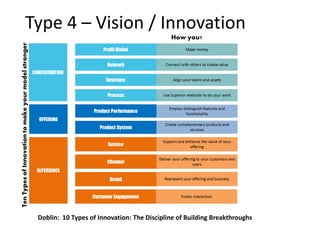
Type 4 – Vision / Innovation
Doblin: 10 Types of Innovation: The Discipline of Building Breakthroughs
4 Types of Problem Situations
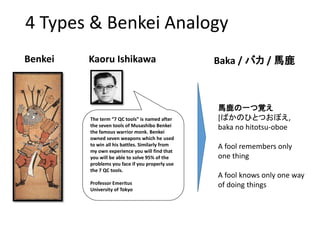
4 Types & Benkei Analogy
The term “7 QC tools” is named after
the seven tools of Musashibo Benkei
the famous warrior monk. Benkei
owned seven weapons which he used
to win all his battles. Similarly from
my own experience you will find that
you will be able to solve 95% of the
problems you face if you properly use
the 7 QC tools.
Professor Emeritus
University of Tokyo
Benkei Kaoru Ishikawa Baka / バカ / 馬鹿
馬鹿の一つ覚え
[ばかのひとつおぼえ,
baka no hitotsu-oboe
A fool remembers only
one thing
A fool knows only one way
of doing things
Session Summary
• Benkei vs. Baka analogy and be careful of experts
who only know one way
• Each type has a different cadence and focal point
• Reflection after doing is key as well. However you
can’t just “think” your way to improvement
• Learning by doing is key for all four types
• Problem solving, innovation and improvement
require perspiration and willingness to fail more
than once

UK-Lean-Summit-2016-Learning-Lean-Lean-Learning-Learning-through-Problem-Solving-The-Four-Types-of-Problems-Plenary-Session-by-Art-Smalley.pdf

  • 1.
    2016 UK LEALean Learning Session 4 Types of Problems Art Smalley President Art of Lean, Inc.
  • 2.
    Keynote Outline • Background •4 Types of Problem Situations • Type 1 – Troubleshooting • Type 2 – Gap from Standard • Type 3 – Target State • Type 4 – Innovation • Summary
  • 3.
    Background - Lean/ Toyota Precision & Machine Intensive Lower Volume & Higher Mix High Volume & Lower Mix Toyota Kamigo Overhead Kamigo Entrance Taiichi Ohno
  • 4.
    Other Background -Work www.artoflean.com
  • 5.
    4 Types ofProblem Situations
  • 6.
    Type 1 –Troubleshooting Condition based trigger Either human or machine
  • 7.
    Andon Response Example 1.Automated process cycling normally 2. Mechanical probe detects broken cutting tool and stops the machine 3. Probe signals an “andon” board for visual display 4. The operator immediately takes corrective action and confirms good products to the following process
  • 8.
    4 C’s Thinking Minimal(if any) documentation involved. No A3’s. Mainly discussion, thinking, rapid action & follow up.
  • 9.
    Type 1 –Troubleshooting Rapid Problem Solving • Concern • Cause • Countermeasure • Check Time & quantity based triggers Reviewed hourly by supervisor
  • 10.
    Toyota Supervisor Image Rapidresponse to problems and abnormal conditions by production -Team Member -Team Leader -Group Leader -Manager -Plant Manager “All Mighty” Supervisor Image 1. Safety 2. Job Ability 3. Team Leadership 4. Kaizen Skills / Problem Solving 5. Technical Knowledge 6. Human Relations
  • 11.
    4 Types ofProblem Situations
  • 12.
    Type 2 –Gap from Standard
  • 13.
    Problem Investigation S A. Immediate abnormality signal B.Go to actual machine and see status C. Ascertain actual problem situation Std. Actual Gap D. Coaching Investigation Sequence 1. Measure actual dimensional extent of problem 2. Look for obvious contamination or abnormalities 3. True and re-dress grinding wheel and observe status 4. Check actual grinding wheel (check “pores”) 5. Confirm actual (not theoretical) stock removal 6. Send part to QC Mat’l lab for hardness and HT depth check 7. Check actual cutting conditions • Wheel RPM • Feed Rate, Depth of Cut, etc. • SFPM 8. Confirm status of datum features 9. Measure spindle run out 10. Coolant check • Flow rate / pressure • Nozzle condition and direction • Temperature • Concentration Cpk 1.15 Cpk 2.33 TPS TPS TPS
  • 14.
  • 15.
    Set a Goal 3Factors From what level? To what level? By when? SMART Specific? Measurable? Attainable? Relevant / Realistic? Time bound? Poor examples include: 1) Find the root cause! (This is the next step of the process) 2) Implement lean tools like 5S or Standardize Work, etc. (This is an action item) 3) Train the employee (This is jumping to conclusions)
  • 16.
    Type 2 –Analysis Types Convergent Focused Analytic C&E Relationship Standard attainment Scope control
  • 17.
    Key Point isthe Countermeasure!
  • 18.
    Type 2 Summary Type1 Troubleshooting is about rapid action and response to the abnormal condition…an analogy is thinking fast. Type 2 Gap from standard problem solving is about being more deliberate and slowing down to consider what is the real problem or root cause…an analogy is thinking slow.
  • 19.
    4 Types ofProblem Situations
  • 20.
    Type 3 –Target State Type 2 - “Gap from Standard” GAP Acceptable (Current State) Situation Current Situation Normal Status (Future) Ideal Situation GAP Type 3 - “Target State” 問題解決 改善方法 Problem Solving Kaizen Methods
  • 21.
  • 22.
  • 23.
    Process Example SMEDExample Dedicated Press Part A Dedicated Press Part B Dedicated Press Part C Flexible Press Parts A, B, & C 3 Dedicated Machines No Flexibility Each 30% Utilization Make lots of inventory! 1 Machine / 3+ Tools Change Over Flexibility 90% Utilization Run more JIT style
  • 24.
    Software Example Unix Linux Windows 3 DedicatedServers Each 30% utilized No flexibility Stranded resources 1 Virtual Server Now 90% utilized Flexibility Less waste Same basic principle as SMED in die exchange… Key here is not the time change over aspect but the software ability to act and host multiple server types…
  • 25.
    Type 3 –Target State Summary Divergent Creative Synthesis Requires change Longer time Greater span
  • 26.
    4 Types ofProblem Situations Small Medium Large
  • 27.
    Toyota Suggestion System1951 The system was introduced by Managing Director Eiji Toyoda in 1951 when it became clear during the post Second World War economic recovery that Toyota's production facilities needed improvement. Toyoda took the idea of TCISS (the creative ideas suggestion system) from a Ford Motor Company plant which he had visited in July 1950. Although the TCISS offered incentives to employees, the real value of the system was that it provided motivation to employees by focusing on their skills and creativity. The TCISS systemized the practices that had been customary since the time of Toyota Motor Corporation founder Kiichiro Toyoda: respecting opinions from production and sales and conducting spontaneous on-site inspections while simultaneously inviting suggestions for improvements.
  • 28.
    Type 4 –Vision / Innovation Doblin: 10 Types of Innovation: The Discipline of Building Breakthroughs
  • 29.
    4 Types ofProblem Situations
  • 30.
    4 Types &Benkei Analogy The term “7 QC tools” is named after the seven tools of Musashibo Benkei the famous warrior monk. Benkei owned seven weapons which he used to win all his battles. Similarly from my own experience you will find that you will be able to solve 95% of the problems you face if you properly use the 7 QC tools. Professor Emeritus University of Tokyo Benkei Kaoru Ishikawa Baka / バカ / 馬鹿 馬鹿の一つ覚え [ばかのひとつおぼえ, baka no hitotsu-oboe A fool remembers only one thing A fool knows only one way of doing things
  • 31.
    Session Summary • Benkeivs. Baka analogy and be careful of experts who only know one way • Each type has a different cadence and focal point • Reflection after doing is key as well. However you can’t just “think” your way to improvement • Learning by doing is key for all four types • Problem solving, innovation and improvement require perspiration and willingness to fail more than once