The Narrative Paradigm: Walter Fisher  Griffen Chapter 23 Lecture 17.11.2009
Storytelling (p. 298-9) Storytelling epitomized (defines) human nature  Reasons to agree  Good story very effective  Evidence and proof are less effective  Narrative Paradigm  Nothing Didactic (clear and instructive) Nothing Descriptive
Defining Narration (p. 300)  3 Elements  Symbolic Actions (words and deeds) S equence and meaning  T hose who live, create and interpret them Broad:  Rooted in time and space  Explains all human experience
Paradigm (p. 300) Conceptual Framework (way of thinking) Ontology  Epistemology Axiology  Narrative Paradigm (Stories as persuasion) A  text without a story cannot persuade
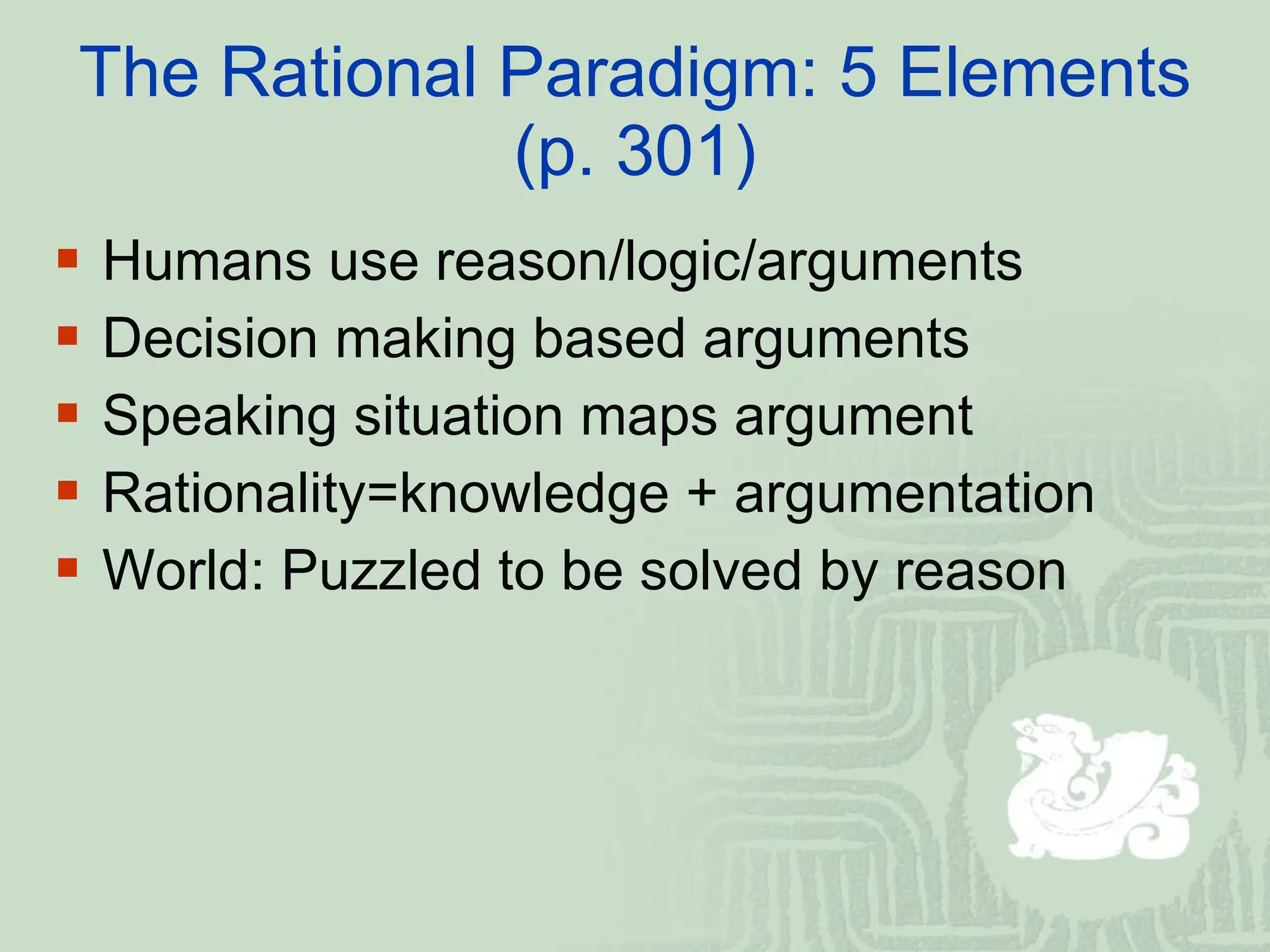
The Rational Paradigm: 5 Elements (p. 301) Humans use reason/logic/arguments Decision making based arguments Speaking situation maps argument Rationality=knowledge + argumentation World: Puzzled to be solved by reason
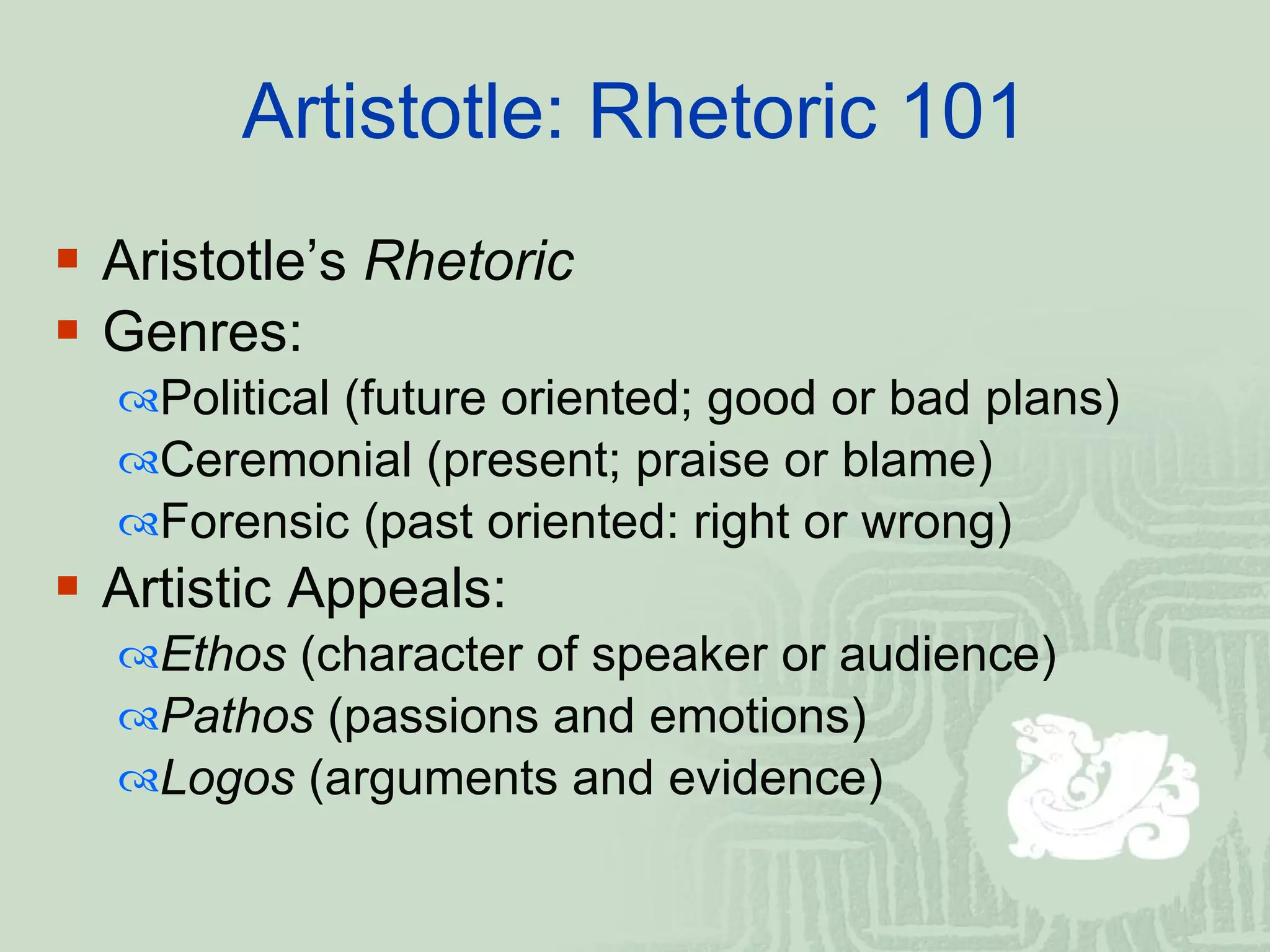
Artistotle: Rhetoric 101 Aristotle’s  Rhetoric  Genres: Political (future oriented; good or bad plans) Ceremonial (present; praise or blame) Forensic (past oriented: right or wrong) Artistic Appeals:  Ethos  (character of speaker or audience) Pathos  (passions and emotions) Logos  (arguments and evidence)
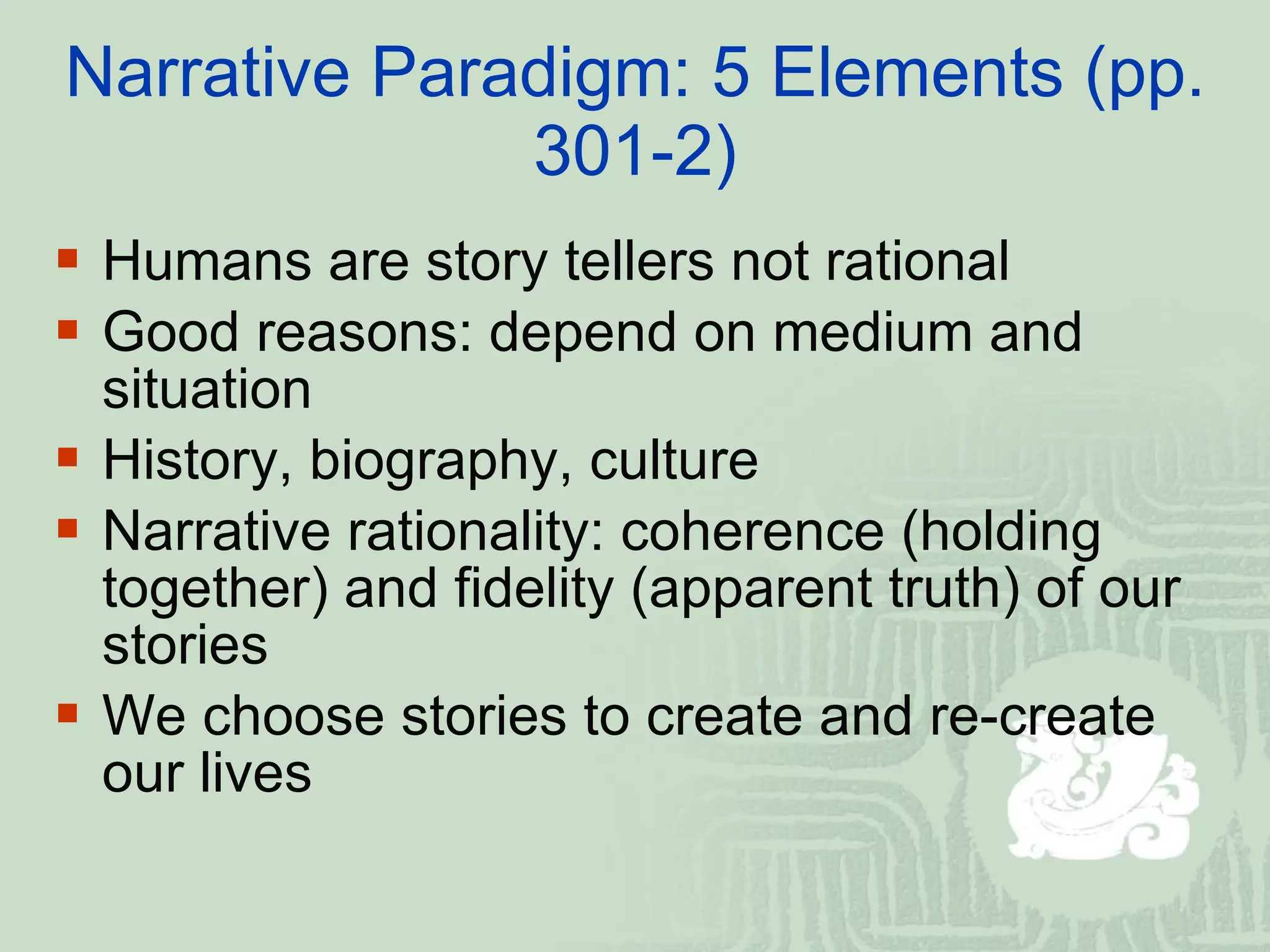
Narrative Paradigm: 5 Elements (pp. 301-2) Humans are story tellers not rational  Good reasons: depend on medium and situation  History, biography, culture  Narrative rationality: coherence (holding together) and fidelity (apparent truth) of our stories  We choose stories to create and re-create our lives
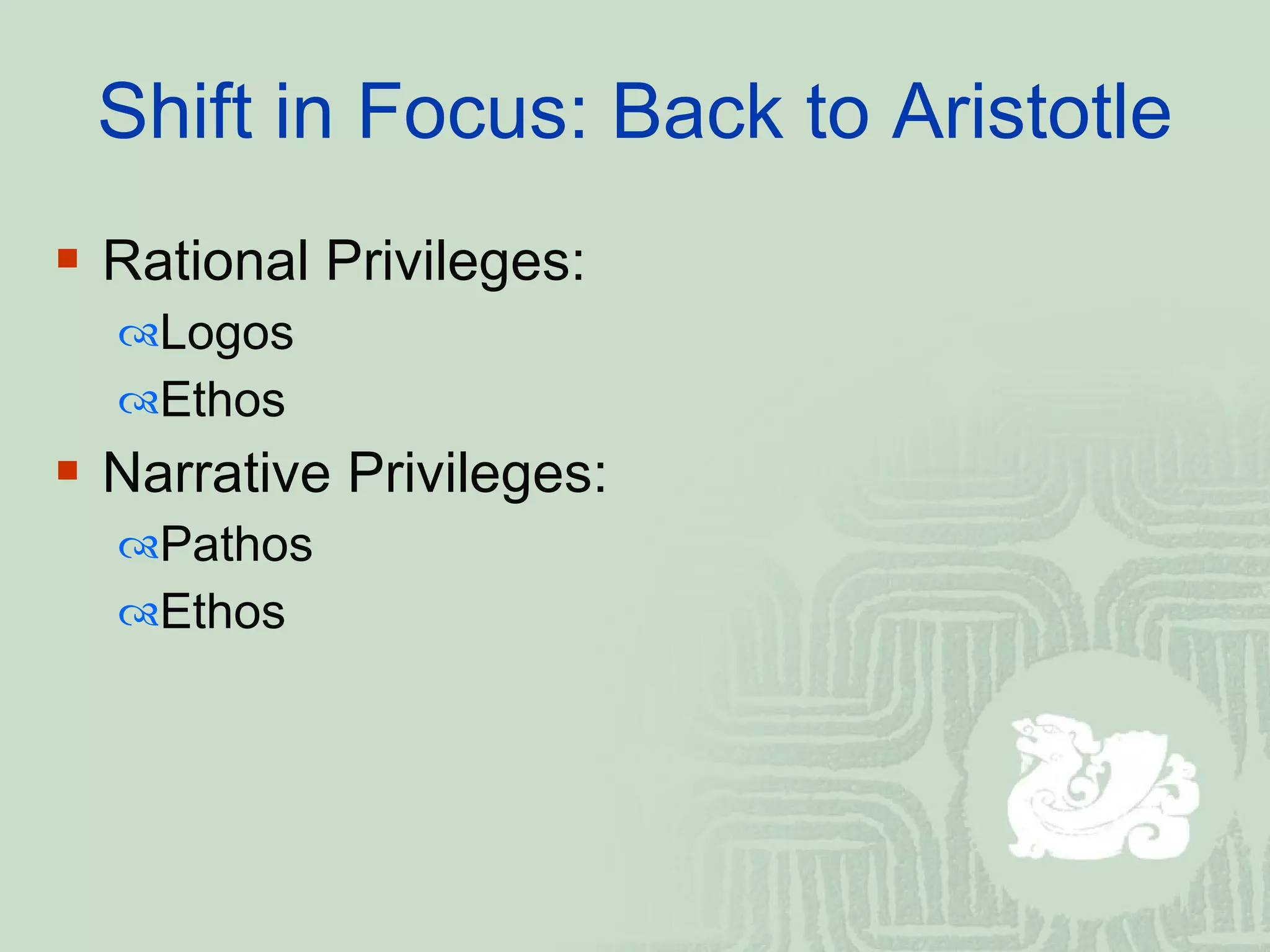
Shift in Focus: Back to Aristotle Rational Privileges:  Logos  Ethos  Narrative Privileges: Pathos  Ethos

The Narrative Paradigm

  • 1.
    The Narrative Paradigm:Walter Fisher Griffen Chapter 23 Lecture 17.11.2009
  • 2.
    Storytelling (p. 298-9)Storytelling epitomized (defines) human nature Reasons to agree Good story very effective Evidence and proof are less effective Narrative Paradigm Nothing Didactic (clear and instructive) Nothing Descriptive
  • 3.
    Defining Narration (p.300) 3 Elements Symbolic Actions (words and deeds) S equence and meaning T hose who live, create and interpret them Broad: Rooted in time and space Explains all human experience
  • 4.
    Paradigm (p. 300)Conceptual Framework (way of thinking) Ontology Epistemology Axiology Narrative Paradigm (Stories as persuasion) A text without a story cannot persuade
  • 5.
    The Rational Paradigm:5 Elements (p. 301) Humans use reason/logic/arguments Decision making based arguments Speaking situation maps argument Rationality=knowledge + argumentation World: Puzzled to be solved by reason
  • 6.
    Artistotle: Rhetoric 101Aristotle’s Rhetoric Genres: Political (future oriented; good or bad plans) Ceremonial (present; praise or blame) Forensic (past oriented: right or wrong) Artistic Appeals: Ethos (character of speaker or audience) Pathos (passions and emotions) Logos (arguments and evidence)
  • 7.
    Narrative Paradigm: 5Elements (pp. 301-2) Humans are story tellers not rational Good reasons: depend on medium and situation History, biography, culture Narrative rationality: coherence (holding together) and fidelity (apparent truth) of our stories We choose stories to create and re-create our lives
  • 8.
    Shift in Focus:Back to Aristotle Rational Privileges: Logos Ethos Narrative Privileges: Pathos Ethos