By ~
Abhishek Chhilwar

 Interesting Facts
 Sector Overview
 Porters Five Forces
 Key Domestic Players
 Key International Players
 Opportunities
 Thank You
Highlights











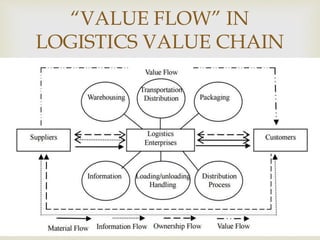
“VALUE FLOW” IN
LOGISTICS VALUE CHAIN

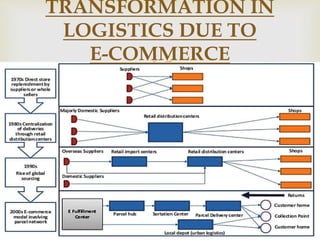
TRANSFORMATION IN
LOGISTICS DUE TO
E-COMMERCE

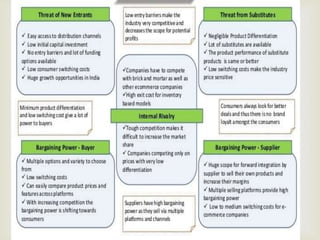
PORTER’S FIVE FORCES
ANALYSIS:
Bargaining power of suppliers
 Any business requires inputs labours, parts, raw material
and service. The cost your inputs have a significant effect
on your company’s profitability
 For our company bargaining power of suppliers
depends on the following factors:
 Price of fuels
 Taxes
 Government policies
 Cost of land
 Increase in rents
Bargaining power of Buyers
 The power of buyers describes the effect that your customers
have on the profitability of your business the transaction
between the seller and the buyer create value for both parties.
 For our company
 The bargaining power of buyers is medium because of the
sufficient number of logistic companies.
Rivalry among competitors
 Rivalry among competitors is often the strongest among the
porter’s five forces.
 For our company the competition is from:
 Unorganized transporters
 International players like DHL
 Domestic company GATI
Threat form new entrants:
 Company may have the market cornered with the product,
but the success may inspire others to enter the business
and challenge your position.
 For our company
 Threat is from various cargo companies that may enter the
logistics business
 Threat is also from the entry of other international
companies like UPS
Threat of substitutes
 Products or services from one business can be replaced by
products or services from another if you produce a
commodity product that is undifferentiated, customer can
switch from your product.
 For our company
 Substitutes may be the transporters who provide services
at the cheaper rate.


Exel
 Headquarters: Westerville, OH United States
 3PL Assets: 74,000 employees; 300 warehouses; 5923 tractors, 7544 trailers
 Services: Warehousing and distribution (contract logistics), air and ocean
freight forwarding, supply-chain consulting, customs brokerage,
transportation management, returns management, home delivery
 Industry Focus: Consumer goods, retail, computers and electronics,
automotive, chemical, healthcare.
 Exel is the world's largest 3PL.
International Key Logistics Players

 Headquarter: Schindellegi, Switzerland
 3PL Assets: 19,000 employees; 50 warehouses
 Services: Ocean and airfreight forwarding, value-added
warehousing and distribution, transportation management,
customs brokerage, supply-chain management
 Industry Focus: Automotive, industrial, healthcare, high-tech,
retail/consumer products
 It is the world's largest ocean freight forwarder. It is also one of the
top five airfreight carriers. Kuehne & Nagel has ISO 9001
certification for all of its company locations. Primary contract
logistics emphasis is on pharmaceuticals and high-tech.
Kuehne & Nagel

 Headquarter: Frankfurt, Germany
 3PL Assets: 36,000 employees; 405 warehouses
 Services: Air and ocean freight forwarding, customs brokerage,
warehousing and distribution, transportation management
 Industry Focus: Automotive, computers and electronics, consumer
goods, healthcare
 Schenker is a German industry giant with logistics management
capabilities. Schenker is part of Stinnes Logistics, a large German
conglomerate (over $11bn in sales) involved in oil trading, raw
materials, steel and other operations. Schenker is a key
transportation and distribution company in Europe.
Schenker

• The Indian logistics industry is poised for a significant leap forward in the
years to come. Factors like the proposed introduction of common Goods
Sales Taxes (GST) will create favorable environment for the logistics
industry.
• Experts anticipate a lot of growth in Tier-II and Tier-III markets as large
number of customers and shippers are going into these markets.
• The express industry in India is showing a growth rate of 12-15%. DHL has
been growing above the market average and will continue to be a leader in
the industry.
• Logistics costs constitute 13% of GDP (gross domestic product) in India
compared to 9% in the US.
Logistic Industry in India

DHL
 DHL Supply Chain is organized into three regions: Americas, Asia
Pacific/Middle East/Africa and Europe.
TNT
 TNT, the world’s leading express integrator, announced that it anticipates
strong growth in India, attributed by its growing air and road network
connectivity and service expansion in the country.
AFL
 AFL specialize the marketing in South / Central America & Caribbean
countries for air freight, they are also the GSA (General Sales Agent) for
AeroMexico Airlines (AM) in Hong Kong whom can provide competitive
air freight rates along with their excellent services ex. HKG to those
countries.
Key players in Indian market

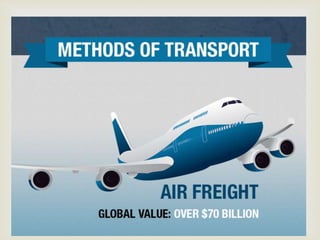
 Air Freight
It includes moving time-sensitive cargo from key gateways to
destinations around the world.
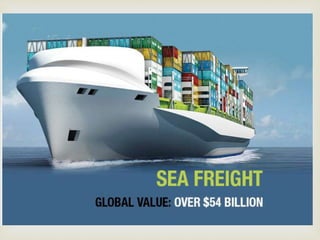
 Sea Freight
It includes ocean forwarding, NVOCC consolidation, full container
load (FCL) services, less than container load (LCL) services
 E-commerce
It provides domestic and international e-commerce sellers with
warehouse management, supply distribution, cross-border transport,
B2C of small parcel services, domestic warehousing and order
fulfilment and an efficient one-stop service platform, ECOSS (E-
Commerce One-Stop Solution).
Services
E-parcel Services
It provides e-parcel services for sellers to deliver their
goods to foreign countries
3PL
It includes distribution centres , experienced staffs in
handling different picking activities, FIFO stock
rotation, SAP Warehouse Management System (WMS)
and using RF for inbound inspection.

 Low-cost country, logistics cost in India is higher
due to administrative delays
 Low penetration of new technology in the supply
chain process is resulting in damage of goods
 Inadequate and low-quality highway availability
 Limiting the trucks’ size and impacting economies
of operation.
Challenges for India

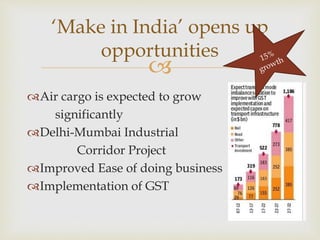
Air cargo is expected to grow
significantly
Delhi-Mumbai Industrial
Corridor Project
Improved Ease of doing business
Implementation of GST
‘Make in India’ opens up
opportunities

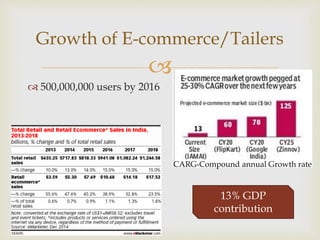
 500,000,000 users by 2016
Growth of E-commerce/Tailers
CARG-Compound annual Growth rate
13% GDP
contribution

Thank You

Logistics sector 2015

  • 1.
  • 2.
      Interesting Facts Sector Overview  Porters Five Forces  Key Domestic Players  Key International Players  Opportunities  Thank You Highlights
  • 3.
  • 4.
  • 5.
  • 6.
  • 7.
  • 8.
  • 9.
  • 10.
  • 11.
  • 12.
  • 13.
  • 14.
  • 15.
     PORTER’S FIVE FORCES ANALYSIS: Bargainingpower of suppliers  Any business requires inputs labours, parts, raw material and service. The cost your inputs have a significant effect on your company’s profitability  For our company bargaining power of suppliers depends on the following factors:  Price of fuels  Taxes  Government policies  Cost of land  Increase in rents
  • 16.
    Bargaining power ofBuyers  The power of buyers describes the effect that your customers have on the profitability of your business the transaction between the seller and the buyer create value for both parties.  For our company  The bargaining power of buyers is medium because of the sufficient number of logistic companies. Rivalry among competitors  Rivalry among competitors is often the strongest among the porter’s five forces.  For our company the competition is from:  Unorganized transporters  International players like DHL  Domestic company GATI
  • 17.
    Threat form newentrants:  Company may have the market cornered with the product, but the success may inspire others to enter the business and challenge your position.  For our company  Threat is from various cargo companies that may enter the logistics business  Threat is also from the entry of other international companies like UPS Threat of substitutes  Products or services from one business can be replaced by products or services from another if you produce a commodity product that is undifferentiated, customer can switch from your product.  For our company  Substitutes may be the transporters who provide services at the cheaper rate.
  • 18.
  • 19.
     Exel  Headquarters: Westerville,OH United States  3PL Assets: 74,000 employees; 300 warehouses; 5923 tractors, 7544 trailers  Services: Warehousing and distribution (contract logistics), air and ocean freight forwarding, supply-chain consulting, customs brokerage, transportation management, returns management, home delivery  Industry Focus: Consumer goods, retail, computers and electronics, automotive, chemical, healthcare.  Exel is the world's largest 3PL. International Key Logistics Players
  • 20.
      Headquarter: Schindellegi,Switzerland  3PL Assets: 19,000 employees; 50 warehouses  Services: Ocean and airfreight forwarding, value-added warehousing and distribution, transportation management, customs brokerage, supply-chain management  Industry Focus: Automotive, industrial, healthcare, high-tech, retail/consumer products  It is the world's largest ocean freight forwarder. It is also one of the top five airfreight carriers. Kuehne & Nagel has ISO 9001 certification for all of its company locations. Primary contract logistics emphasis is on pharmaceuticals and high-tech. Kuehne & Nagel
  • 21.
      Headquarter: Frankfurt,Germany  3PL Assets: 36,000 employees; 405 warehouses  Services: Air and ocean freight forwarding, customs brokerage, warehousing and distribution, transportation management  Industry Focus: Automotive, computers and electronics, consumer goods, healthcare  Schenker is a German industry giant with logistics management capabilities. Schenker is part of Stinnes Logistics, a large German conglomerate (over $11bn in sales) involved in oil trading, raw materials, steel and other operations. Schenker is a key transportation and distribution company in Europe. Schenker
  • 22.
     • The Indianlogistics industry is poised for a significant leap forward in the years to come. Factors like the proposed introduction of common Goods Sales Taxes (GST) will create favorable environment for the logistics industry. • Experts anticipate a lot of growth in Tier-II and Tier-III markets as large number of customers and shippers are going into these markets. • The express industry in India is showing a growth rate of 12-15%. DHL has been growing above the market average and will continue to be a leader in the industry. • Logistics costs constitute 13% of GDP (gross domestic product) in India compared to 9% in the US. Logistic Industry in India
  • 23.
     DHL  DHL SupplyChain is organized into three regions: Americas, Asia Pacific/Middle East/Africa and Europe. TNT  TNT, the world’s leading express integrator, announced that it anticipates strong growth in India, attributed by its growing air and road network connectivity and service expansion in the country. AFL  AFL specialize the marketing in South / Central America & Caribbean countries for air freight, they are also the GSA (General Sales Agent) for AeroMexico Airlines (AM) in Hong Kong whom can provide competitive air freight rates along with their excellent services ex. HKG to those countries. Key players in Indian market
  • 24.
      Air Freight Itincludes moving time-sensitive cargo from key gateways to destinations around the world.  Sea Freight It includes ocean forwarding, NVOCC consolidation, full container load (FCL) services, less than container load (LCL) services  E-commerce It provides domestic and international e-commerce sellers with warehouse management, supply distribution, cross-border transport, B2C of small parcel services, domestic warehousing and order fulfilment and an efficient one-stop service platform, ECOSS (E- Commerce One-Stop Solution). Services
  • 25.
    E-parcel Services It providese-parcel services for sellers to deliver their goods to foreign countries 3PL It includes distribution centres , experienced staffs in handling different picking activities, FIFO stock rotation, SAP Warehouse Management System (WMS) and using RF for inbound inspection.
  • 26.
      Low-cost country,logistics cost in India is higher due to administrative delays  Low penetration of new technology in the supply chain process is resulting in damage of goods  Inadequate and low-quality highway availability  Limiting the trucks’ size and impacting economies of operation. Challenges for India
  • 27.
     Air cargo isexpected to grow significantly Delhi-Mumbai Industrial Corridor Project Improved Ease of doing business Implementation of GST ‘Make in India’ opens up opportunities
  • 28.
      500,000,000 usersby 2016 Growth of E-commerce/Tailers CARG-Compound annual Growth rate 13% GDP contribution
  • 29.